Quick facts
- Language
- Tamazight, Darija, French
- Nearest town
- Tinghir (15 km south)
- Canyon height
- Up to 300 metres
- Best for
- Rock climbing, gorge walking, photography
Between the Walls
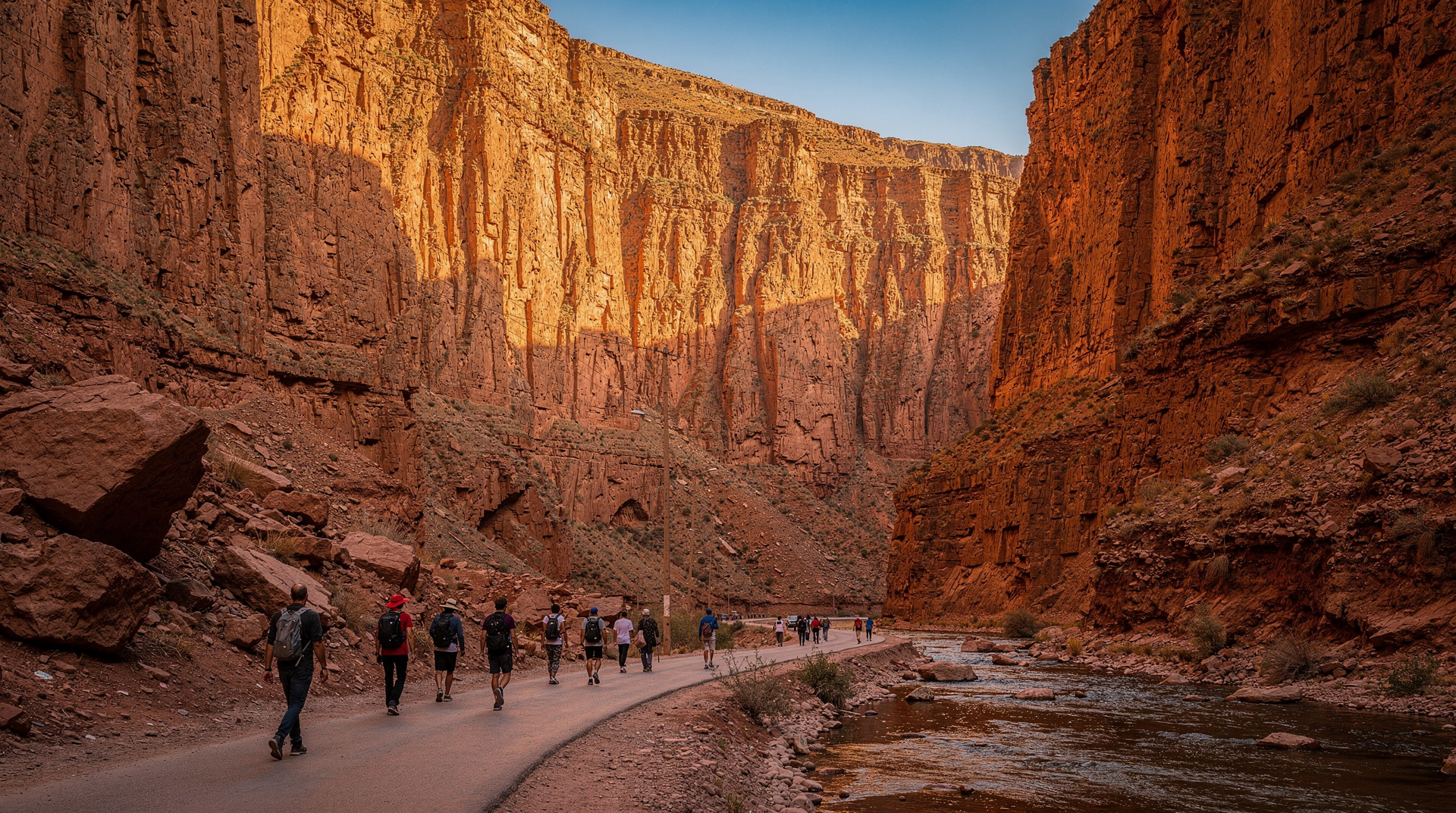
At the narrowest point of the Todra Gorge, the canyon walls close to 10 metres apart and rise 300 metres into a strip of sky above your head. The Todra River — reduced to a knee-deep stream in summer, a rushing torrent in spring snowmelt — runs between your feet over polished limestone. The walls, banded in rust, ochre, and cream, catch the morning sun at an angle that makes them appear to glow from within.
Todra Gorge is one of the most dramatic geological features in Morocco, a slot canyon carved by the Todra River through the southern edge of the High Atlas over millions of years. The narrowest section — about 300 metres long — is the destination that every photo of the gorge depicts. But the gorge extends for 25 km north of the town of Tinghir, and the upper sections — less visited, accessed by a rugged piste — offer increasingly dramatic scenery culminating in the plateau country of the Atlas.
The gorge sits on the classic Marrakech-to-Merzouga tourist route and is typically combined with the Dades Gorge 25 km west on the same travel day. Many visitors give Todra 2–3 hours and move on. Those who stay overnight discover a different experience: early morning mist in the canyon, the afternoon light on the west wall, and the near-silence after the day-trip coaches leave.
| At a glance | |
|---|---|
| Where | Eastern Morocco, 15 km north of Tinghir, on the Marrakech-Merzouga route |
| Cost | Budget-friendly — tagines around 80-150 MAD, doubles from around 250-600 MAD |
| Time needed | 1-2 days; 2-3 hours for the narrow section alone |
| Getting there | Shared taxi from Tinghir, or as part of a Marrakech-Merzouga tour |
| Best time | March-May, September-November; climbing season Nov-Mar |
Getting There
From Merzouga: 1.5–2 hours west on the N10 via Rissani and Tinghir. Most travellers visiting the Sahara from Marrakech pass through Todra Gorge on the way in or out.
From Marrakech: Part of a 3-day circuit — Day 1 Marrakech to Dades Gorge via Ouarzazate and Aït Benhaddou, Day 2 Dades to Todra to Merzouga. Todra Gorge is approximately 7–8 hours from Marrakech by direct car.
From Tinghir: Shared taxis (10 MAD per person) and occasional minibuses connect the town to the gorge entrance 15 km north. Grand taxis for the gorge and back cost around 100–150 MAD per vehicle.
By organised tour: Most 3-day Merzouga tours from Marrakech include a stop at Todra Gorge, though often for only 1–2 hours. Booking a tour that includes a gorge overnight gives you the site in its best light — literally.
Book a 3-day Marrakech to Merzouga tour passing through Todra GorgeGetting Around
The gorge entrance is marked by a small cluster of hotels, tea stalls, and a parking area about 15 km north of Tinghir. From here, a 15-minute walk takes you to the famous narrow section.
The narrow canyon walk: The classic walk follows the riverbed through the narrowest 300-metre section — flat, easy, and accessible to anyone. Beyond the narrow section, a rougher track continues north for 25 km through the upper gorge to the village of Msemrir. This upper section requires a 4x4 or sturdy boots and a full day.
Tinghir town: The palm-grove oasis town 15 km south is the main service hub — ATM, supermarket, petrol, hospital. Worth 30 minutes for its traditional covered souk and views over the palmerie.
Cycling: The road from Tinghir to the gorge entrance is flat and traffic is manageable — pleasant by bicycle hired in Tinghir (80–100 MAD per day).
Top Things to Do
Walking the Narrow Canyon
The fundamental Todra experience: walking into the slot canyon and standing at the narrowest point where the walls close overhead. The walk is 15 minutes from the parking area, fully accessible in standard shoes. Early morning (before 9 am) and late afternoon (after 4 pm) offer the best light and fewest crowds. Midday sends tour buses from Tinghir, and the narrow section can feel like a corridor — still impressive, but shared with a hundred other people.
Rock Climbing
Todra Gorge is one of Morocco’s premier rock climbing destinations — the limestone walls provide over 150 established routes ranging from 5a to 8b (French grading), predominantly bolted single-pitch sport climbing alongside some multi-pitch routes reaching 200 m. The south-facing walls warm quickly in winter sun, making November to March the best climbing season. Local guides and equipment rental are available through the Hotel Yasmina and Bivouac du Gorge at the gorge entrance. A full day of guiding runs approximately 400–600 MAD per person.
Upper Gorge Trek
Above the famous narrow section, the gorge road continues north through increasingly wild scenery — the walls widening, the river carving through boulder gardens, Berber villages perched on canyon shelves. The village of Ait Hani (15 km north) makes a good turning point for a half-day walk or drive. From Msemrir (25 km), a mountain piste crosses the High Atlas toward the Dades Gorge — a spectacular off-road route requiring a 4x4.
Tinghir Palmerie Walk
The Tinghir oasis is one of the largest palmeries in the south — 15 km of date palms, almond trees, and traditional mud-brick villages watered by an ancient seguia (irrigation channel) system. Walking or cycling through the palmerie in the morning, when mist rises from the irrigation channels and farmers tend their plots, is a genuinely peaceful experience far removed from the gorge’s drama.
Sunset and Sunrise
The west wall of the narrow section catches direct sun in the morning; the east wall glows in afternoon light. Sunrise from the gorge entrance (before the tour buses arrive) turns the canyon walls extraordinary shades of amber and rust. If you are staying overnight in the gorge, set an alarm for 30 minutes before sunrise — it is worth it.
Book a 3-day Sahara desert trip from Marrakech including Todra GorgeWhere to Eat
Café/Restaurant Yasmina (gorge entrance, directly below the canyon walls) is the most popular gorge restaurant — a simple terrace overlooking the river and the first wall of the canyon. Reliable tagines (80–110 MAD), good harira, and mint tea. The location alone makes it worthwhile.
Restaurant des Gorges (near the narrow section) serves basic Moroccan plates at slightly elevated tourist prices (100–150 MAD per person) — acceptable food in an unbeatable setting.
Tinghir restaurants: In the town below, Restaurant Oasis (Avenue Mohammed V) and several local cafés offer substantially better value and more authentic cooking — set menus from 60–90 MAD. Worth the 15-minute taxi ride if you have the time.
Where to Stay
Mid-range (400–1,000 MAD / €40–100 per night)
Hotel Yasmina (gorge entrance, right below the canyon walls) is the classic gorge accommodation — 20 rooms built into the cliff face, a terrace restaurant over the river, and the extraordinary experience of waking to the sound of the Todra River with canyon walls framing your window. From 500 MAD.
Hotel Le Festival (500 m south of the narrow section) offers comfortable rooms with terrace, a reliable restaurant, and a more modern fit-out than Hotel Yasmina. From 600 MAD.
Bivouac du Gorge offers basic tent accommodation and simple rooms for climbers and hikers who want to maximise time in the canyon. From 250 MAD per person.
Budget (under 300 MAD / €30 per night)
Several small auberges along the gorge road offer basic rooms from 150–200 MAD. Acceptable for those who simply need a bed between days of climbing or hiking.
Day Trips and Combinations
Dades Gorge: 25 km west — the natural companion gorge, typically combined with Todra on the same day’s drive. Drive west from Todra in the afternoon after a morning in the narrow section.
Merzouga and Erg Chebbi: 1.5 hours east — the Sahara dunes are the natural next stop after Todra Gorge on the classic south Morocco route. Many overnight gorge stays are followed by an early start to Merzouga for the desert camp.
Tinghir palmerie: The oasis below the gorge deserves a morning walk before or after the gorge visit.
Rissani: 80 km east — the ancient capital of the Tafilalt region, with Tuesday, Thursday, and Sunday markets among the most authentic rural souks in Morocco.
Practical Tips
Timing your visit: The gorge fills with tour coaches from Tinghir between 10 am and 3 pm. Arriving before 9 am or after 4 pm gives you the canyon largely to yourself. An overnight stay solves this problem entirely.
Water: The Todra River is fresh mountain water — drinkable in the upper gorge, but downstream from the entrance hotels it may be compromised. Bring bottled water.
Climbing gear: Most sport routes are bolted; a 60 m rope, 12 quickdraws, and a helmet cover the majority of routes. If you don’t have your own gear, rent from gorge hotels at around 100–150 MAD per day.
Photography: The narrow section is a photography masterclass — the walls frame and compress the canyon into extraordinary compositions. Morning (east) and afternoon (west) light creates distinct moods. A wide-angle lens is valuable.
Touts: Minor hassle near the parking area from postcard and fossil sellers — friendly but persistent. A polite refusal in French (“non merci”) is usually sufficient.
Safety: The gorge floor is safe and the rock is solid. Flash floods are theoretically possible in heavy rain — if rain is forecast in the Atlas, stay out of the upper gorge. Rock fall is extremely rare in the established sections.
When to Visit
March to May is ideal — warm days, mild nights, snowmelt filling the river (spectacular but adds current caution), wildflowers on the plateau above.
September to November is the most reliably pleasant: clear skies, moderate temperatures (20–28°C days, cool evenings), and good light for photography.
November to February is excellent for climbing (south-facing walls warm up by mid-morning even in January). Cold nights below freezing. Snow possible on the plateau above but rare in the gorge itself.
June to August: Hot (35–40°C in summer) but the narrow canyon creates shade. Avoid midday; morning and evening are still pleasant. The gorge is more crowded in summer — more European visitors are routed through.
Todra Gorge vs Dades Gorge
Travellers on the classic south Morocco loop usually see both, but if time is short, here’s how they compare:
| Todra Gorge | Dades Gorge | |
|---|---|---|
| Signature feature | 10m-wide, 300m-high narrow slot canyon | Winding valley, “Monkey Fingers” rock formations |
| Best activity | Rock climbing (150+ routes), gorge walk | Scenic driving, valley hiking |
| Crowd levels | Busy 10am-3pm, quiet outside those hours | Generally quieter, more spread out |
| Base town | Tinghir | Boumalne Dades / Kelaat M’Gouna |
| Distance apart | 25 km — easily combined same day | 25 km — easily combined same day |
Most itineraries combine both on the Ouarzazate-to-Merzouga leg; see the Dades Valley guide for the companion gorge.
Frequently asked questions about Todra Gorge
Is Todra Gorge worth visiting if I’m not a climber?
Yes. The narrow canyon walk is accessible to anyone in normal shoes and takes just 15 minutes from the parking area — the rock climbing is a bonus for those interested, not a prerequisite for enjoying the site. Non-climbers get the same dramatic 300m walls and the same photography opportunities.
How does Todra Gorge compare to Merzouga for a short trip?
They’re different experiences on the same route: Todra Gorge is a compact, dramatic canyon seen in 2-3 hours, while Merzouga is the Sahara dune destination requiring an overnight camel trek and camp. See our Atlas vs Sahara guide for help deciding how to split your time.
How to Fit Todra Gorge into a Longer Itinerary
Classic south Morocco loop (7–10 days): Marrakech → Aït Benhaddou → Ouarzazate → Dades Gorge (1 night) → Todra Gorge (1 night) → Merzouga (2 nights) → return via Fes or Marrakech. Todra Gorge fits naturally as the second overnight, making the double-gorge + desert circuit one of the most satisfying road trips in Africa.
Climbing trip (5–7 days): Fly into Marrakech → car to Todra Gorge (2 nights climbing) → Dades Gorge (1 night hiking) → Merzouga desert (1–2 nights) → return. Purpose-built for outdoor enthusiasts.
Short add-on: If your south Morocco circuit does not include an overnight in Todra, at minimum plan a 2-hour stop at the narrow section during a Dades–Merzouga transition day.
See our 3-day Sahara tour guide, how to book a Sahara tour, and Merzouga vs Zagora comparison for complete planning context.