How to Book a Sahara Desert Tour in Morocco Without Getting Ripped Off
How much should a Sahara tour from Marrakech cost?
A shared 3-day tour to Merzouga runs 250-400 EUR per person. Private tours for two cost 500-900 EUR total. Budget versions exist at 180-250 EUR per person but usually mean basic camps and rushed stops. Prices below 150 EUR per person for a 3-day shared tour should raise immediate questions.
The booking decisions that determine whether your desert trip is excellent or disappointing
The Sahara tour market in Morocco is enormous, unregulated at the low end, and full of operators whose marketing descriptions don’t match their actual product. Getting this booking right matters more than almost any other decision in a Morocco itinerary, because once you’re in a minibus heading south, you’re committed to whatever was sold to you.
This guide covers the structural decisions (private vs shared, how long, which desert), the price reality, what should be in the contract, and the specific warning signs that separate reliable operators from those who will disappoint you.
| At a glance | |
|---|---|
| Where | Departs Marrakech (or Fes) for Merzouga/Erg Chebbi or the closer Zagora/Erg Chigaga dunes |
| Cost | Shared: roughly 250-400 EUR pp for 3 days. Private: around 500-900 EUR total for two |
| Time needed | 3 days / 2 nights is standard; longer options exist for Zagora-Merzouga combined loops |
| Getting there | Included return transport in the tour price — private vehicle or shared minibus |
| Best time | October and March-April for the best weather and easiest booking availability |
Private tour vs shared tour: the real difference
This is the first and most important decision.
Shared group tours
A minibus of 8-16 people, a driver who doubles as guide (or a guide who rides along), and a fixed itinerary. You depart and arrive on schedule. Stops are timed. The camp room or tent is pre-allocated, usually shared category.
What works:
- Significantly cheaper: 250-400 EUR per person for a standard 3-day Merzouga tour
- You meet other travellers — for solo visitors, the social element is often positive
- Logistics are handled entirely — no decisions required beyond showing up
What doesn’t work:
- If Aït Ben Haddou is extraordinary and you want more time there, you can’t have it
- Your experience depends on the group dynamic — 14 strangers, including the ones who are chronically late
- Camp accommodation is usually standard (shared tent or budget room), though some shared tours include mid-range camps
Private tours
Your own vehicle, your own driver-guide (often one person), and significant control over the itinerary pacing.
What works:
- Flexibility on stop durations and timing — critical if you’re a serious photographer or simply want to linger
- Private accommodation at the camp — you’re not sharing tent space with strangers
- Better guide attention: with 2 people instead of 14, you can actually have conversations and ask questions
- Timing advantage: leave earlier, arrive to camels before the group tours
What doesn’t work:
- Higher cost: 500-900 EUR total for two people, though this is often only 150-200 EUR more per person than a shared tour for couples
- You need a reliable operator — private tours have less built-in accountability than group tours on established circuits
- Less social; irrelevant for couples, significant for solo travellers
The honest recommendation: For couples or groups of 3+, private is usually worth the premium. For solo travellers on a budget, shared is fine. The gap narrows more than most people expect once you calculate per-person costs for couples.
What a legitimate Sahara tour should include
A 3-day Marrakech to Merzouga tour at 300 EUR per person should include:
- Return transport (private vehicle or shared minibus, clearly specified)
- Professional driver-guide (not just a driver)
- One hotel or guesthouse overnight en route (dinner not always included — check)
- One overnight at a named desert camp (not “a camp near Merzouga”)
- Dinner and breakfast at the desert camp
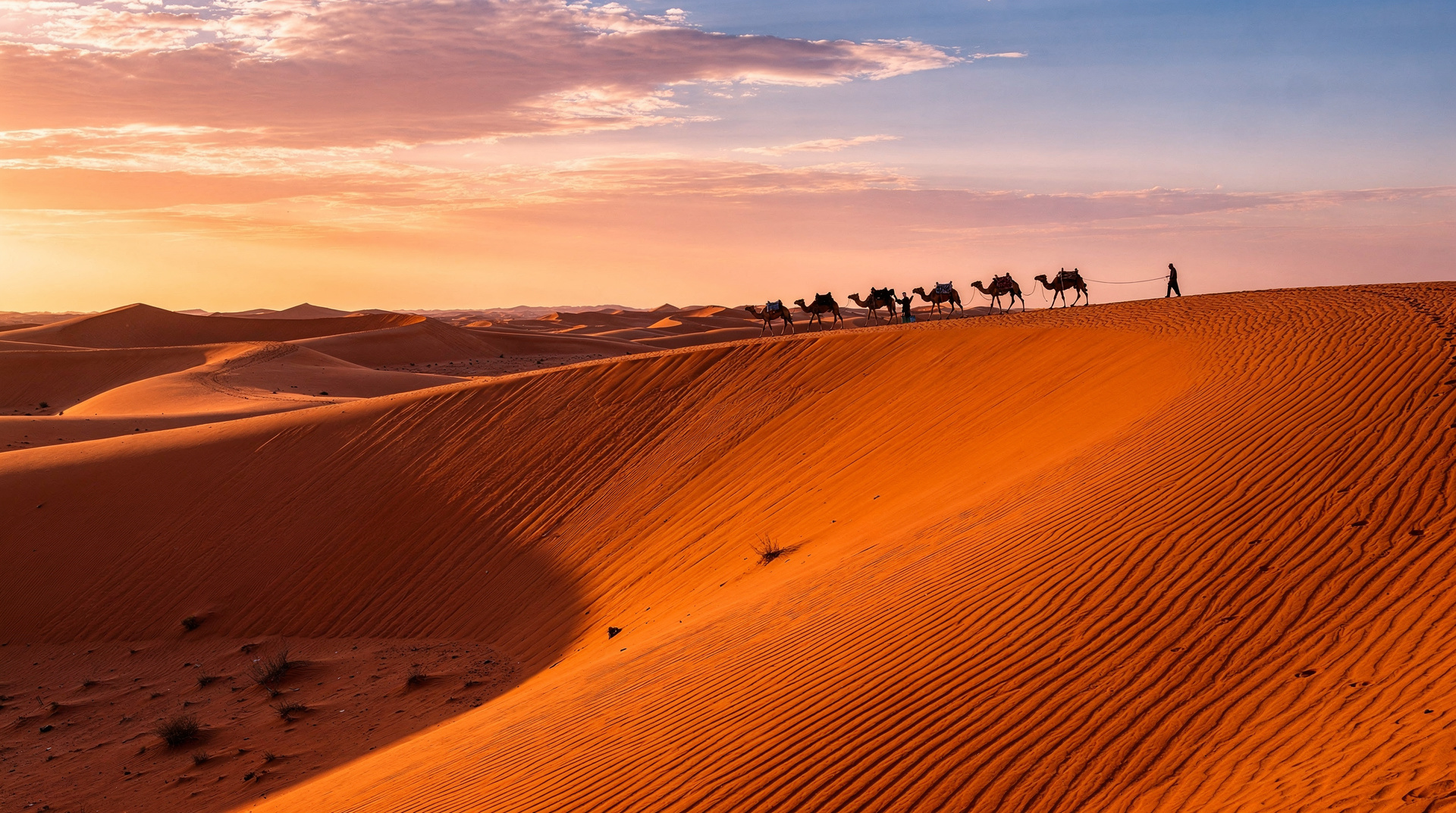
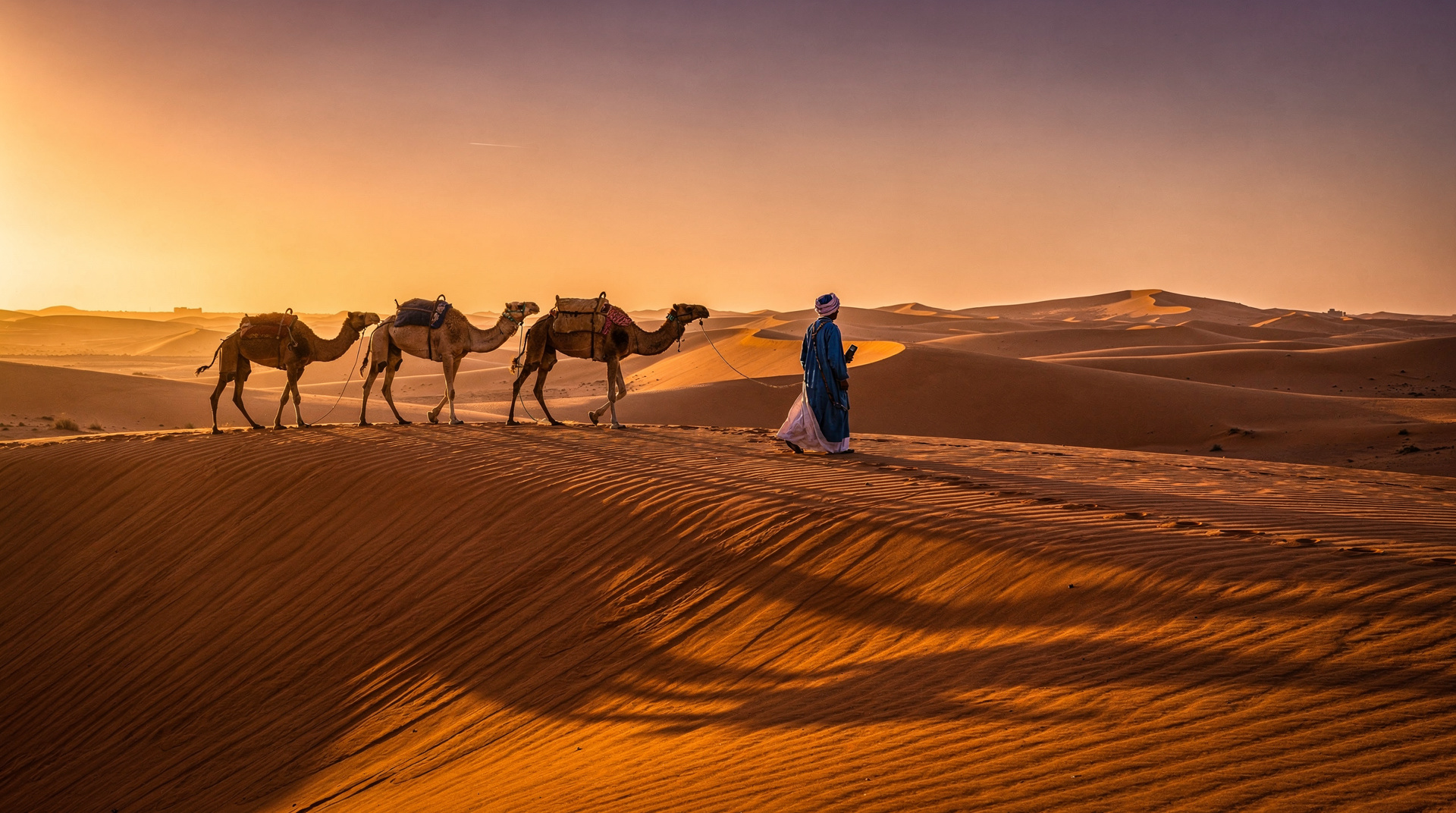
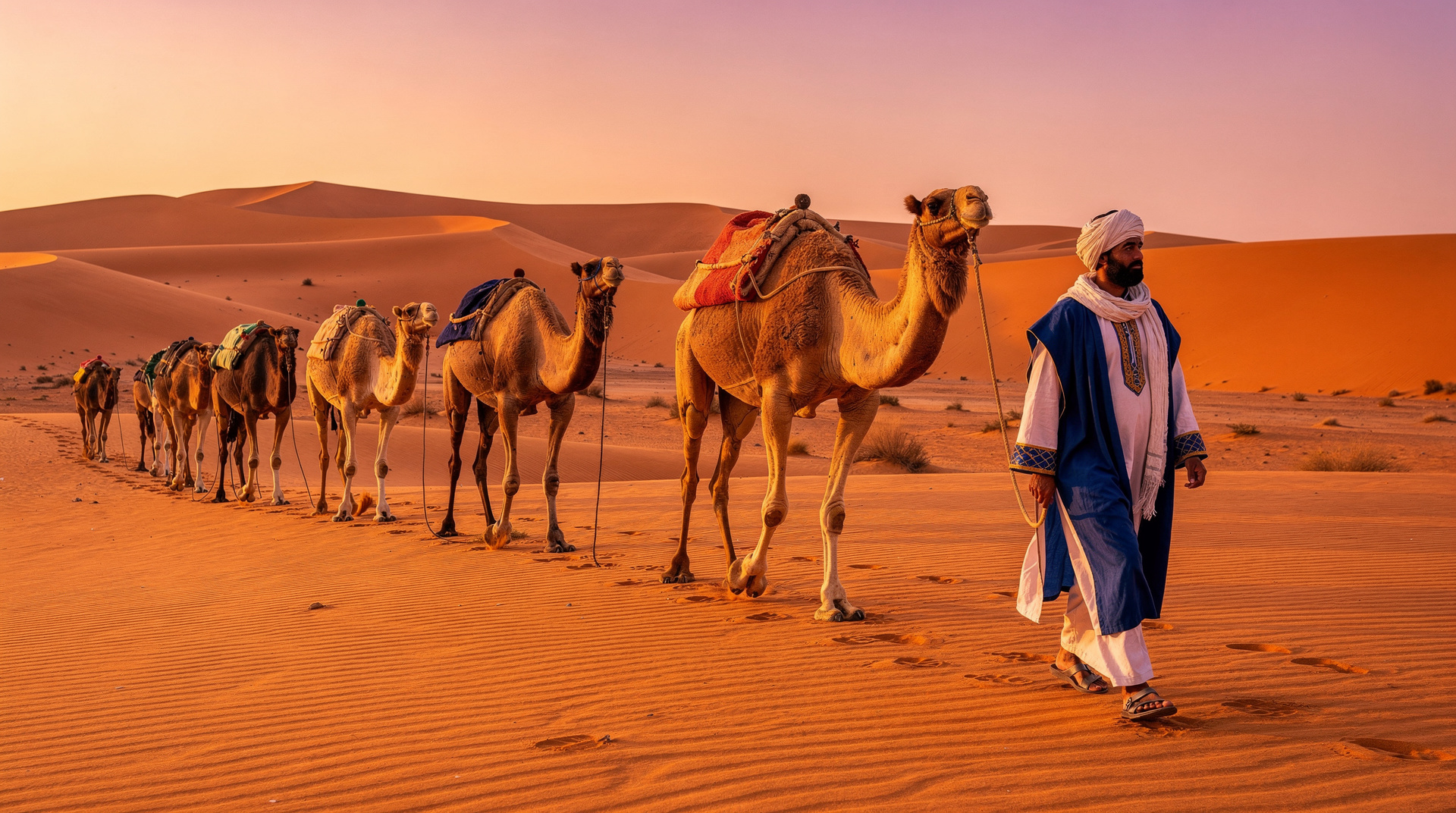
- Camel ride to/from the camp (or 4WD transfer — confirm which)
- Entry fees to Aït Ben Haddou (about 10-15 MAD)
What is usually excluded:
- Lunches (budget 100-150 MAD per person per stop)
- Drinks at the camp (especially alcohol)
- Activity upgrades: quad biking (typically 30-50 EUR/hour), sandboarding (10 EUR rental), 4WD excursions into the erg
- Tips — the standard in Morocco is 100-150 MAD/day for your driver-guide; more if they were excellent
- Personal shopping stops
Price reality check by category
| Tour type | Typical price (per person) | What you get |
|---|---|---|
| Budget shared | 180–230 EUR | Standard minibus, basic camp tent, minimal guide time |
| Standard shared | 250–350 EUR | Comfortable camp, better stops, 1 hotel night included |
| Premium shared | 350–450 EUR | Named luxury camp, smaller group (max 8), quality guide |
| Private (budget) | 200–280 EUR | Just driver (no guide), basic camp, limited flexibility |
| Private (standard) | 280–400 EUR (per person for 2) | Driver-guide, mid-range camp, flexible stops |
| Private (luxury) | 400–600 EUR (per person for 2) | Quality vehicle, expert guide, luxury camp, private room |
Prices for Zagora tours run roughly 20-30% lower at each tier. The desert experience is less dramatic but the saving is genuine.
Red flags when vetting operators
Red flag 1: No camp name provided Any operator who can’t or won’t tell you the name of the camp where you’ll sleep should not be trusted. “A luxury camp in Merzouga” is not a specification. You should receive a specific camp name before paying a deposit.
Red flag 2: Prices significantly below market rate A 3-day private tour to Merzouga for two at 300 EUR total (150 EUR per person) is not a deal — it means either a driver-only (no guiding), a shack rather than a camp, hidden charges to come, or all three.
Red flag 3: Commission stops buried in the itinerary Legitimate tours include 1-2 optional shopping stops (fossil workshop, carpet cooperative). These are normal and operators receive commission from purchases. What’s not acceptable is 4+ mandatory stops where you’re parked for 45 minutes while the driver earns commission. Check reviews specifically for mentions of shopping pressure.
Red flag 4: No written itinerary Reputable operators provide a written day-by-day itinerary before you pay. Vague verbal descriptions are not enough.
Red flag 5: Non-cancellable deposits over 30% Deposits of 20-30% are standard. Demanding 50% or full payment in advance with no cancellation policy is a warning sign.
Red flag 6: WhatsApp-only contact with no business address Legitimate operators have a physical address, a website, and at minimum an email address. WhatsApp-only operations with no verifiable identity are high risk.
Where to book
Through organised tour platforms
3-day Sahara desert trip from Marrakech to Merzouga and the 3-day Merzouga tour with luxury camp upgrade are both established, reviewed options with clear camp inclusions and transparent cancellation policies.
Booking through platforms like these offers consumer protection that direct bookings with local operators don’t — you have a paper trail, a review system, and a dispute mechanism if the product doesn’t match the description.
Advantages of platform booking:
- Transparent pricing with inclusions listed
- Real guest reviews (filter for “verified purchase” only)
- Cancellation protection
- Usually a fixed operator with an established reputation
Limitations:
- Platforms add 10-20% to the operator’s base cost
- Less flexibility for custom routes or itinerary modifications
- You may have less direct communication with your actual driver-guide beforehand
Booking directly with local operators
Reputable local operators in Marrakech and Merzouga offer equivalent or better products at lower prices — when they’re legitimate. The risk is higher, the vetting harder.
Research approach for direct booking:
- Check TripAdvisor and Google reviews (look for photos, detailed reviews, and responses from operators)
- Ask for a written itinerary with named hotels and camps before paying
- Pay deposit by credit card where possible (dispute protection)
- Get a WhatsApp number for your actual guide, not just the booking office
What to negotiate
Private tours have more flexible pricing than most travellers realise. These points are negotiable:
- Duration extensions: Adding half a day in the dunes costs the operator minimal extra (one more hotel-equivalent night); they may agree for 20-40 EUR extra per person
- Camp upgrades: If you booked a standard camp and want to upgrade, ask the operator — they often have direct relationships with multiple camps and can arrange upgrades at lower than the rack rate
- Stop additions: Adding Gorges du Draa or the fossil sites at Erfoud is often possible at no cost if you ask before departure (it affects nothing but timing)
- Driver tip: Factored into the tour price by some operators, additional for others — clarify before the trip ends
What’s not negotiable: the quality of the camel ride experience, what the camp serves for dinner, or whether you get private bathroom facilities if you booked a non-private category.
Questions to ask before booking
- What is the specific name of the desert camp where I will sleep?
- Is the overnight accommodation (en route hotel and desert camp) included in the price?
- What is included for meals — specifically which meals?
- How many people are in my group (for shared tours)?
- Is there a guide as well as a driver, or does the driver also guide?
- What is the vehicle type (minivan, 4WD, minibus)?
- What is your cancellation policy if I need to cancel within 48 hours?
- Are there shopping stops in the itinerary? How many and how long?
For more context on what the desert experience looks like, the 3-day Sahara tour guide gives the day-by-day breakdown of what a standard loop covers.
Timing and seasonal booking advice
Best months for booking: October and March-April for the best weather. October is the most popular and luxury camps at Merzouga book out 4-6 weeks ahead.
Avoid: August (extreme heat, 45+ degrees C in the erg), and the week around major Moroccan public holidays (Aid el-Adha, Aid el-Fitr) when local travel peaks and prices rise.
Ramadan consideration: In 2026, Ramadan falls approximately February 19 to March 19. Camp food quality and activity schedules change during Ramadan — some cooks fast, kitchens open later, Gnawa music performances may be limited. Factor this into timing if it matters to you.
The best time to visit Morocco guide covers the seasonal picture across all regions. For choosing between desert destinations, the Merzouga vs Zagora comparison and Merzouga vs Agafay guide give the full picture. Costs fit into the wider Morocco budget guide.
Frequently asked questions about booking Sahara tours
How far in advance should I book a Sahara tour?
For shared tours: 1-2 weeks usually fine, 2-3 weeks for peak season (October, March-April). For private tours with specific luxury camps: 3-4 weeks minimum in peak season, 1 week is usually adequate off-peak.
Can I book a Sahara tour after arriving in Marrakech?
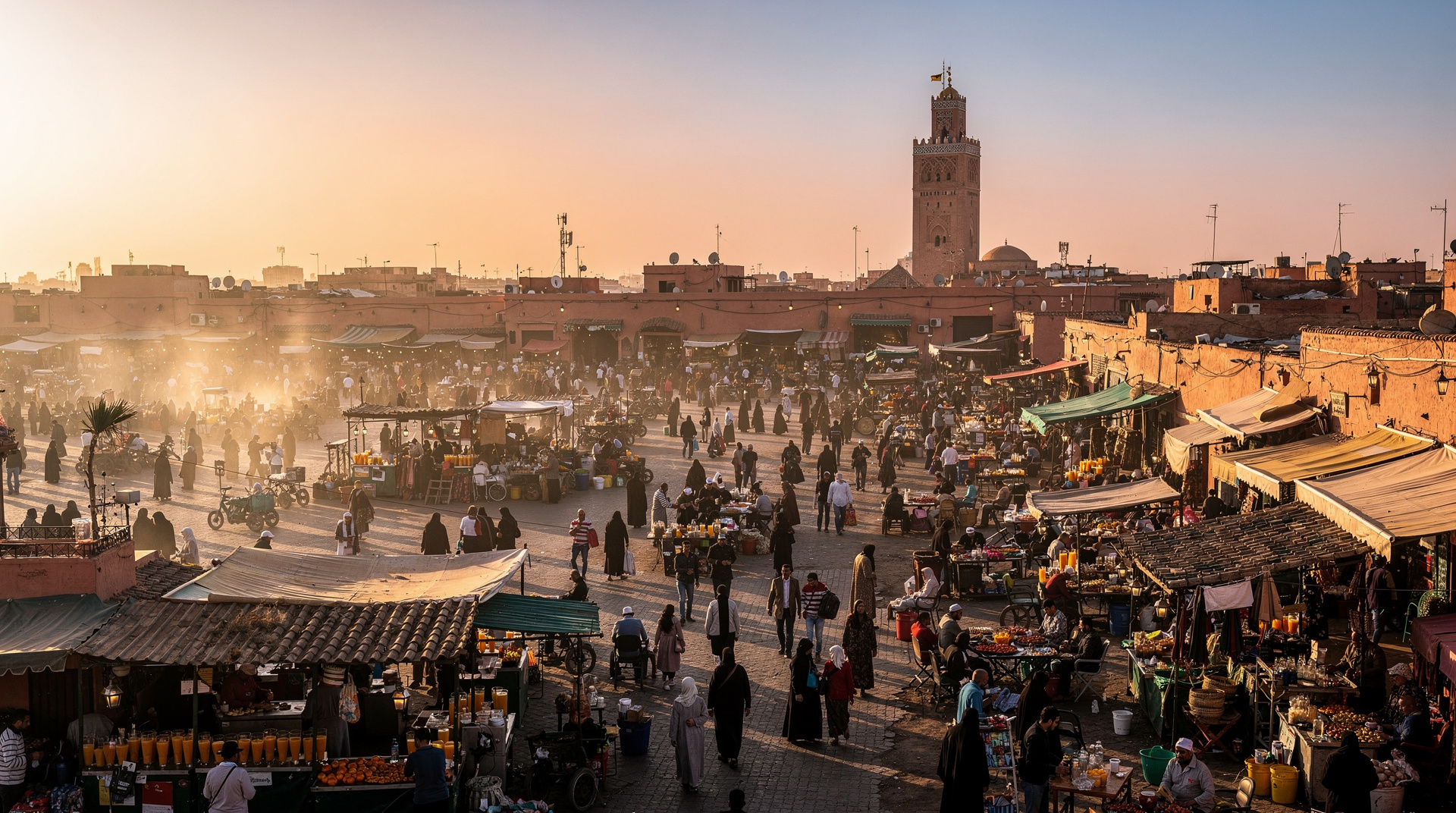
Yes, and many people do. The Djemaa el-Fna area and Marrakech medina have dozens of operators. Last-minute deals occasionally exist (operators filling unsold spots). The risk: you have limited time to vet the operator and confirm camp quality. Budget extra time for comparison shopping if you go this route.
What’s the difference between a driver and a guide?
A driver moves you from A to B. A guide explains what you’re seeing, manages logistics at stops, translates, handles situations, and makes the trip significantly more informative and smooth. Better operators provide a driver-guide who does both. Budget tours often provide only a driver. Ask explicitly.
Is travel insurance necessary?
Strong recommendation: yes. The cancellation costs if you get ill before departure are real (deposits are rarely returned at short notice). Medical coverage for the trip is essential — Moroccan public hospitals are functional but under-resourced, and private clinics want payment upfront. Most European bank cards include some travel insurance; verify your coverage before departure.
What currency do I need for tips and extras?
Moroccan Dirham (MAD). The dirham is a closed currency — you cannot buy it outside Morocco. Airport exchange is available on arrival; ATMs in Marrakech work reliably with major cards. Bring cash in MAD before heading into the desert — no ATMs in the erg and the one in Merzouga village occasionally has availability issues.
Can I combine a Sahara tour with a Marrakech-to-Fes transfer?
Yes — the one-way Marrakech-Merzouga-Fes tour is a popular option that covers the desert loop while transferring between cities. See the Sahara from Marrakech vs Fes guide for the routing logic.
Merzouga or Zagora: does it change the booking approach?
The vetting process above applies equally to both destinations, but the stakes differ slightly. Merzouga’s Erg Chebbi dunes are taller and more dramatic, and the tour market is larger and more competitive — more choice, but also more budget operators cutting corners. Zagora’s Erg Chigaga is closer to Marrakech (shorter drive, less of the trip lost to the road) but has a smaller, more concentrated operator pool where reputation matters even more.
The Merzouga vs Zagora comparison and the Zagora vs Erg Chigaga guide go deeper on which dunes suit which traveller. Whichever you choose, apply the same camp-name and written-itinerary checks — a vague answer is a vague answer regardless of destination.
If a 4x4-specific route through the erg interests you rather than the standard camel-and-camp format, the 4x4 Sahara tours guide covers vehicle-specific operators and what the off-road legs actually involve.