Quick facts
- Language
- Tamazight, Darija, French
- Population
- ~35,000
- Distance from Marrakech
- 350 km (approx 7 hours by road)
- Best for
- Smaller dunes, Draa Valley, authentic desert
The Quieter Road to the Desert
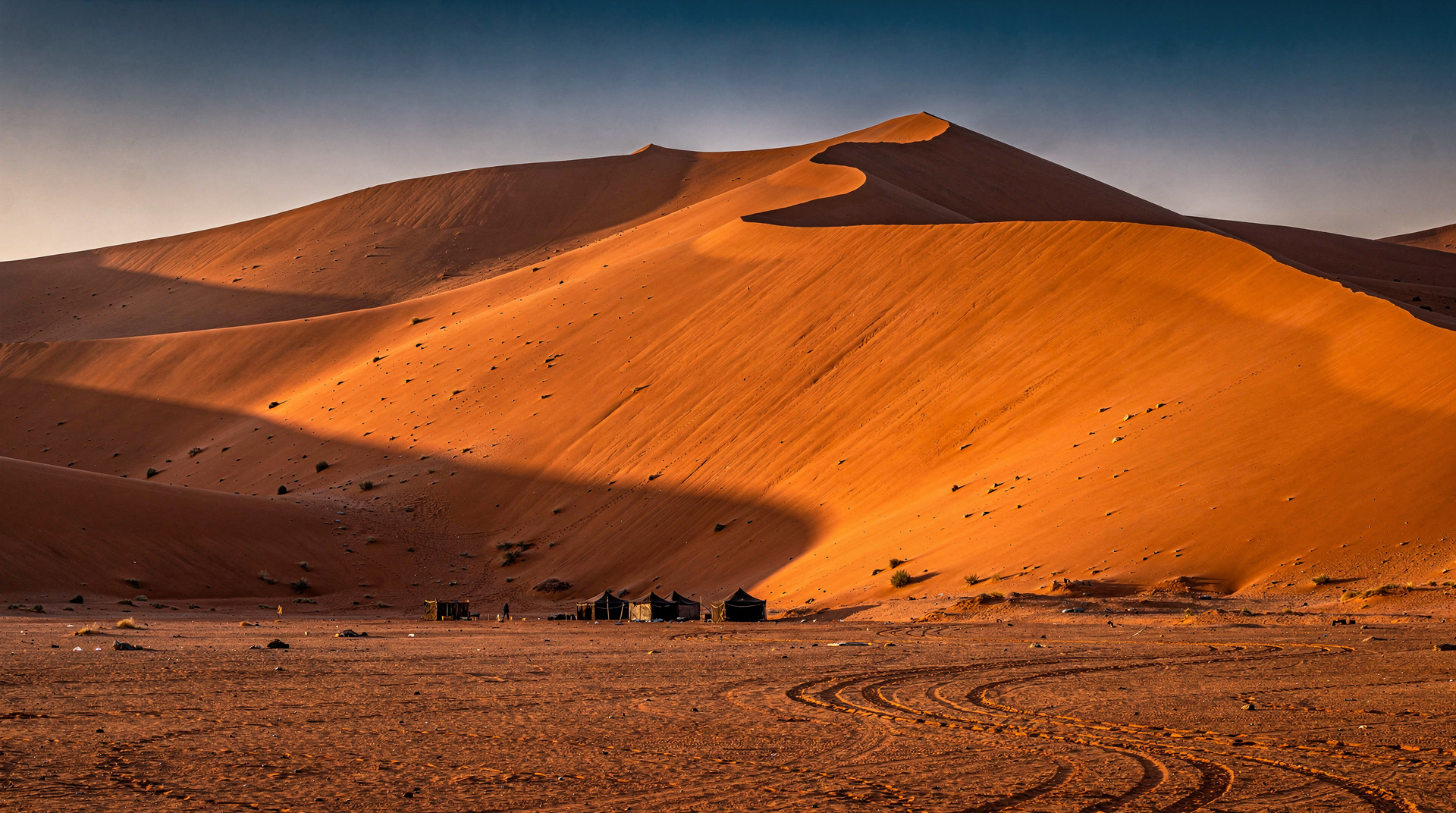
Zagora sits at the end of the Draa Valley, 350 km southeast of Marrakech by road — a journey of approximately 7 hours that is itself one of the great drives in Morocco. The town is smaller and less touristed than Merzouga on the Erg Chebbi side of the Sahara, and the dunes here — the Erg Lehoudi, 20 km south of town — are more modest in scale: 50–80 metres rather than the 150-metre giants at Erg Chebbi. But Zagora offers something Merzouga cannot: the extraordinary Draa Valley as approach and context.
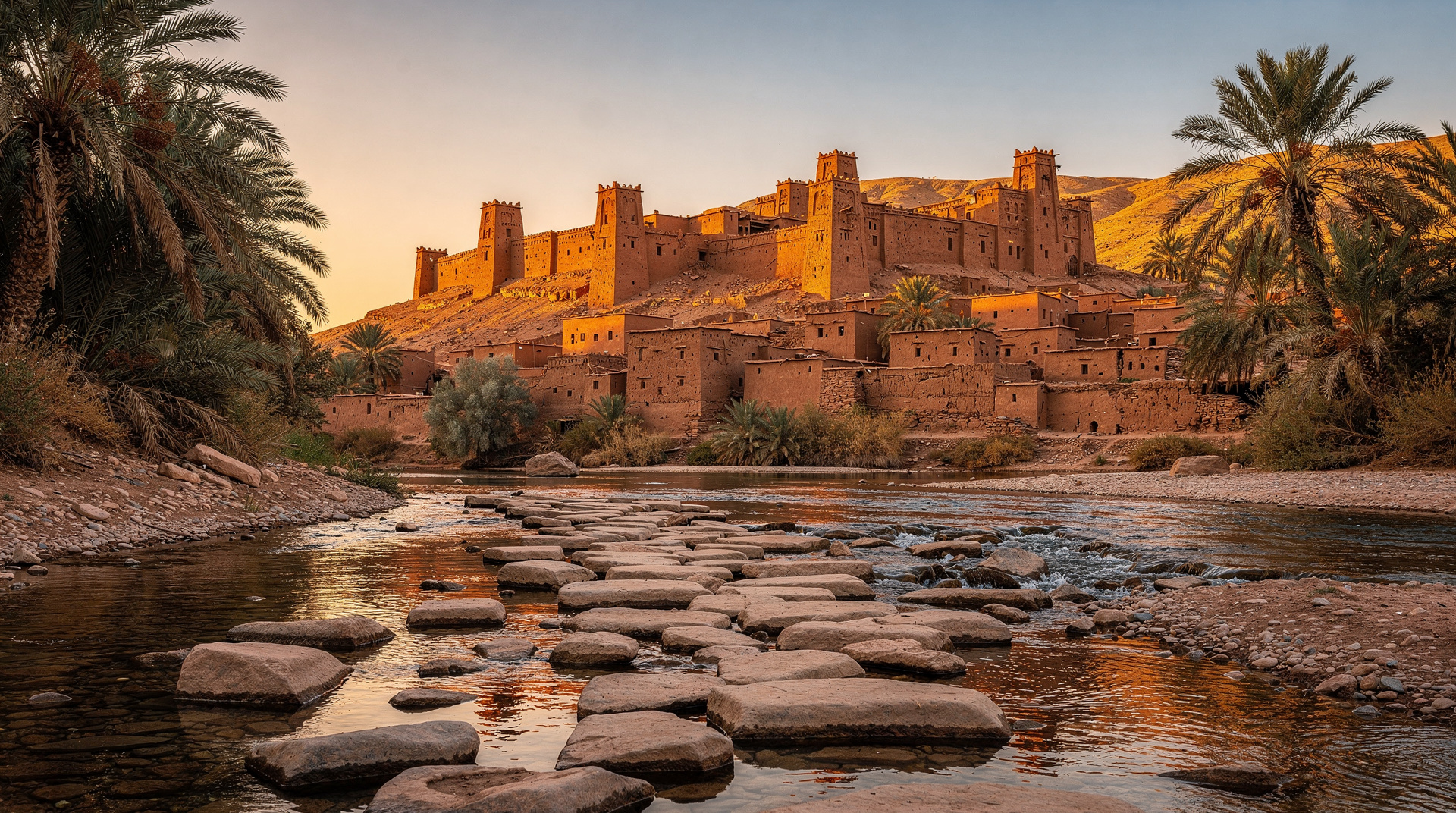
The Draa is Morocco’s longest river, and for the 200 km south of Ouarzazate it sustains a continuous corridor of palm groves, mud-brick ksour (fortified villages), Berber settlements, and date gardens that represent one of the most compelling pre-Saharan landscapes on earth. Driving this road — past fortified granaries on red-rock ridges, through palm-shaded villages where donkeys are still the primary transport — puts you in a world that has changed less in the last 500 years than almost any place in North Africa.
Zagora is also the staging point for the road to M’Hamid and Erg Chigaga — the remote dunes beyond the end of the paved road that offer a genuinely off-the-beaten-track desert experience.
| At a glance | |
|---|---|
| Where | Draa Valley, southern Morocco, 350 km from Marrakech |
| Cost | Budget desert camps from around 200-300 MAD/person; mid-range 500-900 MAD/person |
| Time needed | 1-2 nights |
| Getting there | Car or organised 2-day tour from Marrakech via Ouarzazate; CTM bus around 120 MAD |
| Best time | October to April; avoid May-September heat |
Getting There
From Marrakech (most popular route): The road south crosses the High Atlas via the Tizi n’Tichka pass (2,260 m), descends through Ouarzazate, and then follows the Draa Valley for 150 km to Zagora. Total distance approximately 350 km; allow 7 hours with stops. This is not a fast road — the Draa Valley section is single-lane with lorries and frequent villages — but the scenery makes every kilometre worthwhile.
Organised tours from Marrakech: A 2-day organised tour from Marrakech is the most popular way to reach Zagora — departing early morning, stopping at Aït Benhaddou and Ouarzazate, arriving in Zagora for the overnight desert experience, and returning to Marrakech the following afternoon.
Book a 2-day desert tour from Marrakech to ZagoraBy bus: CTM runs a daily Marrakech–Zagora service. Journey time is approximately 7–8 hours. The bus is significantly less scenic than the drive but substantially cheaper (around 120 MAD).
From Ouarzazate: 150 km south on the N9 — about 2.5 hours by car, passing through Agdz (worth a stop for its palm-fringed kasbah and Tuesday market).
Getting Around
Zagora town is small and walkable. The main street, Avenue Mohammed V, runs north–south through the commercial district. The main auberges and desert operators are concentrated here and along the Draa riverbank.
To the dunes (Erg Lehoudi): The Erg Lehoudi dunes begin about 20 km south of Zagora, near the village of Tinfou. Most auberge operators arrange camel or 4x4 transport to the dune entry point — included in overnight packages. A grand taxi to Tinfou costs around 100–150 MAD.
To M’Hamid: 100 km further south along the N12 (paved road). Grand taxis depart Zagora for M’Hamid daily for around 60–80 MAD per person. M’Hamid is the last paved town before the Erg Chigaga — from here, Erg Chigaga requires a 4x4.
Bicycle: Several guesthouses rent bicycles for exploring the palm groves and Draa riverbanks at gentle pace — a lovely way to spend a morning.
Top Things to Do
Camel Trek and Overnight Desert Camp
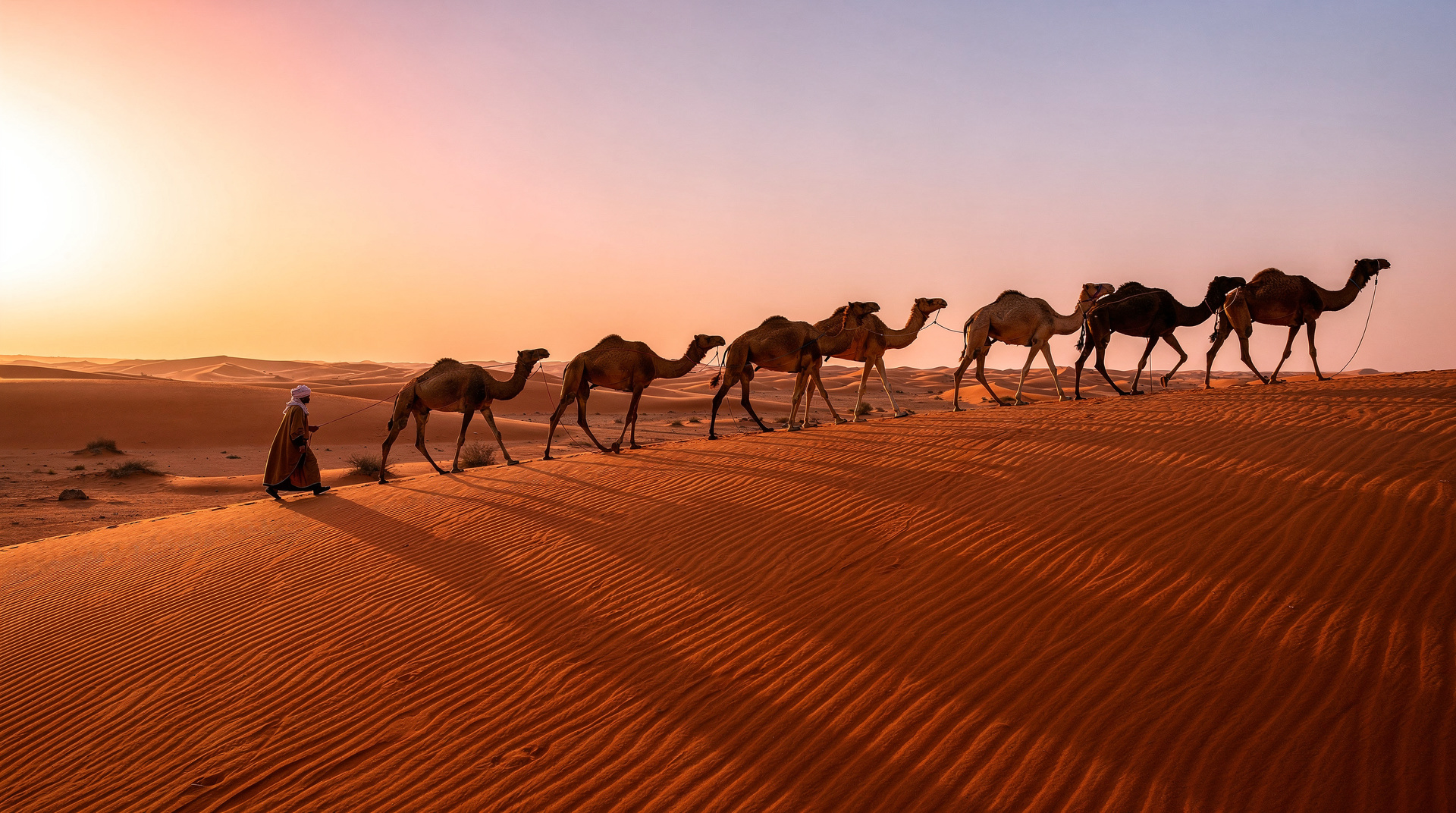
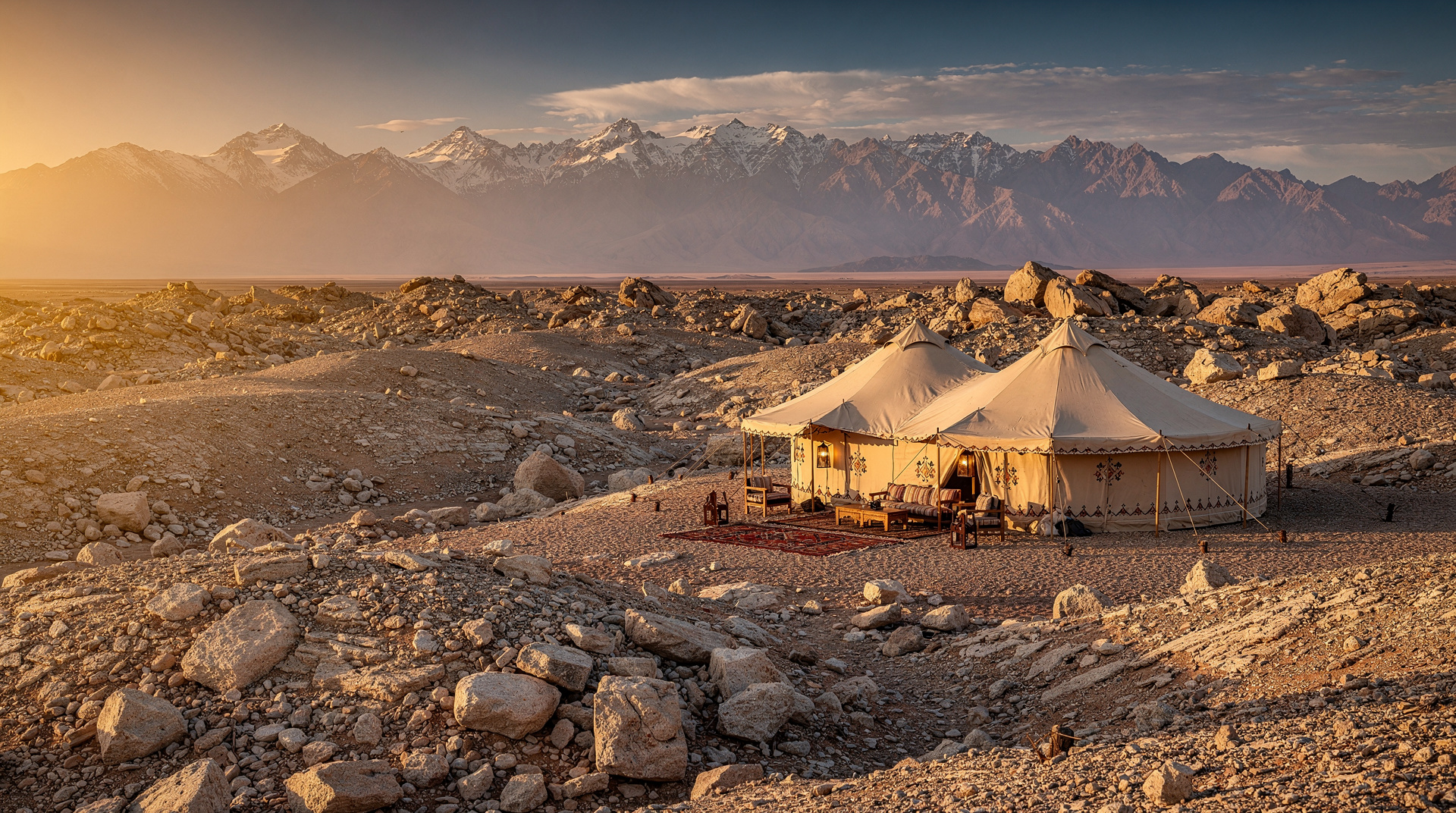
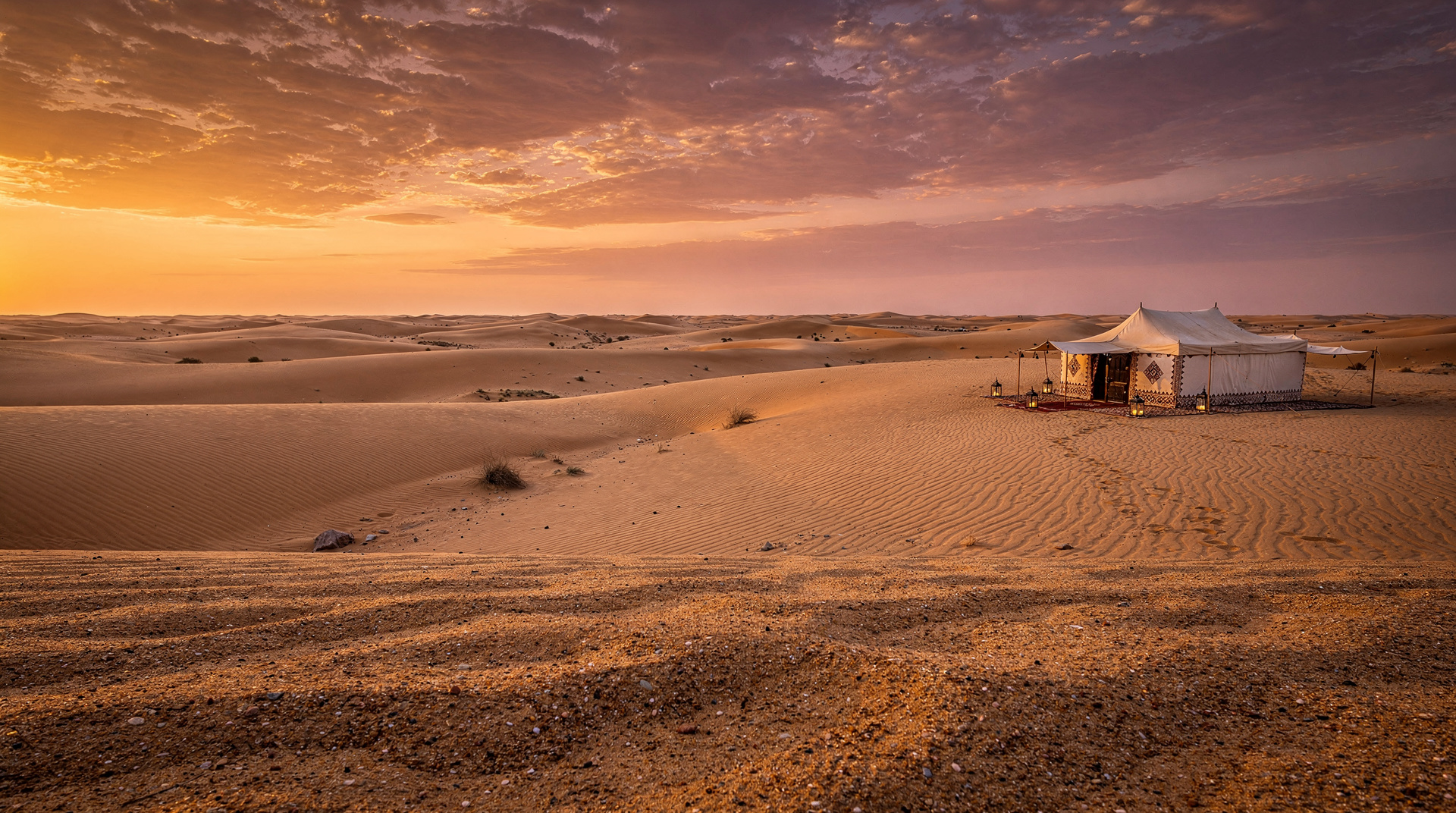
The Erg Lehoudi experience follows the classic formula — sunset camel trek into the dunes, campfire dinner with Gnaoua music, overnight under stars, sunrise on the dune crests — but at a scale that feels less packaged than Merzouga. Fewer tour buses means more space on the dunes and a more personal experience with camp staff. Budget camps start at 200–300 MAD per person for basic tent accommodation with dinner and breakfast; mid-range camps (private en-suite tents) run 500–900 MAD per person.
Book a 2-day Sahara tour from Marrakech via Aït Benhaddou to ZagoraDraa Valley Palm Groves
The 10 km of palm groves surrounding Zagora — watered by the Draa River and the network of traditional seguia (irrigation channels) that have served the valley for millennia — are best explored by bicycle or on foot in the early morning. Berber families still harvest Medjool and Bouffeggous dates here in October, and the groves are home to dozens of bird species including Eurasian rollers and Little Owl.
Tinfou Dunes Viewpoint
Even without an overnight stay, the short detour to Tinfou is worthwhile — a classic dune landscape at the edge of the palm groves, where the transition from green to golden sand is visually dramatic. An hour at Tinfou at sunset is sufficient to understand the desert’s appeal without the full overnight commitment.
Road to M’Hamid
The 100 km drive south from Zagora to M’Hamid is one of Morocco’s most extraordinary desert roads — crossing dried riverbeds, passing through the village of Tagounite and the ancient ksar of Ouled Driss, ending in the final dusty outpost before the Erg Chigaga. If you have a private car, drive it even if you turn around at M’Hamid — the landscape is extraordinary and the road is well-maintained until you turn off toward the dunes.
Ancient Ksour of the Draa Valley
The Draa Valley is lined with more than 20 ksour (plural of ksar) — fortified collective villages of mud-brick that served as combined residence, granary, and defensive stronghold. Tamnougalt (8 km south of Agdz) is the most intact, with family-run tours of its labyrinthine interior. Zagora’s own kasbah is partially open to visitors. These earthen fortresses, many of them crumbling back into the landscape, are as compelling as anything in Morocco.
Book a private 2-day desert trip to Zagora from MarrakechMontagne du Zagora (Jebel Zagora)
The flat-topped mountain rising 800 m above Zagora to the east is a 3-hour return hike from town. The summit — fortified in the 11th century by the Almoravids — offers a panoramic view over the entire Draa Valley and, on clear days, dune ridges to the south. Best attempted very early morning or late afternoon; take water.
Where to Eat
Riad Dar Raha restaurant (Zagora centre) serves reliable Moroccan cooking in a pretty courtyard — tagine with prunes and almonds (100 MAD), Draa Valley salads, harira soup. One of the better dedicated restaurant spaces in town.
Restaurant Tinsouline is a large, popular lunch stop for tour groups — the portions are generous, prices are fair (80–120 MAD for a full meal), and the tagines are consistently decent. Good for a quick stop without reservations.
Camp dinners: The most atmospheric way to eat in the Zagora area is at your desert camp, where a simple but carefully prepared meal — harira, Moroccan salads, lamb tagine, Berber bread — served beside a campfire under desert stars, is hard to improve on regardless of the price.
Where to Stay
Mid-range (500–1,200 MAD / €50–120 per night)
Riad Dar Raha is the best accommodation in Zagora proper — a well-restored riad with courtyard pool, comfortable rooms, and good desert-excursion organisation. From 700 MAD.
Auberge Chez Ali (near the Erg Lehoudi access point) is a reliable desert camp operator with both permanent rooms and tented camp options. Clean, well-run, and good value. From 400 MAD (tent + dinner + breakfast).
Kasbah Sirocco (Zagora centre) offers kasbah-style rooms around a courtyard — architecturally interesting and reasonably priced at 600–900 MAD.
Budget (under 350 MAD / €35 per night)
Several small auberges along Avenue Mohammed V offer basic but clean rooms from 150–250 MAD per night. Services are minimal but the owners can typically arrange desert excursions at reasonable local prices.
Day Trips from Zagora
M’Hamid: 100 km south by paved road — the end-of-the-line town for the Draa Valley, gateway to Erg Chigaga. Worth the drive even for non-dune-seekers.
Agdz and Tamnougalt ksar: 60 km north on the return road to Ouarzazate. The most intact ksar in the Draa Valley and Agdz’s palm-grove market.
Ouarzazate: 150 km north — Atlas Studios and Kasbah Taourirt, a half-day if you have a car.
Aït Benhaddou: 180 km via Ouarzazate. Typically included in organised tour packages from Marrakech that pass through Zagora.
Practical Tips
Zagora vs Merzouga: Zagora has smaller dunes, shorter access time from Marrakech (7 hours vs 10 hours), and a less commercially developed tourist infrastructure. If your priority is maximum dune scale and a wide choice of desert camps, choose Merzouga. If you want the Draa Valley road and a quieter desert experience, Zagora is the better choice. See our Merzouga vs Zagora comparison guide for a full breakdown.
Water: Carry 2 litres per person minimum for any desert activity. The heat in spring and autumn is deceptive — dehydration comes quickly.
Driving: The N9 from Ouarzazate to Zagora is straightforward. The road south to M’Hamid is paved and well-maintained to the village. Beyond M’Hamid, a 4x4 is required.
Bargaining: Desert camp prices are moderately negotiable — not as flexible as souk prices. Get 2–3 quotes before committing; local operators quote lower than tour operators in Marrakech.
Safety: Zagora is genuinely safe. The main practical risks are excessive heat, dehydration, and getting turned around in the dunes. Tell your camp manager where you plan to walk and don’t venture deep into the dunes alone at night.
When to Visit
October to April: The ideal desert window. Spring (March–April) offers warm days (25–30°C) and cool nights — perfect for camel trekking and sleeping under the stars. Autumn (October–November) is similar.
December to February: Cold nights (near 0°C) but brilliantly clear days. The desert looks extraordinary in sharp winter light. Bring very warm sleeping layers.
May to September: Avoid. Summer heat in the Draa Valley reaches 45°C and above — oppressive even at night. Only experienced desert travellers should attempt this, and only before dawn.
Zagora vs Merzouga: Quick Comparison
| Zagora (Erg Lehoudi) | Merzouga (Erg Chebbi) | |
|---|---|---|
| Dune height | 50-80 metres | Up to 150 metres |
| Drive from Marrakech | Approx 7 hours | Approx 10 hours |
| Approach road | Draa Valley palm groves and ksour | Ziz Valley and Rissani |
| Crowd levels | Quieter, smaller camps | Larger established camp infrastructure |
| Best if you want | A shorter trip with dramatic valley scenery | The biggest, most iconic Sahara dunes |
See the full Merzouga vs Zagora guide for a deeper breakdown, or Zagora vs Erg Chigaga if you’re considering pushing further off the beaten path.
Frequently asked questions about Zagora
Is Zagora worth it compared to Merzouga?
It depends on priorities. Zagora offers a shorter drive from Marrakech, the exceptional Draa Valley approach, and a quieter, less commercially developed desert experience. Merzouga offers larger, more dramatic dunes and a wider choice of desert camps. Neither is objectively better — see our Merzouga vs Zagora comparison for a full breakdown based on your priorities.
Can I visit Zagora as a day trip from Marrakech?
Not realistically. The drive alone is 7 hours each way, making a same-day round trip impractical. The minimum sensible visit is a 2-day, 1-night organised tour, and 3 days allows time to also see Aït Benhaddou and Ouarzazate properly along the way.
How to Fit Zagora into a Longer Itinerary
Classic 2-day Marrakech extension: Book an organised 2-day tour from Marrakech that includes Aït Benhaddou, Ouarzazate, and the Draa Valley to Zagora. Perfect for travellers with limited time who want a desert experience without the 10-hour drive to Merzouga.
5-day southern loop: Marrakech → Ouarzazate (1 night) → Zagora (2 nights, including M’Hamid drive) → return via Aït Benhaddou and Tizi n’Tichka. A highly satisfying self-drive itinerary covering the best of Morocco’s south.
Extended desert route: Zagora → M’Hamid → Erg Chigaga by 4x4 (2 nights) → back to Marrakech or continue east to Merzouga via Foum Zguid piste. A serious adventure requiring 5–7 days and a good 4x4.
For more planning resources, see our guides on how to book a Sahara tour, Sahara from Marrakech vs Fes, and luxury desert camps.