Morocco in July
Is July a good time to visit Morocco?
July works if you focus on the Atlantic coast, Chefchaouen, or the Rif and Middle Atlas. Marrakech at 40°C+ is uncomfortable for medina exploration. The Sahara is extreme. The coast — Agadir, Essaouira, Taghazout — is packed with Moroccan holidaymakers but the weather is ideal for beaches and surf.
July in Morocco: the honest picture
July is not the right month for everyone in Morocco — but the common advice to simply “avoid Morocco in July” misses significant nuance. The coast is excellent. The north is pleasant. The Atlas Mountains are accessible and beautiful. What’s genuinely difficult is the inland south: Marrakech at 40–43°C, the Sahara at 45–48°C, and the Dadès Valley at similar extremes.
If your Morocco trip is built around medina exploration in Marrakech, desert camps at Merzouga, or southern driving routes, July is the month to avoid. If your trip centres on the Atlantic coast, surf, beach relaxation, or northern Morocco, July is fine — busy but fine.
The other July factor: Moroccan school holidays run July–August, which drives significant domestic tourism to Atlantic coastal resorts. Agadir, Asilah, Essaouira, and Taghazout fill with Moroccan families. This is a genuine feature rather than a problem — the beaches come alive — but accommodation books quickly and prices at coastal resorts rise.
| At a glance | |
|---|---|
| Where | Atlantic coast (Agadir, Essaouira, Taghazout), Chefchaouen, Middle Atlas |
| Cost | Coastal prices near annual highs; Marrakech riads often soften as European demand drops |
| Time needed | 7–10 days for a coast-and-north loop that avoids the worst inland heat |
| Getting there | Fly into Agadir (AGA), Marrakech (RAK), or Tangier/Casablanca for the north |
| Best for | Beach and surf, Chefchaouen, Timitar Festival, budget Marrakech riads |
Weather in July by region
Marrakech
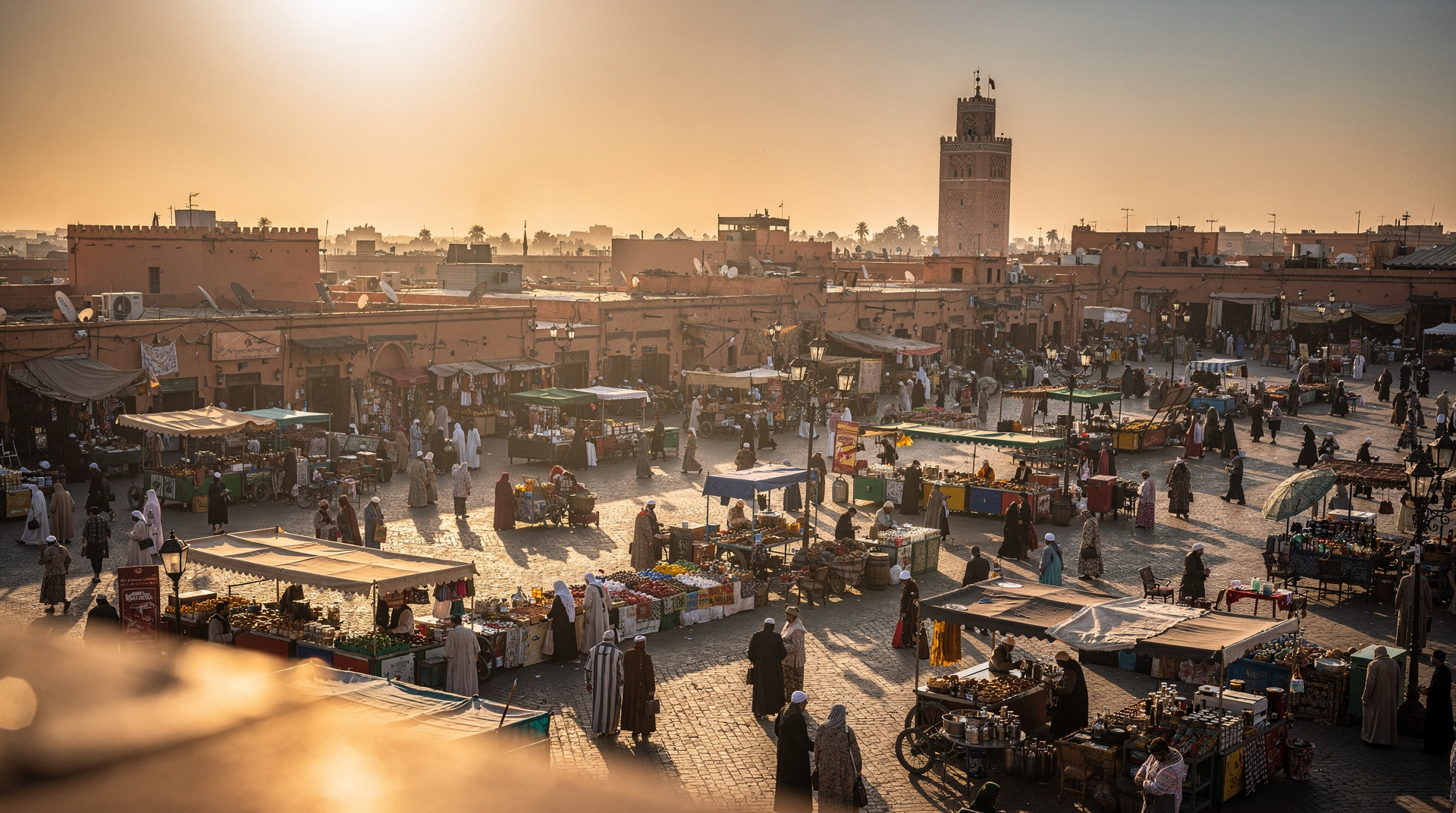
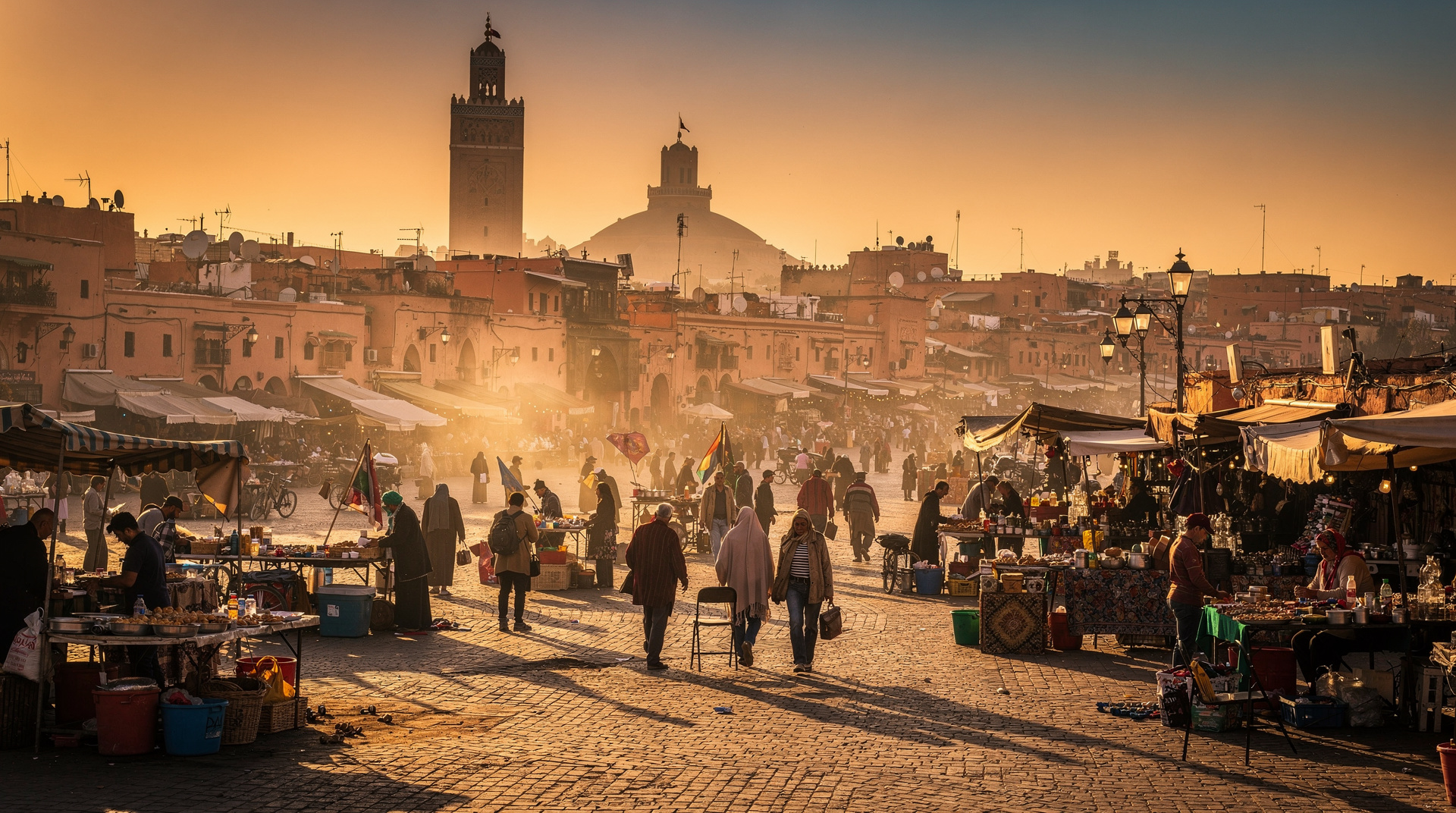
Peak heat. Daytime highs of 38–43°C are standard, with brief spikes to 45°C possible. The medina streets trap heat. Rooftop terraces in direct sun are unusable at midday. The only workable schedule is early morning (7–10am) and evening (after 7pm) for any outdoor activity. Riad pools and hammams become the midday strategy. This is not a reason to cancel a July Marrakech trip — it’s a reason to plan it differently.
Fes
Similar heat to Marrakech. 36–40°C days, 22°C evenings. The Fes medina in July requires the same early-morning/late-evening approach. The tanneries, often unbearable in summer heat due to the hides and chemicals, are best visited very early. Evening in Fes — the old city lit up, cafes full, restaurants opening — is genuinely atmospheric.
Chefchaouen and the Rif
July is one of the best months for Chefchaouen. Temperatures of 30–33°C are warm but not oppressive, the hillside breezes keep the medina tolerable, and the blue city fills with Moroccan domestic tourists giving the town a different energy than European-focused spring. Evenings around 22°C are perfect for the rooftop restaurants and cafes.
Atlas Mountains
The high Atlas in July is accessible and popular. Above 2,000m, temperatures are moderate at 20–25°C. Afternoon thunderstorms are a genuine hazard on high ridges — all serious Atlas hiking should be scheduled for early morning departure. Toubkal summit attempts are common in July; reputable guides insist on summit by 11am at the latest. The Aït Bougmez Valley, accessible from the central Atlas, is spectacular in July — remote, green, and far cooler than the southern plains.
Sahara (Merzouga / Erg Chebbi)
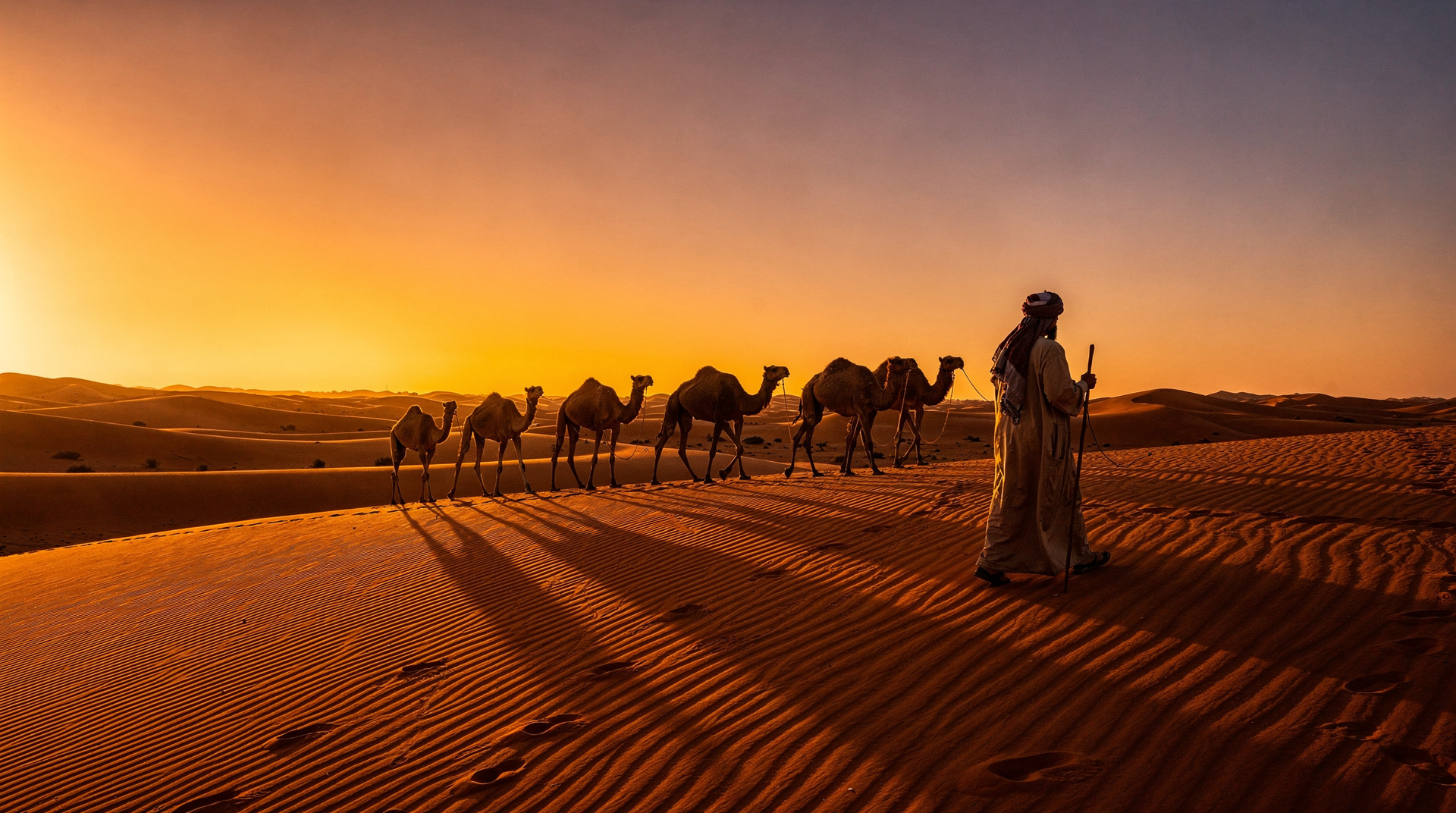
Extreme. Merzouga in July regularly reaches 45–48°C during afternoon hours. Sand temperature at the surface can exceed 60°C. Camels are visibly stressed in these conditions. If you must visit the Sahara in July — perhaps as part of a trans-Morocco route — limit outdoor exposure to before 8am and after 7pm. Luxury desert camps with air conditioning or climate control are the only sensible accommodation choice. Most experienced desert guides strongly recommend skipping the Sahara in July and August entirely.
Atlantic Coast (Essaouira / Agadir)
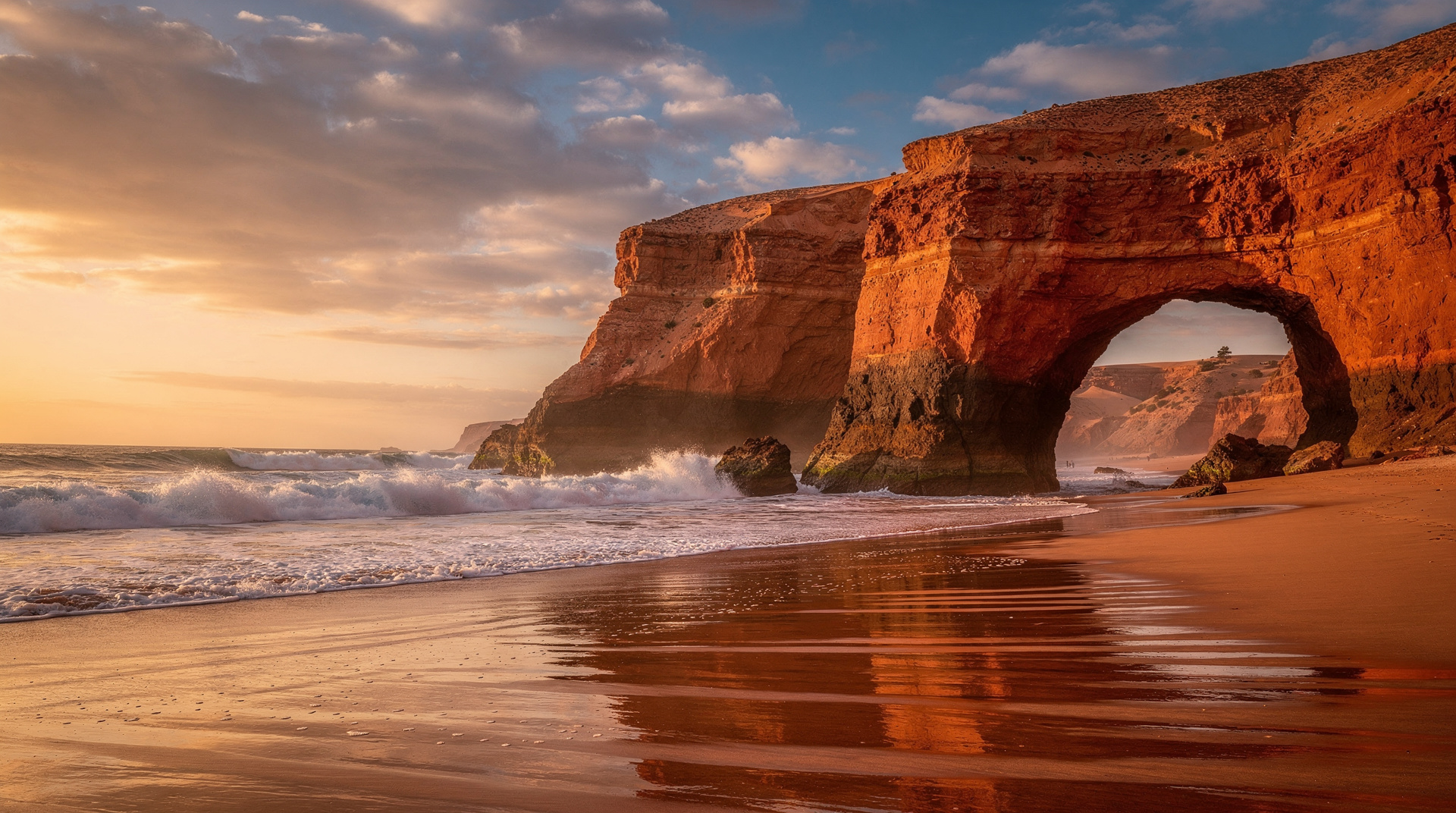
July on the Atlantic coast is the best the coast offers. Essaouira at 24–27°C, reliably windy, is excellent for wind sports and medina exploration. Agadir at 26–28°C is proper beach weather. Water temperatures reach 22–24°C. The coast is packed — Moroccan families fill the beaches and accommodation — but the atmosphere is festive rather than oppressive.
Crowds and prices in July
Atlantic coast: Peak season. Agadir, Essaouira, and Asilah are at maximum capacity in July. Accommodation books out weeks ahead during Moroccan school holidays (typically starting late June). Prices at coastal hotels and riads are at or near annual highs.
Marrakech: Counterintuitively, less crowded with international tourists than spring. European visitors avoid July heat; some of that loss is offset by Moroccan domestic tourism and Gulf visitors. Riad availability is actually reasonable in July — the heat deters European bookings and prices soften somewhat.
Fes and the north: International tourist traffic is lower than spring. The Fes medina is quieter with tour groups. Chefchaouen sees its Moroccan domestic tourism peak in July.
Sahara: Very few tourists at Merzouga in July. Desert camps have availability, some even running promotions. This creates the odd situation where July is both the worst time for the Sahara (heat) and the easiest time to book it.
Key events in July
Timitar Festival, Agadir (typically early July)
The Timitar Festival in Agadir is one of Morocco’s largest music festivals, celebrating Amazigh (Berber) cultural music alongside international world music artists. It typically runs for 4 days in early July, with free outdoor concerts at the beach promenade and ticketed indoor venue performances.
The festival celebrates the Amazigh musical tradition — the original music of Morocco’s indigenous population — alongside invited artists from jazz, reggae, and world music. If Agadir is on your July itinerary, the Timitar Festival is worth timing your visit around.
Moroccan summer holidays
From late June, Moroccan families begin their summer coastal migration. The Atlantic beach towns — Agadir, Mehdia, Asilah, Moulay Bousselham — fill with extended family groups. This isn’t a named event but it defines July’s coastal atmosphere: busy, local, festive, and a genuine window into how Moroccan families spend their holidays.
Best things to do in Morocco in July
Beach and surf at Taghazout
Taghazout, 20km north of Agadir, is Morocco’s surf capital. July brings consistent swell to the various point breaks, warm water, and a beach town atmosphere that peaks in the summer months. Surf lessons are widely available; multi-day camp packages are common.
Chefchaouen at the right temperature
July in Chefchaouen is genuinely comfortable at 30–33°C. The blue medina in July light is excellent. Mornings before 10am and evenings are the sweet spots. The day trip to Akchour waterfalls is a July highlight — a 2-hour hike to a natural bridge and swimming holes that are refreshing in the summer heat.
Akchour waterfalls full day trip from Chefchaouen — a full day at the waterfalls and natural bridge with local guide.
Early morning Marrakech
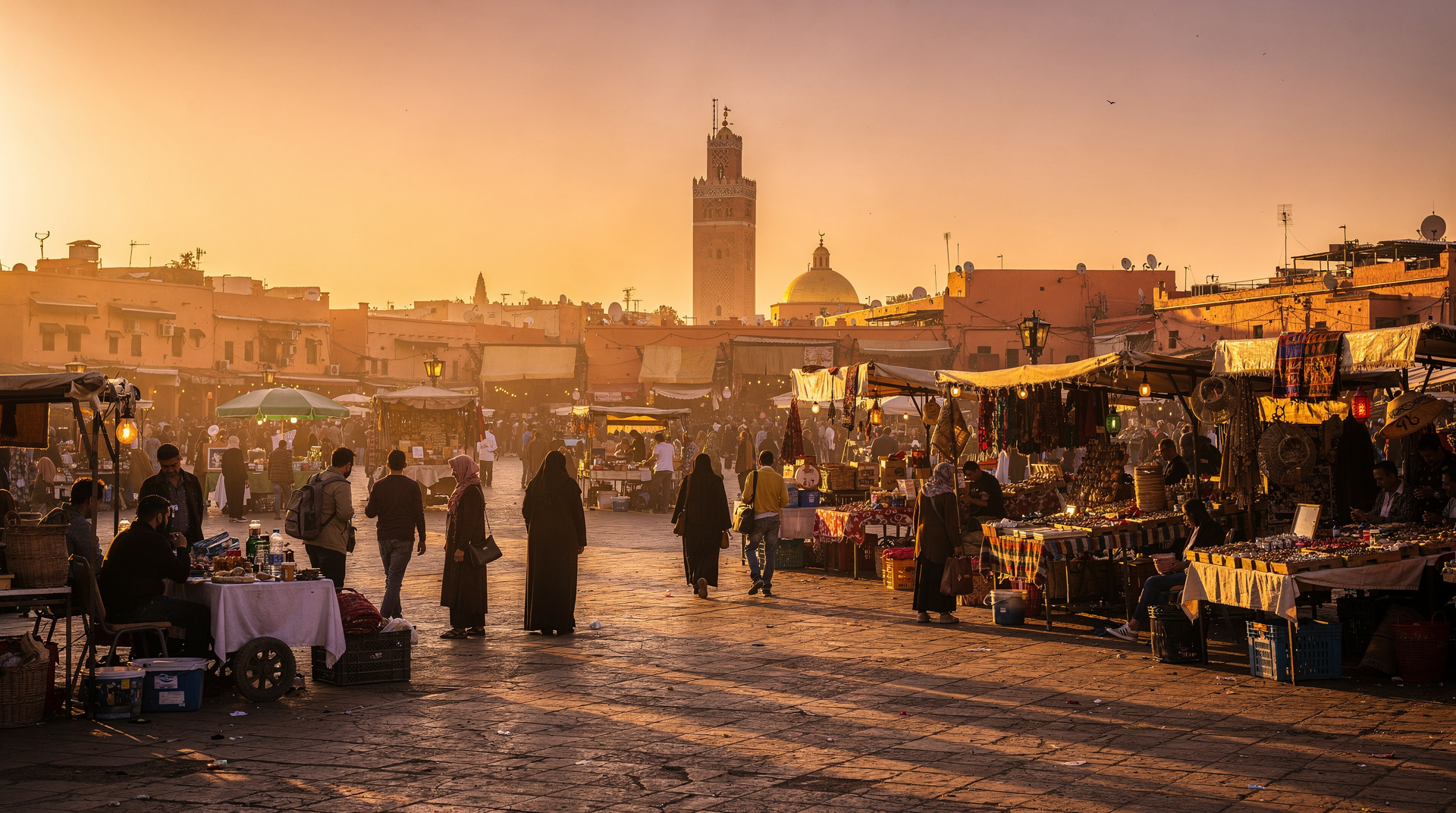
The first 3 hours after sunrise in Marrakech are legitimately excellent even in July. The souks wake slowly, the light is golden, and the temperatures are manageable. A medina tour that finishes by 10am, followed by a riad pool afternoon, is a workable July Marrakech structure.
Marrakech private walking tour — medina and souks — schedule this for 8am start to cover the most ground in the cool window.
Middle Atlas day trip from Fes (Ifrane and monkey forest)
The Middle Atlas town of Ifrane sits at 1,665m altitude and serves as a cool escape from Fes summer heat. Known for its European-style architecture (built during the French protectorate), Ifrane and the surrounding cedar forest (home to wild Barbary macaques) offer a dramatic temperature contrast to the cities below. Day trips from Fes are easy to arrange.
Middle Atlas and monkey forest day trip from Fes — Ifrane, cedar forest, and Barbary macaques in a full-day excursion.
Agadir beach and Timitar Festival
If your Morocco trip has always been about beach relaxation rather than medinas and desert, July in Agadir is actually excellent. The beach is wide and organised, water temperatures are warm, and the Timitar Festival (early July) adds a cultural dimension that most visitors don’t expect from Agadir.
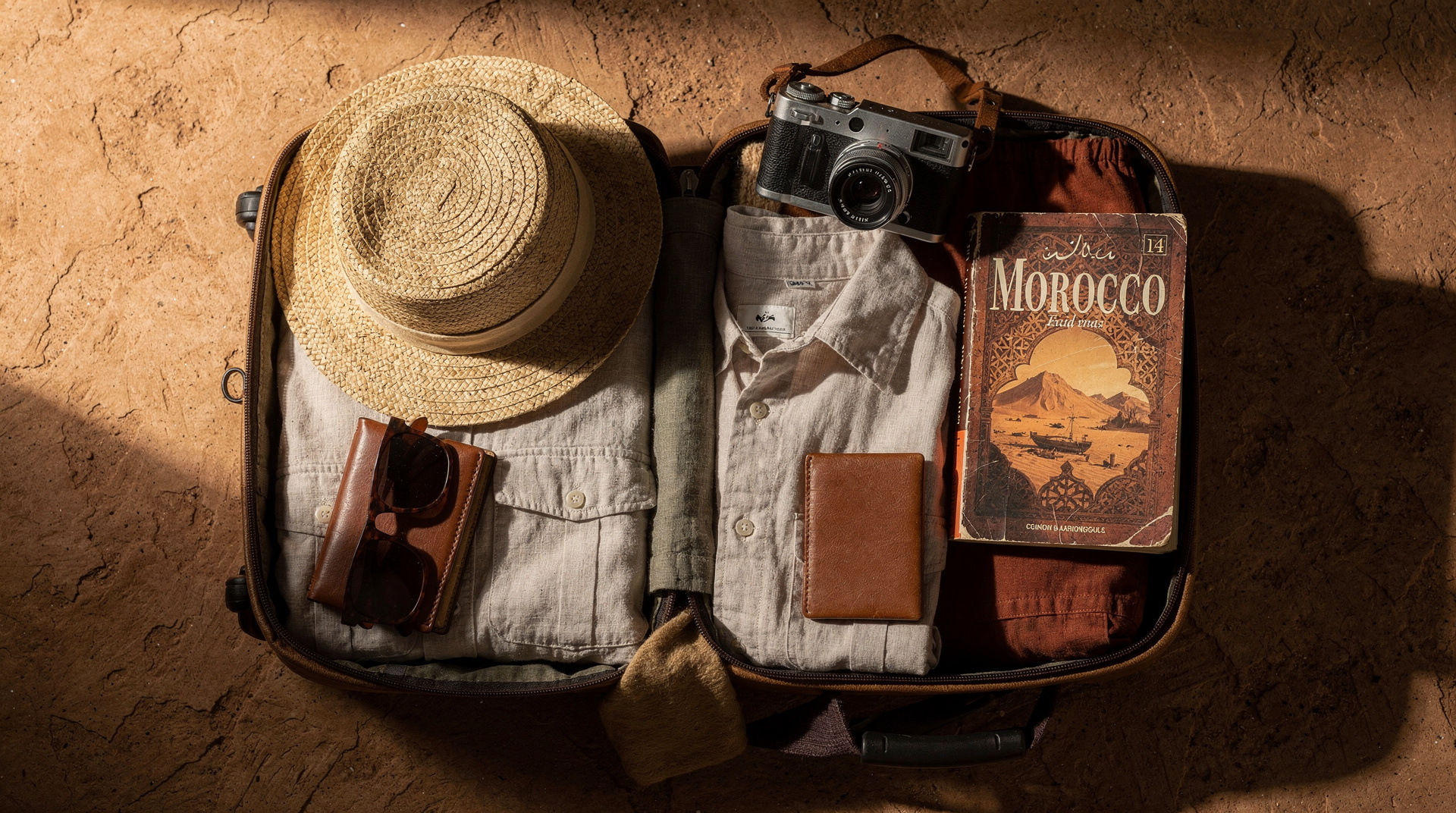
What to pack for July in Morocco
Strict summer packing:
- Lightweight, loose-fitting clothing — linen and cotton only; synthetic fabrics trap heat
- High-SPF sunscreen (50+) — UV index hits 11 regularly in July; reapply every 90 minutes outdoors
- Wide-brim sun hat — essential for any outdoor time between 10am and 6pm
- Sunglasses with UV protection — the desert and coast light is intense
- Swimwear — coast, riad pools, and Agadir beach all require it
- Light cover-up for medinas — linen works without trapping heat; shoulders and knees covered
- Hydration strategy — 2–3 litres of water minimum per day outdoors; bottled water is widely available
- Cooling products — mist spray bottle, cooling towel; genuinely useful in Marrakech medina heat
Ramadan in July
Ramadan does not fall in July in 2026 or 2027. July is entirely outside Ramadan for both years.
Sample itineraries for July
7-day coast and north itinerary: Fly into Marrakech (1 night, early morning medina visit), bus or drive to Essaouira (2 nights), continue to Agadir (2 nights for beach and Timitar Festival if dates align), return via Marrakech. This itinerary avoids inland heat almost entirely. See the 7-day Morocco itinerary.
10-day northern Morocco: Fly into Tangier or Casablanca, Chefchaouen (2 nights), Fes with early morning medina and Atlas day trip (2 nights), Marrakech (2 nights for early morning and riad afternoon), Essaouira (2 nights). All cool windows are available on this route. The 10-day Morocco itinerary covers routing.
July in Morocco: who should go, who should avoid
July works well for:
- Beach and surf enthusiasts — the Atlantic coast in July is excellent
- Chefchaouen lovers who want the blue city at its warmest
- Timitar Festival attendees in Agadir
- Travellers who run cold and welcome heat
- Budget hunters who want Marrakech riads at off-peak prices despite peak season timing
July is difficult for:
- Anyone planning a Sahara desert experience — the heat is genuinely extreme
- Medina-focused travellers who want to walk all day in Marrakech and Fes
- Families with young children in the south
- Those who find heat physically debilitating
For seasonal alternatives, the best time to visit Morocco guide compares July against the shoulder seasons in detail. The Morocco budget guide covers how coastal July prices compare to the rest of the year.
July vs June: which heat is more manageable
July runs consistently hotter than June across every inland region — Marrakech and the Sahara typically add 3–5°C over June figures, and the Sahara crosses from “extreme” into “avoid entirely” territory for most travellers. The trade-off is the coast, which is at its liveliest in July thanks to Moroccan school holidays, and Chefchaouen, which many find at its best this month. If your dates are flexible and heat tolerance is a concern, the Morocco in June guide is worth comparing directly — June offers nearly the same coastal experience with a gentler inland climate.
Surfing and coastal options beyond Taghazout
Taghazout gets most of the attention, but July’s consistent Atlantic swell also suits Essaouira and the wider region — the surfing in Morocco guide and kitesurfing at Essaouira and Dakhla cover the full range of spots and skill levels. For a trip built entirely around the coast, the surf-focused Morocco itinerary is a more realistic July template than any route that pushes inland to the Sahara.
Frequently asked questions about Morocco in July
Is Morocco too hot to visit in July? Not everywhere. The Atlantic coast and Chefchaouen stay comfortable to warm, and even Marrakech is manageable with an early-morning/evening schedule. The Sahara and long inland driving days are where July heat becomes genuinely difficult rather than just intense.
Is July a good time for a Sahara desert trip? Generally no. Afternoon temperatures at Merzouga regularly exceed 45°C and most experienced desert guides recommend avoiding the Sahara in July and August. If you must go, a climate-controlled luxury camp and strict dawn/dusk-only outdoor time are essential.