Moroccan mint tea: history, ritual, and everything you need to know
What is Moroccan mint tea made from?
Moroccan mint tea (atay) is made from Chinese gunpowder green tea, fresh spearmint (nana), and a generous amount of white sugar. The tea is brewed in a metal pot, poured from height to create foam, and typically served three times in small glasses — each glass progressively different in strength.
Atay: Morocco’s national drink and social ritual
In Morocco, tea is not a beverage. It is a ceremony, a greeting, a negotiation, a condolence, a celebration, and the rhythm that structures daily social life. The Arabic-Amazigh word for it — atay (pronounced ah-tie) — comes from the Chinese word for tea, which arrived via trade routes through the Sahara and the Atlantic ports before spreading into Moroccan culture so thoroughly that it now feels ancient.
You will drink Moroccan mint tea dozens of times during any trip of more than a few days. It will be offered before you enter a shop. It will appear when you sit in a riad courtyard. It will arrive after every meal, sometimes during a meal, and occasionally instead of a meal. Shopkeepers will pour it while you negotiate over a carpet. Hosts will keep refilling your glass before it’s empty. Refusing it gracefully requires its own skill.
Understanding what’s in the pot, why it’s poured the way it is, and what the ritual means puts you in a very different relationship with Morocco than the visitor who just sips whatever arrives.
At a glance
| Moroccan mint tea | |
|---|---|
| What it’s made from | Chinese gunpowder green tea, fresh spearmint (nana), sugar |
| Where to try it | Everywhere — riads, shops, cafés, desert camps |
| Cost to buy loose tea | Around 20-50 MAD per 100g in medina spice stalls |
| Where to learn to brew | Cooking classes in Marrakech or Fes, riad breakfasts |
| Etiquette basics | Accept the first glass; three glasses is the polite maximum |
A brief history of tea in Morocco
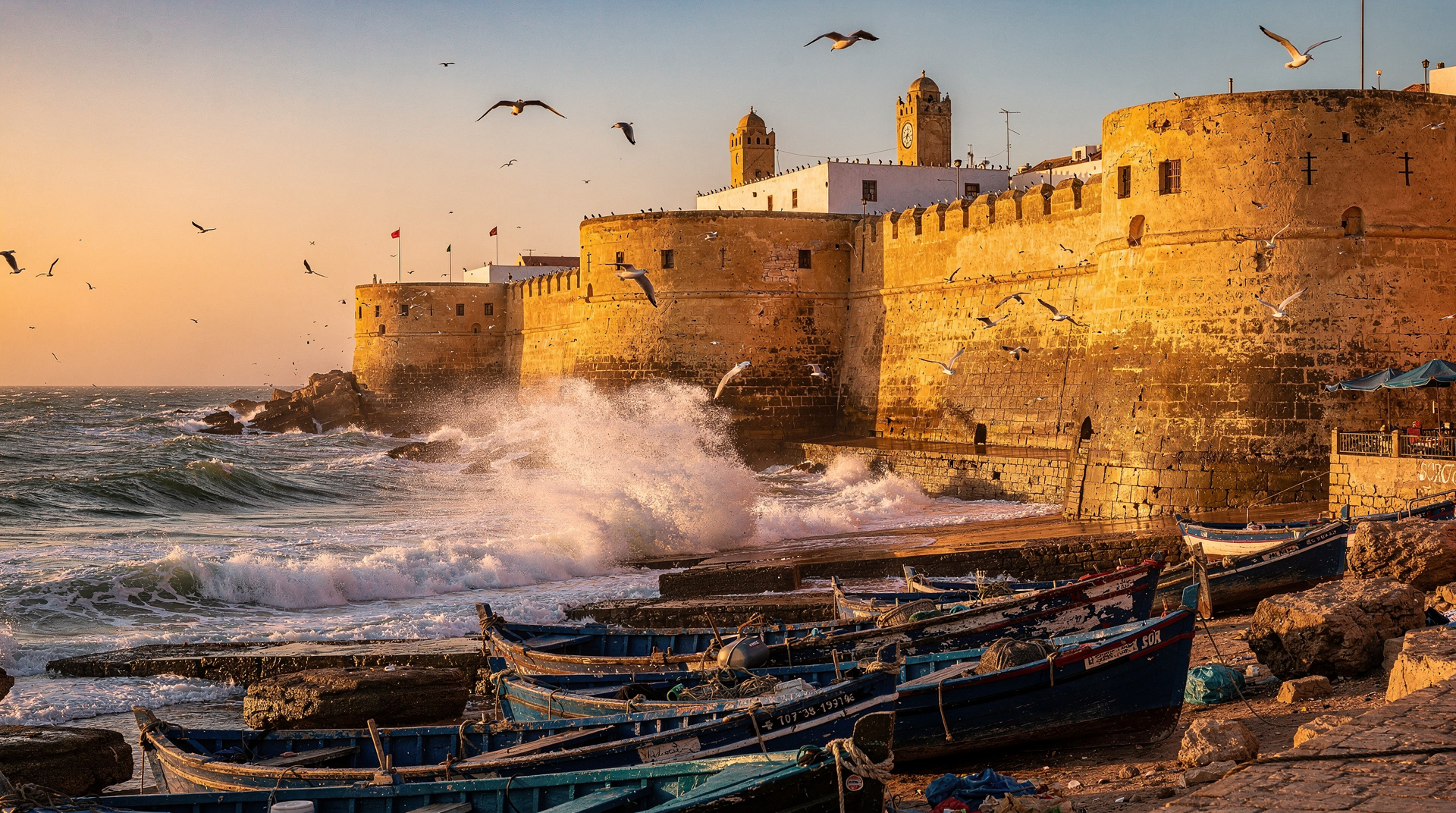
Morocco had no indigenous tea culture before the mid-18th century. The shift happened through commerce. British and Portuguese merchants, seeking new markets for Chinese tea when European trade routes were disrupted, began selling Chinese gunpowder green tea through Moroccan Atlantic ports — primarily Essaouira and Mogador — in the 1700s.
The Moroccan reception was immediate and permanent. Green tea mixed with native spearmint (nana) and local sugar created something new: not a Chinese preparation, not an English preparation, but a distinctly Moroccan synthesis. By the 19th century, tea drinking had spread from the coast to the imperial cities to the Saharan trade routes, replacing or supplementing older beverages like coffee and spiced infusions.
The social ritual around tea — the serving of three glasses, the theatrical pour, the specific etiquette of offering and accepting — developed organically over the following century. Today it’s so culturally embedded that many Moroccans describe it as something that has always existed, which says more about cultural absorption than historical chronology.
The ingredients: what goes into the pot
Chinese gunpowder green tea
The tea base is not Moroccan in origin and it’s not generically “green tea.” It is specifically gunpowder green tea (athan-naari in Darija — “fire powder”), so called because the leaves are hand-rolled into tiny pellets that resemble gunpowder, not because of their flavour.
Gunpowder green tea is produced primarily in Zhejiang province in China. The rolling process preserves freshness and gives the tea a slightly smoky, grassy character that distinguishes it from other green teas. When the pellets hit hot water, they slowly unfurl — the visual is part of the experience for anyone watching closely.
Morocco is one of the world’s largest importers of Chinese gunpowder tea. Quality varies enormously — the fine, tight pellets are better quality than the larger, loosely rolled ones. When buying tea to bring home, look for small, uniform pellets.
Fresh spearmint (nana)
The mint used in Moroccan tea is not peppermint but spearmint — a milder, sweeter variety called nana. It’s grown throughout Morocco, with particularly good versions coming from the Meknes area and the Ourika Valley near Marrakech. Markets throughout the country sell fresh nana in generous bunches for a few dirhams.
Dried mint is used when fresh isn’t available, but the result is noticeably different — more herbal and less bright than fresh. During summer, fresh nana is available daily in most Moroccan markets.
Other herbs sometimes join the pot: fresh wormwood (shiba) is added in the Saharan south for a more bitter, medicinal note; lemon verbena (lwiza) appears in coastal areas for a citrus fragrance; dried rose petals occasionally add sweetness in Marrakech preparations. These regional variations are worth trying if offered.
Sugar
Moroccan tea is sweet. Not slightly sweet — dramatically sweet by the standards of most Western tea drinkers. Traditional preparation uses whole sugar cones (sukkar nabi) that are chipped from a large conical block with a special hammer. The quantity added to a single small pot would make most visitors wince: 5-7 teaspoons per 500ml teapot is typical in traditional households.
The sweetness is not negotiable in a strict cultural sense, but it’s acceptable to ask for “shwiya sukkar” (a little sugar) — most hosts will adjust, even if they consider it unusual. Refusing sugar entirely is harder without giving offense; half the normal quantity is a reasonable compromise.
The brewing method: what the ceremony actually involves
The sequence in a traditional Moroccan tea preparation:
The first steep: Green tea pellets go into a small metal teapot (a Moroccan teapot, silver or white-metal, with a curved spout). Boiling water is poured in, and the pot is immediately drained — this first steep is discarded. This “washing” of the tea removes dust and the initial bitterness.
The second steep: Fresh boiling water goes into the same pot, now holding the washed tea leaves. The pot sits on a low flame or in a hot-water bath for 2-3 minutes. Fresh spearmint is packed in on top of the tea — generously, so the pot is nearly full of mint.
The sugar: Sugar is added to the pot (or sometimes to individual glasses). The amount is significant.
The tasting pour: The host pours a small glass for himself, tastes it, and may pour it back into the pot to mix further. This tests the balance before serving.
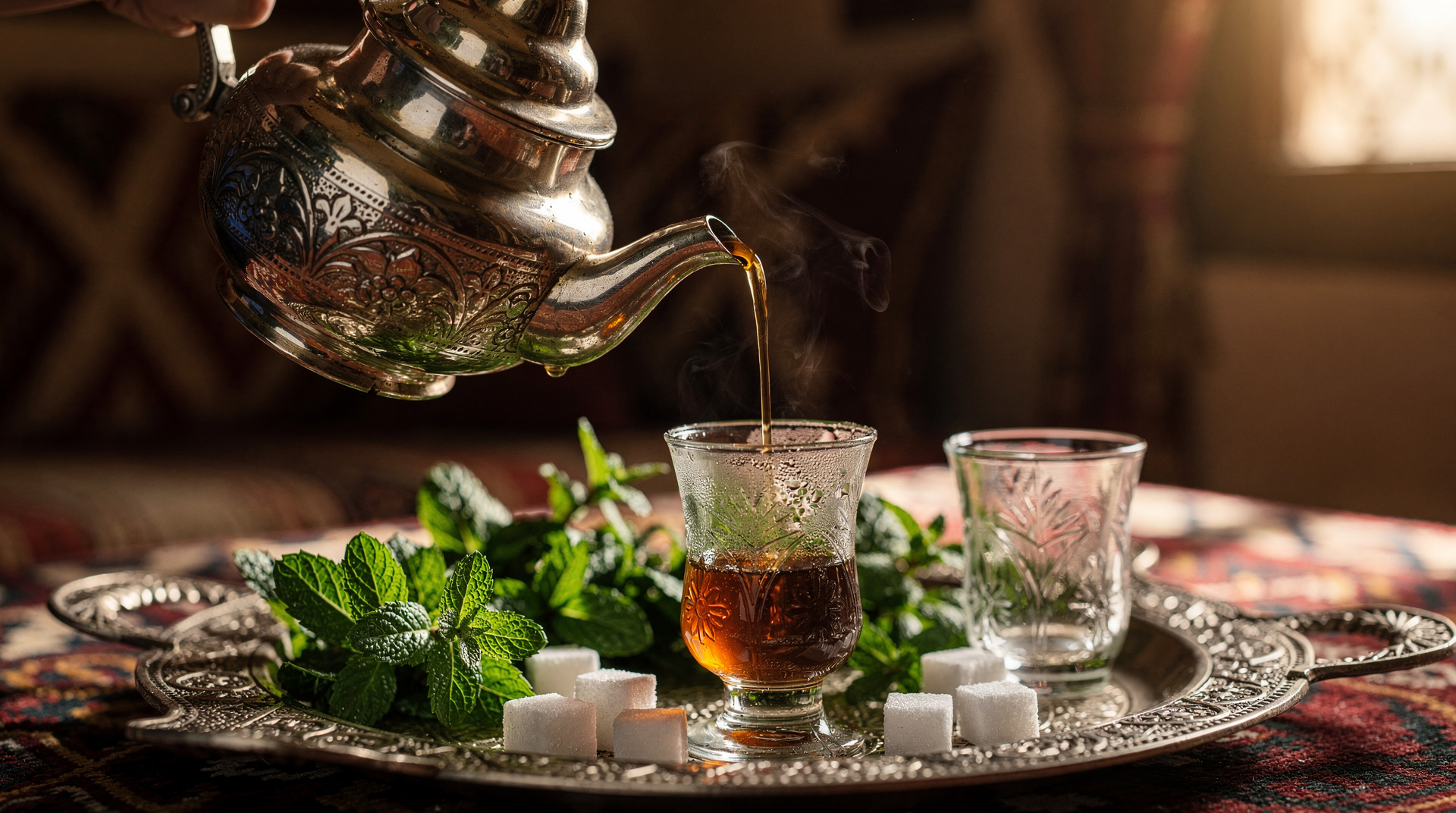
The pour from height: Tea is poured into small glasses from 30-50cm above the glass, creating a slight foam on the surface. This is not theatrical affectation — the aeration cools the tea slightly and softens the flavour. A good pour produces a visible head of foam; an excellent pour does this consistently across multiple glasses without spillage.
The three glass sequence: The same pot produces three rounds of tea, each progressively stronger and more concentrated as the leaves steep longer. Moroccan proverb: the first glass is as gentle as life, the second as strong as love, the third as bitter as death. The third glass is often considered the best by experienced tea drinkers.
Tea etiquette: what visitors get wrong
Accept the first glass: Refusing tea when it’s offered in a home, shop, or riad is a genuine social slight. You can drink slowly or take small sips, but accept. The exception is medical reasons — “I don’t drink tea for health reasons” (ana ma kashraf atay) is understood and respected.
Hold the glass correctly: The small tea glass (kass) is held with the thumb and two fingers around the rim, not cradled in the palm. The glass is intentionally hot — this is not a design oversight. The heat signals freshness.
Don’t drain it immediately: Tea is sipped slowly over 10-20 minutes. Finishing a glass quickly signals that you want more. Leaving tea in the glass signals that you’re satisfied (though your host will likely refill anyway).
Compliment the tea: “Atay bnin” (the tea is good/tasty) is always appropriate and genuinely appreciated. The quality of tea preparation reflects on the host’s character — a compliment registers.
Three glasses is the polite maximum: After three glasses, it’s acceptable to place your hand over your glass to decline a refill. This signals satisfaction rather than rejection.
Don’t discuss price during tea: If you’re in a shop and tea has been offered, you’re in a social moment before a commercial one. Immediately launching into price negotiations while tea is still being poured is considered rude. Drink first, negotiate after.
The same logic carries through the rest of a shopping trip. Our bargaining guide explains how the pace of a negotiation fits around the glass of tea, and the Marrakech souks guide shows where you are most likely to be invited to sit down. If you are invited to a meal, tea usually closes it, so the tagine guide and the Moroccan breakfast guide help you picture where the pot fits in the day. For the wider picture of hospitality, the Berber culture guide is a useful companion.
Regional variations across Morocco
Tea is consistent in its core components across Morocco but varies meaningfully by region:
Saharan south (Merzouga, Zagora, M’Hamid): The most tea-focused region, where hospitality is defined by tea. Preparations tend to be stronger, sweeter, and more ceremonial. Wormwood (shiba) is commonly added. You may be offered tea immediately upon arriving at a desert camp, regardless of the hour.
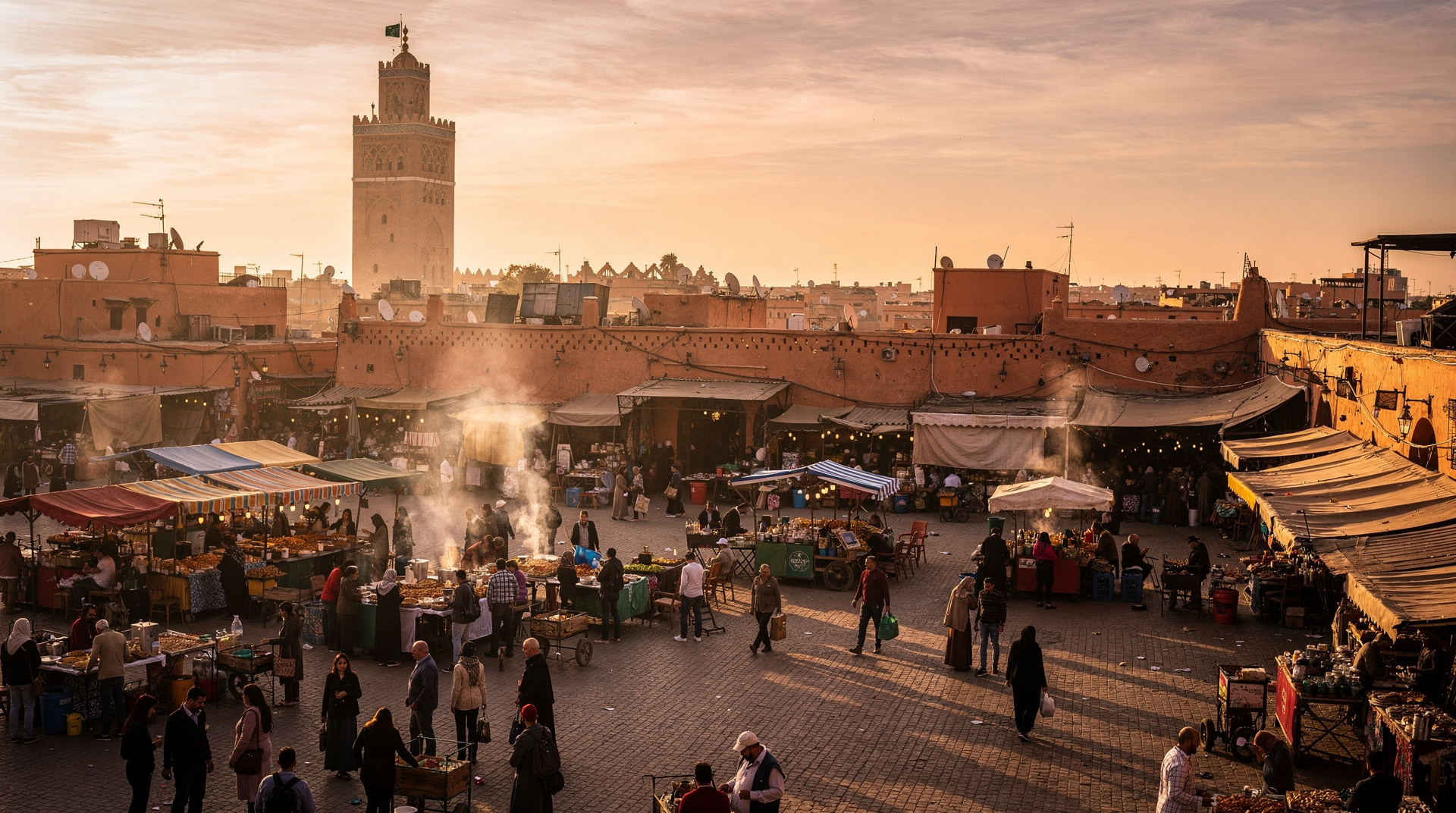
Marrakech and inland cities: Standard gunpowder-and-nana preparation, typically very sweet. Café tea in Jemaa el-Fnaa area is made by the pot and not always the most careful preparation — the best tea in Marrakech comes from riad hosts and private homes.
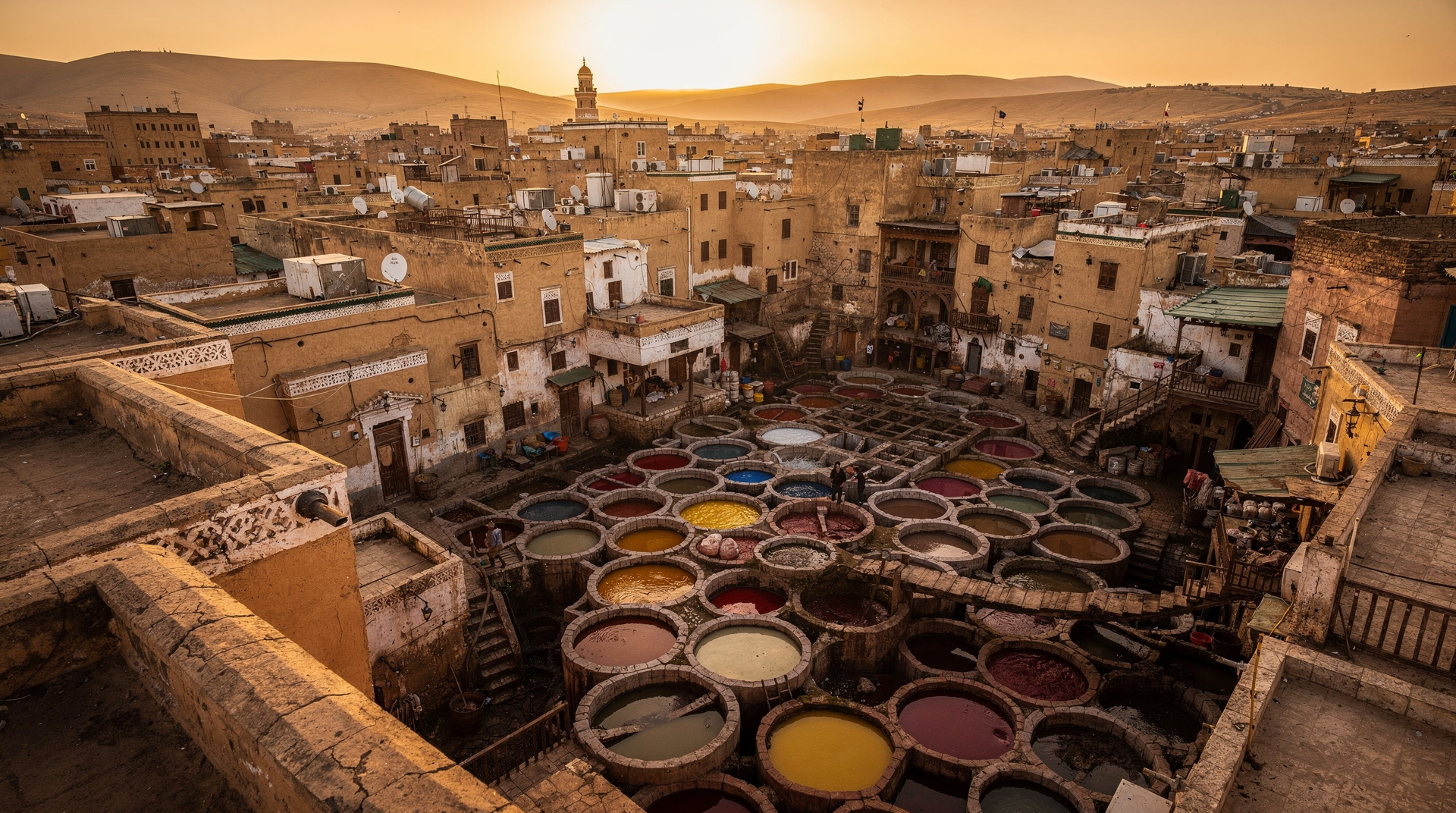
Fes and northern cities: Tea culture is equally present but perhaps slightly less theatrical about the pour. Fassi tea is often served in ornate Andalusian-influenced silverware during formal occasions.
Chefchaouen and the Rif: Mint production in the surrounding hills is excellent, and the local tea reflects this — very fresh and green-tasting.
Atlantic coast (Essaouira, Agadir): Slightly cooler and more casual tea culture in beach-facing towns. The herbs sometimes vary more freely.
If you are planning a route and want to taste these differences, the destination pages for Merzouga, Fes, Chefchaouen and Essaouira are good places to start. Drinking tea in each of them is one of the easiest ways to notice how a single national ritual adapts to local climate, trade and habit.
Where to learn to brew it properly
Several venues in Morocco offer structured tea-making experiences:
Riad morning experiences: Many riads serve mint tea as part of breakfast and will show interested guests the preparation method. This requires asking — it’s not usually offered unsolicited, but most riad staff are happy to demonstrate.
Cooking classes in Marrakech: Tea preparation is typically covered at the end of a Marrakech cooking class as part of the lunch service. La Maison Arabe and Souk Cuisine both include tea preparation in their curriculum — the Moroccan cooking workshop at La Maison Arabe closes with a proper mint tea ceremony that covers the full pour technique.
Cooking classes in Fes: Similarly, Fes cooking classes based in riads will include tea service that can be observed and discussed with the host — the Flavors of Fez market visit and cooking class pairs the spice souk visit with hands-on tea preparation in a traditional riad setting.
Tea shops in Marrakech medina: Several shops in the spice souk area of the Marrakech medina will brew tea and explain the product if you engage them — though you’ll be shown the premium-priced gunpowder varieties they’re selling.
What to buy: selecting tea to bring home
Gunpowder green tea
Buy from Moroccan medina spice vendors rather than supermarkets — the turnover is higher and quality is more consistent. Ask for “atay” or “gunpowder” and specify whether you want the smaller (finer) or larger pellet grade. Smaller pellets generally indicate higher quality.
Packaging: loose tea in a sealed bag or tin is better than commercially packaged tourist versions, which are often older stock. Price: 20-50 MAD per 100g in medina spice stalls.
Avoid: tea sold in decorative tourist tins at a significant premium — you’re paying for the packaging, not the tea quality.
Fresh nana (spearmint)
Not practical to bring home in most cases, but dried Moroccan spearmint is available from spice vendors and keeps for 6 months in a sealed container. The flavour is inferior to fresh but works for home brewing. Price: 10-20 MAD per 50g.
Sugar cones
Traditional Moroccan sugar cones (qaleb) can be bought in medina markets and make an excellent souvenir — they’re visually distinctive and produce the proper texture for traditional tea. Less practical to transport than tea, but if you have space in checked luggage, a wrapped cone travels well.
Teapots and glasses
Moroccan metal teapots (available everywhere from 50 MAD for basic to 400+ MAD for elaborate silver-plated versions) and small tea glasses (koussat) are the practical kit for brewing at home. The pots are functional, not just decorative — the curved spout is specifically designed for the high pour.
Practical tip: the engraved silver-look teapots sold in tourist areas are often aluminium or white-metal. Fine for actual use (they hold heat well), but don’t assume they’re sterling silver. The genuinely silver Fassi teapots are sold by metalworkers in Fes’s Seffarine souk and cost significantly more.
Tea in context: connecting it to your Morocco trip
Moroccan tea is one of the most direct points of entry into the culture. Every time someone pours tea for you — in a shop, a riad, a desert camp, a local home — it’s a genuine social act, not a tourist performance. Receiving it with knowledge and appropriate etiquette changes the interaction.
The Marrakech destination guide covers the city’s café culture and where to sit with tea and watch the medina operate. The street food guide for Marrakech touches on harira as the savoury companion to tea in the evening food culture. The Fes cooking classes guide puts tea in the context of a full Moroccan meal.
If you plan to buy tea, mint or sugar to take home, the Moroccan spices guide explains how the spice stalls work, and the tipping guide helps when a host or guide has gone out of their way to serve you.
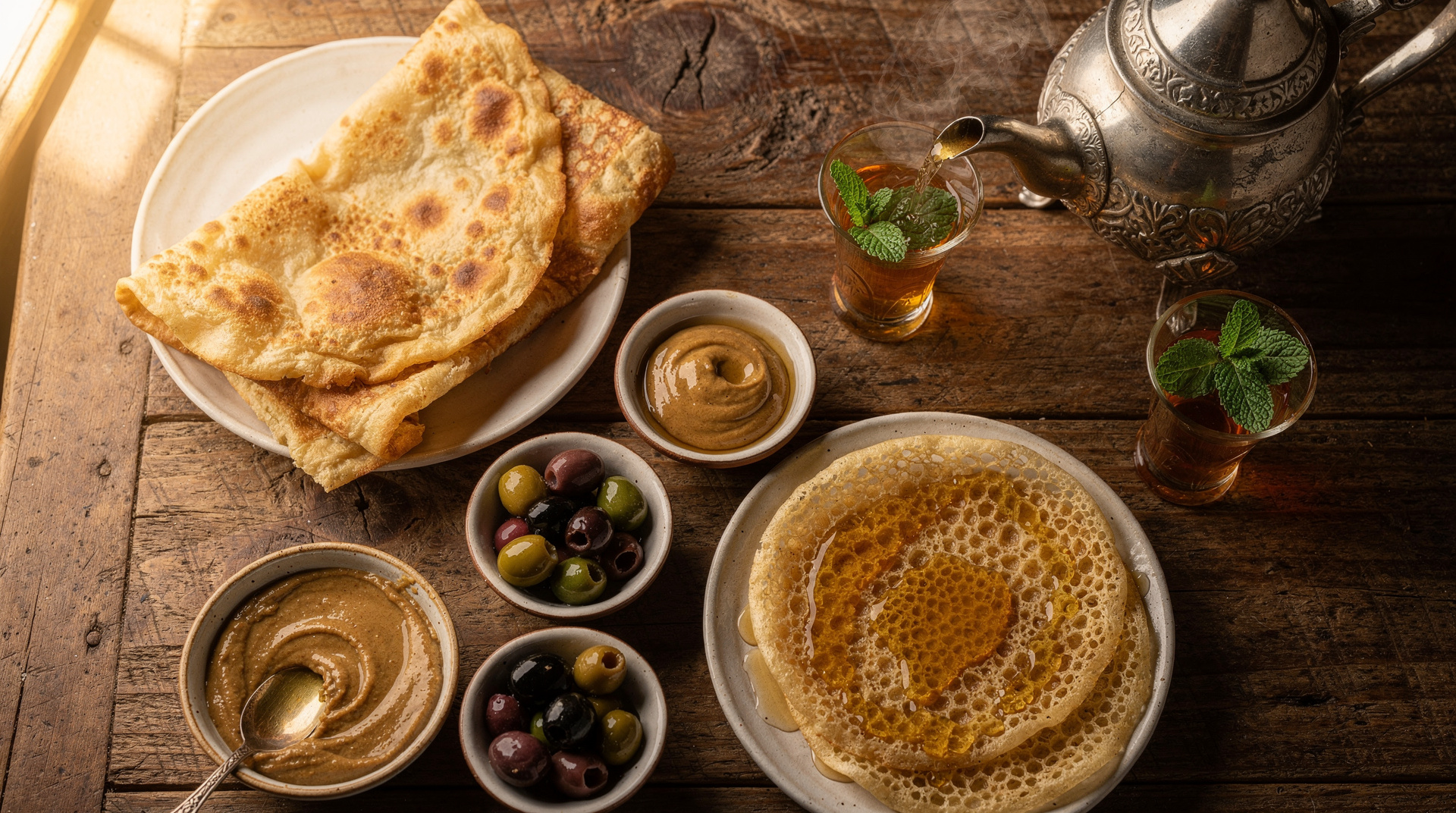
For visitors interested in the broader world of Moroccan food culture, the argan oil experience guide covers amlou — the argan-almond-honey paste that is the definitive companion to mint tea in southern Morocco.
Making it at home: does it taste the same?
Recreating Moroccan mint tea outside Morocco is possible but the result is rarely identical, and understanding why helps set expectations. Fresh nana spearmint, grown in Moroccan soil and climate, has a brighter, sweeter character than most spearmint sold abroad — substituting standard supermarket mint gets close but not exact. Gunpowder green tea travels well and is the easiest ingredient to replicate faithfully, since the same Zhejiang-sourced tea is exported globally.
The pour matters more than most home brewers assume. Pouring from height isn’t just presentation — it aerates and slightly cools the tea, softening the bitterness of the concentrated second and third steeps. Pouring straight from a low height into the glass without that aeration step produces a flatter, more bitter cup even with identical ingredients.
A reasonable home approximation: use a metal teapot if you can source one (the curved spout genuinely helps the pour), rinse the tea leaves with a first short steep and discard it, then steep fresh boiling water with a generous handful of spearmint for 3-4 minutes before adding sugar to taste and pouring from as much height as you can manage without spilling.
Frequently asked questions about Moroccan mint tea
Does Moroccan mint tea contain caffeine?
Yes. The base is Chinese gunpowder green tea, so each glass carries a moderate caffeine dose — generally less than a cup of coffee but more than a typical herbal infusion. If you’re sensitive to caffeine late in the day, the evening rounds after dinner are worth pacing yourself on.
Is Moroccan mint tea always this sweet, or can I ask for less sugar?
Traditional preparation is very sweet by most visitors’ standards. It’s acceptable to ask for “shwiya sukkar” (a little sugar) in a shop or café setting, and most hosts will adjust. In a private home, sugar levels are more fixed to the host’s taste, and asking for a major change is a bit more awkward, though rarely refused outright.