Street food in Marrakech: the complete honest guide
Is the street food in Marrakech's Jemaa el-Fnaa safe to eat?
Yes, with common sense. Stalls that are busy, cooking to order, and showing fresh turnover are generally safe. Avoid pre-plated food that's been sitting out, the snail and sheep head stalls if you're sensitive to offal, and any stall that aggressively pulls you in. Prices on the main square run higher than in the surrounding streets — know what you're ordering before you sit.
Jemaa el-Fnaa after dark: Morocco’s greatest food show
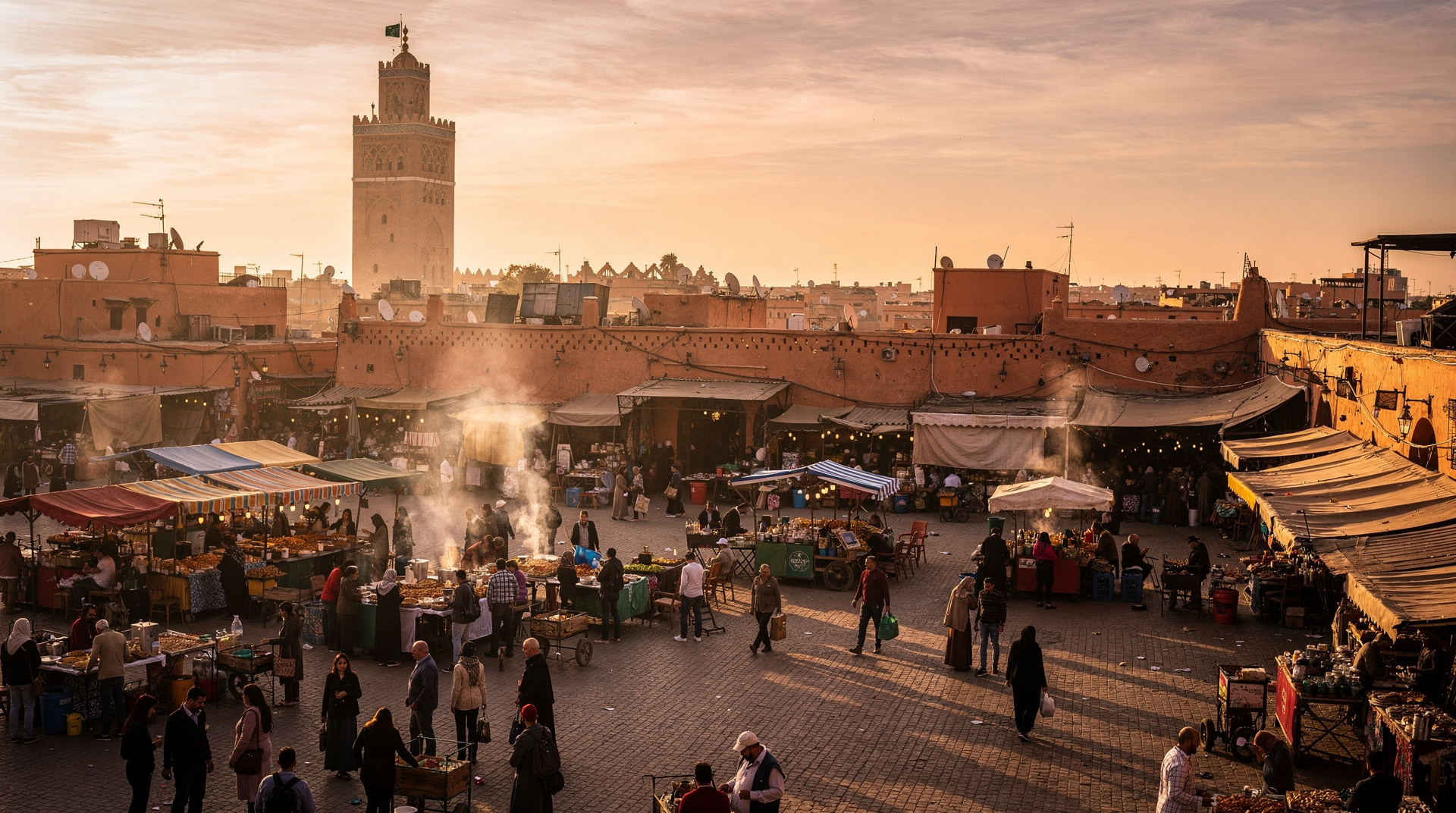
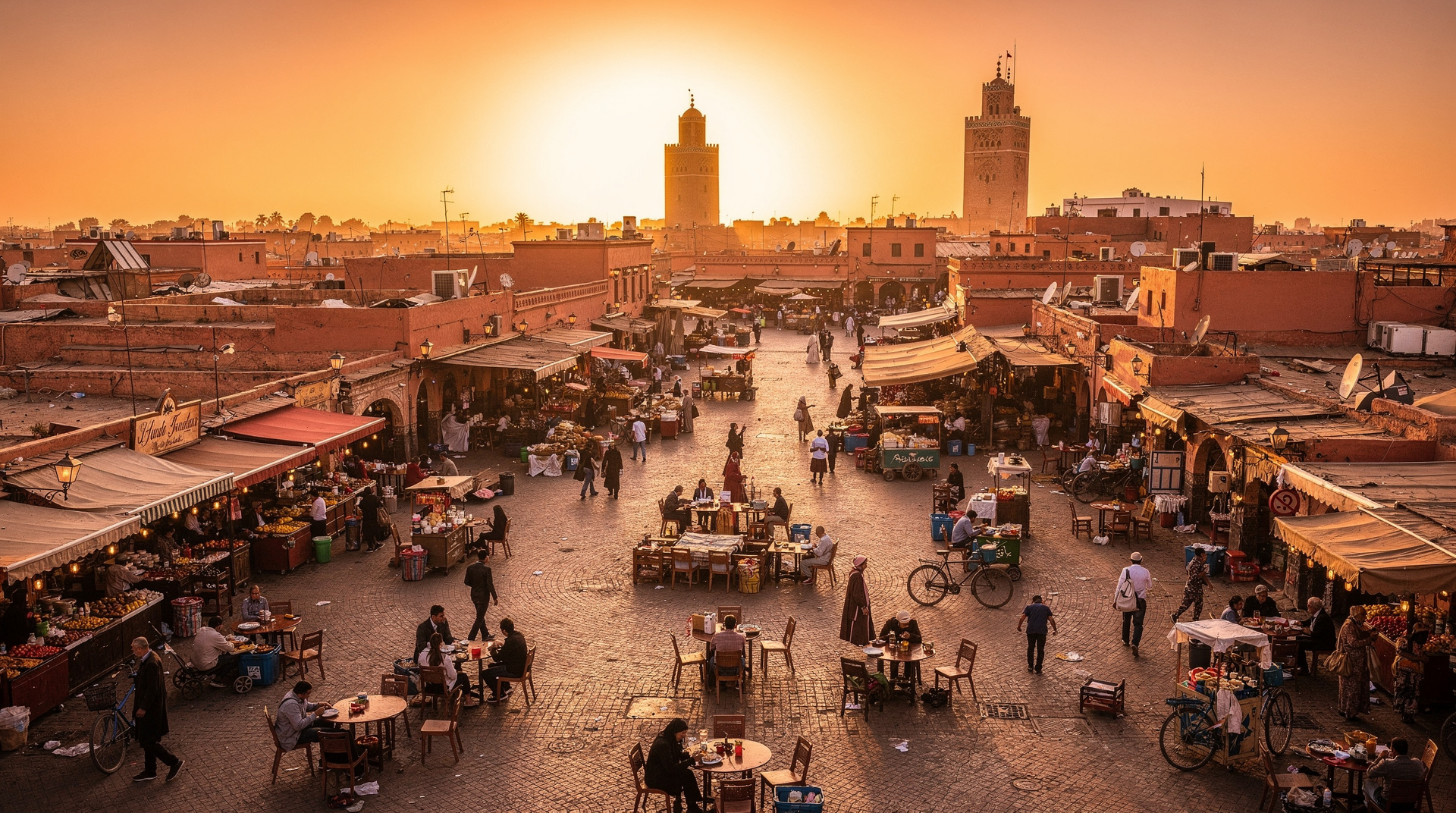
Every evening around 6 pm, Jemaa el-Fnaa transforms. During the day, the UNESCO-listed square is orange juice sellers, snake charmers, and fortune tellers. After dark, roughly 100 food stalls take over the central section, their coal-fired grills producing simultaneous columns of smoke visible from the rooftop terraces above. This is Morocco’s most theatrical eating experience — a nightly street food market that has operated in some form for centuries.
The noise, the smoke, the competing calls from stall vendors, and the chaos of 10,000 people eating together under the open sky are all part of it. Jemaa el-Fnaa is not the cheapest place to eat in Marrakech, nor necessarily the best food. But the experience — watching gnaoua musicians and acrobats between bites of lamb brochette, with the Koutoubia Mosque minaret lit against the dark sky — is genuinely unrepeatable.
This guide tells you exactly what to eat, what to avoid, what it costs, and where to go for better versions of the same food a few streets away.
| At a glance | |
|---|---|
| Where | Jemaa el-Fnaa square, Mechoui Alley, and the streets toward Bahia Palace and Bab Doukkala |
| Cost | Around 80-150 MAD for a proper feed on the square, 40-60 MAD in the surrounding streets |
| Time needed | The square is best after 7pm; mechoui vendors sell out by 2-3pm, so lunch there is a separate trip |
| Getting there | All within walking distance of Jemaa el-Fnaa in the Marrakech medina |
| Best time | Evening (after sunset) for the full stall scene; morning-to-early-afternoon for mechoui |
How the stalls work: the system explained
The main square stalls are numbered 1 to approximately 100, arranged in rough rows across the central section. Each stall specialises in 3-5 items and has a designated tout — usually an energetic young man — whose job is to persuade you to sit at that stall over the 99 others within visual range.
The sit-down protocol: Once you sit at a stall, you’re committed. The vendor will bring food, and leaving without ordering is rude and will create friction. Do your browsing while walking before you choose a stall and sit.
Menus and pricing: Every stall has a laminated menu with prices in dirhams. Read it carefully before ordering. Typical pricing on the main square: brochettes 30-45 MAD per skewer, harira soup 15-20 MAD a bowl, snail soup 15-25 MAD, a full mixed plate 80-150 MAD depending on what’s on it. These prices are 30-50% higher than the same food in the neighbourhood streets — you’re paying for the atmosphere.
The bread scam: Some stalls automatically bring bread to the table and charge 10-15 MAD per piece. If you don’t want it, wave it away immediately. Confirming the price of everything before ordering is the single most important Jemaa el-Fnaa eating skill.
Payment: Cash only, in Moroccan dirhams (MAD). The ATM on the north side of the square near the main road is the closest and usually has good rates.
What to eat at the Jemaa el-Fnaa stalls
Brochettes (skewered meats)
The most reliable choice at any stall. Lamb, chicken, and kefta (spiced minced meat) brochettes are cooked to order over charcoal and served with bread, harissa, and cumin salt. A good brochette is juicy at the centre with slightly charred edges. Ask for “mixed” (assortiment) to get a combination.
Look for stalls where the raw meat is visible on trays — you can see what you’re ordering. Stalls with suspicious pre-cooked meat sitting on platters are worth skipping.
Harira
The classic Moroccan tomato-lentil-chickpea soup, eaten morning, evening, and as Ramadan iftar. On Jemaa el-Fnaa it arrives in a ceramic bowl with dates and chebakia (honey-sesame pastry) — the traditional Ramadan combination that’s now served year-round. Price: 15-20 MAD. This is consistently good across multiple stalls; the recipe doesn’t vary much.
Snail soup (babouche)
This is a divisive one. Large pots of snails simmer in a medicinal-tasting broth spiced with thyme, liquorice root, cumin, and a dozen other herbs. You eat the snails with a toothpick provided. The flavour is more intensely herbal than it is snail — the broth is the point, not the protein. Vendors consider it medicinal as well as culinary (good for digestion, they’ll tell you). Price: 15-25 MAD for a bowl.
First-timers: try a small portion. It’s genuinely unusual and either delightful or unpleasant depending on your tolerance for strong herbal flavours and the textures of cooked mollusc.
Sheep head (ras el hanout preparation)
Whole sheep heads — including brain and tongue — are a traditional Moroccan working-class food that appears prominently on Jemaa el-Fnaa. This is exactly what it looks like. Vendors will portion out tongue, cheek meat, brain, and ear on request.
Sheep cheek and tongue are genuinely excellent — deeply flavoured, slow-cooked meat with no gamey taste. Brain is smooth and rich; ear is mostly cartilage. If you’re curious about offal but cautious about the experience, order cheek meat (khed) only.
Fried fish and seafood
Several stalls near the edges of the square sell fried sardines, calamari, and small whole fish. The quality varies more than the meat stalls — freshness is harder to judge. Go to a busy stall where turnover is clearly high. Fried sardines done right are crisp-skinned and sweet; done wrong they’re soggy and strong-smelling. Look for stalls with visible queuing from Moroccan customers rather than just tourists.
Merguez sausages
Thin, aggressively spiced lamb sausages with a bright red colour from harissa and paprika. Excellent in bread with cumin salt. Often combined with a brochette mixed plate.
Mechoui Alley: the best lamb in the medina
Mechoui Alley — a narrow lane near the south side of Jemaa el-Fnaa off Rue Bab Fteuh — is the single best place to eat lamb in Marrakech. A handful of underground stalls specialise exclusively in mechoui: whole lambs slow-roasted for hours in underground ovens until the meat falls from the bone.
You choose your portion — shoulder, leg, rack — and it’s weighed and chopped for you, served with cumin, salt, and bread. Nothing else. No sauce, no salad, no side dishes. The flavour of properly done mechoui is extraordinary: smoky, deeply savoury, with the fat rendered to a unctuous richness that no other cooking method produces.
Mechoui Alley vendors set up from mid-morning and run until they sell out — usually by 2-3 pm. This is a lunch destination, not an evening one. Price: approximately 120-180 MAD per 250g portion, which is more than enough for one person.
Where NOT to eat on Jemaa el-Fnaa
Stalls with aggressively persistent touts: If a vendor physically blocks your path or follows you for more than 5 metres, move on. The best stalls don’t need this approach.
Pre-plated food left in the sun: Cold brochettes that have been sitting on display, fish that clearly hasn’t moved in an hour, salads wilting in the heat. High turnover is the clearest signal of freshness.
The tourist-trap mixed plates: Some stalls push “tourist menus” — fixed price plates claiming 8-10 items for 150-200 MAD. The portions are small, the quality is variable, and the prices are inflated. Order individual items instead and you’ll eat better and spend less.
Better street food away from the square
The streets around Jemaa el-Fnaa — particularly Rue Bab Agnaou, Rue Riad Zitoun el-Kedim, and the lanes east toward the Bahia Palace — contain smaller, local-facing street food operations with lower prices and often better food:
Msemen stalls: Flaky flatbreads cooked to order on a flat griddle, served with argan oil, honey, or amlou (almond-argan paste). Price: 5-10 MAD each. Best eaten hot from the pan.
Sfenj vendors: Moroccan doughnuts — unleavened rings of fried dough — sold in bags by weight. No filling, just the dough and strong, fresh coffee from a nearby vendor. Breakfast food, but available all day. Price: 3-5 MAD each.
Bissara stalls: Thick soup of dried fava beans with cumin, olive oil, and harissa. A working-class breakfast staple available in the streets east of the medina. Price: 10-15 MAD for a bowl. Filling enough to be a meal.
Fried food vendors near Bab Doukkala: The northern medina gate area has a cluster of vendors selling fried fish, chips, and various fritters alongside a busy local market. Prices are half what you’d pay on the main square.
Guided food tours: getting beyond what you’d find alone
A guided street food tour covers more ground and more confidently than independent exploration, particularly for first-time visitors unfamiliar with what to order or how the stall system works.
The best Marrakech food tours operate after dark when the Jemaa el-Fnaa stalls are at their most atmospheric. They typically cover 6-8 tasting stops across the square and the surrounding streets, with a guide who explains each dish’s cultural context.
Book a Marrakech street food tour by night Book a night food tour and dinner on Jemaa el-FnaaFood hygiene: the honest assessment
Moroccan street food has a mixed reputation in traveller circles that is partly deserved and largely overstated. The following is an honest assessment:
High risk items: Pre-made salads that have been sitting out, shellfish on the main square (rare but occasionally present), and any dairy-based items (yoghurt, cream) that aren’t clearly cold.
Low risk items: Freshly grilled brochettes (heat kills bacteria), harira served boiling hot, bread from visible bakeries, fresh orange juice squeezed to order.
The stomach upset reality: Many travellers experience mild digestive disruption in Morocco regardless of what they eat — the change in water, the change in spice levels, and the change in fermentation practices affect microbiome balance. Staying hydrated, eating cooked food more than raw, and giving your digestive system 2-3 days to adjust is more effective than avoiding all street food.
Bottled water: Tap water in Marrakech is technically treated but carries higher bacterial load than many European or North American visitors are accustomed to. Use bottled water for drinking and teeth brushing. Fresh-squeezed juice is fine — watch that they don’t dilute it with tap water, which the best stalls don’t.
Connecting street food to the wider Marrakech food scene
Street food on Jemaa el-Fnaa is the most accessible introduction to Moroccan cuisine, but it’s a surface-level one. The cooking classes in Marrakech guide explains how to go deeper — learning the techniques behind what you ate on the square.
The Marrakech destination guide covers the restaurant scene in Guéliz (the modern neighbourhood) and the higher-end medina restaurants where Moroccan cuisine is served in a more formal context.
For visitors extending their food exploration beyond Marrakech, food tours in Essaouira cover the Atlantic coast’s very different seafood-centred cuisine, and cooking classes in Fes access the country’s most historically rich culinary tradition.
Going further: dishes, habits and neighbouring guides
Once you have tried the stalls, the dishes behind them are worth understanding. Harira is the star of the evening meal during the holy month, and the Ramadan food guide explains how it fits into iftar, while Ramadan travel in Morocco covers how stall hours and the mood of the square can change at that time of year.
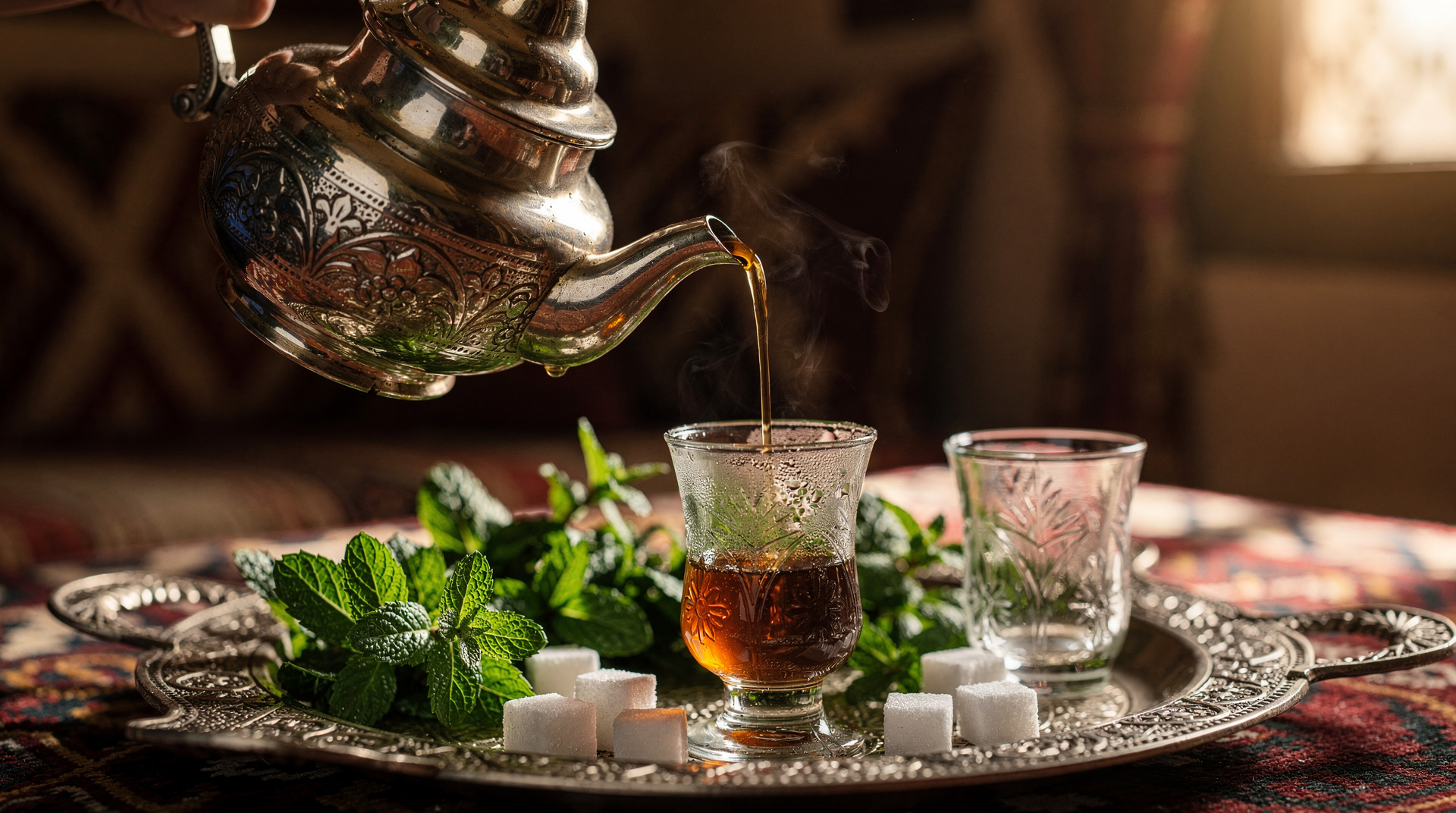
Bread comes with almost everything you eat here, so the Moroccan bread guide helps you recognise what lands on your table and why. The msemen and sfenj mentioned above also belong to the morning ritual described in the Moroccan breakfast guide, which is a good way to start a day after a heavy night on the square. To finish a meal the local way, read about the mint tea ritual.
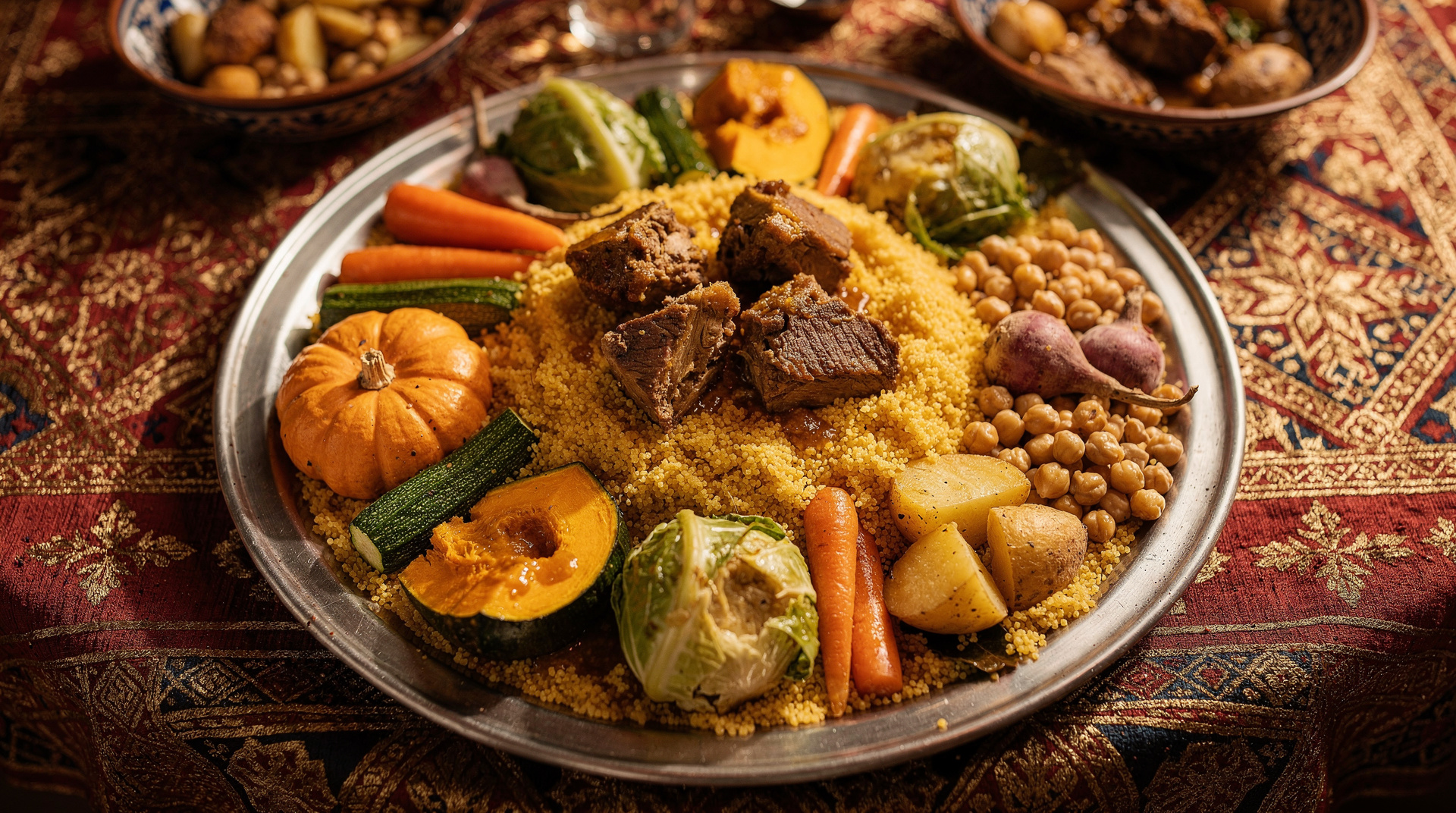
Street food shows only part of the national table. If the slow-cooked dishes tempt you, the tagine guide and the couscous guide explain what to order in a sit-down restaurant. Comparing notes with street food in Fes is also instructive, since the two cities cook and serve in quite different ways.
Eating well here is also about handling the surroundings calmly. The bargaining guide and the scams to avoid in Morocco cover the pushy side of the medina, and money and currency in Morocco helps you carry the right cash for stalls that take nothing else. After dinner, the Marrakech souks guide suggests where to wander next, and the day trips from Marrakech page is useful if you want to balance the city’s intensity with a quieter day outside it.
Practical summary
- Best time: After 7 pm when stalls are fully operational
- Budget: 80-150 MAD for a proper feed on the square, 40-60 MAD in surrounding streets
- Cash: Bring enough MAD — no card payment at stalls
- Language: French and some English from most stall vendors; basic Arabic phrases are appreciated
- Seating: You can stand and eat; stall seating (benches along long tables) is available for those who prefer it
- Dress: No requirements, but respectful clothing makes interactions smoother
- Going alone: Entirely fine and common — solo travellers are not unusual at Jemaa el-Fnaa
The square rewards multiple visits at different times. Come once for a full exploratory dinner, come again for a quick harira before a long walk through the souks, and come a third time just to sit on a rooftop terrace with mint tea and watch the whole operation from above.
Frequently asked questions about Street food in Marrakech
What’s the best time of day to eat at Jemaa el-Fnaa?
After 7pm, once all the food stalls are set up and running at full capacity. Arriving right at sunset lets you watch the transformation from tourist square to food market, and the atmosphere builds as the evening goes on.
Can I eat at Jemaa el-Fnaa on a tight budget?
Yes. A bowl of harira (15-20 MAD) or a msemen from a side-street vendor (5-10 MAD) is a genuinely satisfying cheap meal. Sticking to individual items rather than the fixed “tourist menu” plates keeps costs down while still delivering a good meal.