Food tours and eating in Essaouira: the honest guide
What should I eat in Essaouira?
Fresh-grilled fish from the port stalls is non-negotiable — sardines, sea bass, and calamari cooked to order. Beyond the port, look for traditional Jewish-Moroccan dishes like seffa (sweet couscous with fish), fish bastilla, and the local spiced fish tagine. Budget 80-150 MAD per person for a serious port meal.
At a glance
| Where | The port grill stalls, a 10-minute walk from the medina’s main gates |
| Cost | Around 80-150 MAD per person for a port fish meal; 120-500 MAD for a sit-down restaurant |
| Time needed | 2-3 hours for a proper port lunch and spice market wander |
| Getting there | On foot from any medina riad; Essaouira is roughly 2.5 hours from Marrakech by CTM bus |
| Best time | 11 am-2 pm for the port stalls; year-round, but the Gnaoua Festival in late June pushes everything later |
Why Essaouira has the best seafood in Morocco
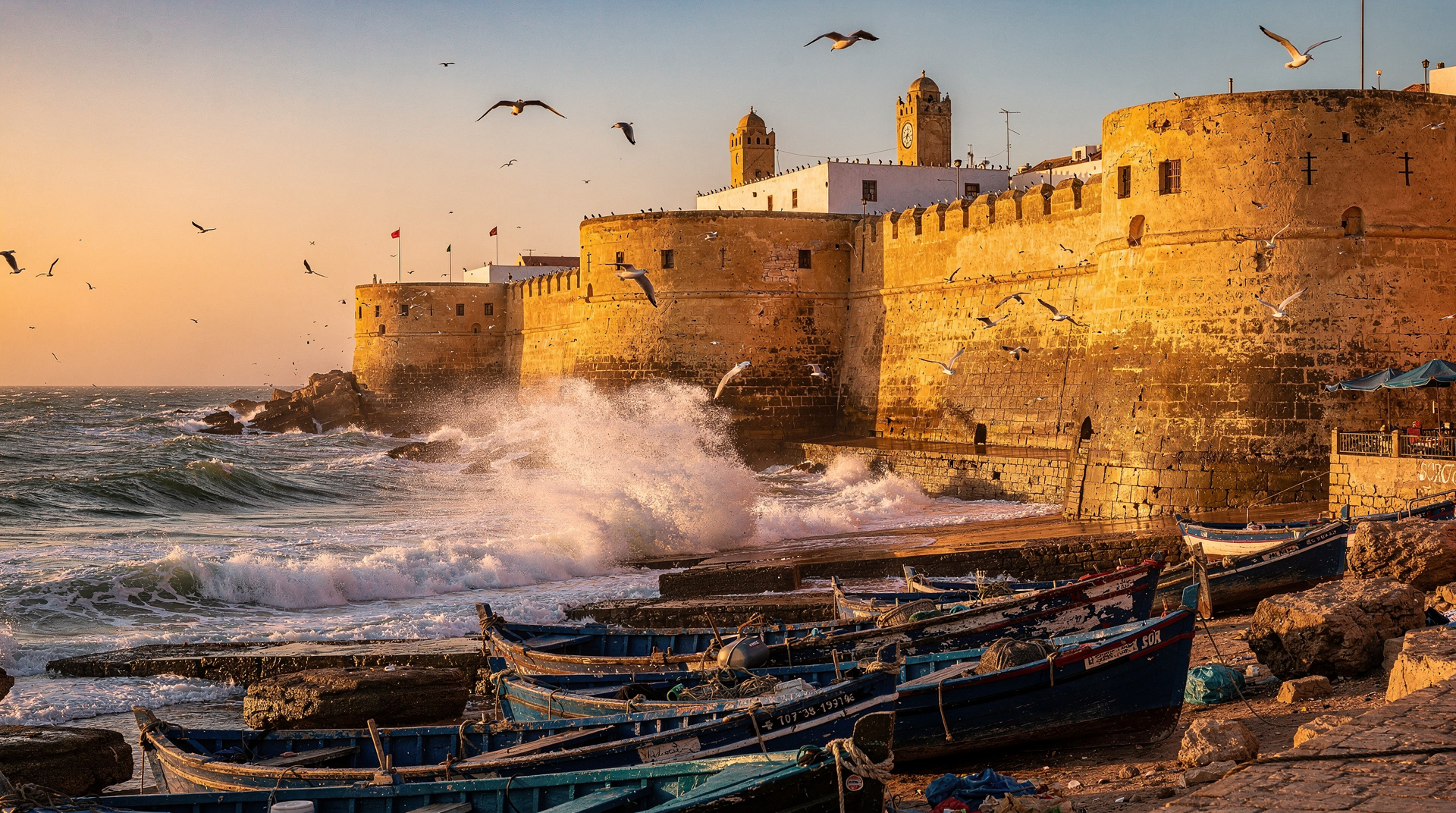
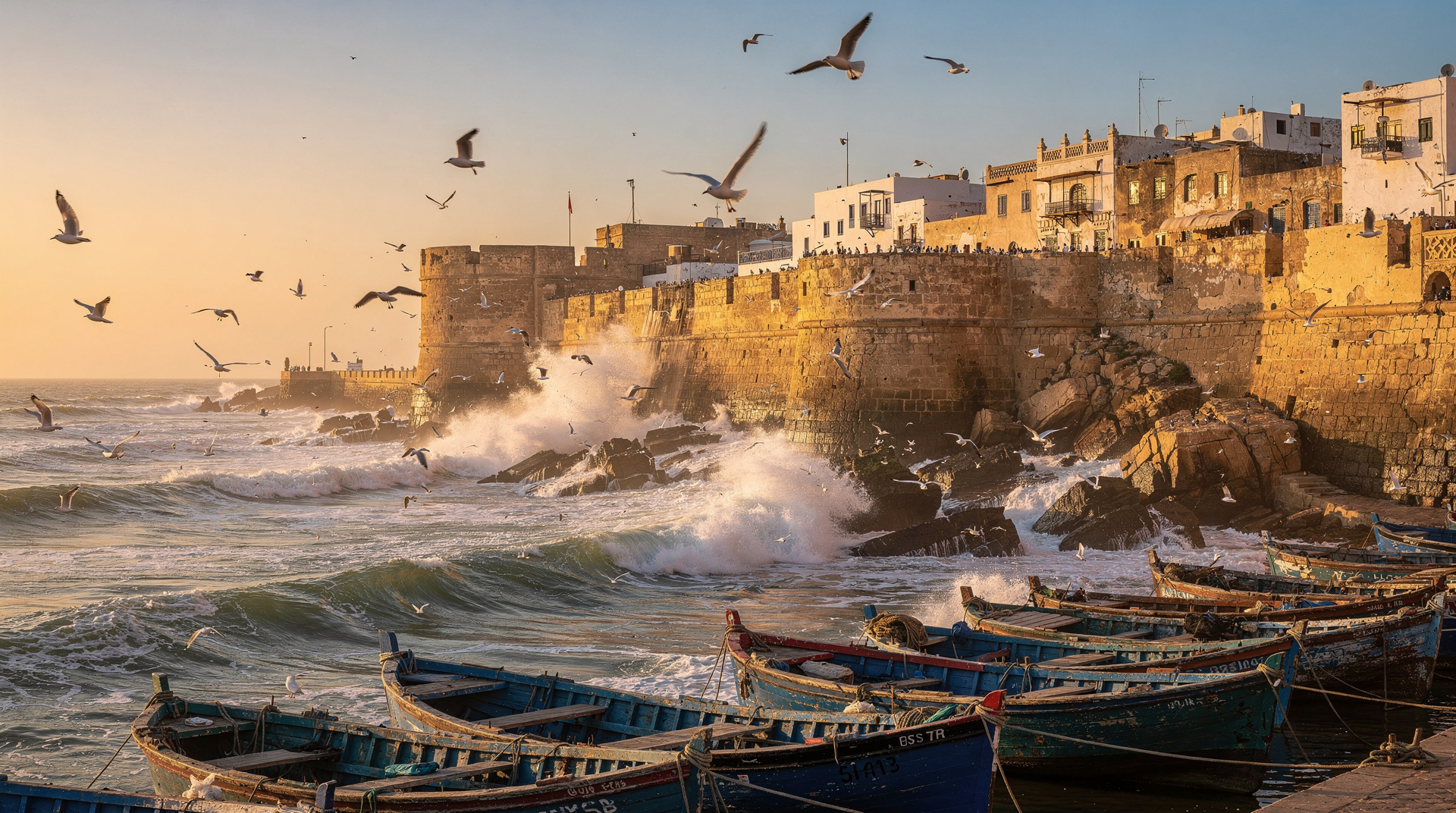
Morocco has a long Atlantic coastline, but Essaouira distils the sea-to-plate experience better than anywhere else in the country. The fishing port sits a 10-minute walk from the medina’s main gate. Every morning, blue-painted wooden boats bring in the night’s catch — sardines, sea bass, bream, sole, squid, octopus, and lobster in season — directly to buyers who include the stall vendors who will grill it for lunch. The distance between sea and plate is genuinely short.
The city’s food culture also carries layers that pure fishing towns lack. Essaouira (historically known as Mogador) was home to a substantial Jewish community for centuries, a result of the Portuguese, then Moroccan, then colonial-era role the city played as an Atlantic trading port. The Jewish-Moroccan culinary tradition that developed here — fish bastilla, seffa with sardines, sweet-savoury fish dishes that reflect a fusion unavailable elsewhere — survives in a handful of restaurants and in the home cooking of Souiri (Essaouira native) families.
The fishing port: how it works
The port sits at the northern edge of the medina, accessible through the blue fishing gate past the ramparts. A working commercial port, it operates on fishing schedules rather than tourist timing — arrive between 7-10 am to see boats unloading, or 11 am onwards when the lunch grills are operational.
The fish auction (criée): The commercial fish auction typically runs from early morning. Buyers from restaurants, market stalls, and regional distributors purchase directly from boat captains. Non-commercial visitors can observe from the edges — this is not a tourist activity, but it’s entirely public. The noise, the pace, and the negotiation happening in Darija make it fascinating even if you understand nothing.
The port grill stalls: The row of informal grill stalls just inside the port area is Essaouira’s defining food experience. You choose your fish from the display of the morning’s catch — they’re laid out on ice and priced by weight — and the vendor grills it immediately over charcoal. The meal comes with bread, harissa, a simple tomato salad, and olives.
This is not fine dining. You’re eating at a plastic table steps from working fishermen. The fish is possibly the freshest you’ll eat anywhere in Morocco. Budget 80-150 MAD per person depending on what you choose.
What to order at the port stalls:
- Sardines: the Essaouira baseline — plentiful, cheap, charred properly, served whole. Price: 30-50 MAD per portion (6-8 sardines)
- Sea bass (loup de mer): the premium option — ask for it grilled whole with just salt and lemon. Clean, sweet flesh with none of the fishiness people expect from Atlantic fish. Price: 60-100 MAD depending on size
- Calamari: cut into rings or served whole, often the most crowd-pleasing option for visitors less comfortable with whole fish. Price: 40-70 MAD
- Prawns and shrimp (gambas, chevrettes): grilled with garlic butter. Price varies by season and size — ask before ordering
- Lobster: available seasonally (autumn-winter primarily). Worth the price if you visit during lobster season. Always confirm the price before ordering — it’s priced by weight and can reach 200-300 MAD for a medium lobster
Jewish-Moroccan cuisine in Essaouira
The Moroccan Jewish community was one of the country’s most significant minorities until mass emigration to Israel and France between the 1950s and 1970s. In Essaouira, the Jewish presence was particularly strong — at peak, Jewish traders controlled much of the city’s European trade and constituted up to 40% of the population.
The culinary legacy of this community is unique to the region and often overlooked by visitors focused on standard Moroccan fare:
Fish bastilla (pastilla au poisson): A cousin of the Fassi pigeon pastilla, but made with fish — typically a combination of white fish, noodles (cheveux d’ange), and a sweet-savoury spiced sauce incorporating saffron, ginger, cinnamon, and sugar. The pastry is the same paper-thin warqa; the effect is entirely different. This dish exists specifically in the Essaouira-Agadir coastal area.
Seffa with fish: Seffa is sweet couscous — steamed with butter, powdered sugar, cinnamon, and raisins — traditionally served as a dessert course. The Essaouira variation pairs seffa with a spiced fish and onion sauce on the side, a combination that makes more sense on the plate than it sounds on paper.
Adafina: A slow-cooked Sabbath stew of chickpeas, eggs, and beef (or offal), left to cook overnight from Friday evening to be eaten at Saturday midday. This dish exists throughout the Sephardic Jewish world but the Moroccan version uses spice combinations (cumin, paprika, ginger) specific to the region. A handful of Essaouira restaurants offer it on Saturdays.
Kefta fish skewers: A Jewish-Moroccan variation on the standard Moroccan kefta, using minced fish (sardine or other oily fish) mixed with herbs and spices, shaped onto skewers and grilled. Lighter than meat kefta and better suited to the coastal climate.
Food tours in Essaouira: what’s available
Essaouira’s food tour offering is less developed than Marrakech’s — there are fewer operators and fewer dedicated culinary experiences. What exists tends to be integrated into broader medina walking tours rather than stand-alone food crawls.
The best approach is a guided medina tour that specifically includes food stops — visiting the spice market, the fish port, and several food vendors in the course of exploring the city’s history and architecture. This format works well because Essaouira’s medina is compact enough (one of the most walkable in Morocco) that food stops fit naturally into a walking route.
Book a guided medina walking tour of EssaouiraA good tour guide in Essaouira will take you to the spice merchants (different vendors stock the coastal spice blends used in fish tagine that don’t appear in inland markets), introduce you to an argan oil producer in the medina (Essaouira is in argan tree territory — see the argan oil cooperative guide for context), and end at the port for grilled fish.
Best restaurants in Essaouira for food culture
Les Alizés: Consistently rated as Essaouira’s finest restaurant for traditional Moroccan cooking. Housed in a beautifully restored riad on Rue de la Skala, it serves fish bastilla, octopus tagine, and a rotating daily menu. Book ahead — small room, high demand. Dinner for two: 300-500 MAD.
Chalet de la Plage: The city’s most atmospheric mid-range restaurant, set in a heritage building on the beachfront. Excellent grilled fish, good salads, and reliable service. More tourist-facing than Les Alizés but the food quality is honest. Lunch: 120-200 MAD per person.
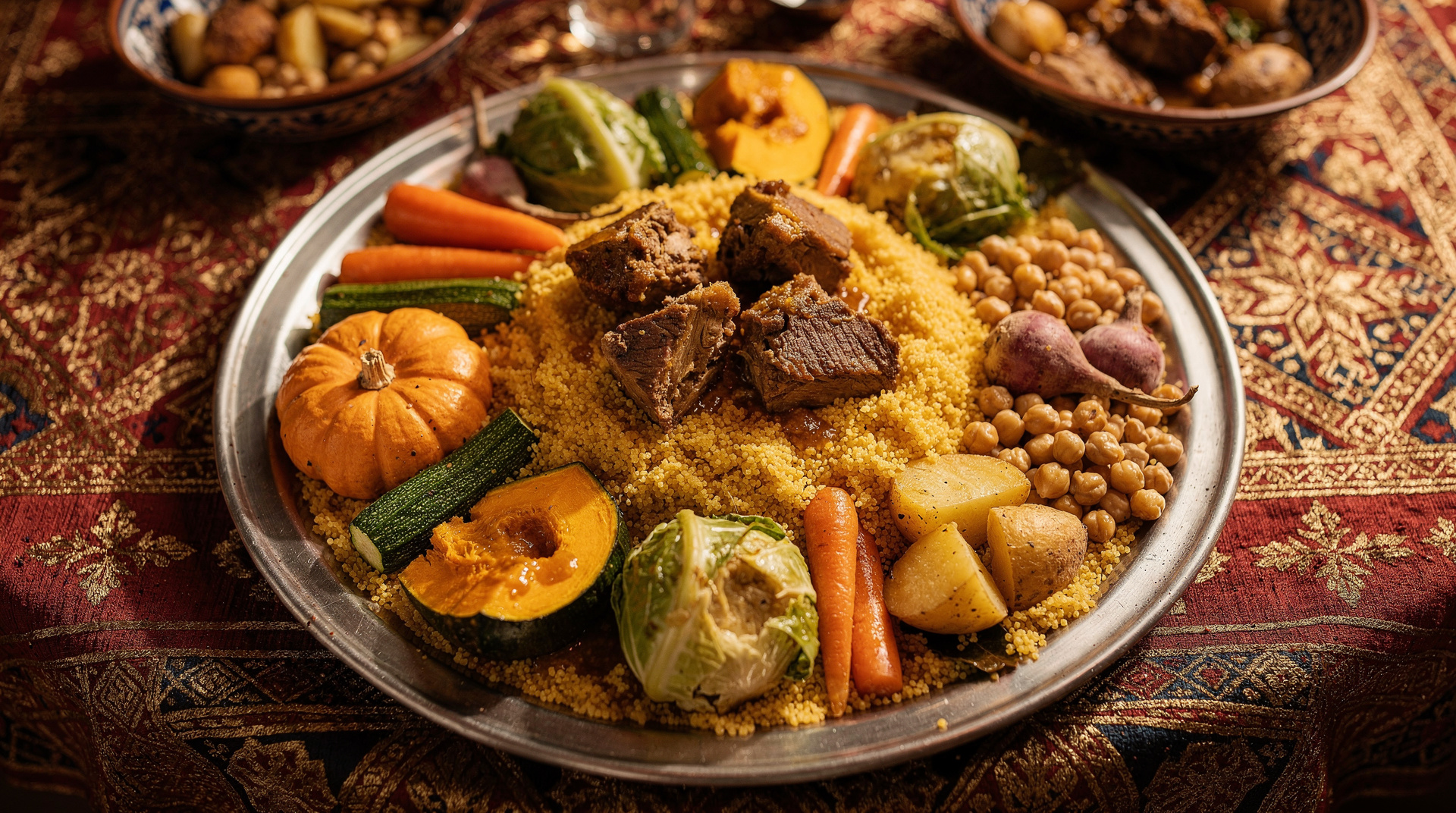
Restaurant El Minzah: Old-school Moroccan restaurant popular with local families on weekends. The couscous served on Fridays is the best in town — call ahead to confirm it’s available. No alcohol. Lunch: 80-120 MAD per person.
Taros: Rooftop bar and restaurant with excellent views over the ramparts. Better for drinks than food, but the grilled seafood platters are decent and the setting unbeatable for sundowner hour.
Port fish stalls: Better than all of the above for fresh fish. If you’re choosing between a restaurant and the port stalls for your main fish meal in Essaouira, choose the port.
Essaouira’s spice market: what to buy
The spice vendors in the medina’s central market zone stock several items specific to the Essaouira-Agadir coastal corridor:
Chermoula spice blend: The Essaouira version of the marinading paste used for grilled fish. Contains paprika, cumin, coriander, garlic, preserved lemon, and olive oil — the exact proportions vary by vendor and represent their house formula. Worth buying as a mix rather than assembling from individual spices.
Spiced salt: Coarsely ground sea salt mixed with cumin and paprika. Served with grilled fish throughout the city and excellent on anything from the barbecue at home.
Argan oil: Essaouira sits at the western edge of the argan tree’s natural range. Culinary argan (roasted, nutty, used in cooking) is different from cosmetic argan (cold-pressed, lighter, used in skincare). See the argan oil guide for how to tell them apart and avoid fake products.
Dried figs and almonds: The Anti-Atlas foothills south of Essaouira produce excellent dried figs and almonds. Vendors in the medina market source directly from producers — quality is significantly better than supermarket versions.
Day trip food context: coming from Marrakech
Essaouira is 2.5 hours from Marrakech by CTM bus or shared taxi — a popular day trip or overnight excursion. From a food perspective, the contrast with Marrakech is immediately apparent: Atlantic coastal cuisine versus landlocked imperial city cuisine, fresh fish versus slow-braised meat, the restrained spicing of the coast versus the complex layering of the south.
A day trip gives you enough time for a fish lunch at the port, a medina walk through the spice market, and a coffee on the ramparts before returning. Two nights allows the more relaxed pace that Essaouira rewards — the Essaouira destination guide covers what to do with the extra time.
If you’d rather learn the cooking than just eat it, Essaouira itself has no well-established class that I can point you to, but a traditional Moroccan cooking class with a market visit in Marrakech is a reasonable option on the Marrakech end of the trip, though it covers inland rather than coastal dishes.
The day trips from Marrakech guide includes Essaouira alongside Aït Benhaddou, the Ourika Valley, and Ouzoud Falls — useful for planning which excursions to combine.
Gnaoua music and food: the festival context
The annual Gnaoua World Music Festival in late June transforms Essaouira’s relationship with food. The city’s restaurants and street food vendors scale up significantly for the 200,000+ visitors, and the medina’s café culture — normally relaxed and low-key — becomes the social infrastructure of the festival. The port stalls run later, new pop-up food vendors appear in the rampart areas, and the whole city feels like it’s eating together.
If you’re visiting during the festival, reserve restaurant tables well in advance. The port stalls manage increased demand naturally, but the popular sit-down restaurants fill up by 7 pm.
Practical essentials
Getting to the port from the medina: Walk north from the main Bab Doukkala gate or from the medina center, following signs toward Port de Peche. It’s a 10-minute walk from most medina accommodation.
Best time for port fish: 11 am-2 pm for the main lunch service. Many stalls close by 3 pm or run out of the morning’s best fish. Don’t show up at 5 pm expecting a full selection.
Cash vs cards: Port stalls are cash only. Restaurants increasingly accept cards. Bring MAD for the market and port.
Alcohol: Essaouira’s medina restaurants are mixed — some serve wine, some don’t. The beachfront restaurants are more likely to have wine lists. The port stalls are alcohol-free. Taros and a few rooftop bars are the main drink destinations.
Wind: Essaouira’s famous Atlantic winds — it’s one of the world’s top kitesurfing destinations — can make outdoor dining cold, even in summer. Bring a layer for evening meals on any terrace. If the wind is the reason you’re here, a kitesurfing introduction lesson pairs well with a late fish lunch at the port.
If you don’t eat fish: vegetarian and other options
Essaouira is a fish town first, but it isn’t fish-only. Medina restaurants serving the standard Moroccan menu (vegetable tagine, couscous, salads, briouats) are easy to find away from the port, and several riads will cook a meat or vegetarian version of the day’s menu on request if you call ahead. For a wider view of what to expect across the country’s kitchens, the tagine guide and couscous guide cover the dishes you’ll see repeated at every stop, and the Moroccan breakfast guide is useful for what a riad will typically put in front of you each morning.
Comparing Essaouira’s food scene to the rest of the coast
Essaouira anchors the Atlantic food circuit, but it isn’t the only coastal town worth eating in. The coastal Morocco comparison guide sets Essaouira’s port-and-medina food culture against Asilah’s quieter fish restaurants and Taghazout’s surf-cafe scene, and the Essaouira vs Agadir guide is worth reading if you’re choosing a coastal base and food quality is a deciding factor for you.
Frequently asked questions about Food tours and eating in Essaouira
Is the fish at the Essaouira port safe to eat?
Yes. The stalls are a normal part of daily life for both locals and visitors, turnover is high (the fish is typically caught that morning), and the grilling is done in front of you over charcoal. Stick to stalls that are busy with a mix of locals and visitors as a simple quality signal.
Can vegetarians eat well in Essaouira?
Yes, though it takes slightly more effort than in Marrakech or Fes. Standard vegetable tagines, salads, and bread are available at most medina restaurants; the port stalls themselves are fish-focused, so vegetarians will get more out of the spice market and a sit-down restaurant than the port experience.