Quick facts
- Language
- Darija, Spanish, French
- Population
- ~380,000
- Nearest Airport
- Tangier Ibn Battouta (TNG), 1 hr
- UNESCO Status
- Medina inscribed 1997
The medina that tourists forgot
In the tourist geography of northern Morocco, Chefchaouen gets the photographs and Tangier gets the gateways, and Tetouan sits between them, largely overlooked by visitors despite possessing a UNESCO World Heritage medina that is arguably more architecturally coherent, more historically layered, and more genuinely un-touristic than either of its better-known neighbours. That lack of recognition is, from a traveller’s perspective, Tetouan’s greatest asset.
The medina of Tetouan was inscribed by UNESCO in 1997 as an outstanding example of an Andalusian town in North Africa. The designation refers to its specific character as a city rebuilt and populated almost entirely by Moorish and Jewish refugees expelled from southern Spain in 1492 — the same Reconquista exodus that shaped Chefchaouen and reshaped Fes. In Tetouan’s case the Andalusian influence is particularly thorough: the architecture, the street layout, the tilework, the artisanal traditions, and even the dialect of Darija spoken here retain distinctive features that trace directly back to Granada, Almería, and Seville.
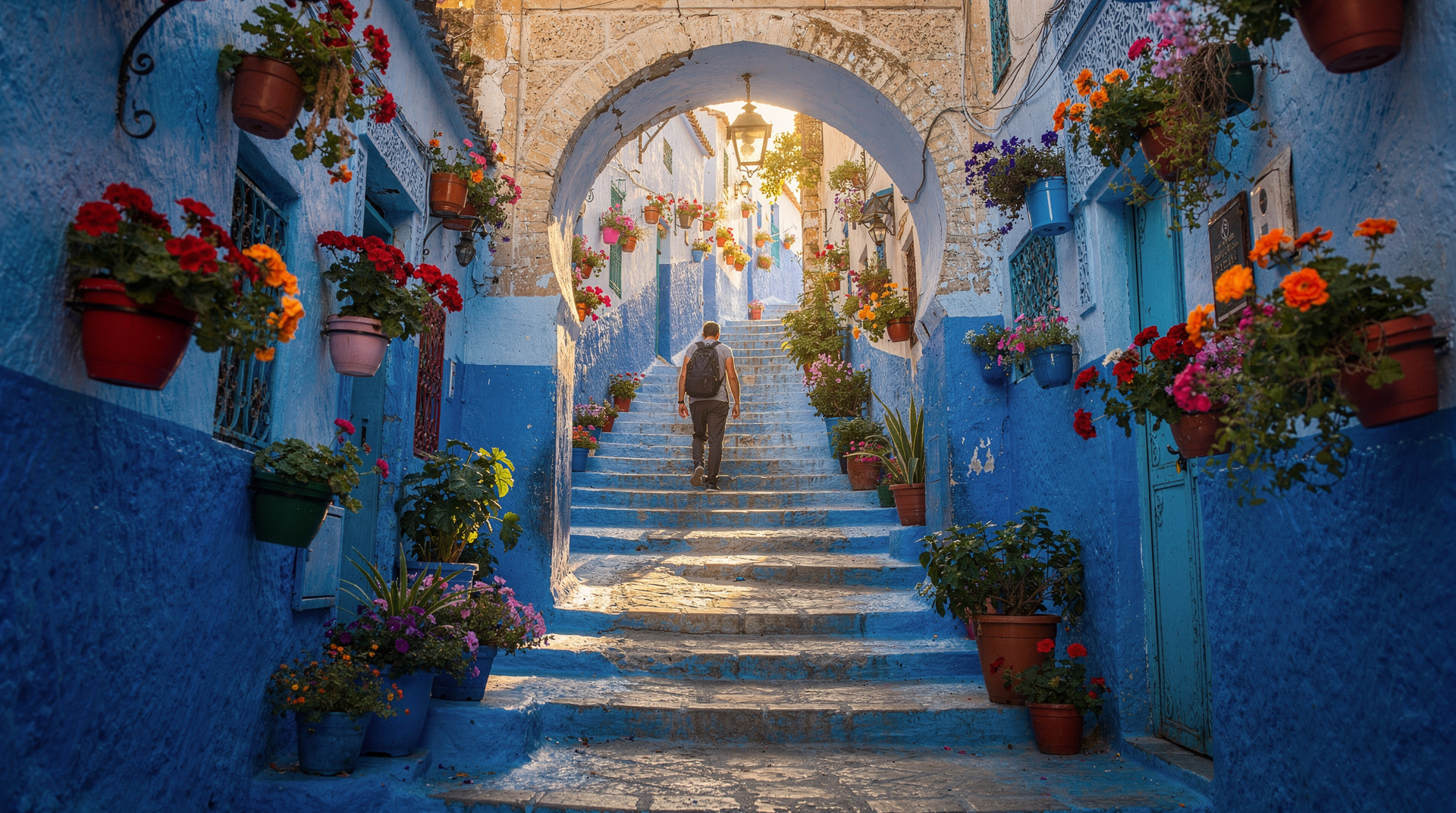
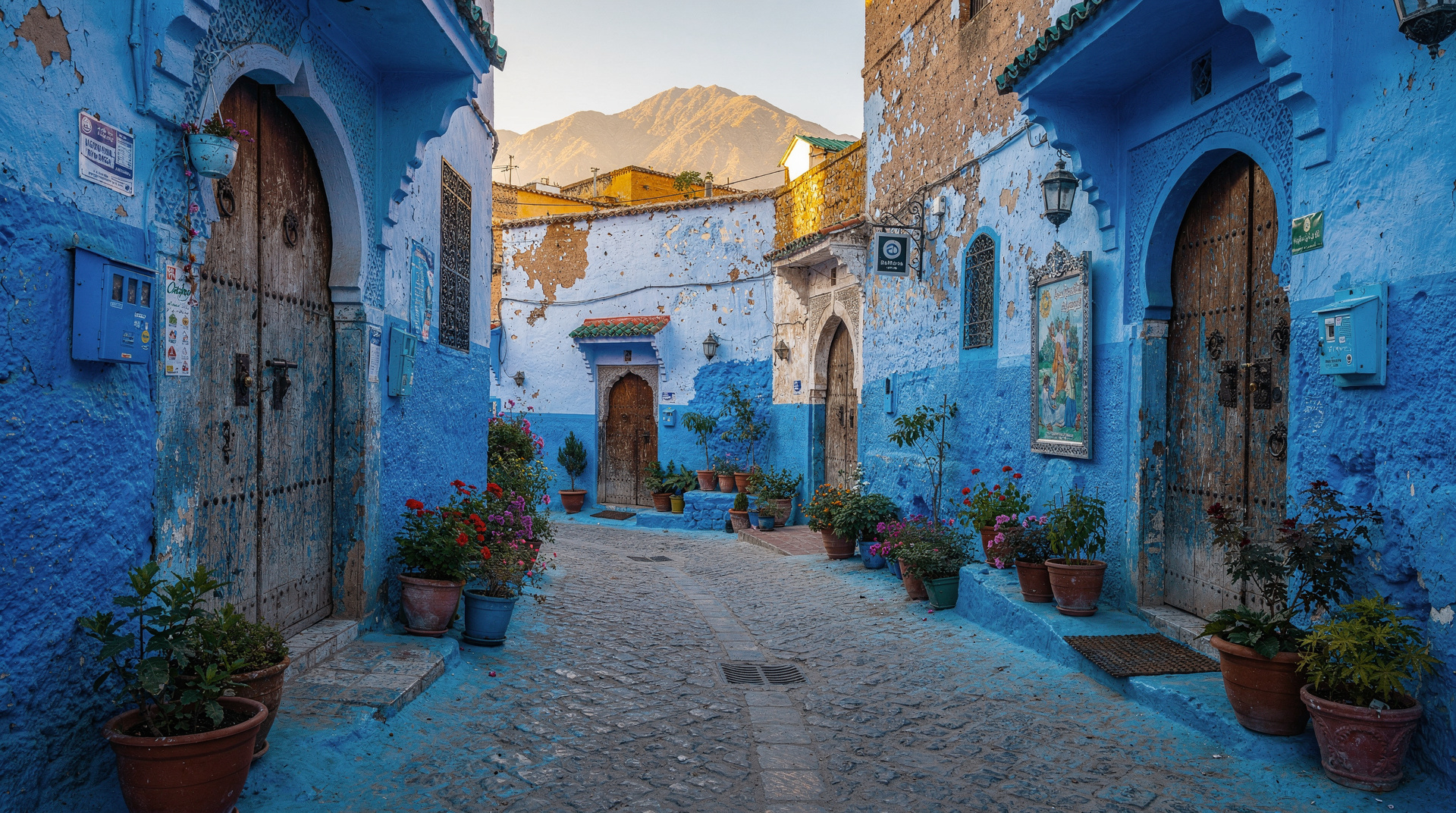
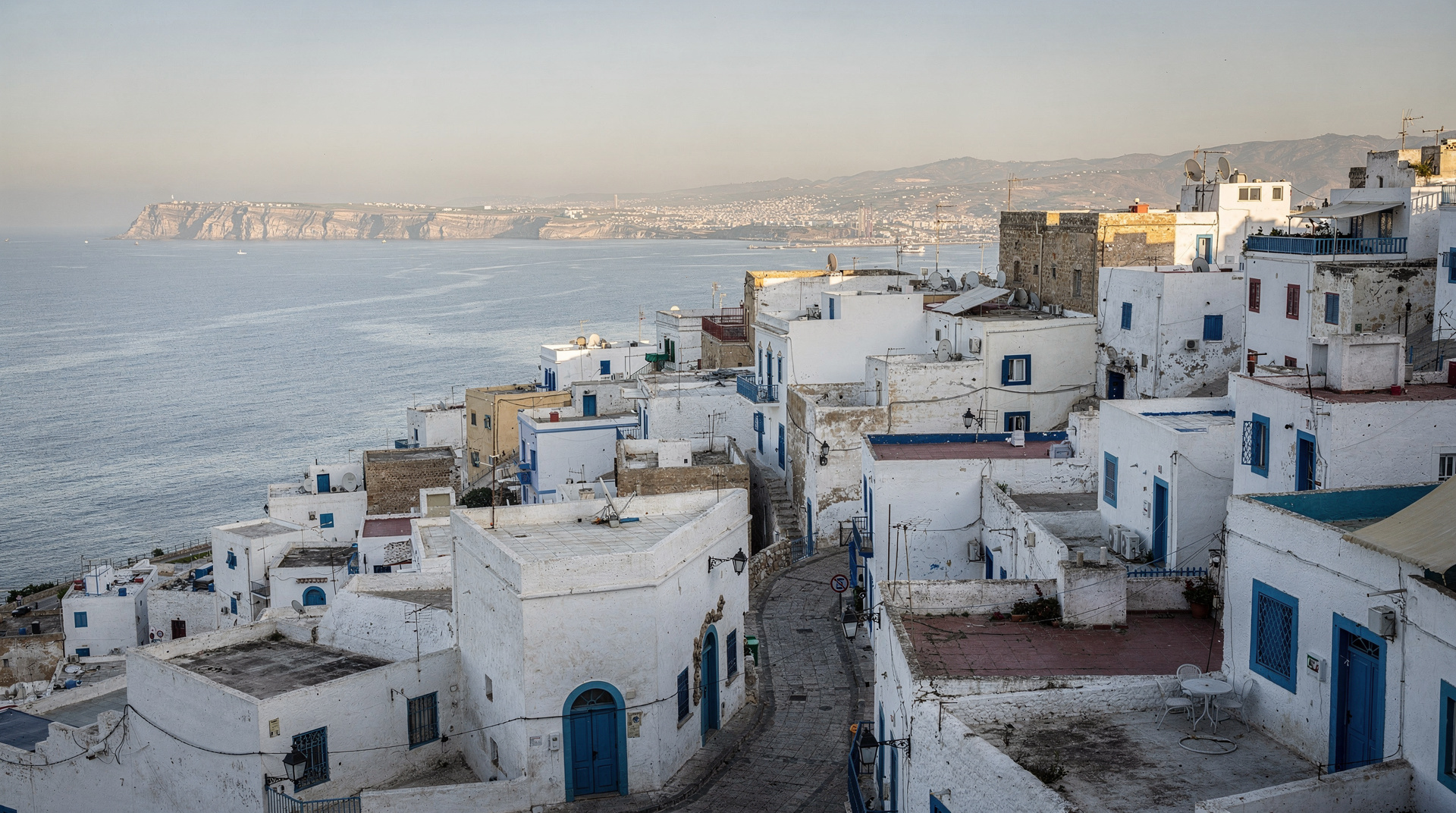
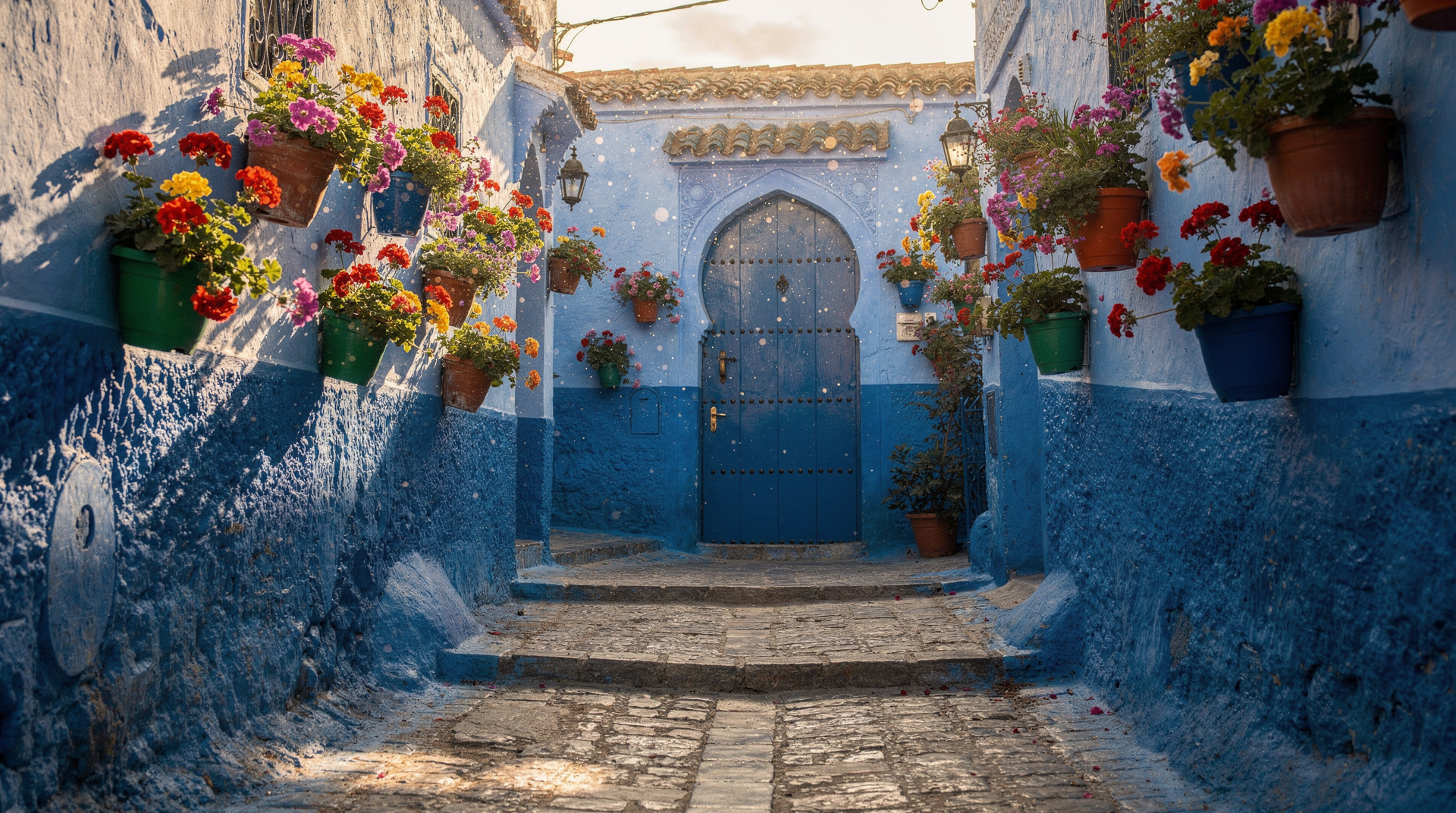
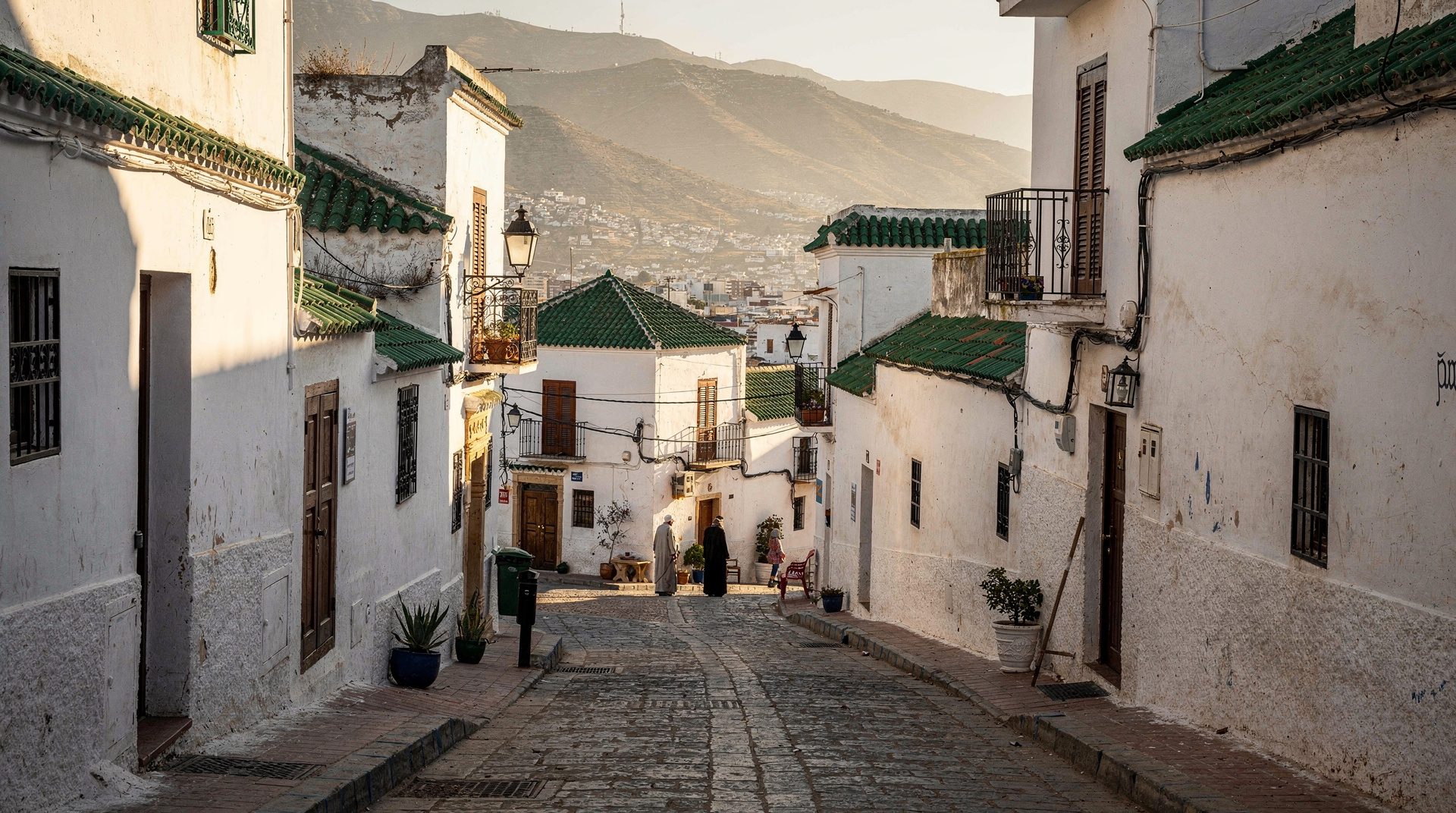
What visitors find on arrival is a compact, navigable medina of whitewashed houses with green and blue painted lower sections, carved stucco doorways, shaded courtyards, and a craft tradition of remarkable depth — marquetry, mosaic tile work, embroidery, and leather goods of a quality rarely found in the more tourist-saturated cities. And they find this largely alone, because Tetouan’s tourist infrastructure remains modest and the souk culture is oriented toward local residents rather than visitors.
| At a glance | |
|---|---|
| Where | Northern Morocco, 35 km from Ceuta, 1 hr from Tangier, 1.5 hr from Chefchaouen |
| Cost | Budget-friendly — meals from 15-30 MAD, doubles from around 250-600 MAD |
| Time needed | 1-2 days; can be done as a half-day stop |
| Getting there | Shared grand taxi or CTM bus from Tangier or Chefchaouen |
| Best time | April-June, September-November; avoid July-August |
History: The White Dove of the Rif
Tetouan’s recorded history begins in the 3rd century BC with a Berber settlement, but the city in its current form was essentially rebuilt from 1484 onward by Muslim refugees from Andalusia. The founding family, the Mandari clan from Granada, constructed the early city walls and established the grid of streets that survives today. A subsequent wave of Andalusian Jewish refugees (Sephardic Jews) created the mellah (Jewish quarter) that operated until the mid-20th century.
Under the Spanish protectorate (1912–1956), Tetouan served as the capital of the Spanish-administered northern zone — a status that reinforced its already substantial Spanish linguistic and cultural overlay. The central plaza, the colonial administration buildings, and the Ensanche (European extension quarter) all date from this period.
The Spanish influence remains visible and audible. Many older Tetouanis speak Spanish as a matter of course, Spanish is taught in many local schools, and the proximity to the Spanish enclave of Ceuta (35 km) keeps the cultural and commercial connection active. This makes Tetouan unusual among Moroccan cities in its genuine trilingual capacity (Darija, Spanish, French), and it gives the city a hybrid character that is historically interesting and practically useful for Spanish-speaking visitors.
Getting There
From Tangier: The most common route. Shared grands taxis depart from Tangier’s main taxi station near the port throughout the day and take approximately 1 hour to Tetouan (25–35 MAD per seat). CTM buses also connect the two cities several times daily.
From Chefchaouen: 65 km by road, approximately 1.5 hours by shared grand taxi. This is the natural direction for most visitors — Chefchaouen to Tetouan as a day trip or en route to Tangier. The road passes through the Rif mountain foothills with views worth a stop.
Organised day trip from Tangier: If you’re based in Tangier, a combined Chefchaouen-Tetouan day trip is one of the most efficient ways to see both in a single long day.
Book a Chefchaouen and Tetouan day trip from TangierBy car: Tetouan sits on the A4 motorway between Tangier and the Rif. The junction is well-signed. A car makes it easy to combine Tetouan with the Martil beach coast nearby.
Getting Around
Tetouan’s medina is compact enough to navigate on foot — the main gate, Bab Rouah, opens onto the main souk street which leads logically toward the other gates and the craft quarter. The medina can be crossed in 15 minutes at a brisk walk, though meaningful exploration takes considerably longer.
The Spanish Ensanche (new city) is a 5-minute walk from Bab el-Okla — the eastern medina gate. The central plaza of the Ensanche (Place Moulay el-Mehdi) is the social heart of the modern city.
Taxis within the city are cheap and reliable for reaching the pottery quarter north of the medina or the Rif foothills above the city.
The Medina
Souk el-Houts and the main market axis
Entering through Bab Rouah (the main western gate), the primary souk street — Souk el-Houts — runs east toward the central plaza. This is the commercial spine of the medina: butchers, grocers, spice merchants, and fabric sellers operating in the vaulted spaces that in another city would be oriented toward tourist purchases but here are simply where Tetouanis shop.
The produce quality is notably high — the surrounding Rif mountains supply fresh herbs, honey, and seasonal vegetables that make the food market one of the most interesting in northern Morocco.
The Craft Quarters
Tetouan has maintained artisanal traditions that are more consistently high-quality than in larger, more tourist-visited cities. The main craft areas:
Souk el-Fouki (upper souk): Leather goods, metalwork, and wooden marquetry — Tetouan’s specialty. The marquetry tradition here uses cedar and thuya wood with inlaid geometric patterns. Buy directly from workshops rather than souvenir shops for better quality and significantly better prices.
The embroidery souk: Tetouan embroidery (Tetouan stitch) is a distinctive tradition of dense geometric patterns in silk on white cotton or linen — tablecloths, cushion covers, and traditional clothing. Several workshops still operate in the traditional manner, with women working at wooden frames in open workshops visible from the street.
Silk weavers: The production of traditional Tetouan silk cloth (for djellabas and kaftans) continues in a small number of workshops near the dyers’ quarter.
The Mellah (Jewish Quarter)
The mellah of Tetouan is one of the best-preserved former Jewish quarters in Morocco. At its peak the Jewish population numbered in the thousands; today the community has almost entirely emigrated (primarily to Israel and Latin America), but the architecture remains: the distinctive balconied facades, the former synagogues (some now converted, some maintained by the community in diaspora), and the grid of narrow streets with wider ground-floor entries designed to allow the passage of goods.
The mellah boundary is visible at the eastern end of the medina — the streets narrow, the buildings change character, and the atmosphere becomes quieter and more residential.
The Archaeological Museum
Located just outside the medina near Place el-Feddan, Tetouan’s archaeological museum contains one of Morocco’s best collections of Roman-period material — mosaics, sculptures, ceramics, and coins from the region’s Roman settlements. The museum is small, affordable (10 MAD), and rarely crowded. Particularly interesting in combination with a visit to Volubilis.
Museum of Moroccan Arts (Dar el-Makhzen)
The Museum of Moroccan Arts occupies a former royal palace — the Dar el-Makhzen — and contains an excellent collection of traditional Tetouan crafts, costumes, musical instruments, and household objects. The building itself, with its tiled courtyards and carved stucco, is as interesting as the collection.
The Spanish Ensanche
The Spanish colonial quarter — built outside the medina walls from 1912 onward — provides a striking contrast to the Islamic architecture of the medina proper. The Ensanche is a grid of wide streets lined with Spanish colonial facades, small plazas, and the kind of neighbourhood café culture that resembles nothing so much as a small Spanish provincial city. Place Moulay el-Mehdi is the social centre — a pleasant square where Tetouanis take the evening paseo under the trees.
The juxtaposition of an Andalusian Islamic medina and a Spanish colonial extension creates an architectural conversation found nowhere else in Morocco — two versions of Spanish cultural heritage, separated by 400 years and a wall.
Where to Stay
Tetouan’s accommodation is functional rather than spectacular — the tourist infrastructure has not caught up with the city’s historical depth. Most visitors come as a day trip from Tangier or Chefchaouen; staying overnight adds considerably to the experience.
Hôtel Chams in the Ensanche is a reliable mid-range hotel with comfortable rooms and proximity to the main plaza. Doubles from 450 MAD.
Riad Dar Lalla is a traditional Moroccan house in the medina converted to a small guesthouse — the most atmospheric option in the city. Only a handful of rooms, so book ahead. Doubles from 600 MAD.
Auberge Darna near Bab Rouah is the budget option of choice — clean rooms, helpful staff, and the best medina access for arriving on foot. Doubles from 250 MAD.
Food and Drink
Tetouan’s cooking reflects its Andalusian heritage and its northern Rif hinterland — fresh fish from the nearby Mediterranean coast, mountain herbs, and a distinct pastry tradition.
Restaurant Restinga (Place Moulay el-Mehdi, Ensanche) is the benchmark for quality Tetouan cooking — refined Moroccan-Andalusian dishes in a proper restaurant setting. The harira, the briouats (stuffed pastry parcels), and the lamb couscous are all excellent. Dinner for two: 250–400 MAD.
Café Central (Place Moulay el-Mehdi) is where Tetouanis take breakfast and evening coffee — excellent Moroccan pastries, coffee, and fresh-squeezed orange juice. Reliable Wi-Fi.
Souk food stalls: The food stalls in and around the main souk serve the best midday options — sfenj (doughnuts), bessara (fava bean soup), harira, and grilled meats at prices firmly aimed at the local market (15–30 MAD for a bowl of harira, 10 MAD for sfenj).
El Reducto (Riad near Bab el-Okla) is the most international restaurant in Tetouan — tapas-influenced Moroccan cooking by a Spanish-trained Moroccan chef. The fusion is handled thoughtfully rather than gimmickly. Dinner for two: 300–450 MAD.
Day Trips from Tetouan
Cabo Negro and the Martil coast: The beach resort coast 5 km from Tetouan — Martil, Mdiq, Fnideq — is a string of Mediterranean beaches popular with Moroccan families. Straightforward by taxi in summer, quiet and pleasant in shoulder season.
Chefchaouen: One hour south by shared taxi, the blue city makes a perfect day trip from Tetouan or a logical stop en route from Tangier.
Tangier: One hour north — Tetouan-Tangier day trip in either direction is straightforward by grand taxi.
Akchour Waterfalls: Accessible via Chefchaouen (2 hr from Tetouan), the Akchour gorge and waterfall hike in Talassemtane National Park is the best natural attraction in the northern Rif — a full day with an early start. If you would rather not organise the logistics yourself, a guided day trip to Akchour from Chefchaouen is one option.
For the full range of excursions in the region, see the day trips from Chefchaouen guide and day trips from Tangier.
How Tetouan Fits in a Northern Morocco Itinerary
Tetouan is best visited as part of a northern Morocco circuit rather than as a standalone destination. The most logical approaches:
Tangier → Tetouan (half-day) → Chefchaouen (2 nights) → Fes: This gives Tetouan its proper weight as a day break between Tangier and the blue city.
Chefchaouen → Tetouan (day trip) → back to Chefchaouen: Take a grand taxi south-to-north for a long day exploring Tetouan, returning in the evening.
Full northern Morocco loop: Casablanca → Rabat → Fes → Chefchaouen → Tetouan → Tangier → ferry to Spain. This 10-day loop hits every major northern destination in a logical sequence.
Tetouan vs Chefchaouen vs Tangier: Which Fits Your Trip
| Tetouan | Chefchaouen | Tangier | |
|---|---|---|---|
| Signature draw | UNESCO Andalusian medina, craft workshops | Blue-washed alleys, photography | Ferry gateway, coastal skyline |
| Tourist pressure | Low — locals-first souks | High in peak season | Moderate |
| Time needed | 1-2 days | 2-3 days | 1-2 days |
| Best for | History, authentic crafts, quiet exploration | Photography, relaxed pace | Arrival/departure hub, day trips |
| Access | 1 hr from Tangier, 1.5 hr from Chefchaouen | 1 hr from Tetouan | Ferry from Spain, airport hub |
For most first-time northern Morocco itineraries, all three fit naturally in sequence — see day trips from Chefchaouen and day trips from Tangier for how to sequence them.
Practical Tips
When to visit: Avoid July–August when Tetouan swells with domestic tourists from the coast and heat is significant. April–June and September–October offer pleasant temperatures and manageable crowds.
Photography in the medina: The medina is not set up for photography tours — people live and work here in a functioning neighbourhood. Ask before photographing individuals, particularly in the craft workshops and the mellah.
Language: Spanish is the most useful second language in Tetouan after Darija. French works everywhere in the tourist infrastructure.
Safety: Tetouan is generally safe. The medina is navigable without a guide, though getting lost is likely without a basic map. The medina perimeter is clearly defined by the walls, so disorientation is temporary.
Shopping: The craft quality in Tetouan is high and the prices, relative to Marrakech or Fes, are significantly more honest. Marquetry woodwork and silk embroidery are the standout purchases. Haggling applies but is less theatrical than in the major tourist cities.
Frequently asked questions about Tetouan
Is Tetouan worth visiting vs Chefchaouen?
They offer very different things. Chefchaouen delivers visual drama and a compact, manageable blue medina ideal for photography. Tetouan offers deeper historical layers, more authentic craft traditions, and the Andalusian-Spanish heritage overlay — but requires more navigation effort and rewards more patient exploration. Both are worth visiting; they make natural partners in a northern Morocco trip.
Do I need a guide in the Tetouan medina?
The Tetouan medina is more navigable than Fes but still involves some genuinely confusing narrow alley networks in the craft quarters. A guide for 2–3 hours (around 150–200 MAD) adds context about the Andalusian history and helps locate the best craft workshops. Self-guided is possible with a printed map. Tetouan has few bookable tours of its own, so if you want a guided medina walk in the region, a private walking tour of Chefchaouen is the closest option.
Is Tetouan safe for tourists?
Yes, by any reasonable standard. Tetouan receives fewer tourists than its neighbours, which means less of the aggressive hustling and commission-driven guiding common in Marrakech. The medina is densely populated with local residents going about their day — a naturally safe environment.
Can I visit Tetouan and Chefchaouen in the same day from Tangier?
Yes — this is one of the most popular day trips from Tangier. The logistics require an early start (7 am at Tangier taxi station), and the day is long, but both cities can be seen in a single day with approximately 3 hours in each. An overnight in Chefchaouen makes the combination more comfortable.
What should I buy in Tetouan?
Marquetry woodwork (cedar and thuya inlay boxes, chess sets, trays) and Tetouan-stitch embroidery are the standout purchases — buy directly from workshops in Souk el-Fouki rather than souvenir shops for better quality and honest prices. Leather goods are also a good value here compared to Fes or Marrakech.