Best day trips from Chefchaouen: Akchour, Tetouan and beyond
What are the best day trips from Chefchaouen?
Akchour Waterfalls is the essential day trip from Chefchaouen — 45 minutes by shared taxi to a dramatic Rif mountain gorge with natural pools, God's Bridge rock arch, and a 100-metre waterfall. Tetouan (1.5 hr south) is the best cultural day trip, offering a UNESCO Andalusian medina with zero tourist crowds. Tangier (3 hr) is feasible as a long day.
Chefchaouen as a base: the Rif mountains open up
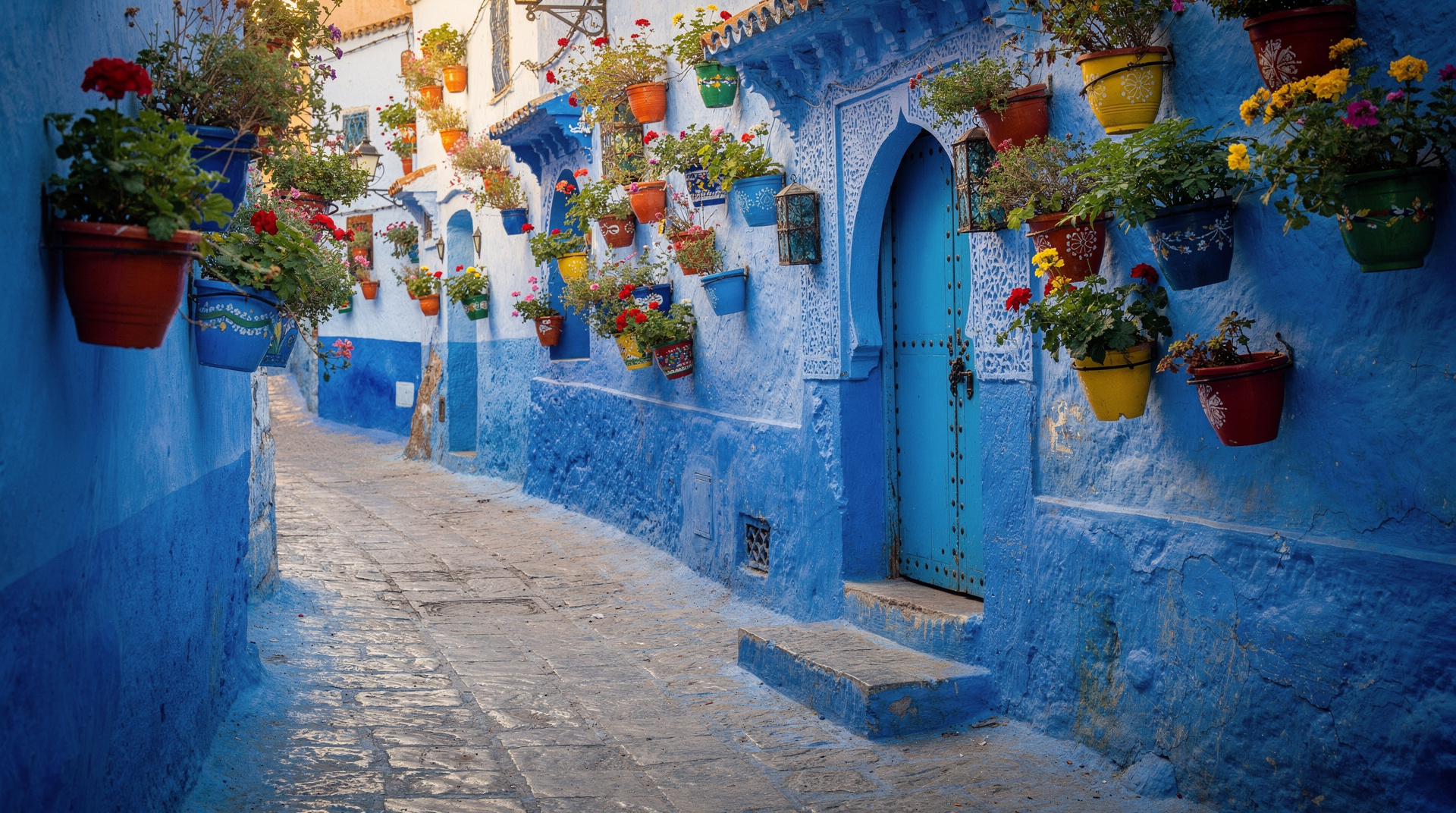
Chefchaouen rewards slow travel — most visitors who budget 2 nights find they want a third, and the medina’s morning light and evening atmosphere are reason enough to stay put. But the city also sits at the gateway to some of northern Morocco’s finest natural and cultural attractions, all accessible without a car and all comfortably doable as day trips.
This guide covers the three best day trips from Chefchaouen: Akchour Waterfalls (the essential one), Tetouan (the cultural alternative), and Tangier (the ambitious long option).
At a glance
| Essential day trip | Akchour Waterfalls — around 45 min by shared taxi |
| No car needed | All three main day trips run on shared grand taxis or buses |
| Typical cost per person | Around 25-75 MAD each way, plus 200-350 MAD for an organised Akchour tour |
| Best time to go | April-June and September-October for Akchour; avoid late July-August crowds |
| Furthest realistic option | Tangier — around 3 hr each way, feasible only as a long day |
1. Akchour Waterfalls and Talassemtane National Park — the essential day trip
Distance: 35 km from Chefchaouen to Akchour village
Travel time: 45 minutes by shared grand taxi
Best for: Hiking, swimming, photography, nature enthusiasts
Akchour is the reason to base yourself in Chefchaouen for at least 3 nights. The waterfalls in Talassemtane National Park — a UNESCO biosphere reserve covering 58,000 hectares of Rif mountain cedar and oak forest — are one of the most spectacular natural attractions in northern Morocco, and their relative inaccessibility (you must hike to reach them) keeps the experience genuinely rewarding even when visitor numbers are high.
Getting to Akchour
Shared grands taxis depart from the main taxi stand outside the Chefchaouen medina walls throughout the morning, running to Akchour village (35 km, 45 min, 25–35 MAD per seat). The road passes through cork oak and cedar forest before descending to the trailhead at the valley bottom. Taxis fill up with passengers, so if you’re in a group of 2–3, you may need to wait 15–30 minutes or pay for the remaining seats.
Return: Taxis return from Akchour village through the afternoon, last departure typically around 5–6 pm. The shared taxi system is reliable in the morning; return logistics are less certain in the afternoon — confirm timing with your taxi driver before departing, or arrange a return pickup.
The Hike: Two Routes
From the Akchour trailhead, the path splits into two options:
Route 1: God’s Bridge (Pont de Dieu) — 1.5 hours each way from the trailhead (3 hr round trip). This is the moderate and most popular option — well-marked trail with some rocky sections and river crossings on stepping stones. God’s Bridge is a natural rock arch spanning the gorge, formed by erosion of the soft limestone. The gorge immediately below is stunning — emerald water, vertical walls, and the arch framing a perfect slot of sky. Swimming in the pools at the base of the arch is possible in summer months when water levels drop.
Route 2: Upper Waterfall (Grande Cascade) — 2.5–3 hours each way (5–6 hr round trip). Significantly more demanding — the trail gains substantial elevation above the God’s Bridge section and involves some exposed sections with loose rock. The reward is the 100-metre waterfall in a tight canyon — arguably the most dramatic single sight in the Rif mountains. Requires early departure (7–7:30 am from Chefchaouen), reasonable fitness, and proper hiking shoes. Sandals are genuinely unsuitable.
Combining both routes: With a very early start (6:30–7 am taxi from Chefchaouen), fit hikers can visit God’s Bridge and the upper waterfall in one day, returning to the trailhead by 5 pm. This is ambitious — plan it only if you’re confident in your hiking pace and the group is fit.
What to Bring
- Hiking shoes with grip (not sandals — the path is rocky and river crossings involve slippery stones)
- 2–3 litres of water per person (the gorge is sheltered and humid but dehydration happens)
- Lunch and snacks (the single café at the trailhead is the only food source)
- Swimwear if the weather is warm and water levels allow swimming
- Sunscreen — the gorge is shaded, but exposed sections catch direct sun
- Cash for the taxi and the trailhead café
Organised Day Trip Option
Book the Akchour Waterfalls day trip from ChefchaouenAn organised tour simplifies the logistics — transport, guide, and the return timing are all managed. The guide adds value particularly on the upper waterfall route where the path becomes less obvious. For the God’s Bridge route, experienced hikers with a map can manage independently.
Book a guided Akchour Waterfalls hike from ChefchaouenWhen to Go
Best months: April–June (spring water levels give the upper waterfall its maximum drama, wild flowers in the gorge, air temperature comfortable for hiking). September–October (lower water, better swimming conditions, fewer visitors than spring).
Avoid: Late July and August (peak Moroccan domestic tourism — the trailhead can be genuinely crowded and shared taxis harder to find for the return). January–February after heavy rain (river crossings can be dangerous in high water).
Talassemtane National Park Context
The national park surrounding Akchour covers the Rif mountains in one of Morocco’s most significant biodiversity zones. The cedar and oak forests here shelter the rare Atlas Cedar, Barbary macaques (visible at higher elevations), and numerous bird species including short-toed eagles and Bonelli’s eagles. The park is also the catchment area for the Loukkos river system that supplies water to northern Morocco’s population centres.
2. Tetouan — Andalusian medina with no tourist crowds
Distance: 65 km north
Travel time: 1.5 hours by shared grand taxi
Best for: History, architecture, authentic Moroccan medina, cultural depth
Tetouan is Chefchaouen’s most culturally rewarding day trip — a UNESCO World Heritage medina built by Andalusian and Jewish refugees in the 15th century, with architecture, craft traditions, and street life that are among the most coherent in Morocco, and a tourist presence that is close to zero.
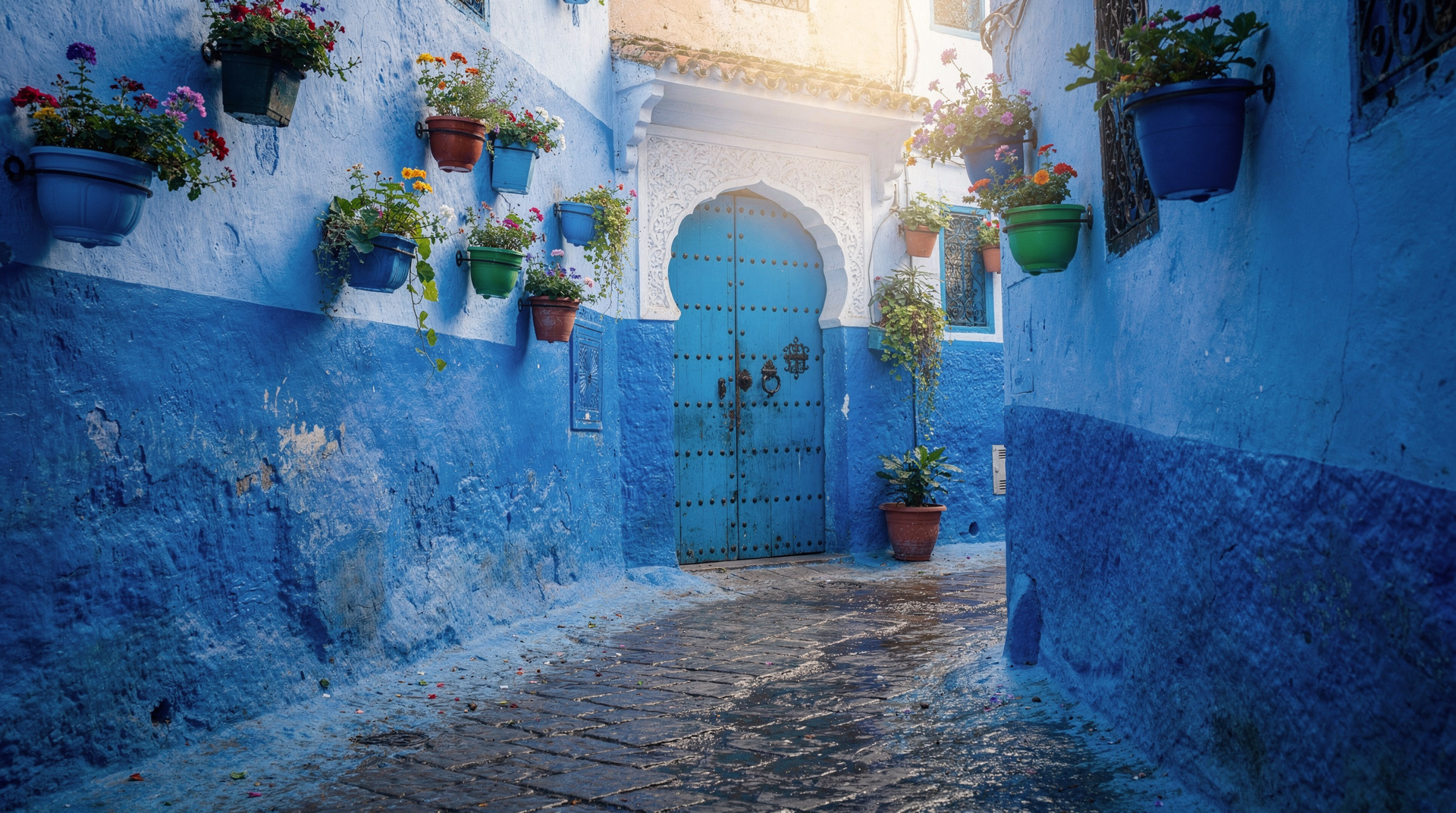
The contrast with Chefchaouen is instructive. Where Chefchaouen has optimised for visitors (photographs, souvenir shops, Instagram-friendly blue walls), Tetouan’s medina functions as a genuine working city quarter, oriented toward residents rather than tourists. The silversmiths’ quarter, the embroidery souk, the covered food market, and the Jewish mellah are all active and functional — not preserved for display.
Getting to Tetouan
Shared grands taxis from Chefchaouen’s main taxi stand run to Tetouan throughout the day (30–40 MAD per seat, 1.5 hr). The road north over the Rif foothills is scenic. Last reliable return taxis from Tetouan are around 5–6 pm — confirm with the driver or at the Tetouan taxi station.
What to Do in Tetouan on a Day Trip
Medina walking (3 hours): Enter through Bab Rouah, walk the main souk axis east toward the central plaza, explore the craft quarters (particularly the marquetry woodwork workshops and the embroidery souk), visit the mellah (Jewish quarter) in the eastern medina, and end at the Archaeological Museum near Place el-Feddan. This is the core and most rewarding itinerary.
Lunch (1 hour): The cafés and restaurants on Place Moulay el-Mehdi in the Spanish Ensanche quarter are the best lunch option — the Ensanche is a 5-minute walk from the medina gates and offers the easiest restaurant-finding in the city.
Ensanche walk (1 hour): The Spanish colonial quarter with its wide boulevards, café culture, and art deco facades provides a fascinating contrast to the Islamic medina — two centuries of overlapping cultural heritage in one small city.
Return logistics: Allow 1.5 hours for the return taxi to Chefchaouen, adding a 30-minute buffer for finding and filling the shared taxi.
For the full Tetouan destination guide, see Tetouan.
3. Tangier — ambitious long-day option
Distance: 120 km north
Travel time: 3 hours by shared grand taxi or CTM bus
Best for: Those wanting a longer northern Morocco circuit, port-city culture
Tangier from Chefchaouen is at the outer edge of what qualifies as a practical day trip — 3 hours each way leaves approximately 4 hours on the ground if you leave Chefchaouen at 7 am and return by 8 pm. This is enough for the Tangier medina and the coastal area but not for the full city.
Most travellers use the Chefchaouen-Tangier route as a one-way transfer rather than a round trip — particularly those heading onward to Spain by ferry. The route by CTM bus runs several times daily (75 MAD, 3 hr).
When a day trip makes sense: If you’re spending 3+ nights in Chefchaouen and genuinely want a full change of scene — Tangier’s café culture, the port energy, Cap Spartel and the Hercules Caves — the day trip is doable. Leave on the first morning bus (7 am), arrive in Tangier by 10 am, take the last return bus at 4–5 pm, back in Chefchaouen by 7–8 pm.
By grand taxi: Shared taxis from Chefchaouen to Tangier can be found at the main taxi stand, but often require a change at Tétouan or Larache. Allow 3.5–4 hours total for the multi-taxi route.
For Tangier city guide and what to do, see Tangier.
Akchour vs Tetouan vs Tangier: which one first?
| Day trip | Time needed | Best for | Skip if |
|---|---|---|---|
| Akchour Waterfalls | Full day (God’s Bridge route: 6-7 hr round trip) | Hikers, nature, swimming | You have mobility limitations or bad footwear |
| Tetouan | Half to full day | Authentic medina, zero crowds | You’ve already seen enough medinas |
| Tangier | Full day, long | Port-city culture, onward Spain travel | You only have 2 nights in Chefchaouen — spend them locally instead |
If you only have one full day free from Chefchaouen, Akchour wins for most travellers — it’s the destination people specifically travel to the Rif to see, and the God’s Bridge route suits most fitness levels.
Other excursions from Chefchaouen
Spanish Mosque (Chefchaouen itself — not a day trip)
The 30-minute walk above the medina to the ruined Spanish mosque is not a day trip but the single best thing you can do in the late afternoon in Chefchaouen — the panorama of the blue city below, the twin peaks of Jbel Rif above, and the sunset light. Worth mentioning here because many visitors prioritise it less than they should.
Rif mountains hiking — multi-day option
The Rif mountains above Chefchaouen have a network of unmarked and semi-marked hiking trails at 1,000–2,000 m elevation, covering cedar and oak forest terrain. The trails are best done with a local guide (arranged through guesthouses in Chefchaouen) as marking is inconsistent. Multi-day circuits connecting the mountain villages above the city are possible for experienced trekkers.
Ketama and the Rif highlands
Ketama, 90 km east of Chefchaouen, is the main town of Morocco’s primary cannabis-growing region. The drive through the Rif highlands is scenic. Ketama itself is not a tourist destination and the area has a reputation for aggressive approaches to foreigners. This is not a recommended day trip.
Day trip planning from Chefchaouen: practical notes
Best schedule: Use Day 1 for the blue medina (morning) and Spanish mosque (afternoon). Day 2 for the Akchour hike (full day, early start). Day 3 for Tetouan or rest in Chefchaouen. This sequence gets the most out of a 3-night stay without over-programming.
Taxi timing: All shared grand taxis from Chefchaouen depart from the main stand just outside the medina walls (a 5-minute walk from Bab el-Ain). The stand is busy in the morning and quiet after 3 pm. For early morning departures to Akchour (7 am) and Tetouan (8 am), arrive at the stand 15 minutes before your target departure time.
Costs in summary:
- Akchour shared taxi: 25–35 MAD per seat each way
- Tetouan shared taxi: 30–40 MAD per seat each way
- Tangier CTM bus: 75 MAD each way
- Organised Akchour day tour: 200–350 MAD per person including guide
Meals on day trips: For Akchour, bring lunch (the trailhead café is limited). For Tetouan, budget 80–150 MAD for lunch in the Ensanche. For Tangier, the medina cafés and harbour restaurants cover all budgets.
For the full Chefchaouen destination guide including where to stay and eat in the blue city, follow that link. For the related northern Morocco day-trip context, see day trips from Tangier and day trips from Fes.
Combining day trips with a longer northern Morocco loop
If Chefchaouen is one stop on a wider northern circuit, the day trips here connect naturally into onward travel rather than requiring a return each time. Akchour is a there-and-back that always returns to Chefchaouen, but Tetouan and Tangier both sit on the route toward Tangier or the coast — meaning you could visit Tetouan on your way north rather than as a round trip, saving a full return leg if your onward plans allow it. This is worth considering if you’re comparing Chefchaouen vs Fes as a next stop, or planning a longer loop through the north.
Frequently asked questions about Best day trips from Chefchaouen
Can you visit Akchour without a guide?
Yes, for the God’s Bridge route — it’s well-marked and manageable independently with a map or offline GPS. The upper waterfall (Grande Cascade) route is more exposed and benefits from local knowledge, so a guide or organised tour adds more value there.
Is one night in Chefchaouen enough to also do a day trip?
Not comfortably. A single night gives you an evening and morning in the medina but no full free day for Akchour or Tetouan. Budget at least 2 nights if you want the medina plus one day trip, or 3 nights for the medina plus both Akchour and Tetouan.