Quick facts
- Language
- Darija, French
- Population
- ~600,000 (metro 1.8 million)
- Airport
- Rabat–Salé (RBA), 12 km from centre
- Best for
- History, culture, UNESCO medina, relaxed pace
Morocco’s Most Underrated City
| At a Glance | |
|---|---|
| Where | Atlantic coast, Morocco’s capital, 90 km north of Casablanca |
| Cost | Most major sights (Hassan Tower, mausoleum, Andalusian Garden) are free; museums and Chellah around 60–70 MAD |
| Time needed | 1–2 days |
| Getting there | Train from Casablanca (1 hr) or Fes (2.5 hrs); Rabat–Salé airport or via Casablanca–Mohammed V |
| Best time | March–May and September–November for mild, dry weather |
Rabat has a reputation problem. Sitting between the tourist juggernauts of Marrakech and Fes, Morocco’s capital city tends to be dismissed as an administrative centre — somewhere travellers pass through rather than stop in. This is a mistake.
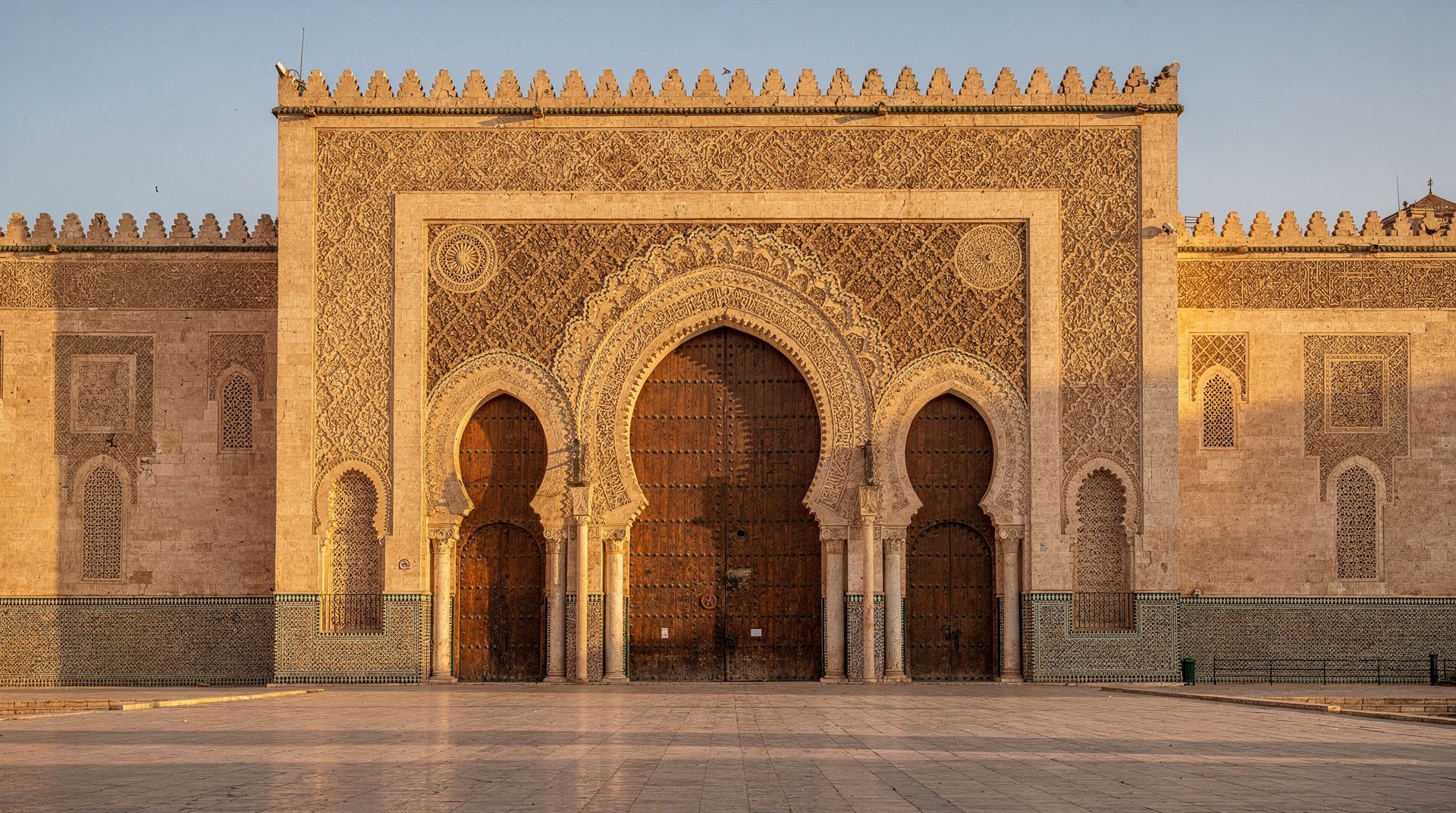
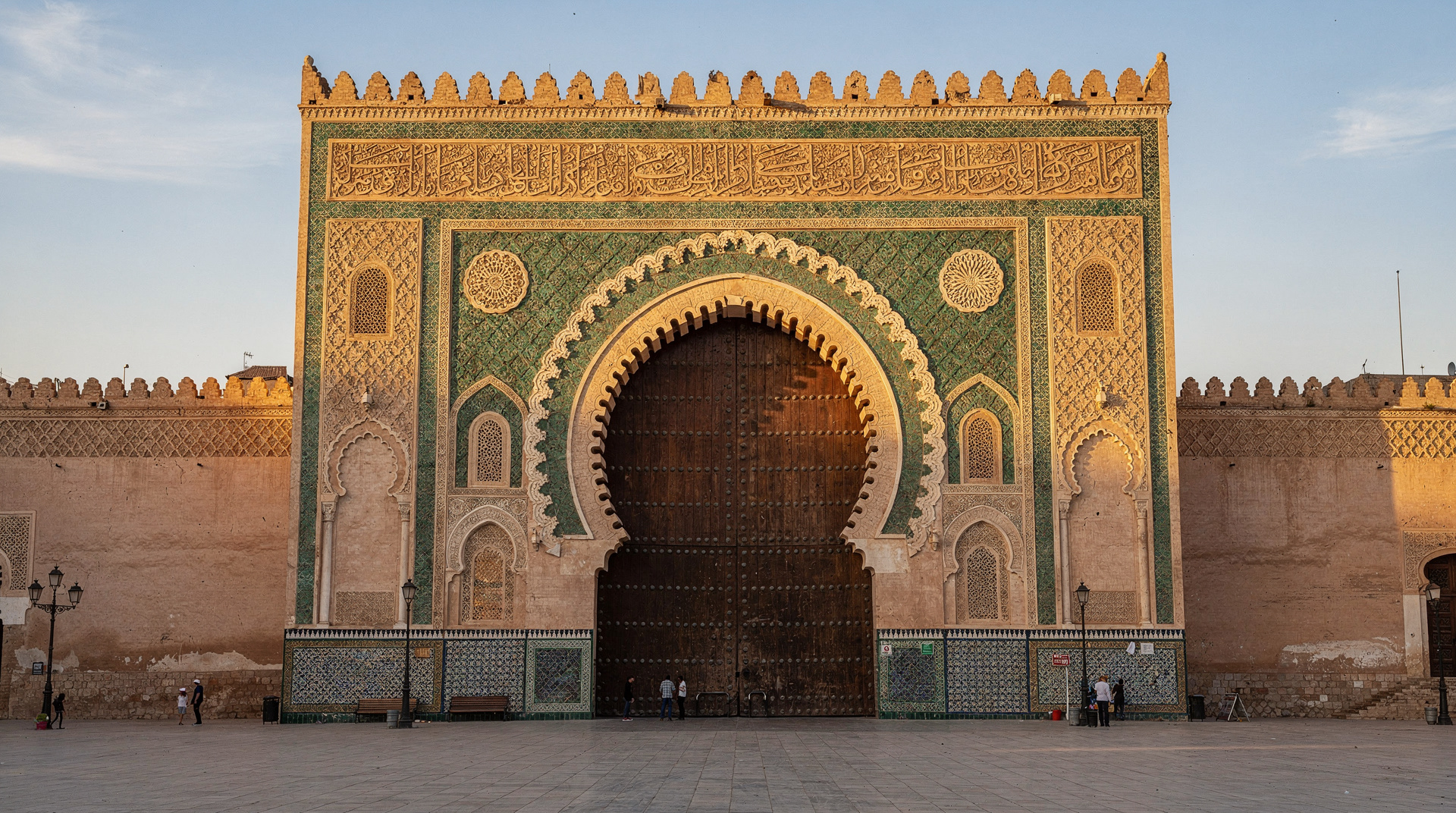
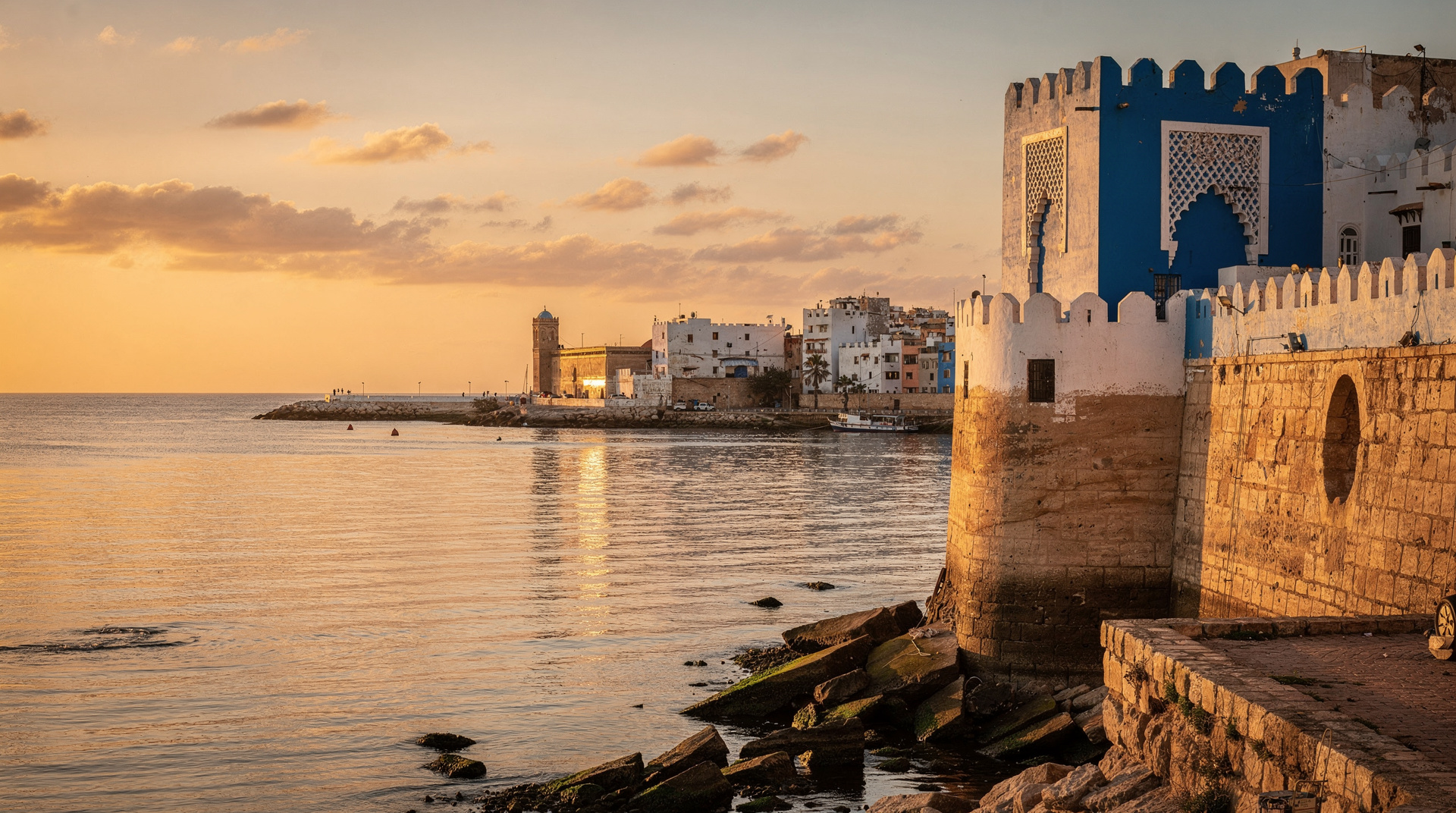
Rabat is one of the most pleasant cities in Morocco: walkable, uncrowded by Moroccan tourist standards, with an extraordinary concentration of historical monuments spread across a manageable geography. The UNESCO-inscribed medina is authentic without being overwhelming. The Kasbah of the Oudayas — a 12th-century fortress above the Atlantic at the mouth of the Bou Regreg river — is among the most beautiful historic neighbourhoods in North Africa. The Hassan Tower and Mohammed V Mausoleum form one of the most photogenic architectural pairings on the continent. And the ruined Roman-era necropolis at Chellah, where storks nest in the broken minarets, feels genuinely otherworldly.
What Rabat does not offer is the bazaar-intensity of Marrakech or the labyrinthine medina depth of Fes. But for travellers who have done those cities and want something different — or for first-timers willing to question the standard Morocco itinerary — Rabat rewards every hour spent here.
Getting There
By train: Rabat’s central station (Rabat Ville) sits a 10-minute walk from the medina. The ONCF rail network connects Rabat to Casablanca in 1 hour (trains every 30 minutes, from 45 MAD), to Tangier in 3.5 hours, and to Fes in 2.5 hours. This is the most comfortable way to arrive.
By air: Rabat–Salé Airport (RBA) receives domestic flights from Marrakech and international flights on Royal Air Maroc and Ryanair. A taxi to the city centre costs around 150–200 MAD. Most international travellers route through Casablanca–Mohammed V Airport (CMN, 1 hour by train) and take the train into Rabat.
By bus: CTM and Supratours run to Rabat from Marrakech (5–5.5 hours, from 120 MAD), Fes (2.5 hours, from 80 MAD), and Tangier (4 hours, from 90 MAD).
By car: The A1 motorway connects Rabat to Casablanca (90 km, 1 hour), to Tangier (340 km, 3.5 hours), and to Fes (200 km, 2.5 hours). Driving in the medina is not practical; park near the train station or along Boulevard Hassan II.
Getting Around
On foot: The core attractions — medina, Hassan Tower, Kasbah Oudayas — are all within 25 minutes’ walk of each other. Rabat is a genuinely walkable city, with wide pavements and minimal motorbike chaos compared to Marrakech or Fes.
Petit taxis: Blue metered taxis are plentiful and honest by Moroccan standards. A ride across the city centre costs 15–30 MAD. Drivers generally use the meter without being asked.
Tram: Rabat’s modern tram (Tramway de Rabat-Salé) connects the railway station with the university and Salé across the river. Useful for reaching Chellah and the new districts; not essential for the main monuments.
To Salé: The sister city across the Bou Regreg is reachable by tram or by small wooden boat from the riverbank below the Kasbah Oudayas (6 MAD). The old medina of Salé is worth 2–3 hours for those seeking an even more authentic neighbourhood.
Top Things to Do
Hassan Tower and Mohammed V Mausoleum
The Hassan Tower — a 44-metre minaret begun in 1195 by the Almohad sultan Yacoub al-Mansour — was intended to be the tallest minaret in the world. The sultan died before it was completed, and an earthquake destroyed the mosque below in 1755. What remains is a forest of 200 column stumps on a great esplanade, with the tower standing against the sky in extraordinary isolation. Beside it, the Mohammed V Mausoleum (completed 1971) is the finest example of 20th-century Moroccan royal architecture: marble floors, cedarwood ceilings, carved plaster, and an interior where royal guards in traditional uniform stand motionless. Entry to both sites is free.
Book a private historic highlights tour of RabatKasbah of the Oudayas
Built by the Almohads in the 12th century on a clifftop above the Atlantic, the Kasbah Oudayas is a maze of whitewashed and blue-painted alleyways that feel unmistakably Andalusian — because they are. The descendants of Moorish families expelled from Spain in 1609 settled here and brought their architectural traditions with them. The interior streets are immaculately kept, the central Andalusian garden (open 8 am–6 pm, free) is a peaceful refuge, and the café at the garden entrance serves mint tea with views over the river mouth that are among the most photogenic in Morocco.
Chellah Necropolis
Chellah is one of Morocco’s strangest and most atmospheric sites. The ruined Roman city of Sala Colonia was later converted into a royal funerary complex by the Merinid dynasty in the 14th century. Today, both layers of history lie in picturesque ruin inside a walled enclosure — Roman mosaics alongside carved Arabic inscriptions, broken minarets inhabited by nesting storks, and a small mosque whose green-tiled pool reflects palm fronds. Entry is 70 MAD. Come in the late afternoon when the light is warm and the storks are most active.
The Medina
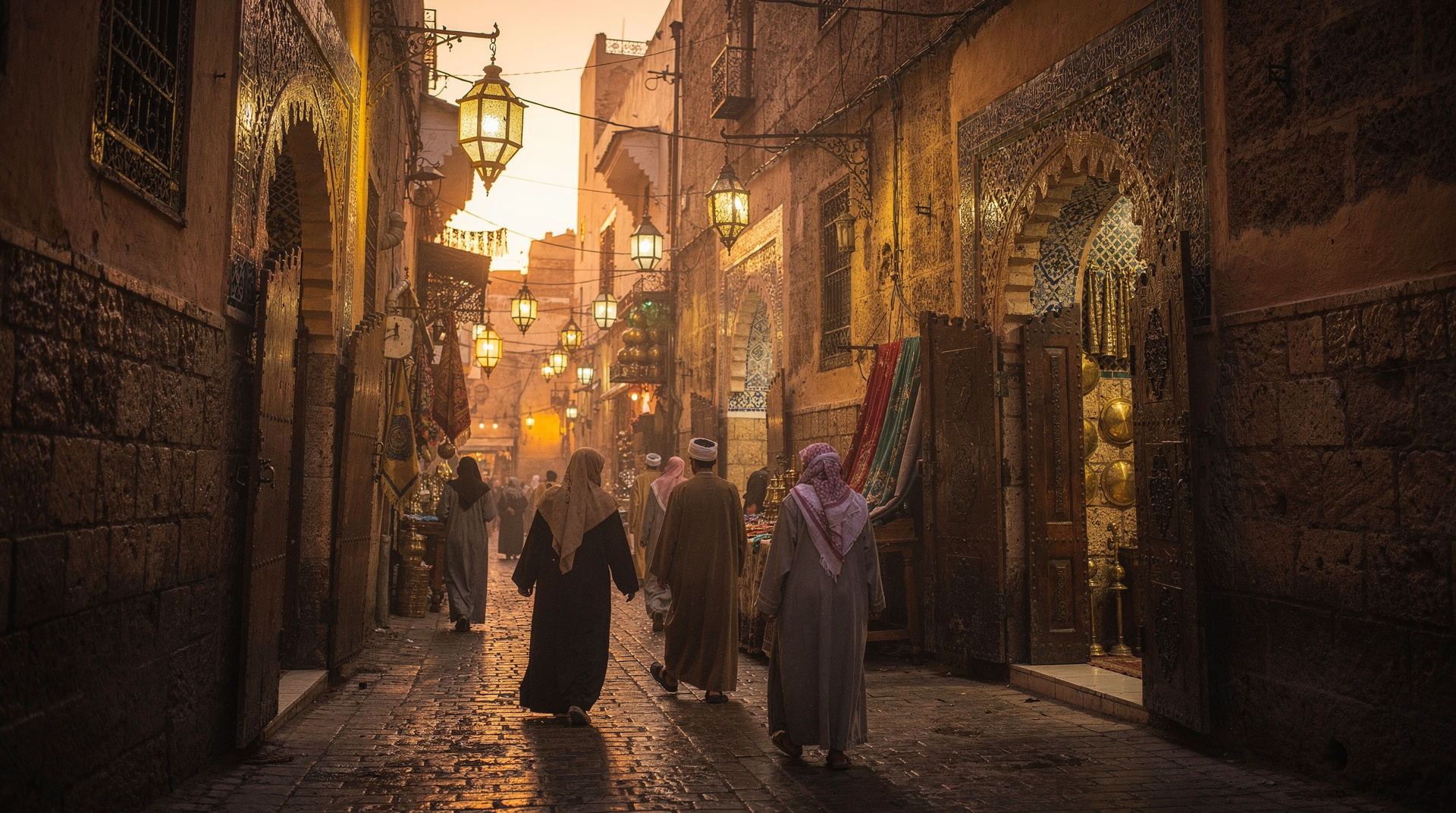
Rabat’s UNESCO-listed medina is compact and genuinely authentic — not set up for tourists in the way Marrakech’s souks are. The main souk street, Rue Souika, runs through the heart of it, lined with spice sellers, fabric merchants, and traditional artisans. The medina is best explored on foot without a guide; it is small enough that getting seriously lost is difficult. The Souk es-Sebbat (covered silversmith market) near the Jemaa el-Atiq mosque is a highlight.
Book a guided half-day walking tour of RabatMohammed VI Museum of Modern and Contemporary Art
Opened in 2014, this is Morocco’s most important modern art museum — a serious institution with a rotating programme of Moroccan and international contemporary work. The permanent collection includes major 20th-century Moroccan artists alongside sculpture and installation. Entry is 60 MAD. A welcome cultural counterpoint to the heritage circuit.
Salé Medina
Cross the Bou Regreg river into Salé — historically Rabat’s companion city and the base for the famous Salé pirates (the Barbary corsairs) in the 17th century. The medina is more traditional and less visited than Rabat’s, with a fine Merinid medersa (madrasa) near the Great Mosque. Give it 2 hours.
Where to Eat
Le Dhow (a converted wooden boat moored on the Bou Regreg riverfront) is Rabat’s most original restaurant — dining on Moroccan-fusion cuisine while watching the Kasbah Oudayas across the water. Dinner for two runs 400–600 MAD. Reserve ahead.
Cosmopolitan Restaurant (near the medina) is a solid choice for refined Moroccan cooking in a relaxed setting. The pastilla au pigeon and lamb mechoui are particularly good. Expect 150–250 MAD per person.
Borj Eddar (Boulevard de la Tour Hassan) offers excellent seafood — Rabat’s coastal position means the fish is as fresh as anything in Morocco. A simple grilled sea bass or loup de mer will run 120–180 MAD.
La Bonne Heure (Agdal district) is popular with Rabat’s professional class for lunch — good sandwiches, Moroccan pastries, and strong coffee. A step away from the tourist circuit in a pleasant residential neighbourhood.
Where to Stay
Mid-range (700–2,000 MAD / €70–200 per night)
Riad Kalaa (in the medina) is one of Rabat’s finest riads — a beautifully restored 18th-century townhouse with courtyard pool, roof terrace, and individually decorated rooms. Around 900–1,400 MAD per night including breakfast.
Hotel Balima (Boulevard Mohammed V) is a 1950s city-centre hotel opposite the parliament building — a slice of Art Deco history with comfortable rooms and a great pavement terrace café. From 700 MAD.
Villa Mandarine (Souissi district) is a boutique garden hotel in a quiet residential area, popular with business travellers and discerning tourists. Rooms from 1,200 MAD, excellent restaurant.
Budget (under 500 MAD / €50 per night)
Auberge de Jeunesse (near the train station) and several medina guesthouses offer basic rooms from 150–250 MAD. The medina options are more atmospheric but noisier.
Day Trips from Rabat
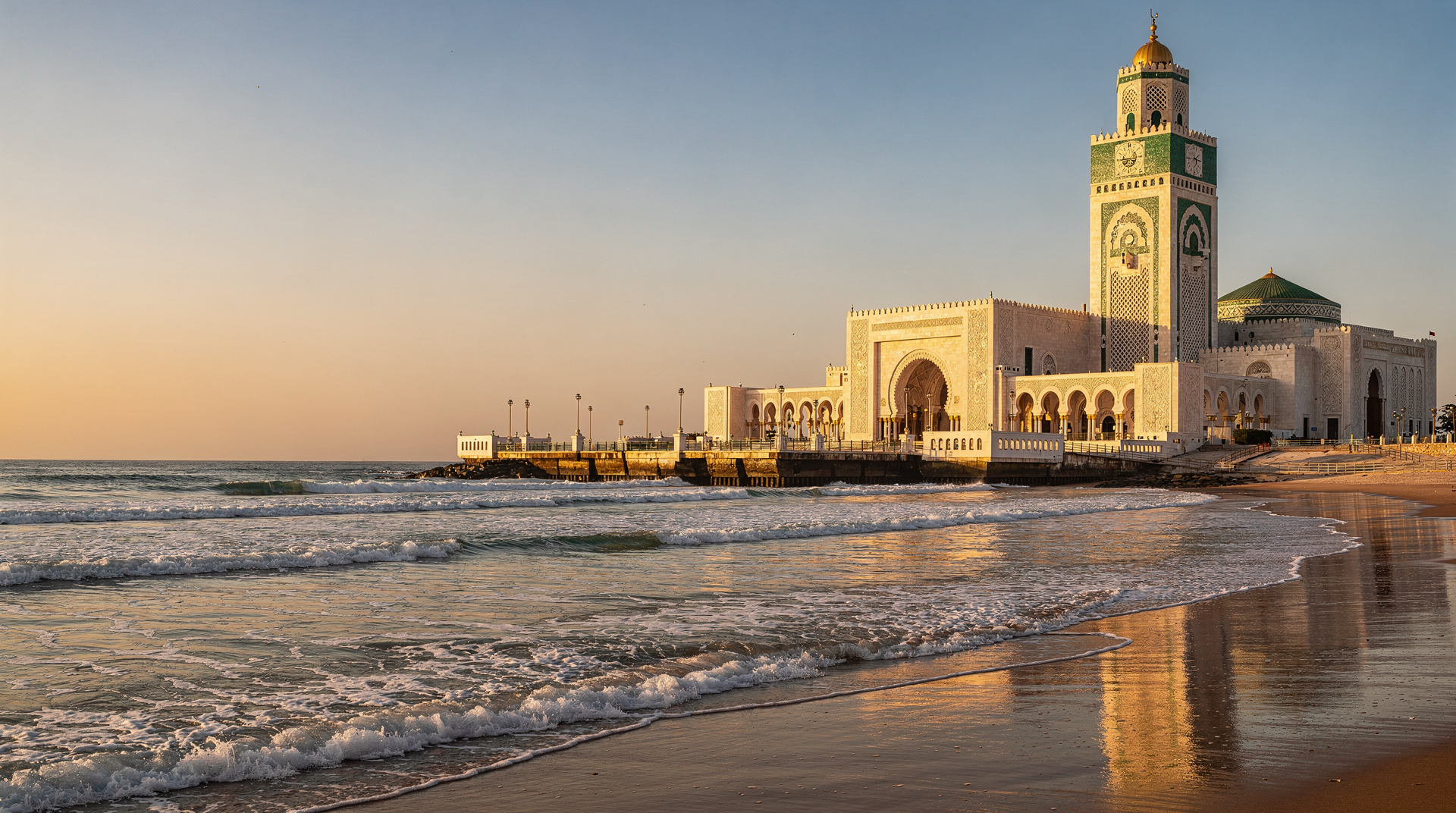
Casablanca: One hour by train, easily done as a day trip. The Hassan II Mosque, Art Deco architecture of the Corniche, and the Central Market are all reachable in a comfortable day. Trains run every 30 minutes.
Salé: Across the river by tram or boat — worth 2–3 hours for the Merinid medersa and the traditional medina.
Kenitra and Moulay Bousselham: 50 km north, the Merja Zerga lagoon at Moulay Bousselham is one of Morocco’s most important bird sanctuaries — flamingos, spoonbills, and migratory waders in season. A relaxed half-day.
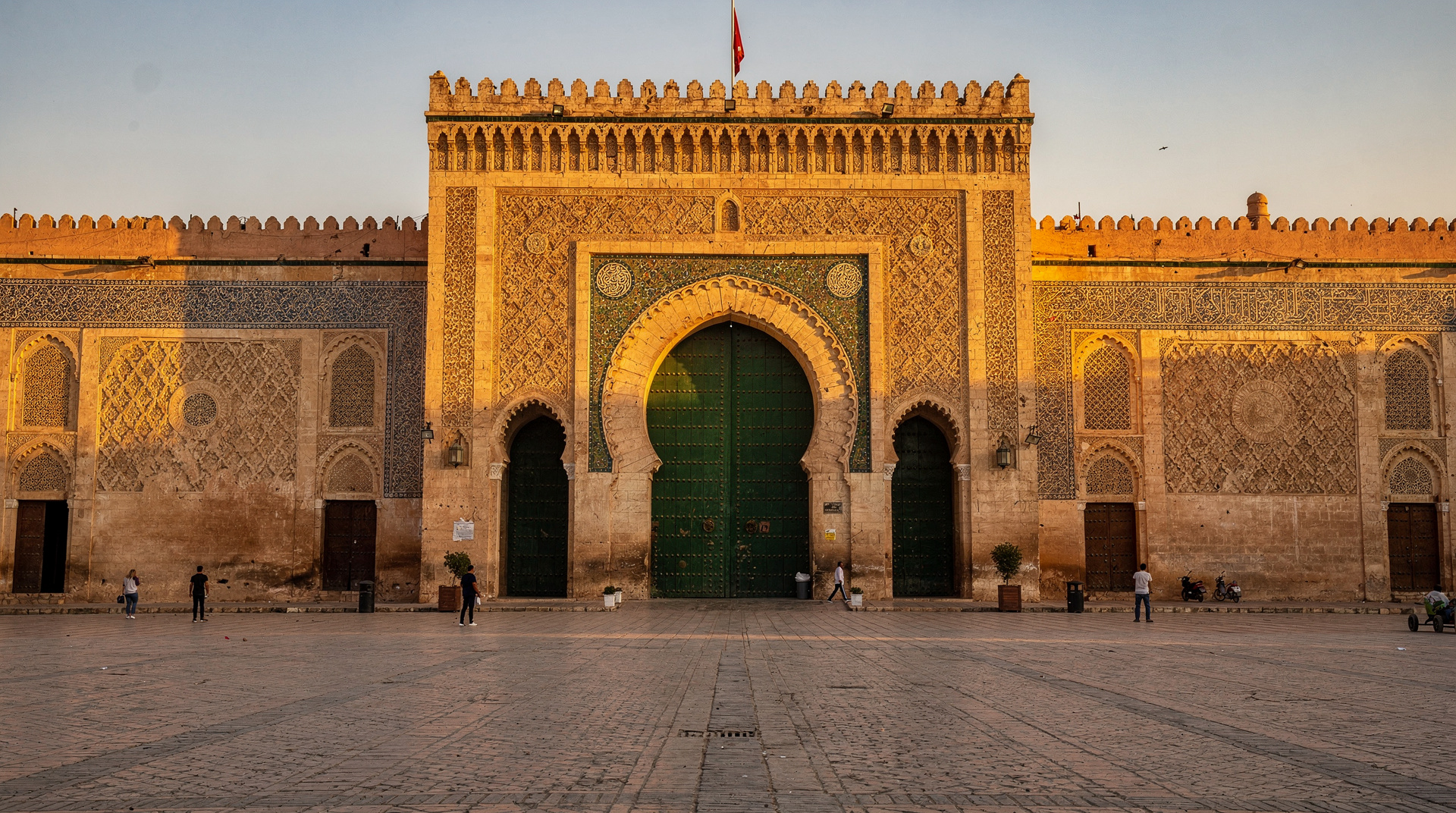
Meknes: 2.5 hours by train, Meknes is one of Morocco’s four imperial cities and often overlooked. The Bab Mansour gate and Moulay Ismail’s mausoleum are outstanding.
Practical Tips
Crowds: Rabat is significantly less touristy than Marrakech, Fes, or Chefchaouen. You will rarely feel overwhelmed. The medina is best explored in the morning; most monuments are quietest before 10 am.
Safety: Rabat is among Morocco’s safest cities. The medina, kasbah, and city centre are all comfortable to walk at night. Standard precautions apply.
Language: French is more widely used here than in Marrakech, reflecting Rabat’s administrative and diplomatic character. English is understood in hotels and tourist sites.
Royal palace: The Royal Palace (Dar al-Makhzen) is a large walled complex in the city — visible from outside but closed to the public. Don’t attempt to photograph it from close range; guards will intervene.
Best half-day circuit: Hassan Tower → Mohammed V Mausoleum (1 hour) → walk along the ramparts to Kasbah Oudayas (30 min walk) → Andalusian Garden → riverside café (1 hour) → walk back via Boulevard al-Alou to the medina.
When to Visit
Spring (March to May) and autumn (September to November) offer the ideal combination of mild temperatures (18–26°C), clear skies, and manageable tourist numbers. Rabat’s Atlantic climate is more moderate than Marrakech’s — summers are warm rather than brutal.
June to August is fine in Rabat — temperatures rarely exceed 32°C thanks to Atlantic breezes. This is actually a pleasant time to visit if you find Marrakech’s summer heat unbearable.
Winter (December to February) is mild and rainy. The monuments remain open; rain can make the Chellah gardens look especially atmospheric.
How to Fit Rabat into a Longer Itinerary
Imperial cities circuit (7 days): Casablanca → Rabat (2 nights) → Meknes → Fes (2 nights) → Chefchaouen → return. Rabat anchors the western end of this classic loop perfectly.
Atlantic coast route: If you are planning to explore Morocco’s western seaboard — Casablanca, Essaouira, and Agadir — Rabat works as a northern gateway. Fly into Rabat, travel south along the coast, fly home from Agadir.
First-time Morocco (10 days): Casablanca arrival → Rabat (1 night) → Fes (2 nights) → Marrakech (3 nights) → Essaouira (1 night) → return. Rabat gives first-timers an accessible, low-intensity introduction to Moroccan cities before the intensity of Fes.
See our comprehensive first-time visitor’s guide to Morocco and our Rabat day trip guide from Casablanca for planning essentials.
Rabat vs Casablanca vs Marrakech
| City | Vibe | Days needed | Best for |
|---|---|---|---|
| Rabat | Calm, historic, walkable capital | 1–2 days | History without crowds, relaxed pace |
| Casablanca | Modern, commercial, coastal | 1 day | Hassan II Mosque, Art Deco architecture |
| Marrakech | Intense, bazaar-driven, tourist-focused | 3+ days | Souks, riads, nightlife, day trips |
See our full Rabat vs Casablanca comparison for more on choosing a base along the Atlantic coast leg of a Morocco itinerary.
Frequently asked questions about Rabat Travel Guide
Is Rabat worth visiting if I only have limited time in Morocco?
If you have 10+ days and are already routing through Casablanca or Fes, yes — Rabat adds a genuinely different, calmer city experience for relatively little extra travel time (1 hour from Casablanca by train). If your trip is under a week, most travellers prioritise Marrakech and Fes instead and treat Rabat as a possible day trip from Casablanca.
How does Rabat compare to Fes or Marrakech for a first-time visitor?
Rabat is a much gentler introduction — smaller medina, less bazaar pressure, more green space — but it lacks the historical depth of Fes’s medina or the sheer energy of Marrakech’s souks. Most first-timers should see it as a complement to those cities, not a substitute.