How Morocco has changed in the last ten years
| At a glance | |
|---|---|
| Then (2013) | word-of-mouth backpacker circuit, patchy Google Maps coverage, riads still a niche accommodation choice |
| Now | Al Boraq high-speed rail, thousands of riads, premium pricing strategy, Instagram-driven crowds at photogenic sites |
| Cost shift | roughly double in real terms for riads, desert camps, and tourist-medina restaurants since 2014 |
| Biggest structural change | Al Boraq (Tangier-Casablanca in ~2h10) makes a car-free northern loop genuinely practical |
| Best time now vs then | same seasons (Mar-May, Sep-Nov) but book 6-8 weeks ahead — availability is tighter than a decade ago |
The Morocco I first visited no longer exists — and I mean that neutrally
My first trip to Morocco was in 2013. I had a Lonely Planet, a hostel booking, and a vague plan. The Fes medina was genuinely disorienting because Google Maps had not yet charted most of it. Chefchaouen was a real town that also happened to be spectacularly blue. Marrakech had significant tourist infrastructure but still felt like it existed on its own terms as much as for visitors.
A decade later, I keep returning. Morocco is still one of the most compelling places I have ever travelled. But it is a genuinely different country to visit than it was in 2013 — transformed by the same forces that have reshaped travel everywhere, plus a few specific to Morocco itself. Some changes are unambiguously good. Some are complicated. Some are losses.
Here is my honest attempt at a ten-year balance sheet.
The Al Boraq high-speed train: genuinely transformative
In 2018, Morocco opened Al Boraq, Africa’s first high-speed rail line. The Tangier to Casablanca route dropped from around five hours to two hours and ten minutes. The impact on how you can structure a Morocco trip is real.
Before Al Boraq, the logical route was fly into Marrakech, do the south, fly out. Or fly into Casablanca and do the imperial cities but treat it as a separate trip. The train now lets you fly into Casablanca or Tangier, do a northern loop through Rabat, Fes, Chefchaouen, and Meknes by train and local transport, then take Al Boraq back to Casablanca and catch a flight south to Marrakech — all in a week, without a car, at a pace that is actually pleasant.
I wrote a full account of riding Al Boraq for the first time when it opened, and the train has only gotten better. It is comfortable, punctual, and well-priced. Morocco now has a proper rail backbone that did not exist a decade ago. This is an unambiguous improvement.
The riad boom: more supply, more range, more risk
In 2013, staying in a riad in the Marrakech medina felt slightly adventurous. The supply of well-converted guesthouses was limited; the good ones were genuinely excellent, the bad ones were easy to spot because there were so few of them.
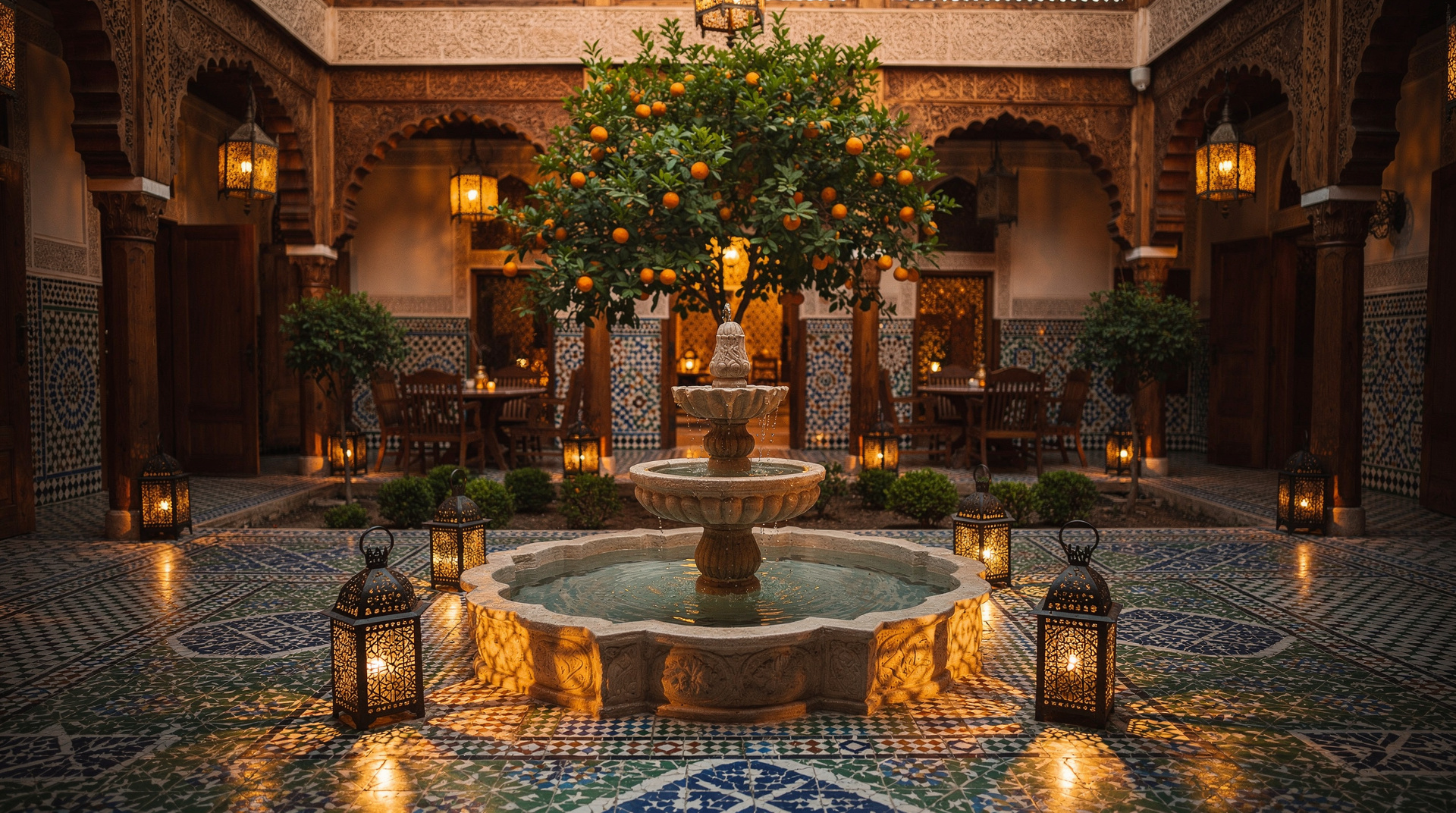
Today the riad market in Marrakech alone runs to several thousand properties. This is not a bad thing in itself — more supply means more price competition, more variety, and an overall quality floor that has risen. You can now find a beautiful, well-managed riad in Marrakech for 80 euros a night that would have cost twice that in 2014.
But it also means a market thick with mediocre conversions, budget places that call themselves “boutique riads” because the word no longer means anything, and a general flattening of the experience. The outstanding riads — the ones that feel like someone’s grandmother’s house crossed with a museum — still exist. You just have to do more work to find them.
The same boom has happened in Fes, Chefchaouen, and Essaouira. Every old medina in Morocco now has a thriving riad accommodation sector. The upside is that you can now sleep inside the historic fabric of these cities rather than in a characterless hotel in the new town. The downside is that “riad” has become marketing language rather than architectural description.
Jemaa el-Fnaa: changed and the same
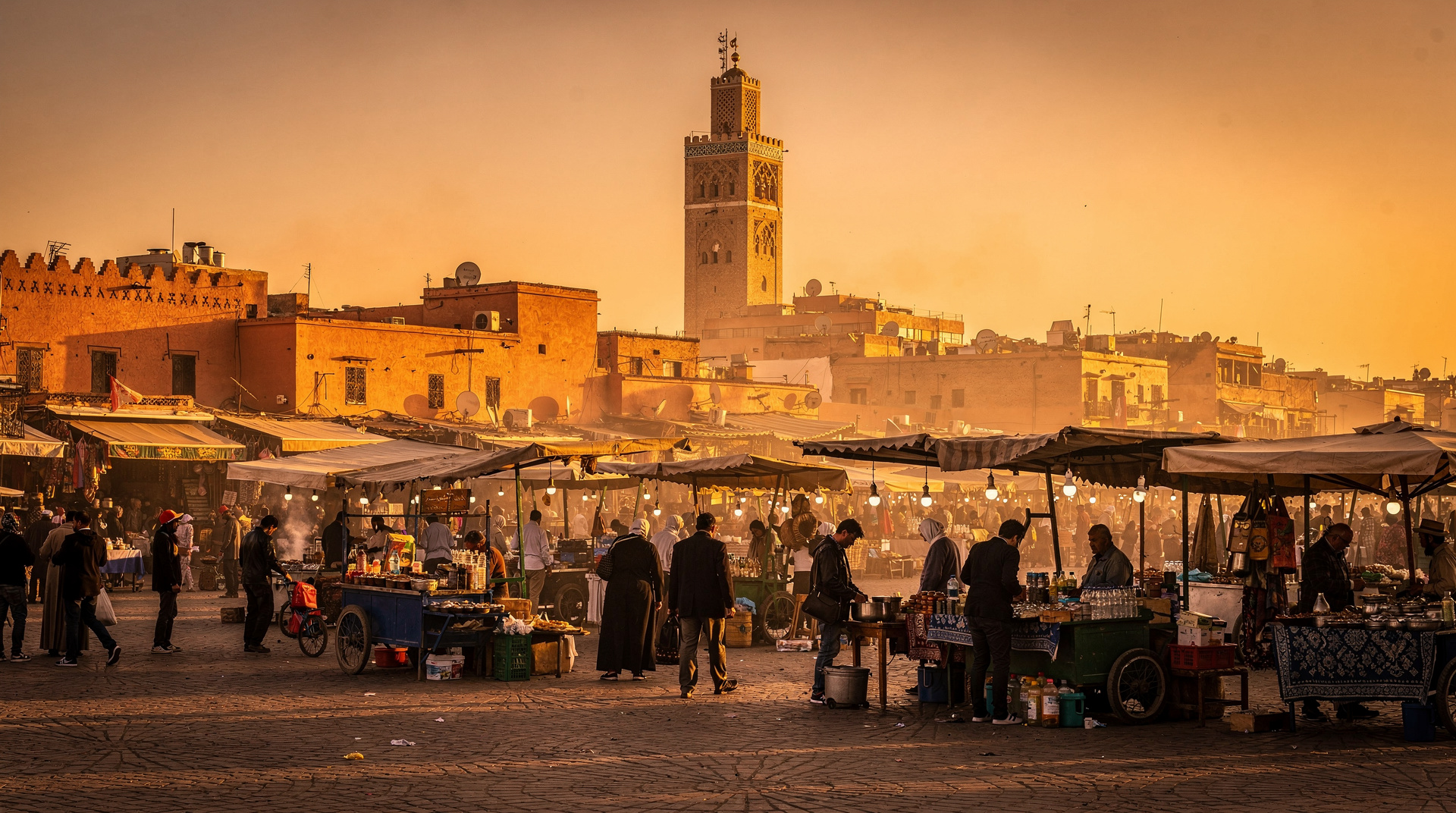
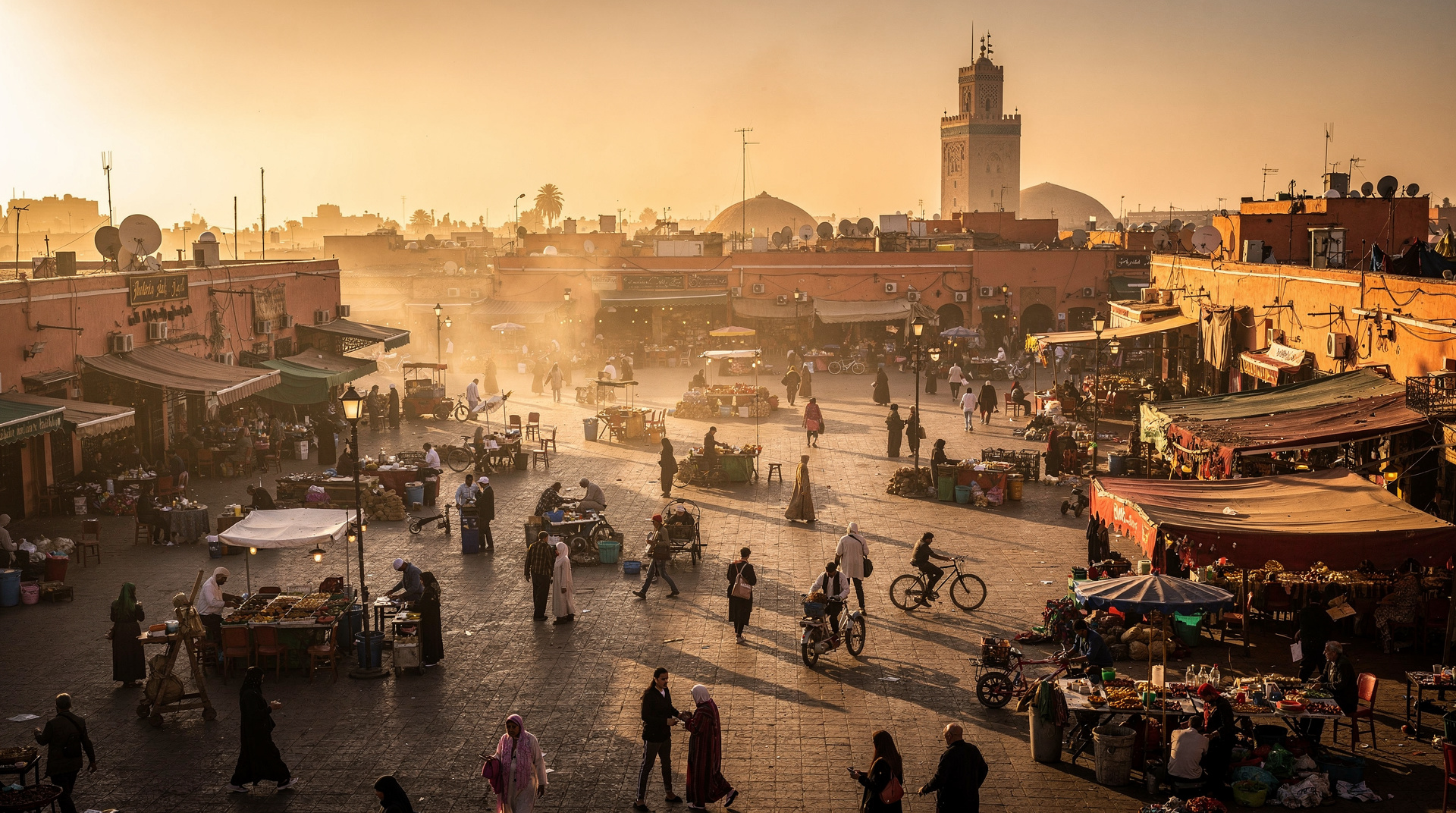
The great square of Marrakech is both exactly what it was and noticeably different. The storytellers and letter-writers who occupied the square for centuries — catering to an illiterate population that needed oral tradition and public scribes — have largely disappeared. The oral storytelling circles that once drew hundreds of locals are now rare, preserved more as performance for tourists than as a living social function.
What has expanded is the tourist-facing economy of the square: more henna women, more photo-with-animal operators, more grill smoke, more orange juice stalls charging prices that bear no relationship to those charged to Moroccans. The square is larger in its tourist density and smaller in its local authenticity than it was ten years ago.
And yet. Stand at the edge of the square at dusk and the Koutoubia minaret still rises over the western skyline. The call to prayer still cuts through the noise in a way that stops conversations. The Gnawa musicians are still there. The food stalls at night still cook the same offal and snail soup they have always cooked. Some core of the thing persists through the commercialisation, and I find myself fiercely protective of it even as I describe its degradation.
Chefchaouen: the Instagram transformation
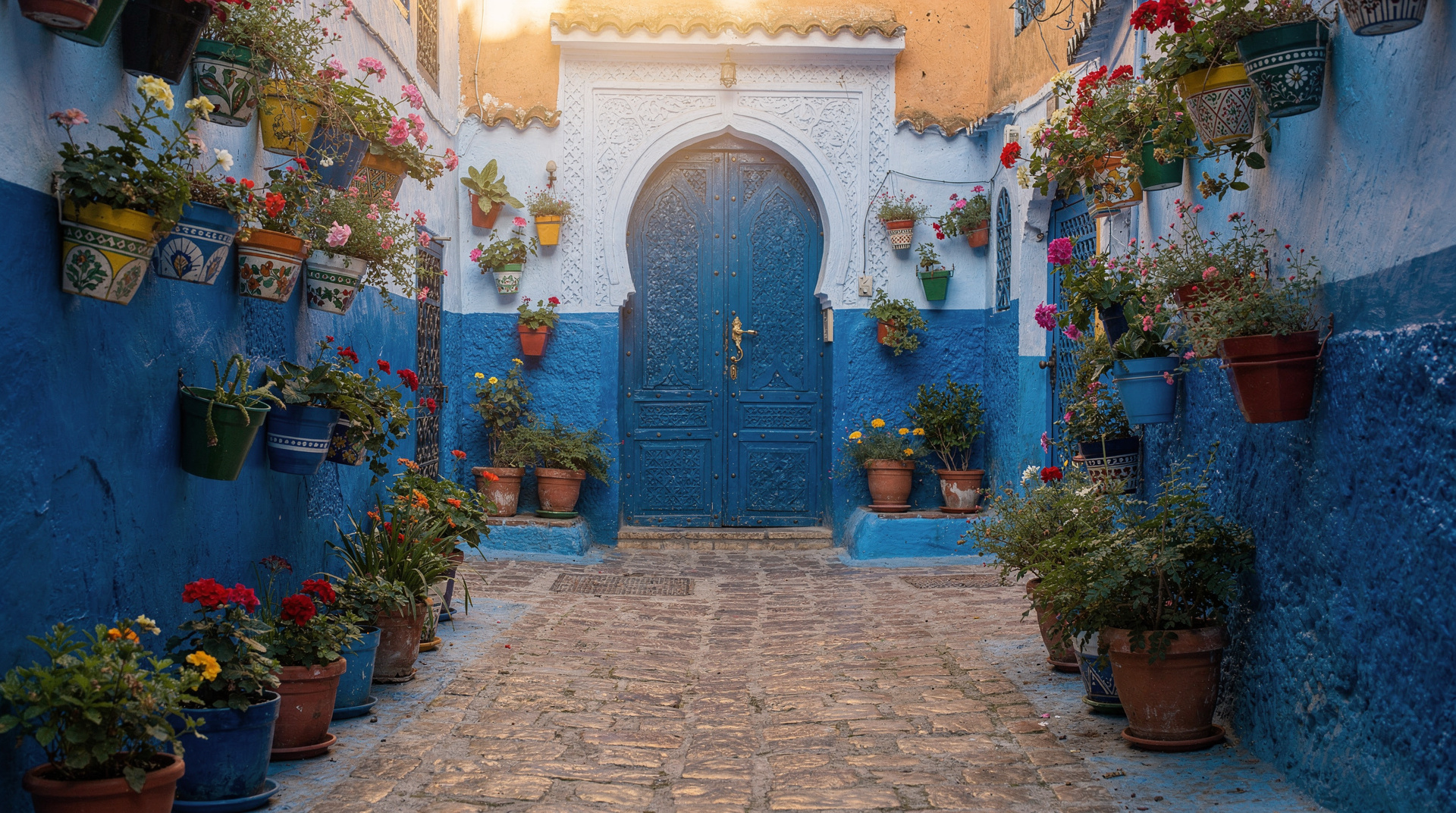
This is the most dramatic change I have witnessed across a decade. Chefchaouen in 2013 was a small hill town in the Rif that happened to be painted blue, visited primarily by backpackers who had heard about it through word of mouth. I spent three days there and encountered perhaps forty other tourists on my first visit.
The Instagram boom changed this completely and irreversibly. Chefchaouen is now one of the most photographed cities in Africa. The blue-painted streets appear on every Morocco travel roundup, every Instagram Morocco compilation, every “10 most beautiful places in the world” article. The town receives visitor numbers it was never built to handle, concentrated in the photogenic alleys of the medina in ways that create genuine bottlenecks.
I wrote a full piece on what Chefchaouen looks like versus Instagram that goes into this in detail. The short version: it is still beautiful. The photography can still be stunning if you go early. But the experience of wandering the medina in mid-morning peak hours is now less about the blue city and more about navigating around other people trying to photograph the blue city.
The tourism infrastructure upgrade
Some things have genuinely improved without qualification. Morocco has invested significantly in tourist infrastructure over the last decade. More airports with international connections. Better road surfaces on the major routes. More reliable mobile data coverage (even in the Sahara, 4G is now common). A larger pool of trained, English-speaking guides. Better food safety standards in tourist-facing restaurants.
The 2023 earthquake in the High Atlas caused devastating local damage, but the Moroccan government’s response and the rebuilding effort around affected villages and kasbahs has been more visible and better organised than many observers expected. The Atlas mountains region, including routes around Imlil and Toubkal, has been largely rebuilt and is fully accessible to visitors again.
The price inflation
Morocco is no longer the cheap destination it was in 2013. A good riad in Marrakech costs more in real terms than it did a decade ago. Restaurant prices in the tourist medinas have risen faster than inflation. The camel ride at Merzouga, the hot air balloon over the Palmeraie, the hammam in the medina — all cost meaningfully more in euros than they did ten years ago.
This is partly global inflation and partly the effect of Morocco’s growing middle class changing the economics of the tourism sector. It is also partly a deliberate strategy: Morocco’s tourism ministry has been explicitly positioning the country as a “premium” destination rather than a budget backpacker stop.
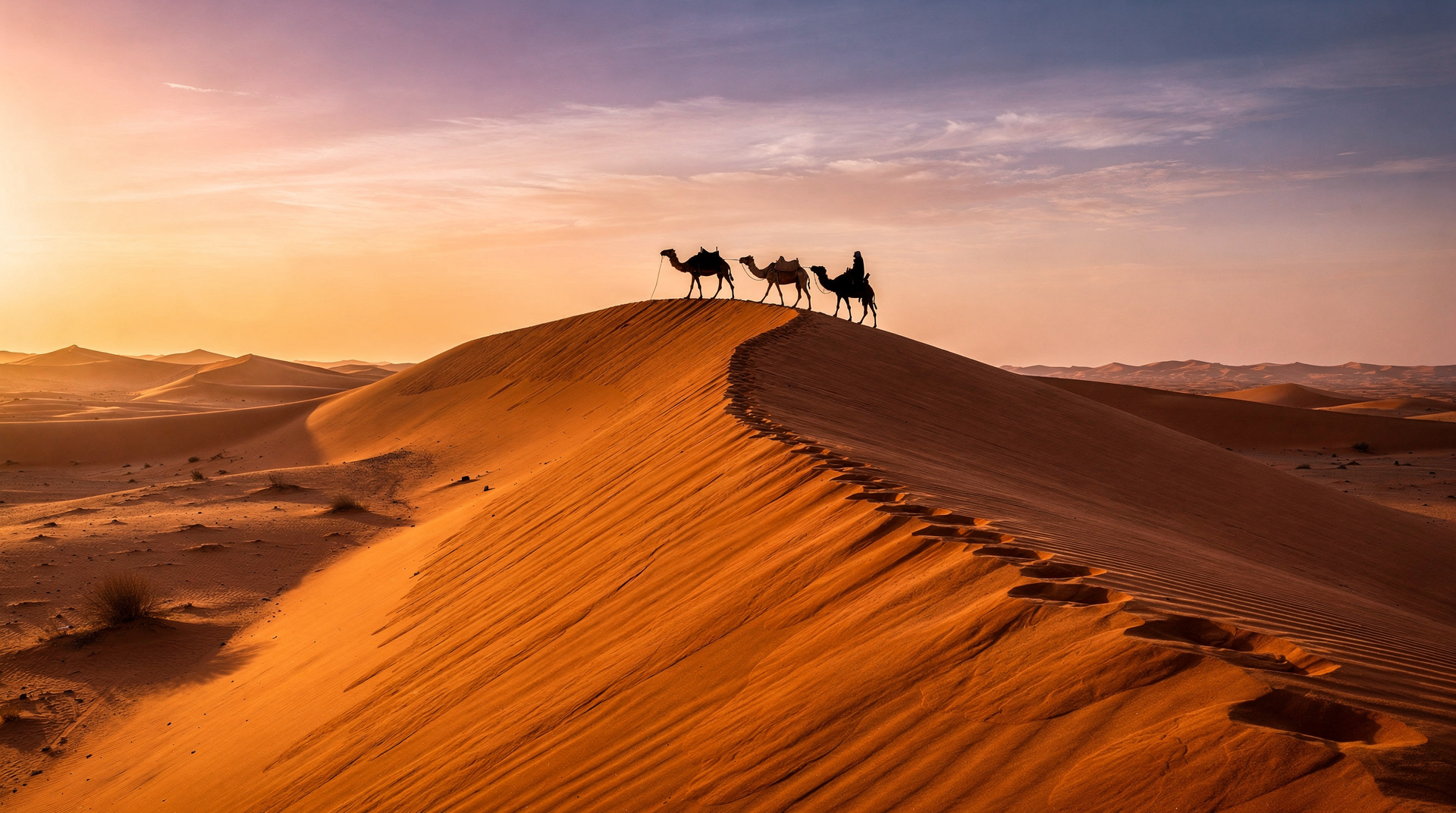
The Sahara camp price gap is a perfect illustration. In 2014, a decent overnight camp at Erg Chebbi cost 40–60 euros per person. The same quality camp today costs 80–120 euros. A luxury camp that would have cost 150 euros in 2014 now starts at 300. The experience is largely similar — the stars are the same stars. But the pricing structure has moved significantly upmarket. For a concrete comparison, the current overnight desert camp in Merzouga with camel trek gives you the real 2024 price — the standard experience, honestly priced.
Our budget guide for Morocco tries to give honest current numbers. It is updated annually.
The social media effect on experience itself
This is the change that is hardest to describe and most felt on the ground. When I first visited the tanneries in Fes in 2013, the experience of looking down at the leather workers from a terrace above was intimate and slightly illicit — you were watching something industrial and ancient in a way that felt like a privilege. Now the terraces above the tanneries are structured tourist viewing platforms, and the photographers standing three-deep around the viewing holes are part of the attraction as much as the tannery itself.
Every photogenic corner of Morocco has had this happen to it to some degree. The painted doors of Chefchaouen. The sand dunes at Erg Chebbi. The rooftop at sunset in Marrakech. What was once discovered is now packaged. What was once accidental is now curated.
And yet people keep discovering Morocco for the first time and having their breath taken away. The experience is still genuine even when the staging around it is not. A first-timer arriving in Fes and walking into the medina has no frame of reference for what it looked like before the terrace was built — they just see the tannery, which is extraordinary, and they feel the thing they are supposed to feel.
Perhaps this is how it has always worked. Every generation thinks it arrived in a country just after it was ruined by tourism. The previous generation thought the same thing. The Morocco I first visited in 2013 would have seemed unforgivably commercialised to someone who arrived in 1993. What persists is the country itself — the architecture, the food, the landscape, the culture — and that is still, ten years on, worth every hour of getting there.
What has not changed
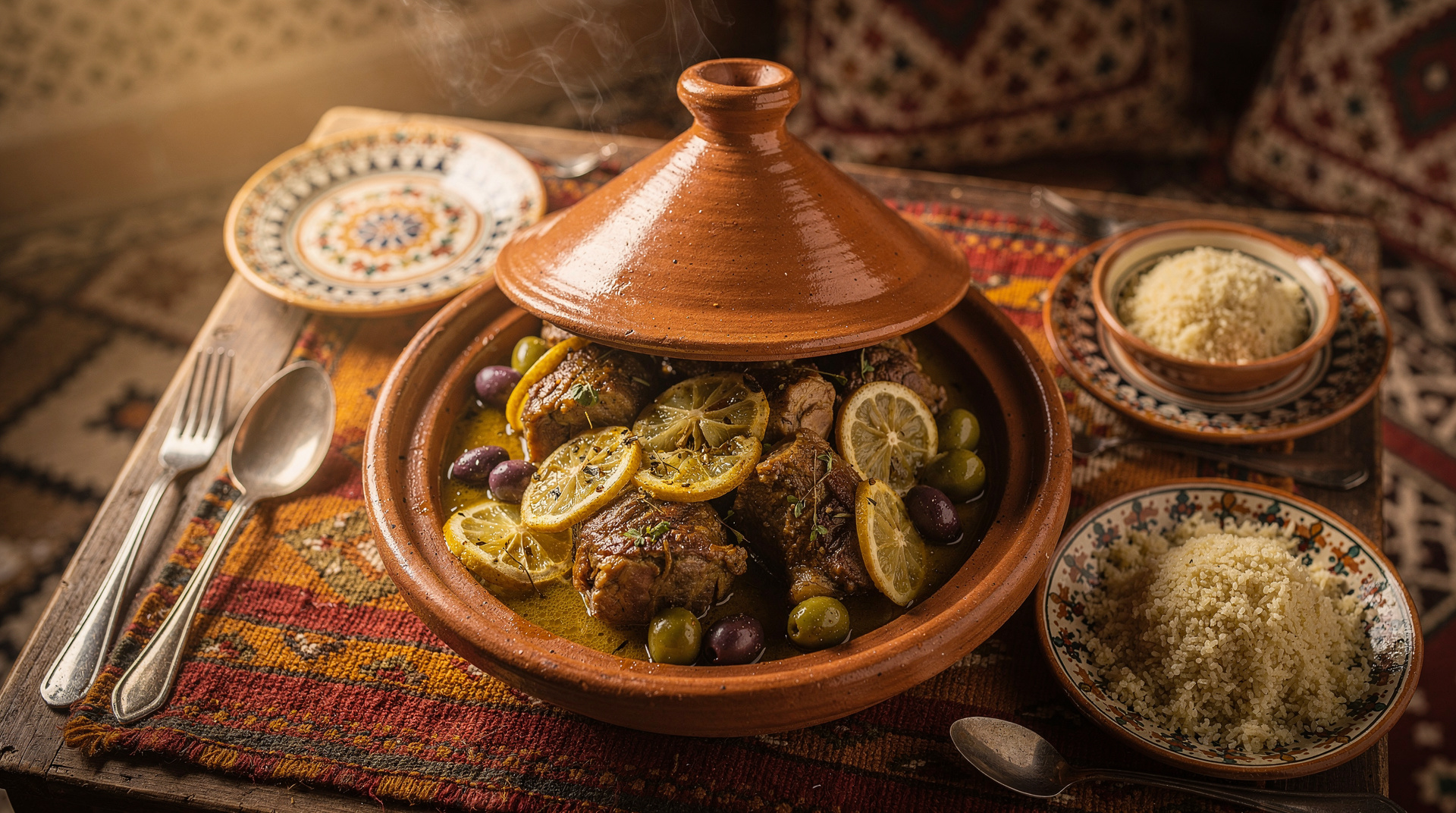
The drive over the Tizi n’Tichka pass at dawn, when the light hits the Anti-Atlas valleys and the shadows are still deep in the gorges. The taste of bissara from a street stall at 7 am. The call to prayer from a minaret in an unguarded moment. The mathematics of light in a Fes alleyway at 4 pm in November. The Sahara sky at 2 am when the generator is off and the Milky Way runs uninterrupted from horizon to horizon.
Some things are not Instagram-able in any meaningful sense. They just happen to you if you slow down enough. That, at least, Morocco still delivers.
Planning a trip now vs ten years ago
If you are planning a Morocco trip in 2024 or 2025, a few adjustments from conventional wisdom will serve you well:
- Book early: Riad availability in peak season (March–May, September–November) is tighter than ever. Six to eight weeks out is not excessive.
- Prioritise less-visited destinations: Essaouira, Meknes, Asilah, Sefrou, and the Draa Valley all offer Morocco’s DNA without peak-season crowds.
- Take Al Boraq: The train between Tangier and Casablanca is one of the genuine pleasures of a Morocco trip. Build it in.
- Budget higher: The Morocco of a decade ago’s budget guides is gone. Plan 80–120 euros per person per day for a comfortable mid-range trip, more in peak season in popular cities.
- Go early in the day: Every photogenic spot is significantly better before 10 am. This is not new advice but it is more important than it was.
- Use guided tours for the medina: A decade ago you could walk the Fes medina alone and muddle through. Today, the payoff for hiring a proper guide is even higher because the tourist-facing maze has deepened. The Fes full-day cultural tour cuts through ten years of tourist layering and gives you the city that still exists underneath it.
Our 10-day Morocco itinerary reflects current realities and is the framework I would use if I were planning a first-time trip today.
Then vs now, by the numbers
| Category | 2013-2014 | Today | Change |
|---|---|---|---|
| Tangier-Casablanca transit | ~5 hours by road | ~2h10 on Al Boraq | Transformed |
| Marrakech riad (mid-range) | ~40-60 euros/night | ~80-120 euros/night | Roughly doubled |
| Merzouga desert camp (standard) | ~40-60 euros/person | ~80-120 euros/person | Roughly doubled |
| Chefchaouen annual visitors | ~200,000 | 800,000+ | Quadrupled |
| Booking lead time (peak season) | 1-2 weeks usually fine | 6-8 weeks recommended | Significantly tighter |
If this pattern of rising prices and crowds worries you, our best time to visit guide and the budget Morocco itinerary both address how to plan around it rather than against it — shoulder-season timing and less-visited stops like Meknes still deliver the 2013 experience in 2026.
Frequently asked questions about How Morocco has changed in the last ten years
Is Morocco more expensive now than it used to be? Yes, meaningfully so. Riads, desert camps, and tourist-medina restaurants have roughly doubled in real terms since 2013-2014, partly from global inflation and partly from a deliberate shift toward premium positioning by Morocco’s tourism sector.
Has Morocco’s tourism boom made it not worth visiting anymore? No — the country’s core appeal (architecture, landscape, food, culture) is intact, and infrastructure has genuinely improved (Al Boraq, road quality, connectivity, guide training). The trade-off is more crowding at famous photo spots and higher prices, both manageable with off-peak timing and less-visited destinations.