I took Al Boraq, Africa's first high-speed train — here's what it's like
A brief history of something worth celebrating
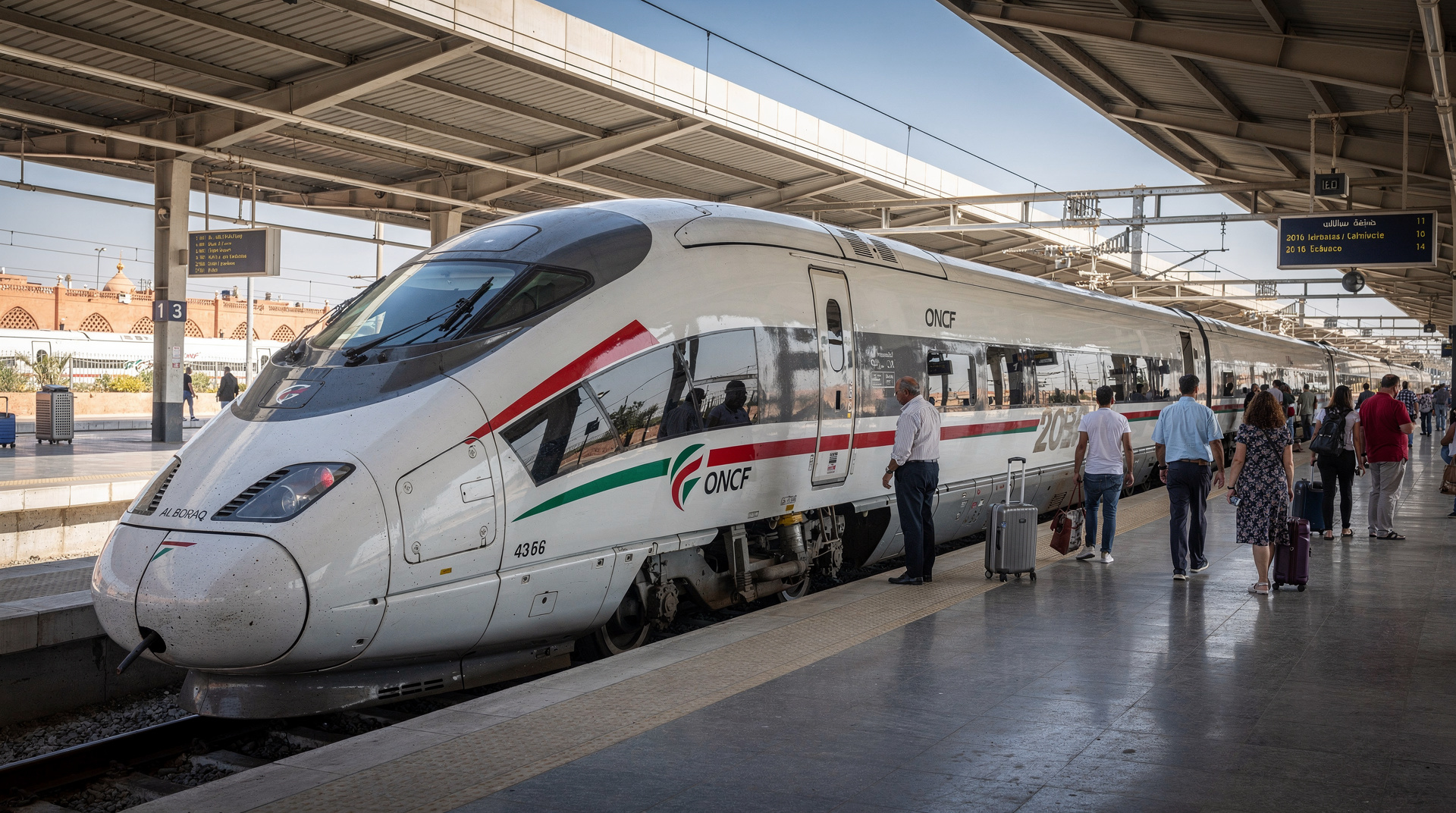
In November 2018, Morocco opened Africa’s first high-speed rail line. Al Boraq — named after the mythological creature that carried the Prophet Muhammad to heaven — connects Tangier to Casablanca at speeds up to 320 km/h, reducing a journey that previously took five hours to two hours and ten minutes. The line continues in conventional service from Casablanca through Rabat and south to Marrakech.
I rode it for the first time in late November 2019, on an impromptu Tangier trip that happened to coincide with a month I had been tracking since the 2018 launch. This is my account, updated substantially in November 2024 after riding it three more times to check what has and has not changed.
Update note (November 2024): The train is broadly the same as when I first rode it in 2019 — well-maintained, reliable, and comfortable. Prices have increased by roughly 15–20% since 2019. The booking system has improved significantly and online purchase is now simple. I have updated all prices and logistics below to reflect 2024 reality.
At a glance
| Route | Tangier-Ville to Casablanca (Casa-Voyageurs), around 2h10 |
| Cost | Second class around 240-260 MAD, first class around 390-420 MAD (roughly 22-39 euros) |
| Frequency | Around 6 departures daily each direction, roughly 6:10am to 7pm |
| Book via | ONCF website or app (international cards accepted on the website) |
| Best for | The Tangier-Casablanca corridor only — it does not reach Marrakech, Fes, or the south |
The Tangier-Ville station
Al Boraq departs from Tangier-Ville station, in the city centre, rather than Tangier-MED port, which is 40 km east and serves the ferries from Spain. This is an important distinction: if you are arriving by ferry from Algeciras or Tarifa, you arrive at Tangier-MED and need a train connection to Tangier-Ville before boarding Al Boraq. There are regular shuttle trains making this connection; allow 60–90 minutes for the transfer, including customs.
Tangier-Ville station itself was renovated in anticipation of Al Boraq and is genuinely pleasant — airy, modern, with good signage in Arabic, French, and English. There are cafés, a baggage storage service, and what felt on my 2024 visit like a meaningfully improved food offering compared to 2019. The WiFi works in the station.
Booking and prices (2024)
Al Boraq is operated by ONCF (Office National des Chemins de Fer), Morocco’s national railway. Booking is through the ONCF website or app, available in French and Arabic. The interface is functional and card payment is accepted.
Current Al Boraq prices (Tangier to Casablanca, 2024):
- Seconde classe (standard): 240–260 MAD (approximately 22–24 euros)
- Première classe: 390–420 MAD (approximately 36–39 euros)
First class is worth the extra on this route: wider seats, a small meal service (sandwich, pastry, beverage), and meaningfully more leg room. For a two-hour journey, it is not strictly necessary — the second-class seats on Al Boraq are more comfortable than the first-class seats on most European regional trains — but if you are treating this as an experience worth doing properly, spend the extra 14 euros.
One logistical note: the ONCF app requires a Moroccan phone number for account registration, which can create friction for first-time users booking from abroad. The workaround is to book directly on the ONCF website, which accepts international cards without account registration for simple single-journey tickets.
The train itself
Al Boraq is a Siemens Velaro train — the same family as the German ICE and the Spanish AVE. The rolling stock is modern, air-conditioned, and clean. The interior is designed with Moroccan geometric tile patterns on the seat fabrics and headrests, which is a nice touch. The seats are comfortable for two hours. The windows are large and the Moroccan landscape — the Rif foothills giving way to the Loukkos River plains and then the Atlantic coast — is worth watching.
The ride itself, at speed, is smooth. I did not feel the 320 km/h. Between Tangier and Casablanca, Al Boraq runs without stops. This is the key differentiator from the conventional ONCF intercity service, which stops at every city along the route.
The WiFi on board is functional but not fast enough for video streaming. A download before boarding is advisable.
The journey: what you see
Leaving Tangier, the train runs through the outskirts of the city and into the hills of the Rif foothills. For the first twenty minutes, the landscape is green and agricultural — a kind of northern Morocco that visitors who only see Marrakech and the desert do not know exists. Winter and spring, these hills are genuinely beautiful.
The train follows the Atlantic coast for a significant stretch before turning inland toward Casablanca. On a clear day, you can see the ocean from the left side of the train (sitting facing the direction of travel, second class, window seats on the left are the better side). There are fishing villages, wetlands, and industrial salt flats along this stretch that are quietly interesting.
The approach to Casablanca is industrial — the port, the refineries, the container facilities. But the train arrives at Casa-Voyageurs station, which is in a functional part of the city, close to the main bus terminals and the city tramway.
Casablanca to Marrakech: the connecting service
From Casablanca, the conventional ONCF intercity service continues south to Rabat and Marrakech. This section is not high-speed — the train is conventional ONCF stock, slower, and takes approximately 3 hours from Casablanca to Marrakech. The full Tangier to Marrakech journey by train (Al Boraq plus connection) takes approximately 5.5 hours with a transfer at Casablanca.
This is the realistic option for a north-to-south Morocco trip without flying: Tangier-Casablanca by Al Boraq, Casablanca-Marrakech by intercity ONCF. The total cost is approximately 350–450 MAD (32–42 euros) for the full journey in second class, which is excellent value for a 5.5-hour trip covering 700 km.
For the Casablanca to Marrakech section specifically, the ONCF first-class sleeping option on overnight trains is worth considering if you want to travel between cities without losing a day to transport.
How to build Al Boraq into your Morocco trip
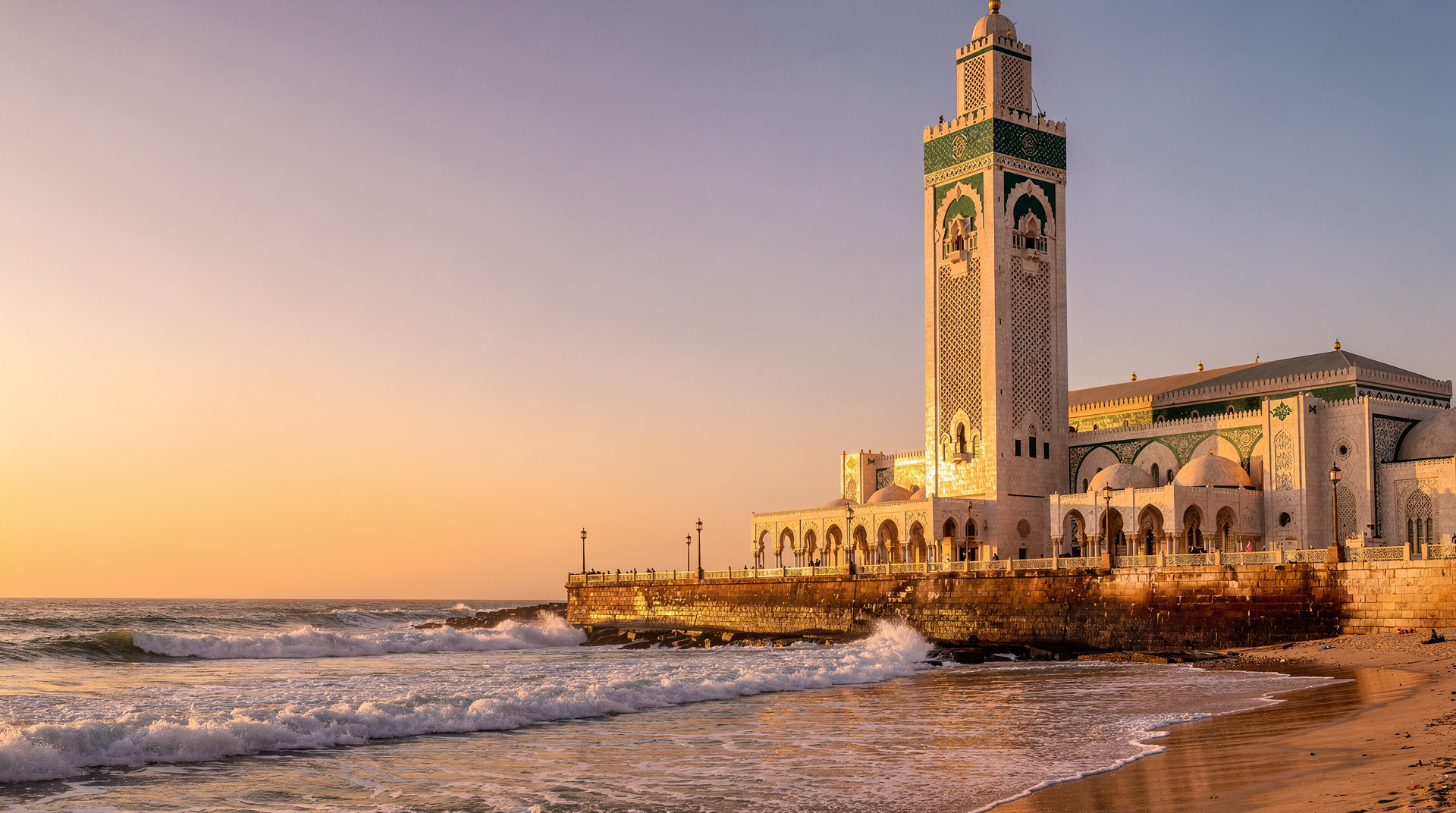
The most natural Al Boraq itinerary is a northern loop: fly into Casablanca, take Al Boraq north to Tangier, explore Tangier and Chefchaouen and perhaps Fes by local train and grand taxi, then take Al Boraq back to Casablanca and fly south to Marrakech for the southern portion of the trip. In Casablanca itself, the guided Casablanca city tour with Hassan II Mosque entry is a worthwhile half-day layover before or after the train — the mosque alone justifies the stop.
This structure uses the train for the one long-distance leg it genuinely excels at (Tangier to Casablanca or reverse) while using other transport for the rest. Our 10-day Morocco itinerary has an imperial cities variant built around exactly this structure.
Alternatively, for travellers primarily interested in northern Morocco: fly into Tangier, travel Al Boraq to Casablanca, explore Rabat, take a connecting train to Fes, loop through Meknes, Volubilis, and Chefchaouen by bus and grand taxi, and fly home from Fes or Casablanca.
A 3-hour private walking tour of Tangier’s kasbah, medina, and souks makes good use of the time before your train departs — Tangier rewards an hour or two on foot with a local guide far more than a solo wander. The Al Boraq makes Tangier a genuinely useful arrival airport rather than a detour.
The comparison: Al Boraq versus private car versus bus
Al Boraq vs private car: On the Tangier-Casablanca route, the train wins on time (2:10 vs 4:30 by car) and wins on cost for solo or pair travel. A private car makes more sense for the desert circuit and Atlas routes that the train does not cover.
Al Boraq vs CTM bus: The CTM bus Tangier-Casablanca takes approximately 5 hours and costs 120–150 MAD. The Al Boraq is 100 MAD more expensive in second class and 3 hours faster. For most travellers, the time saving is worth the additional cost.
Al Boraq vs flying: No internal Morocco flight connects Tangier and Casablanca. The next-nearest hub is Fes, and flights are sporadic. The train is the only sensible option for this corridor.
Practical notes
- Station at Tangier: Tangier-Ville, in the city centre. Not Tangier-MED (the port).
- Station at Casablanca: Casa-Voyageurs, on the eastern edge of the city centre. Tramway connection to the centre and the Hassan II Mosque area.
- Luggage: No weight limit, but luggage must fit in the overhead rack or the designated luggage areas. No bicycle carriage.
- Frequency: Al Boraq runs approximately 6 times per day in each direction. First departure from Tangier at approximately 6:10 am, last at approximately 7:00 pm. Check ONCF.ma for current timetable.
- Left luggage: Available at both Tangier-Ville and Casa-Voyageurs. Approximately 20–25 MAD per bag per day.
Our getting around Morocco guide covers the full transport picture, including when to use the train versus bus versus grand taxi versus private driver, with price comparisons for 2024. Our Tangier destination guide and Casablanca guide have city-specific transport logistics.
The Al Boraq is not a revolution in Moroccan travel — the country’s roads and domestic flight connections remain the primary transport infrastructure for most visitors. But it is a genuine pleasure to ride and makes a specific class of itinerary (northern Morocco circuit, Tangier to Casablanca corridor, onward connection to Marrakech by train) genuinely elegant. Africa’s first high-speed train is, five years on from opening, a justified source of Moroccan national pride.
Who should build a trip around it
If your Morocco trip is arriving or departing through Tangier — whether by ferry from Spain or by flight — Al Boraq is close to a no-brainer for the leg south, and it pairs naturally with our Morocco by train itinerary, which is built almost entirely around ONCF connections rather than a rental car or private driver.
If your route skips Tangier entirely (a straight Marrakech-in, Marrakech-out trip, for instance), Al Boraq simply will not feature — it does not run south of Casablanca, and our Marrakech versus Fes and 7 versus 10 days guides are more relevant starting points for planning that kind of loop. For travellers weighing train against a hired car for the whole trip, our should you use a private driver in Morocco piece covers the trade-offs region by region — the short version is that a driver wins once you are off the Tangier-Casablanca corridor and into the Atlas or Sahara.
Seat selection and timing tips
Booking two or three days ahead is enough for most departures outside peak Moroccan holiday weekends (Eid, mid-August). If you have a flexible schedule, the very first and very last departures of the day tend to have the most available seats and, anecdotally, the calmest platforms. Window seats on the left side (facing the direction of travel, Tangier to Casablanca) get the Atlantic coast views described above; if you are travelling the reverse direction, that means booking a right-side window instead. Families travelling with a stroller or a lot of luggage should aim for the middle carriages, which have more of the designated luggage racks than the end carriages.
Frequently asked questions about I took Al Boraq, Africa’s first high-speed train — here’s what it’s like
Does Al Boraq go all the way to Marrakech? No. Al Boraq’s high-speed line runs only between Tangier and Casablanca. From Casablanca, a conventional (non-high-speed) ONCF train continues to Marrakech, adding roughly 3 hours to the journey.
Do I need to book Al Boraq tickets in advance? It is not strictly necessary outside peak Moroccan holiday periods, but booking 2-3 days ahead through the ONCF website secures your preferred class and seat side, and avoids any risk of a sold-out departure.