Marrakech International Film Festival: the complete visitor guide
Can I attend the Marrakech Film Festival for free?
Yes — public screenings on Jemaa el-Fnaa are free and open to everyone, typically running nightly during the festival week. Official competition screenings at the Palais des Congrès require accreditation or tickets. The outdoor Jemaa el-Fnaa screenings draw the biggest crowds and are the most atmospheric part of the festival for general visitors.
At a glance
| Where | Jemaa el-Fnaa square (free screenings) and the Palais des Congrès (competition, accredited/ticketed) |
| Cost | Free for outdoor screenings; competition access requires accreditation or limited public tickets |
| Time needed | 2-3 evenings covers the free festival experience; a full week for accredited industry visitors |
| Getting there | Marrakech Menara Airport (RAK), around 20 minutes from the medina by taxi |
| Best time | Arrive 30-45 minutes before the evening screening for a good spot on the square |
What the Marrakech International Film Festival is
The Festival International du Film de Marrakech (FIFM) is one of Africa’s most prestigious film festivals and the Arab world’s leading cinema event. Founded in 2001 under the patronage of King Mohammed VI, the festival has hosted an international jury and screened films in competition alongside retrospectives, tributes, and special events for over two decades.
The festival’s format is part Cannes (international competition with jury and awards), part city-wide cultural event (free public screenings, outdoor shows, celebrity-adjacent tourism), and part Moroccan cultural showcase. For general visitors who happen to be in Marrakech during the festival week, the experience is accessible, atmospheric, and free at its best moments. For serious film industry people, it’s a legitimate working festival with credentialed press and industry access.
Dates: when the FIFM happens
The Marrakech International Film Festival runs annually in late November or early December — typically the last week of November, occasionally extending into the first days of December. The 2025 festival ran from 28 November to 6 December. Based on this pattern, the 2026 festival is likely to run approximately 27 November to 5 December 2026.
Official dates for each year are typically announced in September-October. Check the festival’s official site (festivalmarrakech.info) for confirmed 2026 dates.
Why late November? The timing is deliberate: November-December is shoulder season in Marrakech, after the October peak. The festival brings a concentrated influx of film industry professionals, journalists, and tourist interest that extends the busy season. Temperatures in late November in Marrakech are pleasant — 18-22°C during the day, dropping to 10-12°C in the evenings.
The competition: what’s shown
The main competition screens approximately 10-15 international films competing for the Étoile d’Or (Golden Star) and other awards. The jury, composed of international film professionals, watches the competition films and awards prizes at the closing ceremony.
The programming philosophy: The Marrakech festival actively seeks films from underrepresented cinema traditions — African, Arab, and Asian cinema features prominently alongside European and American entries. This curatorial focus makes it genuinely different from European festivals that tend to privilege a narrower set of national cinemas.
Recent jury and star history: The festival has attracted jury presidents and honorary attendees including Martin Scorsese, Francis Ford Coppola, Charlie Chaplin’s family (for a retrospective), and numerous A-list actors. The star presence varies significantly year to year — some editions have multiple Hollywood names; others focus more quietly on serious cinema without celebrity appeal.
The In Honorem section: A significant retrospective tribute to a major filmmaker or actor, often someone with a personal connection to Morocco or to African cinema. These retrospectives screen multiple films across the festival week and are among the more intellectually substantial parts of the programme.
The Jemaa el-Fnaa screenings: the free public experience
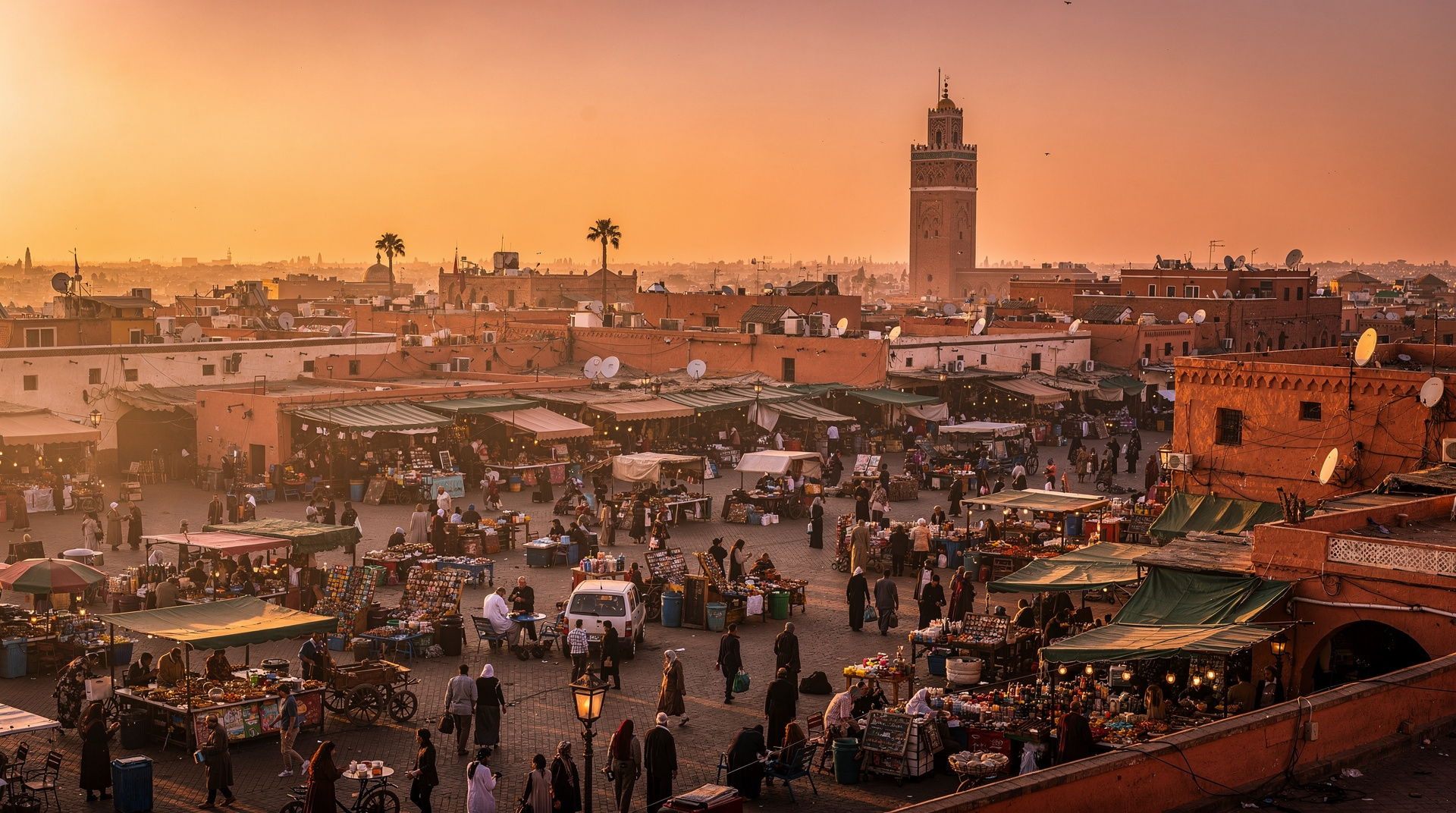
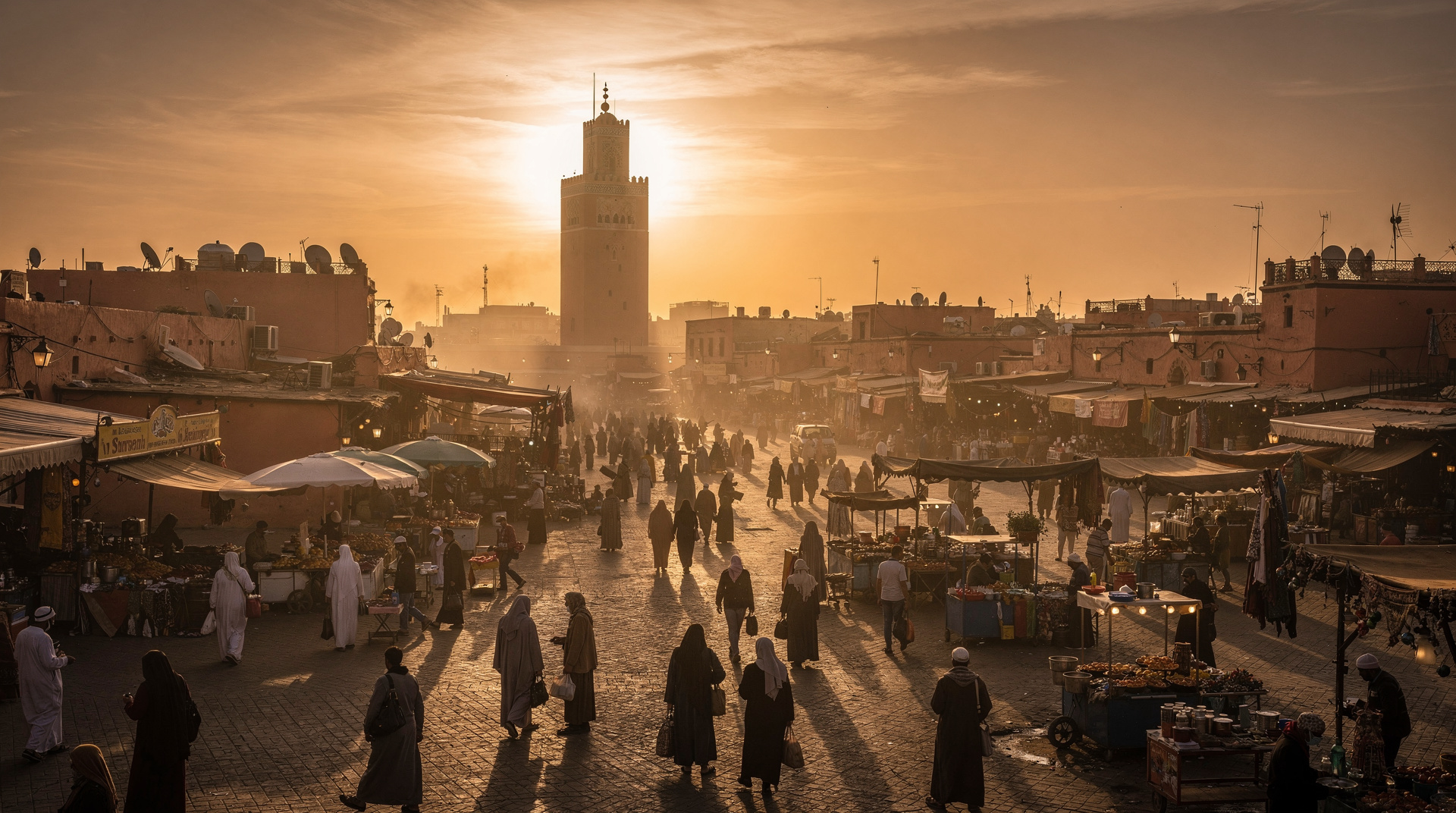
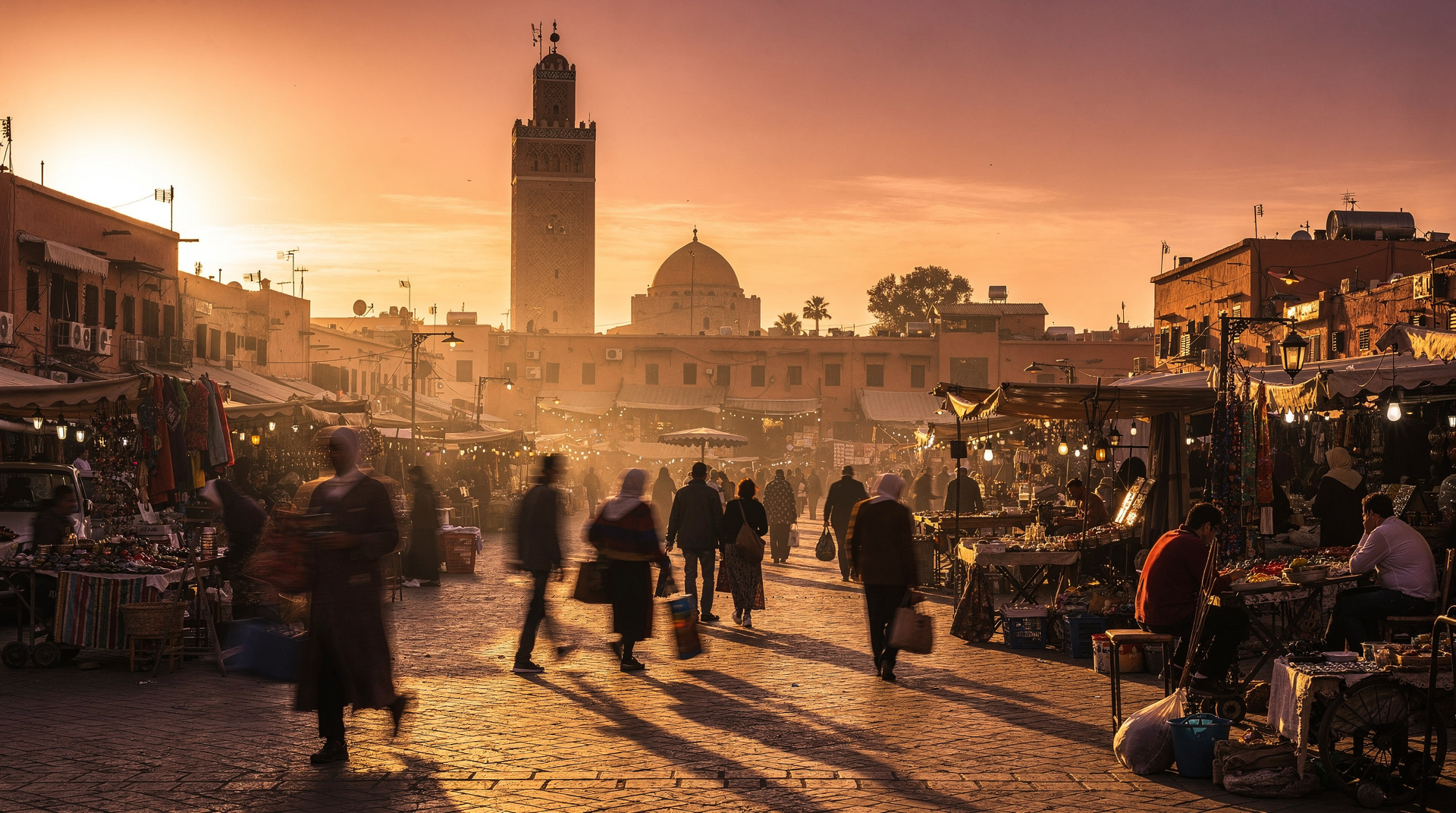
This is the part of the festival most relevant to general visitors. Each evening during the festival week, a large outdoor screen is set up on Jemaa el-Fnaa and films are projected for free. The audience sits on the square’s flat centre — some on chairs if provided, many standing or sitting on the ground — surrounded by the usual activity of the square’s periphery: food stalls, musicians, street performers.
What’s shown: The outdoor screenings typically show a mixture of recent international films and Moroccan or Arab cinema. Selection is populist rather than art-house — the programmers choose films likely to work for a general Moroccan audience in an outdoor setting. Subtitles in Arabic and French are standard; English subtitles are not guaranteed.
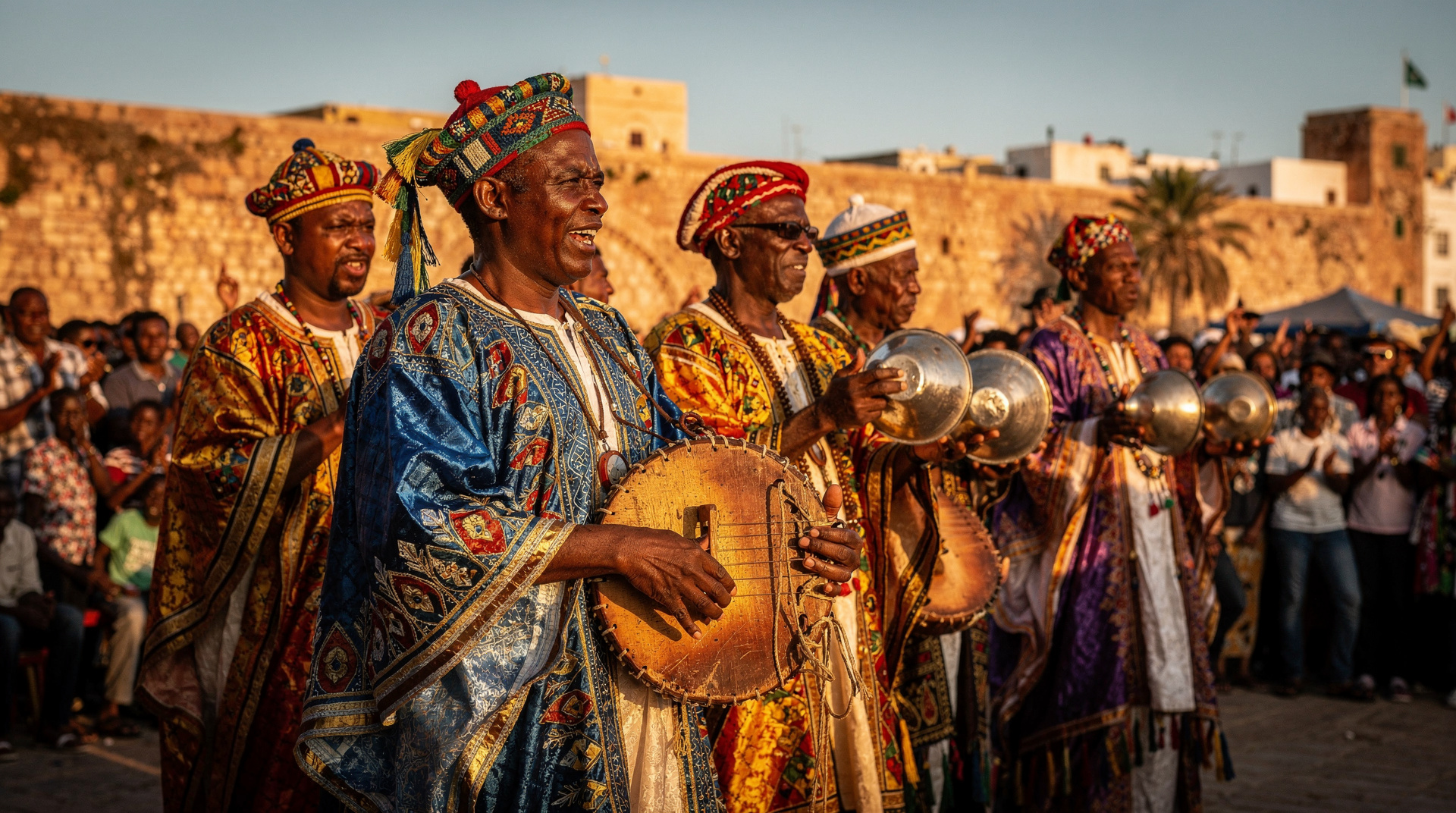
The atmosphere: A Jemaa el-Fnaa screening during the film festival is one of Marrakech’s more unusual experiences. Several thousand people sitting in the open air watching a film while the city continues around them — mint tea vendors weaving through the crowd, the distant sound of gnaoua musicians from the square’s edge, the food stall smoke drifting across the image. It is not a comfortable cinema experience. It is an extraordinary event.
Arrive early: The best positions fill 30-45 minutes before screening time. The square’s central area becomes genuinely crowded. If you want to be close to the screen, arrive early and claim a spot near the centre.
Getting tickets for main screenings
The official competition screenings, retrospective events, and special screenings at the Palais des Congrès require either professional accreditation or public tickets.
Professional accreditation: Film journalists, industry professionals, and serious cinephiles can apply for accreditation via the festival website. Different accreditation levels provide different access — full industry accreditation allows competition film access; press accreditation allows press conferences and some screenings. Applications typically open in September for the November festival.
Public tickets: A limited allocation of tickets for specific screenings is made available to the general public. These sell quickly — particularly for any event featuring a celebrity or a retrospective of a beloved filmmaker. Ticket sales typically open 1-2 weeks before the festival begins.
The practical reality for general visitors: If you’re in Marrakech during the festival and don’t have accreditation, the Jemaa el-Fnaa screenings are your primary festival experience. Competition films at the Palais des Congrès are difficult to access without prior planning. Accept this and enjoy the free outdoor experience for what it is.
Celebrity sightings: how it actually works
The Marrakech festival’s celebrity component is real but concentrated. Celebrities arrive for the opening ceremony (usually held in the grandiose El Badi Palace, partially under the stars), attend press conferences and tributes, and appear at the closing ceremony. Between these events, they’re typically at private dinners, hotel events, and guided city tours — not wandering the medina.
Where celebrities are visible:
- Opening and closing ceremonies (ticketed/accredited events)
- Press conferences at the Palais des Congrès (accredited press and some public access)
- The Mamounia hotel (the festival’s unofficial celebrity headquarters — a cocktail on the terrace puts you in the right proximity)
- High-end riad restaurants in the medina that host festival dinners
The honest expectation: You may spot festival attendees and film industry people in the medina and at high-end restaurants. Actual major celebrities are less often in the general public spaces than festival mythology suggests. The star element is a nice bonus if it happens; don’t structure your trip around it.
Hotel prices during the festival: what to expect
The Marrakech International Film Festival is the city’s second biggest price spike after the peak months (March-April, October). Riads and hotels within the medina and premium areas like Hivernage typically increase rates by 30-80% above their standard November pricing.
The Mamounia: The legendary grande dame of Marrakech hotels is essentially the festival’s home base. Room rates during the festival week can reach 800-1500€ per night, compared to 400-700€ at other high-season periods. If this is your normal budget, book 3-4 months in advance. If it’s not, the Mamounia’s bar and restaurants are accessible without a room reservation.
Medina riads: Mid-range riads (normally 80-150€ per night in November) typically charge 120-200€ during the festival. Not prohibitive, but the combination of higher prices and limited availability means booking early matters.
Guéliz hotels: The modern neighbourhood, 1km from the medina, has conventional hotel options (Kenzi Farah, Four Points by Sheraton, various boutique properties) that see smaller festival premiums than the medina riads.
Booking timeline: For festival week accommodation, book 2-3 months in advance minimum. Some properties are taken by production companies and festival guests with prior relationships. The earlier you book, the better your selection.
The festival’s effect on Marrakech
The FIFM transforms Marrakech’s atmosphere for its week of operation. The changes are real and worth knowing about if you’re not specifically attending:
Prices: Beyond hotels, some restaurants in the medina and Guéliz use festival week to test higher pricing on their standard menu. This is variable — many restaurants maintain standard prices, others try to capitalise.
Jemaa el-Fnaa logistics: The main square is more crowded than usual, particularly in the evenings when both the food stalls and the outdoor screenings draw people. If you dislike dense crowds, the Jemaa el-Fnaa during festival evenings is more intense than standard peak season.
Medina atmosphere: The influx of film industry people — many of whom are curious to explore the medina — creates a slightly different tourist demographic than the usual Marrakech visitor mix. The medina’s better restaurants see more international food-industry travellers; the riads see more sophisticated guests.
What doesn’t change: The souks operate normally. The major sites (Bahia Palace, Majorelle Garden, Saadian Tombs) have no festival-related programming and their standard visitor experience continues. Day trips (Aït Benhaddou, Atlas Mountains, Essaouira) are completely unaffected.
Combining the festival with the rest of a Marrakech trip
The festival works well as an add-on to a standard Marrakech visit rather than as the sole reason to be there. The free outdoor screenings take 2-3 evenings; the festival atmosphere is pervasive without requiring any accreditation to experience.
A typical festival-week Marrakech itinerary:
Day 1: Arrive, orient in the medina, first evening on Jemaa el-Fnaa for food stalls and to get the geography of where the outdoor screen will be
Day 2: Bahia Palace and Saadian Tombs in the morning — the Saadian Tombs, Bahia Palace, souk and medina guided tour covers all three in a single morning (see the imperial palaces guide for context), Majorelle Garden in the afternoon, opening ceremony/outdoor screening in the evening
Day 3: Medina souks and Marrakech cooking class in the morning, any accessible festival events in the afternoon, outdoor screening in the evening
Day 4: Day trip to Aït Benhaddou and Ouarzazate (the film connection is appropriate — Aït Benhaddou is Morocco’s most-filmed location, appearing in Game of Thrones, Gladiator, and dozens of other productions)
Day 5: Departure or extension — consider a hot air balloon flight over the Atlas with Berber breakfast as a morning finale before an afternoon flight
Practical summary
Dates: Late November/early December — verify on festivalmarrakech.info for exact 2026 dates Free access: Jemaa el-Fnaa outdoor screenings, wandering the festival atmosphere in the medina Paid access: Competition and special screenings at Palais des Congrès (accreditation or tickets required) Accommodation: Book 2-3 months ahead; expect 30-80% premium over standard November rates Transport: No festival-specific transport arrangements are needed — Marrakech’s standard taxi and public transport handles the volume Dress: Evening outdoor screenings can be cold (10-12°C after dark in late November) — bring a layer and don’t plan to stand for 2 hours in a light shirt
For the rest of what Marrakech offers beyond the film festival week, the Marrakech destination guide covers the city comprehensively. The street food guide for Marrakech is particularly useful for navigating Jemaa el-Fnaa whether or not the outdoor screen is set up.
Is the film festival worth planning a trip around?
For most travellers, no — but it’s an excellent reason to time a trip you were already planning. The free Jemaa el-Fnaa screenings add a genuinely memorable evening or two to a standard Marrakech visit at zero extra cost, and the festival-week energy in the medina (more film-industry travellers, slightly better restaurant buzz, a livelier square) is a pleasant bonus layered onto sights you’d see anyway — the souks, the palaces, a cooking class.
Building a whole trip around accredited access is a different calculation, and only makes sense for people with a genuine professional or cinephile reason to chase competition screenings — the accreditation process, the higher hotel prices, and the uncertainty over which films and guests will actually appear make it a poor bet as the sole purpose of a holiday.
Comparing the festival week to other times to visit Marrakech
If you have flexibility on dates, it’s worth weighing festival week against Marrakech’s other peak periods. See the best time to visit guide for the full seasonal picture, but in short: March-April and October are the true weather peaks and carry similar price premiums without the festival crowding; late November/early December (festival week) trades slightly cooler evenings for the free screenings and a more animated Jemaa el-Fnaa. If crowds and hotel prices matter more to you than the festival itself, Morocco in January or Morocco in February are quieter and cheaper alternatives with still-pleasant weather.
Frequently asked questions about Marrakech International Film Festival
Do I need a ticket for the Jemaa el-Fnaa screenings?
No. The outdoor screenings on Jemaa el-Fnaa are free and open to anyone who shows up — no ticket, registration, or accreditation required. Arrive 30-45 minutes early for a decent spot as the square fills up fast.
Can regular tourists meet festival celebrities?
Rarely in any planned way. Celebrities attend accredited events (opening/closing ceremonies, press conferences) and private functions; general visitors occasionally spot festival guests at high-end riad restaurants or at the Mamounia’s bar and terrace, but this is opportunistic rather than guaranteed. Don’t build expectations around it.