Quick facts
- Language
- Darija, French
- Population
- ~5,000
- Nearest City
- El Jadida (85 km north), Safi (80 km south)
- Best for
- Oysters, lagoon, surf, tranquillity
Morocco’s Oyster Capital
| At a Glance | |
|---|---|
| Where | Atlantic coast, between El Jadida (85 km north) and Safi (80 km south) |
| Cost | A dozen oysters around 60–100 MAD; mid-range doubles roughly 800–1,500 MAD |
| Time needed | 1–2 days, or a lunch stop on a coastal drive |
| Getting there | Own car strongly recommended; no direct buses |
| Best time | March–June and September–November for calm seas and mild temperatures |
Most visitors to Morocco never hear of Oualidia, which is precisely the point. While the tourist hordes work their way through Marrakech, Fes, and the Sahara, this small lagoon town on the Atlantic coast between Casablanca and Agadir goes quietly about its business of producing some of the finest oysters in Africa and providing Moroccan city-dwellers with the peaceful beach escape they crave.
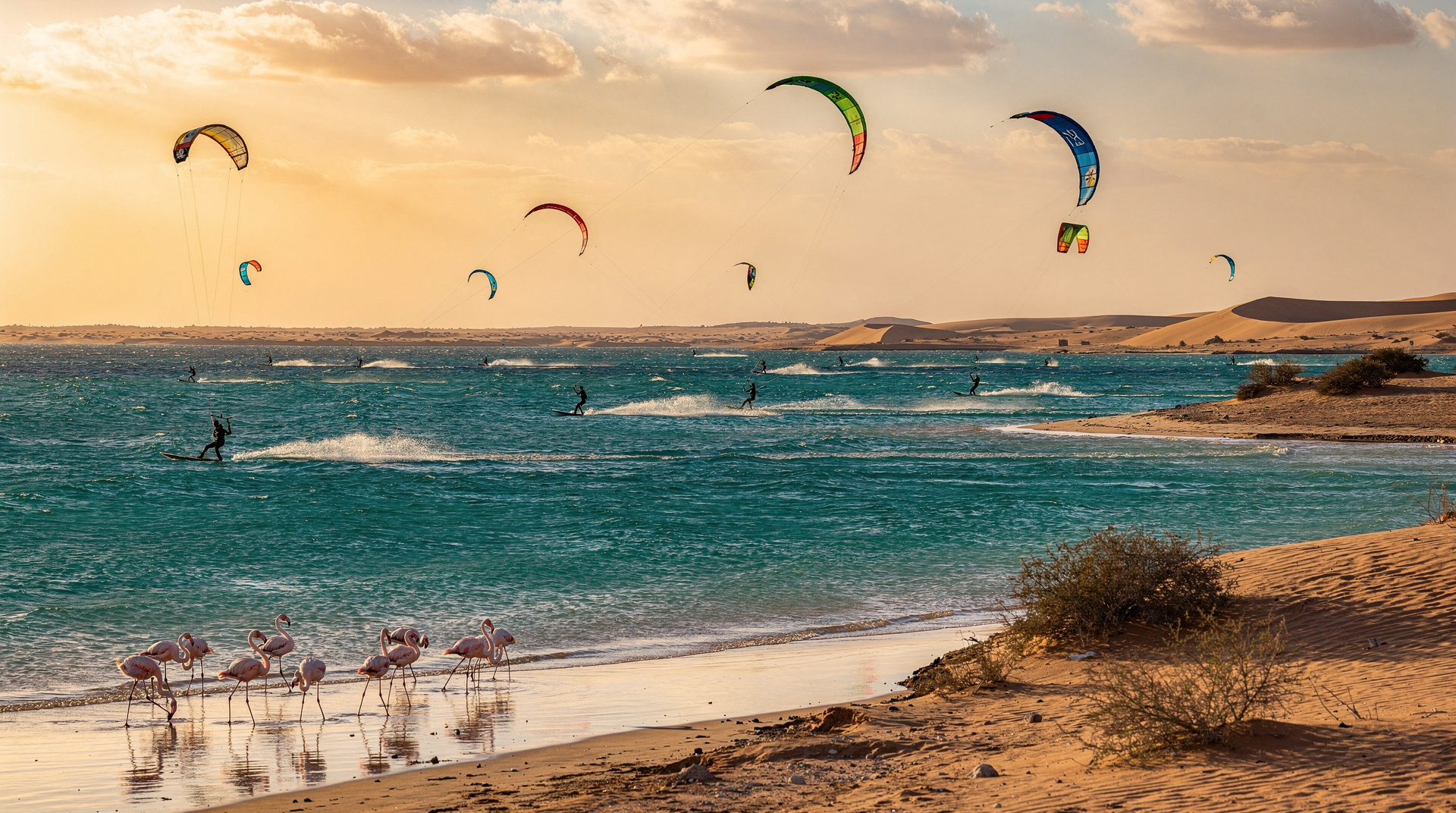
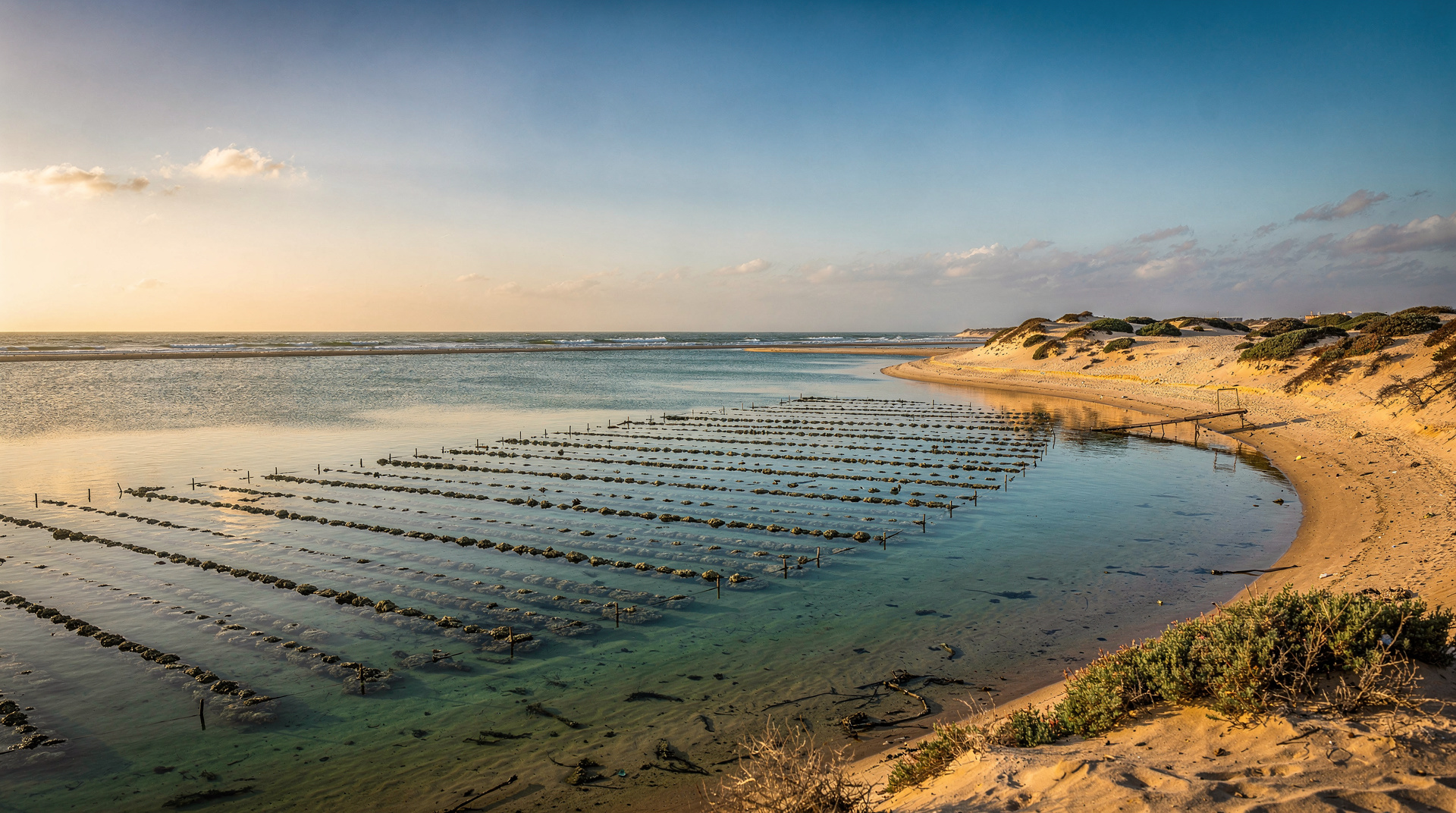
Oualidia’s defining feature is its lagoon — a sheltered crescent of turquoise water separated from the open Atlantic by a natural sandbar. The calm, warm-ish lagoon water is ideal for swimming, paddleboarding, and kayaking. The open-ocean side is exposed enough for reliable surf. And the oyster farms that have operated here since the 1950s, nurtured by the clean Atlantic currents that flush the lagoon twice daily, produce a product of exceptional quality that ends up in Paris restaurants and on Moroccan royal tables.
The town itself is small and functional rather than architecturally distinguished. What Oualidia offers is not medina magic or mountain drama but something rarer in Morocco: genuine, unhurried coastal tranquillity, excellent seafood at honest prices, and the pleasure of a place where almost everything centres on the water.
Getting There
From Casablanca: The most common approach. Drive south on the A7 motorway to El Jadida, then south on the coastal N1 for about 85 km to Oualidia. Total journey: around 2.5 hours. No direct buses — you need your own transport or to take a bus to El Jadida and arrange a taxi onward.
From Marrakech: Take the A7 north toward Casablanca and turn off toward El Jadida, then follow the N1 south. About 3.5 hours by car. Alternatively, buses run to El Jadida from Marrakech (around 3 hours), from where a shared grand taxi to Oualidia takes 45–60 minutes.
From Agadir: Drive north on the N1 coastal road, passing Safi. Allow 3.5 to 4 hours — the road is scenic but slow in sections.
From Essaouira: About 2.5 hours north on the N1 via Safi. A logical stopping point on a coastal road trip between Essaouira and El Jadida or Casablanca.
Practical note: Oualidia is best visited with your own transport. Public transport connections are indirect and infrequent, and the main oyster farms and beaches spread along several kilometres of lagoon that are awkward to reach on foot.
Getting Around
Within the village, everything is accessible on foot or by bicycle (rentals available near the main beach, around 50 MAD per half-day). The lagoon beach, the oyster stands, the restaurants, and the main accommodation strip all sit within a 2 km stretch.
For exploring further along the coast — the surf breaks north of the lagoon, or the clifftop road south toward Safi — you need a car or a negotiated taxi. The road south through the chalk-white cliffs above the Atlantic is one of the more dramatic coastal drives in Morocco and worth doing even without a specific destination.
Top Things to Do
Eat Oysters at the Lagoon
The oyster experience in Oualidia is deceptively simple and extraordinarily good. Producers set up stalls directly at the lagoon’s edge and along the beach road, selling oysters freshly shucked to order, typically with lemon, bread, and a cold drink. Prices run around 60–100 MAD per dozen depending on size — roughly one-third of what you would pay in Europe for inferior product.
Oualidia is most easily reached as a day trip from Casablanca. The guided Casablanca city tour with Hassan II Mosque entry works well as a morning complement if you are driving the Atlantic coast — spend the morning in Casablanca, arrive in Oualidia for a lagoon lunch.
The oysters here are primarily Pacific oysters (Crassostrea gigas), farmed in the lagoon in suspended basket cages that the tidal exchange keeps flushed with clean water. They are plump, briny, and faintly sweet. Eating a dozen at a lagoon-side table while watching the flamingos that winter in the shallows is one of Morocco’s quieter pleasures.
Swim and Kayak the Lagoon
The lagoon is ideal for families and anyone who finds the open Atlantic too rough. The water is calm, shallow in the inner sections, and warmer than the ocean by several degrees. Pedal boats and kayaks are available for rent near the main beach (around 80–120 MAD per hour). At low tide, large sandflats emerge and children wade across them. At high tide, the water level rises to cover the bars and the lagoon becomes significantly deeper.
Surf the Ocean Side
For surfers, the beach north of the lagoon entrance and the breaks around the headland offer consistent Atlantic swell, particularly in autumn and winter (September through March). The surf is suitable for intermediate surfers — powerful enough to be interesting, not so technical as to require advanced skills. Surf schools operate from the beach during the summer months, offering lessons for around 300–400 MAD per session.
Boards and wetsuits are available for rental from shops near the beachfront. For a more established surf school environment, the surf lesson in Essaouira for all levels (80 km south) has certified instructors and consistent conditions.
Birdwatching
The Oualidia lagoon is a significant stop on the West African migratory flyway. Between October and March, the mudflats host flamingos, spoonbills, avocets, and a range of wader species. The dunes on the landward side of the lagoon support stone curlews and Kentish plovers year-round. Bring binoculars; the lagoon at dawn before the swimmers arrive is the right time to look.
Explore the Kasbah
At the northern end of the town, the ruins of a 17th-century kasbah built by Sultan Mohammed ech-Cheikh dominate a rocky headland above the lagoon. It is unrestored and atmospheric rather than architecturally remarkable. The views from the walls — lagoon to the south, open Atlantic to the north — are the point.
Drive the Cliffside Road South to Safi
The N1 coastal road south from Oualidia to Safi runs for 80 kilometres through some of the most dramatic scenery on the Atlantic coast. White chalk cliffs drop sheer to the ocean; fishing villages cling to rock outcrops; the road occasionally narrows to a single lane along a clifftop. Plan two to three hours for the drive with stops. Safi itself is worth a half-day for its Portuguese-era sea fortress and its thriving pottery tradition — the best place in Morocco for traditionally crafted ceramics.
Where to Stay
Mid-range (600–1,500 MAD / €60–150 per night)
L’Initiale Hotel and Restaurant is the most sophisticated property in Oualidia — a beautifully designed boutique hotel on the lagoon shore with elegant rooms, a celebrated restaurant, and a pool. The oyster tasting on their terrace is arguably the finest version of the Oualidia oyster experience. Doubles from around 1,200 MAD.
Auberge Hippocampe has operated for decades as the classic Oualidia address for Casablancans escaping the city. Comfortable bungalow-style rooms on the lagoon, pool, excellent restaurant. Doubles from around 800 MAD.
La Sultana Oualidia is a luxury property perched above the lagoon with suites and a high-end spa. The views are extraordinary; the price is proportionate. For a special occasion stay on the Atlantic coast, this competes with anything in Morocco.
Budget (under 400 MAD / €40 per night)
Several small guesthouses and pensions operate in the village. Standards vary widely. The most reliable budget options are the handful of guesthouses immediately back from the main beach road — book ahead for July and August when Moroccan families fill every room.
Where to Eat
Oualidia’s food identity is essentially: oysters, and then fish.
Restaurant L’Initiale is the finest table in town, with an ambitious menu that pairs the local oysters with properly prepared fish, seafood pastilla, and occasionally more creative dishes. Count on 400–700 MAD per person with wine.
Restaurant La Frégate is a reliable mid-range option near the beach, specialising in grilled fish and seafood platters at more accessible prices. Good for a casual lunch after a morning on the lagoon.
The lagoon-side oyster stands remain the most authentic and memorable option — three or four shuckers operate from simple tables at the water’s edge, and the price and freshness beats any restaurant. Order a dozen oysters (80–100 MAD), a cold Casablanca beer if it is available, and sit with your feet near the water.
Harira stalls in the village serve traditional soup, msemen, and tagines for local prices (30–60 MAD per person). Worth seeking out for breakfast or a cheap dinner.
Day Trips from Oualidia
El Jadida: 85 km north, El Jadida is a UNESCO World Heritage Site with a remarkable intact Portuguese fortified city (the Cité Portugaise) built in the 16th century. The circular cistern inside — a vaulted hall partially flooded with still water, lit from a central oculus — is one of the most beautiful interiors in Morocco. Worth a half-day detour.
Safi: 80 km south, Safi is Morocco’s largest sardine processing centre and a significant coastal city. The National Ceramics Museum in the Portuguese fortress and the live pottery demonstrations in the Colline des Potiers quarter are the main attractions. The medina is authentic and tourist-light.
Essaouira: Around 2.5 hours south on the N1, Essaouira is the obvious next stop on a southward coastal journey. Its famous windswept ramparts, vibrant music culture, and atmospheric whitewashed medina make it a compelling contrast to Oualidia’s calm.
Practical Tips
Oyster safety: Buy from the established stalls and restaurants, not from unlicensed sellers. The lagoon is officially monitored for water quality, and the reputable producers comply with regular testing. Eating raw shellfish anywhere always carries a small risk; Oualidia’s managed production makes it as safe as it gets.
Swimming conditions: The lagoon is safe for all abilities at high to mid tide. At very low tide, the inner lagoon becomes very shallow and muddy. The ocean beach is suitable for competent swimmers when the surf is small; during winter swells it is for surfers only.
Crowds: July and August see heavy Moroccan domestic tourism. Weekends in June and September also fill up. Visit on weekdays in the shoulder season for a noticeably more peaceful experience.
Fuel and ATMs: The village has one petrol station and one ATM. Stock up on cash in El Jadida or Safi if possible.
Flamingos: Present from October through February/March. The best viewing is early morning from the northern end of the lagoon near the kasbah.
When to Visit
March to June offers the best combination of moderate temperatures, calm Atlantic conditions, and low crowd levels. The oysters are particularly good in spring. September to November is similarly excellent — water still warm from summer, autumn light superb, beaches quieter.
July and August are peak domestic tourist season. Rooms fill quickly and prices rise; the lagoon beach gets genuinely crowded on weekends. Still enjoyable if you book ahead, but a different experience.
December to February is quiet and mild compared to inland Morocco (rarely below 12°C). Rain is possible, the surf is at its most powerful, and you will largely have the lagoon to yourself. A good option for surf-focused travellers.
How to Fit Oualidia Into a Morocco Itinerary
Oualidia fits most naturally into a coastal drive between Casablanca (or Rabat) and Essaouira or Agadir. The N1 coastal road makes it a logical overnight stop rather than a backtrack from the main tourist circuit.
For a two-week itinerary that wants to include the Atlantic coast, a night or two in Oualidia between El Jadida and Essaouira provides an authentic, non-touristy counterpoint to the better-known Atlantic towns. The oysters alone justify the detour.
Travellers who are specifically interested in Morocco’s Atlantic coast — surf spots, fishing towns, colonial architecture, coastal cuisine — will find that Oualidia is the most rewarding single destination on this stretch, despite (because of) its low profile.
From Oualidia, the natural onward route is south to Sidi Kaouki or Essaouira, or north to El Jadida and on to Casablanca.
How Oualidia Compares to Other Atlantic Towns
Oualidia is often compared to Essaouira, Asilah, and Taghazout, but the comparison only goes so far — Oualidia has no real medina, no music festival, and no significant surf-town infrastructure. What it has instead is the lagoon, and that single feature defines the whole visit.
Travellers wanting ramparts and culture should look to Essaouira; travellers chasing consistent surf breaks and a backpacker scene should head to Taghazout; travellers wanting a quiet lagoon and the best oysters in the country have exactly one good option. Our coastal Morocco comparison lays out the trade-offs between the main Atlantic towns in more detail, and the best beaches in Morocco guide places Oualidia’s lagoon beach in the wider context.
Frequently asked questions about Oualidia Travel Guide
Is Oualidia worth a special detour, or only a stop on a coastal drive?
It works well both ways. As a lunch stop on the drive between Casablanca/El Jadida and Essaouira, an hour or two at the lagoon is enough to justify the detour. As a standalone destination, one night lets you add the kasbah, a lagoon kayak session, and dinner without rushing.
Can you visit Oualidia without a car?
It’s difficult but not impossible — take a bus or grand taxi to El Jadida or Safi, then a shared grand taxi onward to Oualidia. Once in the village, everything is walkable, so the car is only needed for the journey in and out.