Quick facts
- Language
- Hassaniya Arabic, Darija, French, Spanish
- Population
- ~120,000
- Nearest Airport
- Dakhla Airport (VIL), in town
- Best for
- Kitesurfing, windsurfing, lagoon, desert
The world’s most remote kite beach
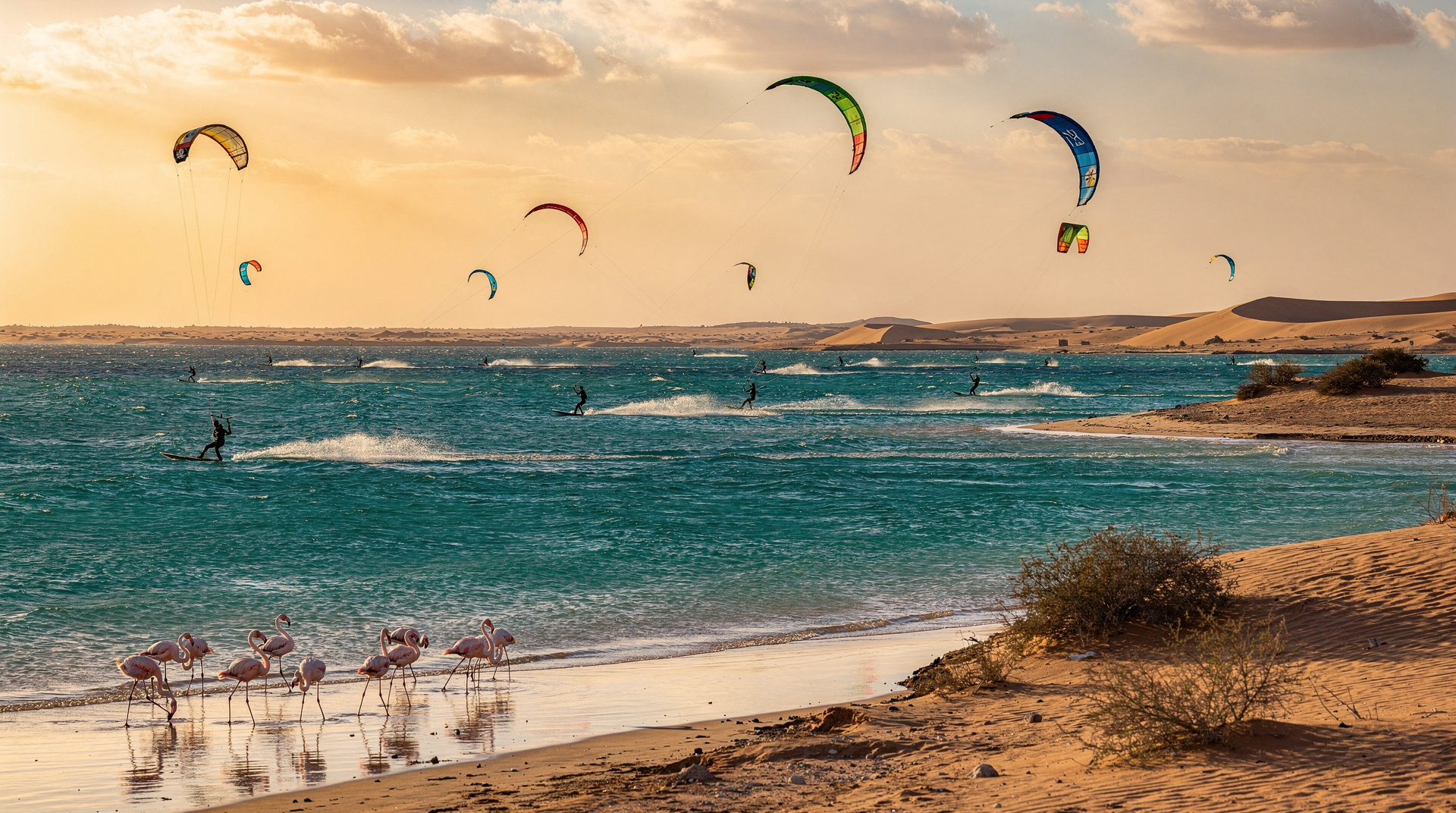
There is a statistic that circulates in the kitesurfing community: Dakhla records over 300 days of consistent wind per year, the water in the lagoon is rarely above knee-depth for hundreds of metres, and the temperature hovers at a pleasant 20–25°C for most of the year. For kiters and windsurfers, this combination — reliable trade winds, flat shallow water, warm temperatures, no dangerous currents — is about as close to ideal as the Atlantic gets.
But Dakhla is not simply a sports destination. Positioned on a narrow peninsula jutting into an extraordinary lagoon on the Atlantic coast of the Western Sahara, roughly 1,500 km south of Casablanca and only 350 km from the Mauritanian border, it occupies one of the most dramatic and isolated locations of any inhabited town in Morocco. The surrounding landscape is Saharan desert meeting the Atlantic — sand dunes backing onto turquoise water, flamingos in the shallow lagoon, and a sky that is genuinely, astoundingly clear on most nights.
The political status of Western Sahara remains unresolved — the territory is administered by Morocco and claimed by the Polisario Front — but for travellers this complexity is largely invisible on the ground. Dakhla functions as a Moroccan city in practice, increasingly connected to the north by improved infrastructure and a growing flow of visitors who make the long journey specifically for the kitesurfing.
| At a glance | |
|---|---|
| Where | Western Sahara peninsula, ~1,500 km south of Casablanca |
| Cost | Kite camp packages around 700-1,200 MAD/person/day all-inclusive |
| Time needed | 3-7 days minimum given the travel commitment to get there |
| Getting there | Direct flight from Casablanca (~2.5 hr) is the practical option; road trip is 12-14 hr from Agadir |
| Best time | Year-round for wind; April-June for the most comfortable temperatures |
Why Dakhla? The Sports Case
The Dakhla lagoon is genuinely exceptional for water sports. The reasons are straightforward:
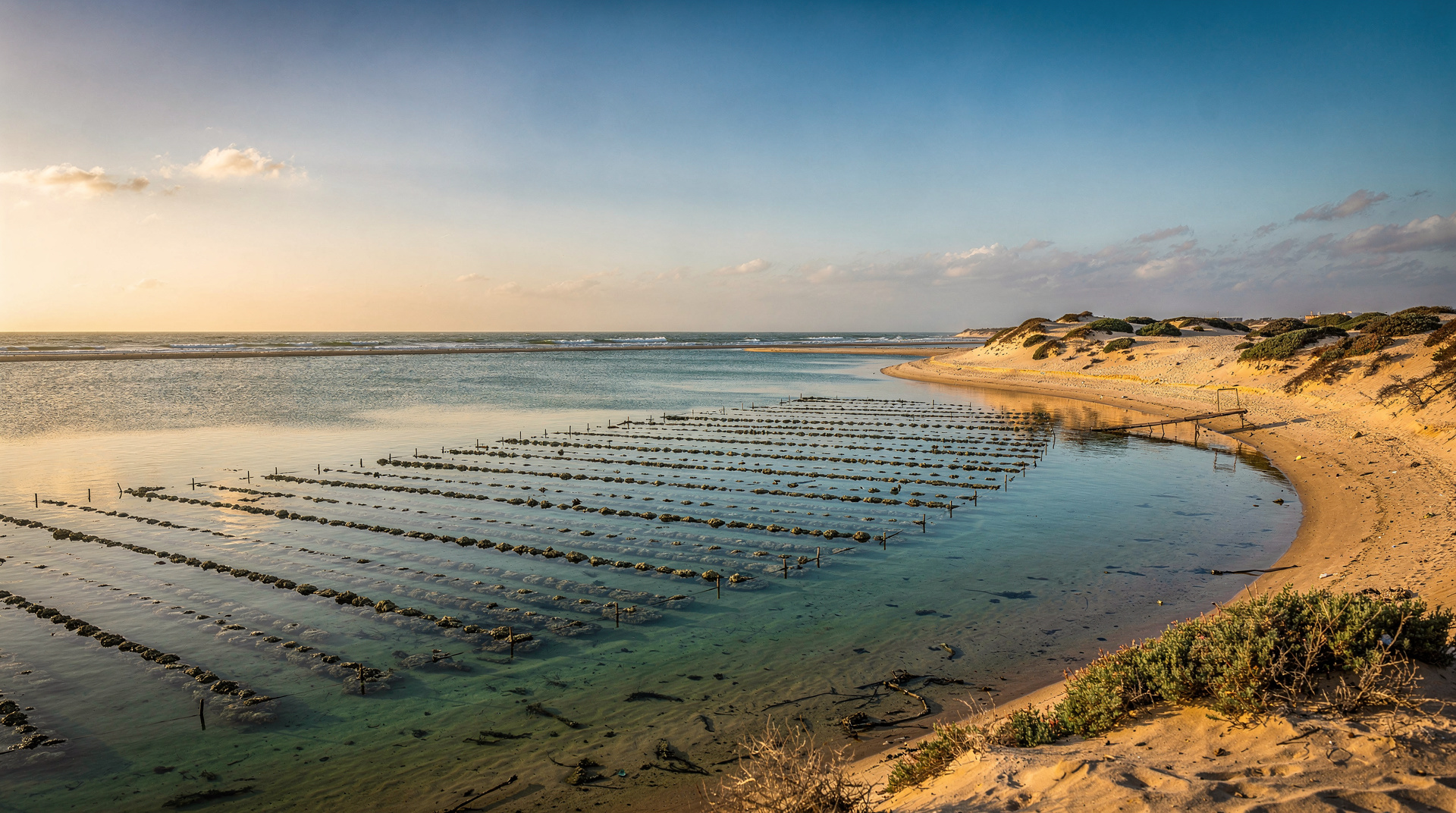
The lagoon: The Peninsula de Dakhla shelters a lagoon approximately 40 km long and up to 10 km wide. The water inside the lagoon is shallow (1–3 m for most of its extent), flat, and warm. Wind crossing open desert heats up and accelerates over the water surface — a reliable thermal amplification effect.
The trade winds: The Saharan trade winds blow consistently from the north-northeast at 15–30 knots for the majority of the year. Summer is the peak wind season (June–September) but conditions are good in virtually every month except occasionally in November–December.
No dangerous zones: The flat water, absence of reef breaks, and the protected lagoon environment make it safe for learners relative to ocean beach kite spots. The town beach (Plage Dakhla) has more chop and is better for experienced riders; the lagoon spots are ideal for beginners and freestylers.
Infrastructure: The kite camp infrastructure around Dakhla is now well-developed. A dozen or more kite schools and camps operate along the lagoon, offering lessons (from 400 MAD/hour), board and kite rental, and accommodation packages that combine lodging with daily sessions. The best-known operators include Dakhla Attitude, Ocean Vagabond, and ION CLUB, all of which have established international reputations.
Getting There
By air: Dakhla Airport (VIL) is located within the town. Royal Air Maroc flies directly from Casablanca (2.5 hr) multiple times weekly, and from Agadir seasonally. This is the only practical option if you’re not driving.
By road (epic option): The N1 coastal highway south from Agadir through Laayoune to Dakhla is one of the longest drives in Morocco — approximately 1,200 km, taking 12–14 hours with no significant stops. The road is entirely paved and in good condition, passing through extraordinary desert landscape. It is a genuinely spectacular drive, particularly the final 300 km south from Laayoune. Military checkpoints operate along this route — carry your passport and vehicle documents.
By long-distance bus: CTM operates a bus from Casablanca to Dakhla — a journey of approximately 24 hours that is exactly as challenging as it sounds. Comfortable for genuinely committed budget travellers or those doing the full Moroccan coast.
Getting Around
Dakhla town is spread along a narrow peninsula with the town centre at the tip and the kite camps spread along both the lagoon shore and the Atlantic-facing coast. A car or moto is essential for getting between the town and the camps.
Rental cars are available from the airport (limited selection — book ahead). Most kite camps offer transfers from the airport as part of their packages. Taxis within town are cheap and readily available.
The Lagoon and Peninsula
The physical geography of Dakhla is what makes it special. The peninsula is a long, thin spit of land roughly 40 km long that shelters the Dakhla lagoon from the Atlantic. Looking across the lagoon from the town, the far shore is desert — sand dunes backing down to flat water. On the ocean side, the Atlantic hammers the exposed beaches with full Atlantic swells.
Pink Lake (Lac Rose)
About 30 km south of Dakhla town, at the tip of the lagoon, a seasonal salt lake takes on pink-red colouration from halophytic algae during dry periods (most pronounced in summer). The combination of pink water, white salt crust, and surrounding desert dunes is visually extraordinary. Access requires a 4WD or a guided excursion — the track is sandy and unmarked.
The Sand Dunes
The Atlantic-facing shore of the peninsula is backed by high sand dunes in places — proper Saharan erg formations meeting the Atlantic. The most photogenic dune field is about 20 km south of town, accessible by 4WD. Coming here at sunset with the Atlantic in one direction and the dune sea in the other is an experience with no equivalent in the Morocco north.
The Lagoon Islands
Sandbanks and small islands dot the lagoon — accessible by boat from the kite camps. Several camps offer boat excursions to the sandbars for picnics, snorkelling, and dolphin spotting. Bottle-nosed dolphins frequent the lagoon year-round; the odds of a sighting on any given day are genuinely high.
Things to Do
Kitesurfing and Windsurfing
This is the primary reason most visitors come. The main lagoon kite zones are organised by level — beginners in the flattest, shallowest water, advanced riders in areas with more chop and open space for tricks. A 5-day beginner course from reputable operators costs approximately 3,500–5,000 MAD including equipment. If you’re already riding, equipment rental is 500–800 MAD per day.
If you want a taste of kitesurfing before committing to a week in Dakhla, a kitesurfing introduction lesson in Essaouira is a more accessible first step — same Atlantic wind, easier logistics.
Sandboarding
The dunes south of town are used for sandboarding — a less technically demanding experience than kitesurfing but surprisingly enjoyable. Several kite camps offer half-day sandboarding excursions to the southern dunes combined with a sunset on the Atlantic-facing coast.
Camel Trekking in the Desert
Short camel excursions operate from several camps, covering the desert hinterland around the lagoon. These range from 1-hour sunset rides to half-day excursions into the desert interior with tea stops at Sahrawi nomad tents. The landscape is proper Sahara — flat reg plains giving way to sand formations, with a quality of silence and remoteness that even Merzouga doesn’t quite match.
Fishing
The Atlantic waters around Dakhla are exceptionally rich fishing grounds — one reason the town grew here originally. Sport fishing excursions can be arranged through the kite camps or independently through local fishermen. Sea bass, bream, and bluefish are all common catches. Dakhla lobster — caught in the cold Atlantic upwelling offshore — is locally famous and appears on the better restaurant menus.
Birdwatching
The Dakhla lagoon is a significant stopover point on the East Atlantic Flyway for migrating shorebirds and raptors. Flamingos are present year-round in the shallows. In spring and autumn, impressive concentrations of waders, terns, and raptors pass through. The lagoon’s flat shores make observation straightforward without specialist equipment.
Where to Stay
Dakhla’s accommodation divides into the kite camps along the lagoon and more standard hotels in the town centre.
Kite Camps (all-inclusive or package)
Dakhla Attitude is the largest and best-known kite camp in Dakhla — a well-run operation with its own lagoon frontage, IKO-certified instructors, accommodation from dormitory to private rooms, and a programme that caters for both beginners and advanced riders. All-inclusive packages from 700–1,200 MAD per person per day.
Ocean Vagabond is a smaller, more boutique camp with an emphasis on quality instruction and a well-designed lounge and dining area with lagoon views. Popular with European kite and yoga retreat clients. Similar pricing to Dakhla Attitude.
Town Hotels (350–1,200 MAD)
Hôtel Doums is a solid mid-range hotel in the town centre with comfortable rooms, reliable wifi, and a restaurant. Doubles from 500 MAD. Good base for those who want town access alongside day trips to the lagoon.
Calipau Hotel offers sea-facing rooms on the Atlantic-facing side of the peninsula — not the lagoon side, but the rooms overlooking the open ocean are impressive. Doubles from 650 MAD.
Food and Drink
Dakhla has a surprisingly good restaurant scene for its size — the local Atlantic seafood is the primary reason.
Restaurant Samarkand is the town’s best dining option — a proper restaurant with tablecloths and an extensive fresh fish menu. The Dakhla lobster (langoustine locale) is the essential order. Expect to pay 300–500 MAD for a full meal including shellfish.
Restaurant El Bahia near the port serves straightforward grilled fish at genuinely local prices — whole sea bass for around 80 MAD. The setting is basic and the quality is excellent.
Kite camp restaurants: Most camps feed their guests as part of packages and the food at established camps is consistently good — fresh salads, grilled fish, and Moroccan staples.
Camel milk: A Sahrawi specialty available in Dakhla — both fresh and in ice cream form. Worth trying at the small dairy shops near the market.
Combining Dakhla with Other Destinations
Dakhla is far enough south to require commitment. Most visitors fly in specifically and stay 5–10 days for water sports. If you’re road-tripping, the logical circuit from Agadir is:
Agadir → Tiznit → Mirleft → Sidi Ifni → Guelmim → Laayoune → Dakhla (allow 4–5 days driving). Return by air from Dakhla to Casablanca or Agadir.
If Agadir is your base before the journey south, the Paradise Valley day trip from Agadir makes an excellent add-on during the stop there — turquoise pools and palm gorges before the long desert road south.
For the broader regional context, see day trips from Agadir for the northern end of this coastal stretch.
Practical Tips
Money: Bring adequate cash from Agadir or Casablanca. ATMs exist in Dakhla town but can be unreliable — particularly Banque Populaire and Attijariwafa branches.
SIM cards and mobile data: Maroc Telecom has the best coverage in the far south. Buy a SIM before leaving Agadir.
Checkpoints: Military checkpoints on the N1 south of Guelmim are routine. Have your passport accessible. Interaction is polite and brief.
Health: No special vaccinations required. Drink bottled water. The intense sun and wind at the lagoon cause dehydration faster than you expect — drink consistently during water sports sessions.
Travel insurance: Essential for kitesurfing — ensure your policy specifically covers the activity at the level you’re riding (lessons vs independent riding).
Best months: April to June offers optimal conditions: consistent wind, temperatures around 22–26°C, lower humidity than summer. July–August is the peak wind season but also hotter and busier with kite tourists.
Dakhla vs Morocco’s Other Kite and Surf Spots
Dakhla is not the only wind-sport base in Morocco, and it isn’t automatically the right choice for every level of rider.
| Dakhla | Taghazout | Essaouira | |
|---|---|---|---|
| Best for | Kitesurfing, flat-water freestyle, beginners | Surfing (waves), a growing kite scene | Windsurfing/kitesurfing, more casual intro sessions |
| Water | Flat, shallow lagoon | Ocean swell and reef/point breaks | Ocean, choppier than Dakhla’s lagoon |
| Access | Flight or 12-14 hr drive from Agadir | ~30 min from Agadir airport | ~2.5-3 hr from Marrakech |
| Vibe | Remote, dedicated kite camps | Surf town, backpacker energy | Historic medina town, broader appeal beyond sports |
Riders wanting a short taster before committing to the Dakhla trip often start with a kitesurfing lesson in Essaouira or base themselves in Taghazout for wave surfing, then decide whether the flat-water specialism of Dakhla is worth the extra travel.
Life at the Kite Camps
Beyond the riding itself, the kite camp culture around Dakhla is a large part of the draw for repeat visitors. Days settle into a rhythm: morning session while the wind is building, a long lunch break through the midday heat, afternoon session as the thermal wind peaks, then communal dinners with fellow riders from a dozen countries. Most camps run weekly rhythms with a rest day built in, typically used for the Pink Lake or dune excursions described above. For visitors travelling as a couple or family where not everyone rides, the Paradise Valley day trip from Agadir is worth combining with the journey south, giving non-riders a scenic stop before the long desert stretch.
Frequently asked questions about Dakhla
Do I need special permission to travel to Dakhla / Western Sahara?
No. The territory is administered by Morocco and no special visa or permit is required beyond a standard Moroccan entry. Your passport will be checked at military checkpoints on the road south.
Can beginners learn to kitesurf in Dakhla?
Dakhla is widely considered one of the best beginner kite destinations in the world precisely because of the flat lagoon water. A 5-day IKO beginner course will have most students riding independently by day 4–5. The shallow lagoon eliminates the main safety hazard of deeper water kite spots.
Is Dakhla accessible by road without a 4WD?
Yes — the N1 highway to Dakhla is fully paved. A standard 2WD car manages the route without difficulty. A 4WD is useful for off-road excursions to the dunes and pink lake south of town, but not required for the main highway.
What is there to do in Dakhla if I don’t kitesurf?
Quite a lot: boat trips on the lagoon, fishing excursions, desert 4WD trips, sandboarding, camel rides, birdwatching, and simply sitting on one of the most dramatic lagoon shores in Africa. Non-riding partners at kite camps consistently report being well occupied.
How do I get from Dakhla back to Marrakech or Casablanca?
The fastest way is the Royal Air Maroc flight from Dakhla to Casablanca (2.5 hr). From Casablanca you can continue by train or bus to Marrakech (4 hr by ONCF train). Driving back north takes 12–14 hours minimum and is a full day’s commitment.
Is Dakhla or Essaouira better for a first kitesurfing trip?
For genuine beginners, Dakhla’s flat shallow lagoon is more forgiving and most riders progress faster there. Essaouira and Taghazout are better if you also want a broader travel experience — medina life, restaurants, a shorter journey — alongside a lighter wind-sport introduction.