Quick facts
- Language
- Tachelhit Berber, Darija, Spanish, French
- Population
- ~20,000
- Nearest Airport
- Agadir Al Massira (AGA), 2.5 hr
- Best for
- Architecture, off-beat travel, coast
Where Spain met the Atlantic — and then left
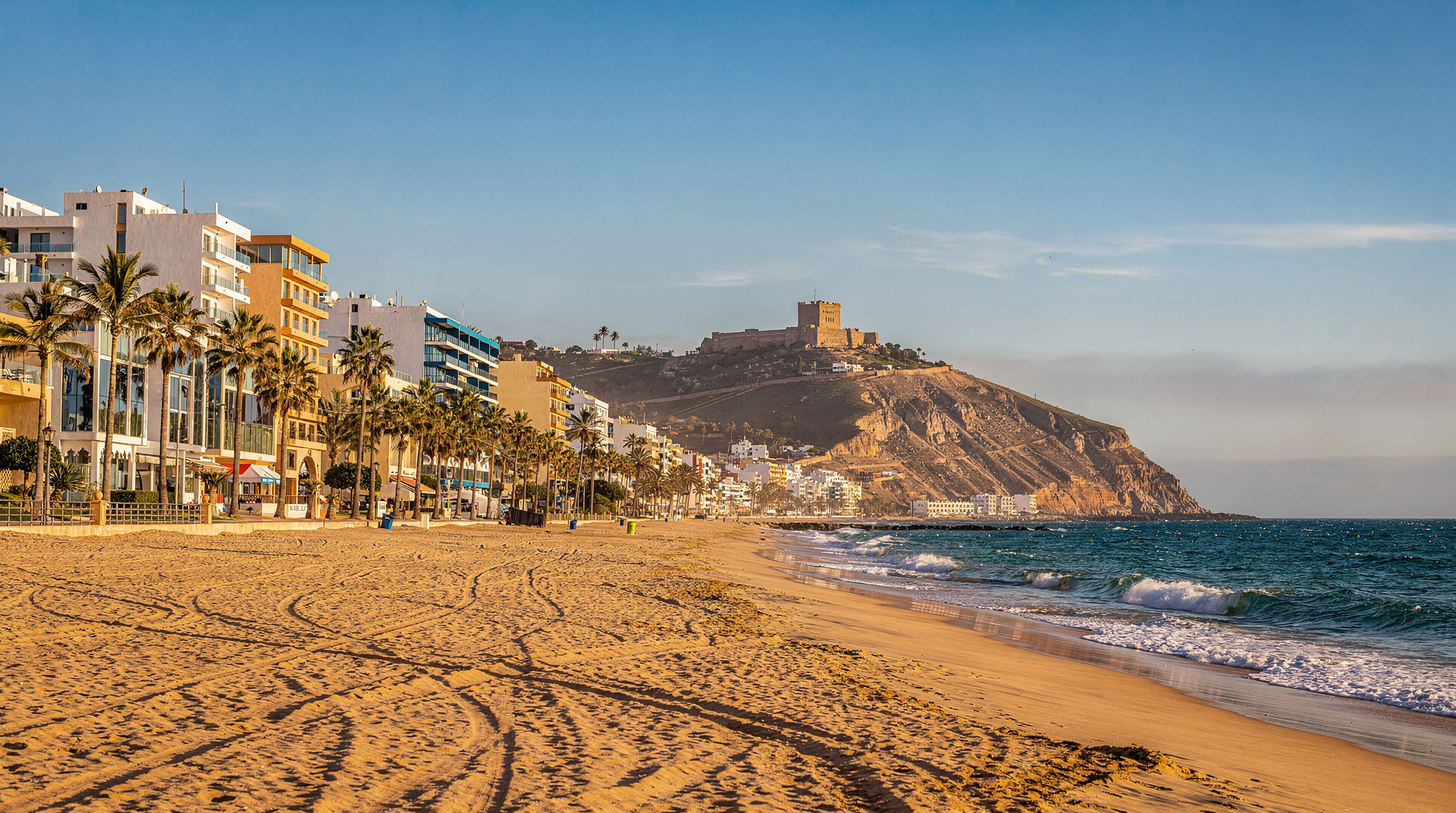
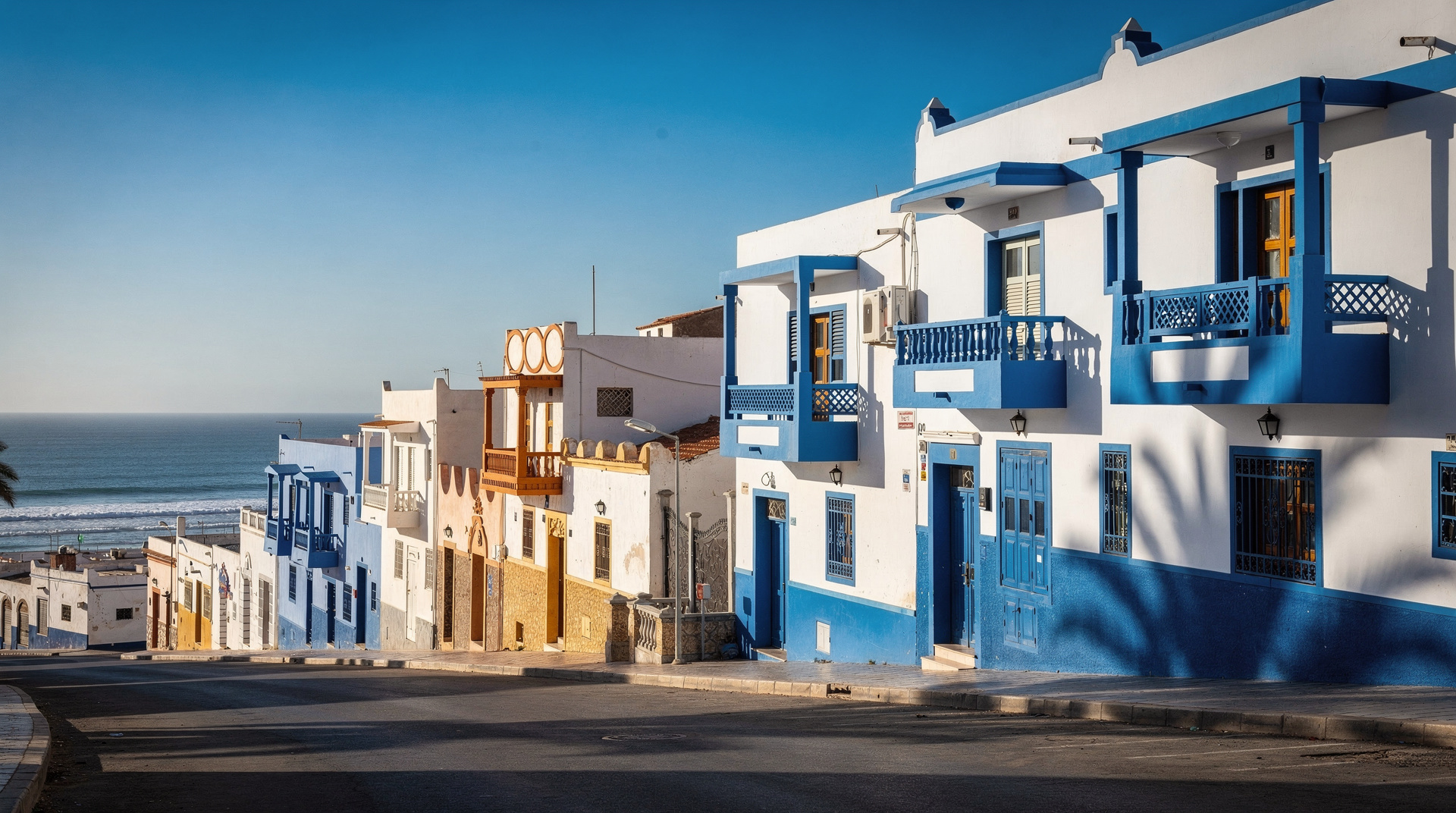
There is no other place in Morocco quite like Sidi Ifni. Perched on a cliff promontory above the Atlantic on the southern tip of the Souss-Anti-Atlas coast, this small city was a Spanish possession from 1476 until 1969 — far longer than the main protectorate zones. That colonial history is visible in every building: art deco facades, a town hall that would not look out of place in Valencia, a lighthouse at the cliff edge, and street names that were only changed from Spanish decades after the handover.
What makes Sidi Ifni compelling is the combination of this extraordinary architectural layer with an almost complete absence of the tourist industry that has transformed similar curiosities elsewhere in Morocco. The town receives a small trickle of adventurous travellers who specifically seek out the anti-atlas coast, some European kitesurfers who know the beach, and Moroccan families from Agadir for weekend breaks. That’s approximately it. The result is a place where you can walk into a 1930s art deco post office — still functioning, still tiled floor to ceiling in colonial geometry — and be the only visitor, watched with mild curiosity by the postmaster.
For travellers willing to make the detour from the beaten track, Sidi Ifni is one of Morocco’s most rewarding days or nights. Pair it with Mirleft to the north for a coastal Anti-Atlas loop that represents genuinely original Moroccan travel.
| At a glance | |
|---|---|
| Where | Souss-Anti-Atlas Atlantic coast, 165 km south of Agadir |
| Cost | Doubles from around 200–700 MAD; dinner for two around 250–400 MAD |
| Time needed | 1 day trip, or 1–2 nights for the fuller experience |
| Getting there | Grand taxi or CTM bus via Tiznit; 2.5–3 hours from Agadir |
| Best time | October to April; the morning fish market (6–9am) is a highlight any day of the week |
A Brief History
Spain’s foothold at Sidi Ifni traces to a treaty of 1860 that ceded the area in the aftermath of the Spanish-Moroccan War. Development was minimal for decades, but from the 1930s onward the Spanish colonial administration invested heavily in infrastructure, building the art deco town centre, a cable car across the cliffs (now defunct), a harbour, and a small airport. The city served as the capital of the Spanish territory of Ifni.
Moroccan independence in 1956 began a long negotiation process. The surrounding territory of Ifni was returned to Morocco in 1958 following a short military conflict; the city itself was held by Spain until 1969. This extended Spanish presence explains why many older residents still speak some Spanish, and why the architectural legacy is more thorough than in the brief protectorate zones of the north.
Since 1969, Sidi Ifni has been absorbed into the Souss-Massa region but has developed slowly — partly due to its geographic isolation, partly due to limited economic investment. The result, from a traveller’s perspective, is a time-capsule quality that more accessible towns have long since lost.
Getting There
From Agadir: The most practical base for visiting Sidi Ifni is Agadir, 165 km to the north. Shared grands taxis connect Tiznit to Sidi Ifni (45 min, around 30 MAD), and Agadir connects to Tiznit via taxi or bus. Total journey time from Agadir: 2.5–3 hours. CTM runs a daily bus from Agadir to Sidi Ifni (around 3 hr, 55 MAD).
From Mirleft: Sidi Ifni is 30 km south of Mirleft on the N1 coastal highway. Shared grands taxis make this run frequently (25 MAD per seat, 30 min). This is the most logical approach if you’re doing the anti-atlas coastal route.
From Tiznit: Tiznit is the main transport hub for this coast. Grands taxis south to Sidi Ifni run throughout the day (30 MAD, 45 min). Tiznit itself has connections from Agadir, Marrakech, and Taroudant.
By car: The N1 highway south from Agadir through Tiznit and Mirleft is entirely paved and well-maintained. The final approach to Sidi Ifni involves a descent down the cliff road with views across the Atlantic — one of the more dramatic road arrivals in Morocco.
Getting Around
Sidi Ifni’s compact town centre can be covered on foot in 30 minutes. The central plaza — Place Hassan II, built on the former aerodromo — is the obvious anchor point. The art deco buildings radiate out from here in a rough grid that’s unusual for a Moroccan town. The beach is a 15-minute walk down from the clifftop town centre, via a road that winds down the escarpment.
For the outlying beaches south of town, motorcycle taxis (motos) are the quickest option and cost 10–20 MAD per trip.
What to See and Do
The Art Deco Town Centre
The core of Sidi Ifni’s appeal is architectural. Wander the streets around Place Hassan II and you will find: the former Hôtel de Ville (now the municipal court) with its signature curved facade and geometric tilework; the old Spanish consulate building; the Church of Santa Cruz de la Mar Pequeña (now a functioning court of law — the conversion is visible in the awkward juxtaposition of legal notices against the colonial religious architecture); and dozens of private residences in varying states of preservation, all dating from the 1930s–1950s.
The aesthetic is a particular strain of Spanish colonial modernism — Streamline Moderne combined with Moorish geometric detailing — that has no direct equivalent anywhere in Morocco. The buildings are not maintained as monuments. They simply exist in everyday use, which makes them more interesting and more poignant than a preserved heritage district would be.
The Central Market (Souk Municipal)
The covered market in the town centre occupies a structure that would pass for a minor masterpiece of 1940s municipal architecture in Spain — arched ironwork, the original tiling, and a functional fish market that has operated continuously since the colonial era. The morning fish market (6–9 am) is the best time to visit: local fishermen bring the Atlantic catch — grouper, sea bass, octopus, and shellfish — and the energy is genuine and entirely non-touristic.
The Lighthouse and Cliff Walk
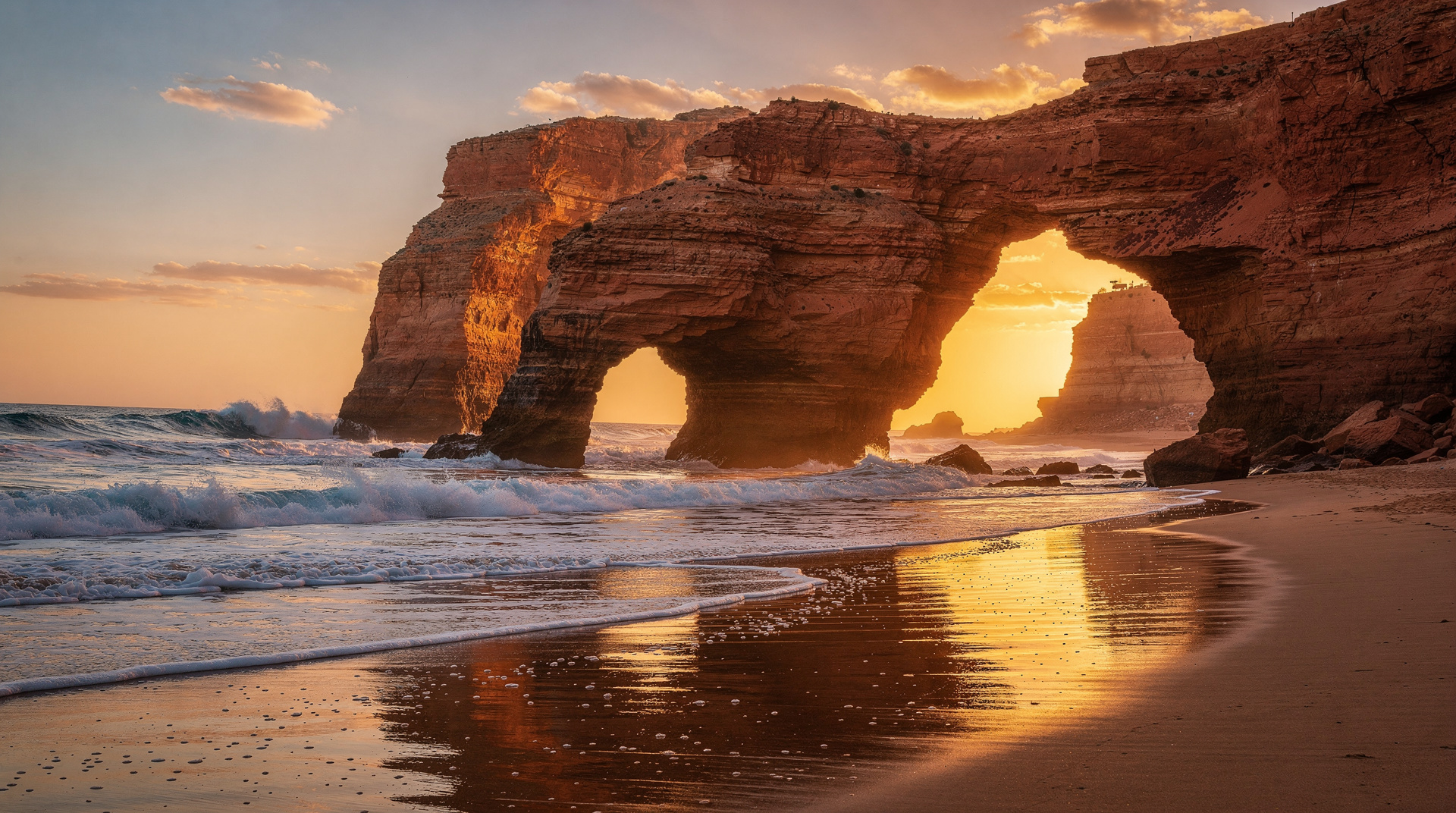
The Sidi Ifni lighthouse stands at the edge of the promontory, and the path along the cliff top offers commanding Atlantic views. The cliff here drops vertically to the ocean — the combination of the colonial-era buildings above and the raw Atlantic below is the defining visual of the town. Evening light on the cliffs is exceptional.
The ruined infrastructure of the old Spanish cable car — concrete pylons at the cliff edge, the terminal building now derelict — is visible on the cliff face and adds an additional layer of melancholy history to the view.
The Beach
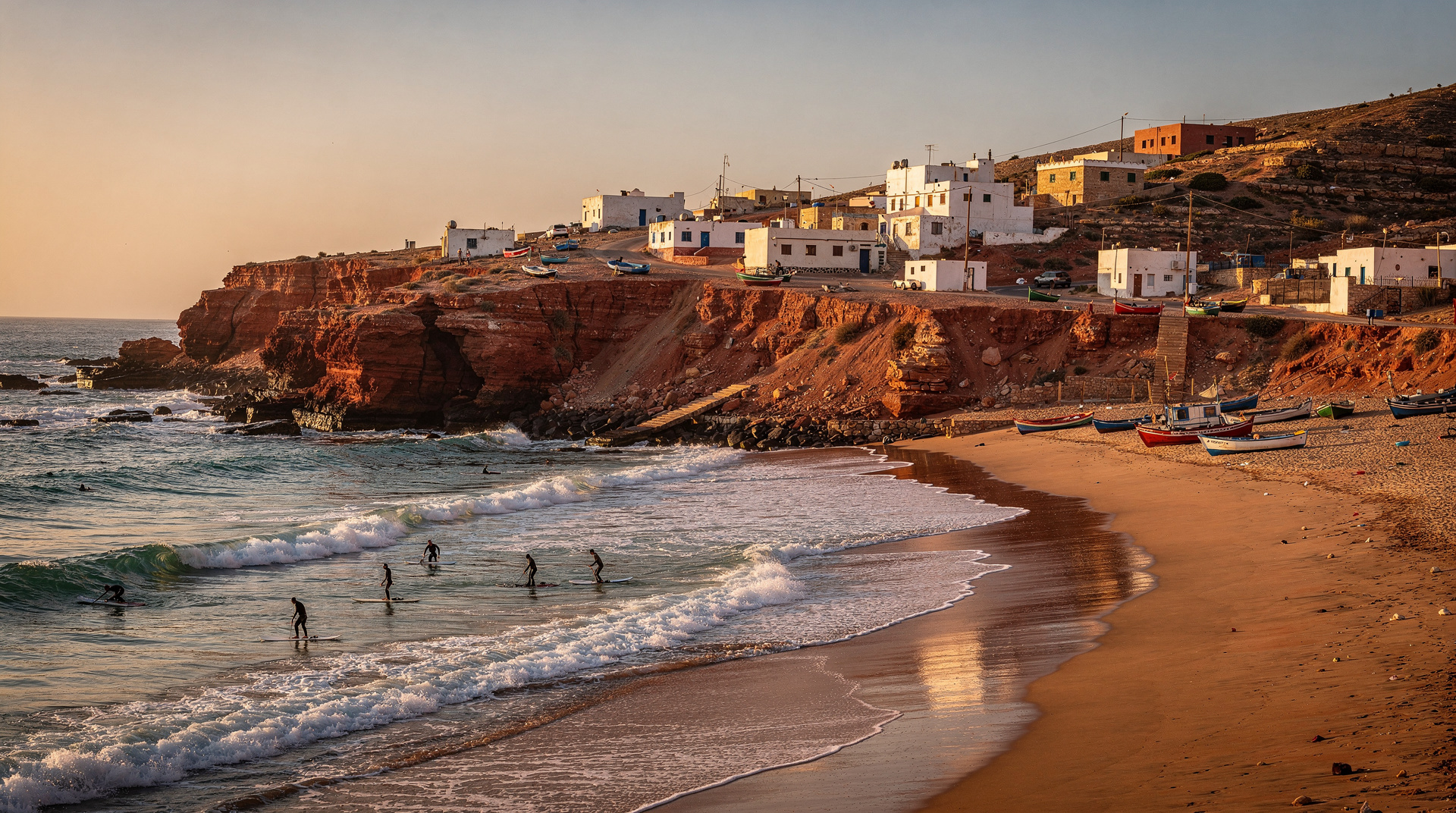
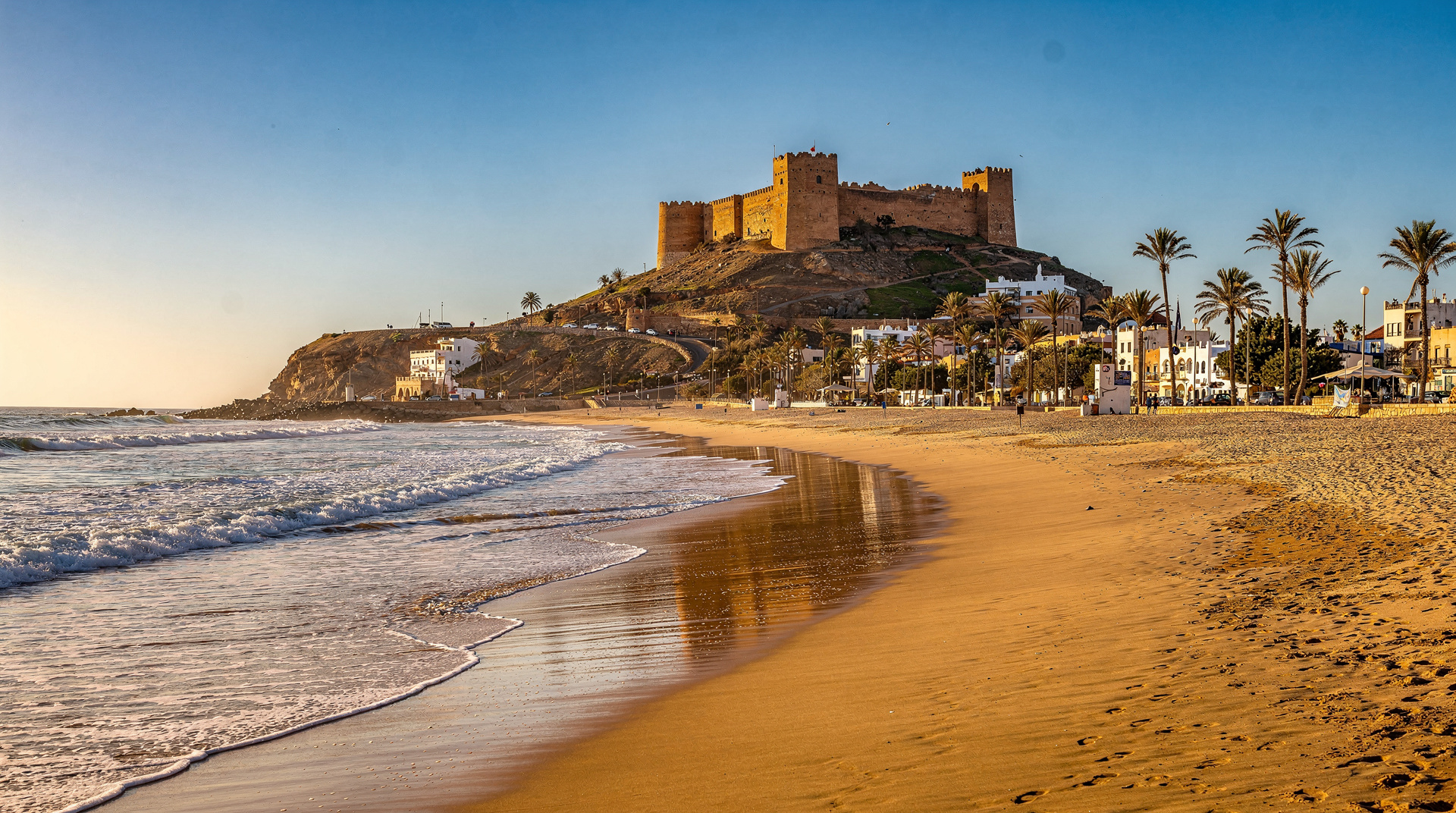
The town beach sits below the cliffs, accessed by a winding road. It is a long, wide Atlantic beach with a consistent surf break — popular with local fishermen, a few surfers, and Moroccan family bathers in summer.
Those coming from Agadir who want a wider coastal overview before making the journey can book the Paradise Valley day trip from Agadir as a warm-up for the Anti-Atlas coastal route. In low season it is nearly empty and the swimming is possible in the calmer northern end. A handful of café shacks operate seasonally at the beach level.
A more dramatic beach, Plage Sidi Mohamed Ben Abdallah, is accessible by road south of town — a wider arc backed by dunes with no facilities and consistent kitesurfing and windsurfing conditions (the southern exposure channels the trade winds effectively).
The Thursday and Sunday Souk
Sidi Ifni runs a large regional souk twice a week — Thursday and Sunday — that draws Tachelhit-speaking Berber traders and farmers from the Anti-Atlas interior. The souk is set up outside the town centre near the stadium and sells everything from livestock and produce to cheap clothing, spices, and plastic goods. This is a working Berber market with no tourist orientation whatsoever, and attending one is a genuinely immersive experience.
Where to Stay
Sidi Ifni has limited accommodation, reflecting its limited tourist traffic. Most visitors come as a day trip from Mirleft or Agadir, which is a viable approach, but a night here adds considerably to the experience.
Hôtel Suerte Loca (the “Lucky Hotel”) is the most interesting place to stay in Sidi Ifni — a converted art deco building with individually decorated rooms, a restaurant serving the best food in town, and an owner with extensive local knowledge. Doubles from 550 MAD.
Hôtel Ifni is a no-frills but clean hotel in the town centre, running since the 1960s and largely unchanged since then. Doubles from 200 MAD. The period atmosphere is entirely unintentional and the better for it.
Bellevue Hotel is a newer property on the cliff edge with Atlantic views, a swimming pool, and modern rooms. Less atmospheric than Suerte Loca but more comfortable. Doubles from 700 MAD.
Food and Drink
Restaurant at Hôtel Suerte Loca is the best cooking in town — fresh Atlantic fish (the specialty is grilled sea bass with chermoula and local vegetables), decent Moroccan salads, and a wine list. Dinner for two: 250–400 MAD.
Café Clock / Place Hassan II cafés: The cafés around the central square serve mint tea, coffee, and simple Moroccan breakfasts — msemen, amlou, and fresh bread. Prices are genuinely local (15–30 MAD for tea and pastries). Sit outside and watch the town wake up.
Fish at the market: Buy fresh fish at the morning market (aim to arrive by 7 am for best selection) and arrange for your guesthouse to cook it. This is the best meal in Sidi Ifni for around 80–120 MAD total.
Combining Sidi Ifni with the Anti-Atlas Coast
The southern Atlantic coast between Agadir and the Western Sahara border at Guelmim is one of Morocco’s most consistently overlooked travel zones. A logical loop from Agadir takes in:
- Agadir → Tiznit (silver jewelry, walled medina) → Mirleft (2 nights: surf and beaches) → Sidi Ifni (1 night: art deco and cliffs) → back via Guelmim to Agadir.
This loop takes 4–5 days with a rental car, or 5–7 days by shared transport. For day trips from Agadir covering this region, see our dedicated hub guide. Visitors short on time who want the broader regional picture can also take the guided Souk el-Had market tour in Agadir to ease into the Souss region’s Berber culture before heading south to Sidi Ifni.
Practical Tips
Cash: One ATM in the town centre (Banque Populaire). Bring adequate cash from Tiznit or Agadir.
Electricity and wifi: Reliable in the town centre hotels; less so at the beach level.
Language: Older residents often speak some Spanish alongside Tachelhit and Darija. French is understood in most hotels and restaurants. English is minimal.
Safety: Very safe by any standard. The town is quiet, unhurried, and the interaction with visitors is curious rather than commercial.
Photography: The art deco facades are best photographed in the morning light (eastern-facing streets lit from 8–11 am). The clifftop light at sunset is exceptional. Ask before photographing people in the market — the usual Morocco etiquette applies.
What not to expect: Organised tours, souvenir shops oriented at tourists, upscale restaurants, or nightlife. Sidi Ifni is not that kind of town, and its value is entirely dependent on not being that kind of town.
Frequently asked questions about Sidi Ifni
Is it worth visiting Sidi Ifni for a day or staying overnight?
A day trip from Mirleft is genuinely worthwhile — the architecture, the market, and the cliff walk take about 4–5 hours total. An overnight stay adds the evening atmosphere, the morning fish market, and the chance to have dinner at Suerte Loca, all of which improve the experience significantly.
What language do people speak in Sidi Ifni?
The primary everyday language is Tachelhit, the Berber language of the Souss region. Darija (Moroccan Arabic) is widely understood. French works in hotels and restaurants. Older residents sometimes retain some Spanish from the colonial era.
Can I surf at Sidi Ifni?
The town beach has a beach break that works for intermediate to advanced surfers in the winter swell season (October–March). The southern beach (Plage Sidi Mohamed Ben Abdallah) is better for kitesurfing and windsurfing due to the consistent trade winds. There are no established surf schools in Sidi Ifni — Mirleft to the north has the infrastructure for learners.
How do I get from Sidi Ifni to Marrakech?
CTM runs a bus from Sidi Ifni through Tiznit to Marrakech — total journey around 5–6 hours, departing in the morning. Alternatively, take a grand taxi to Tiznit (30 min), then CTM or Supratours north. Allow a full day for this journey.
Is Sidi Ifni worth visiting if I’ve already seen Chefchaouen or Essaouira?
Yes, for a different reason — Sidi Ifni’s appeal is Spanish colonial art deco architecture and near-total absence of tourism, not blue streets or a lively medina. It rewards travellers who specifically want an off-the-radar detour, not those seeking the classic postcard Morocco of Chefchaouen or Essaouira.