Self-drive Morocco itinerary: 14 days with a rental car
The honest case for (and against) self-driving Morocco
Self-driving Morocco gives you something no guided tour can: the ability to stop at the unnamed kasbah on the bend of the Dades Valley road at exactly the moment the afternoon light is right. The ability to spend an extra hour at Todra Gorge because you found a rock to sit on and the silence was perfect. The ability to make a 30-km detour to Telouet because you read about it in the riad and decided, on the spot, to go.
This freedom is real and it is genuinely valuable. Morocco’s main roads are well-maintained and straightforward to drive. The N9 over Tizi n’Tichka is challenging but not dangerous if driven with appropriate care. The N10 through the Dades Valley is one of the great road-trip drives in the world. The Marrakech–Essaouira highway is faster and smoother than many European routes.
But. The medinas are not for driving — they are for walking, and parking near them is a significant logistical overhead. Urban traffic in Casablanca and Marrakech is genuinely chaotic. Road signs switch between Arabic and French (and occasionally Tifinagh, the Amazigh script) without warning. Roundabout priority rules are technically give-way-to-traffic-on-roundabout but are routinely ignored. Sheep, donkeys, and occasionally camels are road users.
This itinerary is written for drivers who have considered both sides honestly and decided the freedom is worth the overhead. It routes around the worst medina parking situations, identifies the genuinely challenging road segments, and gives realistic driving times.
Route at a glance: Marrakech → Oukaïmeden → Tizi n’Tichka → Aït Benhaddou → Ouarzazate → Dades Valley → Todra Gorge → Merzouga → Erfoud → Midelt → Fes → Chefchaouen → Tangier (or return south to Casablanca → Marrakech via El Jadida coast)
Best season: October–April. Mountain passes (Tizi n’Tichka above 2,260m) occasionally close in January–February due to snow — always check current conditions before the pass. The summer months (June–September) are driveable but the Sahara section in July–August has daytime temperatures exceeding 45°C.
Total estimated cost (per person, flights excluded): €900–1,600 including car rental and fuel
At a glance
| Route | Marrakech → Aït Benhaddou → Ouarzazate → Dades Valley → Todra Gorge → Merzouga → Fes → Chefchaouen → Casablanca/Essaouira |
| Duration | 14 days, own driving throughout |
| Cost (per person) | around €1,580–2,750 excluding flights, including car and fuel |
| License needed | valid EU/UK license accepted; IDP recommended for US/Canada licenses |
| Best time | October–April; mountain passes can close briefly for snow in Jan–Feb |
| Car type | intermediate car fine for paved roads; compact SUV for Telouet/Merzouga dune-edge tracks |
Before you drive: what you actually need to know
Driving license requirements:
A valid EU driving license is accepted throughout Morocco. A UK driving license (photocard) is accepted. A US or Canadian license is legally accepted but an International Driving Permit (IDP) is recommended as an additional document — some car rental companies and police checkpoints prefer to see one alongside the national license. IDP is obtained from the national AA/AAA equivalent before departure (€10–20, same-day in most cases).
What car to rent:
For the standard circuit (Marrakech, Sahara, Atlas, coast), a standard intermediate car (Dacia Logan, Hyundai i20 class) is adequate on all paved roads. For the Telouet detour, the Draa Valley upper sections, and access to some dune-edge guesthouses in Merzouga, a compact SUV (Dacia Duster, Renault Captur) gives meaningful additional ground clearance on the sandy access tracks.
A 4x4 is only necessary if you plan to drive into the Sahara itself — which is an activity for which a guide and a proper off-road vehicle (Land Cruiser, Land Rover) are required regardless. The Erg Chebbi dunes themselves are not self-driveable; the access road to the dune edge guesthouses in Merzouga village is paved.
Car rental practicalities:
Rent from an international agency (Hertz, Europcar, Sixt, Budget) for the most reliable experience — vehicles are newer, breakdown support is more established, and insurance coverage is clearer. Local Moroccan rental companies are cheaper (€25–40/day versus €45–80/day) but breakdown support and insurance documentation can be complex if something goes wrong.
Always purchase the collision damage waiver (CDW) and theft protection. Read the insurance exclusions carefully — gravel road damage is excluded from some policies. Photograph the car thoroughly before departure. The fuel policy should be full-to-full.
Fuel: Premium petrol (sans plomb 95) and diesel are available at all main road petrol stations. Rural fill-up points are less reliable — the leg from Merzouga to Midelt (250 km) has limited stations in the first 150 km, so fill up fully in Merzouga or Erfoud before heading north.
Speed limits and police:
Urban areas: 60 km/h. Outside urban areas (beginning of white speed-limit sign): 100 km/h. Motorway: 120 km/h. Speed cameras are present on the main routes and police radar checkpoints are common — particularly on the approaches to cities. Moroccan traffic police are generally professional; if stopped, be polite, produce your documents calmly, and do not offer payment. Fines are issued on a ticket for payment at a post office, not on the spot (unlike some other countries).
Day 1: Pick up car in Marrakech — city orientation
Morning: car pickup and city approach
Pick up your rental from Marrakech Menara Airport or from the agency’s city branch (often on Rue Mohammed el Beqal in the Ville Nouvelle). Drive into the medina area via the outer ring road (Boulevard Mohammed VI) to your riad or hotel. Do not attempt to drive into the medina proper — park at the Bab Doukkala or Bab Rob parking areas (paid, watched, €5–10/day) and walk.
Two days in Marrakech by car means the car sits in a parking lot while you explore the medina on foot. This is correct. See the Bahia Palace, Saadian Tombs, Majorelle Garden, and Djemaa el-Fna. Do the hammam. Buy the argan oil. Get oriented.
Book the Marrakech Bahia Palace and medina walking tour to cover the main city sights efficiently on Day 1 — you want to spend the remaining days on the road, not in the medina. €35–55 per person.
Where to stay: Hotel Kssour Agafay (Ville Nouvelle, parking available, €80–120/night) or a riad in the medina (park at Bab Doukkala and walk 10 minutes)
Budget estimate today: €80–150 including car pickup, parking, meals, accommodation
Day 2: Marrakech + Agafay Desert evening
Morning: final Marrakech
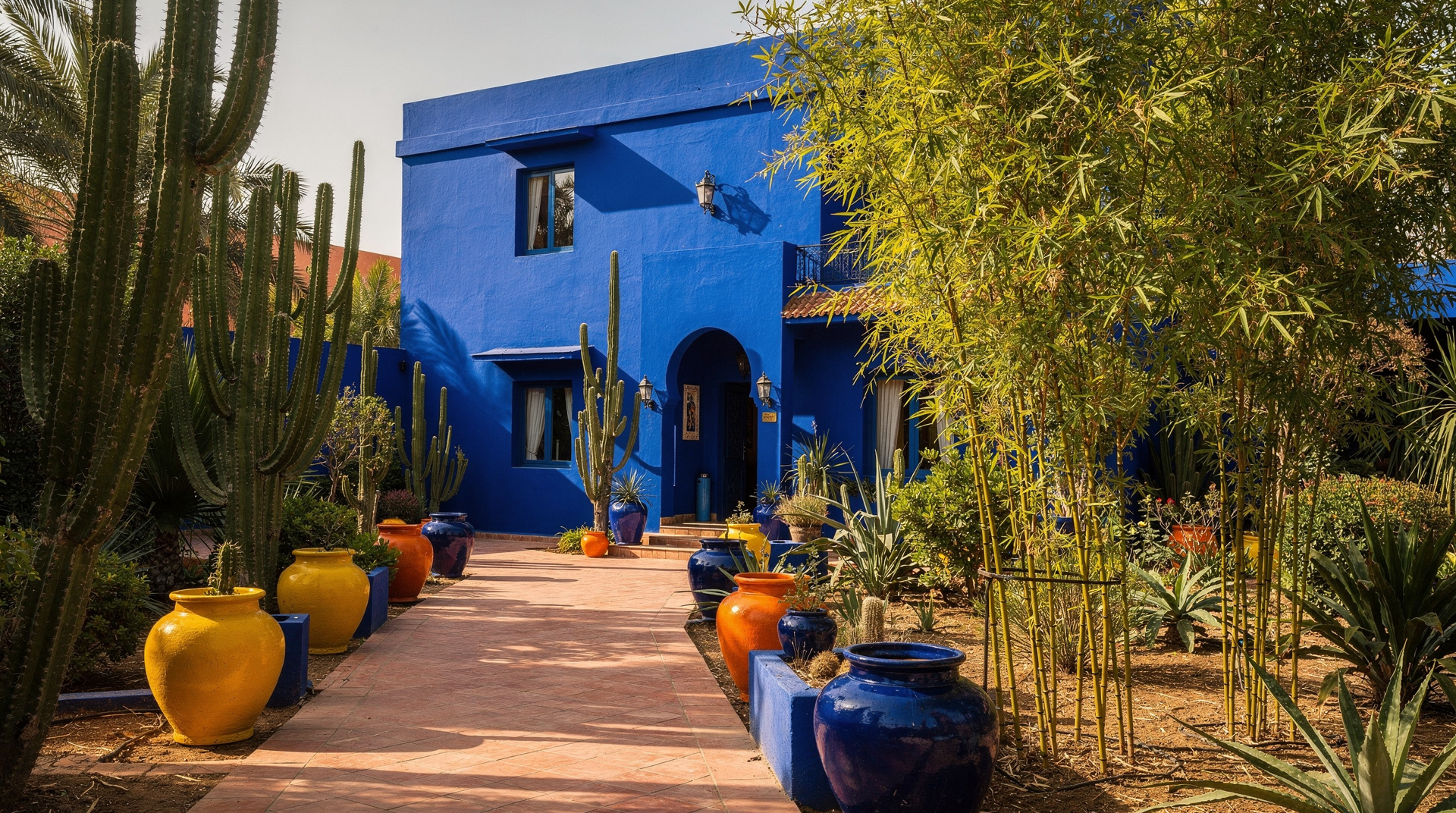
Majorelle Garden (petit taxi from your hotel, €4) in the morning. The museum and garden take 90 minutes. The YSL Museum adjacent is worth the €12 extra. Return for lunch, then an afternoon at leisure or a hammam session.
Evening: Agafay Desert
The Agafay plateau is 30 km south of Marrakech — the most direct desert experience with a car is to drive yourself. The N8 road south toward Tahanaout splits just before Lalla Takerkoust; follow signs for the Agafay camps. Several camps operate the dinner-under-stars-with-show experience (€60–80/person including camel ride and dinner). Book in advance. Parking at the camp is straightforward.
Return to Marrakech by midnight. The Agafay road at night is well-surfaced and lit adequately for the 30-km return.
Where to stay: Same Marrakech hotel
Budget estimate today: €120–200 per couple including Majorelle, Agafay dinner, parking
Day 3: Tizi n’Tichka pass → Aït Benhaddou (3h30)
The drive:
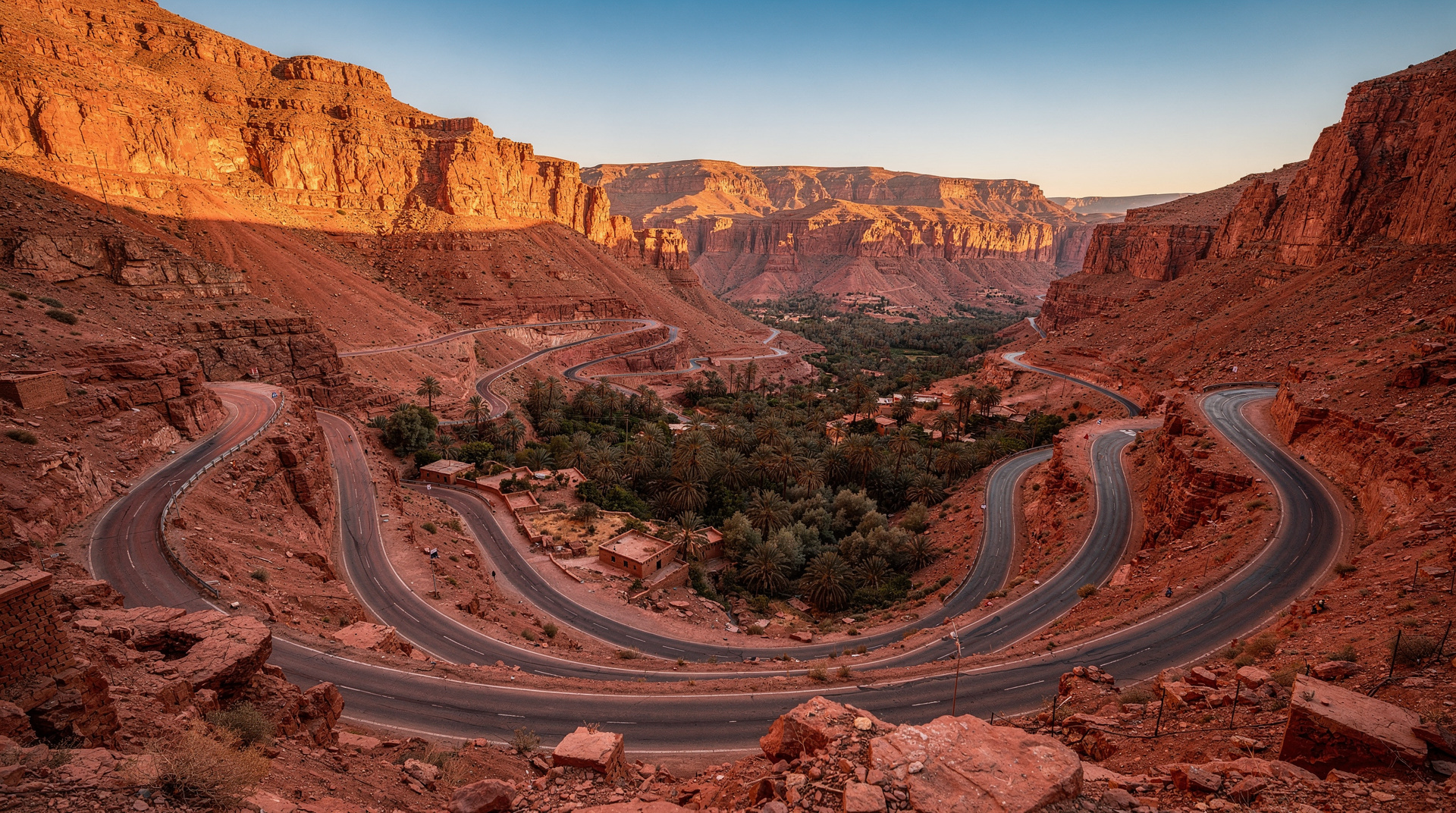
Leave Marrakech by 08:00. The N9 south toward Tahanaout begins the Atlas climb immediately. The road quality is excellent — it was the first paved pass in Morocco, opened in 1936. The Tizi n’Tichka summit at 2,260m requires second gear for the final 15 km of hairpin ascent. The descent is steeper and more exposed on the south side.
Driving advice for the Tizi n’Tichka:
- Stay behind buses and trucks on the uphill rather than overtaking on blind bends
- Use the engine to brake on the descent (lower gear) rather than riding the brakes, which overheat
- Stop at the summit viewpoint (a wide lay-by on the right) for 10 minutes — the view across the Atlas to the south is extraordinary and the photograph is worth the stop
- The road is occasionally used by goat herds — slow for animals and they will pass
Telouet detour (optional, adds 2h and 60 km):
The Kaïd’s palace at Telouet is 21 km off the main road on a paved-but-rough track (passable in a standard car, bumpy in places). The abandoned palace of the Glaoui dynasty — built in the 1940s, decorated with extraordinary Art Nouveau-influenced Moroccan tilework, and left to decay since independence in 1956 — is one of Morocco’s most dramatic and least-visited monuments. Go if time allows; skip if not.
Midday: Aït Benhaddou
Park at the river crossing (guarded parking, €10/day). Cross the river by stepping stones or the wooden bridge. Entry €3. Climb to the granary. Spend 90 minutes. Lunch at a riverside restaurant (€10–18 per person). Continue to Ouarzazate (1h).
Where to stay: Dar Kamar in Ouarzazate (€60–100/night); parking on site
Budget estimate today: €80–130 including fuel (full tank Marrakech, no refill needed today), meals, entry fees, accommodation
Day 4: Ouarzazate → Dades Valley (2h30)
Morning: Atlas Film Studios
The Atlas Film Studios (€12 entry, 90 minutes) are worth an early morning visit before continuing east. The standing sets from Game of Thrones, Gladiator, and dozens of other productions are photographically bizarre and contextually fascinating — the world’s largest film studio complex is in a Moroccan desert town, which is either deeply surreal or entirely logical depending on your relationship with landscape.
Drive: Ouarzazate to Boumalne Dades on N10
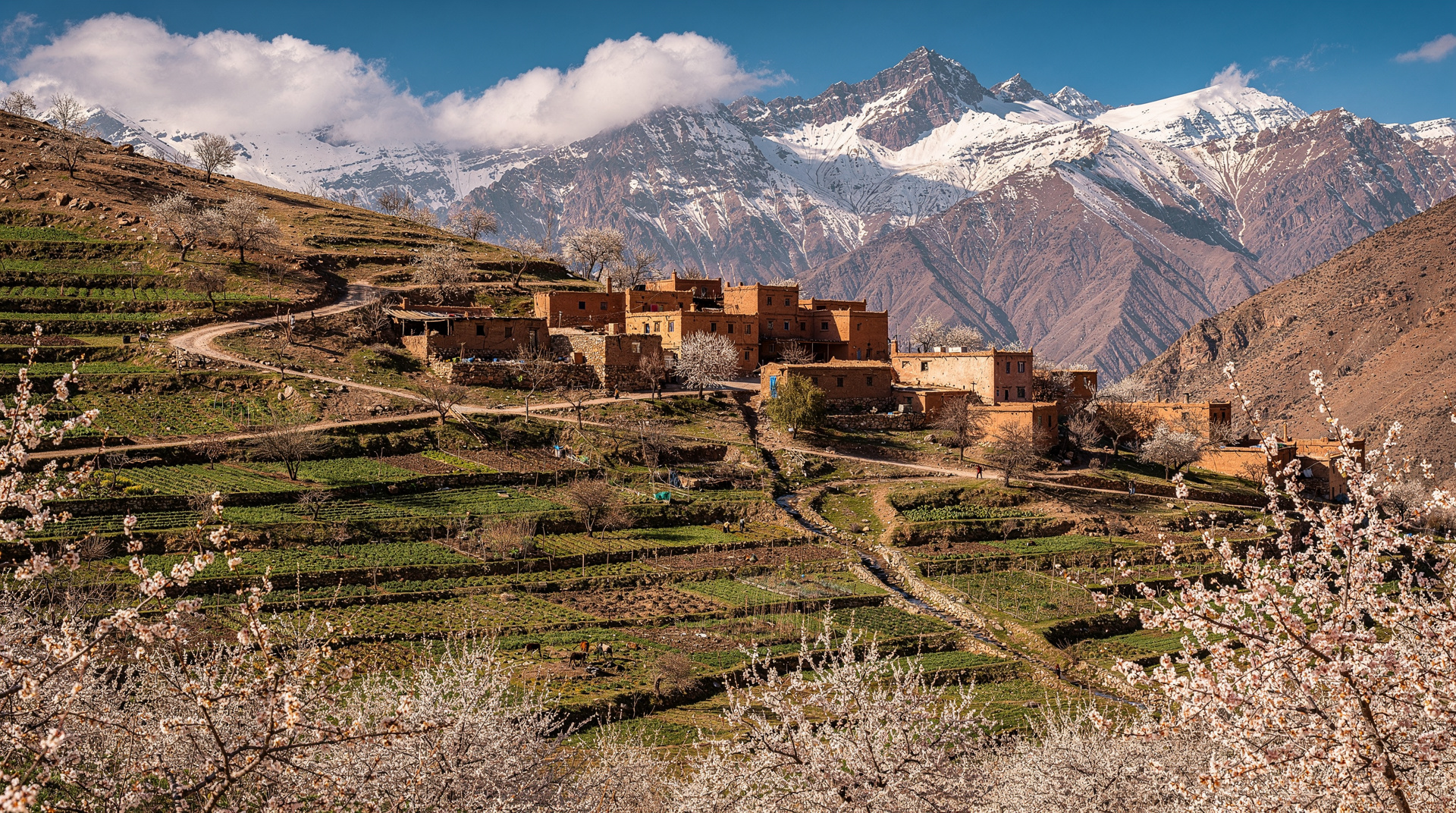
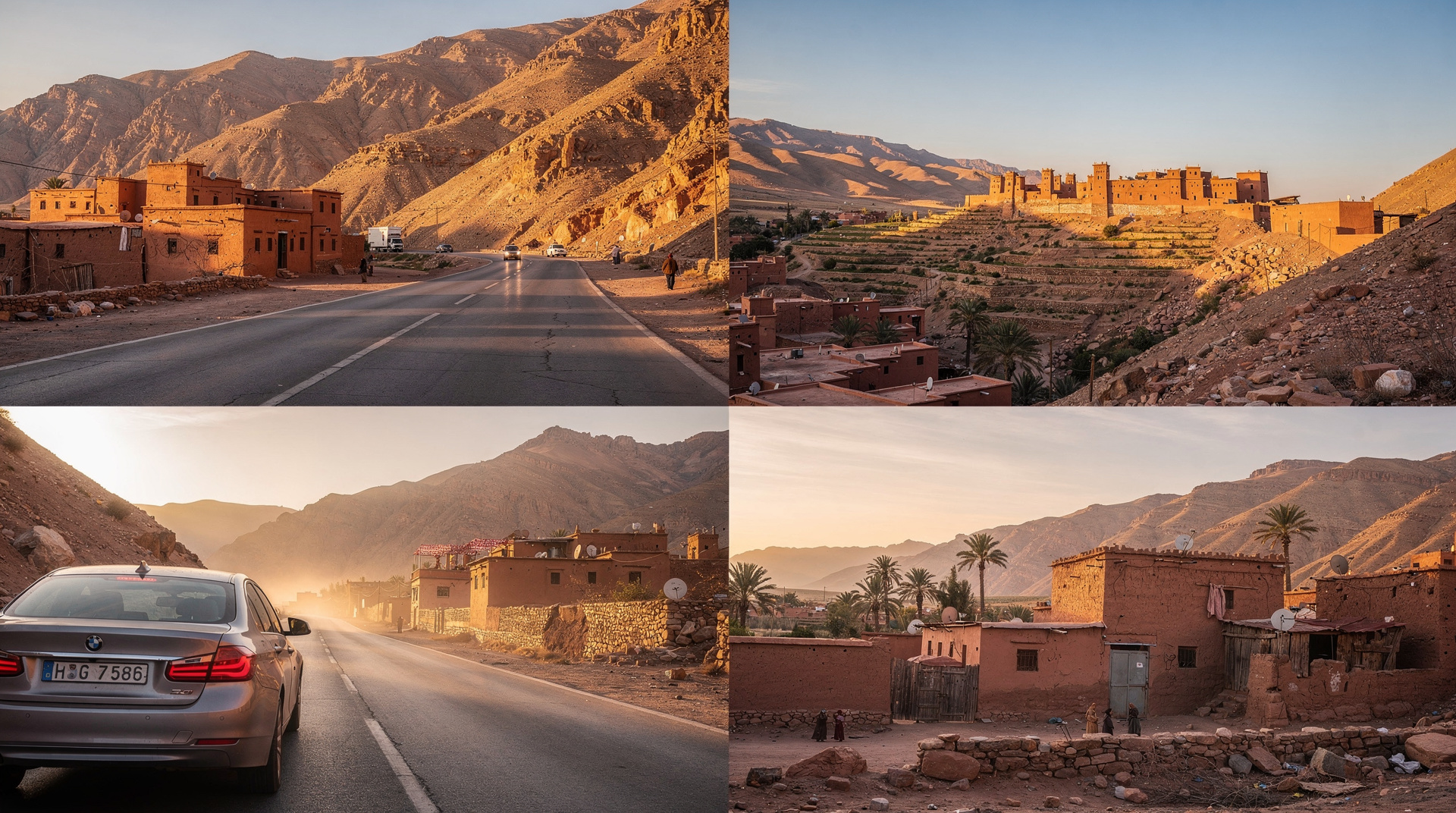
The N10 road east is the Dades Valley road — widely regarded as one of the most beautiful drives in Morocco. 130 km of palm oasis following the Dades River, with earthen kasbahs at every bend, the High Atlas to the north, and the Jbel Saghro range to the south. The road is good (paved, well-maintained) and carries light traffic except on market days.
Stop at: Kelaa M’Gouna (the Rose Valley capital — rose water factories visible from the road in April–May, rose jam and products sold year-round at roadside stalls); Boutaghrart (a striking kasbah cluster photographable from the road); Aït Arbi (the “Monkey Fingers” rock formations in the upper Dades Gorge).
Afternoon: Dades Gorge upper road
The Dades Gorge north of Boumalne is driveable for 25 km on a paved road that becomes a gravel track thereafter. The Monkey Fingers rock formations at km 8 are the main visual attraction. The road narrows significantly at km 15 — if your car is a compact, reversing may be required if you meet an oncoming vehicle on a blind bend. Know your comfort level before committing.
Where to stay: Guesthouse in Boumalne Dades or in the gorge itself (€40–70/night); parking on site
Budget estimate today: €70–110 including fuel, Atlas Studios, meals, accommodation
Day 5: Todra Gorge → Merzouga (4h)
Dawn: Todra Gorge
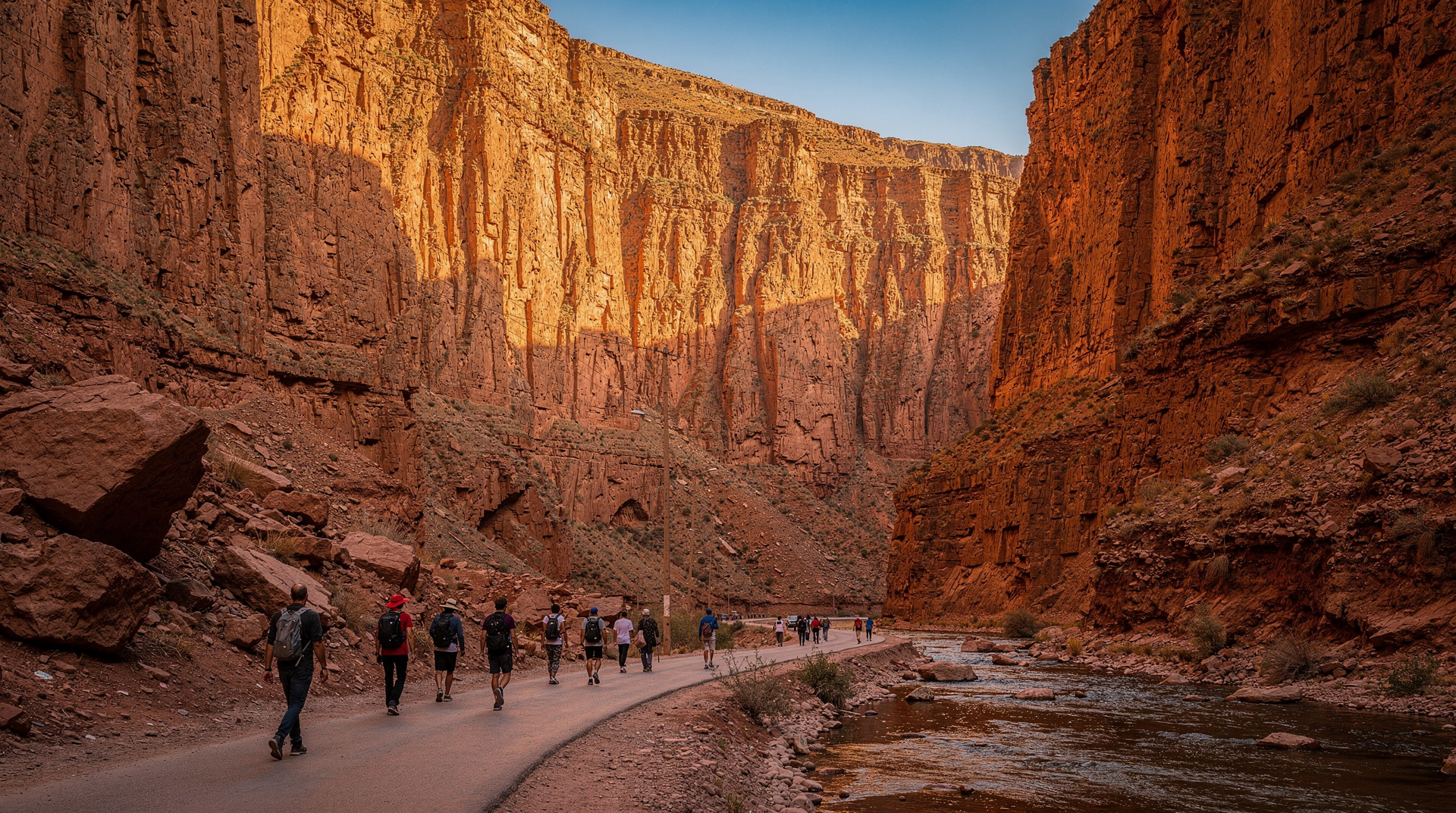
Be in the Todra Gorge at 07:30. Park in the first large parking area (€5 all day). Walk the 600-metre dramatic section between the 300-metre walls. The river at the gorge base is ankle-deep in summer, knee-deep after winter rains — waterproof boots optional but useful. The gorge wall in the morning catches eastern light and the pink granite glows.
Rock climbers on the walls at dawn are common — the Todra Gorge has 150+ established climbing routes and draws an international climbing community. This is either relevant to you or it is not; either way, the sight of climbers on 100-metre faces by 08:00 is impressive.
Drive to Merzouga:
The route through Tinghir, Tinejdad, Erfoud, and Rissani. Total approximately 175 km, 3 hours. The Erfoud fossil market (10 minutes, entertaining) is on the right as you enter town. Rissani’s souk (Monday, Thursday, Sunday) is Morocco’s most authentic regional market if timing aligns.
Fill up in Erfoud: The next reliable fuel station after Erfoud is in Merzouga, which may or may not have supply depending on the day. Fill in Erfoud.
Merzouga arrival: park and camel ride logistics
Guesthouses on the Erg Chebbi edge have parking areas. Leave the car at the guesthouse. The Erg Chebbi dunes themselves are only accessible by camel, quad, or with a specialist 4x4 guide — not in a rental car. Book the camel trek and overnight camp separately. Book the Merzouga sunset camel trek to desert camp — the easiest pre-bookable option. €80–120 per person including dinner, breakfast, and the camel ride both ways.
Where to stay: Guesthouse in Merzouga village or dune-edge auberge (€50–90/night); desert camp (€80–150/night)
Budget estimate today: €90–150 including fuel (full tank in Erfoud), Todra parking, camel trek, camp
Day 6: Sahara sunrise → second dune day
05:30 alarm: dune climb
Walk (or ride) to the dune crest for sunrise. This is non-negotiable. Come back for breakfast at camp. Spend the morning on the dunes or at the camp pool (some camps have pools). By 10:00 the heat is significant; retreat to shade.
Afternoon: Merzouga quad or at leisure
The Merzouga quad biking tour in Erg Chebbi is the afternoon option — 2 hours covering more dune terrain than a camel ride allows, with the added thrill of navigating sand in a motorized vehicle. €50–70 per person including guide and helmet.
Where to stay: Return to dune-edge guesthouse (€50–90/night)
Budget estimate today: €80–140 including camp extras, quad biking, meals
Days 7–8: Merzouga to Fes (8 hours total — split over 2 days)
Day 7: Merzouga to Midelt via the Zad Pass (5h)
The route north from Merzouga via Erfoud, Errachidia, Rich, and over the Zad Pass (2,178m) to Midelt covers 350 km. Leave by 07:30. The pass road is well-surfaced and less daunting than Tizi n’Tichka — a single climb over the Middle Atlas rather than the High Atlas. The cedar forests of Azrou begin on the north side of the pass.
Stop in Midelt for lunch (a good mountain town with reliable local restaurants, €8–15 per person) and stay overnight in the Middle Atlas. Midelt has a kasbah and several local cooperative shops selling Berber carpets and Middle Atlas honey (€5–15 for excellent local honey).
Day 8: Midelt to Fes (3h)
Through Azrou (cedars, Barbary macaques by the road at dawn — do not feed them but do photograph them), Ifrane (the Swiss-alpine-in-Morocco town built by the French, worth 30 minutes of walking the bizarre streetscapes), and down to Fes. Arrive by midday.
Park at the parking outside Bab Bou Jeloud (official parking, €10/day, guarded) or at your riad if it has arrangements. The medina is for walking — leave the car for Day 8 and 9.
Book the Fes full-day cultural tour for Day 8 afternoon if arriving before 13:00 — the afternoon tour is excellent for getting oriented before Day 9’s deeper medina exploration. €45–70 per person.
Where to stay (Day 7): Hotel Riad d’Or in Midelt (€50–70/night); (Day 8): Riad Idrissy in Fes (€60–100/night)
Budget estimate (Days 7–8): €200–320 including fuel, accommodation, meals, city entry
Days 9–10: Fes and surrounds
Day 9: Fes medina deep dive
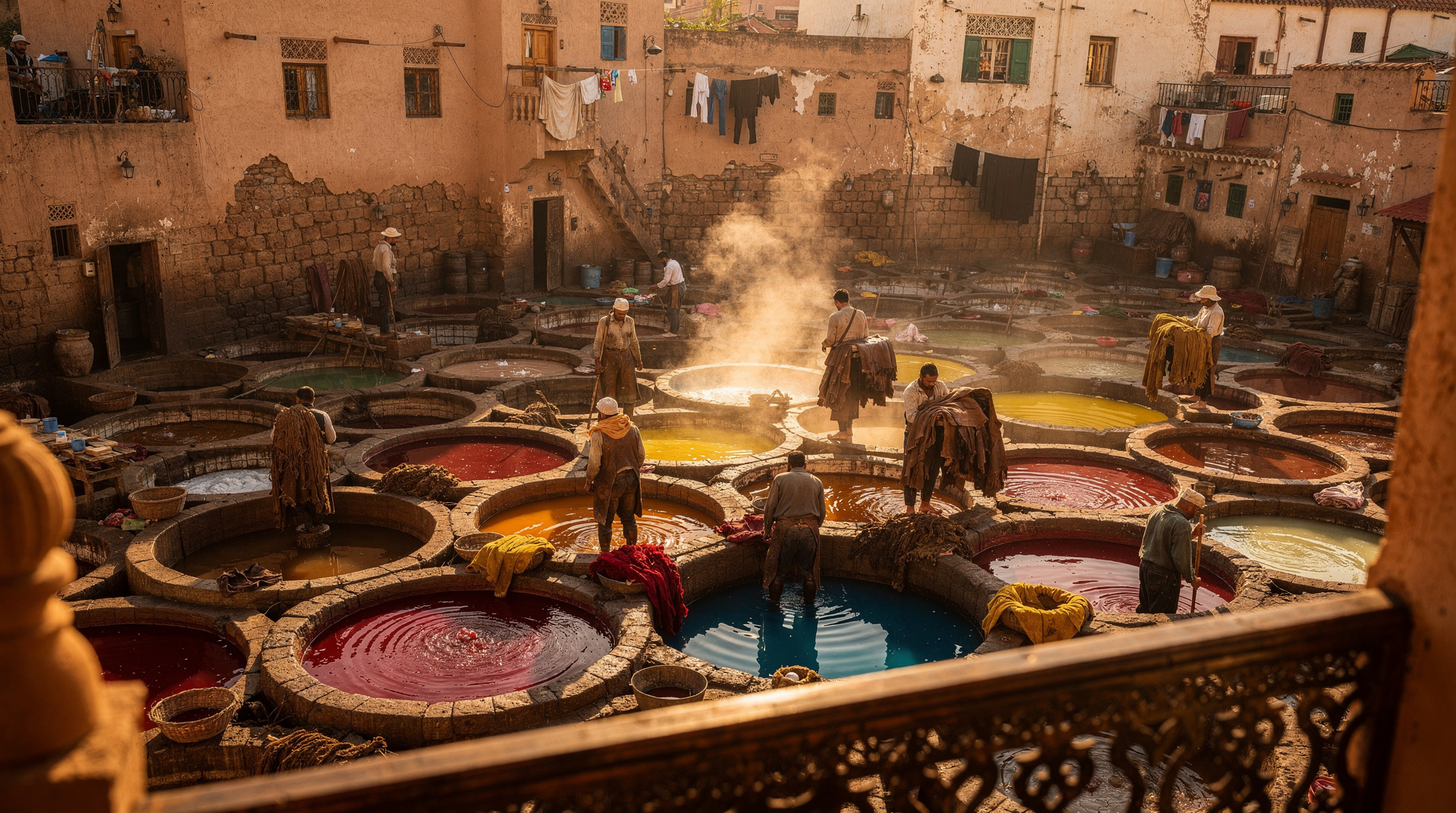
Follow the Day 4 and 5 recommendations from the cultural deep-dive itinerary. The tanneries, Al-Attarine Madrasa, Bou Inania Madrasa, and the Merenid Tombs view. All are walkable from Bab Bou Jeloud.
Day 10: Volubilis and Meknes day trip by car (2h30 loop)
This is where the rental car pays dividends: book the Meknes–Volubilis day trip independently, leave at 08:00, and you control the timing. Volubilis (32 km north of Meknes) entry €10; Meknes Bab Mansour and medina; return via Meknes train station area for a reliable lunch restaurant. Back in Fes by 18:00. Total driving: 140 km. See our Volubilis guide and Meknes guide for site details.
Where to stay (Days 9–10): Same Fes riad
Budget estimate (Days 9–10): €150–250 including accommodation, guided tour, Volubilis fuel and entry, meals
Days 11–12: Chefchaouen — the Rif Mountains
Day 11: Fes to Chefchaouen (3h)
The drive follows the N4 highway northwest to Ouazzane, then south into the Rif Mountains. The final 40 km to Chefchaouen climbs dramatically — hairpin bends through cedar and oak forest, the valley of the Oued Laou visible below.
Parking in Chefchaouen:
Chefchaouen’s medina is pedestrian-only beyond the medina gate. Park at the Parking Ras El Maa at the eastern edge of the medina (€10/day, generally safe) or at the parking south of Plaza Uta el-Hammam. Do not attempt to drive into the medina.
Spend Day 11 afternoon and Day 12 morning in Chefchaouen. The Chefchaouen Blue City private walking tour gives the historical context missing from a solo medina wander. The Akchour day hike (Day 12 morning option) is reachable by car — drive to Ain Tissimane village (28 km on a paved road) and park at the trailhead.
Where to stay (Days 11–12): Casa Perleta or Riad Cherifa in Chefchaouen (€45–80/night)
Budget estimate (Days 11–12): €130–200 including accommodation, tour, Akchour, meals
Days 13–14: Atlantic coast return — Casablanca and Essaouira
Day 13: Chefchaouen to Casablanca (4h30)
The route south via Ouazzane, Meknès, and the A1 toll motorway to Casablanca. Stop at the Hassan II Mosque for the afternoon (entry €14 with guided tour — essential). Book the Casablanca Hassan II Mosque skip-the-line tour in advance — the interior is only accessible on a guided tour. If flying out of Casablanca Mohammed V Airport, the trip ends here. If continuing, stay the night in Casablanca and drive south tomorrow.
Day 14: Casablanca to Essaouira or Marrakech (3h + 2h30)
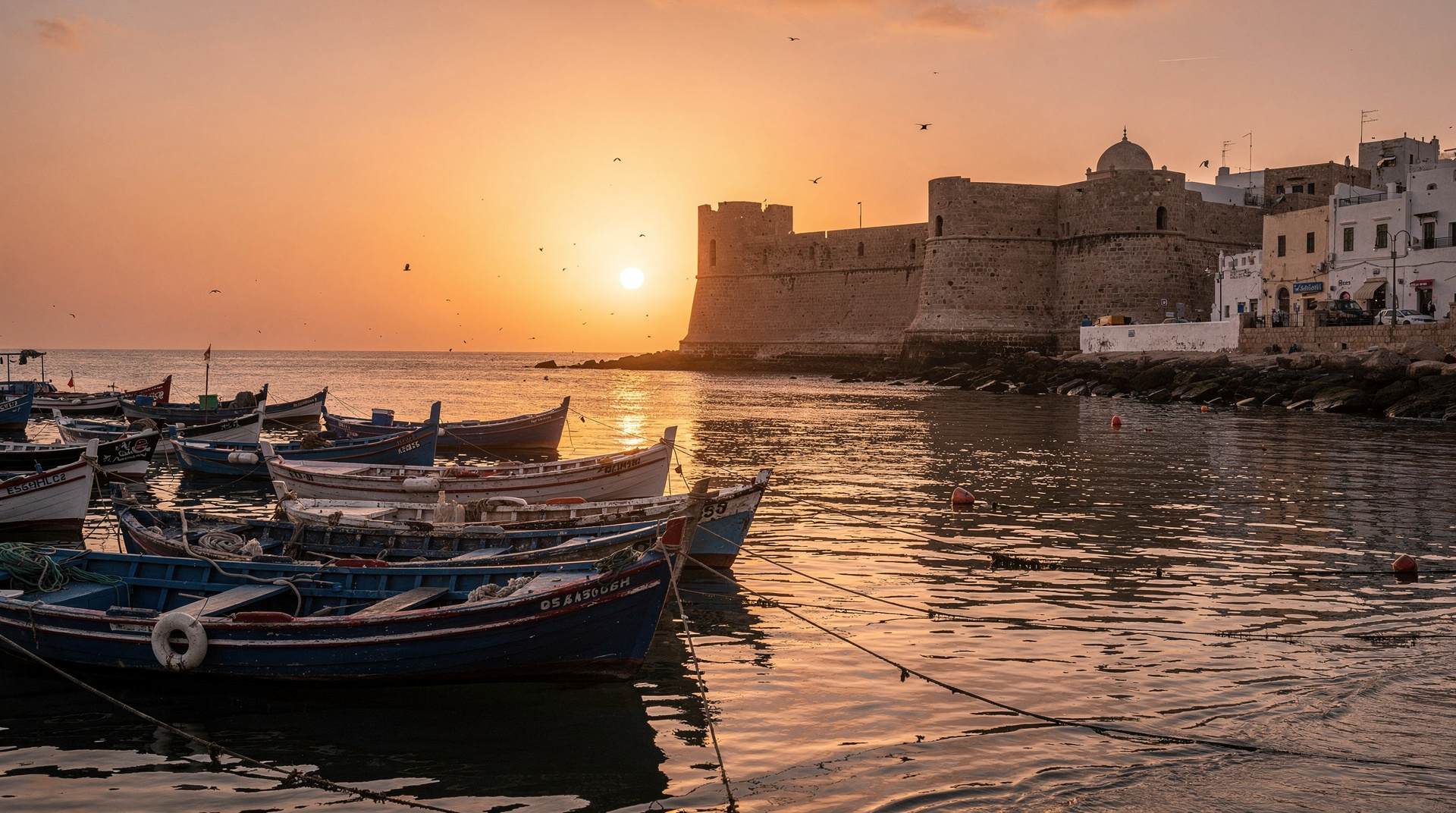
If your return flight is from Marrakech, the direct route is Casa → Marrakech (3h on the A7 motorway, excellent road). Alternatively, Casa → Essaouira (3h30) for a final night at the Atlantic before returning to Marrakech for the flight. The Essaouira option adds 2h30 to the final driving day but the Atlantic farewell is worth it for many travelers. See our Essaouira guide and Atlantic coast itinerary for more.
Where to stay: Casablanca city hotel (€60–100/night); Essaouira riad (€70–120/night)
Budget estimate (Days 13–14): €200–320 including accommodation, Hassan II Mosque, fuel, meals
Total trip cost estimate
| Item | Budget (per person) | Mid-range (per person) |
|---|---|---|
| Rental car 14 days (economy SUV) | €420 | €700 |
| Fuel (approx. 2,000 km total) | €120 | €120 |
| Accommodation (14 nights) | €420 | €900 |
| Desert camp and camel trek | €160 | €250 |
| Guided tours and entry fees | €150 | €250 |
| Food and drink (14 days) | €280 | €500 |
| Tolls (motorways) | €30 | €30 |
| Total (flights excluded) | €1,580 | €2,750 |
Road conditions and driving realities
Main highways (motorway, A-series): Excellent. Casablanca–Marrakech A7, Casablanca–Tangier A1. Toll booths accept cash (MAD) and some credit cards.
National roads (N-series): Good. The N9 (Tizi n’Tichka), N10 (Dades Valley), N13 (Middle Atlas) are all well-paved and clearly signposted.
Regional roads (R-series): Variable. Generally paved but may have surface damage, narrow sections, or shared use with livestock. Reduce speed on blind bends.
Pistes (off-road tracks): Unpaved. The Telouet track, upper Dades Gorge access, and some Sahara-edge approaches are piste. A standard car handles piste in dry conditions at low speed; after rain, these tracks can become impassable. A ground-clearance car handles them better.
Night driving: Legal but not recommended on mountain passes (Tizi n’Tichka, Zad Pass) or in the Sahara region. Pedestrians, cyclists, and animals use roads at night without lights and with total confidence. Reduce speed and increase following distances after dark.
For the full transport picture, read our getting around Morocco guide and the private tour vs self-drive comparison. For the 10-day version of this circuit, see our 10-day Morocco itinerary and the with-driver Morocco itinerary if you want to compare the costs and trade-offs. For packing for a self-drive trip, the Morocco packing list covers car-specific essentials.
Self-drive vs. private driver vs. guided tour
| Self-drive | Private driver | Guided group tour | |
|---|---|---|---|
| Flexibility | Total — stop anywhere, anytime | High — request stops, driver adapts | Low — fixed schedule |
| Cost (per person, 14 days) | €1,580–2,750 | €1,800–3,200 | €1,200–2,000 |
| Stress level | Moderate (mountain passes, medina parking) | Low | Very low |
| Local insight | Self-directed, needs research | High — drivers often double as guides | Moderate — group guide only |
| Best for | Independent travellers comfortable driving abroad | Travellers who want flexibility without driving | First-timers or those short on planning time |
If the road realities above (mountain passes, medina parking, night driving with unlit livestock) sound like more stress than adventure, our with-driver Morocco itinerary covers the identical route with a private driver instead — same stops, same pace, no driving.
Frequently asked questions about Self-drive Morocco itinerary
Is it safe to self-drive in Morocco as a first-time visitor? Yes, for the main routes described in this itinerary. Main highways and national roads are well-maintained and clearly signposted. The main adjustments are unfamiliar roundabout etiquette, animals on rural roads, and the mountain pass driving described above — none of which require prior international driving experience, just extra caution.
Can I drop the rental car off in a different city than I picked it up? Yes, most international agencies (Hertz, Europcar, Sixt) support one-way rentals between major cities like Marrakech, Fes, and Casablanca, usually for an additional drop fee (€50–150 depending on distance). Confirm the fee at booking, not at pickup.