Cultural deep dive Morocco: 14 days in the imperial cities
Morocco as a cultural destination: setting expectations correctly
Morocco’s cultural inheritance is extraordinary and genuinely complex. The country sits at the intersection of four major civilisations: indigenous Amazigh (Berber) culture going back millennia, sub-Saharan African traditions carried by trans-Saharan trade, Arab-Islamic civilisation arrived with the 7th-century conquest, and Andalusian heritage brought by the Muslim and Jewish refugees expelled from Spain in 1492. These layers do not simply coexist — they are folded into each other in ways that architecture, cuisine, music, and daily life all reflect simultaneously.
The imperial cities — Fes, Meknes, Marrakech, and Rabat — were each at different points the political capital of Morocco and each developed a distinct character. Fes is the most scholarly and the most medieval. Meknes is the most monumental and least visited. Marrakech is the most cosmopolitan and the most dramatically Saharan-influenced. Rabat is the most functional and the most French-influenced.
This 14-day itinerary takes all four imperial cities seriously, adds Tangier’s literary-diplomatic history, Chefchaouen’s Andalusian-Berber synthesis, Volubilis’s Roman layer, and Aït Benhaddou’s Berber kasbah architecture. It is an itinerary for people who want to understand Morocco, not merely see it.
Route at a glance: Tangier → Tetouan → Chefchaouen → Fes (3 nights) → Volubilis → Moulay Idriss → Meknes → Rabat → Casablanca → Marrakech (3 nights) → Aït Benhaddou
Best season: October–November or March–May. Fes in July is brutally hot; Marrakech in August is survivable only with air conditioning. The shoulder months offer the right temperature for extended medina walking.
Total estimated cost (per person, flights excluded): €1,000–1,800 including a rental car
At a glance
| Where | Tangier → Chefchaouen → Fes → Meknes/Volubilis → Rabat → Marrakech → Aït Benhaddou |
| Cost (pp, flights excluded) | around €1,000–1,800 |
| Time needed | 14 days minimum; do not compress below 12 |
| Getting there | fly into Tangier or Casablanca; a rental car covers the whole loop, with an optional train segment Casablanca–Marrakech |
| Best time | October–November or March–May |
| Guided context | licensed local guides at each imperial city add real value here — this is a history-dense itinerary, not a scenery one |
Day 1: Tangier — literary and diplomatic crossroads
Arrival and the city’s layered identity
Tangier was, for most of the 20th century, an International Zone — governed jointly by multiple nations, attracting artists, writers, spies, and exiles who found its legal ambiguity and cosmopolitan atmosphere uniquely permissive. Paul Bowles lived here for 50 years. William Burroughs wrote Naked Lunch in a medina apartment. The Beat Generation came to Tangier for the same reasons Delacroix had come a century earlier: Morocco as the edge of the familiar.
The Kasbah Museum (€2 entry) occupies the former sultan’s palace and provides the best introduction to this layered history — Phoenician, Roman, Vandal, Byzantine, Arab, Portuguese, Spanish, and French layers are all legible in the artefacts. The museum’s layout follows the palace rooms and the decorative work of the palace itself is the star exhibit.
The literary cafés and medina streets
The Café Hafa, perched on the cliff above the Strait since 1921, has served every Tangier legend — the same mint tea in the same glasses, the same view to Spain. The Café Central on the Petit Socco (small square) is where Bowles held court for decades. Sit in both. They cost €1.50 per tea.
Book the Tangier private half-day city tour including Hercules Caves to get the layered history from a local guide — the Phoenician Hercules Caves at Cap Spartel (where the Atlantic meets the Mediterranean) are geologically and historically extraordinary, and the Cap Spartel lighthouse marks the westernmost point of continental Africa.
Where to stay: Riad Dar Sultan (medina, €50–90/night) or El Minzah Hotel (Art Deco grand hotel, €100–150/night)
Budget estimate today: €80–150 including tour, meals, accommodation
Day 2: Tetouan — Andalusian Morocco
Morning: drive to Tetouan (1h from Tangier)
Tetouan is the city most directly shaped by the 1492 Reconquista. When the Muslim (Mudéjar) and Jewish populations were expelled from Andalusia, many settled here — bringing Andalusian architecture, music (the Andalusian classical music tradition of al-Ala is preserved here), Ladino language, and a cooking tradition distinct from the rest of Morocco.
The medina of Tetouan is UNESCO-listed and noticeably different from Fes or Marrakech — the white-plastered houses have Andalusian patio configurations, the arched doorways reflect Mudéjar craftsmanship, and the artisan workshops preserve techniques brought directly from Granada and Seville 530 years ago. It is also much less touristed than any other major Moroccan medina, which makes the experience more intimate.
The Museum of Moroccan Arts (€2) and the Archaeological Museum (€2) together provide 2 hours of good cultural context. See also the Tetouan School of Fine Arts, which has operated since 1945 as a centre for traditional craft instruction.
For the Tetouan medina in context, see our Tetouan guide.
Afternoon: drive to Chefchaouen (1h)
The drive from Tetouan to Chefchaouen climbs into the Rif Mountains — 1 hour through cedar forests and mountain villages. The approach to Chefchaouen through the valley is one of Morocco’s best arrival moments.
Where to stay: Casa Perleta or Riad Baraka in Chefchaouen (€45–80/night)
Budget estimate today: €80–140 including driving, museum entry, meals
Day 3: Chefchaouen — Amazigh-Andalusian synthesis
The blue city’s real history
Chefchaouen was founded in 1471 by Moulay Ali ben Rachid as a military base against the Portuguese. It became a refuge for Andalusian Muslims and Jews after 1492. The blue paint — the aesthetic that defines the city today — is relatively recent (from the 1930s), though the tradition it draws on is ancient: blue as a Jewish colour associated with divinity, and the cooler-feeling white-blue that reflects heat.
The city’s Jewish Quarter (mellah) is in the upper medina — the graves of 15th-century Andalusian rabbis are still maintained here, and the Hebrew inscriptions on some tombstones in the Bab Ssour cemetery document the arrival of specific families from specific Andalusian cities.
Book the Chefchaouen guided medina tour for the morning — a guide who can explain the Andalusian heritage layers, the Berber craft traditions (woven textiles, particularly the striped berber blankets sold in the market), and the geographical context of the Rif Berber population transforms what might otherwise be an aesthetic experience into a genuinely historical one.
Afternoon: the Rif craft traditions
The weekly market (held on Monday and Thursday) brings Berber women from surrounding villages in traditional striped haik and broad-brimmed straw hats — a visual and cultural encounter unlike anything in the imperial cities. Even outside market days, the weavers’ souk in the medina shows the textile tradition at work.
Where to stay: Same Chefchaouen riad
Budget estimate today: €60–100 including guide, medina, meals
Days 4–6: Fes — three full days in the oldest medina
Why Fes needs three days
Fes el-Bali is not a city that yields in a day. It is, quite simply, too large and too layered. The UNESCO inscription covers 9,000 streets. The artisan guilds — tanneries, brass-workers, carpet weavers, woodcarvers, ceramic painters — are each worth an hour. The religious monuments (the Al-Qarawiyyin mosque-university, the Bou Inania Madrasa, the Al-Attarine Madrasa, the Merenid Madrasas above the city) are collectively a masterclass in Islamic architecture across four centuries.
Day 4: the learning city
Fes was for centuries the intellectual capital of the Islamic West. The Al-Qarawiyyin, founded in 859 AD by Fatima al-Fihri (a woman, a fact the university recently began acknowledging more prominently), is the world’s oldest continuously operating university. The mosque itself is not accessible to non-Muslims, but the exterior and the nine gates that front onto different streets of the medina are worth circling. The Al-Attarine Madrasa (€3) directly adjacent is accessible and is the finest example of Merenid decorative architecture in Fes — 14th-century carved stucco, cedar wood muqarnas, zellige tile dado: three layers of Islamic geometric and calligraphic art in a single building.
Book the Fes full-day cultural tour for Day 4 — covering the major monuments with a trained guide is the right choice for the first day in the medina.
Day 5: artisan guilds and tanneries
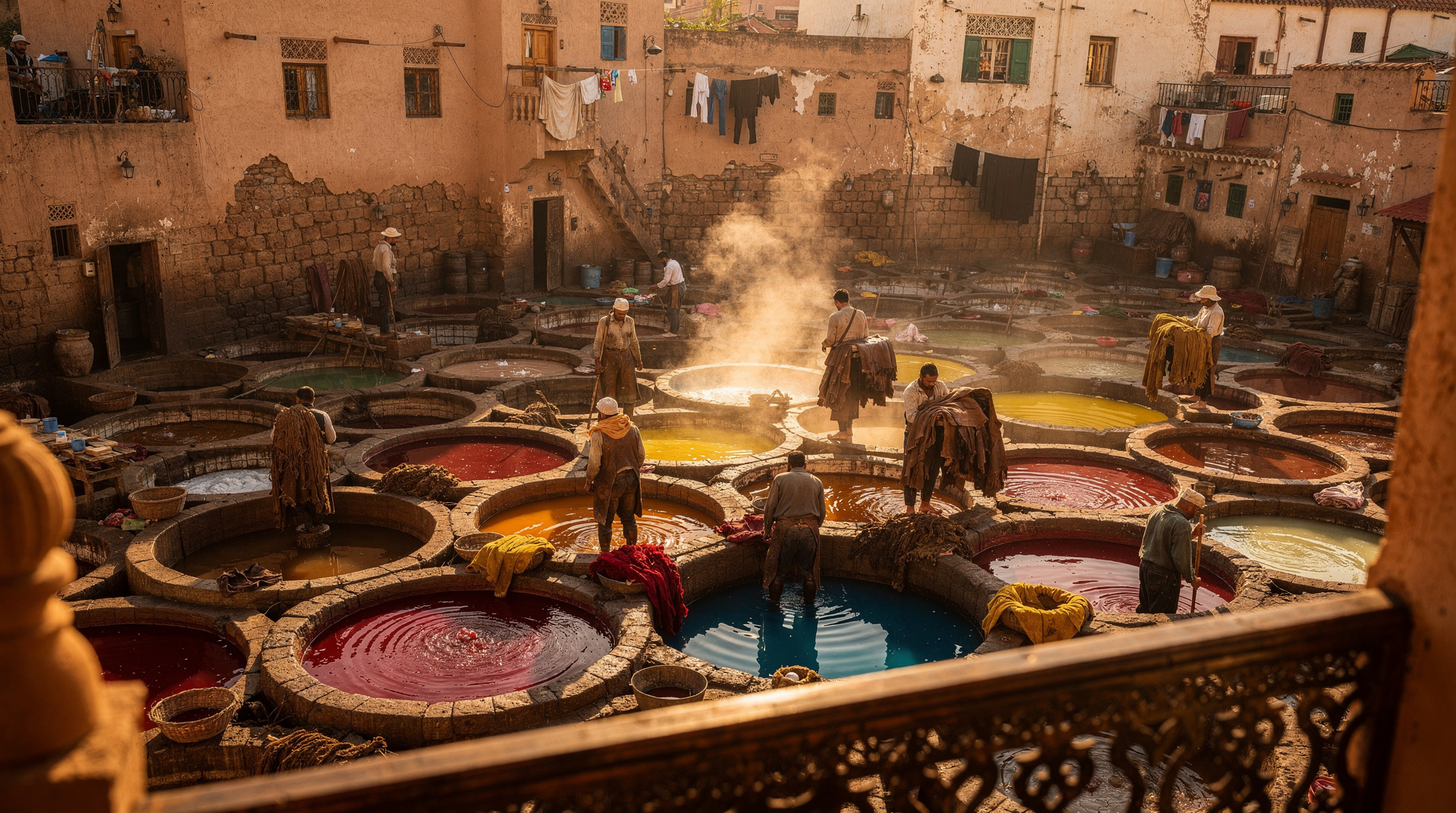
The Chouara tanneries (best seen from the rooftop leather shops before 11:00) are the most famous sight in Fes. But the craft tour is richer than the tannery alone: the brass-workers of Seffarine Square, the woodcarvers in the lanes behind the Al-Qarawiyyin, the ceramic painters in the Fes pottery workshops on the edge of the medina (€5 entry including a demonstration), and the rope-makers whose twisted fibres are produced in the same courtyard they have occupied for 400 years.
Book the Fes museum, madrasa, tannery, and medina guided tour for Day 5 morning — a different guide brings a different narrative layer.
Day 6: Fes el-Jdid (New Fes) and the Mellah
Fes el-Jdid, built by the Merenids in 1276, contains the Royal Palace (exterior only — the ornamental gate is one of the most photographed in Morocco), the former Jewish Quarter (Mellah), and the Vieux Mechouar (royal courtyard). The Mellah in Fes is the oldest in Morocco — established in 1438, and the architecture of the Jewish houses (tall, narrow, with characteristic wrought-iron balconies) is distinct from the rest of the medina. The Ibn Danan Synagogue (restored, €2 entry) is the best-preserved Jewish monument in Morocco.
Where to stay: Riad Laaroussa or Riad Palais Amani in Fes (€80–160/night)
Budget estimate (Days 4–6): €250–420 total including accommodation, guided tours, entry fees, meals
Day 7: Volubilis and Moulay Idriss
Morning: Volubilis — Morocco’s Roman layer
Volubilis is the best-preserved Roman city in North Africa and a genuinely extraordinary site. Founded as a Berber-Phoenician settlement centuries before Rome arrived, it became the regional capital of the Roman province of Mauretania Tingitana under the Emperor Claudius (1st century AD). At its height, the city had 20,000 inhabitants, a forum, basilica, triumphal arch, public baths, and (unusually) 50+ surviving floor mosaics of exceptional quality.
The Orpheus mosaic, the Labours of Hercules mosaic, and the Diana bathing mosaic are the most celebrated — but walking the excavated streets, identifying the oil press installations that made this city wealthy, and reading the Latin inscriptions on public buildings tells a story of how Roman civilization operated at its furthest western reach.
Book the Fes day trip to Volubilis, Moulay Idriss, and Meknes — this covers all three sites in a single efficient day. Entry to Volubilis: €10. Allow 2 hours minimum.
Afternoon: Moulay Idriss Zerhoun
Moulay Idriss is the most sacred city in Morocco — the tomb of Idris I, the founder of the Idrisid dynasty and the first Arab ruler of Morocco, is here. Until 2005, non-Muslims were not permitted to enter the city after sunset; now it is fully accessible but retains a devotional atmosphere unlike any other Moroccan city. The two circular hills that hold the city have a distinctive urban silhouette visible across the valley.
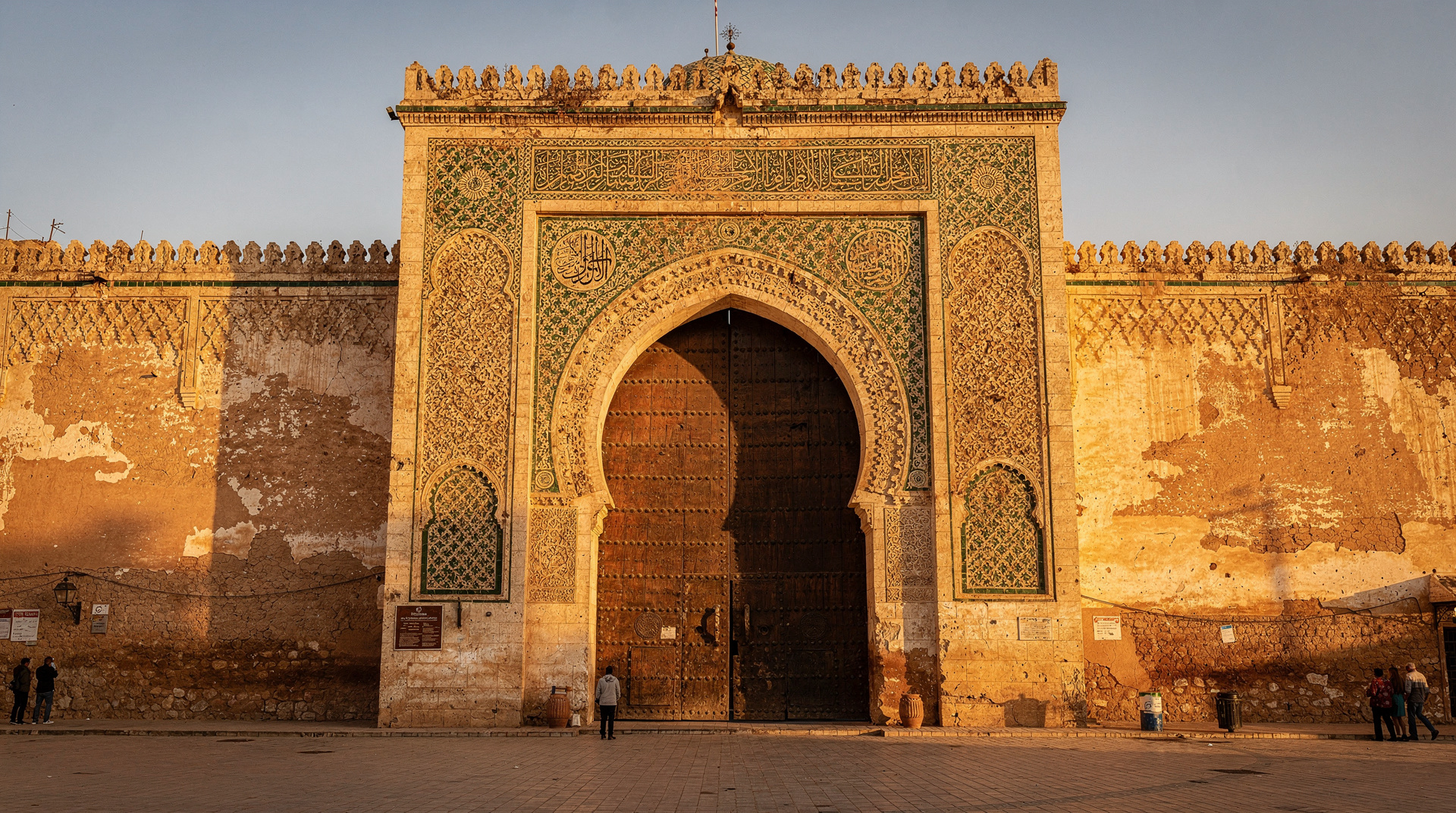
The round minaret of the Sidi Abdallah el-Hajjam mosque — the only cylindrical minaret in Morocco — is covered in zellige tilework spelling out Quranic verses in relief. The view from the Sidi Abdou terrace above the city looks directly over the rooftop minarets and across to Volubilis in the valley below.
Where to stay: Hotel Bab Mansour or a riad in Meknes (€50–80/night)
Budget estimate today: €80–150 including tour or self-drive, entry fees, meals
Day 8: Meknes — the forgotten imperial city
The city of Moulay Ismail
Sultan Moulay Ismail (1672–1727) is one of the most extraordinary and most controversial figures in Moroccan history. During his 55-year reign, he unified Morocco, expelled the Portuguese from several Atlantic ports, and built a capital at Meknes of such ambition that contemporary observers compared it to Versailles. He reportedly had 700 sons. He also had 60,000 Christian slaves working on his building projects.
The built legacy is staggering: the Bab Mansour gate (the most magnificent ornamental gate in Morocco, 25 metres high, with marble columns looted from Volubilis); the Heri es-Souani granary-stable complex (enormous vaulted underground chambers designed to hold enough grain for a 10-year siege and stabling for 12,000 horses); the Agdal Basin (a reservoir 4 km in circumference, built for naval exercises and food preservation); and the 25 km of city walls.
Book the Meknes private guided walking tour — the granary and the Mausoleum of Moulay Ismail (one of the few imperial mausoleums open to non-Muslims) are the essential monuments. The Bou Inania Madrasa in Meknes (similar to Fes but less crowded, €3 entry) completes the morning.
Afternoon: Meknes medina and drive to Rabat
Meknes’s medina is genuinely undervisited — the Place el-Hedim (the main square opposite Bab Mansour) functions as a smaller Djemaa el-Fna, with the same mix of food stalls, musicians, and evening theatre. The covered souk behind the square sells excellent Meknes pottery and leather at prices significantly lower than Fes.
Drive to Rabat (1h30) for the night.
Where to stay: Riad Dar El Kebira in Rabat (€60–100/night)
Budget estimate today: €90–150 including guide, entry fees, driving, dinner
Day 9: Rabat — the modern capital’s ancient roots
Chellah and the Almohad legacy
The Chellah necropolis at the southern edge of Rabat contains a remarkable palimpsest: a Roman city (Sala Colonia, roughly contemporary with Volubilis), overlaid by a 14th-century Merenid necropolis with royal tombs, a mosque ruin, and a minaret that storks have been nesting in for centuries. Entry €3. The combination of Roman column bases, Islamic mausoleum tile work, and the natural chaos of roosting storks above the ruins is genuinely singular.
The Hassan Tower — the unfinished 12th-century Almohad minaret — was intended to be the world’s largest mosque at its founding. The death of Sultan Yacoub al-Mansour in 1199 stopped construction; the 44-metre minaret stands among the stumps of 300 columns, all that was built of the mosque platform before work halted for 800 years.
Modern Rabat: the French Protectorate city
The Ville Nouvelle of Rabat is one of the most intact examples of French colonial urban planning — wide tree-lined boulevards, Art Deco government buildings, and the Mohammed V Mausoleum (contemporary royal architecture in Moroccan style, free entry). The contrast with the adjacent medina — white Andalusian-influenced houses, artisan souks — is instructive about how colonialism created the physical division between old and new that most Moroccan cities still embody.
Drive to Casablanca (45 minutes) then Marrakech (3h30 by car or train)
Given the driving day, take the train from Casablanca to Marrakech (3h) rather than driving. Leave the car at a Casablanca car park for the Marrakech segment and collect on return, or arrange a one-way car rental.
Where to stay: Marrakech riad (arrive evening; €100–180/night)
Budget estimate today: €100–180 including Chellah, Hassan Tower, driving/train, meals
Days 10–12: Marrakech — the southern imperial capital
Day 10: Marrakech as imperial city
Marrakech was the capital of the Almoravid and Almohad empires — the Koutoubia Mosque (12th century, the model for the Giralda in Seville and the Hassan Tower in Rabat) is the defining monument of the city and its exterior is one of the most architecturally refined structures in the Islamic world. The Saadian Tombs (16th century) represent the high point of Moroccan decorative architecture under the Saadian dynasty. The El Badi Palace ruins (also 16th century Saadian, €2 entry) are what remains of a palace reportedly so magnificent that it was stripped of its materials by Moulay Ismail to decorate Meknes.
Book the Marrakech Bahia Palace, Madrasa Ben Youssef, and medina tour — the Ben Youssef Madrasa (€3 entry; the largest madrasa in Morocco, founded in the 14th century and restored to its Saadian-period grandeur) is one of the finest examples of Moroccan decorative architecture anywhere. The three-storey courtyard of carved stucco, zellige tile, and cedar wood is equal to anything in Fes.
Day 11: Berber Marrakech — the Atlas connection
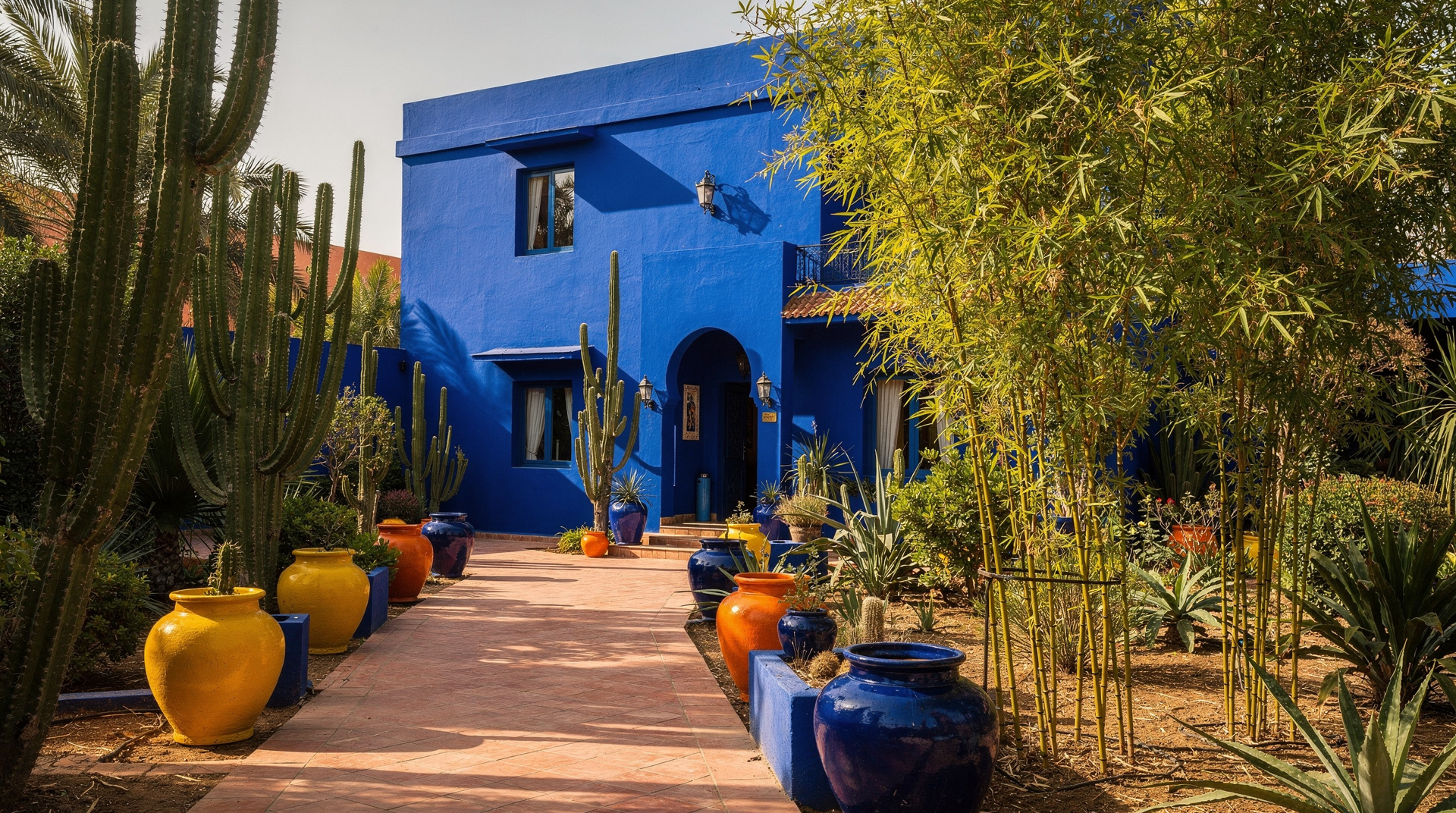
Marrakech sits at the foot of the High Atlas — the Berber heartland that has always been a parallel world to the Arab city in the valley. The Berber Museum at the Majorelle Garden (combined entry €12) is the best introduction to Amazigh material culture, with displays of jewelry, textiles, tools, and ritual objects from across the Moroccan Berber regions.
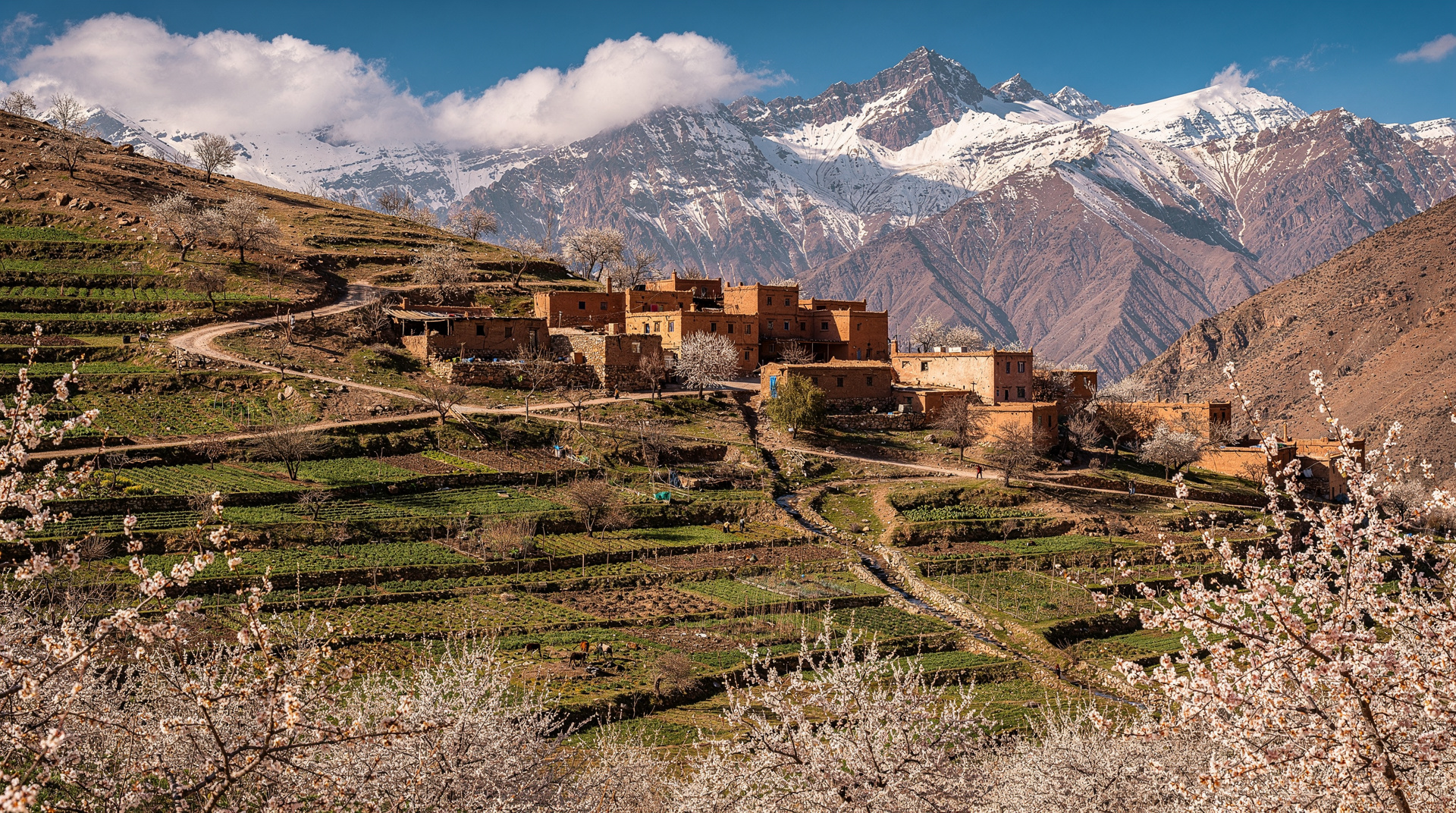
A day trip to Imlil (1h30 drive south) or the Ourika Valley brings you into actual Berber village life. The traditional mud-brick architecture, the terraced farming, the Tachelhit language (distinct from Arabic and the Darija of the cities) — these represent the deepest roots of Moroccan culture. See our Atlas Mountains guide for detail.
Day 12: Marrakech — Jewish Quarter and Andalusian legacy
The Mellah of Marrakech (adjacent to the Bahia Palace) is the historic Jewish quarter — founded in 1558 when the Saadian sultan relocated Marrakech’s Jewish community here. The Ben Youssef Synagogue (now partially a museum), the Hebrew inscriptions on several house facades, and the distinctive architectural vocabulary of the Mellah houses (taller, with balconies, different from the inward-facing riad typology of the Islamic medina) tell the story of Morocco’s Jewish community — Amazigh-speaking Jews who predated the Arab arrival, and Andalusian Jews who arrived with the 1492 expulsion.
Where to stay: Riad BE Marrakech or Riad El Fenn (€120–200/night)
Budget estimate (Days 10–12): €300–450 total including accommodation, tours, entry fees, meals
Days 13–14: Aït Benhaddou — Berber kasbah architecture
Day 13: drive to Aït Benhaddou (3h from Marrakech)
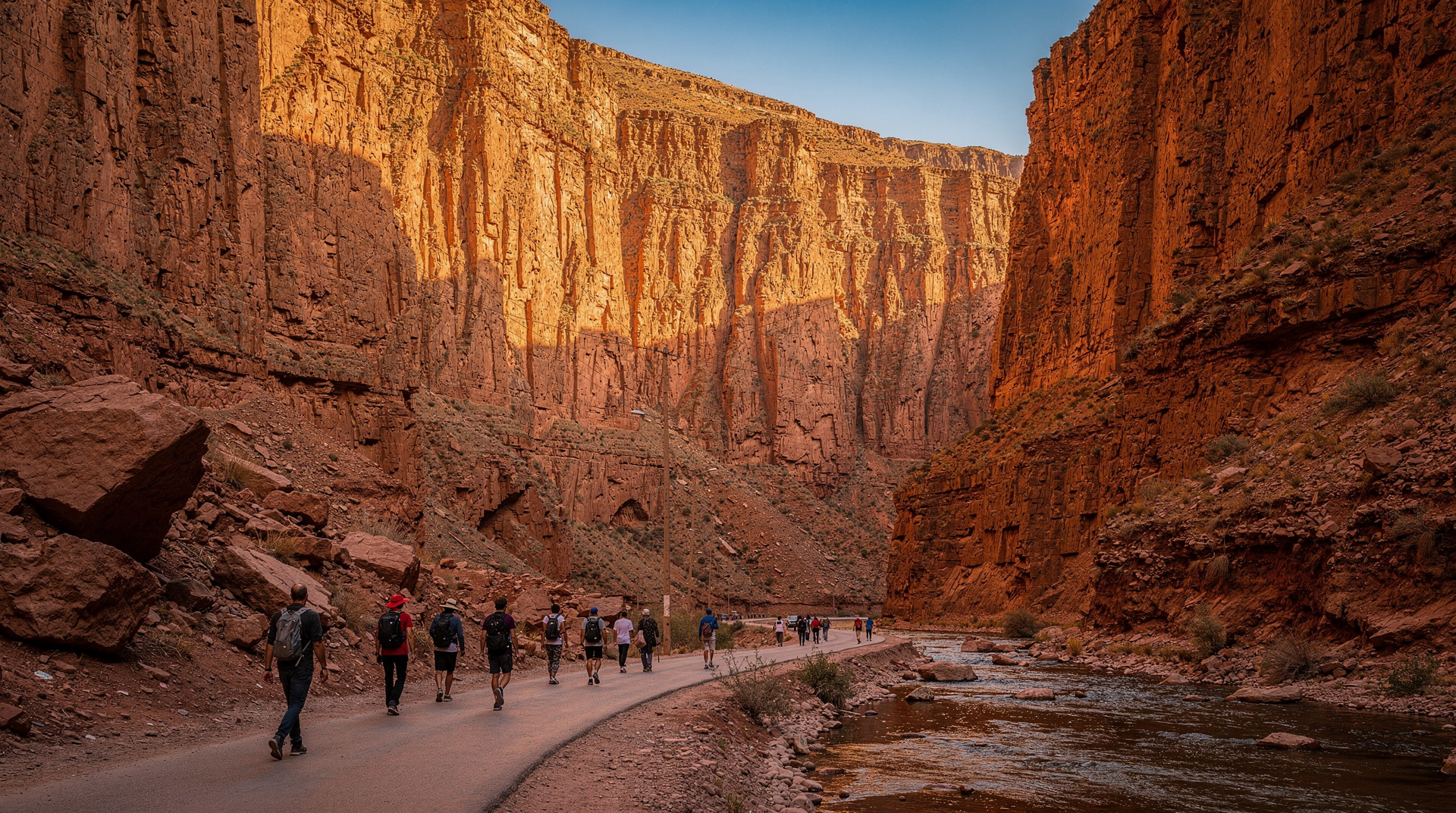
The route south over the Tizi n’Tichka pass (2,260m) is the most dramatic Alpine road in Morocco — switchbacks, canyon views, Berber road-stop villages selling minerals and amethyst geodes. The descent into the southern valleys is the transition between Mediterranean-influenced north Morocco and Saharan-influenced south Morocco.
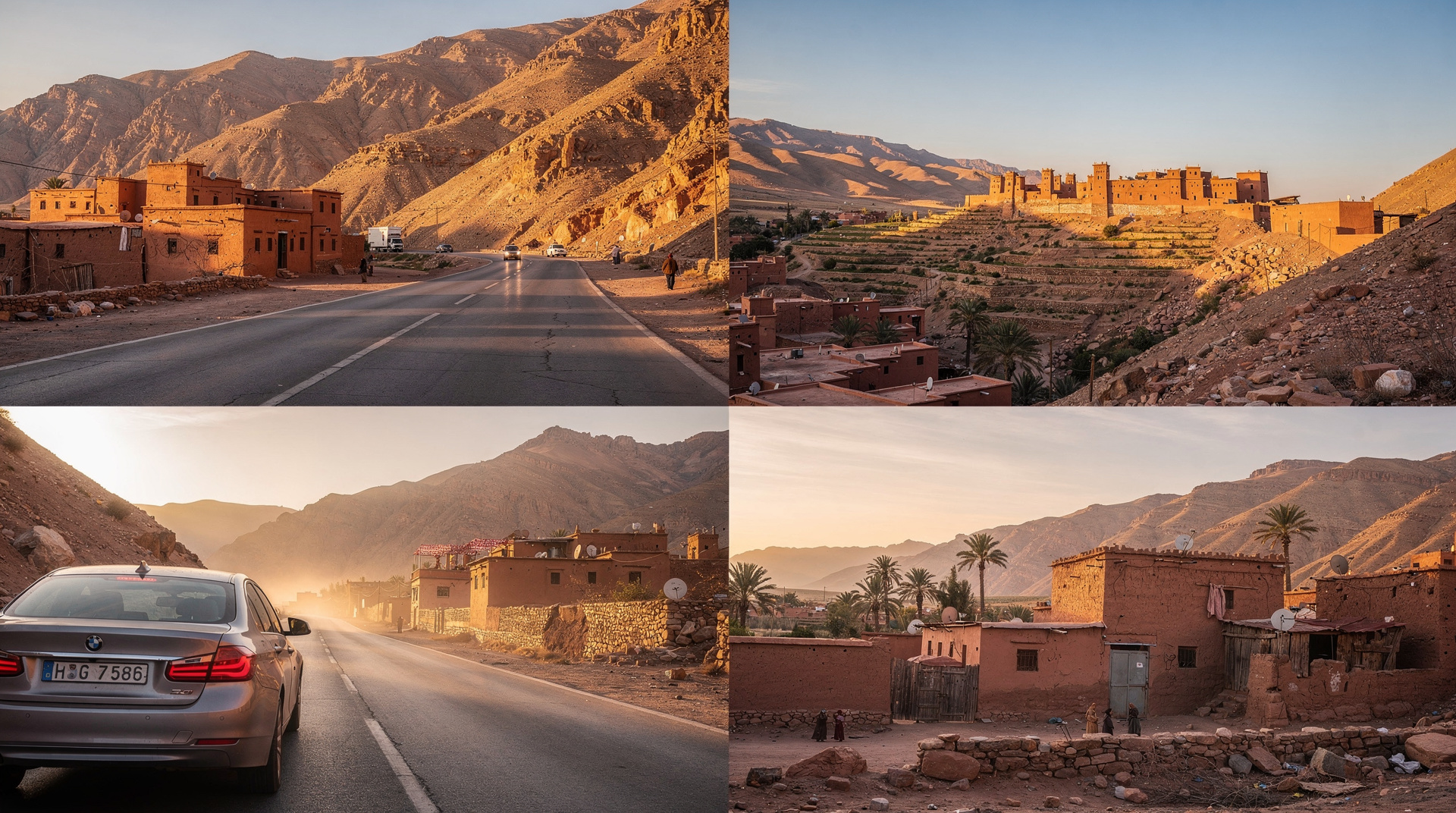
Aït Benhaddou is the finest example of southern Moroccan earthen architecture — a fortified village (ksar) of four kasbahs and dozens of houses built entirely in pisé (rammed earth) and unfired brick. This building tradition — adapted to extreme temperature differences between day and night, cheap and locally sourced, naturally ventilated — represents a vernacular architectural achievement as sophisticated as the decorative arts of the imperial city madrasas.
Day 14: Aït Benhaddou at dawn + Ouarzazate
The dawn walk across the dry river bed and up through the ksar is the architectural experience of the trip — the morning light on the pisé towers, the carved earthen geometric patterns that decorate the upper facades, the stork nests on every summit. The view from the granary at the top takes in the Ouarzazate Valley and the beginning of the Saharan landscape.
Book the Ouarzazate half-day tour including Aït Benhaddou if you prefer a guide for the afternoon, combining the ksar with the Kasbah Taourirt in Ouarzazate (a working kasbah occupied until the 1950s, with decorated interior rooms open for visits at €3).
Return drive to Marrakech over the Atlas (3h) for the evening flight, or stay a night in Ouarzazate and fly from Marrakech the following day.
Where to stay: Auberge at Aït Benhaddou village (€40–70/night) or Dar Kamar in Ouarzazate (€60–100/night)
Budget estimate (Days 13–14): €150–250 including driving, accommodation, entry fees, meals
Total trip cost estimate
| Item | Budget (pp) | Mid-range (pp) |
|---|---|---|
| Accommodation (14 nights) | €500 | €1,000 |
| Rental car (14 days, fuel) | €450 | €650 |
| Guided tours (6 days) | €200 | €400 |
| Entry fees (sites) | €80 | €80 |
| Food and drink (14 days) | €300 | €550 |
| Total (flights excluded) | €1,530 | €2,680 |
Hiring guides: when it matters and when it doesn’t
This itinerary books a licensed local guide on several days (Tangier, Chefchaouen, Fes twice, Meknes, Volubilis, Marrakech), and that pattern is deliberate rather than habitual. In a culture-focused itinerary, a guide is not a convenience — it is the difference between seeing a beautiful courtyard and understanding why the Merenid sultans built madrasas at all, or between photographing the Chouara tannery and knowing which pit produces which colour and why. Skipping guides on this specific itinerary would flatten roughly half of what makes it worth doing.
That calculation reverses on a itinerary built around landscape rather than history — see the desert-focused Sahara itinerary, where a private driver replaces the guided-tour structure because the desert’s value is experiential, not interpretive. For a comparison of the two approaches to organising a Morocco trip, read private tour vs self-drive Morocco.
Budgeting guides realistically: a half-day licensed guide runs €25–45 per group in the imperial cities, cheaper in Meknes and Volubilis than in Fes or Marrakech. Across the six guided sessions in this itinerary, expect €150–250 total per couple — already included in the tour bookings above rather than an extra line item.
Reading the medinas: a practical framework
Four medinas in fourteen days (Tangier, Chefchaouen, Fes, Marrakech) is enough to notice real differences if you know what to look for. Three things distinguish one Moroccan medina from another: the era of its dominant architecture (Merenid Fes vs Saadian Marrakech vs Andalusian Chefchaouen), the trade that built its wealth (scholarship and leather in Fes, trans-Saharan gold and slaves in Marrakech, smuggling and diplomacy in Tangier), and the degree to which tourism has reshaped its economy (heaviest in Marrakech and Chefchaouen, lightest in Meknes).
Fes el-Bali rewards slow, guided walking because its logic is genuinely opaque to outsiders — the Fes souks guide and the Fes blue pottery guide both help decode specific quarters before you go. Marrakech’s medina is more legible on your own after the Ben Youssef Madrasa orientation — see the Marrakech souks guide for a self-guided route.
What to skip or add
Skip if time is tight: Tetouan (Day 2) can be bypassed — drive directly Tangier to Chefchaouen in 3 hours. Tetouan is genuinely rewarding but it requires an extra half-day and the road is less scenic than the direct mountain route.
Add if time allows: A day in Asilah — an Atlantic fishing town 50 km south of Tangier with one of Morocco’s best-preserved Portuguese-built medinas and an annual international arts festival. Or Ifrane on the Fes–Meknes segment, for an entirely surreal town built by the French in a Swiss Alpine style at 1,650 metres elevation in the Middle Atlas.
Deep reading: The single best book for the cultural context of this itinerary is Barnaby Rogerson’s “A Traveller’s History of North Africa.” For the Fes medina specifically, Tahir Shah’s “The Caliph’s House” (about restoring a house in Casablanca, but deeply embedded in Moroccan cultural context) and Elias Canetti’s “The Voices of Marrakesh” (a 1968 account that remains uncannily accurate).
For full destination coverage, read our Fes guide, Meknes guide, Volubilis guide, and Moulay Idriss guide. For the imperial cities as a circuit, see the imperial cities itinerary and the imperial cities destination overview. The cultural deep dive guide and Morocco 10 vs 14 days are also relevant for planning. If you’d rather shift the balance toward the Atlas and Berber villages, compare against the Atlas-focused Morocco itinerary.
FAQ
Is 14 days too long for a cultural Morocco trip? Not for this route. Three imperial cities plus Chefchaouen and Aït Benhaddou genuinely need it — travellers who compress this itinerary into 10 days consistently report Fes feeling rushed, and Fes is the section that rewards time the most. If 14 days isn’t available, drop Tetouan and one Marrakech day rather than cutting a full city.
Do I need a guide in every city, or can I do this itinerary self-guided? You can skip guides in Meknes and Rabat without losing much — both are legible enough to self-navigate with the destination guides linked above. Fes is the one city on this route where a guide meaningfully changes the experience; the medina’s internal logic (which lane leads where, which workshop is worth entering) is not intuitive on a first visit.