Budget Morocco itinerary: 10 days for €50/day
Morocco on a tight budget: what’s actually possible
Morocco is one of the best-value destinations in the world for budget travellers — if you know how locals move. The trap is falling into tourist infrastructure: private transfers, mid-range riads, guided tours at western prices. The alternative is exactly how Moroccans themselves travel: CTM and Supratours buses, grand taxis packed with locals, street food from the mechoui alleys, and cheap hostels or guesthouses in the medinas.
The €50/day target covers a bed, three meals, transport, and basic entry fees. It is achievable with discipline. On some days — long bus days with a packed lunch — you will spend €25. On days with a paid attraction or a longer taxi journey, you might hit €65. The average works.
This 10-day route hits Morocco’s greatest hits: Marrakech, a night in Essaouira, the Sahara at Merzouga, Fes, and Chefchaouen. It is a genuine “best of Morocco” circuit done at backpacker pace.
Route at a glance: Marrakech (2 nights) → Essaouira (1 night) → Marrakech → Merzouga (2 nights) → Fes (2 nights) → Chefchaouen (2 nights) → Tangier/home
Total estimated cost (per person, flights excluded): €480–550 for 10 nights
At a glance
| Day | Route | Overnight |
|---|---|---|
| 1 | Arrive Marrakech | Marrakech |
| 2 | Marrakech medina | Marrakech |
| 3 | Bus to Essaouira (2h30) | Essaouira |
| 4 | Bus back Marrakech, onward to Merzouga (CTM) | Merzouga |
| 5 | Merzouga: dunes, sunset camel | Merzouga |
| 6 | Merzouga: morning dunes, bus toward Fes | Fes |
| 7 | Fes medina | Fes |
| 8 | Fes: tanneries, cooking class optional | Fes |
| 9 | Bus to Chefchaouen (4h) | Chefchaouen |
| 10 | Chefchaouen → Tangier bus or home | Tangier/home |
Day 1: Arrive Marrakech — find your feet for free
Marrakech Menara Airport is €4–6 petit taxi to the medina. Agree the price before getting in; the legal meter rate is around 40–50 MAD but drivers often quote higher. A shared grand taxi from outside arrivals can cost as little as 15–20 MAD per seat if you share.
Check into your hostel. The best budget options in Marrakech’s medina cluster around Bab Doukkala and near Djemaa el-Fna: Equity Point Marrakech, Hostel Riad Zitoun, and Dar Sidi Messaoud all offer dorm beds for €7–12 per night, many with rooftop breakfast included.
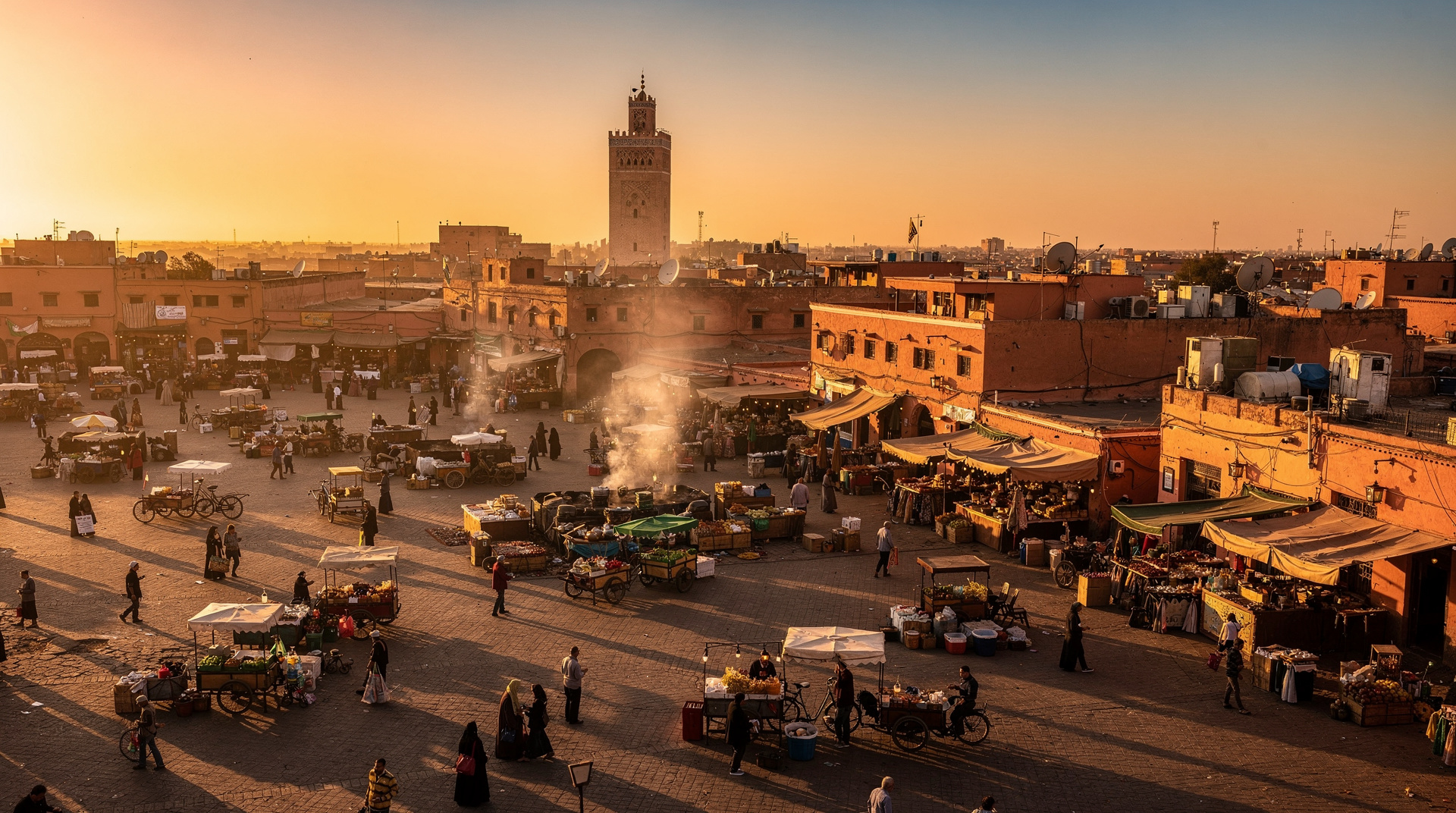
Today costs almost nothing. Walk to Djemaa el-Fna square in the late afternoon — it is free. The orange juice sellers charge 5–7 MAD per glass (under €0.60). Stand at the edge and watch the snake charmers, musicians, and acrobats — this is Morocco’s greatest free performance. Dinner on the square’s grill stalls: a plate of kefta with bread and harira soup, €4–6.
The medina at night is loud, aromatic, and slightly overwhelming. That is normal. By Day 3 you will navigate it without looking at your phone.
Accommodation: Hostel dorm €8–12 | Food: €6–10 | Day total: €15–25
Day 2: Marrakech medina — the free version
Most of Marrakech’s real wealth is free or nearly free. A walking morning through the souks costs nothing. The souk network north of Djemaa el-Fna — Souk Semmarine, Souk el-Attarine, the lamp souk, the slipper souk — is the largest concentration of traditional crafts in North Africa and admission is zero.
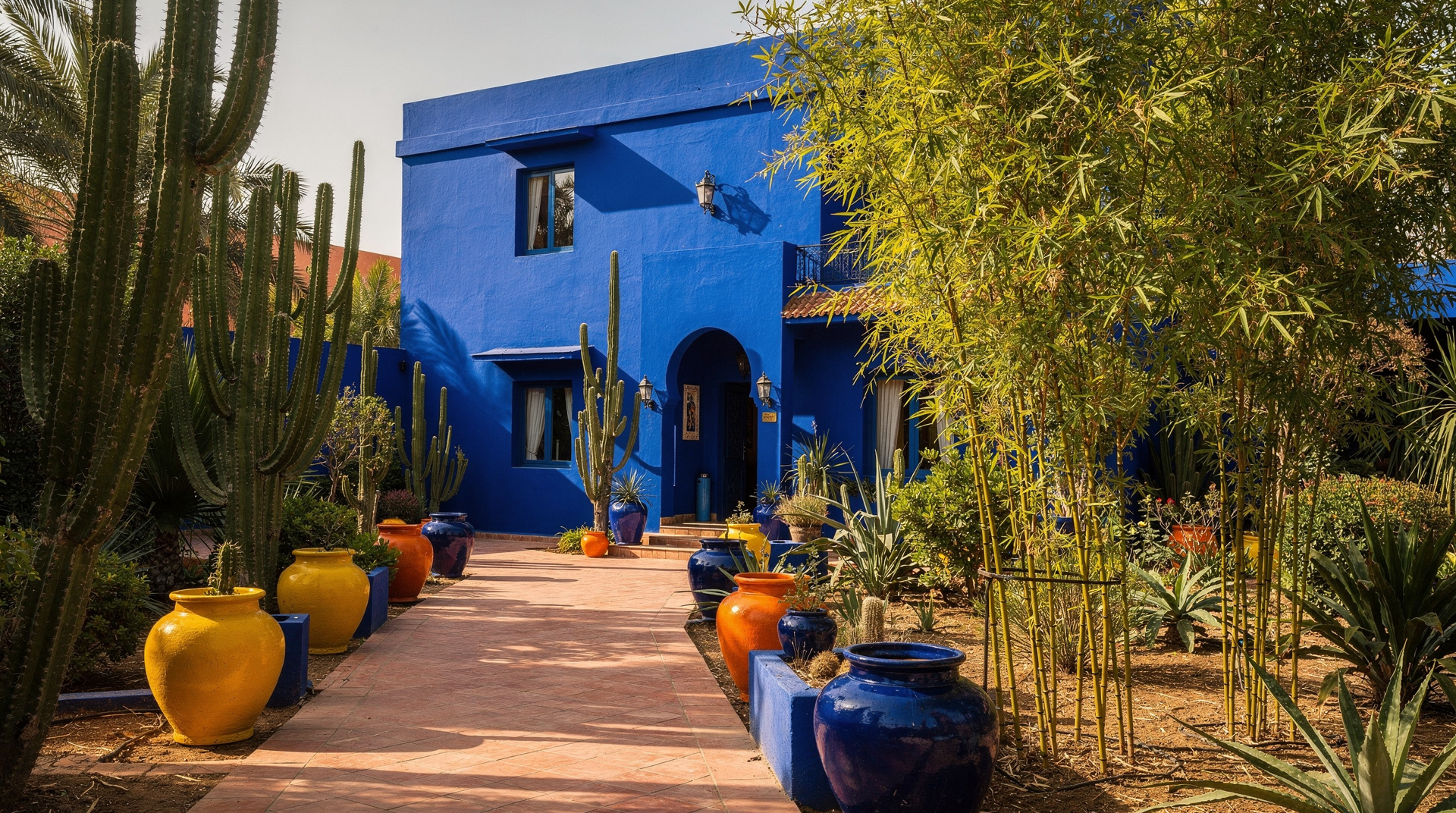
Entry fees worth paying: Bahia Palace (10 MAD / €0.90), Saadian Tombs (10 MAD). Majorelle Garden is expensive by budget standards (€8–10 entry) — worth it for the photography, skippable if you’re tight. The Almoravid Koubba water pavilion, the oldest surviving Almoravid structure in Morocco, costs 10 MAD.
Lunch at a medina fondouk (a traditional inn-turned-restaurant): a full tagine with bread and mint tea costs €3–5. The Marché Central in the Ville Nouvelle has a cheap food court; locals eat here at €2–4 per dish.
For your evening, the hammam is one of the best budget experiences in Morocco. A neighbourhood hammam — not a spa, a real public bathhouse — costs 15–25 MAD (€1.40–2.30) including a scrub if you want one. Ask your hostel for the nearest local hammam; they will know.
Spend wisely: Withdraw cash today. ATMs in Merzouga are unreliable. Take out enough for 4–5 days.
Accommodation: €8–12 | Food: €8–12 | Attractions: €5–8 | Day total: €25–35
Day 3: Bus to Essaouira — the budget Atlantic break
The CTM bus from Marrakech to Essaouira departs from the CTM station near Bab Doukkala. Fare: €5–7. Journey: 2h30–3h through the Haouz plain and argan forest. Supratours also runs this route at similar prices. Grand taxis from Bab Doukkala cost €6–8 per seat and depart when full — faster but less comfortable.
Essaouira is one of the most pleasant surprises in Morocco for budget travellers. The medina is compact, the pace is slow, the winds keep the temperature down, and the accommodation is genuinely cheap. A hostel dorm runs €7–10; a private room in a basic guesthouse €15–25.
The seafood is the reason to come. The harbour fish stalls grill fresh catch to order — sardines, mackerel, squid — for €3–6 per plate, eaten standing at the stall with bread and lemon. This is the best seafood you will have in Morocco and possibly the cheapest.
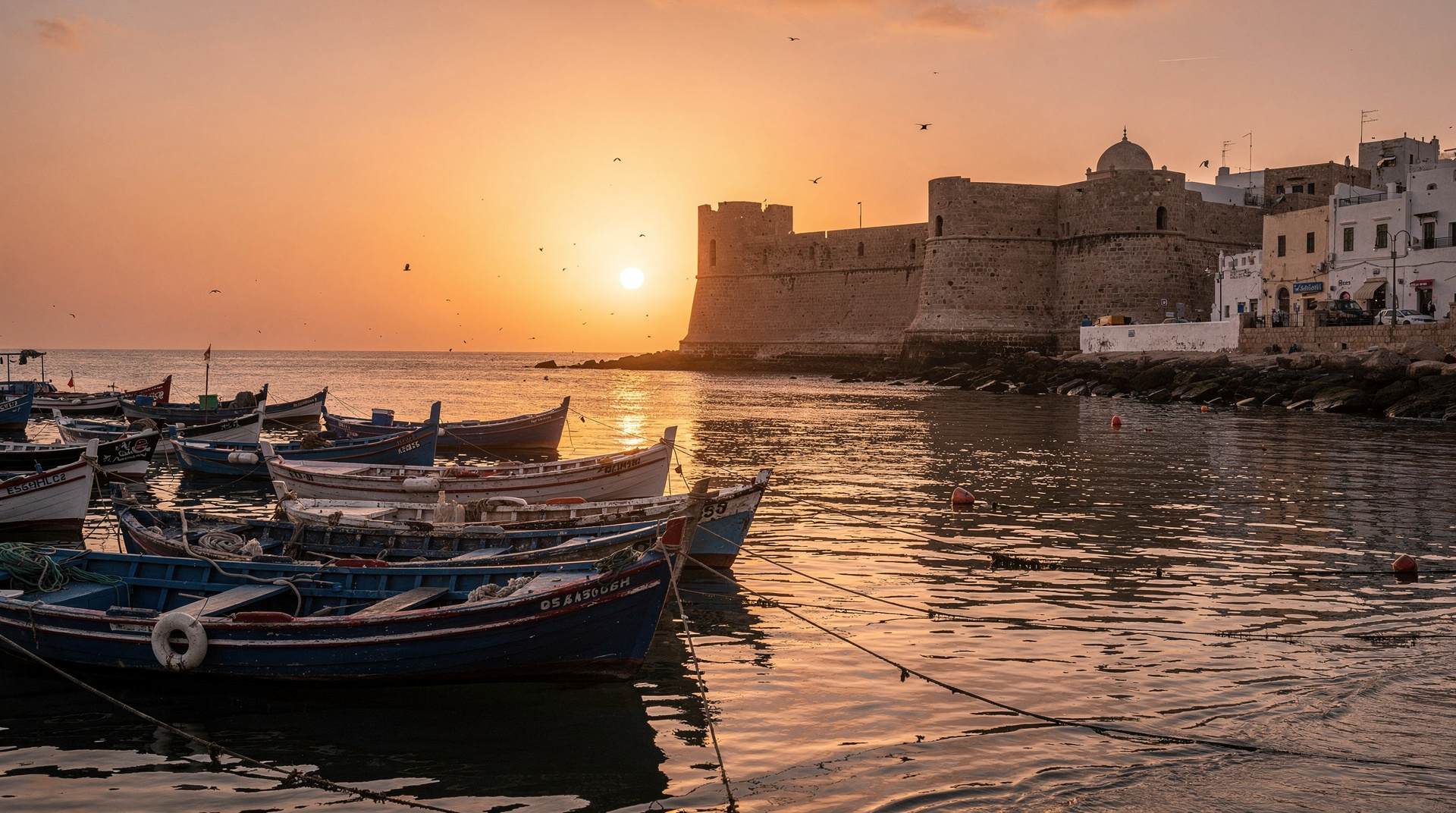
Afternoon: walk the ramparts above the Atlantic (free), browse the blue-and-white medina alleys, and watch the kitesurfers on the beach — the winds here are world-class and the beach is long and free. The Skala de la Ville fortification offers Atlantic views at no charge.
If you want a guided introduction to the medina, this Essaouira medina walking tour is good value for a half-day orientation.
Accommodation: €8–15 | Food: €8–12 | Transport: €5–8 | Day total: €25–38
Day 4: Return to Marrakech and onward to Merzouga
The Merzouga leg requires some planning. The cheapest option is the CTM or Supratours overnight bus from Marrakech to Erfoud or Rissani, departing around 21:00–23:00 and arriving around 07:00–09:00. Fare: €12–15. From Rissani, a grand taxi to Merzouga costs €3–5 per seat and runs throughout the morning.
So today: catch the morning bus back to Marrakech from Essaouira (€5–7, 2h30). Arrive Marrakech around noon. You have an afternoon in Marrakech — visit whatever you missed on Days 1–2, eat well, pack for 3 desert nights, then make your way to the CTM station for the evening bus.
Pack light layers for the desert: it is 25–30°C by day and can drop to 5°C at night in autumn or spring. A lightweight sleeping bag liner and a good base layer are worth more than a jacket in the dunes.
Budget note: The overnight bus saves one night’s accommodation cost — a genuine budget hack worth using. You sleep on the bus; you arrive in Merzouga at dawn with sand dunes visible from the taxi window.
Food: €8–12 | Transport: €18–22 | Day total: €28–38
Day 5: Merzouga — the Sahara on a budget
Arrive Merzouga in the morning. The cheapest guesthouses cluster in the village itself (not in the dunes): Maison du Soleil, Dar Sable d’Or, and several unnamed family guesthouses all offer rooms for €10–18, some including breakfast.
The free Merzouga experience: walk toward the dunes in the morning. The Erg Chebbi sand sea starts at the edge of the village and extends 50 km along the Algerian border. Nothing stops you walking in for free. The sand is soft, the silence is absolute, and the colour changes every hour through the day.
The paid experience worth every centime on a budget trip: a sunset camel ride to a standard desert camp — not a luxury camp, just a proper Berber tent with blankets, dinner, and Berber music. Cost: €25–40 including the camel ride and one night camping. This is the essential Sahara experience and even on a budget camp the stars are the same.
Book a Merzouga sunset camel trek and camp through GetYourGuide for a verified operator.
Sunrise the next morning: mandatory. The walk up the nearest dune crest takes 20–30 minutes. At the top, the Sahara goes from black to deep blue to orange in 20 minutes. Cold, silent, extraordinary.
Accommodation: €10–18 (or camp included in camel package) | Food: €8–12 | Activities: €25–40 | Day total: €35–55
Day 6: Merzouga → Fes by CTM
The CTM bus from Erfoud or Rissani to Fes runs daily. Grand taxi from Merzouga to Rissani: €3. Rissani to Erfoud grand taxi: €2. CTM Erfoud to Fes: €12–15. Total journey: 8–9 hours. Long, but Morocco is big and this is the honest way to cross it.
Alternatively, some budget tour operators in Merzouga run shared shuttles to Fes at €15–20 per person, stopping at Midelt and the Middle Atlas along the way. Ask at your guesthouse.
Arrive Fes in the evening. Do not try to navigate the medina with luggage in the dark on your first visit — book a hostel near Bab Bou Jeloud (the main medina entrance), where most budget accommodation clusters. Equity Point Fes and similar hostel-style riads offer dorms from €8–12.
Food: €8–12 | Transport: €17–22 | Day total: €28–40
Day 7: Fes medina — the world’s greatest free attraction
Fes el-Bali is the largest preserved medieval city in the world and you can walk it entirely for free. The souks, the alleys, the medersa architecture visible from the street, the Attarine spice market, the tannery views from adjacent roof terraces — all accessible without paying.
The one paid site that genuinely warrants its entry fee: Bou Inania Medersa. Entry costs around 20 MAD (€1.85). The 14th-century carved plasterwork and cedar ceiling are among the finest examples of Marinid architecture anywhere. Go in the morning when the light falls well.
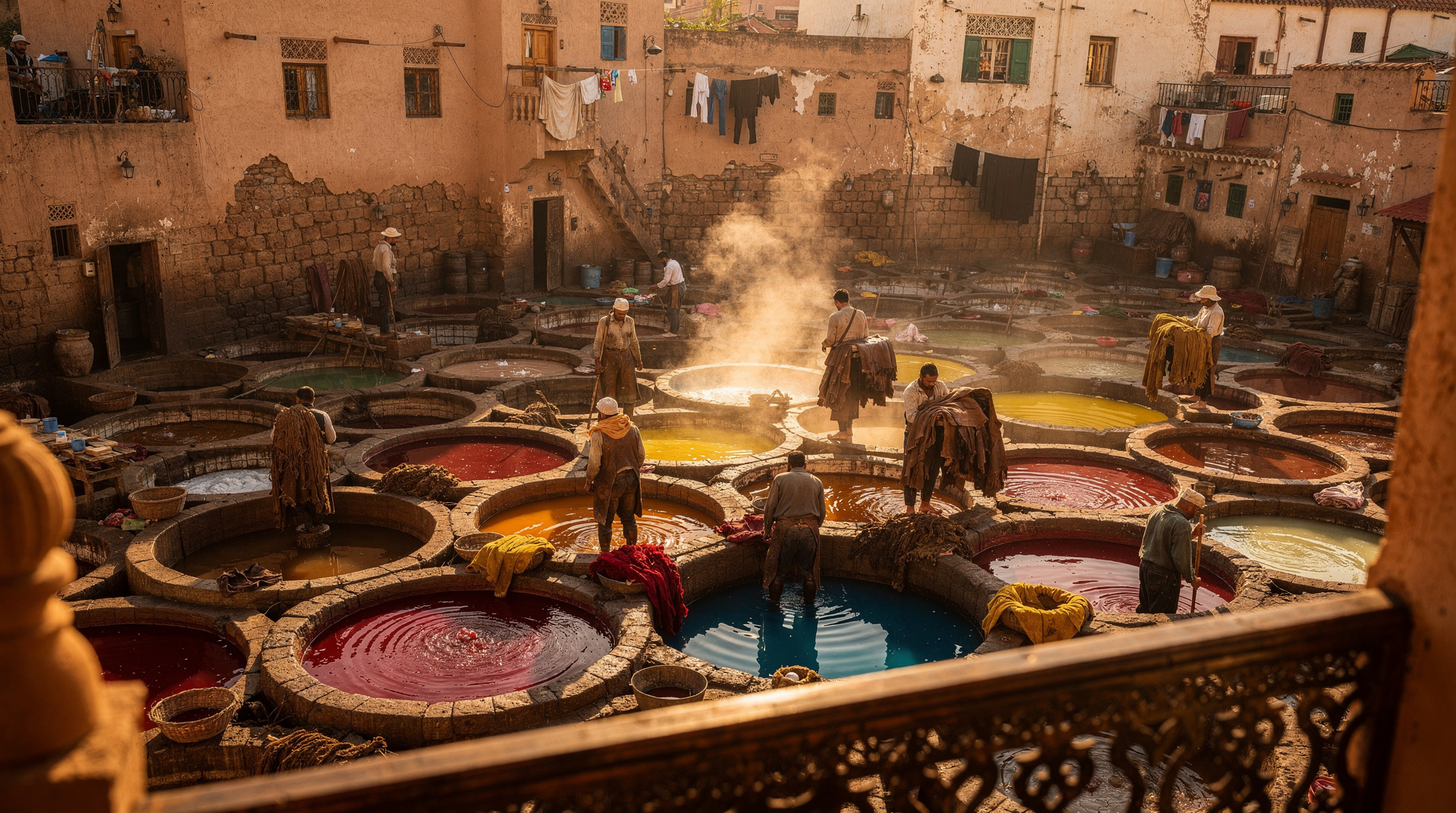
The Chouara Tanneries: the leather shops surrounding the tanneries will let you up to their viewing terraces for free if you browse. You are not required to buy. The view of the dye vats is one of the iconic images of Morocco and it costs nothing except the stamina to resist sales pressure.
For deeper orientation, the Fes medina guided tour runs at a reasonable price and transforms the experience — Fes is the one city in Morocco where a guide genuinely earns their fee.
Lunch at a workers’ restaurant in the medina: tagine, bread, salad, mint tea for €2.50–4. Ask locals; these places are unmarked and off the main tourist alleys.
Accommodation: €8–12 | Food: €8–12 | Attractions: €5–10 | Day total: €25–38
Day 8: Fes — souks, cooking, optional Volubilis
A second full day in Fes rewards patience. The medina reveals itself slowly: a second morning brings different alleys, different light, different activity in the souk. The Andalusian quarter (across the river from the main Arab medina) is quieter, less visited, and architecturally distinctive.
The Volubilis day trip from Fes (€2 train to Meknes, then €15–20 shared taxi) is worth it if Roman ruins interest you. The Roman city’s in-situ mosaics are exceptional. But this adds €20–30 to today and 8 hours of your time. Alternative: skip Volubilis and use the money saved for a Fes cooking class — some local riads and cooking schools offer 3-hour sessions at €20–30 per person (market visit, cooking, lunch). This is the best value-for-experience in the city.
Evening: the Bou Jeloud area around the main gate has the cheapest restaurants in Fes. A full meal at a local place — harira, tagine, msemen flatbread, tea — runs €4–7. The bakeries near the Qarawiyyin mosque sell sfenj (Moroccan doughnuts) for 2 MAD each in the morning.
Accommodation: €8–12 | Food: €8–12 | Activities: €5–25 | Day total: €25–50
Day 9: Bus to Chefchaouen — the blue city on a budget
CTM runs Fes to Chefchaouen directly (€8–10, approximately 4 hours) or you change at Ouazzane. Alternatively, take the CTM or a shared grand taxi to Chefchaouen via Ouazzane (slightly cheaper, slightly slower). Arrive Chefchaouen by early afternoon.
Chefchaouen is one of the most photographed places in Morocco and consequently one of the most tourist-priced for accommodation. Still: dorms at Hostel Souika and Dar Salama start at €9–13, private rooms from €18–25.
The blue city itself is entirely free to explore. The medinas of all colours are walkable without paying a dirham. The Plaza Uta el-Hammam at the centre has cafes charging slightly elevated tourist prices (mint tea: 15–20 MAD vs 8–10 MAD at local places). Walk 5 minutes toward the Bab el-Ain end for local prices.
The Spanish mosque above the medina: a 30-minute uphill walk from the top of the medina. The view over the blue city and the Rif mountains behind it is one of the best viewpoints in northern Morocco, completely free.
For a deeper experience of the medina, this Chefchaouen guided medina tour covers the hidden corners that most visitors miss.
Accommodation: €9–13 | Food: €7–10 | Transport: €8–10 | Day total: €28–40
Day 10: Chefchaouen → Tangier and home
Chefchaouen to Tangier: CTM bus or grand taxi, 3–4 hours, €6–9. Tangier is the hub for ferries to Spain (if continuing overland) or has bus connections to Casablanca for international flights. If you are flying home via Casablanca Mohammed V Airport, take the CTM from Tangier (€12, 5h30) or via Rabat.
If you have extra time in Tangier, the medina and kasbah are interesting and underrated — far less touristic than Chefchaouen or Fes.
Transport to Tangier: €6–9 | Food: €6–10 | Day total: €15–25
Transport logistics
Buses: CTM is the premier network — comfortable, punctual, fixed prices, online booking at ctm.ma. Supratours is equally good for most routes. Book 24–48 hours ahead for popular routes, a week ahead for Merzouga in high season.
Grand taxis: The inter-city grand taxi system runs shared Mercedes between towns for less than bus prices on many routes. They depart when 6 seats are filled (you can “charter” an empty taxi by paying all 6 seat prices). Faster than buses but less comfortable.
City transport: Petit taxis in Marrakech and Fes cost €0.70–2 for most medina journeys. Always agree the price before getting in or insist on the meter in cities where meters work.
For a fuller picture of how the network fits together, our getting around Morocco guide explains the options beyond buses and shared taxis. If the overnight bus and long transfers worry you, the private tour vs self-drive comparison shows what you would give up, and gain, by changing approach.
Budget breakdown (10 days)
| Item | Budget (pp) |
|---|---|
| Accommodation (10 nights, mix of dorms + basic rooms) | €100–130 |
| Food (3 meals/day, street food + cheap restaurants) | €80–100 |
| Intercity transport (buses + grand taxis) | €70–90 |
| Local transport (petit taxis, city buses) | €15–20 |
| Entry fees and activities | €30–50 |
| Desert camp (sunset + overnight) | €30–40 |
| Contingency | €30–40 |
| Total | €355–470 |
The €50/day target is realistic. With overnight buses (saving accommodation costs) and street-food discipline, some travellers do this circuit for €35–40/day.
Money habits that keep the budget intact
Small habits protect a budget more than any single booking. Learn the basics of haggling before you arrive — our bargaining in Morocco guide covers the etiquette — and keep tipping modest and consistent, as explained in the tipping guide. For cash, cards and exchange rates, see Morocco currency and money, and for the overall picture of costs across travel styles, the Morocco budget guide is the companion to this itinerary. Sleeping cheaply does not have to mean sleeping badly: the budget hostels in Morocco guide lists where to look beyond the names mentioned above.
What to pack for budget Morocco
- Unlocked smartphone with offline maps downloaded (Maps.me or Google Maps offline)
- Lightweight daypack for day trips (leave main bag at hostel)
- Scarf / light shawl (for conservative medina areas, cold desert nights)
- Flip-flops for hammam use
- Reusable water bottle (fill from large plastic bottles, €0.50/1.5L in shops)
- Mix of small and large dirham notes — few small vendors have change
For clothing choices by season, the Morocco packing list goes into more detail, and the what to wear in Morocco guide helps with medina etiquette.
Best time of year for budget travel
October–November and March–April are ideal. Temperatures are comfortable, the desert is not dangerously hot, and the Sahara night sky is clear. Budget accommodation is easier to find outside July–August when Moroccan domestic tourism peaks. If you want to compare months, the best time to visit Morocco guide sets them side by side.
Avoid: July–August in Fes and Marrakech (40°C+, unpleasant without air conditioning). Ramadan is a mixed experience for budget travellers — many cheap eateries close during daylight hours, though the evening iftar celebrations are extraordinary.
Common budget travel mistakes in Morocco
Agreeing to follow “guides” in the medina. Unofficial guides who approach tourists in the medina will lead you to shops where they earn commission. Prices in those shops are inflated 30–100% above what you would pay if you found them independently. Politely decline all offers.
Changing money at airports. Airport exchange desks offer 5–8% worse rates than in-city bureaux de change. Exchange a small amount at the airport for taxis, then change the bulk of your cash at a city bureau.
Paying tourist prices at restaurants near major attractions. Walk one block from Djemaa el-Fna or Bab Bou Jeloud in Fes and prices halve.
Falling for common scams. Overcharging, fake closures and “free” help that turns into a demand for money all target tired new arrivals; our scams to avoid in Morocco guide lists the usual patterns.
Booking the cheapest possible Sahara tour from Marrakech. The very cheapest tours (€80–100 for 3 days from Marrakech) use cramped vehicles, rush the stops, and use basic camps. The slightly better tours at €130–160 are dramatically better experiences. This is worth the extra €30–50.
How to extend or shorten
Cut to 7 days: Remove Essaouira (replace with a Marrakech day trip from Essaouira section) and take the direct Fes-Chefchaouen bus rather than adding an extra night anywhere.
Extend to 14 days: Add Rabat (2 nights) between Fes and Chefchaouen — ONCF train from Fes to Rabat is €6–8, the city is underrated, and the kasbah and Hassan Tower are worth a full day. Add Casablanca as a transit stop with a half-day at the Hassan II Mosque.
Alternative variations
All-north route (skip Sahara): Tangier → Chefchaouen → Fes → Meknes → Rabat → Casablanca. Cheaper overall (no desert camp costs), more culture-focused, fully doable on €35–40/day. See our cultural deep-dive itinerary for a longer version.
Surf budget route: Marrakech → Essaouira (2n) → Agadir → Taghazout (5n). Taghazout guesthouses and surf camps offer the best value for money in Morocco for surfers: accommodation + lessons at €30–40/day all-in. See our surf Morocco itinerary.
For more detail on each destination, explore our Marrakech guide, Fes guide, Chefchaouen guide, Essaouira guide, and Merzouga guide.
Where the money actually goes (and where it doesn’t)
On this route, accommodation and food are cheap almost everywhere — the real budget pressure points are the long intercity transfers and the Sahara camp. A dorm bed rarely exceeds €13 and a full local meal rarely exceeds €7, but the Marrakech-to-Merzouga overnight bus, the Merzouga-to-Fes crossing, and the desert camp itself together account for roughly a third of the entire trip’s cost. Understanding this in advance changes how you plan: cutting a day of sightseeing saves you €25-35, but cutting a transport leg or downgrading the desert camp saves far more — and the guide’s explicit advice above (spend the extra €30-50 on a better Sahara tour) reflects where corners genuinely should not be cut.
Card payments are rare outside hotels and mid-range restaurants in this itinerary’s budget tier. Withdraw cash in Marrakech and Fes — both have reliable bank ATMs — and carry enough to cover Merzouga and Chefchaouen, where machines are fewer and sometimes out of order.
Frequently asked questions about Budget Morocco itinerary
Is Morocco actually safe and comfortable to backpack solo on this budget? Yes — this circuit is one of the most backpacker-trodden routes in the country, and CTM buses, grand taxis, and hostels are all well-established infrastructure used daily by independent travellers. Standard precautions apply (agree taxi fares upfront, decline unofficial guides), but solo travellers, including solo women, complete this route regularly; see our solo female Morocco itinerary for route-specific safety notes.
Can I really do this trip for less than €50/day? Yes, with discipline. The budget breakdown above totals €355-470 for 10 days (excluding flights), which averages €35-47/day. Overnight buses that double as accommodation and consistent street-food eating are what make the lower end achievable; travellers who eat at sit-down restaurants most nights or skip the overnight bus hack tend to land closer to €50-60/day.