Scams to Avoid in Morocco: Complete Warning Guide
What are the most common scams in Morocco?
The most common: fake guide who steers you to commission shops, 'medina is closed' redirect, tannery 'free view' with high-pressure sales, misdirection in Fes medina, henna applied without consent, taxi meter refusal, and snake charmer photo fees. None are violent — all are financial manipulation. Forewarned is forearmed.
Morocco scams: understanding the landscape
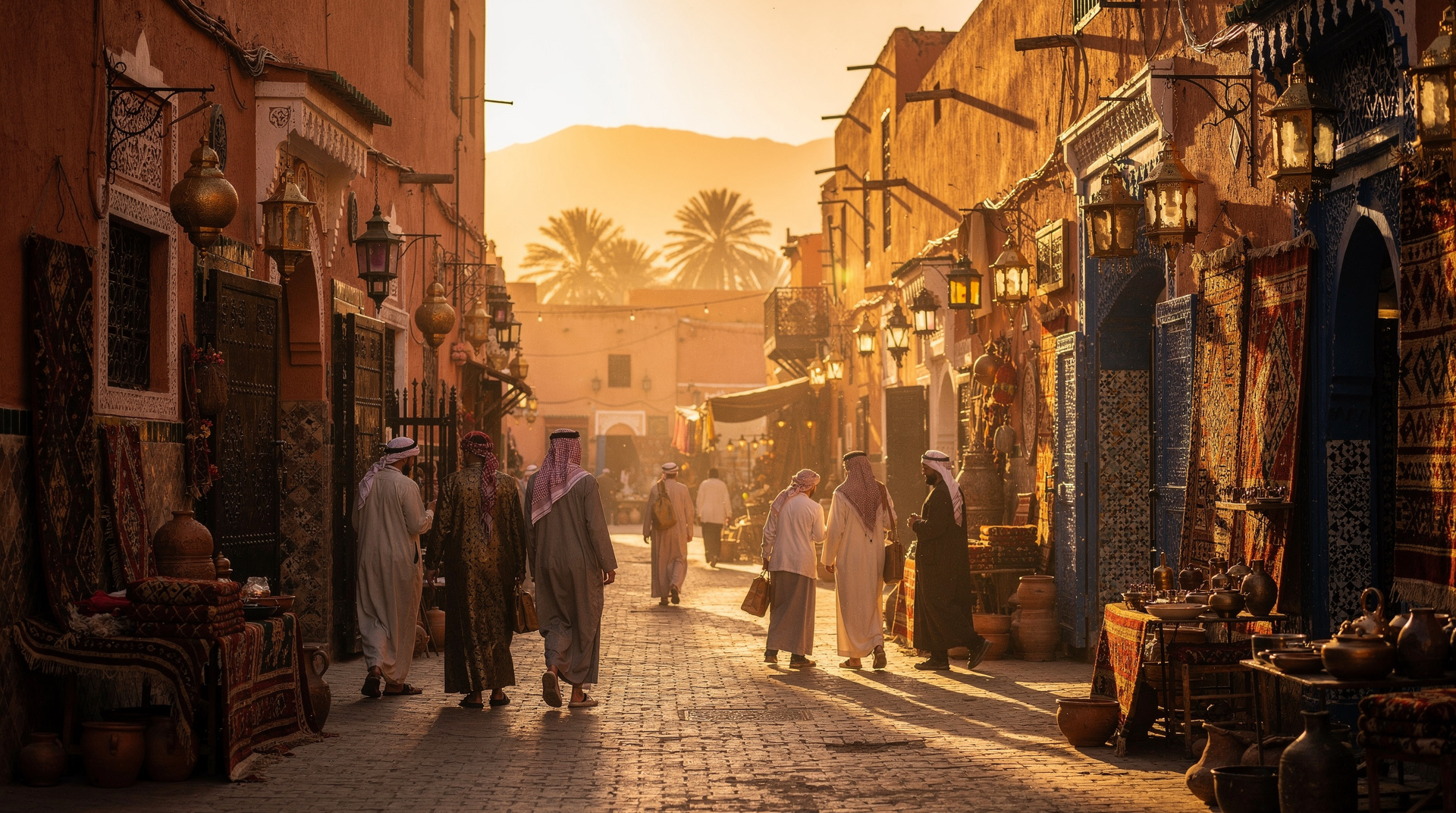
Morocco’s tourist medinas — Marrakech especially, followed by Fes — have developed a sophisticated ecosystem of tourist-oriented money extraction. Most of it is not violent. Most of it relies on social pressure, confusion, manufactured goodwill, and the tourist’s uncertainty in an unfamiliar environment.
Understanding the mechanics removes almost all of the risk. The scams below are well-documented and operate on predictable patterns. If you know the pattern, you see it coming from 20 metres away.
This guide is not meant to make you anxious about Morocco — it’s meant to make you confident. Millions of tourists navigate Morocco with zero scam incidents every year. The ones who don’t are usually those who didn’t know what to expect.
If this is your first trip, read it alongside the first-time visitors guide and the Marrakech souks guide, so the shopping side of the medina feels familiar before you arrive.
At a glance
| Where it’s concentrated | Marrakech and Fes medinas, especially Djemaa el-Fna and the souk approaches |
| Typical cost of falling for one | Usually 20-500 MAD; rarely more than a frustrating afternoon |
| Risk level | Low — almost entirely financial manipulation, not physical danger |
| Best defence | A firm “la, shukran” plus offline maps and pre-researched shops |
| Best time to be extra alert | Peak tourist season (spring and autumn) and around major squares at dusk |
The “friendly guide” scam
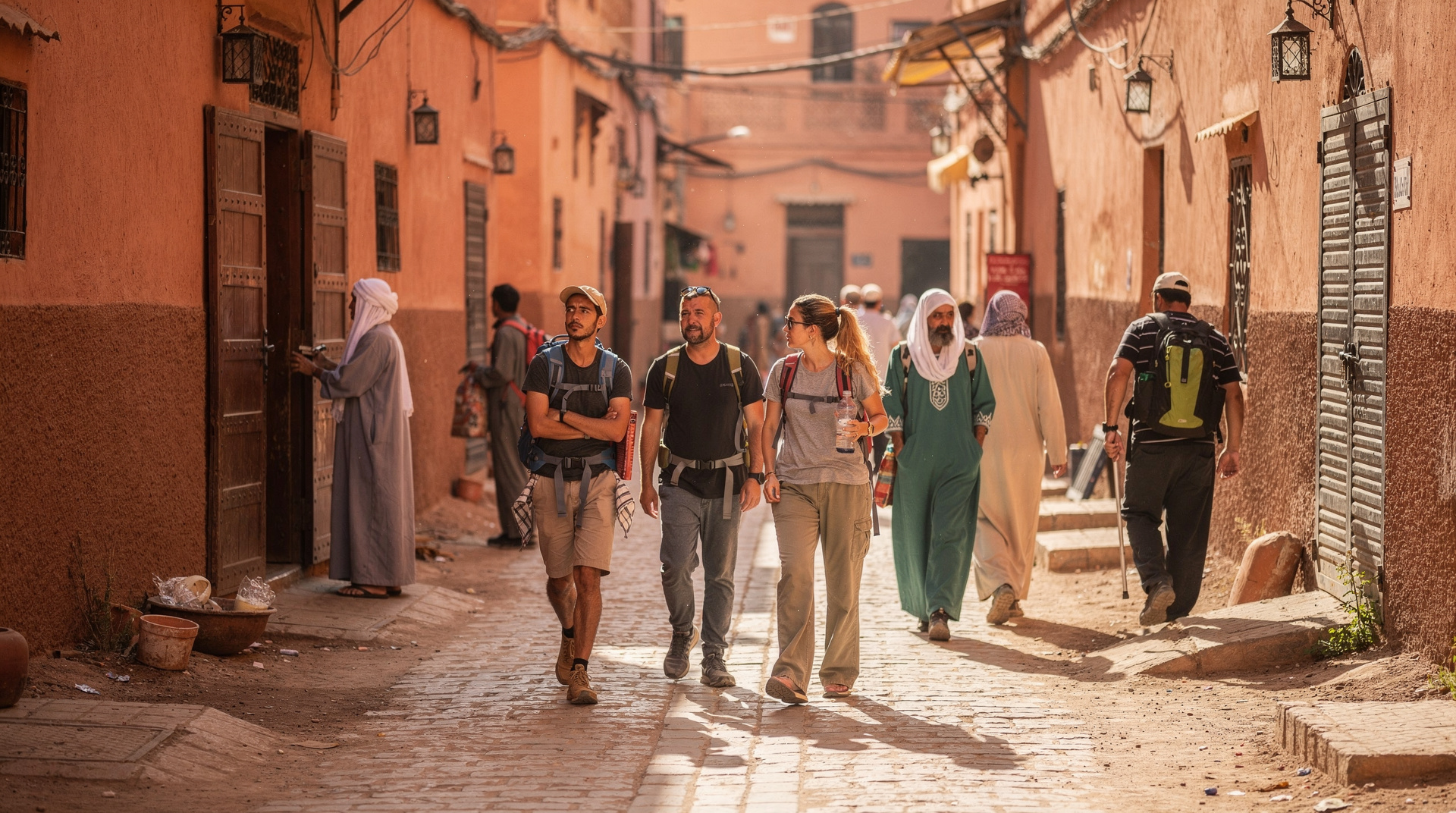
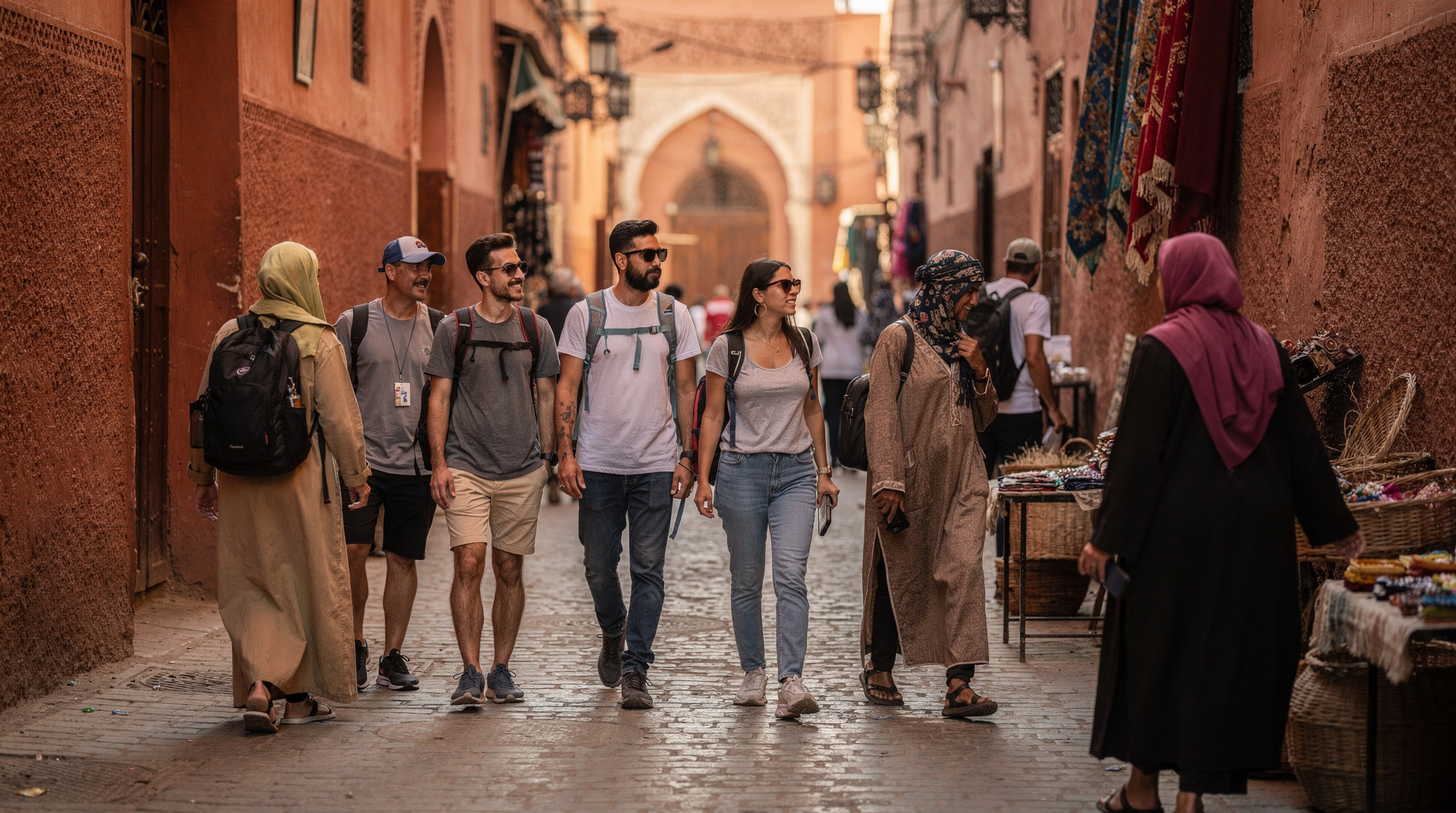
How it works: Someone approaches you in the medina. They make friendly conversation — where are you from, is this your first time in Morocco, etc. They offer to help you find your riad, a specific restaurant, or an attraction. At the end of the interaction, they demand payment for “guiding” you. In more elaborate versions, they steer you into a specific shop (carpet, leather, argan oil) where they receive 30-50% commission on whatever you spend.
The tell: The approach is uninvited and you didn’t hire them. The friendliness is investment, not personality.
The counter: Don’t follow anyone who volunteers guidance without your explicit request. If you need help, go into a shop and ask the shopkeeper, or ask your riad to give you a specific route with landmarks. Saying “I don’t need any help, thank you” — once, firmly, while walking — works in most cases.
If someone walks with you uninvited for more than a few seconds: “Please leave me alone.” Not rude, but clear. Repeat if needed.
The “medina is closed” redirect
How it works: You’re walking to a specific destination — Bahia Palace, the tanneries, a medersa, your riad — and someone on the street tells you it’s closed today. “Closed for prayer,” “closed for restoration,” “closed on Mondays,” whatever. They then offer to take you somewhere “just as good” or back to their cousin’s shop.
The tell: The attraction is almost never actually closed when this happens. This is among the most transparent of the medina scams.
The counter: Check opening hours at your riad or hotel before you leave. If someone tells you something is closed, verify by walking to the entrance yourself. If it’s genuinely closed, the sign will be there. Don’t take street-level word for it.
The tannery visit manipulation
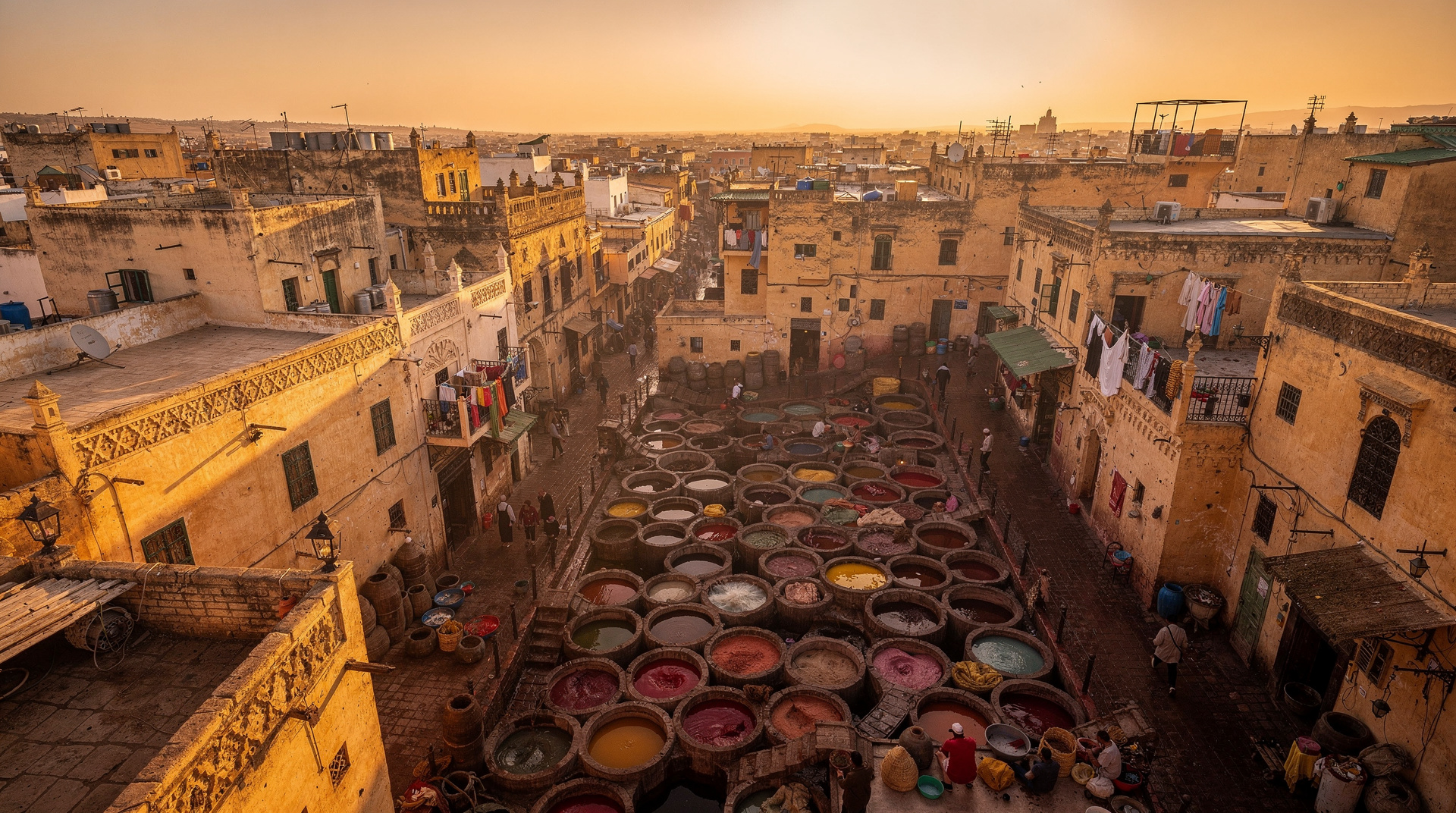
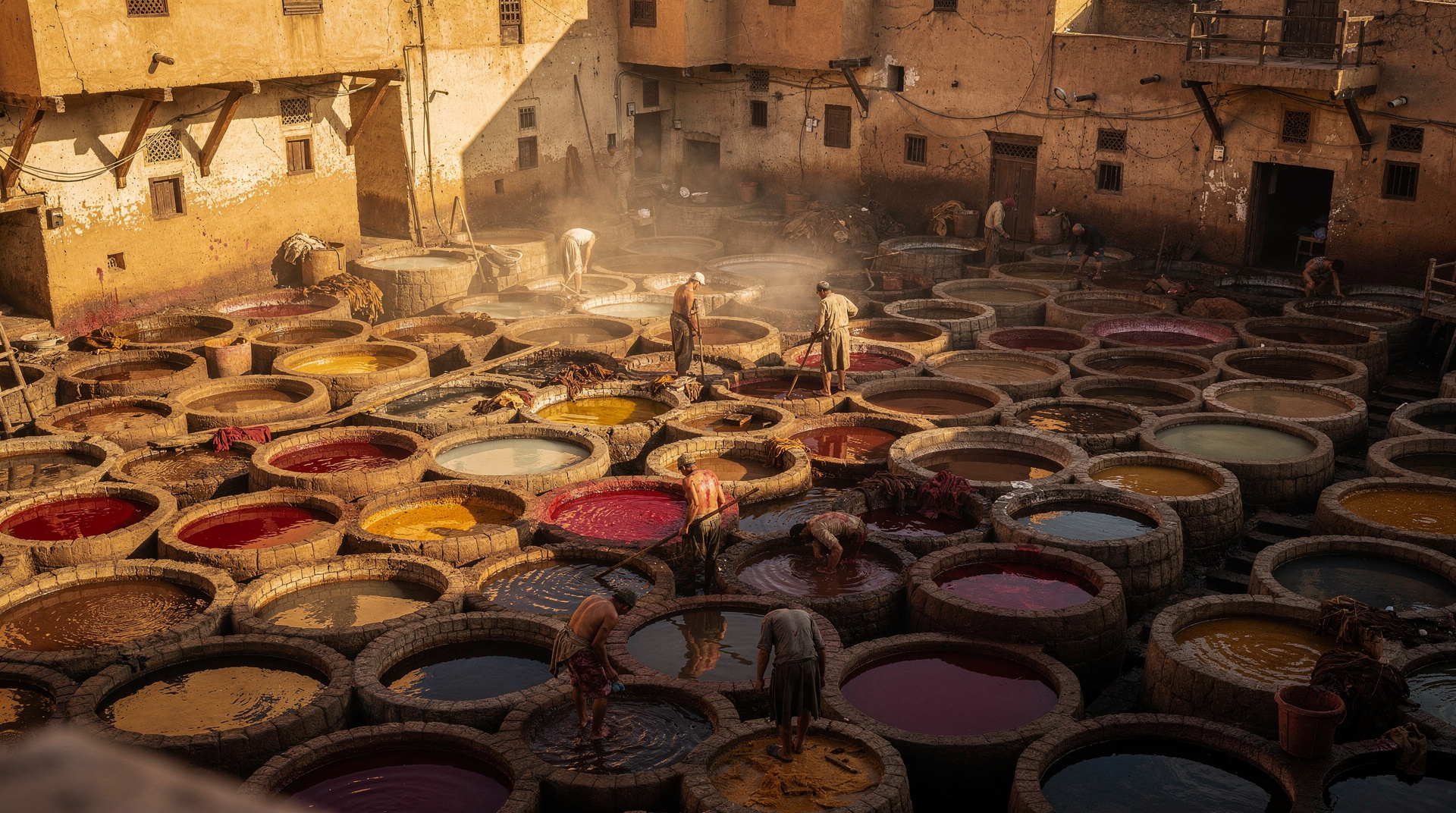
How it works in Marrakech and Fes: Around the Chouara Tanneries in Fes (and similar craft areas in Marrakech), leather shops offer “free views” from their rooftop terraces. You’re given a sprig of mint to hold against the smell. Once on the rooftop with a view of the tanneries, the social pressure to buy leather goods begins — sometimes aggressively, sometimes through guilt.
Is this technically a scam? Partly. The rooftop view is real and the leather may be quality. But the “free” framing is misleading — there is an implicit expectation that you’ll buy, and some shops become very pushy.
The counter: Know before you go in that you’ll be invited to see leather goods. If you have no interest in buying, be clear from the start: “I just want to see the view, I won’t be buying anything.” Say this once, politely, and stick to it. Alternatively, pay for a legitimate tannery view entry — in Fes, official tannery viewing tickets in Fes provide a proper view without the shop pressure.
The misdirection in Fes medina
How it works: Fes el-Bali is genuinely one of the most complex navigational environments in the world. Someone tells you that you’re going the wrong way. They may be sincere, or they may be setting up a misdirect that ends at their shop. Even when sincere, following a stranger’s navigation in Fes rarely ends where you expect.
The counter: Navigate with Google Maps offline, downloaded before you leave your riad. Have your riad’s location pinned. Walk with the phone visible but secure. When someone offers directions, say “I have GPS, thank you” and keep walking.
A licensed guide for your first day in Fes eliminates this entirely. A guided Fes medina tour with a certified local guide solves the navigation problem and removes the vulnerability that misdirection exploits.
The henna squirt
How it works: A woman approaches (usually near Djemaa el-Fna or prominent medina squares) and applies henna to your hand or wrist without asking. Once it’s on, the demand for payment begins — and the amounts requested can be 200-500 MAD or more. If you refuse or offer less, the confrontation can become intense.
The tell: Any henna application that begins without an explicit agreement is this scam.
The counter: Don’t let anyone touch your hands or arms without agreement. If you’re approached, say “la, shukran” (no, thank you) and keep moving. If henna is applied before you can stop it, you’re under no legal obligation to pay whatever is demanded — but the social pressure is real. Paying 20-30 MAD and leaving is the fastest resolution; arguing about the amount extends the encounter.
If you want henna: Arrange it with an established shop inside the medina where you can see the artist’s work and agree on the price — both the design and the amount — before anything is applied to your skin.
The snake charmer and performer photo fee
How it works: The snake charmers, acrobats, water sellers in colourful costumes, and musicians at Djemaa el-Fna are professional performers whose income depends on the interaction. If you stop near them, photograph them, or engage with them, they will ask for payment.
Is this a scam? Not exactly — it’s their livelihood. But the fee sometimes isn’t established before engagement, and the amount demanded after can be aggressive.
The counter: Know in advance that proximity to any Djemaa el-Fna performer creates a fee context. 10-20 MAD is standard. If you want to photograph performers without interaction, a cafe terrace above the square with a long lens is the way to do it. The photography etiquette guide covers this context in detail.
Taxi scams
The meter refusal
How it works: In Marrakech particularly, some taxi drivers claim the meter is broken or offer a “better deal” with a fixed price before you get in. The fixed price is almost always higher than what the meter would show.
The counter: Get in the taxi, point to the meter (“conteur, SVP”), and if the driver refuses to use it, get out and find another taxi. In Marrakech, there are always other taxis within a few minutes. The Careem app eliminates this entirely — transparent pricing, no negotiation.
The wrong route
How it works: Some drivers take a longer route (particularly from airports or train stations where tourists are unfamiliar). The meter isn’t wrong — you’re just going the long way.
The counter: Know approximately where your accommodation is and roughly which direction the route should go. Having Google Maps open in the back seat is useful. At Marrakech airport, the official taxi rank has set prices to city destinations — confirm the rate before departure.
The “luggage fee”
How it works: At the end of a taxi ride, the driver invents a supplementary charge for luggage, night rates, or airport transfers that weren’t mentioned at the start.
The counter: For grand taxis from airports, confirm the total price including luggage before getting in. For city petit taxis, the meter price is the full price — supplementary fees are rarely legitimate.
The free gift setup
How it works: A vendor or someone in the medina presses something into your hands without consent — a bracelet, a gift, sometimes a sprig of herbs or a small item. Once it’s in your hands, the “payment” demand begins. The amount requested can be many times what the item is worth.
The counter: Don’t take anything that’s handed to you without explicitly agreeing to purchase it first. “La, shukran” while keeping your hands in your pockets. If something is pressed into your hands before you can react, returning it immediately and walking away is the fastest resolution.
The “my friend’s shop” redirect
How it works: A person walking with you (either a hired guide or an “accidental” companion) begins steering the conversation toward a specific shop. “My cousin makes the best leather in Marrakech,” “the cooperatives are closed but my friend has the same thing.” The shop pays them commission.
The tell: Any strong recommendation for a specific shop from a stranger or a non-licensed guide is almost certainly commission-based.
The counter: Pre-researched shops and cooperatives (from legitimate travel guides and reviews) are more reliable. Your riad can also recommend places without commission motivation.
Knowing how haggling works takes much of the pressure out of these situations; the bargaining in Morocco guide explains the rhythm of a fair negotiation. For crafts with a clear origin, the artisan cooperatives guide points to places where the maker is the seller, and the tipping guide helps you tell a fair gratuity from a demanded one.
The “donation” for the medersa
How it works: Someone at the entrance to a religious or historical site suggests you make a “donation” to enter or to go to a specific viewing point. The official entry fee is stated somewhere near the entrance; the donation is supplementary.
The counter: Know what the official entry fee is before you arrive. Pay at the ticket window, get a ticket, and proceed. Don’t make additional payments to individuals who are not staff.
Fixed tour price inflation
How it works: A driver or local operator quotes you a price for a day tour (Aït Benhaddou from Ouarzazate, Chefchaouen from Fes, etc.) that’s significantly above market rates. The inflated quote targets tourists who don’t know the going rate.
The counter: Know the ballpark rate for common trips before agreeing. Ask your riad what they would expect to pay for a specific route — they often have trusted driver contacts too. Pre-booked organised tours through established operators remove this uncertainty. A pre-booked Aït Benhaddou day trip from Marrakech is a transparent alternative with set pricing.
Online and pre-trip scams
Not every scam happens on the ground. A growing share of Morocco-related fraud targets travellers before they even land.
Fake riad and tour booking sites: Cloned websites and social media ads mimic real riads or well-known tour operators, taking a deposit that never reaches an actual business. Book through established platforms or the riad’s verified own site — check for reviews with photos and a genuine street address, not just a WhatsApp number.
“Guide” contact via social media DMs: Some accounts pose as licensed guides or drivers, offering suspiciously cheap private tours (Sahara treks, Atlas day trips) with payment upfront by transfer. Legitimate operators rarely require full payment before arrival and can be verified against listings like the how to book a Sahara tour guide.
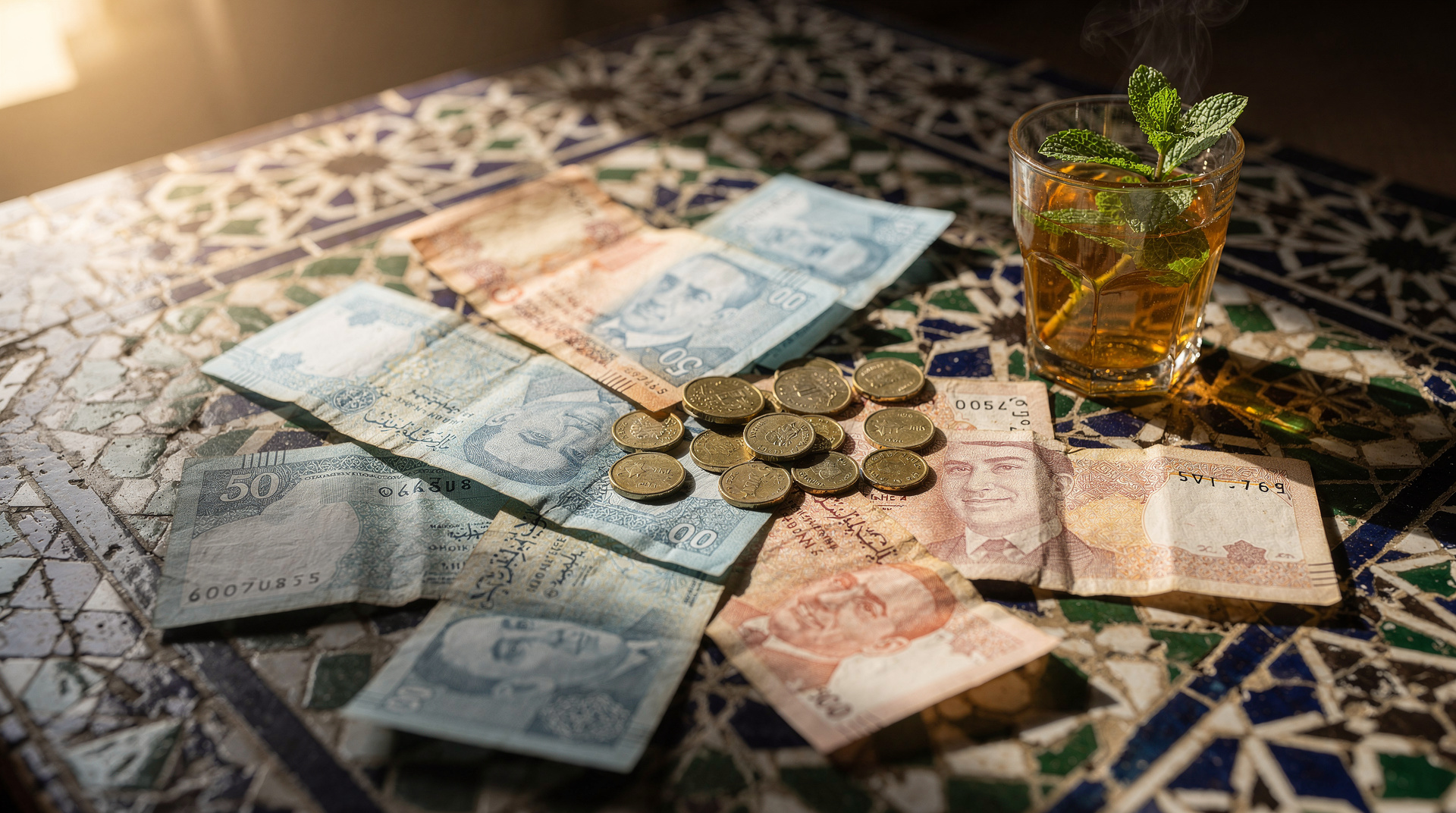
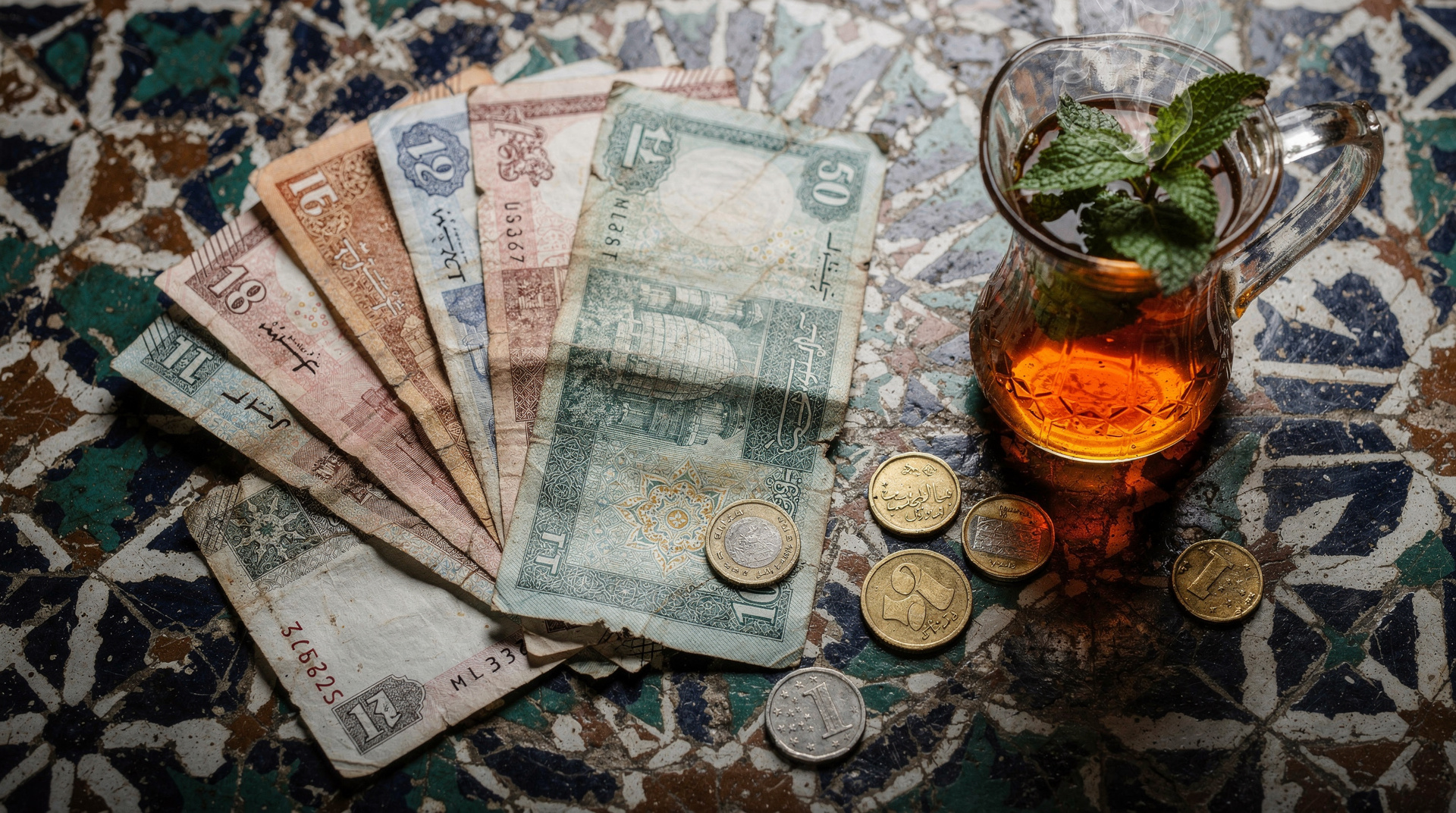
Currency exchange “deals”: Offers to exchange currency at better-than-bank rates from unofficial contacts abroad almost always end with counterfeit notes or no exchange at all. Exchange dirhams only at licensed bureaux or ATMs once in Morocco — see the Morocco currency and money guide for the legitimate options.
The counter for all of these: Book directly, verify independently (a phone call, a second review source), and treat any pressure to pay quickly and in full upfront as a red flag.
General scam defence principles
Walk with purpose. Hesitation, confusion, and standing still looking at your phone signal opportunity to touts. Move like you know where you’re going even when you’re slightly lost.
Saying no is always enough. You are never obligated to engage, explain, or justify your refusal. A firm “la, shukran” while moving is a complete response.
Don’t follow strangers. No matter how helpful, pleasant, or insistent someone is. If you need help, go to a shopkeeper, your riad, or a licensed information point.
Have key destinations loaded offline. Google Maps Morocco offline, your riad’s pin saved, key landmarks located. Remove the navigation vulnerability that so many medina scams exploit.
The tourist police (Brigade Touristique) exists in Marrakech and other major cities specifically for tourist-related incidents. They’re more responsive to tourist complaints than regular police and can sometimes resolve situations that feel stuck.
What Morocco is NOT
Documenting these scams can create an impression that Morocco is hostile to tourists. It isn’t.
The majority of Moroccans you interact with — your riad hosts, taxi drivers, restaurant staff, shopkeepers in non-tourist areas, people in villages and on the road — are warm, hospitable, and genuinely interested in whether you’re enjoying their country. The scam ecosystem is concentrated in the tourist medina zones of Marrakech and Fes and is operated by a specific segment of the local population.
If you are choosing where to stay, the best riads in Marrakech and best riads in Fes are good places to start, since a trustworthy host is your best source of local advice. The Marrakech and Fes destination pages cover the cities where most of these tricks occur.
The is Morocco safe guide gives the full safety picture. The solo female travel guide addresses safety from a gender-specific perspective. Neither guide recommends avoidance — only preparation.
Frequently asked questions about Scams to Avoid in Morocco
What should I do if I’ve already fallen for a scam?
Pay the minimum reasonable amount to end the interaction and walk away — arguing tends to escalate rather than resolve it. For anything involving real money loss (a fake booking deposit, a serious taxi overcharge), the tourist police (Brigade Touristique) in Marrakech, Fes, and other major cities handle these complaints specifically and are more responsive than general police stations.
Are scams worse in Marrakech than in Fes?
Marrakech has a higher volume of scam attempts simply because of tourist density, particularly around Djemaa el-Fna. Fes has fewer overall attempts but its medina’s genuine navigational complexity makes misdirection scams more effective there — the Fes souks guide has more detail on navigating that specific medina.