Photography Morocco itinerary: 14 days chasing the best light
Morocco for photographers: the honest brief
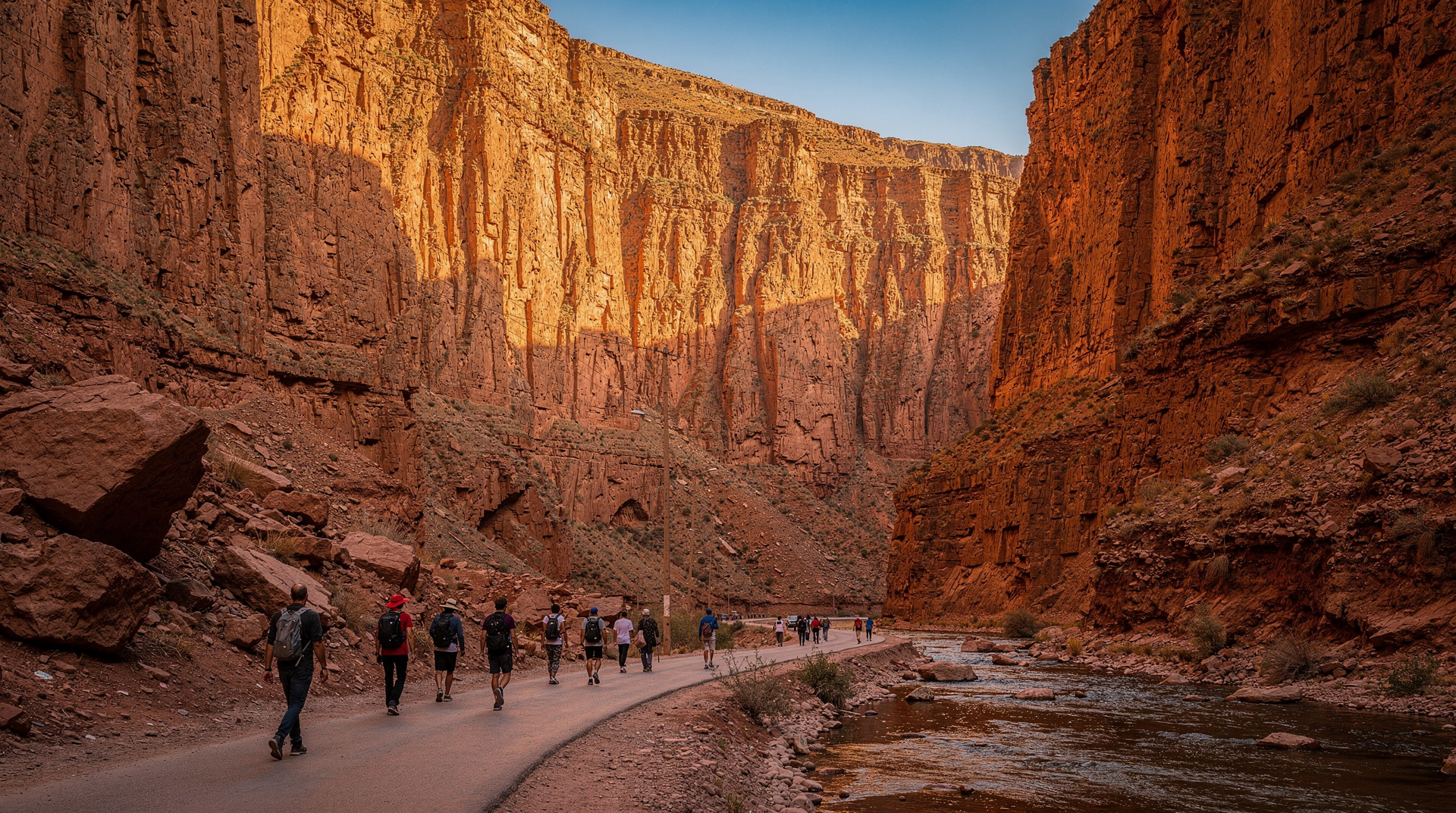
Morocco is genuinely one of the world’s great photography destinations. But the reasons are more nuanced than Instagram suggests. Yes, the blue medina of Chefchaouen is as beautiful as advertised — but the best photographs are taken at 07:00, not 11:00 when the day-tripper buses arrive. Yes, the Erg Chebbi dunes are extraordinary — but the photographs worth printing are the ones from dawn, not the sunset that every phone camera has already captured 10,000 times.
This 14-day itinerary is built around light. Every routing decision privileges golden hour access. Every overnight location is chosen for its proximity to the best light in the morning. The car is essential — it is the only way to be at Aït Benhaddou at 07:30, at the Todra Gorge at 08:00, and at the Chefchaouen rooftops before the crowds arrive.
A note on photography etiquette: people in Morocco are not backgrounds. Ask permission before photographing individuals. Many medina traders will refuse; some will agree; a few will ask for payment (fair — your photography is commercial if you monetize it). A small gesture (10–20 MAD, or buying something) transforms the relationship. Our full photography etiquette guide for Morocco covers this in detail.
Route at a glance: Tangier/Chefchaouen (3 nights) → Fes (2 nights) → Merzouga/Erg Chebbi (2 nights) → Aït Benhaddou/Ouarzazate (2 nights) → Marrakech (2 nights) → Essaouira (3 nights)
Best season: March–April (spring wildflowers, soft light) or October–November (desert clarity, no haze). Ramadan timing matters — the medinas are extraordinary during Ramadan at iftar time but photography of people requires more sensitivity. See our Ramadan travel guide.
Total estimated cost (per person, flights excluded): €1,200–2,000 including car rental
At a glance
| Route | Tangier → Chefchaouen → Fes → Merzouga → Aït Benhaddou/Ouarzazate → Marrakech → Essaouira |
| Duration | 14 days, car essential for the full route |
| Cost (per person) | around €1,560–2,800 excluding flights (see cost table below) |
| Best time | March–April or October–November for soft light and desert clarity |
| Getting around | self-drive rental car (SUV recommended for the south); see our self-drive Morocco itinerary for driving logistics if this is your first time |
| Pace | active — most days start before dawn for the light |
Gear overview
You do not need exotic gear for Morocco. The light is the asset — your task is to be there when it is good and have a camera that does not get in the way.
Recommended: A mirrorless camera (Sony A7 series, Fujifilm X-T5, Nikon Z series) or a capable DSLR. A 24–70mm f/2.8 covers 80% of situations. A 70–200mm or 100–400mm is useful at the tanneries (shooting across the vats from the roof terrace) and at Erg Chebbi (compressing dune ridgelines). A wide prime (24mm or 35mm f/1.8) is excellent for medina interiors and riad courtyards in low light.
Filters: A circular polariser dramatically improves blue sky contrast in the Atlas and reduces glare on white medina walls. A 6-stop ND filter enables long-exposure work in the medinas (blurring crowds while the architecture stays sharp).
Protection: A dry bag insert for desert days — even without wind, fine sand enters every crevice. Lens cloths for the coastal days in Essaouira (salt spray). A lightweight rain cover if shooting in the Atlas in spring.
Storage and power: 2TB portable SSD. A multi-port USB charger. Moroccan power outlets are European-style (Type C, 220V) — European plugs work directly; UK and US adaptors needed.
Day 1: Tangier — port arrival and afternoon light
Arrival and first afternoon
The light arriving at Tangier in the afternoon is directly on the white medina walls of the Kasbah — soft, directional, extremely photogenic from around 16:00. If your flight or ferry lands before 15:00, you have time to reach the Kasbah viewpoint before the light softens.
The specific shot: from the platform outside the Kasbah Museum, looking southeast over the Petit Socco and the Strait of Gibraltar with the Spanish coast visible in good conditions. This photograph works best between 15:30 and sunset.
Spend the evening in the medina at the Petit Socco — the small square that was the centre of Tangier’s literary era. The café interiors (tile floors, copper tables, elderly men reading newspapers) photograph beautifully in the warm interior light after dark.
Book the Tangier city tour including Hercules Caves and Cap Spartel for the following morning — the guide ensures access to the best viewpoints and the sea cave photographs at low tide are exceptional.
Where to stay: Riad Dar Sultan or El Minzah Hotel (€50–120/night)
Budget estimate today: €70–120 including meals and accommodation
Days 2–3: Chefchaouen — the blue medina
Pre-dawn strategy
The single most important piece of advice for photographing Chefchaouen: set your alarm for 05:30. The medina at 06:00 is empty. The blue walls, the cats, the occasional tradesperson opening shutters — the light enters the east-facing lanes at low angles and the blue paint glows. By 09:00 the day-trip buses from Tangier and Fes have arrived and the medina fills. The window is 3 hours maximum.
Specific shots at dawn:
- The lane leading south from the main square (Plaza Uta el-Hammam) — blue stairs, potted plants, cat
- The domed hammam building in the northern medina — best in early morning side-light
- The Spanish Mosque on the hill above the city — 20-minute walk from the medina, the best aerial view over the blue rooftops; arrive at 06:30 for the right light angle
- The fountain near Bab Souk — blue tile work, flowing water, if a local is drawing water this is your portrait opportunity
Book the Chefchaouen Blue City private walking tour for Day 2 afternoon — a guide who knows the medina will take you to the two or three lanes that are genuinely less photographed and therefore more interesting.
Day 3: Akchour Waterfalls
The Akchour Gorge northwest of Chefchaouen offers a completely different landscape palette — limestone cliffs, green river water, dappled forest light. The gorge is best photographed in the morning when the sun enters from the east and lights the cliff faces.
Book the Akchour guided hike from Chefchaouen for transport and a guide who can position you at the best vantage points. The natural swimming pool at the base of the first waterfall catches sunlight by 10:00 — the green water and white limestone surrounds make a remarkable colour palette.
Where to stay: Casa Perleta or Riad Cherifa in Chefchaouen medina (€45–80/night)
Budget estimate (Days 2–3): €120–200 total including accommodation, tours, meals
Days 4–5: Fes — medina and tanneries
Day 4 morning: the tannery photograph
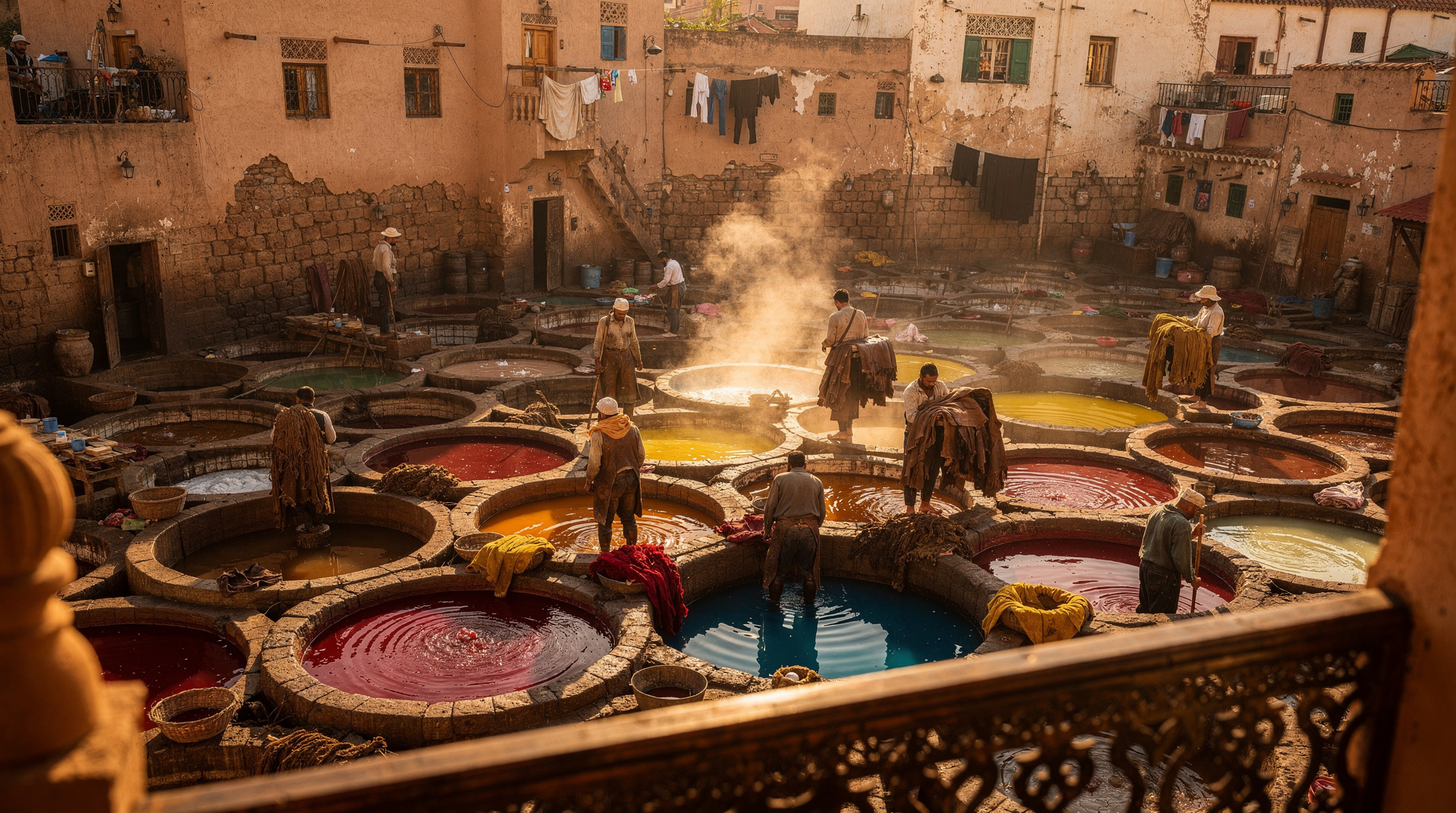
The Chouara tanneries are the most iconic and most-photographed scene in Fes. Getting a genuinely good photograph requires: arriving before 10:00 (the light is better and fewer tourists block the rooftop viewpoints), finding the leather shop with the least-obstructed terrace view, and using a 70–200mm lens to compress the vats and workers. The mint sprigs that shops hand you against the smell are actually useful — hold one while shooting with your other hand.
The colours of the vats change seasonally — saffron yellow, pomegranate red, indigo blue are the traditional dyes. The best colour combinations are in the morning when fresh batches are being worked.
Book the Fes tannery, madrasa and medina tour — the guide secures tannery roof access and handles the sales pressure so you can photograph without distraction. €40–60.
Day 4 afternoon: Bou Inania Madrasa interior
The Bou Inania Madrasa is one of the most photogenic interiors in Morocco. Three tiers of carved stucco and cedar wood surround a central fountain — the light at 14:00 in autumn and 16:00 in spring enters from the open courtyard roof and casts beautiful shadows through the lattice screens. A tripod is allowed (confirm at entry). Entry €3. The reflection of the carved ceiling in the central fountain requires a wide-angle lens and a low shooting position.
Day 5: Merenid Tombs at dawn
The Merenid Tombs above Fes el-Bali are the standard aerial viewpoint — but the light at dawn, looking east over the medina as it begins to wake up (smoke from bakery ovens, the first calls to prayer echoing between minarets), is an entirely different photograph from the midday tourist version.
Drive or taxi to the Merenid Tombs before 06:00. Stay until 08:00. The minaret forest of Fes el-Bali at first light is one of the great Morocco photographs and it is genuinely underexploited because it requires an early alarm.
Where to stay: Riad Idrissy or Dar Seffarine in Fes medina (€50–90/night)
Budget estimate (Days 4–5): €130–200 including guide, entry fees, accommodation, meals
Days 6–7: Erg Chebbi — the Sahara at dawn
Drive from Fes to Merzouga (8 hours)
This is a long driving day — Fes to Merzouga via the Middle Atlas (Azrou, Midelt, Errachidia, Erfoud) is approximately 500 km. Leave Fes by 07:00. The route through the cedar forests of Azrou (where Barbary macaques sit in the road) and over the Zad Pass (2,178m) are photographically interesting — the Middle Atlas forest light in the morning is extraordinary. Stop at Midelt for lunch (€8–12 at a local restaurant).
Day 6 evening: arrival and first dune light
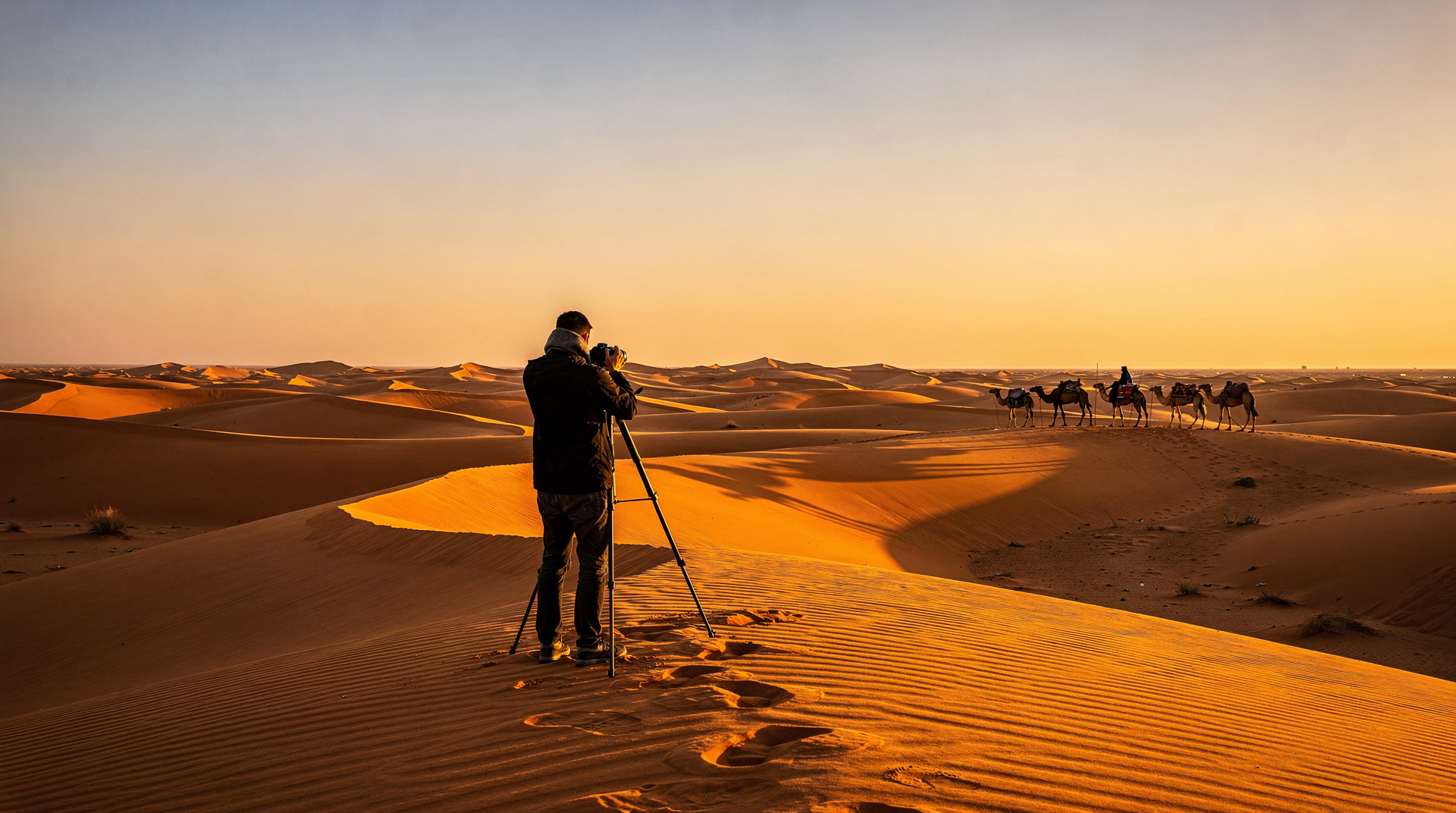
Arrive at the dunes by 17:00 for the late afternoon light on the Erg Chebbi sand face — the western aspect of the main dune sea glows orange as the sun drops. The ridgeline shadows at 17:30–18:00 are the classic Sahara photograph. Climb the nearest accessible dune (30 minutes from the main trailhead) for the ridgeline shot.
Day 7: Sahara dawn — the summit hike
05:00 alarm. The Erg Chebbi’s main dune crest is 40 minutes from most camp locations. The required photograph: sunrise over the eastern horizon from the dune summit, with the shadow of the dune sweeping west across the flat hammada below. A 24–35mm lens captures the full scale. A 100–200mm compresses the dune ridgelines into graphic curves.
Book the Merzouga sunset camel trek to desert camp for the evening of Day 6 — the camel silhouette at sunset against the dune is a legitimate compositional subject, not just a tourist cliché, and the camp provides the overnight position for the Day 7 dawn climb. The sandboarding is poor photography (it is fast and shaky) but entertaining nonetheless.
After sunrise: The dunes are good for 90 minutes after dawn before the light goes overhead and flat. Spend it on the ridgeline — the desert patterns in raking light change every 10 minutes. By 09:00, return to camp for breakfast and rest.
Where to stay: Merzouga desert camp or guesthouse in Merzouga village (€60–150/night including camel ride)
Budget estimate (Days 6–7): €180–280 including fuel, camp, camel trek, meals
Days 8–9: Aït Benhaddou and Ouarzazate
Day 8: Aït Benhaddou at dawn
The drive from Merzouga to Aït Benhaddou takes 5 hours. Leave by 06:00. Arrive at Aït Benhaddou by 11:00. But the dawn photograph here requires an overnight or a very early start from Ouarzazate (1 hour west) — if you can be at the ksar by 07:00, the morning light on the eastern towers is the definitive Aït Benhaddou photograph.
The specific viewpoint: cross the river on foot (stepping stones or shallow ford) and climb to the granary at the top of the ksar. From here, looking west, the towers and pisé walls are fully lit at 08:00. The river below catches light from 09:00. A wide-angle lens (24–35mm) takes in the full composition; a telephoto (200mm) isolates the tower detail and compressed texture.
Day 9: Atlas Film Studios and Draa Valley
The Atlas Film Studios in Ouarzazate (€12 entry) are photographically interesting in an unexpected way — the standing sets from Game of Thrones, Gladiator, and The Living Daylights are enormous and empty on weekday mornings, creating a strange, cinematic landscape that is entirely unlike anything else in Morocco.
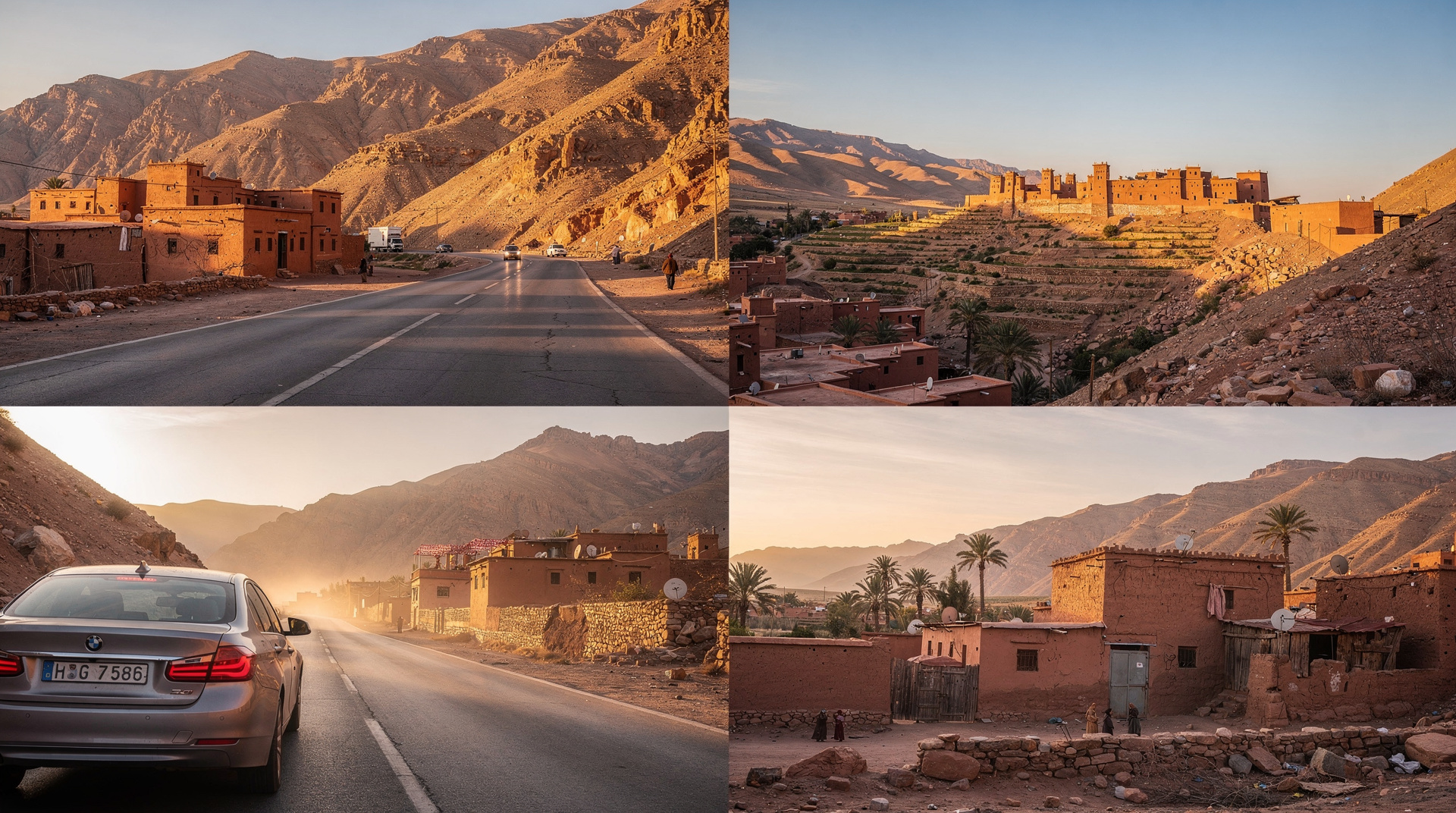
The Draa Valley south of Ouarzazate is one of the most photogenic drives in the country — the road follows the Draa River through a 200 km palm oasis, with earthen kasbahs and villages at intervals. The afternoon light on the valley (14:00–17:00) is directional and warm. If time allows, drive 1 hour south to Agdz and the beginning of the proper Draa palm system.
Where to stay: Riad Dar Kamar in Ouarzazate (€60–100/night) or a guesthouse in Aït Benhaddou village (€40–70/night)
Budget estimate (Days 8–9): €150–250 including fuel, accommodation, entry fees, meals
Days 10–11: Marrakech — medina light and Atlas access
Day 10: Marrakech medina at dawn
Djemaa el-Fna at 06:30 is completely different from the evening tourist scene — water sellers preparing for the day, early market stalls assembling, the orange juice carts being set up, the pigeons on the empty main square. The light from the east enters the square directly at 07:00–08:00 in spring and autumn. This is the Marrakech photograph nobody sees.
The Mellah (Jewish quarter) south of the Bahia Palace is the most architecturally underrepresented part of the medina — wrought-iron balconies, different facade treatment, smaller scale, and almost no tourists at 08:00.
Day 11: Atlas mountains day trip
The Atlas foothills above Marrakech offer dramatic landscape photography within a 90-minute drive. The Ourika Valley, Imlil (base for Toubkal), and the Tizi n’Test pass road (for advanced drivers, extremely scenic) are the main options. The Atlas Mountains day trip covering 3 valleys and waterfalls is the most efficient option if you want a guided circuit rather than self-driving. €45–65 per person.
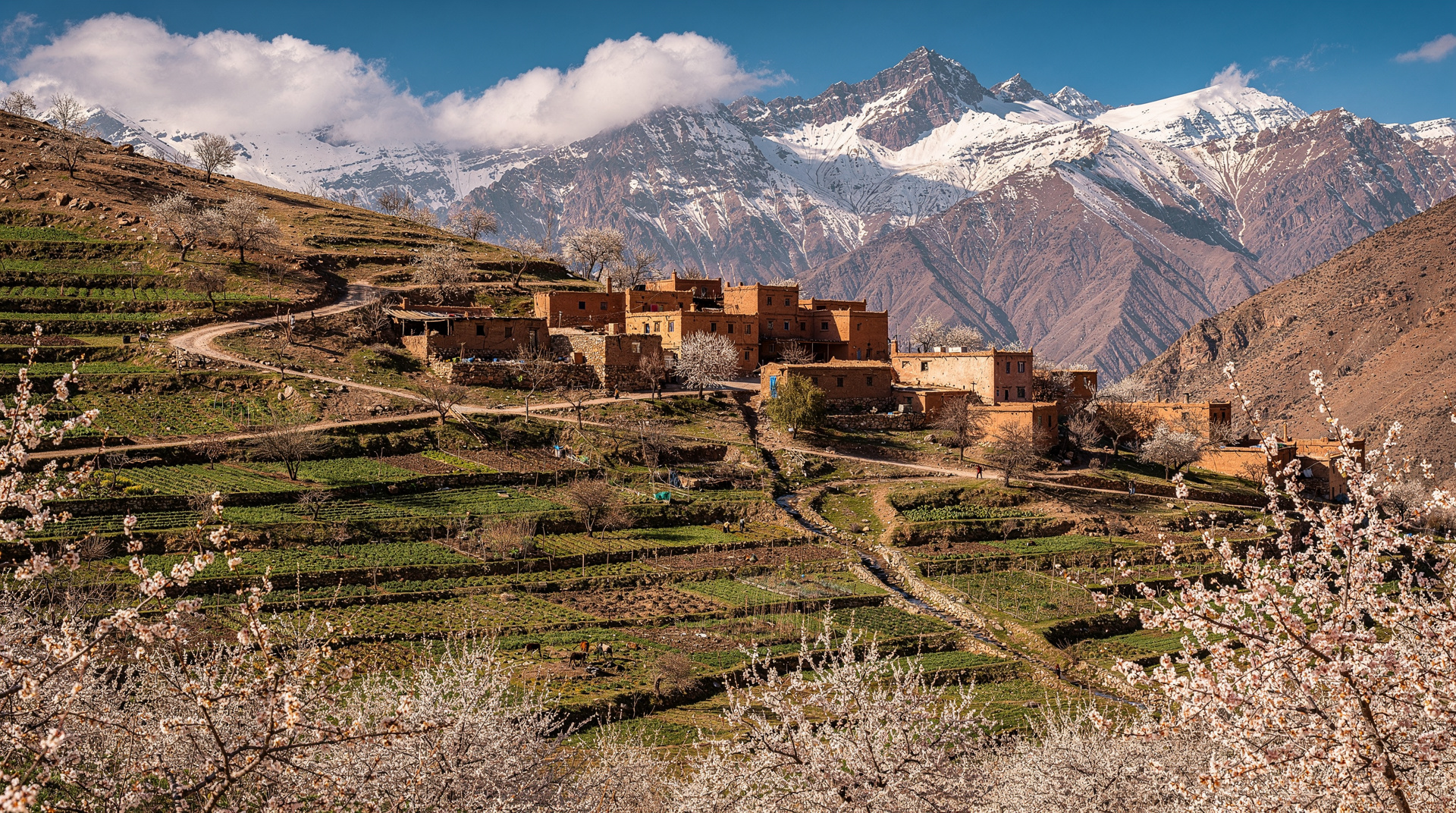
The photography priority in the Atlas: Berber village architecture (flat-roofed earthen houses against dramatic mountain backdrops), the terraced barley fields in spring, the river valley lighting in the Ourika and Imlil areas. Bring the 70–200mm for compressing mountain layers.
Where to stay: Riad BE Marrakech or Riad El Fenn (€120–200/night)
Budget estimate (Days 10–11): €170–280 including accommodation, Atlas day trip, meals
Days 12–14: Essaouira — Atlantic coast and wind light
The Essaouira light
Essaouira has a quality of light entirely its own — the Atlantic wind clears the air to a crystalline transparency that gives the city a silver-blue luminance quite different from the warm ochre of Marrakech or the golden sand of the Sahara. The white-and-blue medina walls reflect this light in a way that rewards a circular polariser and slight underexposure.
Day 12: ramparts and medina
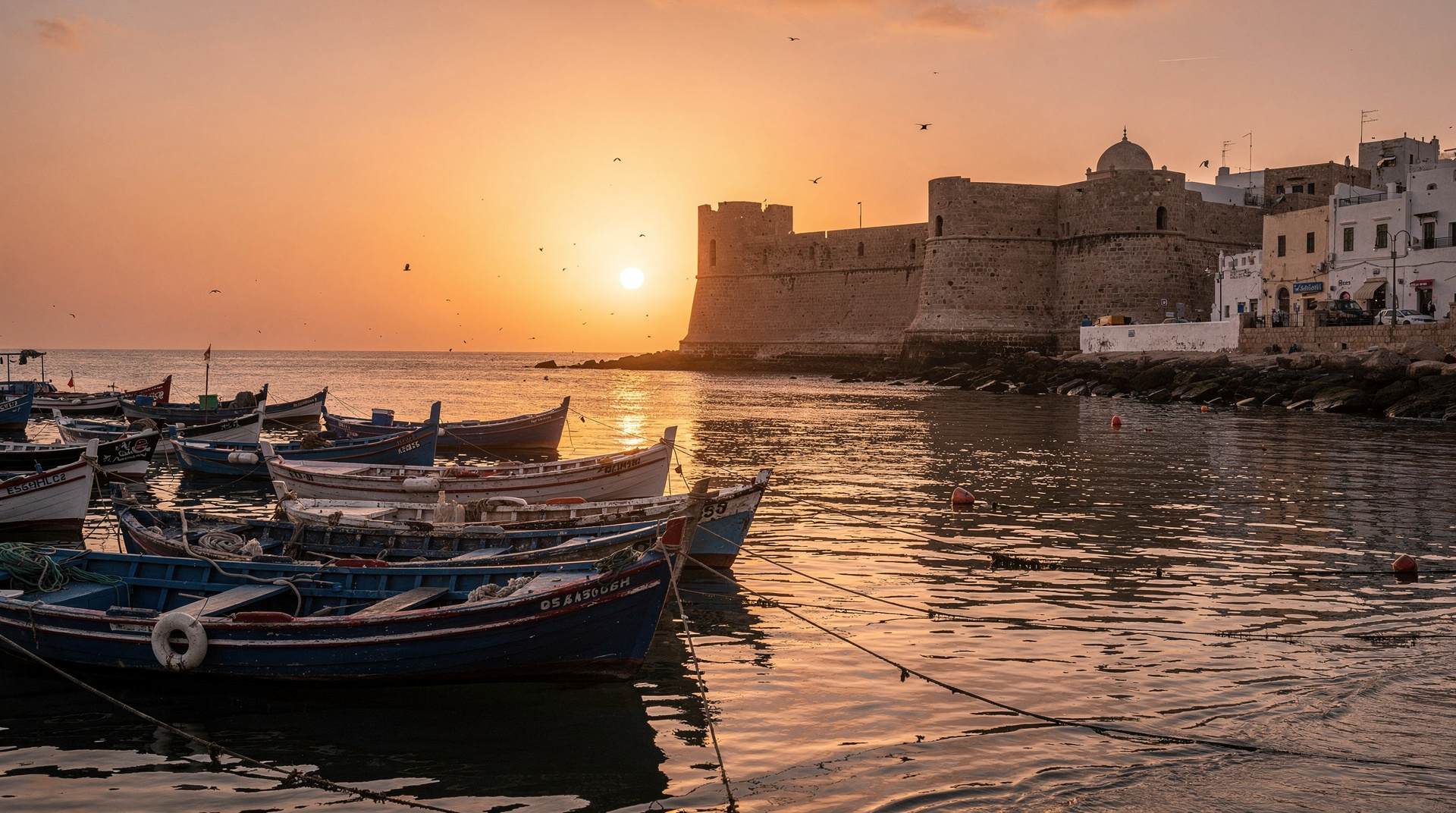
The Skala de la Ville ramparts at sunset face directly west over the Atlantic — the cannons, the waves, the disappearing sun are the definitive Essaouira image. Arrive at the rampart at 17:30 (adjust for season). Use a wide-angle to capture a cannon in the foreground and the ocean horizon behind; use a telephoto to isolate the lighthouse at Moulay Bouzerktoune visible 3 km north.
The medina’s main craft street (Rue Mohammed el Qory) photographs best in early morning (08:00) when light enters from the east and the thuya wood workshops are opening. The craftsmen working at their benches are the most genuine portrait subjects in Morocco — they are busy and will generally agree to be photographed if you ask simply and honestly.
Day 13: Sidi Kaouki beach
Sidi Kaouki, 27 km south of Essaouira, has a wild beach with breaking waves, low dunes, and a small shrine that photographs beautifully against the ocean backdrop. This is where the Essaouira surf scene operates at its rawest — kite surfers in the strong offshore wind, horses on the beach, and an extraordinary Atlantic sky. The drive south on the coast road is itself photogenic — argan trees, eucalyptus groves, the ocean on one side. See our Sidi Kaouki guide for detail.
Day 14: final morning and departure
The beach south of Essaouira’s medina at 07:00 in morning light — the blue boats pulled up on the sand, the fishermen working their nets, the medina walls in the background — is the farewell Morocco photograph. Drive or transfer to Marrakech airport (2h30) for afternoon or evening flights.
Book the Essaouira medina half-day guided walking tour on Day 12 afternoon — the guide knows which workshops allow photography (and which do not), and can facilitate the introductions that make portrait photography possible.
Where to stay (Days 12–14): Heure Bleue Palais (€150–250/night) or Riad Baladin (€80–120/night)
Budget estimate (Days 12–14): €250–450 including accommodation, activities, meals, fuel for departure
Total trip cost estimate
| Item | Budget (pp) | Mid-range (pp) |
|---|---|---|
| Accommodation (14 nights) | €500 | €1,100 |
| Rental car (14 days, including fuel) | €500 | €700 |
| Guided tours and entry fees | €200 | €350 |
| Food and drink (14 days) | €280 | €500 |
| Camel trek and desert camp | €80 | €150 |
| Total (flights excluded) | €1,560 | €2,800 |
Light timing reference
| Location | Best morning light | Best evening light | Notes |
|---|---|---|---|
| Chefchaouen medina | 06:30–09:00 | Not recommended (crowds) | East-facing lanes best |
| Fes tanneries | 09:00–11:00 | Not suitable | Afternoon closes vats |
| Erg Chebbi dunes | 05:30–07:30 | 17:30–sunset | Dawn climb essential |
| Aït Benhaddou | 07:00–09:00 | 16:00–18:00 | Midday is flat and harsh |
| Essaouira ramparts | Not ideal | 17:00–sunset | Faces due west |
| Marrakech square | 07:00–08:30 | 18:00–20:00 | Evening is busier but warmer |
| Atlas foothills | 07:30–10:00 | 16:00–18:00 | Valley light requires morning start |
Key logistics
Driving: A rental car is essential for this itinerary — you need to be at locations at specific times that no tour bus respects. Book an intermediate SUV (Dacia Duster class, €45–70/day) for the Atlas and Sahara sections. The Fes–Merzouga road is entirely paved; the access road to some guesthouses near Erg Chebbi uses 2–3 km of sandy track where some ground clearance helps.
Accommodation proximity to subjects: Book accommodation as close as possible to the dawn locations. For Chefchaouen, stay inside the medina. For Erg Chebbi, stay at a camp within the dune area rather than a Merzouga village guesthouse. For Aït Benhaddou, the guesthouses inside the ksar village (small and rustic but extraordinary positioning) allow a pre-dawn walk to the viewpoint.
For further Morocco photography inspiration and preparation, read our photography etiquette guide. For destination depth, see the Chefchaouen guide, Merzouga guide, Essaouira guide, and Aït Benhaddou guide. For the 14-day general circuit comparison, see our 14-day Morocco itinerary and the Morocco 10 vs 14 days comparison.
Compressing or extending this route
If 14 days is more than you can spare, the two sections easiest to cut without losing the photographic core are Days 12–14 in Essaouira (drop to 2 nights and lose the Sidi Kaouki day) and Day 9’s Atlas Film Studios detour (skip it and drive straight into the Draa Valley). Cutting Chefchaouen or the Sahara dawn climb undercuts the itinerary’s whole premise, so protect those first.
For a tighter frame, our 7-day itinerary covers Marrakech, the Sahara loop and Essaouira only — workable for photographers on a shorter trip, though you lose Chefchaouen and Fes entirely. Extending beyond 14 days, the natural add is 2–3 nights in the Atlas for a proper trek (see the Atlas multi-day trek guide) rather than the single day trip from Marrakech described above.
Shoulder-season light comparison
| Month | Light quality | Crowds at key spots | Notes |
|---|---|---|---|
| March–April | Soft, occasional haze clears after rain | Moderate, rising toward Easter | Wildflowers in the Atlas foothills |
| May | Clear but heat building in the south | Lower | Good balance before summer heat |
| June–August | Harsh midday sun, hazy Sahara | Lower in the south, high on the coast | Dawn/dusk windows shrink; desert middays best avoided entirely |
| September | Clearing haze, warm evenings | Lower | Transitional, can be excellent |
| October–November | Sharpest desert clarity of the year | Moderate | Best overall for landscape contrast |
| December–February | Very clear but cold desert dawns | Lower except Marrakech/Fes | Pack for near-freezing pre-dawn shoots at Erg Chebbi |
Frequently asked questions about Photography Morocco itinerary
Do I need a rental car for this photography itinerary? Yes, effectively. The route depends on being at specific viewpoints at precise pre-dawn and golden-hour times that public transport and scheduled tours cannot match. See our self-drive Morocco itinerary if you want a dedicated driving-focused route instead.
Is a drone worth bringing for this route? Drone rules in Morocco are strict and enforcement varies — flying without the correct import declaration and permits risks confiscation at customs. Most photographers on this route get strong results without one; if you do bring one, register it in advance and expect restrictions near cities, airports and the desert camps.