Morocco by train: 10-day ONCF rail itinerary
Why Morocco by train makes sense
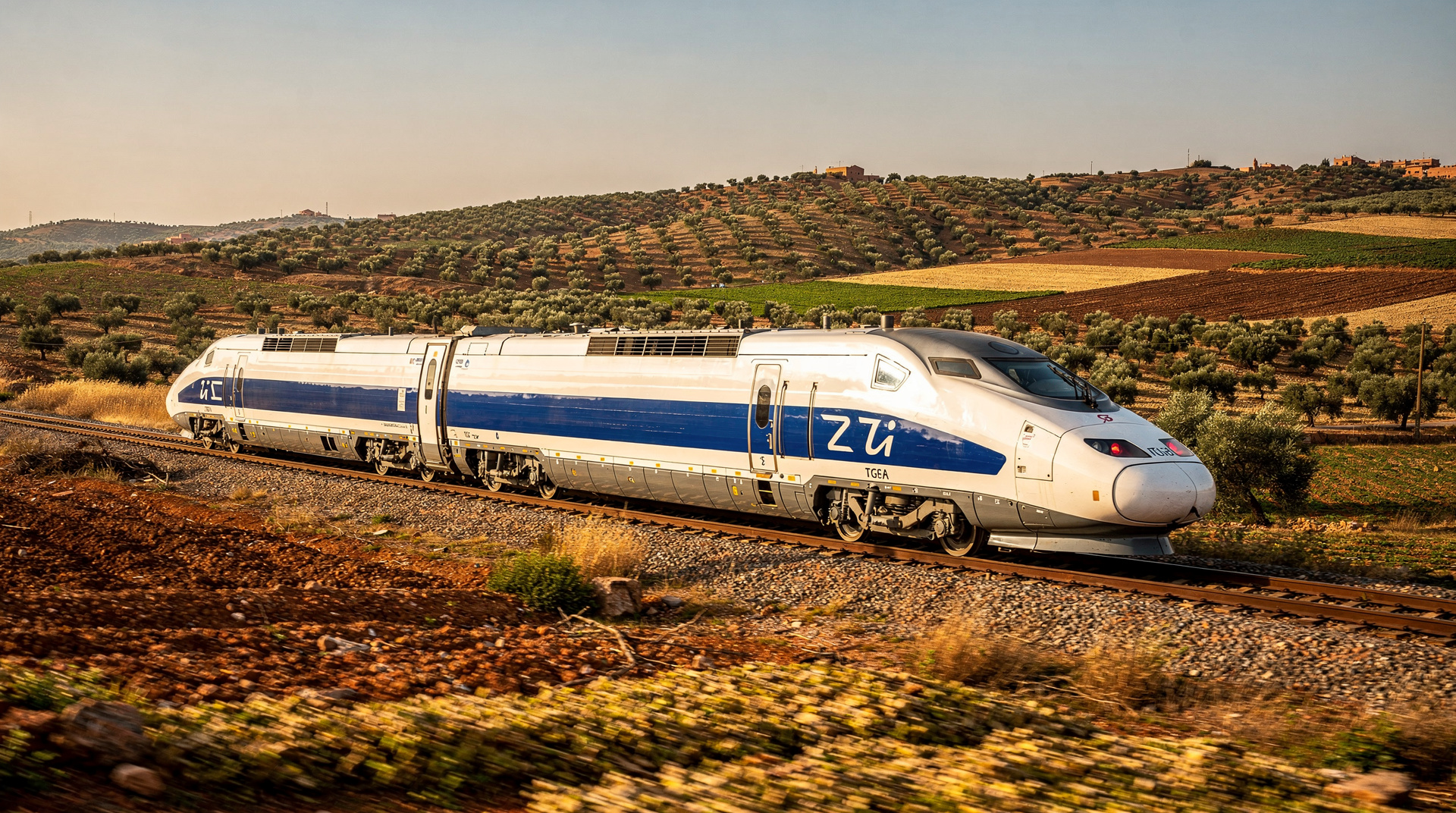
Morocco’s ONCF (Office National des Chemins de Fer) railway network is one of the best-kept secrets in North African travel. The trains are clean, punctual (by regional standards), affordable, and the new Al Boraq high-speed line between Tangier and Casablanca runs at up to 320 km/h — faster than many European services. Traveling the country by rail removes the stress of driving in medina-adjacent urban traffic, the cost of car rental and fuel, and the cognitive load of navigation.
The rail network covers all the major imperial cities: Tangier, Casablanca, Rabat, Meknes, Fes. Marrakech is at the end of a southern branch. The Sahara is genuinely unreachable by train — but there is a workaround using CTM buses from Marrakech that many travelers combine with the rail circuit.
This 10-day itinerary uses the train as the primary mode of transport throughout. The route follows the natural ONCF network: Al Boraq from Tangier south to Casablanca, then Rabat, then the Meknes–Fes intercity, then south to Marrakech. Every connection is direct or requires a single change at most. Every station is inside or adjacent to the city centre.
Route at a glance: Fly into Tangier → Al Boraq to Casablanca (2h10) → Rabat (45 min) → train to Meknes → train to Fes (30 min) → overnight train to Marrakech
Best season: October–April. The summer months are manageable on the air-conditioned trains but station transfers in 40°C heat add unnecessary suffering. October and March offer ideal temperatures at every city on this route.
Total estimated cost (per person, flights excluded): €500–900 depending on accommodation grade
At a glance
| Where | Tangier, Casablanca, Rabat, Meknes, Fes, Marrakech (+ optional Sahara by bus) |
| Duration | 10 days / 9 nights |
| Cost per person | around €860–1,540 (flights excluded) |
| Getting there | fly into Tangier Ibn Battouta, depart Marrakech Menara |
| Getting around | ONCF trains throughout, CTM bus only for the optional Sahara add-on |
| Best time | October–April |
Day-by-day summary
| Day | Route | Overnight |
|---|---|---|
| 1 | Tangier: Kasbah, Café Hafa | Tangier |
| 2 | Al Boraq to Casablanca: Hassan II Mosque | Casablanca or Rabat |
| 3 | Rabat: Hassan Tower, Kasbah des Oudayas → train to Meknes | Meknes |
| 4 | Meknes + Volubilis → train to Fes | Fes |
| 5 | Fes medina → overnight train to Marrakech | Overnight train |
| 6–7 | Marrakech: palaces, cooking class, souks | Marrakech |
| 8–10 | Optional Sahara add-on by CTM bus | Desert tour / Marrakech |
The ONCF network — essential knowledge
Al Boraq high-speed line: Tangier Port to Casablanca Voyageurs, 2h10, first class €25–30, second class €15–20. Stations: Tangier Port, Tangier Ville, Kénitra, Rabat Agdal, Casablanca Voyageurs. This is a genuine world-class rail experience — smooth, quiet, fast.
Intercity trains: Casablanca–Fes via Rabat and Meknes runs every 2–3 hours. Journey time Casablanca to Fes: 4h15. The best option is to break this journey at Rabat (45 min from Casa) and at Meknes (2h from Rabat to Meknes, then 1h Meknes to Fes).
Marrakech line: Casablanca to Marrakech direct, 3h, first class €18–22. Fes to Marrakech requires a change at Casablanca (total journey 7h30; overnight train available). The overnight train from Fes to Marrakech departs around 21:30, arrives ~06:00 — couchette berth recommended (€30–40 first class).
Booking: Book at ONCF.ma or at station ticket counters. The website works for online booking but requires a non-Moroccan credit card on some browsers — if the online booking fails, buying at the station always works. Trains are rarely sold out except on Friday afternoons and Sunday evenings when Moroccans travel home.
Station location note: Marrakech train station is in the Ville Nouvelle (new city), 1.5 km from the medina. Fes train station is on Avenue des Almohades, 10 minutes by taxi from Bab Bou Jeloud. Rabat train station is in the centre of the Ville Nouvelle. Casablanca has two main stations — Voyageurs and Casa Port; Voyageurs is the main hub for onward connections.
Day 1: Tangier — arrive and explore
Arrival
Tangier Ibn Battouta Airport is 14 km from the city. Grand taxis to the city centre run €8–12; shared taxi €3–5 per person. The CTM bus (Line 8) runs to the Tangier city centre for €2. If arriving at the ferry terminal from Spain or Gibraltar, the Tangier Port Al Boraq station is directly adjacent.
Tangier is worth more than a transit stop. The city has been fundamentally gentrified since the 2010s: the port area is clean and walkable, the Kasbah (hilltop fortified area) has become a destination in itself, and the Medina Socco Chico is one of the most atmospheric small squares in Morocco — think Tangier’s version of Djemaa el-Fna but in miniature.
Afternoon: Kasbah Museum and cliff cafés
The Kasbah Museum occupies the former Sultan’s palace at the top of the medina — the collections include Phoenician, Roman, and Islamic artefacts and the palace itself is architecturally extraordinary. Entry €2. The view from the Kasbah walls over the Strait of Gibraltar is the signature Tangier image.
The Café Hafa, perched on the cliff below the Kasbah since 1921, serves mint tea to the Strait of Gibraltar view. It has served mint tea to the Strait of Gibraltar for a century. Paul Bowles, Jack Kerouac, and the Rolling Stones all had the same tea. It is the same tea. The view hasn’t changed.
Evening: medina dinner
El Morocco Club on the Old Mountain road above the city is exceptional for a splurge (€30–50 per person). For budget options, the cafés around the Petit Socco (Zoco Chico) serve reliable Moroccan food for €8–15 with front-row seats on the best people-watching square in the country.
Book the Tangier guided medina and Kasbah tour if arriving with enough time in the afternoon — 2 hours with a local guide unlocks the literary history (this was the city of writers-in-exile), the former royal residences, and the Byzantine-Moorish architecture of the upper medina. €25–40.
Where to stay: Riad Dar Sultan (medina, €50–90/night), El Minzah Hotel (historic grand hotel, €100–150/night), or a Tangier Ville Nouvelle hotel for budget options (€30–50/night)
Budget estimate today: €70–130 including meals and accommodation
Day 2: Al Boraq to Casablanca — the world-class connection
Morning: Al Boraq departure
The Al Boraq high-speed service from Tangier Port or Tangier Ville station to Casablanca runs approximately every 2 hours from 06:00. First class is worth the small premium for this journey — the seats are excellent and the service includes a snack. Journey time: 2h10. Casablanca Voyageurs station is the terminus.
The train is a genuine pleasure. The speed becomes apparent only when you notice the landscape blurring at 300 km/h — the flat Atlantic coastal plain between Kénitra and Casablanca feels like low-altitude flight. The station-to-station timing is the kind of rail punctuality that makes you wonder why you ever fly short-haul.
Casablanca: Hassan II Mosque (the essential stop)
Casablanca is misunderstood by the Morocco-as-medinas crowd. The Hassan II Mosque — completed in 1993, built by 35,000 craftsmen over 6 years, and standing on a promontory above the Atlantic — is one of the genuinely magnificent buildings of the 20th century. The minaret at 210 metres is the world’s tallest. The prayer hall floor retracts to open to the sky.
Book the Hassan II Mosque guided tour with entry ticket — the interior is only accessible on a guided tour (entry €14/adult), and the guide explains the architectural and engineering achievement in detail. Allow 90 minutes. It is not optional on a Casablanca stop.
Afternoon: Art Deco Casablanca
The city centre contains one of Africa’s best collections of 1930s French colonial Art Deco architecture — the central market, the Cathédrale Sacré-Coeur (now an art centre), the corniche along the Atlantic. A 2-hour self-guided walk through the Quartier Habous (Moroccan Art Deco with a medina layout) is an excellent pre-dinner option.
Evening: stay in Casablanca or take the 45-minute train to Rabat
If arriving Casablanca before 15:00, take the 45-minute train to Rabat and sleep there — Rabat is calmer and more pleasant than Casablanca for overnight stays. If arriving later, Casablanca has excellent accommodation options (Barceló Casablanca, Hotel Diwan, €80–150/night).
Where to stay: Casablanca city centre hotel (€60–120/night) or Rabat riad if moving on
Budget estimate today: €80–150 including train, mosque tour, meals
Day 3: Rabat — Morocco’s underrated capital
Morning: Rabat city highlights
Rabat is significantly easier to navigate than Fes or Marrakech and has several world-class sites within a 30-minute walk of each other. Start at the Hassan Tower and Mausoleum of Mohammed V — the unfinished 12th-century minaret stands 44 metres high among 200 broken columns, and the royal mausoleum next door is the finest example of modern Moroccan decorative craft in the country. Admission free; entry to the mausoleum interior requires modest dress.
Walk north to the Kasbah des Oudayas: a 12th-century fortified kasbah at the mouth of the Bouregreg river. The Andalusian garden inside is the most peaceful 20 minutes in Rabat. The blue-and-white-painted residential lanes inside the kasbah are Chefchaouen-adjacent in their painterly quality but virtually tourist-free.
Book the Rabat historic highlights private tour to cover the Chellah (ancient Roman-Merenid necropolis outside the city walls, home to storks in spring, genuinely atmospheric), the medina, and the Oudayas in a single morning.
Afternoon: medina and train to Meknes
Rabat’s medina is the most comfortable medina in Morocco for first-time visitors — compact, manageable, with the Rue des Consuls for shopping (carpets, pottery, traditional crafts) without the pressure of larger medinas. Lunch at a medina café (€8–15) then the train to Meknes.
Train from Rabat Agdal to Meknes: 2h, approximately €8–12 first class. Direct services every 2–3 hours.
Where to stay: Riad Dar El Kebira in Meknes (arriving late afternoon, €50–80/night)
Budget estimate today: €70–130 including train, tour, meals
Day 4: Meknes and Volubilis
Morning: Meknes — the forgotten imperial city
Meknes is the most overlooked of Morocco’s four imperial cities and arguably the most rewarding for that reason. The 17th-century city of Sultan Moulay Ismail — who built 25 km of walls, 50 palaces, and reportedly kept 12,000 horses here — retains an extraordinary monumental scale without the tourist infrastructure of Fes or Marrakech.
The Bab Mansour gate is among the most spectacular in Morocco — a 25-metre triumphal arch covered in intricate geometric tilework. Entry free. The mausoleum of Moulay Ismail is one of the few Islamic shrines in Morocco open to non-Muslims (the interior is extraordinary; visitors are not required to pray). The Heri es-Souani granaries and stables — enormous vaulted underground chambers built to store food for 12,000 horses — defy belief in their scale.
Book the Meknes private guided walking tour for the morning to understand the city’s history — the context transforms the monuments from impressive stone to a comprehensible human story of imperial ambition.
Afternoon: Volubilis by local bus or taxi
Volubilis is the best-preserved Roman city in North Africa — 2 km of excavated streets, temples, triumphal arches, and 50+ mosaic floors (the Orpheus mosaic is extraordinary) in a valley setting 32 km north of Meknes. The Volubilis and Moulay Idriss half-day trip from Meknes is the most efficient way to visit — transport, entry, and guide for €35–50.
Alternatively, take a grand taxi from Meknes to Volubilis (€8 per seat, negotiated as a private hire €20–30 return with waiting time) and visit independently. Entry to Volubilis: €10. Allow 2 hours minimum for the site.
Evening: train Meknes to Fes (1 hour)
The short train from Meknes to Fes takes 1 hour and runs frequently. Budget €5–8. Arrive in Fes in time for dinner in the medina.
Where to stay: Riad Idrissy or Riad Laaroussa in Fes medina (€50–100/night)
Budget estimate today: €80–140 including guided tour, Volubilis trip, and train
Day 5: Fes — full medina day
Morning: Fes medina with guide
No city in the world quite prepares you for the Fes medina. The 9,000-alley old city has been a functioning urban organism for 12 centuries — craftsmen’s guilds still occupy the same streets they have always occupied, the water flows through the same ceramic channels, and the Al-Qarawiyyin mosque-university (founded 859 AD, predating Oxford by 300 years) still holds classes.
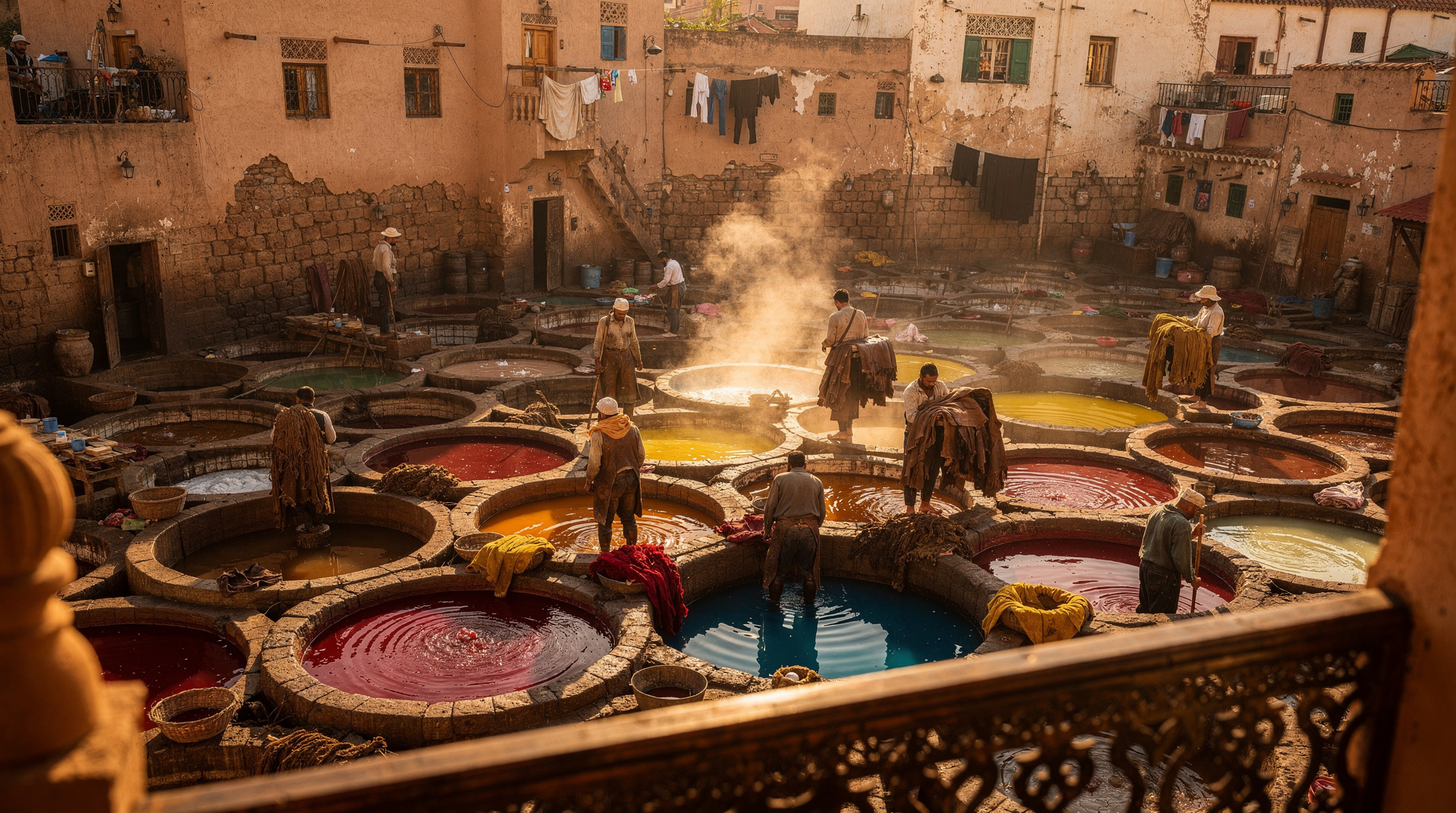
Book the Fes Royal Palace, madrasa, tannery, souks, and medina tour for the morning. The Chouara tanneries — the leather dyeing vats visible from surrounding rooftop terraces — are the defining Fes image. Your guide gets you the roof terrace access without pressure to buy leather goods (the shops control the viewpoints; a guide navigates this).
Afternoon: Fes at your own pace
The Bou Inania Madrasa (stunning 14th-century tilework and carved stucco, €3 entry) and the Nejjarine Museum of Wood Arts (in a beautifully restored 18th-century caravanserai, €3) are excellent independent afternoon stops. The Merenid Tombs above the city give the best aerial view over Fes el-Bali — walk up or take a petit taxi (€2) and stay for the afternoon light.
Evening: overnight train to Marrakech
The 21:30–22:00 overnight train from Fes to Marrakech arrives ~06:00. Book a couchette (first class, 6-berth lockable compartment, €30–40). Pack snacks and water. This is a well-regarded overnight journey and many Morocco rail travelers cite it as a highlight.
Where to stay: Overnight train (couchette)
Budget estimate today: €90–150 including guide, entry fees, and train ticket
Days 6–7: Marrakech — arrival and city exploration
Day 6 morning: arrive and reset
Marrakech train station delivers you directly to the Ville Nouvelle. The medina is a 15-minute walk or 5-minute petit taxi (€2). Most riads will store your bag and let you use common areas before check-in.
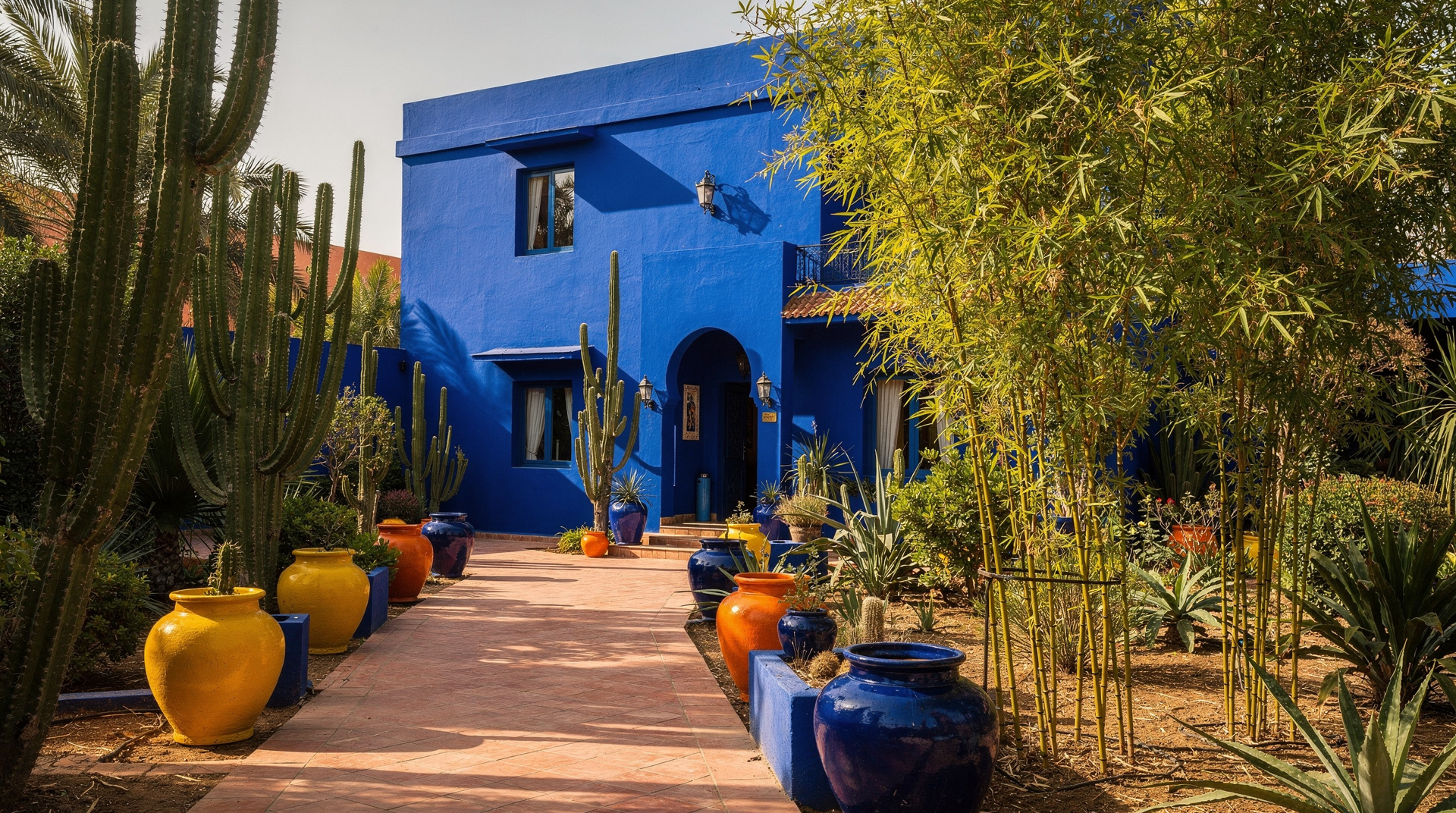
For a full Marrakech plan, follow the Day 1–2 section of our 7-day Morocco itinerary — the Bahia Palace, Majorelle Garden, and Djemaa el-Fna sequence works perfectly on your Marrakech Days 1 and 2 here.
Day 7: Marrakech fully explored
A cooking class, a hammam session, and the souks fill Day 7. The street food tour at night is excellent: book the Marrakech street food tour by night for an insider guide to the Djemaa el-Fna food stalls, the alley snacks, and the hidden juice bars that every local knows and no tourist stumbles upon alone. €30–45 per person; excellent for meeting other travelers.
Where to stay (Days 6–7): Riad Jardin Secret or Riad BE Marrakech (€90–140/night)
Budget estimate (Days 6–7): €150–250 total including accommodation, food, and activities
Days 8–10: Adding the Sahara by CTM bus
The train–desert combination
The Sahara is the only major Morocco destination genuinely unreachable by train. The Marrakech–Merzouga route (550 km, 10 hours) is served by CTM bus (once daily, departing ~07:00, arriving ~17:00, €25–30) or by organized tour. The most practical option for a rail-focused traveler: book a 2-day Zagora desert trip (closer, the Draa Valley is 330 km from Marrakech, 5 hours by bus) or the full 3-day Merzouga tour.
For the 3-day group tour option that handles everything: book the 3-day Sahara desert tour from Marrakech — this covers Days 8, 9, and returns you to Marrakech on Day 10 morning, leaving the afternoon for departure or a final medina hour.
If you prefer Zagora (closer, shorter drive, different sand landscape), the 2-day Zagora desert tour from Marrakech is excellent value at €80–120 per person, leaving Day 10 for a leisurely Marrakech departure.
The decision between Merzouga and Zagora is covered in depth in our Merzouga vs Zagora guide.
Where to stay (Days 8–9): Included in desert tour
Budget estimate (Days 8–10): €200–350 for the 3-day desert option
Total trip cost estimate
| Item | Budget (pp) | Mid-range (pp) |
|---|---|---|
| Train tickets (all ONCF) | €80 | €120 |
| Accommodation (10 nights) | €300 | €600 |
| Desert tour (3 days) | €180 | €280 |
| Food and drink (10 days) | €160 | €280 |
| Guided tours and entry fees | €100 | €200 |
| Local taxis and transport | €40 | €60 |
| Total (flights excluded) | €860 | €1,540 |
ONCF booking tips
Online booking (ONCF.ma): The website works best on desktop with a modern browser. Visa and Mastercard are accepted. Print or screenshot your ticket — inspectors check at boarding and en route. Tickets are also available at every station counter (no booking fee).
First class vs second class: For long journeys (Fes to Marrakech overnight, Casablanca to Marrakech), first class is worth the premium — approximately €8–12 more per person for significantly more comfort. For short city hops (Rabat to Meknes, Meknes to Fes), second class is entirely adequate.
Al Boraq: This is a high-speed train requiring a specific ticket — standard ONCF tickets are not valid on Al Boraq. Book and pay specifically for the Al Boraq service. The ticket is well worth it at €15–25 for 2h10 to Casablanca.
Station taxi approach: Every Moroccan train station has grand taxis waiting outside. Always agree on the price before getting in. The standard from Fes station to Bab Bou Jeloud is €3–4; from Marrakech station to medina is €5–8.
For broader transport context, read our getting around Morocco guide. For city-by-city exploration, see our imperial cities guide and the imperial cities itinerary. For those who want to combine the train circuit with a rental car in specific regions, our private tour vs self-drive guide covers the decision in detail.
The Fes guide and Meknes guide give full city coverage for those two stops. For the full imperial cities focus without the train-logistics framing, see our imperial cities itinerary, and for a first-timer’s Marrakech-heavy plan, see the 7-day Morocco itinerary.
Why the overnight train to Marrakech is worth the couchette upgrade
The Fes–Marrakech overnight (Day 5) is the itinerary’s one long rail leg, and it is worth paying for a first-class couchette rather than a second-class seat. The berth compartment locks, the journey covers the least scenic stretch of the whole trip (so you lose nothing by sleeping through it), and arriving in Marrakech at 06:00 means a full extra day in the city rather than losing daylight hours to a daytime transfer. Bring your own snacks and a refillable water bottle — the onboard buffet car is inconsistent on this specific service.
Second class versus first class: when it actually matters
For short city hops — Rabat to Meknes, Meknes to Fes — second class is genuinely fine and the price difference is marginal. For the Al Boraq high-speed leg and the Fes–Marrakech overnight, first class buys meaningfully more comfort for a modest premium (roughly €8–12 more per person). If budget is the primary constraint, spend the upgrade money on the two long legs and save on the short ones — see our Morocco on a budget guide for the fuller cost breakdown across transport, food, and lodging.
Frequently asked questions about Morocco by train
Can you really see Morocco properly without ever renting a car?
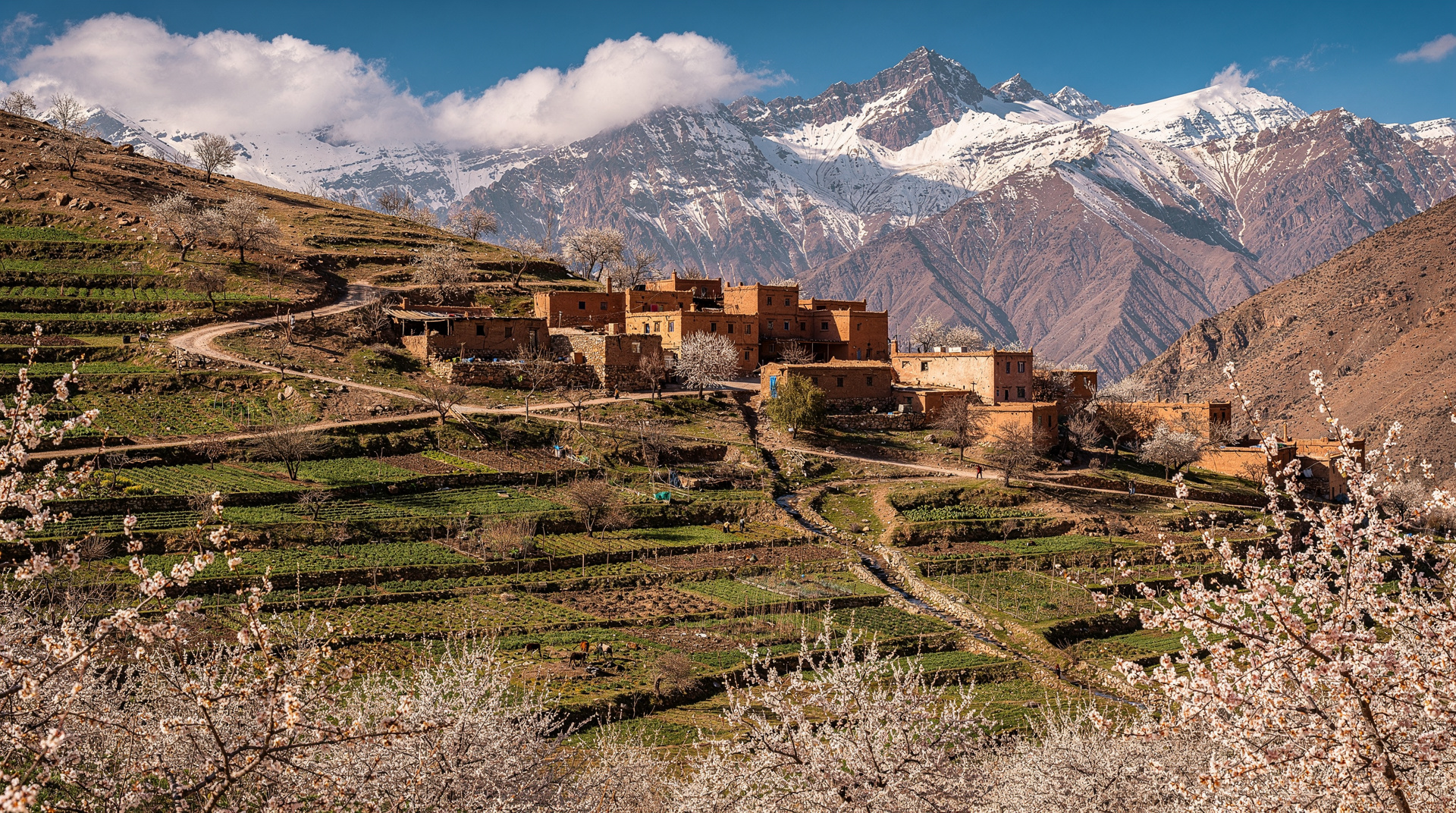
Yes, for the imperial cities and the northern/central corridor covered by this itinerary — the ONCF network is genuinely excellent for exactly that route. What you cannot do by train is reach the Sahara, the Atlas mountain villages, or most of the Atlantic coast south of Casablanca; those require a bus, private driver, or short flight, as covered in the Days 8–10 Sahara add-on above.
Is the Al Boraq high-speed train worth booking over a regular intercity service?
For the Tangier–Casablanca leg specifically, yes — it is roughly twice as fast as any alternative and the ticket premium is modest. On other legs where Al Boraq does not run, standard ONCF intercity trains are perfectly comfortable and there is no faster alternative to book.