Luxury Morocco itinerary: 10 days in supreme comfort
Morocco without compromise
Morocco is one of the world’s great luxury destinations — and one of the most underestimated. La Mamounia in Marrakech is regularly ranked among the finest hotels on earth. The luxury desert camps outside Merzouga have private plunge pools and telescopes for stargazing. The private riads of Fes serve eight-course Fassi dinners in candlelit courtyard dining rooms. The cuisine, when executed at the highest level, belongs in any serious conversation about the world’s great culinary traditions.
What separates luxury travel in Morocco from budget travel is not simply the quality of the bed. It is the difference between navigating the Fes medina overwhelmed and confused versus understanding everything you see because your knowledgeable guide has explained the architectural history of each façade. It is the difference between an exhausting 10-hour shared desert van and a private vehicle that stops whenever you want to photograph the Atlas passes at your own pace.
This itinerary is built around private drivers, the finest accommodation Morocco offers, and the luxury of time — time to stay longer at places that deserve it, to take the scenic detour, to accept a third glass of argan oil and almond amlou at a local producer’s home because there is no group to hurry back to.
Route at a glance: Marrakech (3 nights) → Aït Benhaddou (1 night) → Merzouga dunes (2 nights) → Fes (3 nights) → fly home from Fes or transfer to Casablanca
Total estimated cost (per person, flights excluded, sharing double room): €3500–6000
At a glance
| Where | Marrakech, Aït Benhaddou, Merzouga (Sahara), Fes |
| Duration | 10 days / 9 nights |
| Cost per person | around €3,700–6,700 (flights excluded, sharing) |
| Getting there | fly into Marrakech Menara (RAK), depart Fes (FEZ) or Casablanca |
| Getting around | private driver throughout, no self-driving |
| Best time | October–November, March–April |
Day-by-day summary
| Day | Route | Overnight |
|---|---|---|
| 1 | Arrive Marrakech | La Mamounia / Royal Mansour |
| 2 | Marrakech palaces + Majorelle | La Mamounia |
| 3 | Marrakech cooking, hammam, Djemaa el-Fna | La Mamounia |
| 4 | Private drive: Tizi n’Tichka → Aït Benhaddou | Kasbah du Toubkal or luxury Ouarzazate |
| 5 | Ouarzazate → Dades → Todra → Merzouga | Luxury desert camp |
| 6 | Merzouga: morning dunes, afternoon rest | Luxury desert camp |
| 7 | Merzouga → Midelt → Ifrane → Fes | Riad Fes |
| 8 | Fes medina: private full-day tour | Riad Fes |
| 9 | Fes: Volubilis, Meknes, private guide | Riad Fes |
| 10 | Fes departure or fly via Casablanca | — |
Day 1: Arrive Marrakech — the greatest hotel in Africa
Marrakech Menara Airport to La Mamounia is a 10-minute private transfer. Your hotel will arrange it; the cost is typically €30–40 and worth not negotiating.
La Mamounia is, by any measure, one of the most exceptional hotels on earth. Built in the 1920s on a 12th-century garden — a gift from the king to his son — it was redesigned by the architect Jacques Majorelle (who later designed his own garden) and has hosted Churchill, who painted its gardens, Hitchcock, who filmed here, and every significant world leader of the past century. A junior suite starts at €600–900 per night; the garden suites and riad accommodations inside the hotel grounds begin at €1200.
If La Mamounia is fully booked (it sells out months ahead), the Royal Mansour is the alternative — a custom-built palace complex commissioned by King Mohammed VI in 2010, comprising 53 private riads within a walled city. Each riad has three floors, a private terrace, and a butler. Prices from €1000–2000 per night.
This evening: dinner at La Mamounia’s Le Marocain restaurant. The kitchen interprets classic Moroccan cuisine — bastila, b’stilla au pigeon, couscous with seven vegetables — with the precision of a fine-dining kitchen and the generosity of a family home. Dress code applies. Budget €80–120 per person for dinner with wine.
Where to stay: La Mamounia (€600–1200/night) | Royal Mansour (€1000–2000/night)
Day 2: Marrakech — palaces, Majorelle, the art of the medina
A private guide meets you after breakfast. This is the investment that transforms Marrakech from beautiful-but-bewildering to deeply comprehensible. Book through your hotel concierge — La Mamounia works with the finest licensed guides in the city, several of whom have been leading tours here for 20+ years.
Morning: Bahia Palace (built 1894–1900 by the grand vizier Ba Ahmed — the most powerful man in Morocco — as a statement of personal ambition) and the Saadian Tombs, the dynastic mausoleum sealed for 200 years after a succeeding sultan preferred to erase his predecessors’ memory. Your guide explains the political context; without it, these are beautiful rooms with no story.
The private Marrakech medina, palaces, and tombs tour is the benchmark for this experience.
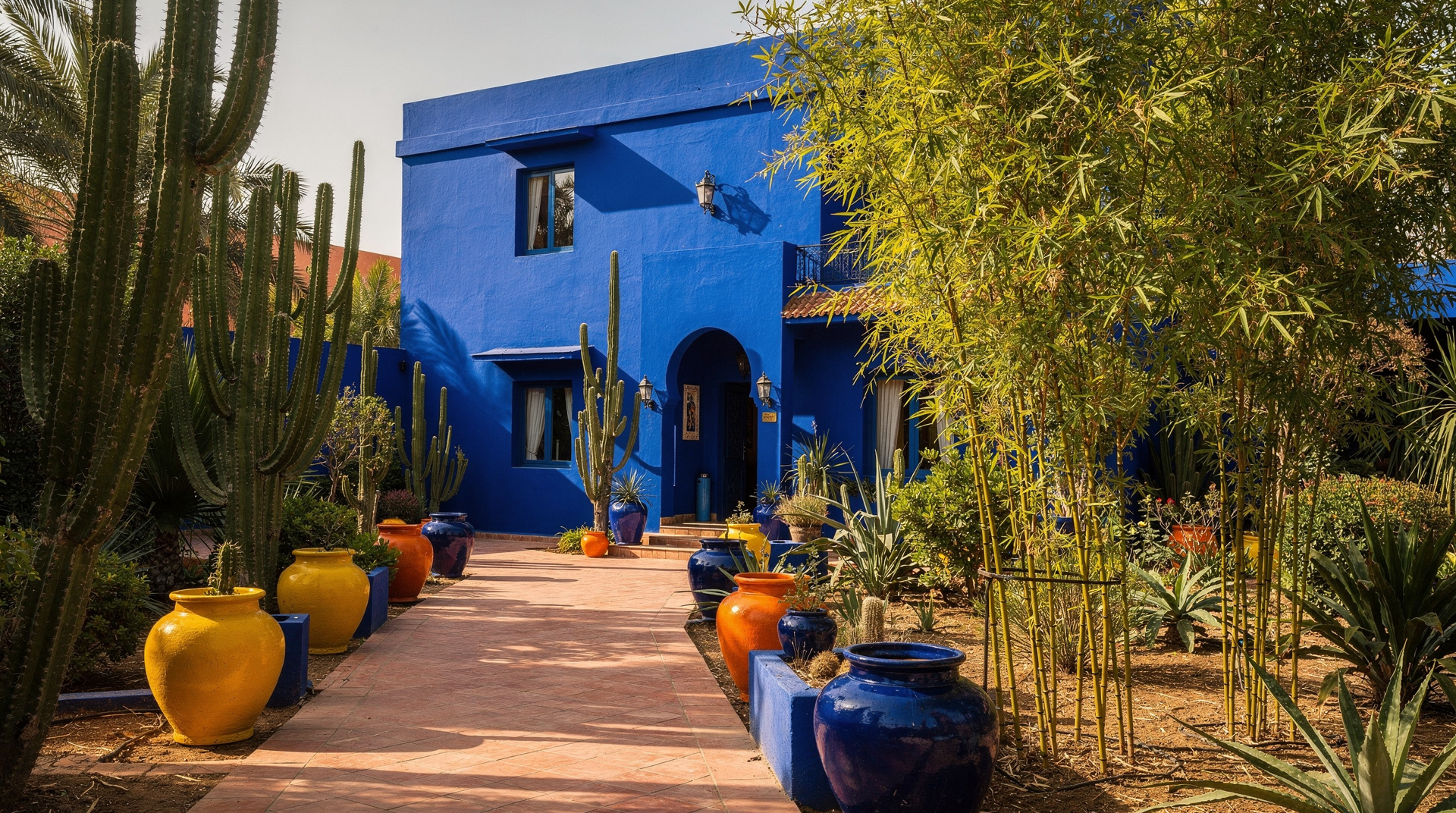
Afternoon: Majorelle Garden with your guide (skip the queue entirely via pre-booked entry). The YSL Museum adjacent is a beautifully curated tribute to Saint Laurent’s relationship with Morocco — the fabric and inspiration connections between Moroccan craft and couture fashion are more complex and fascinating than the museum’s gentle tone suggests.
Evening: hammam at La Mamounia’s spa (€150–200 for the full traditional experience with argan oil treatment, ghassoul clay, and kessa scrub — incomparable). Dinner at Dar Moha on Rue Dar el Bacha: the most celebrated independent Moroccan restaurant in the city, housed in a 1920s French protectorate riad with a central pool and garden. The tasting menu (€60–80 per person) is the finest interpretation of Marrakchi cooking available outside a royal palace.
Budget estimate today: €300–500 per couple including guide, entry fees, hammam, dinner
Day 3: Marrakech — cooking class, souk, and the best of Djemaa el-Fna
A morning cooking class at La Maison Arabe — Marrakech’s most storied culinary institution, with a cooking school attached to a boutique hotel. The 3-hour class covers preserved lemon preparation, ras el hanout construction, and two main dishes. The equipment is pristine, the instruction is detailed, and the meal you eat at the end is excellent.
Book the La Maison Arabe cooking workshop at least a week in advance — classes run at maximum 12 people.
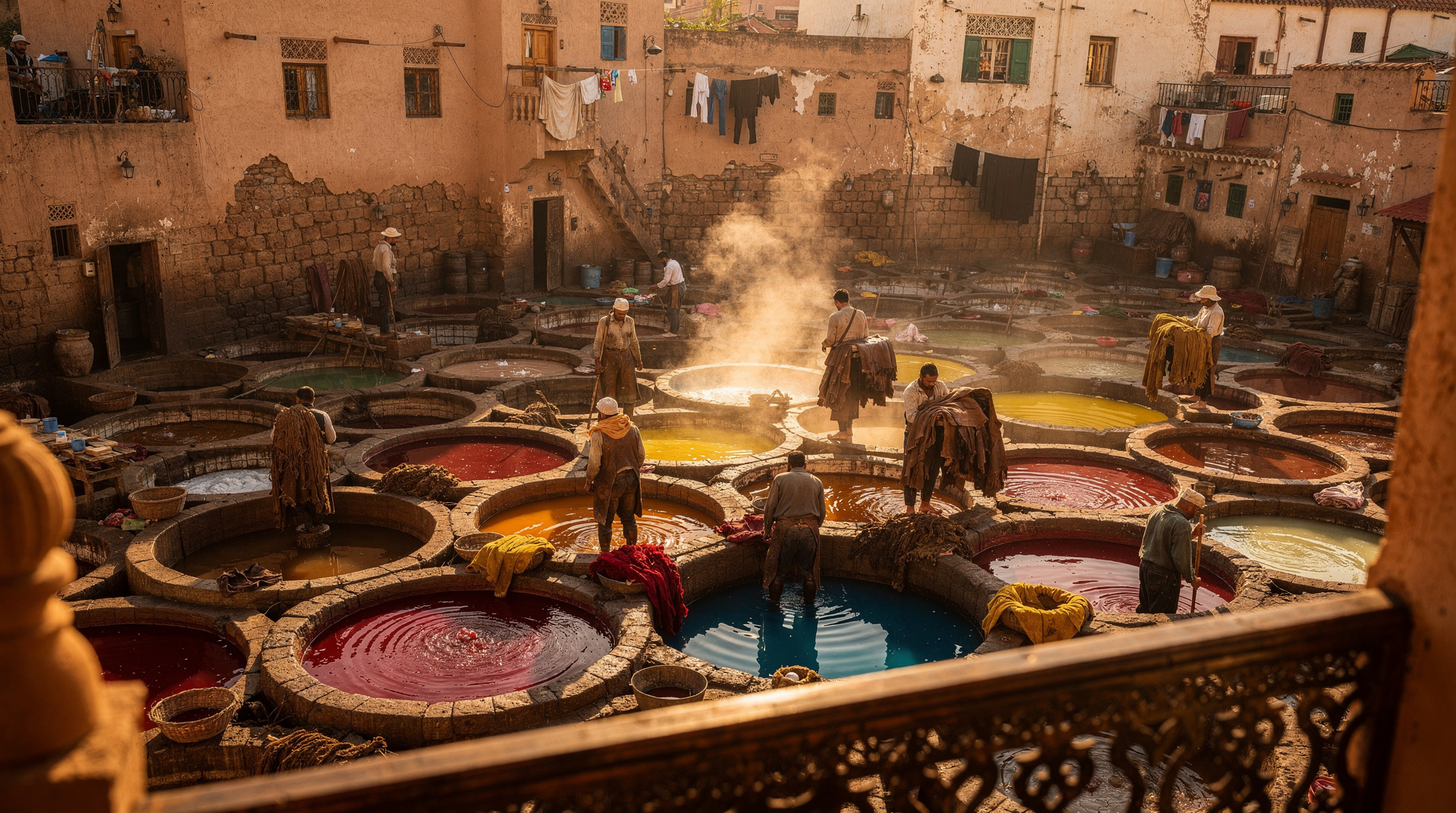
Afternoon: free time in the souks with a private guide if you want focused shopping. The guide knows which artisans work to genuine quality standards versus which sell tourist-grade goods at local prices. For carpets, the Cooperative Artisanale in the Ville Nouvelle has fixed prices and will arrange international shipping. For leather, the small workshops near the Chouara Tanneries sell directly; a high-quality leather bag runs €80–200.
Evening: do what Churchill did. Watch the Djemaa el-Fna from the terrace of the Café de France or Le Marrakchi restaurant — elevated above the square’s chaos, with a cocktail, watching the nightly spectacle unfold below. Then descend into it. A night food tour of Djemaa el-Fna is one of the few Marrakech experiences that is exactly as extraordinary as its reputation suggests.
Budget estimate today: €200–350 per couple
Day 4: Private drive south — Tizi n’Tichka and Aït Benhaddou
Your private driver collects you from La Mamounia at 08:00. The vehicle is a comfortable 4x4 or premium minivan — arranged through your hotel’s concierge. A full-day private drive with driver costs €150–250 depending on the vehicle.
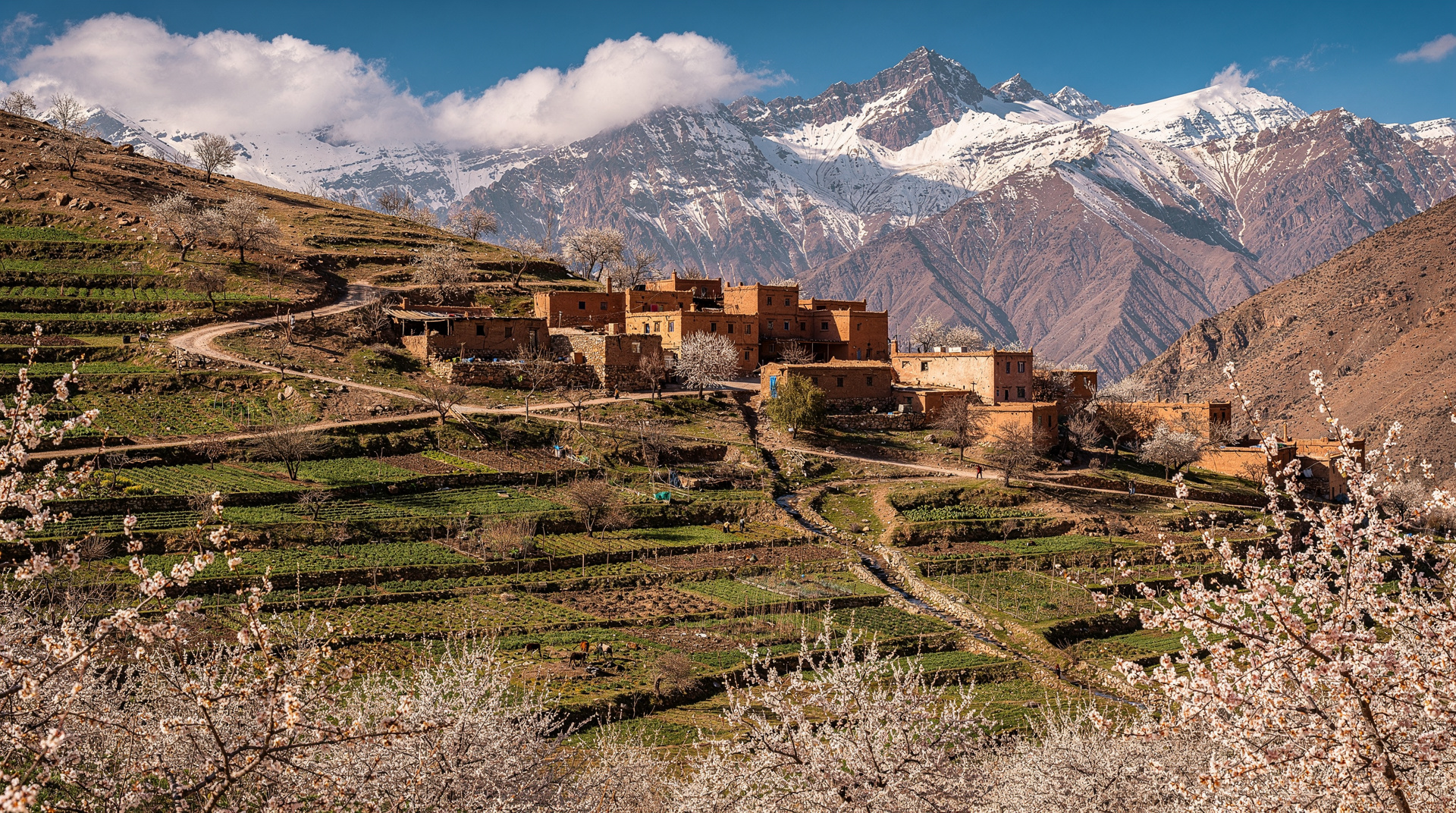
The road climbs immediately south into the Atlas foothills. The Tizi n’Tichka pass at 2260 metres is one of the great mountain roads in North Africa: hairpin bends, panoramic valleys, Berber roadside stalls selling geodes and fossils. Stop as often as you like. There is no group; the schedule is yours.
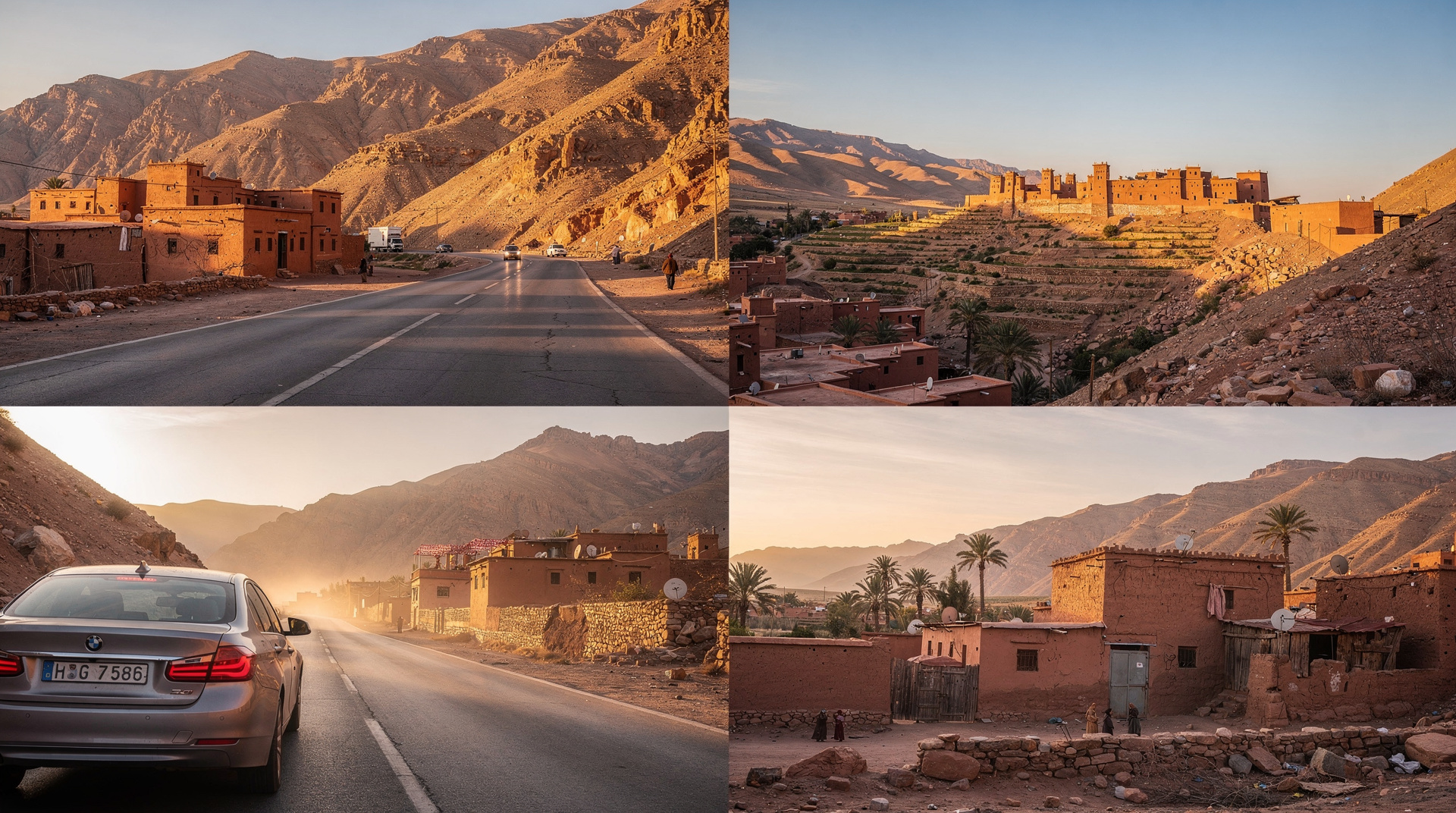
The descent south into the Draa Valley brings a different Morocco: drier, redder, emptier, more ancient-feeling. The light is sharper. The colours are terracotta and khaki, broken by lines of green palm along the rivers.
Midday: Aït Benhaddou
The UNESCO ksar of Aït Benhaddou is a fortified mud-brick citadel that has served as a film location for 50 years — Gladiator, Game of Thrones, Kingdom of Heaven, The Mummy. Cross the river on foot (or by donkey in wet season) and climb to the top of the ksar. A private guide at the site adds genuine depth to what might otherwise be just a famous backdrop. Entry €3; private guide €20–30.
Lunch at the Riad Caravane hotel restaurant on the riverside — the terrace views of the ksar across the river are spectacular, the food (lamb tagine, Moroccan salads, pastilla) is excellent.
Overnight: kasbah accommodation
The finest sleep near Aït Benhaddou is at Ksar Ighnda or Dar Mouna — boutique kasbahs built in traditional earthen architecture, with swimming pools and elevated terraces overlooking the valley. Rates: €200–400 per night.
Budget estimate today: €350–550 per couple including private driver, lunch, entry, accommodation
Day 5: Dades Valley, Todra Gorge, arriving Merzouga
An early start to maximise the extraordinary landscape of the Dades Valley — the “Valley of a Thousand Kasbahs,” where every ridge holds an earthen fortification and every flat area holds a palmery. Your driver knows the stops worth making: the Dades Gorge viewpoints, the rose farms around Kelaa M’Gouna (best in May during the Rose Festival), the earthen ksar of Skoura.
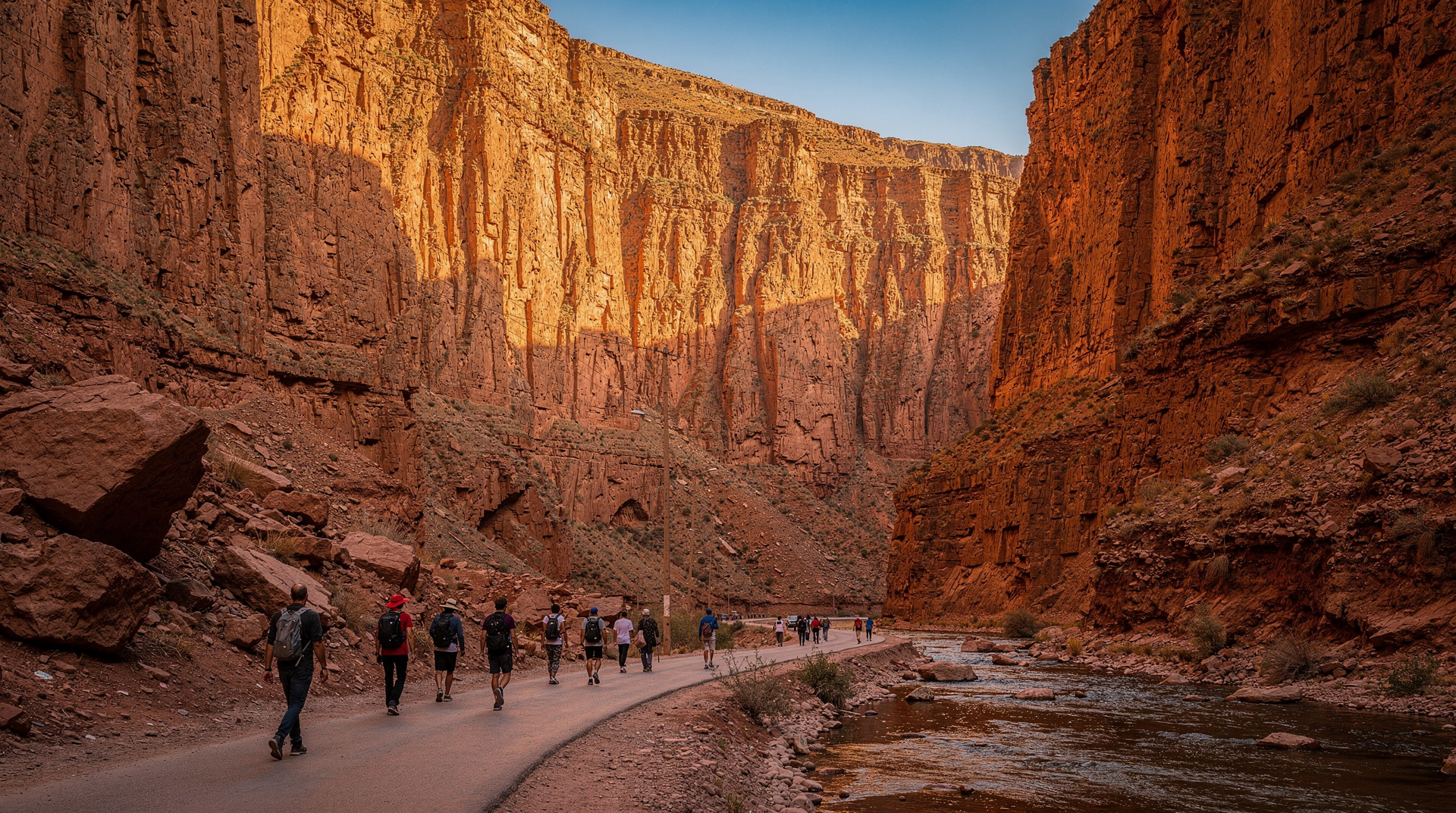
Todra Gorge at 09:00: be there before the coach tours arrive. The gorge walls rise 300 metres above a cold river in a canyon 20 metres wide. Walk the dramatic section (600 metres) in the morning light when the colours in the rock face are at their most saturated.
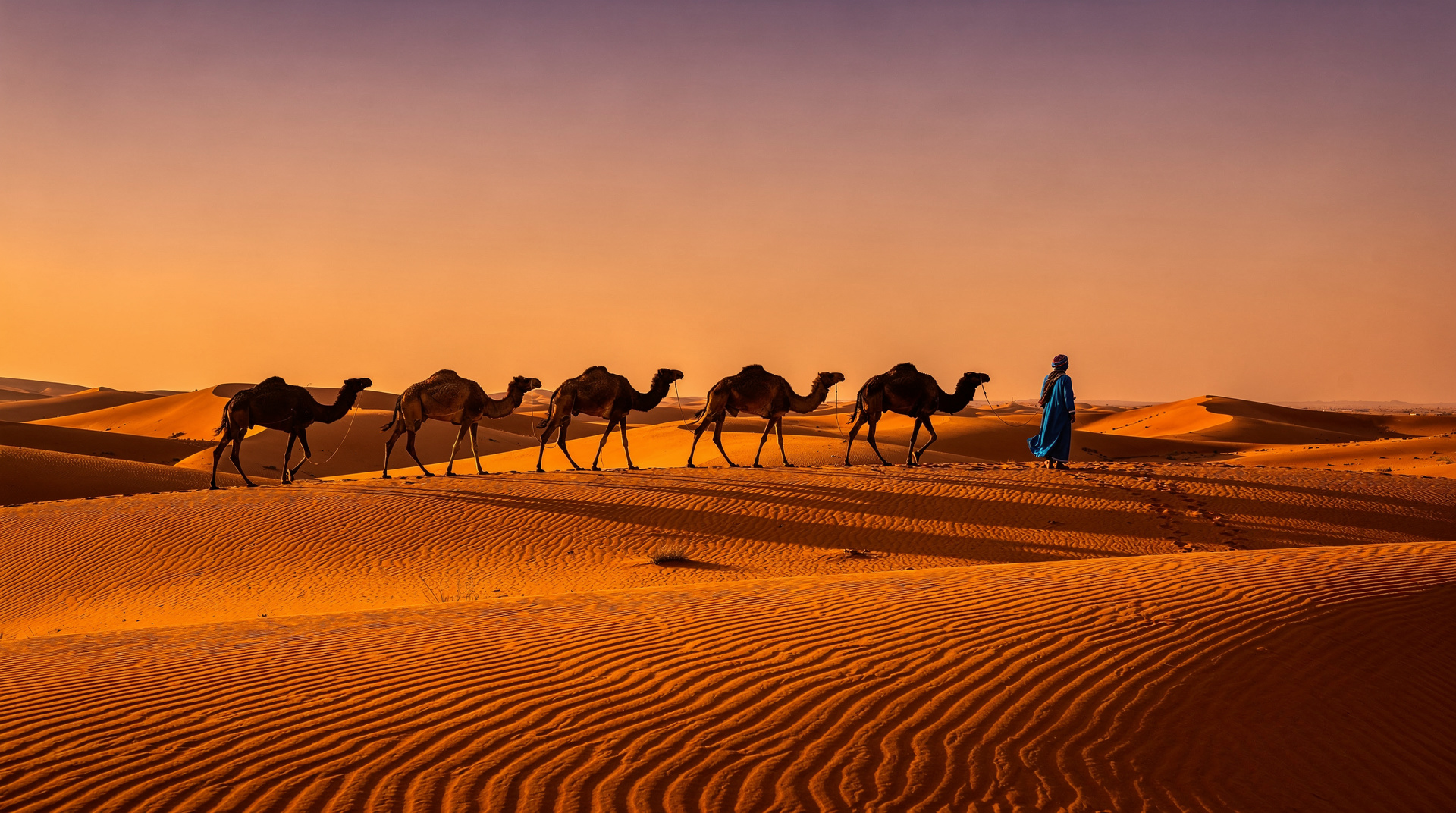
The final approach to Merzouga: the landscape flattens into the stony hammada desert, and then the Erg Chebbi dunes rise from the plain — 150 metres of orange sand extending to the Algerian border. It is one of the most startling geographical transitions you will ever see.
Sunset into the dunes by private camel:
Your luxury camp arranges a camel escort into the dunes at 17:30. A private camel trek (just your party, with a guide) takes 45–60 minutes to reach the camp. Alternatively, your camp can arrange a 4x4 transfer to the dune crest for a less romantic but more comfortable arrival.
The luxury desert camps of Erg Chebbi are extraordinary: private en-suite tents (proper beds, tiled floors, heated shower, electricity from solar panels), a private terrace overlooking the dunes, and — in the premium properties — a private plunge pool filled from a cistern. Luxury camp rates: €300–600 per tent per night, usually including dinner and breakfast.
Book a Merzouga luxury desert camp with camel ride and dinner — verify the camp’s star rating and recent reviews before booking.
Where to stay: Luxury tented camp in the Erg Chebbi (€300–600/tent)
Day 6: Merzouga — dawn dunes and a day of nothing
04:45: the camp wakes you gently. Climb the dune crest in the dark — 25–30 minutes of steep, soft sand — for the Sahara sunrise. The sun rises behind Algeria, the shadow of the dune sweeps west across the desert plain, and the temperature moves from cold to warm in minutes. This is the best thing you will do in Morocco.
Back at camp: breakfast on your private terrace. Mint tea, Berber bread, honey, argan oil, fresh fruit. Then: absolutely nothing scheduled. This is the point of a two-night desert stay — one night catches the experience, two nights lets you relax into it.
Optional afternoon activity: quad biking in the dunes. The large orange dunes around the camp are the best quad-biking terrain in Morocco — steep, empty, scenic. Your camp arranges equipment. Budget €50–80 per person for 2 hours.
Second evening: the camp sets up dinner outside the tent under the open sky — tagine on the fire, Berber musicians, the Milky Way directly overhead without any light pollution. At the right time of year (no moon, clear skies), the density of stars visible from Merzouga is overwhelming in the most literal sense. Bring binoculars; the camp’s telescope, if they have one, is worth an hour after dinner.
Budget estimate today (activities): €100–200 per person beyond accommodation
Day 7: Merzouga → Fes via the Middle Atlas
The drive from Merzouga to Fes is 7–8 hours on a well-paved road through some of Morocco’s finest interior landscape. Your private driver takes the northern route via Midelt and the Middle Atlas — passing through mountain forests of cedar and pine that feel completely alien after the Sahara, inhabited by wild Barbary macaques that sit on the road verge watching traffic.
Ifrane — a small ski town built in the 1930s in a chateau style — is the most unlikely sight in Morocco: Swiss Alpine architecture in the Atlas Mountains, with a famous stone lion in the town centre. Worth a 30-minute coffee stop.
Arrive Fes in the early afternoon. Check into your riad. The finest riads in Fes are extraordinary properties: 18th-century merchant palaces with central courtyards of carved marble, fountain pools, carved cedar ceilings, and gardens of orange trees. Palais Amani, Riad Fes, and Dar Bensouda are the three benchmark properties; all offer suites in the €200–450 range with breakfast, butler service, and in-house dining.
Evening: Dinner in your riad courtyard. Riad Fes serves one of the finest Fassi dinners available — a multi-course procession of cold salads, soup, bastilla (the pigeon and almond pie with sugar and cinnamon — incomprehensible until you taste it, then essential), lamb with preserved lemon and olives, and pastries with Moroccan tea. This is the food that made Moroccan cuisine one of the great world cuisines; tasting it in its city of origin is significant.
Where to stay: Riad Fes (€200–450/night); Palais Amani (€250–450/night)
Day 8: Fes — private full-day tour of the medieval city
A private licensed guide for a full day in Fes el-Bali is the finest single investment of this itinerary. The guide — arranged through your riad, which employs the best in the city — walks with you from Bab Bou Jeloud through 12 centuries of urban history, explaining every façade, every lane junction, every artisanal tradition.
Morning: the tanneries. A private guide means access to the best viewing terrace without sales pressure, and the context for what you are seeing — the pigeon-dung lime vats, the dye vats, the history of the tanners’ guild. The Chouara Tanneries are the oldest still-operating tanneries in the world. Workers still tread hides in stone vats by foot, a process unchanged since the 10th century.
The Fes full-day cultural tour is the standard format — your riad can arrange a private version at a higher price but with complete schedule flexibility.
Afternoon: Bou Inania Medersa, the Qarawiyyin university quarter, the Dar Batha palace museum. Lunch at a traditional Fassi restaurant recommended by your guide (not a tourist restaurant — a genuine Fassi kitchen serving the city’s cuisine to locals and discerning visitors).
Evening: hammam at a luxury spa — Palais Amani’s hammam is among the best in Fes, or your riad will know the equivalent.
Budget estimate today: €200–350 per couple
Day 9: Fes — Volubilis, Meknes, and the Roman world
A private day trip north of Fes to Meknes (45 minutes by your private driver) and Volubilis (additional 45 minutes) is one of the most rewarding extensions from Fes.
Volubilis is the best-preserved Roman city in Morocco — in-situ mosaics of extraordinary quality depicting Bacchus, Hercules, Orpheus, and the seasons, set within the foundations of a prosperous 2nd-century Roman provincial capital. The archaeologist who walks this site for the first time usually needs longer than planned. Allow 2–3 hours with a private guide.
Meknes: Bab Mansour (the most magnificent city gate in Morocco), the Mausoleum of Moulay Ismail (open to non-Muslims — Morocco’s most ambitious 17th-century sultan), and the Heri es-Souani underground granary system built to supply a standing army. Lunch in a Meknes riad restaurant.
Return to Fes for an afternoon shopping expedition with your guide: the Fes medina has the finest craftsmanship in Morocco for carpets, embroidery, leather, and blue pottery. Your guide knows the cooperative artisans who produce genuine Fassi quality, not factory product.
Final dinner in Fes: Le Loft or Nur restaurant — the finest contemporary Moroccan restaurants in the city, interpreting traditional ingredients through a modern lens.
Budget estimate today: €200–350 per couple including driver, guide, lunch, dinner
Day 10: Fes departure
Fes has an international airport (FEZ) with connections to Paris, Amsterdam, Brussels, and several other European cities. If your routing requires Casablanca Mohammed V Airport, your private driver takes the 3.5-hour journey (or you can fly domestically Fes-Casablanca in 45 minutes for €40–80).
A final morning in Fes before check-out: the medina before the crowds, a last mint tea in the Bou Jeloud square, one final walk through the Attarine Spice Market.
Total trip cost estimate
| Item | Per person (sharing) |
|---|---|
| Accommodation (10 nights, luxury) | €2000–4000 |
| Private driver (8 days) | €600–900 |
| Private guides (4 days) | €400–600 |
| Dining (mix of riad + restaurants) | €500–800 |
| Activities, hammam, entry fees | €200–400 |
| Total (flights excluded) | €3700–6700 |
What to pack for luxury Morocco
- One smart evening outfit per person (La Mamounia and fine-dining riads have dress codes)
- Light layers for desert nights (even luxury camps are cold at 2am in autumn)
- Good walking shoes for medina cobblestones
- Sunscreen and hat for desert days
- Cash in dirham for souks and tips (ATMs are reliable in Marrakech and Fes)
Best time of year
October–November is the finest month combination: Marrakech is warm but not brutal (25–30°C), the Sahara is comfortable at night, and Fes in autumn light is at its most beautiful. March–April is equally good. May is excellent for the Rose Festival in the Dades Valley.
Avoid July–August: temperatures exceed 40°C in Marrakech and Fes, and the luxury properties are at peak pricing and minimum comfort.
Common mistakes at the luxury end
Booking luxury through travel agencies without checking the hotels directly. La Mamounia and Royal Mansour have their own booking systems and sometimes offer better rates than travel agents for flexible bookings.
Under-tipping. Tipping culture in Morocco is important at every level, but at the luxury end it is expected. Private drivers: €20–30/day. Private guides: €30–50/day. Riad staff: €5–10/day. Hammam attendants: €5–10.
Not booking far enough ahead. La Mamounia sells out months in advance in October and March. Luxury desert camps during peak season (October–November, March–April) book out 4–8 weeks ahead.
How to extend or shorten
Cut to 7 days: Remove Merzouga entirely and replace with a Zagora overnight — closer to Marrakech (3h30), less dramatic dunes, but a genuine Sahara experience. This brings the drive south and the drive north closer together and removes one full travel day.
Extend to 14 days: Add Essaouira (2 nights at Heure Bleue Palais or La Sultana Essaouira) between Marrakech and the desert drive, and add Chefchaouen (2 nights at Casa Hassan) after Fes before flying home from Tangier or Fes.
For comparison, explore the private driver itinerary for a more moderate comfort level, and the desert-focused itinerary for more Sahara time. For a honeymoon-specific version of this same standard of comfort, see the honeymoon Morocco itinerary, and for accommodation research across every stop, our best riads in Marrakech, best riads in Fes, and luxury spas in Marrakech guides go deeper than this itinerary has room for.
Where the money actually goes on a luxury Morocco trip
The single biggest lever on total cost is accommodation grade, not activities. A junior suite at La Mamounia versus a comparable room at a well-run 5-star riad like Palais Amani can be a €400–600/night difference for a broadly similar level of comfort — the Mamounia premium buys history and brand, not necessarily a better night’s sleep. The second biggest lever is the private driver arrangement: booking day-by-day through your hotel concierge costs more than pre-booking the full circuit with a single reputable operator before you arrive. For a full breakdown of where luxury and mid-range spending diverge, see our luxury versus budget Morocco guide.
Private guide versus private driver: what each one actually buys you
These are two different services and luxury travellers sometimes conflate them. A private driver gets you between cities in comfort, at your own pace, with flexibility to stop. A private guide unlocks the content of a city — the history, the context, the access to viewing terraces and workshop backrooms that a driver cannot provide. This itinerary uses both: a driver for the road days (4, 5, 7, 9) and a licensed guide for the content-dense city days (2, 8). Skipping the guide days to save money is the most common regret past luxury travellers report, more than any accommodation downgrade.
Going deeper on each stop
Each leg of this route has a dedicated guide if you want more detail before you commit. For the desert leg, luxury desert camps compares the tented properties, and Merzouga versus Agafay helps if you are weighing a shorter desert stay. Stargazers should read stargazing in the Sahara before choosing a camp. If the Marrakech hotels are the centrepiece of your trip, the La Mamounia review and the Royal Mansour review cover both in more depth, and honeymoon hotels in Morocco widens the shortlist.
For the destinations themselves, the Marrakech, Aït Benhaddou, Merzouga and Fes pages explain what each place offers beyond the highlights here. Choosing a private driver rather than renting a car is a real decision, and the private tour versus self-drive guide sets out the trade-offs honestly. Finally, if you are unsure whether ten days is the right length, 10 versus 14 days in Morocco and the 14-day itinerary show what changes with more time.
Frequently asked questions about Luxury Morocco itinerary
Is La Mamounia worth booking over other 5-star options in Marrakech?
For history and brand prestige, yes — few hotels anywhere carry the same weight. For pure comfort per euro, Royal Mansour’s private riads or a top boutique property like Palais Amani (in Fes) can match or exceed the experience at a lower price. Book La Mamounia specifically if the history and name matter to you; otherwise redirect that budget toward an extra guided day or a longer desert stay.
Can this itinerary be done without a private driver, using trains instead?
Partially. Marrakech, Fes, Meknes, and Casablanca are all rail-connected, but Aït Benhaddou and Merzouga are not, so the Sahara leg requires a private vehicle regardless. A hybrid version — train for the Marrakech-Fes-Casablanca legs, private driver only for the desert loop — is possible and typically saves €200–400 versus a driver for the entire 10 days.