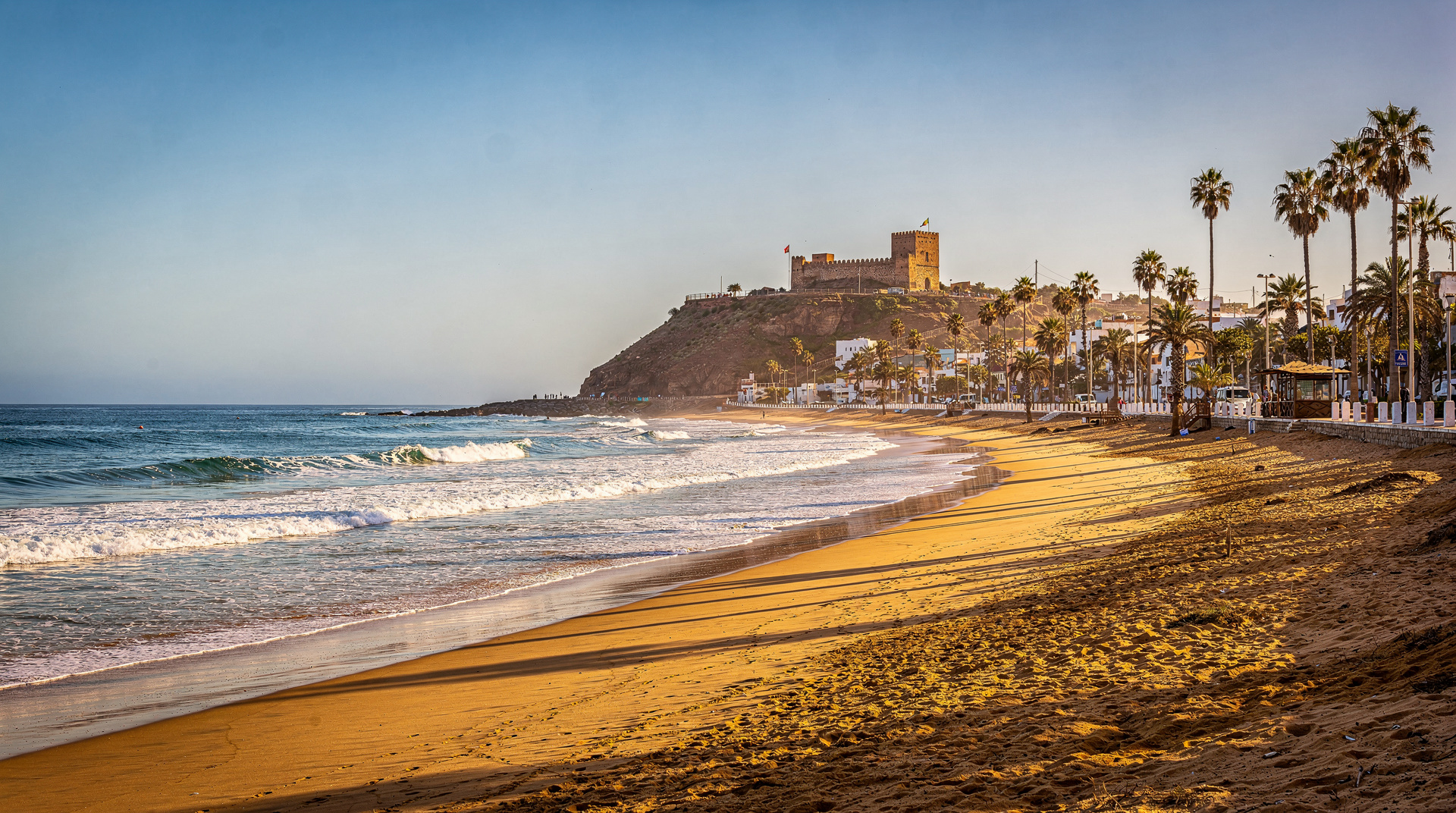
Taghazout day trip from Agadir: surf village 20 minutes away
Is Taghazout worth a day trip from Agadir?
Yes for non-surfers wanting a beach with more atmosphere than Agadir's resort strand. Taghazout is 20 minutes north and has a genuine surf village character with good food and dramatic coastal scenery. Surfers should base themselves here for at least 2 nights to access consistent morning sessions.
When 20 minutes feels like a different world
| Where | Taghazout village, 20 minutes north of Agadir on the coastal road |
| Cost | Grand taxi around 15-20 MAD/seat; lunch around 90-200 MAD; surf lesson around 250-400 MAD |
| Time needed | A half-day comfortably; a full day if combining beach, food and a walk to Panoramas |
| Getting there | Grand taxi from Agadir station (20 min), rental car/scooter, or local bus 12 |
| Best time | October-April for the best surf conditions; May-September for calmer beach weather |
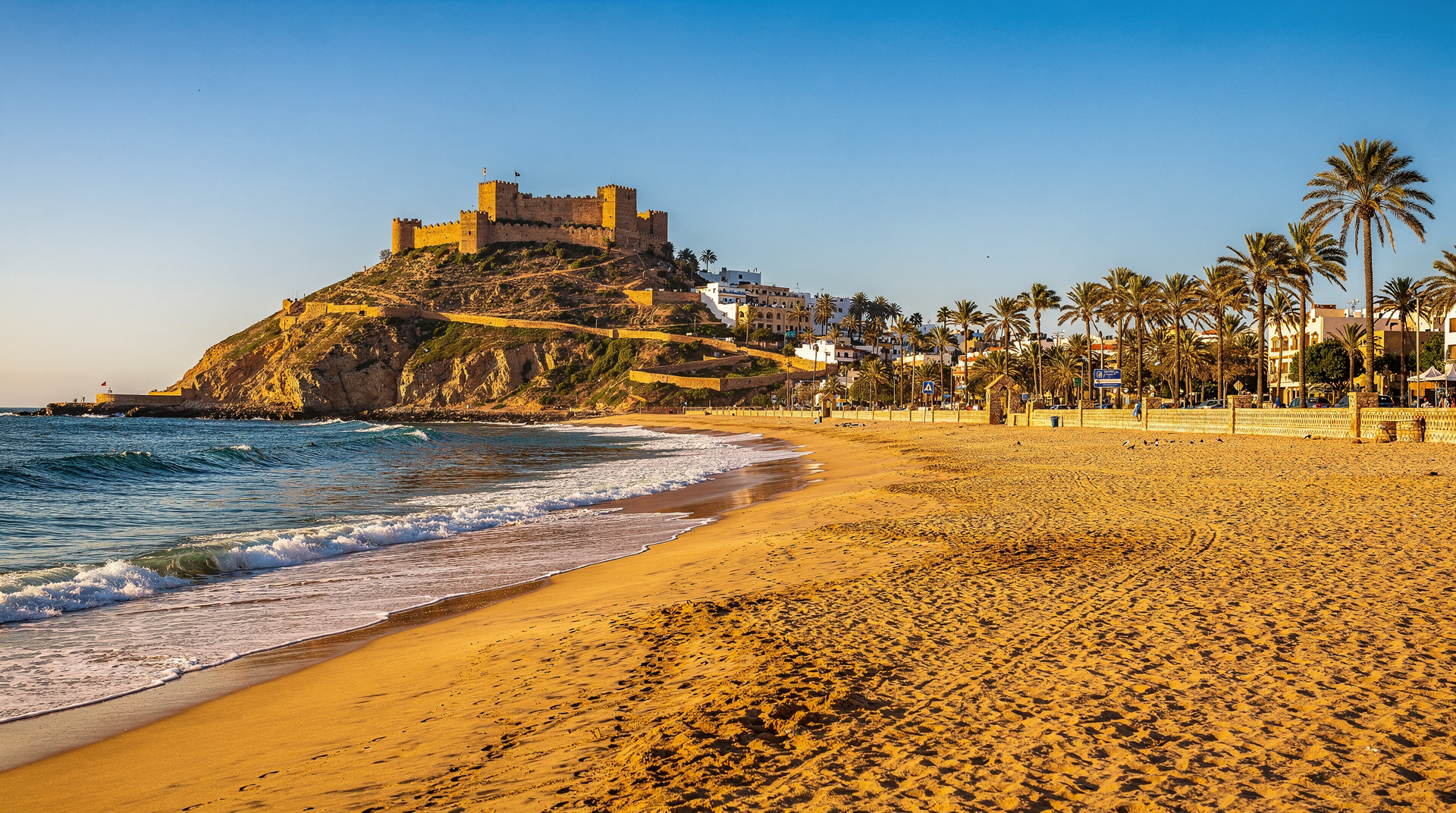
Agadir’s beach is genuinely impressive — 9 kilometres of clean sand, calm surf, and reliable sunshine for 300 days a year. It is also very much a resort beach, with the infrastructure, pricing, and atmosphere that comes with being Morocco’s largest purpose-built tourist destination.
Twenty minutes north on the coastal road, Taghazout is something entirely different.
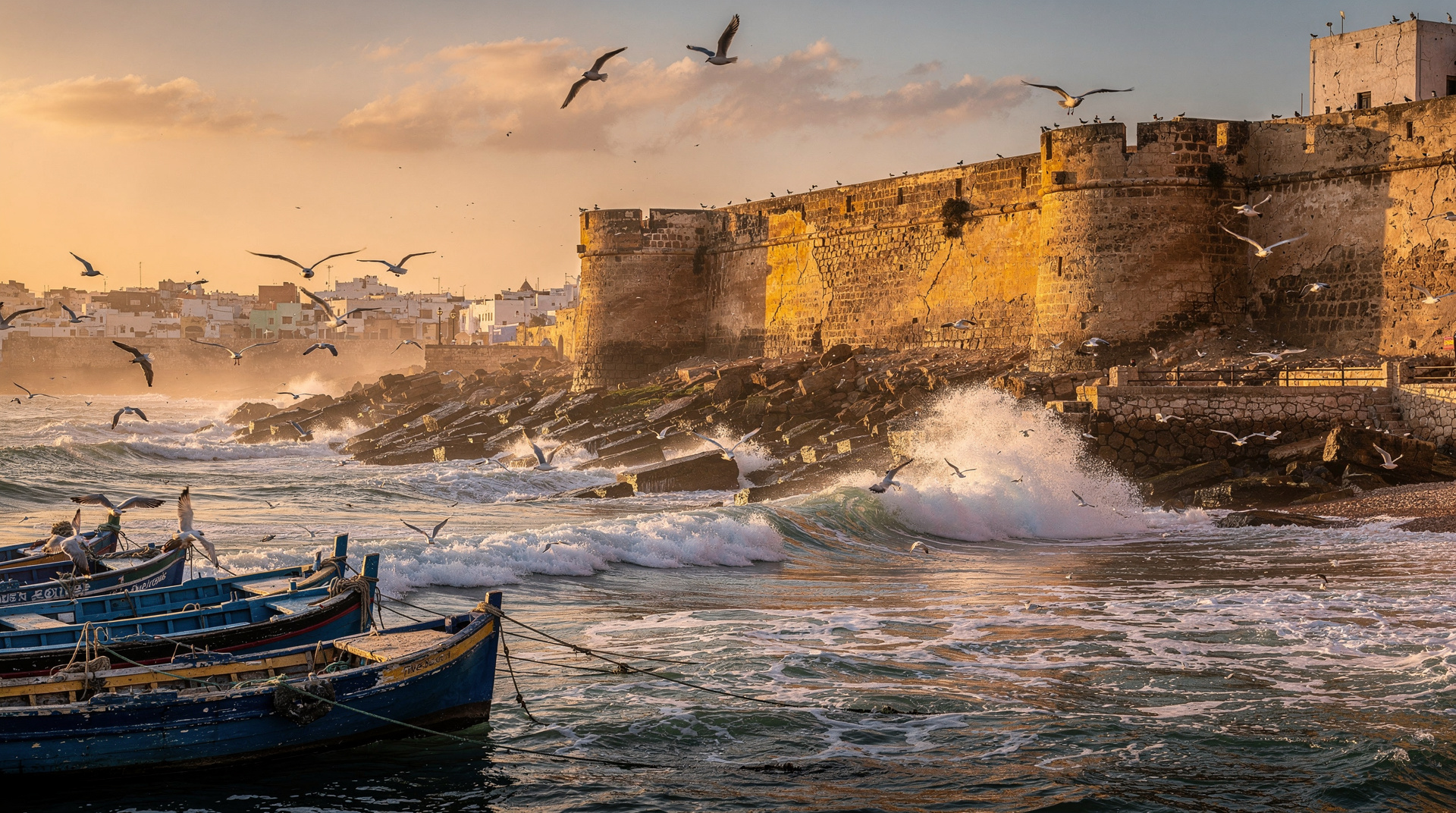
What was a small Amazigh fishing village in the 1970s — a secret passed between European hippies and early surfers — is now one of Morocco’s most celebrated surf destinations. The core of the village retains a stripped-back, salt-bleached character: narrow lanes, painted walls, café terraces looking directly at the Atlantic, and the constant soundtrack of waves hitting the point break below. Luxury surf camps and boutique riads have arrived, and the food scene is good. But the central draw — the quality of the surf breaks that ring the headland — remains what it always was.
As a day trip from Agadir, Taghazout is one of the easiest calls you will make. The distance is trivial, the contrast with Agadir is significant, and the beaches north of the village — Panoramas, Hash Point, Anchor Point — are among the most dramatic on the Atlantic coast.
Why Taghazout matters
Taghazout and the cluster of breaks around Anchor Point have been on the serious surf travel radar since the early 1980s, when Anchor Point was first surfed regularly by European and Australian travellers working their way down the Atlantic coast. The point break here — a long, peeling right-hander that works best with a northwest swell — is considered one of the finest waves in Africa. Anchor Point is not a beginner wave. Panoramas and Banana Beach, further up the coast, offer more accessible conditions for learning surfers.
Beyond surfing, Taghazout has developed a food scene driven by the international community of surf tourists and long-stay visitors. Smoothie bowls, fresh fish, and argan-oil-dressed salads sit alongside traditional Moroccan tagines at the village’s café-restaurants. The combination of quality fresh food, dramatic scenery, and the relaxed pace of a surf village makes Taghazout an attractive destination even for people who have never picked up a surfboard.
How to get there from Agadir
By grand taxi: The most convenient option. Grand taxis run regularly from the Agadir grand taxi station (near Souk el-Had) to Taghazout — 20 minutes, approximately 15–20 MAD per seat. Return taxis are found along the main road through Taghazout. This is how most budget travellers do it.
By car or scooter: The coastal road north from Agadir (R301) is straightforward and scenic. Parking in Taghazout is limited but manageable outside peak season. Scooter rental in Agadir is an excellent option for this short trip — it allows you to stop at the various beaches and viewpoints along the coast.
By local bus: Bus 12 from Agadir city centre runs to Taghazout and neighbouring villages. Cheap (5–10 MAD) but slow and crowded in peak season.
Surf lesson and day trip from Agadir: The Taghazout surf lesson for beginners is a practical option if your main motivation for the trip is to try surfing. It includes instruction at a beginner-friendly break, equipment rental, and typically transport from Agadir. A second option is the surf lesson on Taghazout beach, which is set up for travellers starting from Agadir.
Suggested day itinerary
Taghazout requires almost no planning for a day trip — it is small enough to explore entirely on foot, and the main activities (beach, surf, food, coastal walking) impose their own rhythm.
10:00am — Arrive in Taghazout Start at the central village — the main street, the café terraces facing the ocean. The vibe here is distinctly different from Agadir: slower, younger, more international, considerably more tattooed. Settle in for a coffee and observe.
10:30am–12:30pm — Explore the breaks and beaches Walk north along the coast from the village. The path from Taghazout to Anchor Point headland takes about 25 minutes and provides the best views of the famous point break — even non-surfers find watching skilled surfers on a proper long ride satisfying. The cliff path above the break gives a higher vantage point.
Panoramas beach, accessible by a short path from the coastal road, is one of the most beautiful beaches on this section of coast — wide, sandy, with smaller waves than Anchor Point and a longer beach walk in either direction.
12:30–2:00pm — Lunch Taghazout’s food scene is the most developed in the Agadir day-trip orbit. See the eating section below.
2:00–4:00pm — Beach afternoon After lunch, Banana Beach (about 2km north of Taghazout) is the area’s most family-friendly beach — calmer water, longer flat sand, and reasonable beach café facilities. Alternatively, Hash Point beach directly below the village is closer and lively in the afternoon surf session.
4:00–5:00pm — Return to Agadir Grand taxis run back to Agadir throughout the day. In peak season, the road gets congested in the late afternoon — leave by 4:30pm to avoid the worst of it.
Top highlights
The point breaks
Even if you do not surf, the geography of Taghazout — a headland with multiple point breaks generating long, consistent waves — is impressive to observe. The best viewing position for Anchor Point is from the cliff path above the break. Sit here for an hour and watch proper surfers (and beginners tumbling) and the appeal of the location becomes obvious.
The village lanes
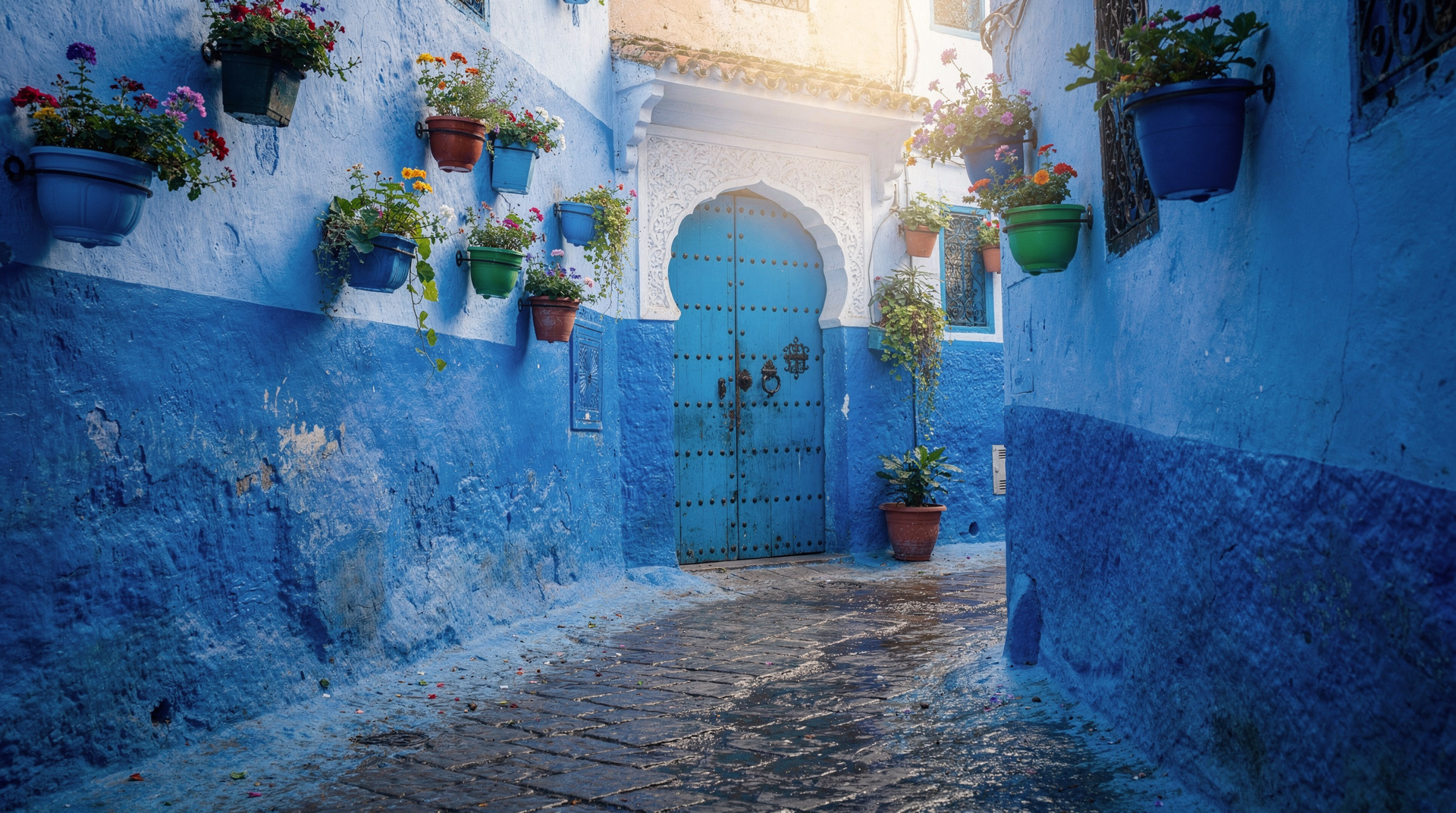
The original fishing village character survives in Taghazout’s central lanes — painted doors, cats on every surface, the smell of the Atlantic constant. The surf culture overlay (board racks, wax shops, smoothie bars) adds a specific energy that is recognisable from any surf town on any coast. What makes Taghazout distinctive is the Moroccan urban fabric underneath.
Banana Beach
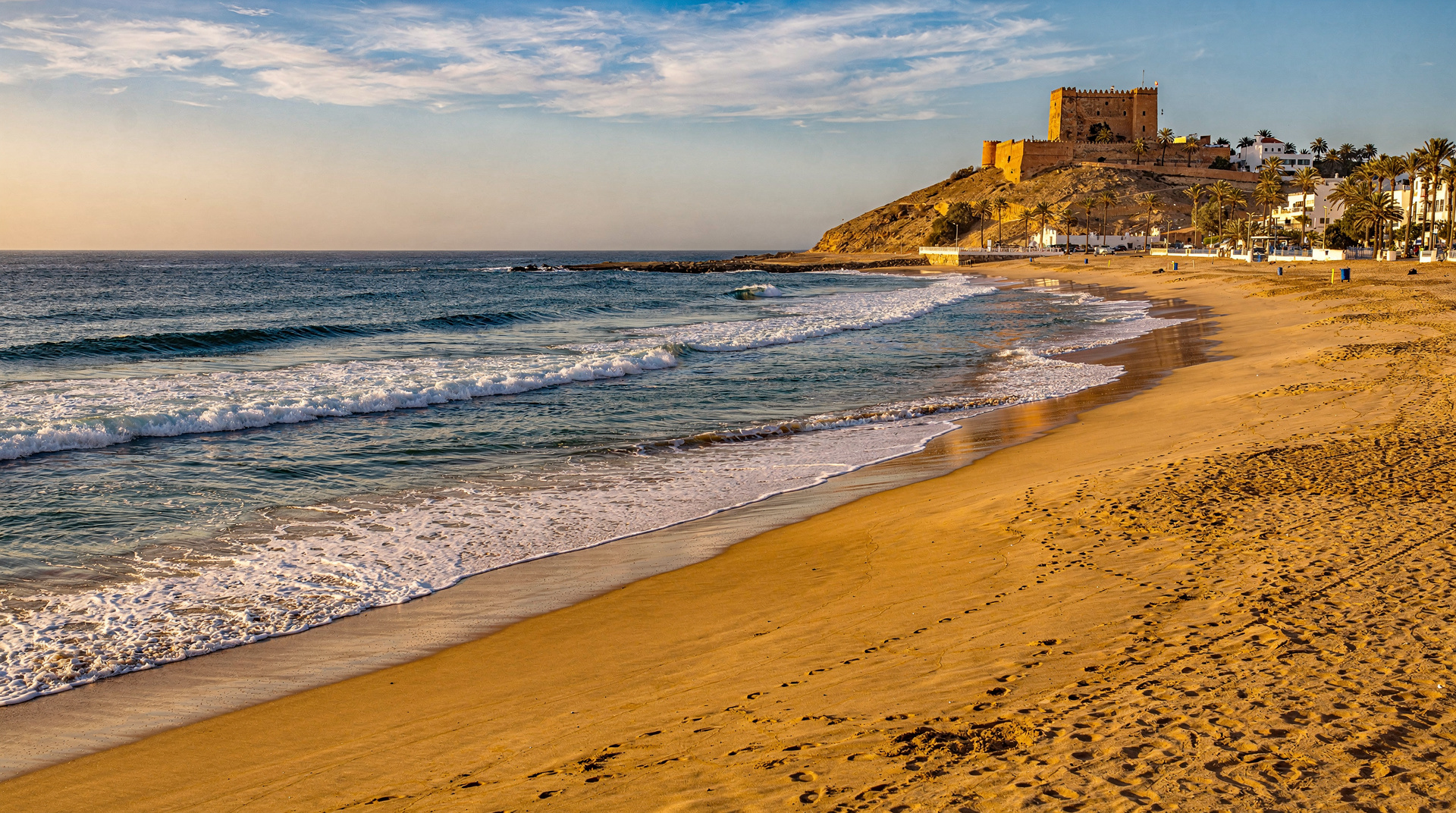
The long arc of beach north of the village is the most photogenic swimming beach in the area. The surf here is much calmer than at the point breaks — manageable for families and non-surfers. The sand is clean and the beach stretches far enough that it never feels crowded outside peak summer.
Panoramas viewpoint
On the coastal road above Taghazout, a turn-off leads to a clifftop viewpoint (locally called Panoramas) that provides a sweeping view north along the Atlantic coast. The combination of blue water, white surf, and the green hills above Tamraght village in the distance is one of the area’s best photographs.
The café terraces at sunset
The café and restaurant terraces facing west over the Atlantic catch the sunset light directly. In the late afternoon, this is where surfers returning from sessions gather, where long-stay visitors have their sundowner, and where the relaxed Taghazout atmosphere is at its most appealing.
Where to eat
Taghazout has the best food options in the Agadir day-trip radius. The surf and expatriate community has demanded quality, and the competition between cafés has driven standards up considerably.
Café Krimo (central village terrace): The classic Taghazout breakfast spot — generous smoothie bowls, fresh juice, eggs, and pastries on a terrace with an ocean view. Open from 7:30am. Breakfast for two: 120–180 MAD.
Restaurant Ocean Vagabond (near the beach): A surf-camp-affiliated café with consistent quality — good salads, fresh fish of the day, and one of the better tagines in the area. Popular at lunch. Main courses: 90–150 MAD.
Panorama Café (above the break): Located above Anchor Point with views over the surf, this small café is ideal for a mid-morning coffee break on the coastal walk. Simple menu — sandwiches, pastries, coffee. No full meals.
Dar Nour restaurant (Taghazout central): A more formal dinner option in one of the established surf riads — good Moroccan cuisine in a riad courtyard. Better for a leisurely dinner if you are staying the night than for a rushed day-trip lunch. Fixed menu around 150–200 MAD.
Street food near the main square: Fresh sfenj, grilled brochettes, and msemen from market stalls in the central village area are excellent and cheap (30–60 MAD). The fruit smoothie stands near the beach entrance are worth the 25–35 MAD investment.
What to skip
Anchor Point if you are not a strong surfer: Anchor Point is an experienced-surfer wave — long sections, fast sections, and a rocky bottom in shallow water. Beginners who paddle out there (and some do) create both a danger to themselves and an irritant to the experienced surfers who rely on the lineup etiquette working properly. The beginner surf lesson options at Panoramas and Banana Beach are specifically chosen for more forgiving conditions.
The tourist-priced souvenir shops on the main street: The surfwear and souvenir shops on Taghazout’s main drag sell items at Marrakech medina prices without the medina ambience. If you want quality surfwear, there are genuine surf shops selling reputable brands at reasonable prices.
Trying to do surf lessons and proper exploration in the same day: A beginner surf lesson takes 2.5–3 hours including briefing, beach practice, and time in the water. If you want to explore the coastal path, beaches, and village properly, surfing takes up most of your active time. Choose one focus per day.
Is Taghazout worth overnighting instead? (Honest answer: yes for surfers)
For non-surfers on a beach holiday in Agadir, Taghazout as a day trip is the correct calibration. Twenty minutes each way, a beach and village afternoon, return for dinner in Agadir — perfectly balanced.
For surfers — the honest answer is that Taghazout as a day trip is a waste. The best surf sessions happen in the early morning (from 6:30am) before the wind picks up and before the crowd arrives. Arriving by grand taxi from Agadir at 10am means you have missed the optimal two hours. The afternoon session is significantly worse at most breaks.
The surf camps and guesthouses in Taghazout exist for this reason — they position you at the breaks with morning access. A two-night stay in Taghazout gives you two proper morning sessions, which is the experience that justifies the Atlantic surf travel in the first place. See surf camp options in Taghazout village or through the surf lesson booking platforms.
Combined trips
Taghazout + Paradise Valley (same day): A perfectly calibrated combination — Paradise Valley in the morning (canyon and pools, 1 hour from Agadir), drive to Taghazout for beach afternoon and dinner. Return to Agadir by 7pm. Requires a rental car or a private taxi for the day. If you would rather not drive, there is also a Paradise Valley day trip with lunch from Agadir that you can pair with an afternoon in Taghazout.
Taghazout + Tamraght: The small village of Tamraght, 3km north of Taghazout, has a similar surf character but is quieter and feels less developed. The two villages are walkable along the coastal path (45 minutes). Worth including in a longer coastal walk if you have time.
Taghazout as part of a coastal drive: If you have a rental car, the coastal road north from Agadir through Taghazout continues to Essaouira (2.5 hours from Agadir). Taghazout makes a natural mid-morning stop on this drive, with Essaouira as the destination for lunch and afternoon exploration — see the Essaouira day trip from Marrakech guide for what a full day there looks like.
Taghazout vs other Agadir-area day trips
| Distance from Agadir | Best for | Rushed as a day trip? | |
|---|---|---|---|
| Taghazout | 20 minutes | Surf, beach village atmosphere | No |
| Paradise Valley | ~1 hour | Palm-lined pools, swimming | No |
| Tafraoute | 4 hours | Anti-Atlas landscape, almond blossom | Yes — overnight recommended |
| Essaouira | 2.5 hours | Medina, wind, port atmosphere | Doable but tight |
If you want to see the wider picture of what surrounds Agadir, the day trips from Agadir guide covers all of these options together with realistic time budgets for each.
Practical information
Best time to visit: October to April for the best surf conditions (northwest swells, consistent waves). May to September is more reliable for non-surfers wanting calm beach conditions — the swells reduce but the weather is excellent and Banana Beach is at its most inviting. Summer months (July–August) see the highest crowds.
Dress code: Taghazout has a more relaxed dress code than inland Moroccan cities due to the surf and beach culture. Swimwear is fine on the beach; covering up when walking through the village is respectful but not strictly enforced. The village is still a Moroccan community — be aware of this particularly away from the beach areas.
Safety in the water: The Atlantic at Taghazout has real surf — unpredictable waves, rocky sections, and occasional strong currents at the point breaks. Swim at the designated beach areas (Banana Beach, the beach area south of the village) rather than near the surf breaks. If you are not a swimmer, respect the conditions.
What to bring: Swimwear, sun protection (the Atlantic glare is intense), cash (ATMs are limited in Taghazout; there is one in the village but it runs out of cash in peak season), a light layer for the sea breeze in the evening.
Frequently asked questions about Taghazout day trip from Agadir
How do I get from Agadir to Taghazout cheaply?
Grand taxi from the Agadir station, 15–20 MAD per seat. The journey is 20 minutes. This is how locals and budget travellers do it. Return taxis are available at the main road through the village throughout the day.
Is Taghazout good for beginner surfers?
Yes, specifically at Panoramas and Banana Beach. The surf lesson tour mentioned above is the best way to start — it includes instruction, equipment, and takes you to the appropriate break for your level. Avoid Anchor Point as a beginner.
Can families with young children visit Taghazout?
Yes. The village is manageable for families, and Banana Beach (2km north) is the most child-friendly swimming beach in the area — calmer water, flat sand, and enough space. The village cafés are relaxed and welcoming.
What is the difference between Taghazout and Agadir?
Agadir is a large, modern resort city with a hotel strip, wide boulevards, and a long resort beach. Taghazout is a small surf village with narrow lanes, casual cafés, and breaks famous in international surf culture. The atmosphere is radically different despite the 20-minute distance. Most visitors to the area benefit from spending time at both.
Are there ATMs in Taghazout?
There is one ATM in the village but it runs empty during busy periods. Bring enough cash from Agadir for food, taxis, and any activity costs.
Should I stay overnight in Taghazout instead of a day trip?
For non-surfers, a day trip is well calibrated — you get the beach, food, and village atmosphere without committing to the surf-camp accommodation model. For surfers, an overnight stay of at least 2 nights is strongly recommended to access morning sessions; see the surfing Taghazout guide for what that experience looks like.