Moroccan olive oil: regions, varieties and buying guide
Is Moroccan olive oil worth buying and where is the best from?
Morocco is the world's 5th largest olive oil producer and the quality from the Meknes and Fes-Boulemane regions is genuinely exceptional. The Meknes plains (the Saiss plateau) produce the most praised Moroccan olive oil. Buy from cooperatives or established shops — not tourist souvenir stalls. Price for quality extra virgin: 40-80 MAD per 250ml at source.
Morocco’s olive oil: underrated and worth knowing
Morocco produces around 140,000 tonnes of olive oil annually, making it one of the world’s significant olive oil producers — and one of the least-known outside the country. While Spanish, Italian, and Greek olive oils dominate international markets, Moroccan olive oil stays largely within Morocco and North Africa, which means domestic prices reflect production costs rather than export premiums.
For visitors, this creates a genuine buying opportunity. Quality extra virgin olive oil that would cost 15-20 EUR per 250ml in a European specialty shop costs 40-80 MAD (4-8 EUR) at the source in the Meknes region. The question is knowing what to look for, where to buy, and how to avoid the commodity-grade oil sold in tourist-facing formats.
| At a glance | |
|---|---|
| Where | Meknes-Saiss plateau (best), Fes-Boulemane, Souss Valley near Agadir |
| Cost | Around 40-80 MAD per 250ml at cooperatives, more in souks/supermarkets |
| Harvest season | October-January, peak November-December |
| Best time to buy fresh | November-December, at a Meknes cooperative |
| Getting there | Self-drive or grand taxi from Meknes/Fes; roadside cooperatives signposted toward Ain Taoujdate |
Morocco’s olive regions
The Meknes-Saiss olive basin
The Saiss plateau around Meknes is Morocco’s premium olive country — a high plain at 550-600m altitude with rich clay-limestone soil, cool nights, and the right continental climate for olive cultivation. The Picholine marocaine variety, which dominates Moroccan production, produces its best oil here.
The Meknes advantage: The altitude and climate create olives with higher polyphenol content (the compounds that give olive oil its complexity, bitterness, and health properties) than lower-altitude Moroccan production. The Meknes region has also attracted significant investment in modern extraction facilities since the 2000s, which has improved oil quality dramatically.
Key producers: The Celliers de Meknes (best known for wine but also producing olive oil), Savola (large commercial producer), and several smaller cooperative operations in the Meknes province produce the region’s best oils. The cooperative model is the most visitor-accessible.
The Fes-Boulemane region
Adjacent to the Meknes basin, the Fes area and the Boulemane mountains produce olive oil with a slightly more robust character — higher elevation, rockier terrain, and less water creates more concentrated flavour in the olive. Smaller-scale production, less industrial, harder to find outside the region.
The Marrakech-Safi plain (Zemmour)
The Zemmour olive country lies between Khénifra and the Meknes-Marrakech road — a transitional area between the Middle Atlas foothills and the plains. Zemmour olive oil is produced by smaller cooperatives and sold locally; it has a lighter, less bitter profile than Meknes oil.
The Menara connection: The historic Menara Gardens in Marrakech have a substantial olive grove that has been productive for centuries (the Almohad dynasty planted olives here in the 12th century). While the Menara grove is no longer the significant commercial production it once was, “Menara oil” as a category refers to Marrakech-area olive production — typically lighter and less complex than Meknes.
The Souss Valley (around Agadir)
The Souss region produces significant quantities of olive oil from the Picholine marocaine variety, as well as newer introductions including Arbequina (a Spanish variety planted as part of Morocco’s Green Morocco Plan). The Souss climate is drier and hotter than Meknes — oils tend to be less bitter and more mild. Good everyday oil; less prestigious than Meknes for quality buyers.
The olive harvest season
Morocco’s olive harvest runs from October through January, peaking in November-December. The exact timing varies by elevation and by the year’s weather — a warm autumn can push the harvest later.
Early harvest oil (October): The most prized. Olives harvested before full ripeness produce oil with higher polyphenol content, greener colour, more bitter and peppery character, and shorter shelf life. This is the equivalent of “extra virgin” at its most intense.
Mid-harvest (November-December): The main harvest. Good quality, more balanced between fruit and bitterness. This is what most Moroccan cooperative shops sell as their standard extra virgin.
Late harvest (January): Olives at full ripeness produce oil with a more golden colour, milder flavour, and less bitterness. Larger volume, lower quality.
Visiting during harvest: The Meknes region during November-December is one of the most atmospheric times to visit — olive processing facilities (maasra) are operating, the smell of freshly pressed oil is present, and cooperative shops have the season’s new oil available. See the Meknes destination guide for harvest season logistics.
Types of Moroccan olive oil
Extra virgin (vierge extra)
The first cold press, with free acidity below 0.8%. At its best in Morocco, this is comparable to premium Spanish or Italian EVOO — complex, peppery, with green or golden-green colour and an aroma of fresh olives, cut grass, or green tomato.
What to look for: Greenish colour (early harvest) or golden (mid-harvest). Peppery bite at the back of the throat (indicates polyphenols). Fruity aroma. The “extra virgin” label in Morocco is regulated but less strictly than in the EU — buy from cooperatives with certification rather than souvenir shop bottles.
Virgin (vierge)
Second press or higher acidity. Lighter flavour, less complexity, typically used for cooking rather than finishing. Most of what Moroccan households use for everyday cooking is virgin grade.
Lampante (refined oil)
Industrial grade, used for commercial food production. Not sold directly to consumers as-is but blended into lower-quality “olive oil” products. Not relevant for visitor purchases.
The Picholine marocaine variety
Morocco’s native olive variety — the Picholine marocaine — is the most planted variety in Morocco and the foundation of the country’s olive oil tradition. It’s a dual-purpose variety: used both for table olives (eating) and oil production.
The flavour profile: Medium intensity, with notes of green apple, fresh herbs, and a mild pepper finish. Less bitter than Spanish Picual, less fruity than Italian Frantoio. Balanced and versatile — works well for both cooking and finishing.
The newer plantings: Morocco’s Green Morocco Plan (introduced 2008) brought Spanish varieties — Arbequina, Picholine du Languedoc — to new plantings in the Souss and coastal regions. These produce milder, softer oils targeted at export markets. For the traditional Moroccan olive character, stick with Picholine marocaine-labelled oils from Meknes.
How to taste olive oil
A quick tasting method that works even without formal equipment:
Step 1: Pour a small amount (about 15ml) into a cup or small glass. Warm it slightly by cupping the glass in your hand for 30 seconds — warmth releases the aromatic compounds.
Step 2: Smell. Bring the glass close and inhale. Good EVOO should smell of fresh olives, cut grass, green herbs, or ripe fruit. Any smell of rancidity (like old nuts or crayons), mustiness, or vinegar indicates a flawed oil.
Step 3: Taste. Take a small sip and draw air across it (like a wine tasting). You should detect: initial fruitiness, then some bitterness mid-palate, then a peppery sensation at the back of the throat.
The pepper burn: The peppery sensation at the back of the throat (you may cough slightly) is caused by oleocanthal, a polyphenol with significant anti-inflammatory properties. More pepper burn = higher quality early-harvest oil. No pepper burn = mild, late-harvest, or refined oil.
Where to buy Moroccan olive oil
At the source: Meknes cooperatives
The Meknes region has several olive oil cooperatives that sell directly to visitors. Prices are fair, quality is verified, and the buying experience is genuinely interesting — you can sometimes watch the pressing process (maasra) during harvest season.
What to ask for: “Huile d’olive vierge extra de la récolte récente” — extra virgin olive oil from the recent harvest. Cooperatives date their production on the label.
Price guide: 40-70 MAD per 250ml; 150-250 MAD per litre for quality EVOO at a cooperative.
In the souks of Fes and Marrakech
Established olive oil merchants in the medina spice souks carry good quality oil in unlabelled containers (sold by weight or volume) and in sealed bottles. The unlabelled container system is traditional and doesn’t have the certification trail of cooperative oil, but established merchants with long-standing customer relationships produce reliable quality.
Price guide: 30-60 MAD per 250ml from a souk merchant. Cheaper than cooperative shops but less quality assurance.
Supermarkets (Marjane, Carrefour)
Morocco’s supermarket chains carry a range of labelled olive oils including the Menara and Beldi brands. This is reliable, consistent, and accurately labelled. Less romantic than buying from a souk or cooperative, but perfectly good quality.
Brands worth buying: Beldi (widely available, good quality everyday EVOO), Menara (lighter style), Zitoun (cooperative-produced, good quality). Prices at supermarkets: 30-80 MAD per 250ml depending on quality grade.
Avoid: tourist souvenir bottles
The olive oil sold in decorative bottles at medina tourist shops and airport gift stores is typically commodity-grade oil repackaged in attractive ceramic or clay containers. The price is high for the quality: 150-300 MAD for a small bottle of ordinary oil. The authentic experience is at the cooperative or the souk merchant.
Moroccan olives: eating versus pressing varieties
Morocco’s table olive tradition is equally impressive. The medina olive markets — stalls piled with dozens of olive varieties in different cures and marinades — are worth visiting even if you’re not buying oil.
Common Moroccan table olives:
- Beldi olives: Traditional small olives, cured in brine, slightly bitter, deep purple-black
- Green olives with preserved lemon: Common accompaniment to tagines; sold in souk olive stalls
- Cracked olives with harissa and herbs: Marinated green olives with coriander and chilli — one of the best snacks in Morocco
- Khmira olives: Olives cured with argan oil and herbs — specific to the Souss region
At medina olive stalls, olives are sold by weight — expect to pay 20-40 MAD per 200g for most varieties.
Olive oil in Moroccan cooking
The role of olive oil in Moroccan cooking is substantial but different from, for example, Italian or Greek traditions. A few specific uses:
In tagines: Olive oil is used both for browning the meat and onions at the start and as a finishing drizzle over the finished dish. The combination of olive oil, preserved lemon, and saffron is the flavour base of the classic chicken tagine.
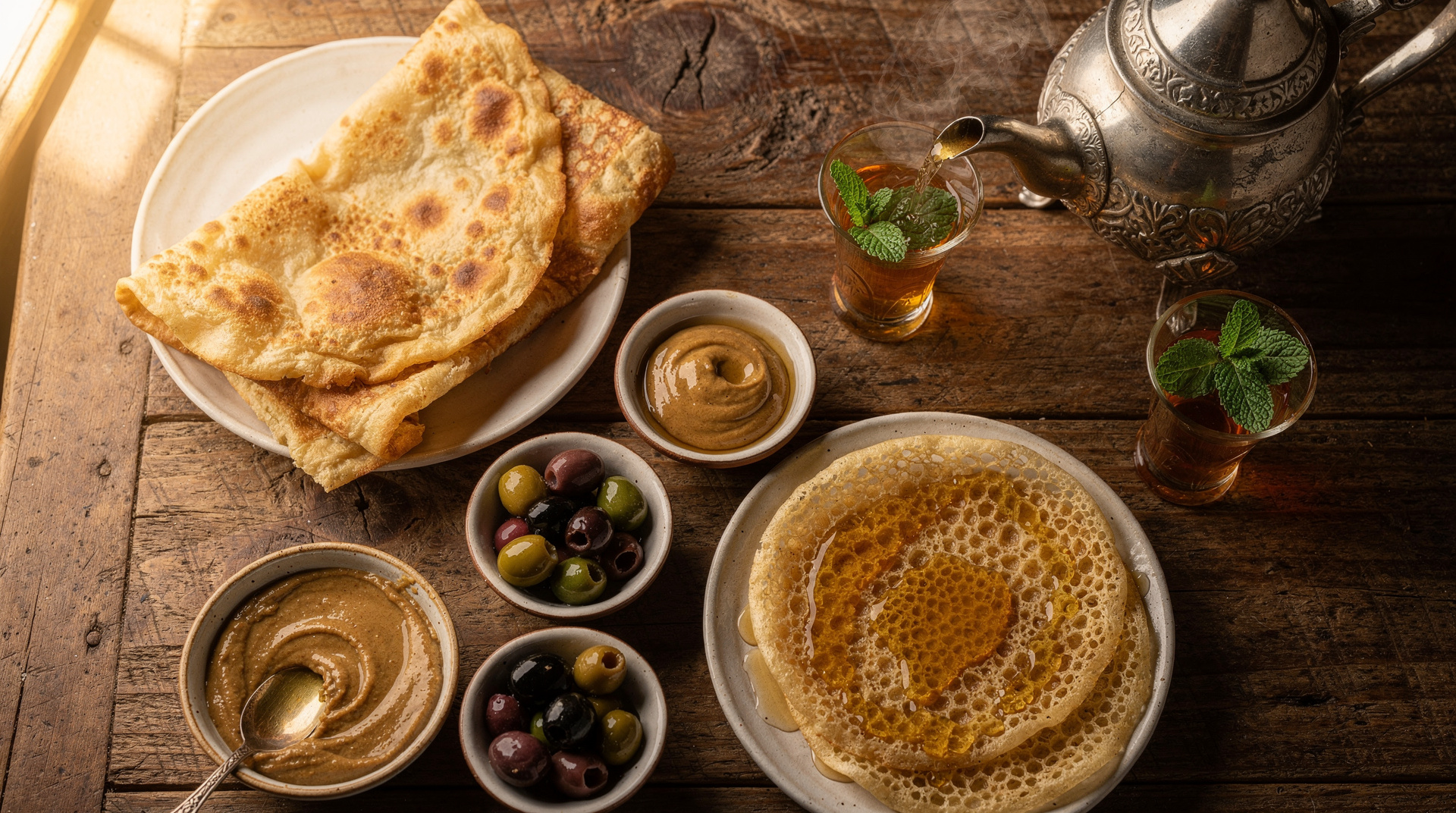
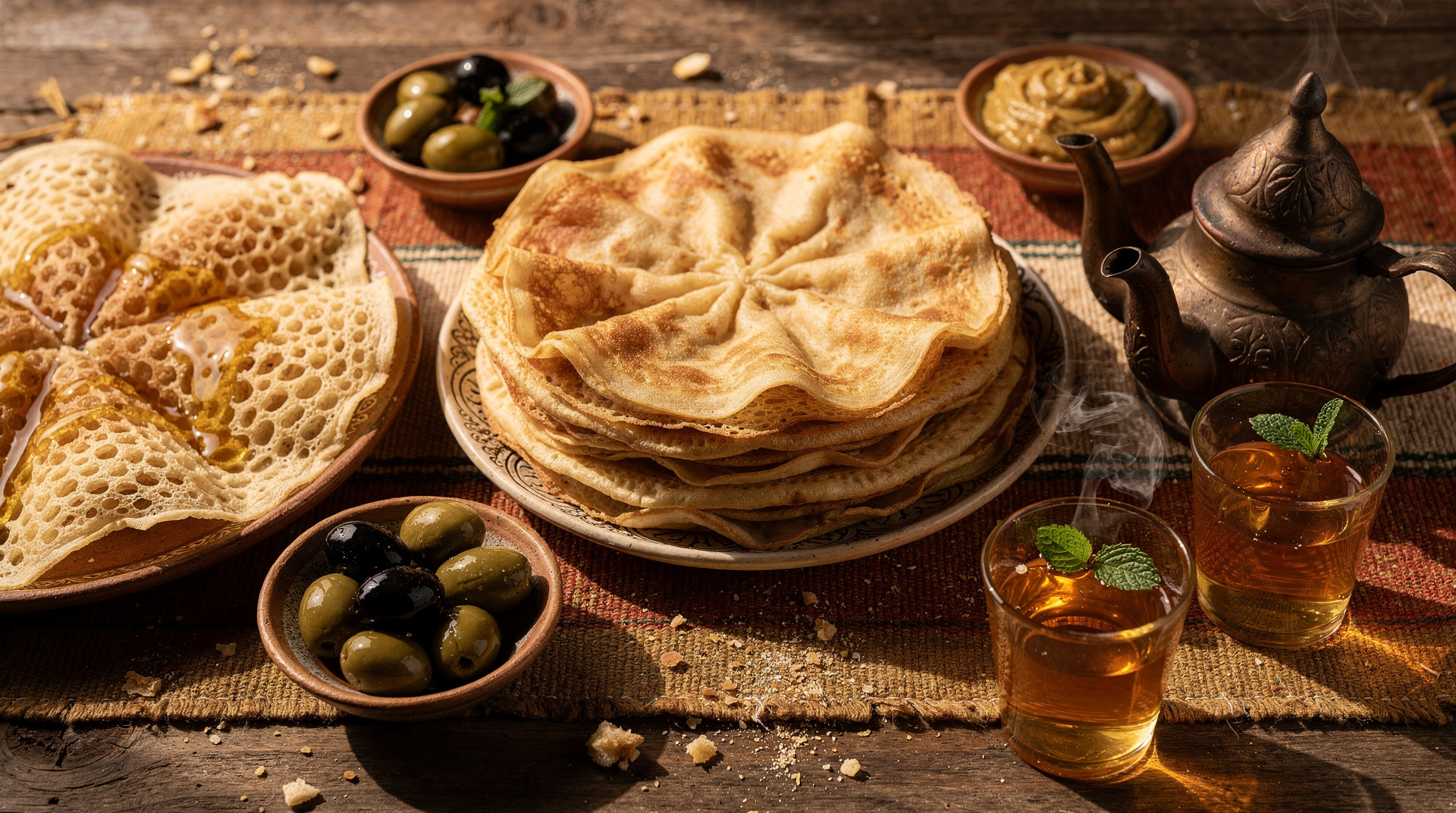
At breakfast: A bowl of olive oil for dipping bread is a traditional Moroccan breakfast element — alongside honey, amlou, and cheese. See the Moroccan breakfast guide.
In salads: Moroccan salads (zaalouk, taktouka) use olive oil as the primary dressing and cooking medium.
In the hammam: Moroccan hammam treatments use olive oil soap (savon beldi, the black soap made from olive paste) as the primary cleansing agent. See the traditional hammams guide.
Taking olive oil home: practical notes
Bottle sizes: For carry-on luggage, 100ml bottles pass through security. For checked luggage, any size works — wrap the bottle well and pack in the centre of clothing.
Shelf life: Extra virgin olive oil keeps for 18-24 months from pressing date in a cool, dark place. An early-harvest Meknes EVOO bought in November should be excellent through the following winter.
Customs: Olive oil is an agricultural product and large quantities (multiple litres) may attract customs questions in some countries. For personal use, a litre or two won’t raise any issues.
Comparison shopping: If you’re visiting both Fes and Marrakech, taste oils at both locations before committing to a large purchase. The Meknes-sourced oils available in Fes are generally the best option; Marrakech’s sourcing is more varied.
For the broader context of buying Moroccan food products — from argan oil to spices to olive oil — the Moroccan spices souks guide covers the souk buying environment and the argan oil guide covers the product most easily confused with or compared to olive oil in the Moroccan kitchen. A Marrakech cooking class with market visit gives you the chance to taste and cook with both olive oil and argan oil under a local chef’s guidance.
Olive oil cooperatives worth visiting
If you’re passing through the Meknes region, several olive oil cooperatives welcome visitors during business hours and offer tastings alongside direct sales.
The Meknes region cooperatives:
The cooperatives organised under Morocco’s Green Morocco Plan in the Meknes province produce certified extra virgin olive oil and sell directly to consumers. Look for signage toward Aït Baamrane, Ain Taoujdate, or Beni Amir — all small towns in the Meknes olive belt where cooperative facilities are accessible.
What a cooperative visit involves:
- A brief explanation of the production process (in French or Arabic, sometimes with English)
- A tasting of 1-3 oils (different varieties or harvest dates)
- Direct purchase at producer prices (150-250 MAD per litre)
- Sometimes the opportunity to see the pressing facility (maasra) if visiting during harvest season
This is a legitimate agro-tourism experience and not heavily marketed — you’ll be treated as a genuine buyer rather than a tourist attraction.
The difference between argan oil and olive oil in Moroccan cooking
Visitors to Morocco frequently encounter both oils and wonder when one is used rather than the other. The short answer: olive oil is the general-purpose cooking fat throughout Morocco; argan oil is specific to the Souss region and to specific preparations (amlou at breakfast, certain couscous in the southwest, salad dressings in Agadir restaurants).
Where argan oil dominates:
- The Souss Valley and anti-Atlas region (Agadir, Taroudant, Tiznit)
- Breakfast spreads in riad breakfasts throughout Morocco (as a premium product)
- Cosmetic use nationwide
Where olive oil dominates:
- Tagines throughout Morocco
- Couscous finishing (except in the Souss)
- Moroccan salads
- Hammam black soap production
The price difference is significant: culinary argan oil costs roughly twice as much as equivalent quality olive oil. In everyday Moroccan home cooking outside the Souss, olive oil is used for cooking and argan oil is reserved for the breakfast table or specific applications where its flavour is wanted.
The olive harvest as a travel experience
Visiting Morocco’s olive country during the October-December harvest creates a travel experience not available at other times of year. The logistics:
Where to go: The Meknes area (specifically the roads between Meknes and Khénifra or between Meknes and Fes) passes through significant olive groves. During harvest, you’ll see families working the trees along the roadside.
What you see: Traditional olive harvesting involves spreading cloths beneath the trees and beating the branches with long poles to dislodge the olives. The collected olives go into large sacks for transport to the pressing facility. Modern harvest in larger commercial operations uses mechanical vibrators attached to the trunk — faster but less picturesque.
The pressing facility (maasra): The traditional stone olive press (maasra) uses a heavy stone wheel rotated by donkey or mule to crush the olives. Modern facilities use stainless steel centrifugal separators. Both types operate during harvest season. If you see a working maasra, the smell of fresh-pressed olive oil is extraordinary — one of the most vivid olfactory memories you can take from Morocco.
Combining with Meknes: The Meknes destination guide covers the city itself — the imperial monuments, the wine production, the location as a base for Volubilis. Olive oil country exploration combines naturally with a Meknes stay. From Fes, a flavours of Fes market visit and hands-on cooking class puts olive oil’s role in Moroccan cooking into direct practice.
Moroccan olive oil on the international market
Morocco has been increasing its olive oil export volume significantly since the mid-2000s, and Moroccan oils are now available in specialty food shops in Europe and North America — though often labelled as “North African olive oil” rather than specifically Moroccan.
Brands to look for outside Morocco:
- Zitoun Morocco: The cooperative umbrella brand for certified Moroccan EVOO
- Terres de Meknes: A premium producer that also exports
- Atlas Olive Oils: A company that works with Moroccan cooperative producers
Price outside Morocco: Moroccan EVOO in European specialty shops costs 12-20 EUR per 500ml — significantly more than buying at source (8-12 EUR equivalent) but still competitive with Spanish and Italian premium oils.
The advantage of buying in Morocco: the freshness. Oil purchased in Morocco in November-December is from the current season’s press. The same oil in a European shop six months later has been bottled, shipped, and stored — still good, but a month off the press is not the same as a year off the press.
Olive oil and the rhassoul tradition
One unexpected connection: Moroccan olive oil is the base for savon beldi — the famous traditional black soap used in Moroccan hammams. The soap is made from olive paste (the byproduct of olive pressing, retaining significant oil content) mixed with potassium hydroxide and water, then aged. The result is a soft black soap with significant exfoliating and moisturising properties.
Savon beldi is sold throughout Morocco’s souks and at hammam supply shops. At 30-60 MAD per 250g at a good souk shop, it’s one of the best Morocco souvenirs — made from the same olive oil tradition, expressing it in a completely different direction.
See the traditional hammams guide for the full context of how olive-based soap fits into the hammam treatment tradition.
Frequently asked questions about Moroccan olive oil
Is it legal to bring Moroccan olive oil back on a flight?
Yes, in checked luggage without restriction (wrap bottles well and pack centrally). In carry-on, liquid limits apply — only containers of 100ml or less are allowed through security in most countries, so buy travel-size bottles if you want to carry it on.
What’s the difference between Moroccan and Spanish or Italian olive oil?
Moroccan Picholine marocaine oil, especially from Meknes, is milder and less bitter than Spanish Picual and less fruity than Italian Frantoio — a balanced, medium-intensity profile with green apple and herb notes. Quality-for-quality, it’s typically cheaper than either at the source, largely because Morocco exports less and domestic prices aren’t inflated for the export market.