Moroccan bread guide: khobz, msemen, and the farran culture
What types of bread do Moroccans eat and why is bread so important?
Moroccan bread centres on khobz, the round flatbread present at every meal, alongside msemen (layered griddle bread), harcha (semolina rounds), and baghrir (honeycomb pancakes). Bread is not a side — it is the utensil, the vehicle for sauces, and a cultural connector. Moroccan households bake their own dough and take it to the communal farran oven daily.
Bread is everything in Morocco
Walk through any Moroccan medina in the morning and you’ll see children carrying round dough discs on wooden boards to the neighbourhood farran. By the time they return 20 minutes later, those discs have become khobz — the round flatbread that will sit at the centre of every meal for the next 24 hours. The board is covered in a cloth, tucked under an arm, and the whole transaction takes five minutes. It happens daily in every medina neighbourhood in the country.
Moroccan bread culture is not about artisan baking or sourdough trends. It is about a functional, daily, deeply embedded relationship between the household and the bakery. Bread is present at breakfast, lunch, and dinner — it is the utensil, the vehicle for broth and tagine sauce, the thing you use instead of a fork. Understanding Moroccan bread is understanding the Moroccan meal.
This guide covers every major bread type, the communal farran culture, the street-level bakery economy, and how bread fits into the ritual of Moroccan eating.
| At a glance | |
|---|---|
| Where to try it | Any medina farran queue, street stalls, riad breakfast table |
| Typical cost | Around 1.5-6 MAD per piece at street level, more at tourist stalls |
| Time needed | 5-10 minutes to watch a farran hand-off; a full breakfast sitting is 30-60 minutes |
| Getting there | Walk through any traditional medina neighbourhood in the morning |
| Best time | Morning, before around 10am when the best farran bread sells out |
Khobz: the foundational bread
Khobz (from the Arabic khabaza, to bake) is the standard Moroccan round flatbread. It is made from a simple dough of wheat flour, semolina, water, yeast, salt, and aniseed (which gives it a distinctive flavour note that distinguishes Moroccan khobz from other flatbreads). The dough is mixed, kneaded, divided into round portions, slightly flattened and dimpled on top, and left to rise before baking.
Shape and size: Round, 20-25cm in diameter, 2-3cm thick. Not a thin flatbread — thick enough to tear in strips that hold sauce without disintegrating.
Crust: From a proper farran (wood-fired or gas-fired communal oven), the crust is firm and slightly golden with a soft interior. From a home oven, slightly less crust development but still good.
At the table: Khobz arrives in a cloth-lined basket at the beginning of every meal. You tear it — never cut it — and use torn pieces to scoop tagine sauce, mop up harira broth, or eat with olive oil. When the bread runs low, more appears without asking at any Moroccan household or restaurant that knows what it’s doing.
Price: At bakeries, 1.5-3 MAD per round loaf. At tourist restaurants, it’s included in the meal. At local restaurants, you may be charged 3-5 MAD for the bread basket.
Khobz dar: home bread
Khobz dar (house bread or home bread) is the variation made with the household’s own preferred flour ratios and sometimes additions — black sesame, nigella seeds, extra aniseed, or a slightly coarser semolina component. Every family has its own version.
The essential difference from standard khobz is that khobz dar is made at home from scratch — the household mixes and kneads the dough, marks it with a distinctive impression (so it’s recognisable when picked up from the communal oven), and sends it to the farran.
The marking tradition: Before the dough goes to the farran, the baker marks the top with a distinctive pattern unique to the household. When the loaves come out of the oven, each family can identify its own. This is one of the small elegant solutions that communal baking requires.
The farran: Morocco’s communal oven
The farran is the neighbourhood communal oven — one of Morocco’s most distinctive social institutions. It is a wood or gas-fired commercial oven operated by a baker (the farrani) who bakes for the neighbourhood for a small fee.
How it works: Households prepare their dough at home, shape it into rounds, place it on a wooden board (lawh), and send a family member (traditionally a child) to the farran. The farrani slides the dough into the oven, bakes it, and returns it when done. The fee is minimal — 1-2 MAD per loaf.
What else goes in the farran: Beyond bread, the farran serves as a communal slow-cooker. On special occasions, families bring whole lamb, pots of beans, and marinated chicken to slow-cook in the residual heat after the bread baking is done. The tangia of Marrakech — a whole lamb slow-cooked in an amphora-shaped vessel — traditionally goes into the farran overnight. See the street food guide for Fes for how tangia and farran culture intersect with street food.
Finding the farran: In any traditional medina neighbourhood — Fes el-Bali, Marrakech’s medina, the old quarters of Meknes — the farran is identifiable by a queue in the morning and the smell of baking bread from a low, ancient doorway. Most visitors walk past dozens without realising what they are.
Msemen: the layered griddle bread
Msemen is the breakfast and snack bread that requires the most technique of the Moroccan bread repertoire. The dough is made from wheat flour and fine semolina, then portioned into balls, each ball stretched thin, folded multiple times with olive oil and semolina between the layers, and cooked on a dry griddle.
The layering process: The technique creates horizontal layers similar to puff pastry but using a laminating method rather than butter and folding. When cooked, the layers separate slightly, creating the characteristic stripeable texture. A good msemen tears into three or four distinct layers.
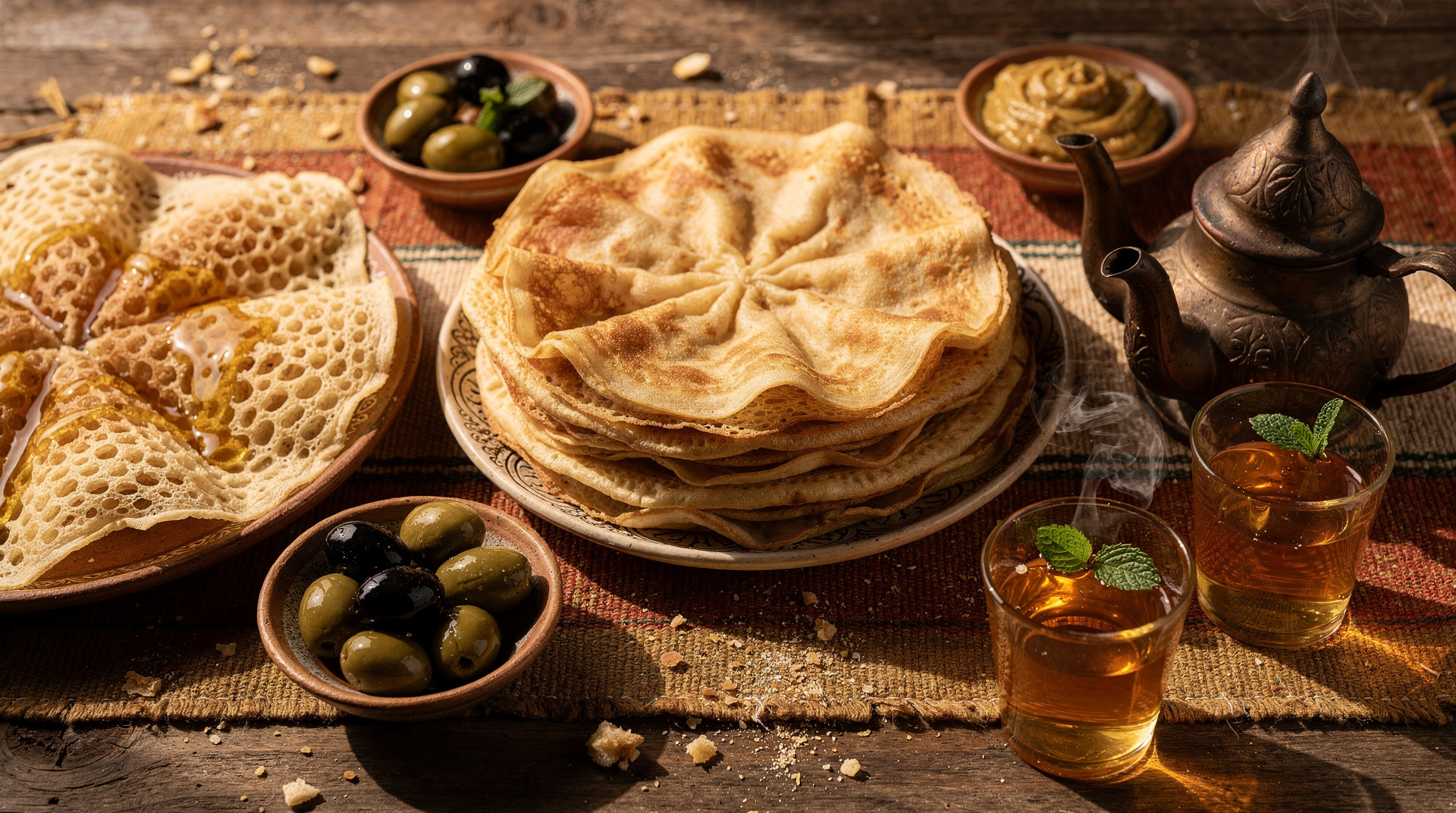
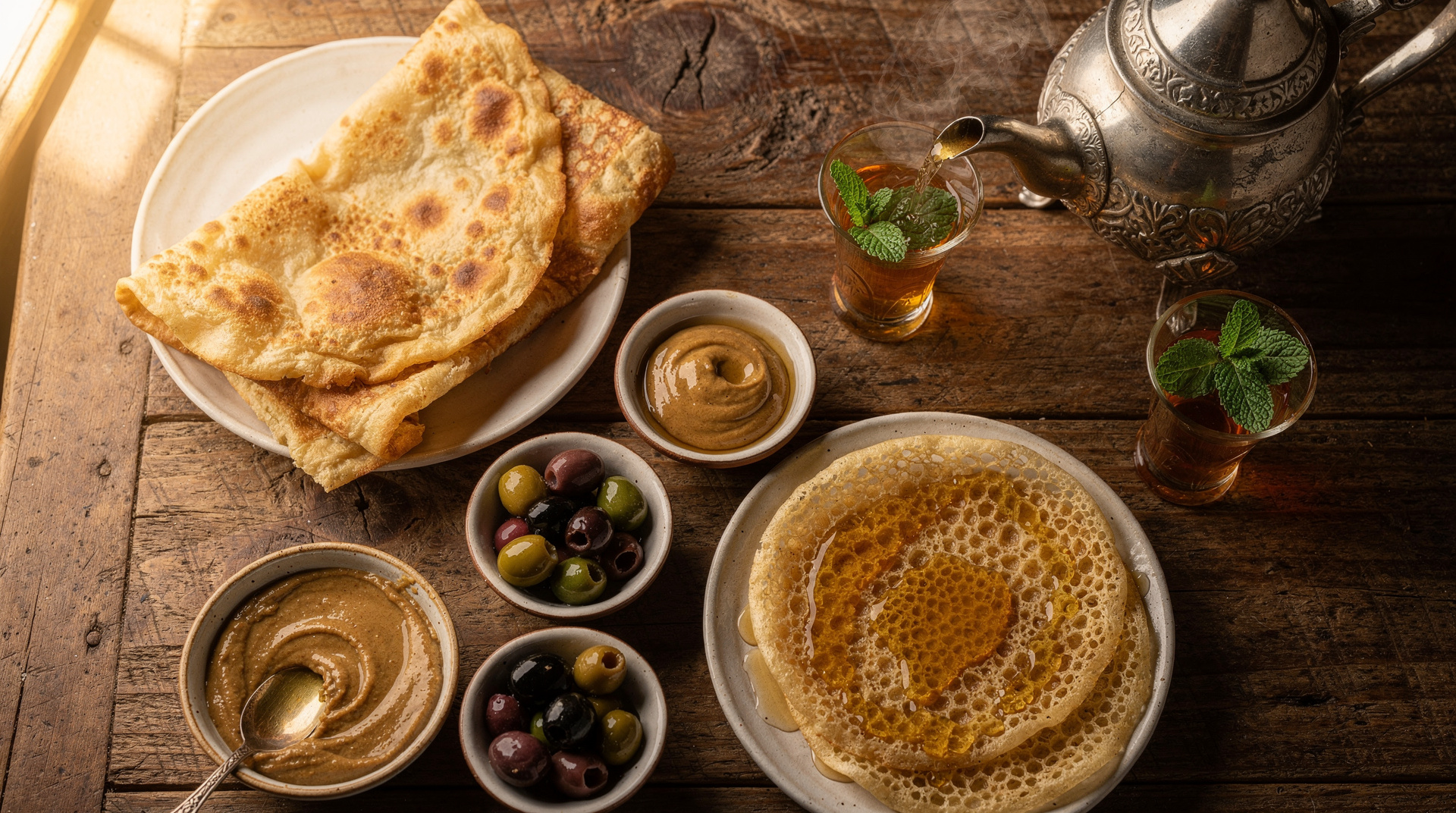
How to eat it: Hot msemen is eaten by tearing strips and dipping into argan oil, honey, amlou, or butter. At street level, it’s sold folded around a filling — fresh soft cheese, kefta, or sweet onion jam. At breakfast tables, it arrives flat on a plate alongside the spreads.
Street price: 3-5 MAD per piece. At medina stalls, women often sit with a griddle and a bowl of dough, making msemen continuously through the morning — this is the best version, made fresh in front of you.
Regional variants: In Berber regions, msemen is sometimes made larger and thicker, more like a flatbread wrap. Along the Atlantic coast, you find versions folded into quarters and stuffed.
Meloui: the rolled cousin
Meloui is a spiral-shaped griddle bread made from the same laminated dough as msemen but rolled into a cylinder and coiled into a spiral before cooking. The coiling creates a different texture — each spiral ring slightly distinct, with a more pronounced chew than flat msemen.
Less common in tourist-facing contexts but regularly available at street stalls and local markets. Same preparation method, same accompaniments, same price range as msemen.
Harcha: the semolina round
Harcha is made from coarse semolina (not fine flour), olive oil or butter, milk, baking powder, and salt — mixed and formed into round cakes about 2cm thick, then cooked on a griddle. No yeast, no rising time: harcha is a quick bread.
The texture is entirely different from khobz or msemen — grainy, crumbly, dense. It breaks rather than tears. It’s typically split horizontally and filled: soft white cheese (jben) and honey is the classic combination; butter and jam is common in cafés; sometimes it’s eaten plain with olive oil.
Where to find it: At street stalls and bakeries in the morning. At local café-restaurants as part of the breakfast offering. Some riad breakfasts include it alongside msemen and baghrir.
Price: 3-6 MAD at street level.
Baghrir: the bread that became a pancake
Baghrir (also spelled beghrir) occupies the border between bread and pancake. Made from fine semolina, water, yeast, and a small amount of flour, the batter ferments for 30-60 minutes before cooking, developing a slightly sour note and a cellular structure. When cooked (on one side only, on a lightly greased pan), the top surface develops dozens of tiny holes — the “thousand holes” that give baghrir its other name.
The holes are what makes it special: butter and honey poured over a hot baghrir run into the holes, creating a self-basting effect. It’s the most dessert-like of the Moroccan breads and the most immediately accessible for visitors.
Making it: The fermentation is the unpredictable part — temperature and humidity affect how the batter develops. Moroccan home cooks calibrate by eye and smell. Too little fermentation produces flat pancakes without the hole structure; too much makes them bitter.
For the full context of baghrir at the breakfast table, see the Moroccan breakfast guide. The Marrakech cooking class with market visit begins at the spice souk where you buy the semolina and herbs, then teaches you to make msemen and baghrir by hand — the fastest way to understand what the technique actually involves.
Sfouf: the celebration bread
Sfouf is a spiced semolina cake-bread eaten at specific celebrations — particularly during the Prophet’s birthday (Mawlid) and at weddings. Made from fine semolina with aniseed, sesame, fennel seeds, and fenugreek, with olive oil and honey, it’s baked rather than griddled and has a dense, almost cake-like texture.
The taste is strongly herbal and aromatic — not sweet like a cake but not savoury like standard bread either. If you encounter it at a celebration or a traditional bakery, it’s worth trying. At spice souks, the pre-mixed sfouf spice blend is available for home baking.
Bread and meal culture: the practical rules
Bread is not an appetiser: It arrives at the beginning and stays through the whole meal. Don’t eat all the bread quickly expecting a meal to follow — you’re going to need it for the tagine broth.
The right hand only: In traditional contexts, bread is torn and eaten with the right hand. The left hand is considered unclean in the Islamic tradition; even if you’re left-handed, make the effort at a traditional table.
Don’t cut bread with a knife: Tearing is the method. A knife at the bread basket marks you as someone unfamiliar with the culture. The same principle applies in home settings — the bread is torn by the host and distributed.
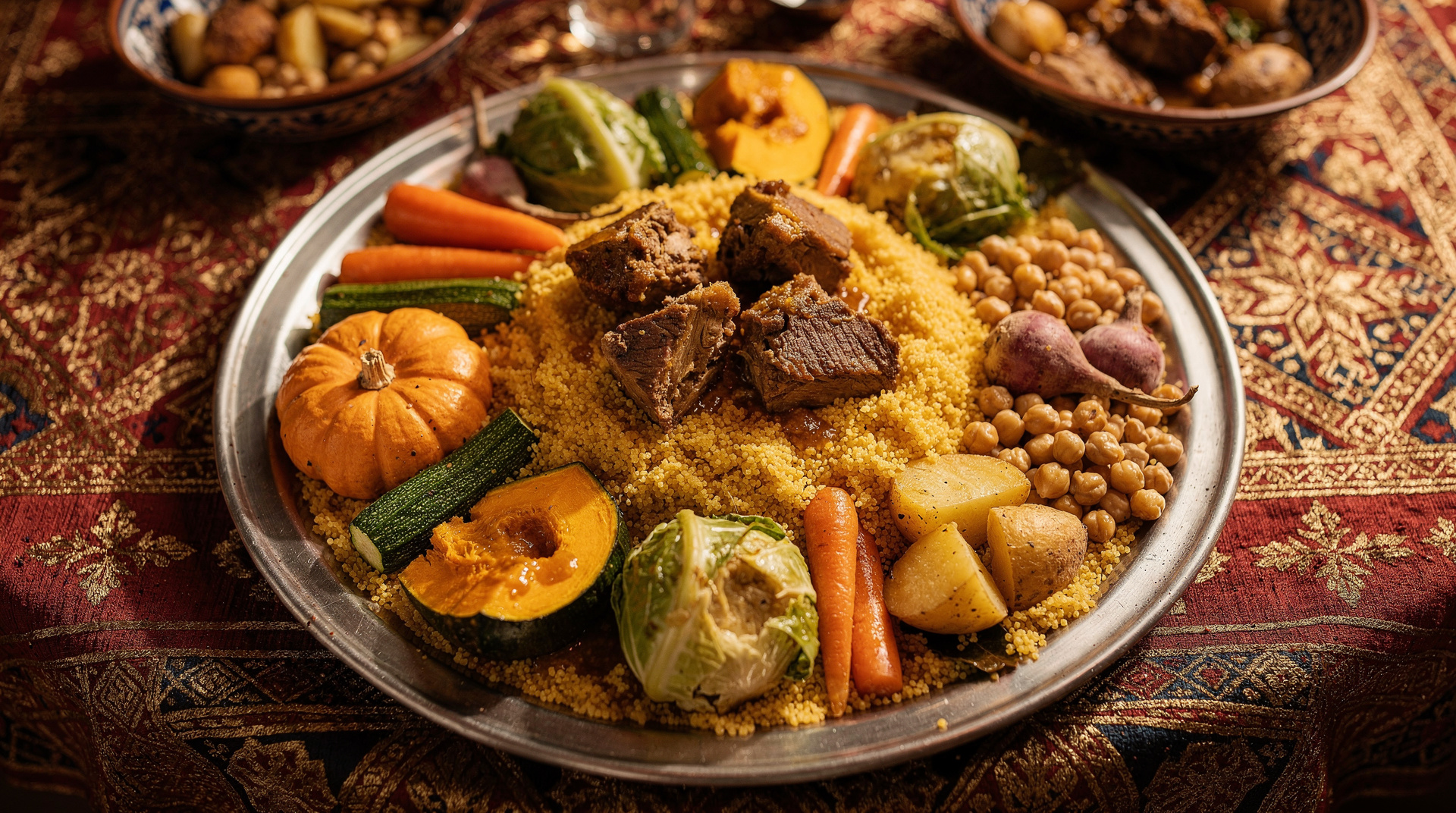
Mop, scoop, dip: The three uses. Mop the last of the tagine broth from the pot (this is expected, not rude). Scoop couscous onto the bread and eat together. Dip into olive oil, honey, or amlou at breakfast.
Stale bread is not wasted: Moroccan kitchen culture does not throw away bread. Stale khobz becomes breadcrumbs for kefta meatballs, is soaked in broth for various preparations, or is crumbled into harira soup. The farran culture means fresh bread is available daily, so yesterday’s loaf genuinely does need a use.
Bakery culture: where to buy and what to look for
In the medina
Traditional wood-fired farran bakeries in the old medinas of Marrakech, Fes, and Meknes bake bread throughout the morning. The best khobz in Morocco comes from these ovens, not from modern bakeries. The bread is slightly smoky, with a firm crust and an open crumb.
Look for the queue: the best farrans have a small line in the morning. The baking is typically done by 10am — arrive later and the best bread is gone.
French-style boulangeries (Guéliz, Casablanca, Rabat)
The modern districts of Morocco’s cities have French-style bakeries producing baguettes, croissants, and pain au chocolat alongside traditional breads. This reflects the French colonial food influence, which remains significant in Morocco’s cities. A good baguette costs 2-3 MAD and is of legitimate French quality in the best establishments.
At the market (souk)
Weekly markets in rural areas often have bread vendors selling fresh khobz and msemen from the morning. The bread is made in portable griddle-and-dough setups and sold immediately — this is some of the best street bread you’ll encounter.
Taking bread culture home
If you want to recreate Moroccan bread at home, the key purchases from Moroccan spice souks:
- Fine semolina (smida): Different from Italian semolina; finer and from a different wheat variety. Available at spice souks for 10-20 MAD per kilo.
- Aniseed (nafaa): The distinctive flavour note in khobz. Buy whole seeds and grind fresh.
- Nigella seeds: For khobz variations; sprinkled on top before baking.
- Black sesame: Another topping option.
The Moroccan spices souks guide covers where to buy and at what prices to avoid getting overcharged.
Bread at every meal: a quick reference
| Meal | Bread type | Role |
|---|---|---|
| Breakfast | Msemen, baghrir, harcha, khobz | Main food vehicle for spreads |
| Lunch | Khobz | Utensil for tagine/couscous |
| Dinner | Khobz | Mopping broth, eating with salads |
| Special occasions | Sfouf, khobz dar | Celebration and ceremony |
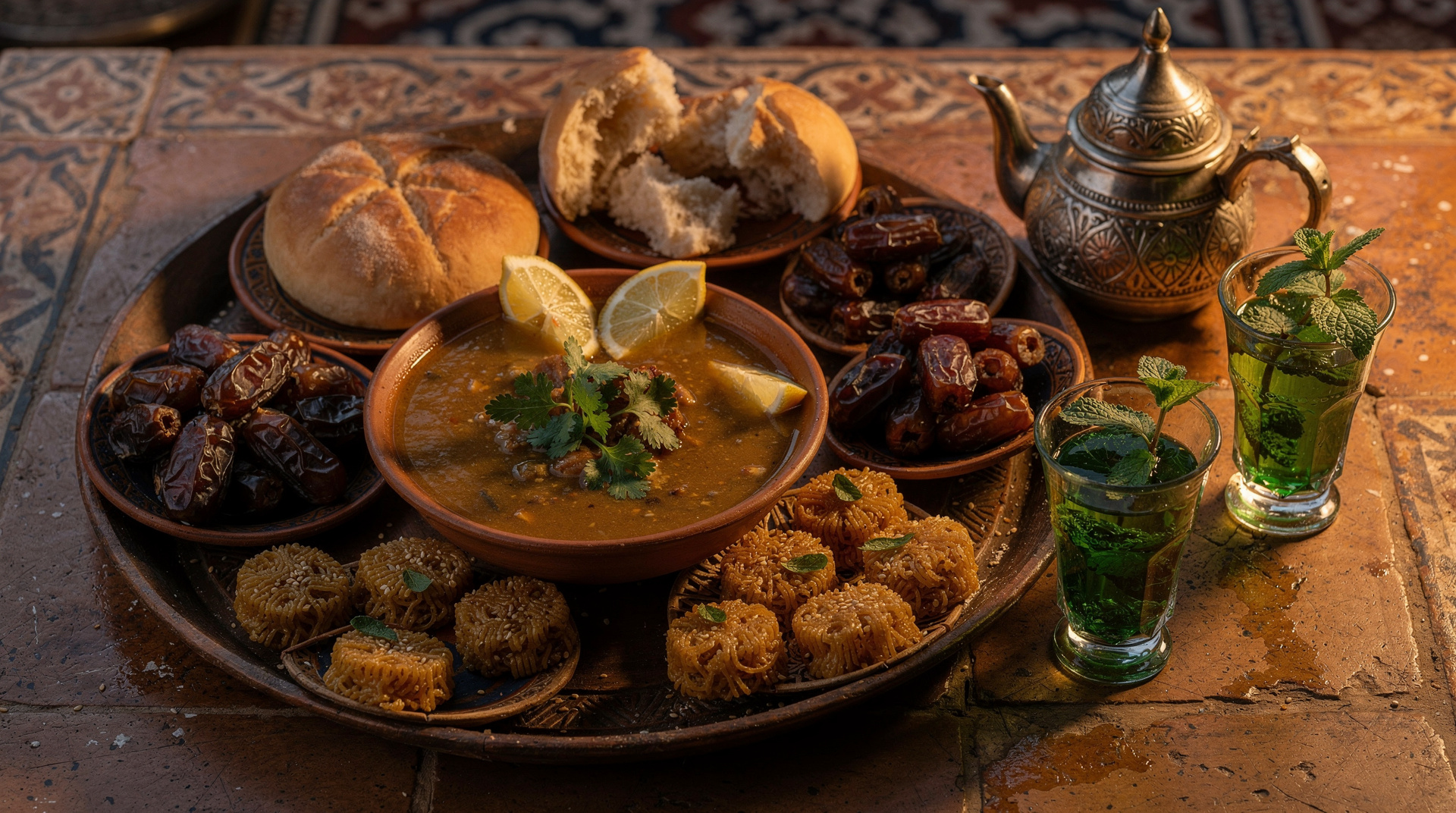
| Ramadan iftar | Khobz, beghrir | Breaking the fast alongside harira and dates |
For the complete picture of Moroccan food culture — from breakfast through street food to the Sunday couscous tradition — the tagine guide, couscous guide, and street food guide for Fes fill in what bread culture connects.
The economics of Moroccan bread
Understanding what bread costs at different points in Morocco’s food system reveals a lot about the country’s economy and food culture.
At the farran: 1.5-3 MAD per round khobz loaf. This price has remained stable for years due to government subsidy — wheat flour is subsidised in Morocco as a food security measure. The political significance of bread pricing in Arab countries is significant; Morocco has kept khobz affordable as a deliberate policy.
At a bakery: 2-5 MAD per khobz. The French-style boulangeries in urban areas charge slightly more for khobz, and significantly more for baguettes (2-4 MAD) and croissants (5-10 MAD).
At a restaurant: Bread is generally included in the meal price or charged 3-5 MAD for the basket. At upscale riad restaurants, the bread basket may include multiple varieties (khobz, msemen, grissini) at no extra charge.
At tourist-area stalls: Inflated significantly — a piece of msemen that costs 3 MAD at a local stall may be sold for 10-15 MAD near tourist areas. The baseline quality is the same; the location determines the markup.
Bread and Moroccan social life
Bread appears at the most significant social moments in Moroccan life, beyond the everyday meal:
At a welcome: Guests arriving at a Moroccan home are offered bread and salt — the traditional expression of hospitality. “Bread and salt” in Arabic means a shared obligation of trust between guest and host. Refusing this offer is culturally significant.
At a wedding: The wedding meal begins and ends with bread. The communal couscous served at the celebration is eaten with bread alongside; the wedding’s close is marked by the last piece of bread from the shared bowl. See the Moroccan wedding customs guide for the full ceremony context.
At Ramadan iftar: The breaking of the fast begins with dates, water, and harira — but bread arrives with the harira and remains through the whole iftar spread. The suhoor (pre-dawn) meal is specifically bread-focused. See the Ramadan food guide for the full iftar context.
In charitable giving: The Moroccan tradition of sadaqa (charitable giving) often takes the form of bread — freshly baked khobz distributed to those in need, particularly on Fridays and religious holidays.
Regional bread specialties worth seeking out
Beyond the breads described in this guide, Morocco has regional specialties that rarely appear in tourist contexts:
Ksra (Fes version of khobz): Slightly thicker and more aniseed-forward than the Marrakech version. The Fes medina produces a distinctive round loaf that food writers have called the best everyday bread in Morocco.
Aghroum (Amazigh flatbread): The Berber flatbread made in Atlas mountain villages — coarser flour, sometimes including barley, cooked directly on ashes or on a flat stone. This is the bread of the mountains and one of the oldest preparations in Morocco. Encountered in rural villages on Atlas mountain treks or on routes through the Rif.
Matlouh (Algerian-influenced north Moroccan flatbread): The areas near the Algerian border in eastern Morocco produce a thicker, raised flatbread that reflects the region’s mixed cultural influences. Less common in tourism circuits but worth knowing exists.
Briouches of the French-Moroccan tradition: The colonial crossover produced briouche breads in Morocco’s French-influenced cities (Casablanca, Rabat) that combine the French enriched-dough technique with Moroccan flavouring — orange blossom water, aniseed, sesame. Available at good boulangeries in the ville nouvelle districts.
Bread-based street food: the fast lunch
In Moroccan medinas, bread doesn’t only appear at the table — it is the vehicle for some of the best street food in the country. The practical bread-based street food:
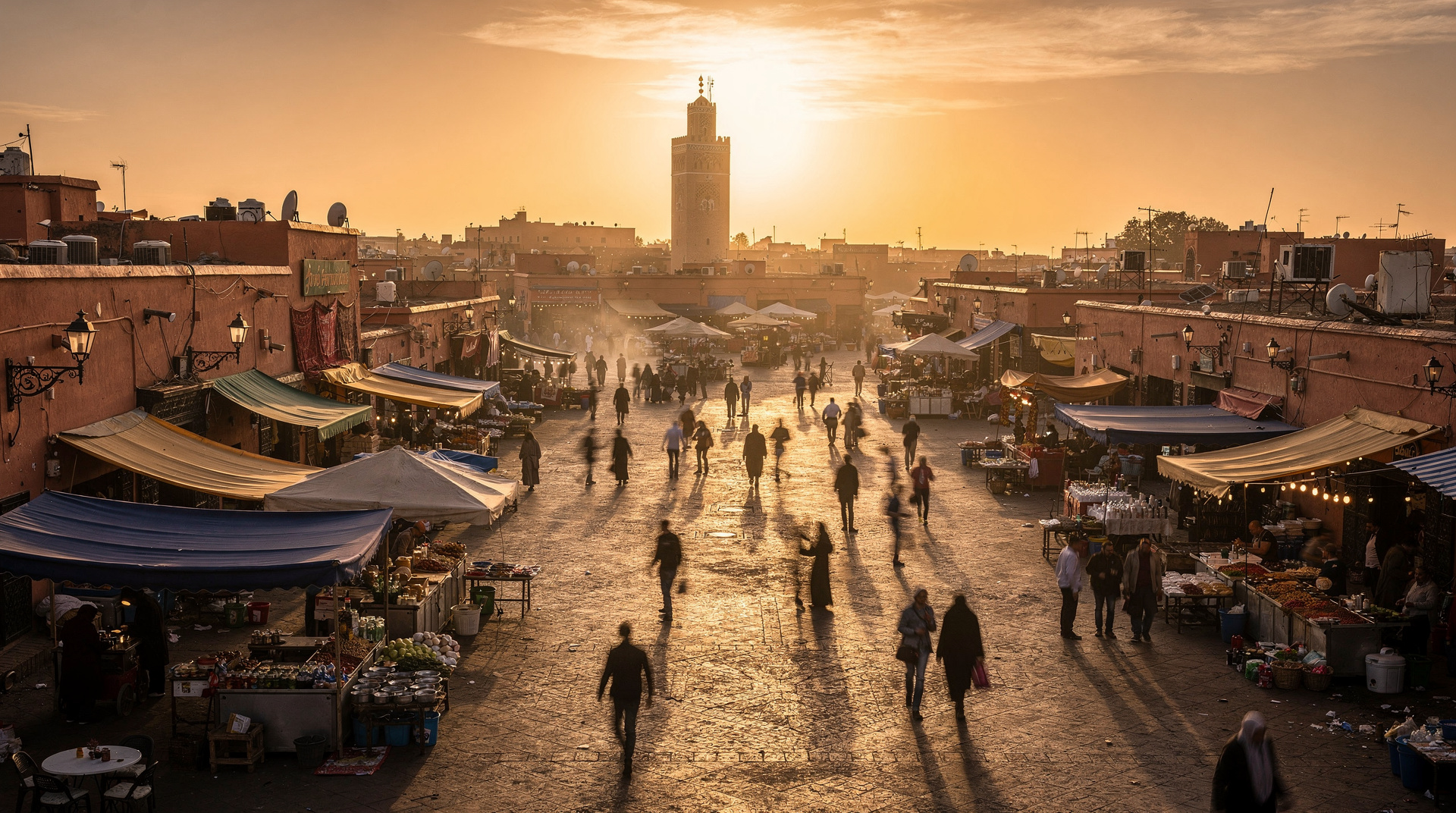
Kefta roll: Spiced minced meat (kefta) grilled on charcoal, pulled from the skewer, and stuffed into a fresh khobz roll with harissa, olives, and herbs. The standard fast lunch across Morocco. 15-25 MAD. The Marrakech night street food tour covers kefta rolls, msemen stalls, and the full Jemaa el-Fnaa food circuit in a single guided evening. See the street food guide for Fes for the best locations.
Merguez sandwich: Spiced lamb sausages grilled and served in a baguette (reflecting the French colonial influence) or in a khobz roll. More common in the coastal cities and the modern districts than in the medinas. 15-30 MAD.
Egg and herb msemen: Msemen folded around a cooked egg, fresh herbs, and harissa. Eaten standing from a street stall in the morning. 8-15 MAD. One of the best on-the-go breakfasts in Morocco.
Sardine sandwiches (Atlantic coast): On the coast (Essaouira, Safi, Agadir), fresh sardines grilled on charcoal, placed inside a khobz roll with chermoula and pickled vegetables. 15-25 MAD. Only worthwhile where the sardines are genuinely fresh — see the Essaouira destination guide for where to find the best stalls.
Frequently asked questions about Moroccan bread guide
Why does Moroccan khobz taste different from other flatbreads?
Aniseed is the key differentiator — it’s mixed into the standard khobz dough and gives it a subtly sweet, herbal note that other regional flatbreads (like Tunisian or Egyptian versions) don’t share. The communal farran baking, often wood-fired, also adds a smokiness that a home oven can’t fully replicate.
Can I visit a working farran as a visitor?
Most farrans are working neighbourhood businesses, not tourist attractions, so a direct visit isn’t typically offered. The best way to see one in action is on a guided food or medina walk — the street food guide for Fes covers routes that pass working farrans, or a cooking class such as the one linked above will usually include a farran stop as part of the market visit.