Fes medersas: Al Attarine, Bou Inania, Cherratine, Seffarine
Which medersa in Fes is best to visit?
Al Attarine Madrasa (adjacent to the Qarawiyyin Mosque) is the most architecturally refined. Bou Inania Madrasa is the largest and most complete, with an upper gallery you can walk and a working religious clock across the street. Visit both if you can — they're 10 minutes apart and together represent the peak of Marinid architectural achievement.
At a glance
| Where | Fes el-Bali medina, all four within a 15-20 minute walk of each other |
| Cost | Under 60 MAD total (around €6) for all four medersas |
| Time needed | 3-4 hours for all four, or a focused 90 minutes for just Bou Inania and Al Attarine |
| Best time | Morning (9-11am) for the best light and before medina crowds build |
| Guide | Recommended for context on the architecture — not required to gain entry |
What is a medersa?
A medersa (also written madrasa or medersa) is an institution of Islamic higher learning — a residential college attached to or near a mosque where students studied theology, law, mathematics, astronomy, and rhetoric. The Arabic word derives from the root meaning “to study.” Morocco’s great medersas, built primarily during the 14th-16th century Marinid and Saadian periods, were simultaneously educational institutions, charitable foundations, and demonstrations of dynastic piety and cultural ambition.
Fes, as the seat of the Qarawiyyin University — founded in 859 CE and sometimes cited as the world’s oldest continuously operating university — attracted students from across the Islamic world. The medersas built to house these students were correspondingly magnificent: the Marinid sultans who funded them understood that educational architecture was a form of political legitimacy.
Today, the medersas of Fes are the best-preserved and most architecturally significant group of Islamic educational buildings in the western Islamic world. They are the reason that a serious architectural pilgrimage to Morocco must include Fes.
Bou Inania Madrasa: the largest and most complete
Built between 1351 and 1357 by the Marinid Sultan Bou Inan Faris, this medersa is the largest in Morocco and the only one in the country that has historically been granted the status of a Friday mosque (jama) — meaning it could host the main weekly prayers, a privilege usually reserved for the city’s primary mosque.
The architecture: The central courtyard is the heart of the building — a space approximately 15m by 10m, floored in white Carrara marble, with a central ablution pool fed by a brass channel. The lower walls are zellij in deep turquoise and white, the middle zone is intricately carved stucco, and the upper zone is carved cedarwood — the three-material hierarchy that defines classical Moroccan architectural space. The cedarwood screens (mashrabiya) of the student rooms on the upper level create a textured gallery that looks onto the courtyard.
The muqarnas: The entrance iwan (vaulted portal) on the street contains some of the finest muqarnas work in Morocco. Approach the building from the medina street and look up as you enter — the stalactite vault above the doorway accumulates in layers that appear structurally impossible.
The religious clock: Across the narrow street from Bou Inania’s entrance stands an enigmatic wooden structure — 13 wooden beams projecting from the wall at different heights, with bronze bowls suspended below. This is the Dar al-Maqana, a hydraulic water clock built by Sultan Bou Inan to mark prayer times. It stopped working in the 14th century and no one has conclusively explained its operating mechanism since. It’s still there, still unexplained.
Opening hours: Daily 9 am-6 pm (approximately — verify locally). Entry fee: 20 MAD.
Al Attarine Madrasa: the most refined
Adjacent to the Al Qarawiyyin Mosque (which non-Muslims cannot enter), Al Attarine Madrasa was built in 1325 by the Marinid Sultan Abu Said Uthman II as accommodation for students of the great mosque. Its position — literally touching the mosque wall — gave students the shortest possible path to their studies.
Why it’s the best: Al Attarine represents Marinid architecture at its most refined. Where Bou Inania is impressive through scale, Al Attarine achieves its effect through proportion and the density of its detail. The carved plaster friezes in the upper zone are widely considered the finest examples of this craft in Morocco — the arabesque botanical patterns achieve a depth and complexity that no later reproduction has matched.
The courtyard: Smaller than Bou Inania, the Al Attarine courtyard is accordingly more intimate. The effect of standing at the centre while morning light comes through the upper mashrabiya screens and lands on the zellij floor is extraordinary — this is a space calibrated to produce a specific meditative experience.
The upper galleries: Unlike many medersas, Al Attarine allows access to the upper student gallery level. Walking the narrow gallery around the courtyard gives a perspective on the architectural composition unavailable from below — you can see how the individual student rooms were arranged and appreciate the courtyard’s proportions from above.
The name: “Al Attarine” means “of the spice sellers” — the madrasa sits adjacent to the Al Attarine souk, the historic spice and perfume market. The connection between scholarly and commercial life in the medieval Islamic city was deliberate: the market provided income, the medersa provided legitimacy.
Opening hours: Daily 9 am-6 pm. Entry fee: 20 MAD (sometimes combined with museum entry nearby).
Book a guided Fes tour covering the museum, Al Attarine Madrasa, and the tanneryCherratine Madrasa: the undervisited one
Built in 1670 under Sultan Moulay Rashid — the first Alaouite sultan — Cherratine is the largest medersa in the Fes medina by number of student cells. Unlike the Marinid medersas with their concentrated courtyard spaces, Cherratine organised student accommodation around multiple smaller courtyards, creating a complex of interconnected spaces rather than a single monumental hall.
Why it matters: Cherratine represents the moment when Moroccan religious architecture transitioned from the Marinid tradition (sophisticated, cosmopolitan, Andalusian-influenced) to the early Alaouite style (more austere, more emphatically Moroccan rather than Andalusian). The craft quality is lower than Al Attarine or Bou Inania — there was less money, less accumulated craft expertise, and less interest in architectural showmanship from the early Alaouites.
Why to visit anyway: Cherratine receives a fraction of the visitors of the main medersas. The experience of exploring its labyrinthine interior — stairways, student rooms opening off corridors, small courtyards — in relative quiet is genuinely different from the more polished tourist experience at the major sites. This is what a working medersa actually looked like from the inside.
Entry fee: 10 MAD. Location: In the commercial heart of the Fes el-Bali medina, near the kissaria market.
Seffarine Madrasa: adjacent to the Brass Square
Seffarine is the oldest surviving medersa in Fes, built by the Marinid Sultan Abu Yusuf Yaqub al-Mansur around 1271. It’s a smaller, rougher building than the later Marinid constructions — the craft traditions that would produce Al Attarine and Bou Inania were still developing.
What it offers: The historic context more than the architecture. Seffarine Madrasa sits directly adjacent to the Place Seffarine — the Brass Workers’ Square — where metalworkers (coppersmiths, brass founders) have operated since the medieval period. The sound of hammers on metal rings through the narrow entrance passage of the medersa. The combination of sacred and industrial is quintessentially Fes.
Visiting: Seffarine is sometimes partially closed due to renovation. Verify at entry whether the courtyard is fully accessible. Entry is free or minimal charge.
The Qarawiyyin Mosque: what you can and cannot see
The Al Qarawiyyin (also spelled Karouine or Karaouiyine) Mosque — founded in 857 CE, with the associated university established by Fatima al-Fihri in 859 — is the focal point of the entire medina. Non-Muslims cannot enter the mosque or the university facilities.
However, you can see into the mosque from multiple points: several medina alleys have gates or windows that provide partial views into the prayer halls, particularly during non-prayer hours. The courtyard fountain, parts of the ceiling, and the general scale of the space are visible from these points.
The Fes destination guide maps the best vantage points and explains the mosque’s layout in enough detail to make sense of what you can see from the outside.
Photography in the medersas
All four medersas described here allow photography. Standard considerations:
Best light for Al Attarine: Morning (10-11 am) when direct light enters the courtyard from the east-facing upper windows. The zellij floor colours are most saturated in this light.
Best light for Bou Inania: The courtyard receives good light from late morning through early afternoon. The muqarnas entrance vault is best photographed with a wide angle — it’s difficult to capture from a narrow street.
Flash: Prohibited at all sites. The carved plaster and cedarwood are light-sensitive and flash causes glare that loses surface detail.
Respecting worshippers: Bou Inania remains a functioning place of Islamic worship. Visitors should not photograph worshippers without explicit permission, and should dress respectfully — shoulders and knees covered, women with a head covering readily available if requested.
Guided vs independent visits
Independent: All four medersas are walkable from each other within the Fes el-Bali medina. Al Attarine and Bou Inania are 10 minutes apart; Cherratine is 5 minutes from Al Attarine; Seffarine is adjacent to the brass square and about 15 minutes from Bou Inania. Total walking and visiting time for all four: 3-4 hours.
The navigation challenge: Fes el-Bali medina contains over 9,000 alleys and no straight lines. Getting lost en route to a medersa is standard. Download offline maps (Maps.me is better than Google Maps for medina detail) and accept that some wandering is part of the experience rather than a problem.
Guided tours: A knowledgeable guide adds the historical and theological context that makes the architectural detail legible. The guide should ideally be a local Fassi with training in Islamic art history — not simply a licensed tour guide who knows the visitor circuit.
Book a guided Fes tour covering the Royal Palace, Madrasa, tannery, and medinaCombining medersas with other Fes highlights
The medersas are most naturally combined with:
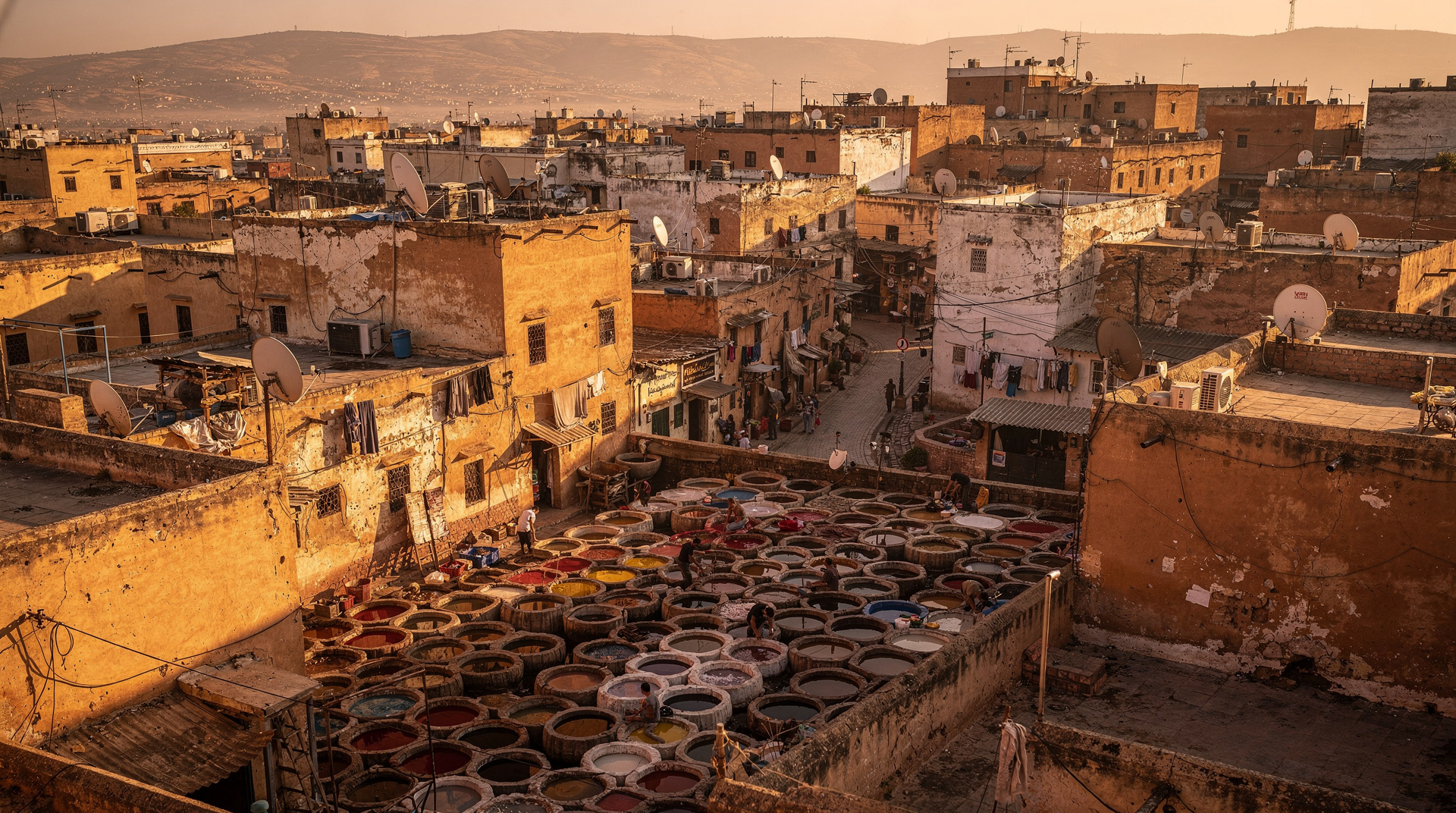
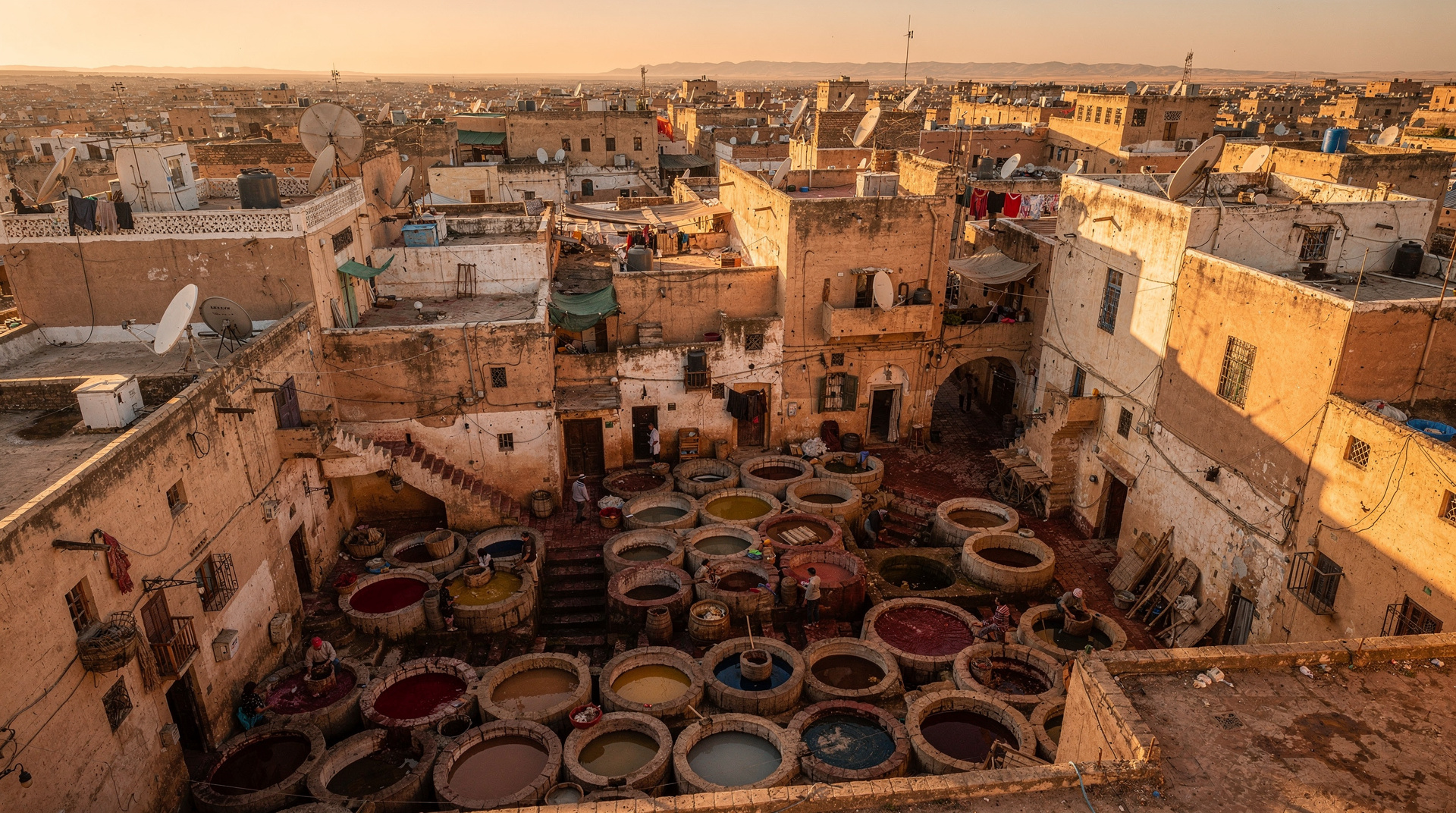
Chouara Tanneries: 15-20 minutes on foot from Al Attarine through the leather souk. The tanneries are best visited in the morning when dye activity is highest. A guided tour that covers Al Attarine Madrasa and the Chouara Tanneries in the same morning is the most efficient structure.
Al Qarawiyyin library exterior: The library, restored by Aziza Chaouni in 2016, is visible from the exterior and recently became accessible to researchers — a useful symbolic stop even if entry requires advance arrangement.
Dar Jamai Museum and the Meknes day trip: If combining Fes with a Meknes excursion, the medersas make a strong first-day Fes activity, with Meknes and Volubilis as a day two option.
Cooking class: A Fes cooking class works well as an afternoon complement to a morning medersa tour — medersas in the morning, market and kitchen in the afternoon.
Practical essentials
Dress code: Shoulders and knees covered for all visitors. Bou Inania (as an active mosque) may require removing shoes before entering the prayer hall area if it’s open.
Best time to visit: Spring (March-May) and autumn (October-November) for comfortable weather. Medersas are open during Ramadan but hours may be reduced and the atmosphere is different — Bou Inania fills with worshippers for iftar prayers.
Entry fees summary: Bou Inania 20 MAD, Al Attarine 20 MAD, Cherratine 10 MAD, Seffarine free or minimal. Total outlay for all four: under 60 MAD (approximately €6).
Fes context: The Fes destination guide covers the full city beyond the medersas — the mellah (Jewish quarter), the tanneries, the Fassi food scene, and accommodation options in and around the medina.
Where the medersas fit against Fes’s other historic sites
The medersas are one strand of Fes el-Bali’s architectural heritage, not the whole picture. The Fes souks guide covers the commercial districts that surround Al Attarine and Cherratine, and pairing a medersa morning with a souk afternoon is the natural way most visitors structure a first day. If you’re building a multi-day Fes itinerary, the day trips from Fes guide covers what to add once the medina highlights — medersas included — are done, and the Meknes day trip from Fes guide is the single best addition for anyone who wants to see how the Marinid medersa tradition compares to the later Alaouite-era Bou Inania Medersa in Meknes itself.
For travellers weighing how much time the medersas deserve against everything else in Fes, the first-time visitors guide has broader pacing advice for a first Morocco trip.
Frequently asked questions about Fes medersas
Do I need to book medersa tickets in advance?
No. All four medersas sell tickets on-site and rarely see queues long enough to matter, even in high season. The exception is during major religious holidays when Bou Inania’s mosque function takes priority.
Are the medersas suitable for children?
Yes, though the appeal is more visual than narrative for younger children. Bou Inania’s scale and the Dar al-Maqana water clock opposite it tend to hold kids’ attention better than the more intimate Al Attarine. Budget shorter visits and combine with the nearby souks for variety.