Luxury vs budget Morocco: realistic costs at every level
How much does Morocco cost per day?
Morocco works across a wide range. A careful budget traveller can manage €40–55/day covering hostel, street food, local transport, and free sights. A mid-range couple spends €100–160/day each. Luxury Morocco — private riads, private drivers, premium desert camps, fine dining — runs €300–600/day per person. The gap between budget and luxury is wider than in most destinations.
Morocco is genuinely flexible on budget — here is what each level actually buys
The currency divide matters here. Morocco prices in dirhams (MAD). In 2026, rough working rates: €1 ≈ MAD 11, $1 ≈ MAD 10. Everything in this guide uses both; convert freely.
What makes Morocco interesting from a budget perspective is that the spread between floor and ceiling is unusually wide. The same city — the same medina — contains both a shared dorm for €10/night and a private riad suite for €500/night. Both are real options and both deliver what they promise. The question is what you want from a Morocco trip and how much you are willing to pay for it.
At a glance
| Where | Same spread applies across Marrakech, Fes, Chefchaouen, Essaouira; luxury concentrates in Marrakech |
| Cost | Roughly €40-55/day budget, €120-270/day mid-range, €390-1,100+/day luxury (per person) |
| Time needed | A week is enough to feel the difference across accommodation, food, and one Sahara trip |
| Getting there | Cash is essential everywhere; ATMs widely available in cities, scarcer in small towns |
| Best time | Shoulder season (Nov, late Feb-Mar, mid-Sep-mid-Oct) stretches any budget further |
The overall daily budget breakdown
| Category | Budget (€/day) | Mid-range (€/day) | Luxury (€/day) |
|---|---|---|---|
| Accommodation | 10–20 | 60–120 | 200–500+ |
| Food | 10–18 | 25–50 | 60–150 |
| Transport | 5–10 | 15–40 | 50–150 |
| Activities | 5–15 | 20–60 | 80–300 |
| Total estimate | €35–60 | €120–270 | €390–1,100+ |
These are per-person figures. Budget travel is most efficient solo or in pairs sharing costs. Luxury rates are per-person but assume two sharing most expenses (accommodation, private drivers).
Accommodation: the biggest variable
Budget: €10–25/night
Morocco’s medinas have deep hostel and budget guesthouse infrastructure. In Marrakech, Fes, Chefchaouen, and Essaouira you can reliably find:
- Shared dorm beds: €10–15/night. Hostel quality varies enormously. Waka Waka Hostel (Marrakech), Funky Fes (Fes), and most Chefchaouen hostels are clean and social.
- Private rooms (shared bathroom): €18–28/night. The entry-level riad experience — your own room in a traditional courtyard house, but the bathroom is shared with a few other travellers. Surprisingly decent in the better establishments.
- Hammam included: Many budget riads include free hammam access in the evening — this is a genuine value-add at this price level.
What budget accommodation misses: Courtyard pools (essentially none at this price), guaranteed hot water (variable), reliable WiFi, breakfast quality. The shared bathroom situation is the main friction point.
Where budget works best: Chefchaouen (cheapest medina accommodation in Morocco), Fes (slightly cheaper than Marrakech for equivalent quality), Essaouira (smaller market, less premium pricing pressure).
Mid-range: €60–150/night
This is where Morocco’s riad scene hits its stride. A genuine private riad room — en suite bathroom, breakfast on the rooftop, courtyard with fountain — is available throughout this range.
In Marrakech: Riad Yasmine, Riad Danka, and dozens of comparable properties offer courtyard pool access, elegant tilework, rooftop breakfasts, and attentive staff from €80–120/night for a double room. In Fes, comparable quality runs €60–100/night. Essaouira’s Riad Mimouna and Riad Zahra category sits at €70–110/night.
At the top of mid-range (€120–150/night), you access riads with private rooftop terraces, better breakfast spreads, more personal service, and occasional small plunge pools.
What mid-range gets right: The Moroccan riad experience — the thing that makes Morocco accommodation distinctive — is fully accessible at this level. You are not missing anything meaningful above what a budget room offers, except space and privacy.
Luxury: €200–600+/night
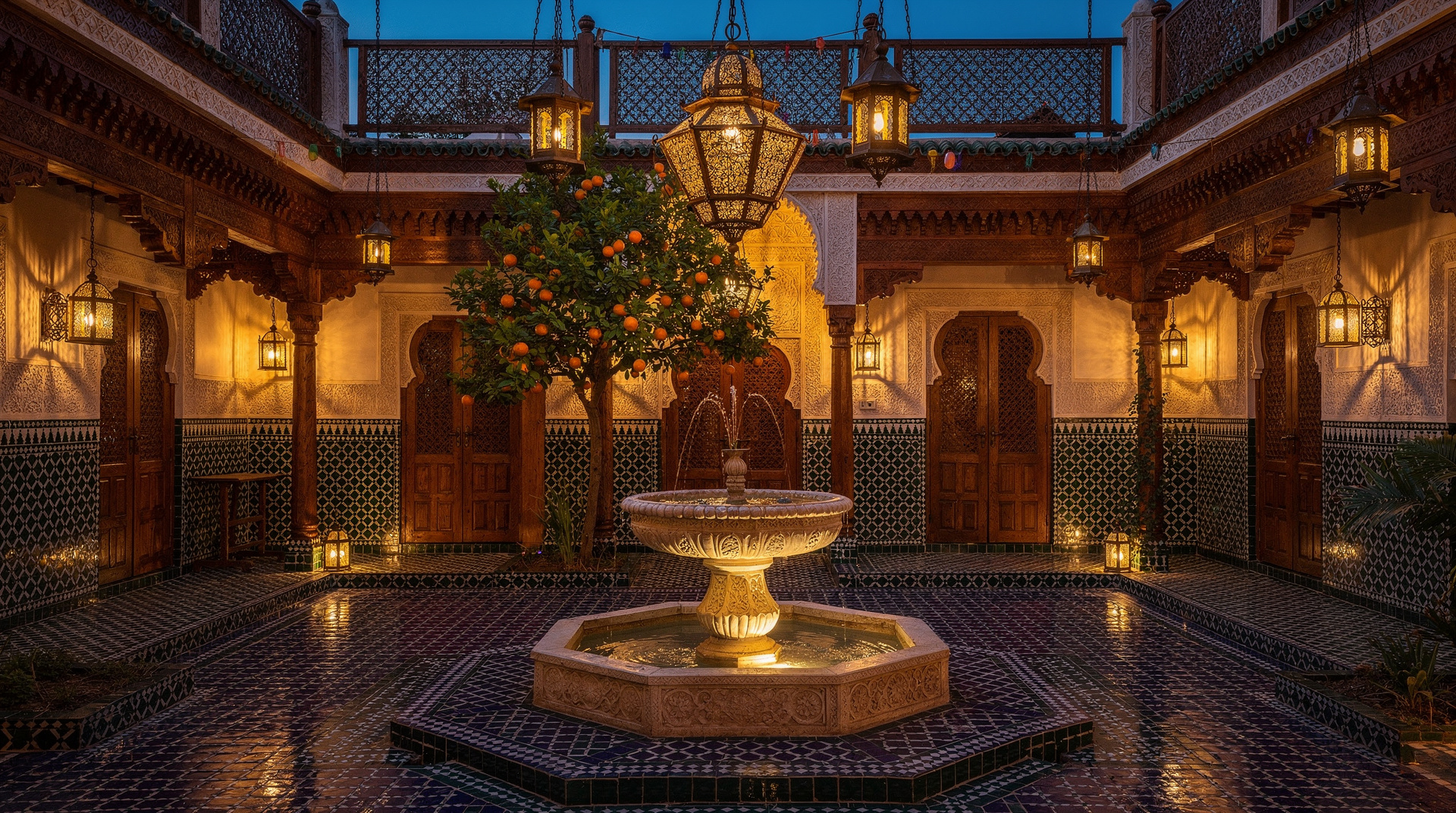
Morocco’s luxury riad and boutique hotel market is genuinely world-class. This is where international design magazines take their photographs.
Marrakech: La Mamounia (MAD 5,000–15,000/night for a room, considerably more for suites) is the grande dame — Winston Churchill painted here, the gardens are extraordinary, the pool is one of the great hotel pools in the world. Royal Mansour (private riad within a larger riad complex, with butler service) is arguably the most architecturally serious hotel in Morocco. El Fenn (boutique, four courtyard pools, contemporary Moroccan aesthetic) hits the €300–500/night range with excellent food.
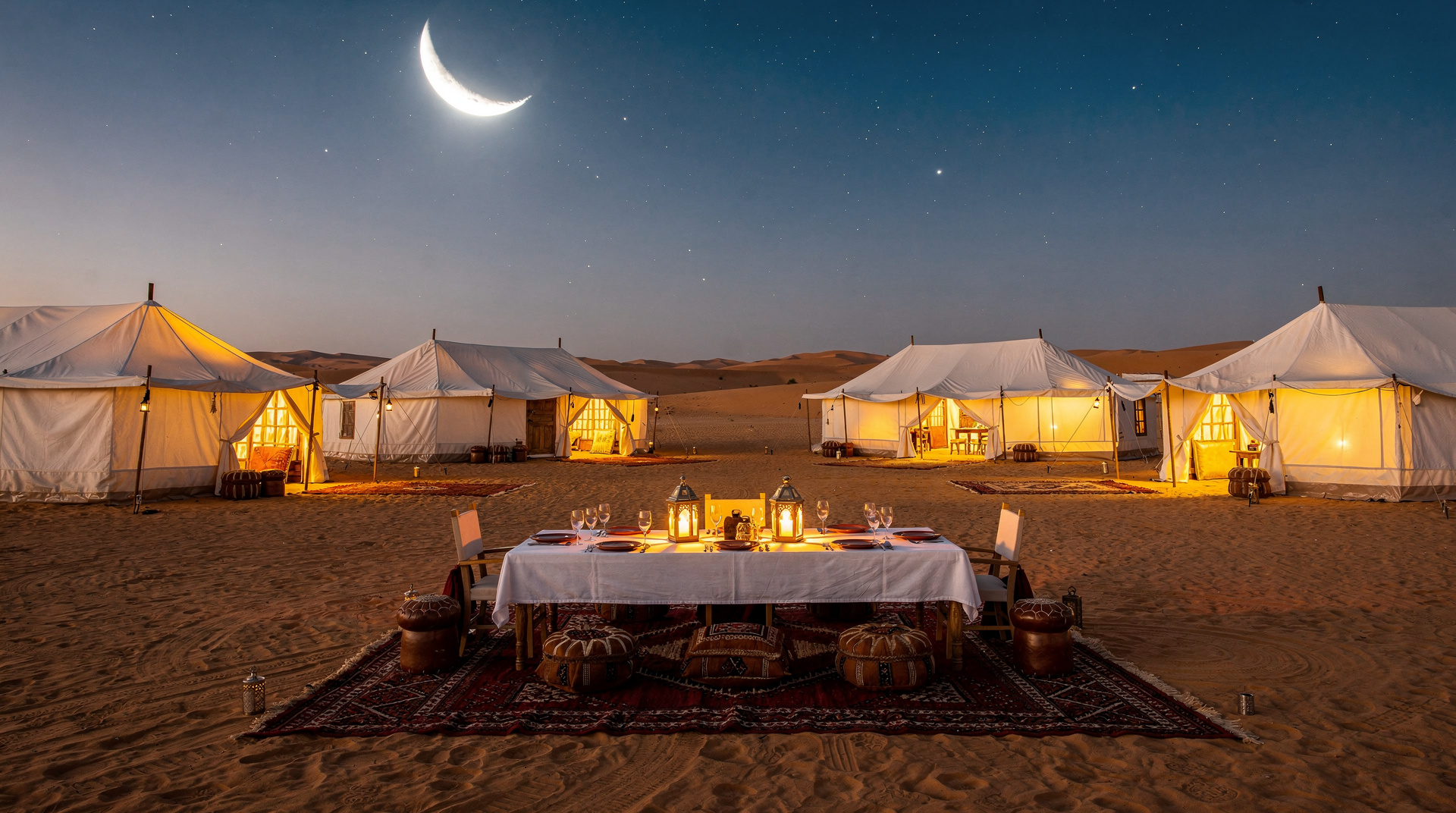
Beyond Marrakech: The Sahara has genuine luxury camp options — large private tents with proper beds, private showers, and chef-prepared Moroccan dinners under the stars at Merzouga or Erg Chigaga. These run MAD 2,500–5,000 (€230–450) per person/night including camel ride and meals. The luxury desert camps guide covers the best operators.
What luxury buys that mid-range cannot match: Staff ratios (luxury properties may have four staff per guest), architecture (the great riads were the homes of 19th-century Moroccan merchant families and the bones are exceptional), pool access and privacy, curated experiences that feel seamless rather than arranged.
Food: the most democratic category
Budget eating: €8–18/day
Morocco’s street food and café culture is one of the most generous in the world for budget travellers.
Breakfast: Msemen (Moroccan flatbread) with argan oil and honey, café au lait — MAD 25–40 (€2.50–4) at any neighbourhood café.
Lunch: A bowl of harira (tomato and lentil soup) and bread — MAD 10–15. A full tagine at a local restaurant in the medina — MAD 50–80 (€5–7). Sandwiches (kefta, merguez, tuna with chermoula) from street stalls — MAD 15–25.
Dinner: The budget ceiling in Morocco sits around €10–12/person for a sit-down meal with drinks in a local restaurant. This buys a proper Moroccan meal — salads, tagine, bread, mint tea. At hole-in-the-wall spots in the residential medina quarters, €6–8 covers everything.
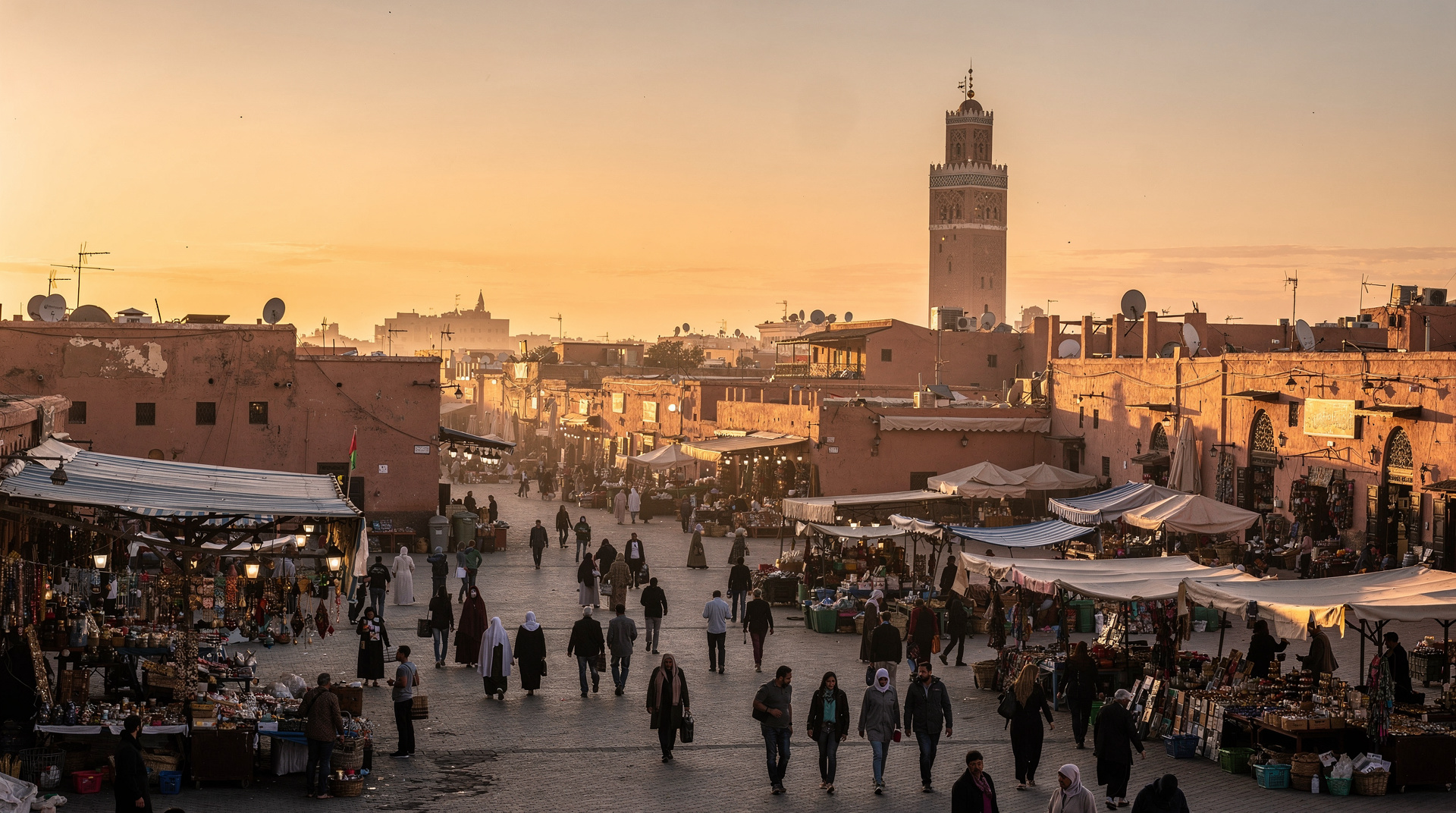
What to avoid at budget level: The tourist-facing restaurants on Djemaa el-Fna square in Marrakech and equivalent squares in Fes charge 3–4x local prices for average food. A “full dinner” at one of these can cost MAD 200–350 (€18–32/person) for mediocre tagine and minimal hospitality. The food is worse than what you find at restaurants that serve locals.
Mid-range eating: €25–50/day
At this level, Morocco’s restaurant scene opens up considerably. You can eat at the better medina restaurants with proper Moroccan cooking in riad settings, choose wine with dinner (Morocco has a wine industry; a bottle of Médaillon Gris runs MAD 120–180 in a restaurant), and access the fusion-Moroccan scene that has developed in Marrakech’s Gueliz district.
Marrakech specifics: Nomad (modern Moroccan, MAD 120–180/main course), Café Clock (cultural venue with good Moroccan food and music evenings), Dar Zitoun (traditional cooking in a riad setting, MAD 150–250/person for full dinner) all sit comfortably in mid-range. Dinner at a quality restaurant runs MAD 300–450/person with drinks.
Fes: The Fassi cooking tradition — widely considered the most refined in Morocco — is accessible at mid-range. Riad Fes restaurant, Dar Roumana, and the cooking-class dinners at several medina riads offer the full bastila and mechoui (slow-roasted lamb) experience at MAD 300–500/person.
Luxury eating: €60–150+/day
Morocco’s top restaurant tier is concentrated in Marrakech and is genuinely ambitious. La Mamounia’s restaurant is the obvious peak — an architectural experience as much as a culinary one. Dar Yacout (theatrical Moroccan banquet in a 1960s riad, with musicians and multiple courses) runs MAD 600–900/person and is a performance worth paying for once.
Outside Marrakech, luxury food is more limited. The best meals in Fes tend to be at riad restaurants rather than standalone fine dining. Essaouira’s luxury ceiling is excellent seafood, not architectural dining.
Transport: where budget and mid-range diverge most
Budget transport
Intercity buses: CTM (the premium state bus service) and Supratours cover the main Morocco routes at excellent value. Marrakech–Fes: MAD 170–210 (~8h). Marrakech–Essaouira: MAD 110–140 (~3h). Marrakech–Casablanca: MAD 100–130 (~3.5h). Comfortable, reliable, and the best value transport in Morocco.
Trains: ONCF covers the major northern cities. The Al Boraq high-speed train does Casablanca–Tangier in 2h10 for MAD 190–240. Casablanca–Marrakech: MAD 100–170 (regular) or MAD 270 (first class). The Al Boraq train experience is worth it purely for the novelty.
Shared taxis (grands taxis): The Moroccan shared taxi system — six passengers in a large Mercedes, fixed route, departing when full — is cheap, often faster than buses, and a genuine local experience. Marrakech to Ouarzazate: MAD 80–100/person in a shared taxi. Useful for reaching destinations CTM does not serve directly.
In-city: Petit taxis (city taxis, metered, cheap, maximum 3 passengers) are the budget workhorse within cities. Negotiate or insist on the meter. A cross-medina trip in Marrakech should cost MAD 10–20.
Mid-range transport
Supratours plus private transfers for the last leg: A common pattern is using the bus network for long intercity routes and private transfers for the medina check-in (where luggage over cobblestones is the issue). Private transfer Marrakech Menara Airport to medina riad: MAD 200–300 (€18–27).
Day trip by shared taxi or organised tour: Agafay desert, Ourika Valley, and Ouzoud Waterfalls all have group day trips running MAD 200–350/person from Marrakech. This sits between budget and mid-range and is the best-value way to reach day trip destinations.
Luxury transport
Private driver, full-day: MAD 700–1,200/day (€65–110) for a private driver with your own vehicle is one of the best value upgrades in Morocco. This covers a full day of travel, transfers, waiting time, and someone who knows where they are going. For multi-day itineraries, a private driver is significantly more comfortable than piecing together public transport. The private driver vs self-drive guide covers the decision in detail.
Private driver, multi-day (Sahara circuit): A 3-day Marrakech–Sahara–Marrakech private circuit with a good driver runs MAD 2,200–3,500 (€200–320) for the vehicle, not per person. Split between two or four travellers, this becomes very reasonable.
Activities: the biggest range of all
What is free or near-free
- Walking any Moroccan medina (the experience is the activity)
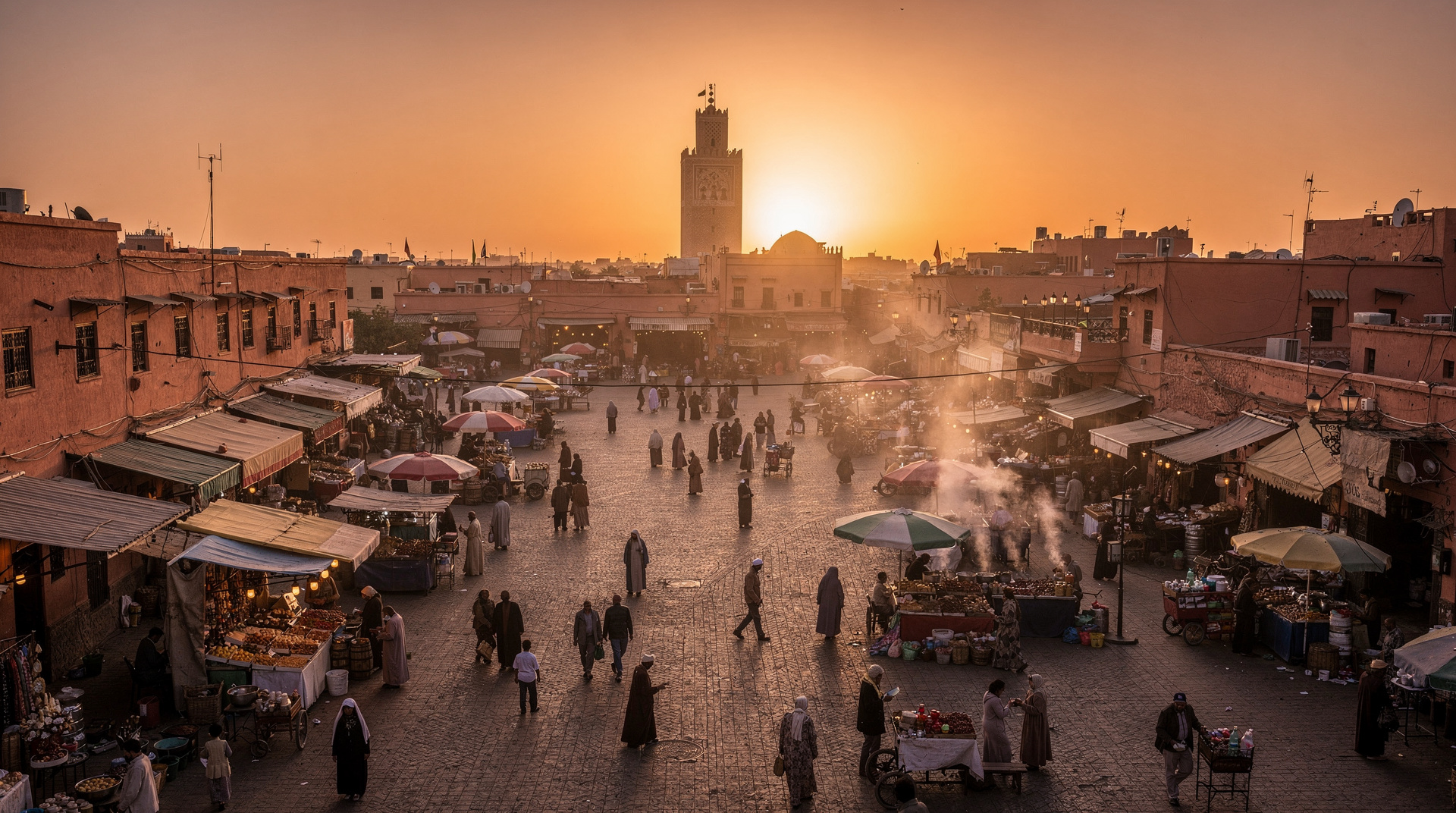
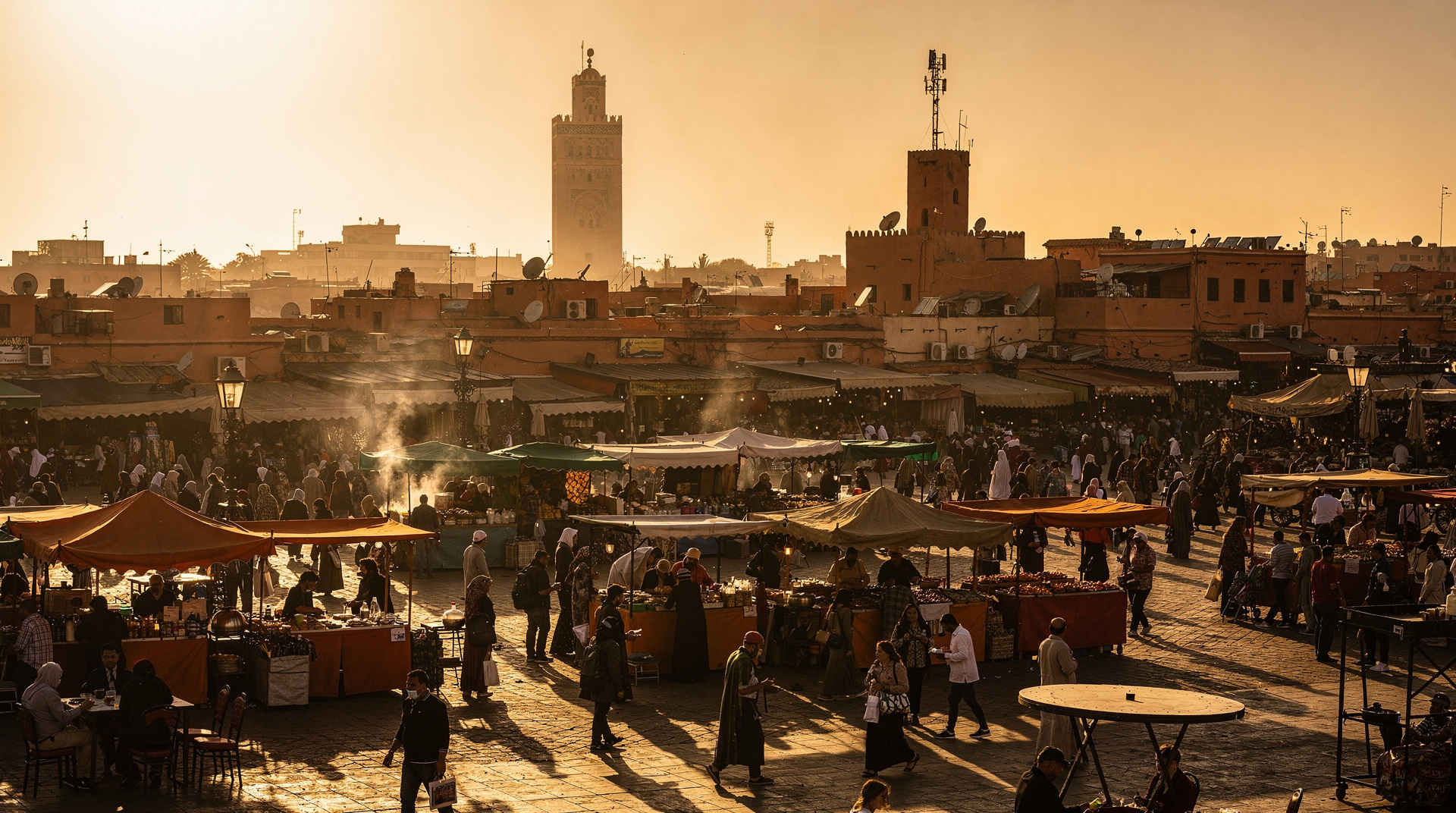
- The Djemaa el-Fna square spectacle
- Exterior visits to mosques and medersa courtyards (non-Muslims cannot enter some mosques, but the streets around them are extraordinary)
- Beaches at Essaouira, Agadir, and Taghazout
- Viewpoints over the Fes medina from Borj Nord and the hills above Fes el-Bali
Budget activities: €5–20
- Majorelle Garden entry: MAD 100 (€9) — essential, no argument
- Bahia Palace: MAD 70 (€6.50) — one of Morocco’s best palaces
- Chouara Tannery viewing platform (usually free with shop purchase)
- Local hammam session: MAD 15–30 for the basic scrub at a neighbourhood hammam — a very different experience from the tourist hammam
Mid-range activities: €20–60/person
Organised day trips (Agafay dinner, Atlas mountains, Ouzoud Waterfalls) run MAD 200–500/person through group tours. A traditional hammam-spa experience at a quality tourist establishment — longer, more comfortable, English-speaking staff — runs MAD 350–600 (€32–55).
A cooking class (market visit, instruction, lunch) at a well-regarded Marrakech kitchen runs MAD 600–900 (€55–82/person) and is one of the most consistently rewarding Morocco experiences across all budget levels. For those interested, a Marrakech cooking class with market visit is consistently one of the highest-rated Morocco activity bookings.
Luxury activities: €80–300+/person
Hot air balloon over the Marrakech palmery: MAD 1,800–2,500/person (€165–230) including breakfast in a Berber camp. Worth every dirham if weather cooperates — the Atlas Mountains at sunrise from 1,000 metres is genuinely extraordinary.
Private guided day trips: A private guide for a full day of Marrakech medina, Fes, or Chefchaouen runs MAD 700–1,200/day — the difference from a group tour is time flexibility, depth of explanation, and access to places a group cannot navigate. For Fes specifically, a full-day Fes cultural tour is one of the tours where the private upgrade makes the largest difference.
Premium desert camp: At the Merzouga dunes, genuine luxury camps (private tented suites, chef-cooked dinners, sunrise camel treks) run MAD 2,500–5,000/person/night. Standard camps run MAD 600–1,200/person/night. The gap in quality is real and substantial; the luxury desert camp guide explains what the price difference actually buys.
Desert tours: the biggest spend in any Morocco budget
The Sahara is the single biggest cost item in a Morocco trip, and the range is dramatic.
| Option | Price/person | What you get |
|---|---|---|
| Budget shared tour (3 days) | €120–180 | Shared 4WD, basic camp, group camel ride, standard tent |
| Mid-range private tour (3 days) | €250–380 | Private 4WD, better camp with en suite tent, private camel ride |
| Comfort tour (3 days) | €380–550 | Private transfer throughout, quality camp, private tent and shower |
| Luxury camp (3 days) | €600–1,000 | Private driver, 5-star desert camp, private suite tent, sommelier, chef |
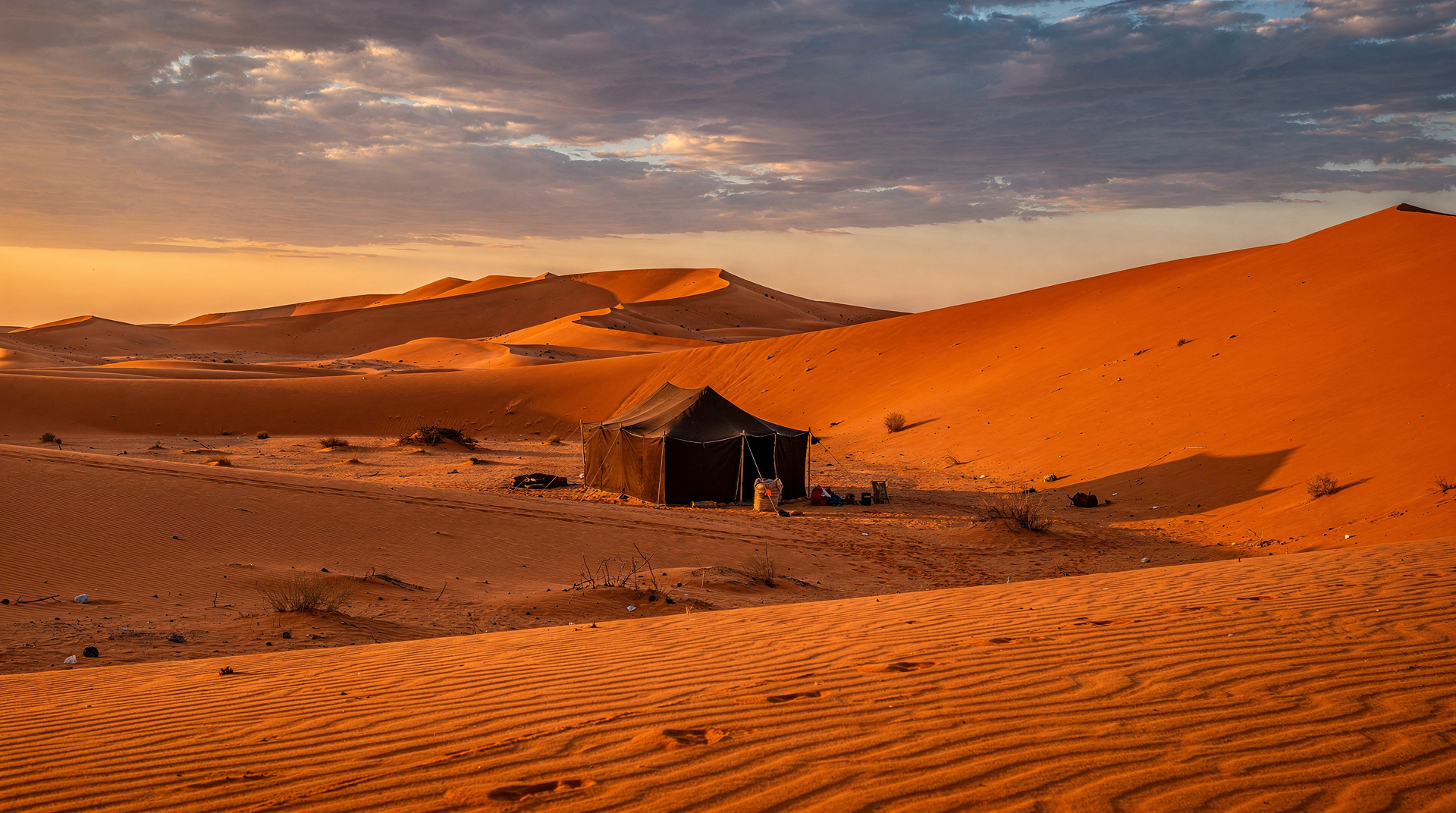
Budget shared tours are not bad — the dunes at Erg Chebbi are spectacular regardless of how you get there. But the camp quality difference is significant: a €150 tour delivers a basic tent with foam mattress and shared bathroom 200 metres away. A €400 tour delivers a proper bed, a private outdoor shower, and a reasonable camp dinner.
The Merzouga vs Agafay guide covers the alternative of the Agafay rocky desert near Marrakech, which is less spectacular but much cheaper (€60–150 for a dinner-and-sunset experience) and realistic for short trips.
Real sample itinerary costs
7-day budget Morocco: ~€320–400/person total
- Flights (included separately)
- 6 nights accommodation: hostels and budget guesthouses → €80–120
- Food: street food, local restaurants, breakfast included at riad → €70–100
- Transport: CTM buses (Marrakech–Essaouira–Marrakech) + city taxis → €30–45
- Activities: Majorelle Garden, Bahia Palace, local hammam, 1 group day trip → €40–60
- Budget shared Sahara tour (if included): → €120–150
Total without flights: approximately €340–475 for 7 days.
7-day mid-range Morocco: ~€900–1,400/person total
- 6 nights accommodation: quality riads, 2 nights luxury camp → €500–700
- Food: good restaurants, 1 cooking class, mid-range lunches → €200–280
- Transport: mix of CTM bus and private transfers for medina/airport → €100–150
- Activities: private medina tours, day trips, hammam experience → €120–200
Total without flights: approximately €920–1,330 for 7 days.
7-day luxury Morocco: ~€2,500–5,000/person total
- 6 nights accommodation: La Mamounia 2 nights, quality riads, luxury desert camp 2 nights → €1,500–3,000
- Food: fine dining, cooking class at top kitchen, all mid-range lunches → €400–700
- Transport: private driver throughout → €350–600
- Activities: hot air balloon, private guides everywhere, spa → €300–600
Total without flights: approximately €2,550–4,900 for 7 days.
Where to spend money in Morocco: the value hierarchy
Some upgrades are worth far more than their price suggests. Others have minimal impact on the actual trip.
High-value upgrades:
- A guide for your first day in Fes — the medina complexity means context pays dividends across your entire stay.
- A good private driver for the Sahara circuit — 3 days in a shared minibus versus your own driver with flexibility is a qualitatively different experience.
- One genuinely good riad — the Moroccan riad experience is distinctive enough that staying in one excellent example is worth more than three mediocre ones.
- A cooking class — you learn something, eat something excellent, and carry the recipe home.
Diminishing-returns upgrades:
- Desert camp at the very top end — the dunes are spectacular at €150 and spectacular at €500. The luxury camp adds comfort and quality, but the sunrise experience is the same.
- Most tourist hammams — the expensive tourist hammams (€45–80) are more comfortable and English-friendly than a neighbourhood hammam (€3–5), but the actual washing-and-scrubbing experience is comparable.
- Very expensive riads in high season — the top Marrakech riads charge €400–600/night in peak; for that money in shoulder season you can access the same places at €200–250. If flexibility is possible, the off-peak rate is the sweet spot.
Frequently asked questions about Luxury vs budget Morocco
How much cash do I need in Morocco?
More than you might expect. The medinas operate predominantly in cash (dirhams). Major restaurants, riads, and hotels in tourist areas accept cards, but your guide, the petit taxi, the hammam, the street food, the market purchases — all cash. Plan for MAD 200–300 (€18–27) in spending cash per day as a minimum, more if you are doing haggling-heavy shopping.
Can I do Morocco on €30/day?
At a push, yes — if you sleep in dorms (€10), eat entirely from street food and market stalls (€8–10), use only public buses and shared taxis (€3–5), and visit only free or near-free sites. It is a minimal Morocco experience and leaves out most of the things that make Morocco worth visiting. The floor for a reasonable experience is closer to €40–45/day.
Is tipping expected?
Yes, and it is meaningful to the people involved. Restaurant service: 10% is appropriate. Guides: MAD 100–150/day for a good half-day tour, MAD 200–300 for a full day. Riad staff who carry bags: MAD 20–30. Hammam staff: MAD 20–30. Private drivers on multi-day trips: MAD 100–150/day is appropriate. Budget these amounts into your daily cash needs.
Is Morocco good value compared to European destinations?
Considerably, especially at mid-range and below. A riad experience that would cost €300/night in Portugal costs €80–100 in Morocco. A cooking class that runs €120 in Lisbon runs €60–80 in Marrakech. Restaurant meals at quality establishments cost 50–70% less than comparable European equivalents. At the true luxury tier (La Mamounia-level), the price gap narrows but Morocco remains better value than comparable European luxury.
When is Morocco cheapest?
July and August are peak season in Marrakech — temperatures reach 40°C but European tourist demand is highest. January–February is cheapest for accommodation but cold (Marrakech medina nights in January drop to 7–10°C). The best combination of good weather, lower prices, and thinner crowds: November, late February–March, and mid-September–mid-October.
Do I need travel insurance in Morocco?
Yes. The public healthcare system is limited in quality and private clinic care is pay-upfront. A straightforward insurance policy covering medical evacuation (relevant if you are doing any Atlas trekking) costs €30–60 for a 2-week trip and is not worth skipping.
Mixing budget levels: the smart-splurge strategy
Most experienced Morocco travellers don’t pick one tier and stay there — they mix. A genuinely effective pattern: budget or mid-range accommodation for most of the trip, with one or two deliberate splurges where the money buys something qualitatively different rather than just more comfort.
The splurges that pay off best: one night at a top-tier riad or La Mamounia-level hotel (even if the rest of the trip is mid-range riads), a private driver for the Sahara leg instead of a shared minibus, and a genuinely good guide for the first day in a complex medina like Fes. These specific upgrades change the texture of the experience, not just its comfort level. Compare this against the Merzouga vs Zagora choice for the desert leg, since picking the right route matters as much as the budget tier once you’re there.
The splurges that pay off least: upgrading every single night of accommodation, or paying for the most expensive version of an experience that’s already good at the mid-range (the desert dunes, the medina walk, most hammams). The best time to visit guide is also a free lever — travelling in shoulder season stretches any budget significantly further than any single splurge-vs-save decision.
Where to read next once you know your tier
Once you have a sense of which level suits you, the rest of the planning gets easier. If you lean towards the lower end, the budget guide and the budget Morocco itinerary turn the daily ranges above into a route, and budget hostels in Morocco covers where to sleep without overspending. If you lean towards the upper end, the luxury Morocco itinerary and the Royal Mansour review show what the top tier looks like in practice.
Wherever you land, two practical topics affect every budget: tipping in Morocco and bargaining in Morocco. Both change what you actually spend on the ground, whatever the tier.