Berber culture guide: understanding Amazigh identity in Morocco
Who are the Berbers of Morocco and what is their culture?
Berbers (Amazigh, plural Imazighen) are the indigenous people of North Africa, predating Arab arrival by millennia. Morocco has the world's largest Amazigh population — roughly 40-60% of Moroccans identify as Amazigh. Three main groups are the Chleuhs of the High Atlas and Souss, the Rifis of the northern mountains, and the Soussi from the southwest. Their culture includes Tifinagh script, distinct music traditions, weaving, and a preserved oral tradition.
| At a glance | |
|---|---|
| Where to encounter it | Atlas mountain villages (Imlil, Ourika Valley), Chefchaouen and the Rif, Souss region around Agadir |
| Best single stop | Berber Museum, Majorelle Garden, Marrakech |
| Best festival | Imilchil Marriage Festival, September; Timitar Festival, Agadir, July |
| Cost | Museum entry typically 30-80 MAD; homestays around 200-400 MAD/person/night |
| Respectful engagement | Ask before photographing, especially elder women’s tattoos; visit cooperatives over souvenir shops |
Who are the Amazigh: correcting the misconceptions
The term “Berber” has European origins — from the Greek barbaroi and the Latin barbari — and was applied by outsiders to the indigenous North African peoples the Arabs called Amazigh. Morocco’s Amazigh population, the indigenous people who inhabited North Africa long before the Arab conquests of the 7th century, call themselves Imazighen (singular: Amazigh), which roughly translates as “free people” or “noble people.”
The misconception most visitors arrive with is that Berber culture is somehow separate from Moroccan identity — a tribal minority on the margins. The reality is opposite: Amazigh culture is the substrate of Moroccan civilisation. The High Atlas villages, the spice trade routes, the carpet weaving traditions, the mountain agricultural systems, the pre-Islamic Tifinagh script — these predate the Arab cultural overlay by centuries and in some cases millennia.
Modern Morocco has officially recognised this: Tifinagh script was added to the Moroccan curriculum in 2003, and Amazigh (Tamazight) was enshrined as an official national language alongside Arabic in the 2011 constitution.
The three major Amazigh groups in Morocco
The Chleuhs (Souss and High Atlas)
The Chleuhs inhabit the High Atlas mountains and the Souss Valley region (around Agadir, Taroudant, and Tiznit). They speak Tachelhit, the most widely spoken Amazigh language variant in Morocco. The Chleuhs produced the Saadian dynasty that ruled Morocco from Marrakech in the 16th century — evidence that Amazigh groups didn’t just resist Arab political power but wielded it.
Cultural markers: The Tachelhit language has a rich oral poetry tradition (timawayin — improvised sung poetry). The Chleuh ahwash collective dance (below) is the dominant music-dance form. The flat-woven kilim rugs from the Souss are specific to this group. Argan oil production is a Chleuh tradition — the argan tree grows almost exclusively in Chleuh-inhabited territory.
Where to encounter this culture: The Ourika Valley south of Marrakech, the Imlil area at the foot of Toubkal, Taroudant, and the small atlas villages accessible on atlas mountain treks. See the Imlil destination guide for the deepest access to Atlas Chleuh culture.
The Rifis (Northern Rif Mountains)
The Rifis inhabit the Rif Mountains of northern Morocco — the region including Chefchaouen, Al Hoceima, and the eastern Rif. They speak Tarifit (also called Riffian), a distinct Tamazight variant not mutually intelligible with Tachelhit.
The Rifis have a long history of resistance to central authority. The Rif War of 1921-1926, in which Abd el-Krim el-Khattabi led a Riffian republic against Spanish colonial forces (and won several significant battles before eventual defeat), is a major marker of Amazigh identity and broader anti-colonial history.
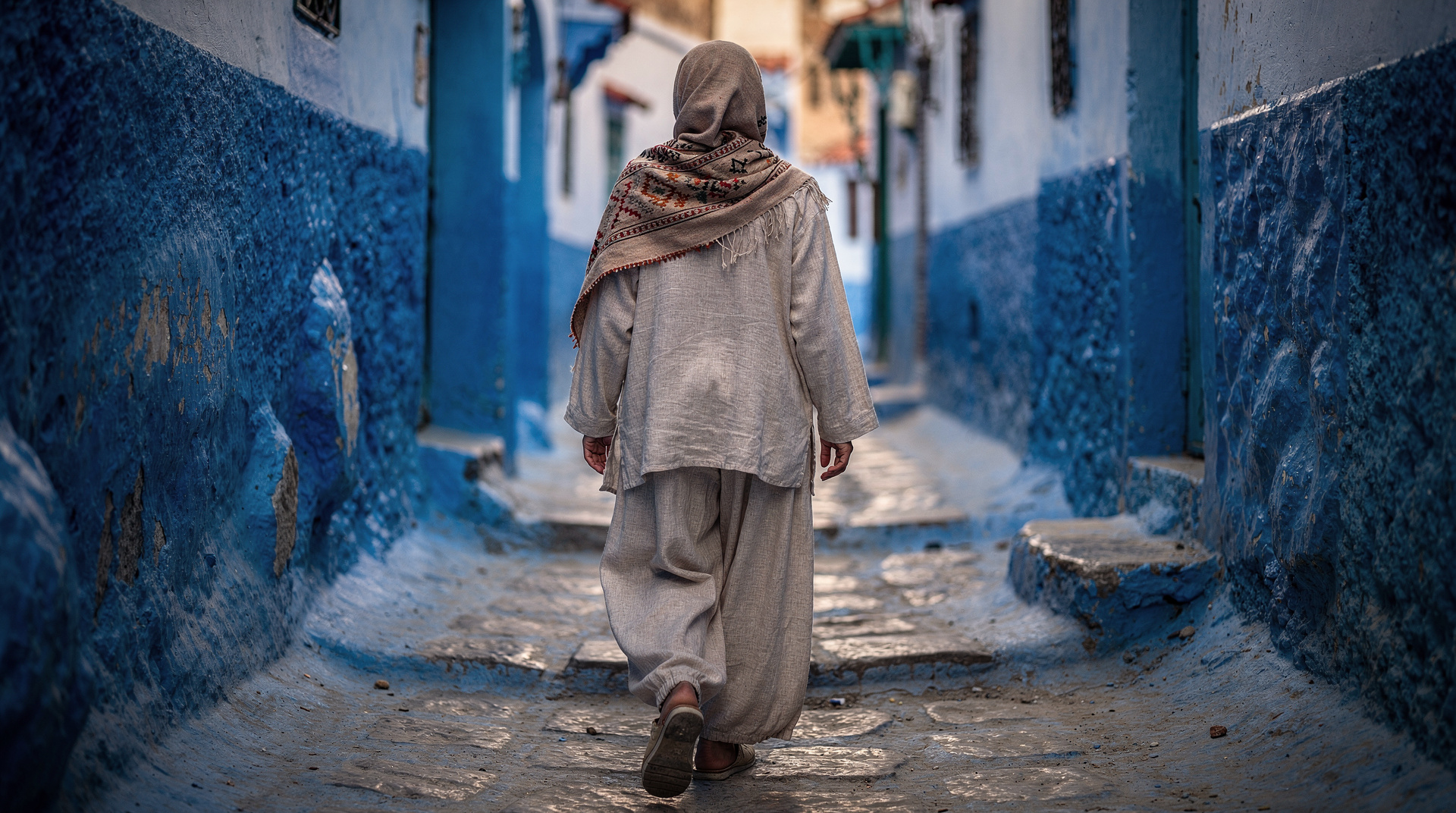
Cultural markers: Rif women’s dress is distinctive — wide-brimmed straw hats (qob) decorated with red pompons are specific to Rifi women. The Rif markets (souks) have a different character than southern Morocco — more Atlantic, more agricultural, less tourist-facing.
Where to encounter this culture: Chefchaouen, the most visited Rif city, shows some Rifi cultural influence but is heavily tourist-transformed. The markets around Al Hoceima on the Mediterranean coast are less visited and more genuinely Rifi.
The Soussi and anti-Atlas groups
The Souss region and the anti-Atlas mountains south of Agadir are home to sub-groups of the Chleuh with distinct cultural identities. The Ida ou Semlal confederacy in the anti-Atlas is known for honeybee cultivation and thyme honey production. The Aït Baamrane group on the Atlantic coast near Sidi Ifni has a distinct coastal cultural tradition.
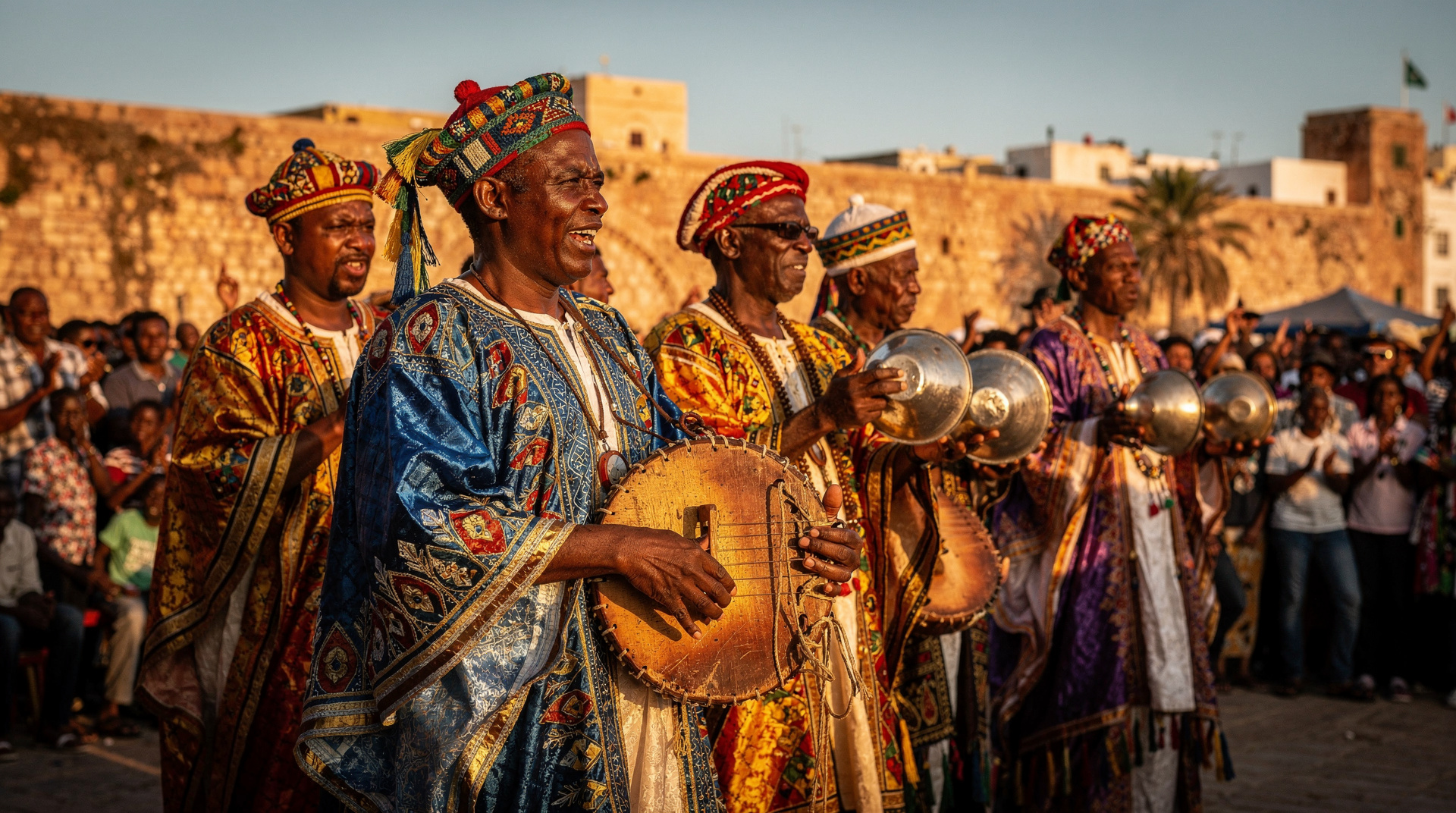
The Gnaoua question: The Gnaoua people of Morocco are often confused with Berbers but have distinct origins — Sub-Saharan African heritage from enslaved populations brought to Morocco centuries ago. Gnaoua music (using the guembri bass lute and krakeb metal castanets) is its own tradition, not an Amazigh tradition. The Gnawa Festival in Essaouira is a celebration of Gnaoua music specifically. See the Gnaoua festival guide for the distinction.
Tifinagh: the Amazigh script
Tifinagh is one of the oldest writing systems still in use — the script used by the Amazigh people for at least 2,500 years, with roots in the ancient Libyan script and possibly Phoenician influences. The modern neo-Tifinagh script standardised for use in Morocco has 33 characters and reads left to right (the ancient version had multiple directions).
Where you see it: On official Moroccan government signage (all major public signs in Morocco now include three scripts: Arabic, French, and Tifinagh). In art and craft traditions — Amazigh textiles and pottery incorporate Tifinagh letters and their derived geometric patterns as decorative motifs. In tattoo traditions — traditional Amazigh women’s facial tattooing used Tifinagh-derived symbols.
In the rug tradition: The zigzag, diamond, and cross patterns in Amazigh rugs are not purely decorative — many derive from Tifinagh letters and carry protective or identifying meanings. A weaver from the Ait Bou Ichaouen tribe creates patterns that identify her region and sometimes her family. The Moroccan Berber rugs guide covers this in detail.
Learning Tifinagh: Several apps and online resources teach neo-Tifinagh. Even learning five or six letters — enough to recognise patterns in rugs and craft — adds a layer to understanding the visual culture.
Amazigh music: ahwash and ahidous
Moroccan music is not one tradition — it is at least three distinct Amazigh music traditions, the Arab-Andalusian classical tradition, and the Gnaoua tradition, all of which are different from each other and all present at various points in a Morocco journey.
Ahwash
The dominant music-dance form of the Chleuhs. Ahwash is collective — a performance involving a circle or two facing lines of men and women, accompanied by the bendir (large frame drum), tbel (double-headed drum), and call-and-response singing. The communal character is the point: ahwash is a social performance, not a stage performance. It happens at harvest festivals, weddings, and community celebrations.
The structure: A poet (ait rbab) improvises verses (timawayin) that the group repeats or responds to. The tempo builds through the performance — early verses are slow and ceremonial; later verses accelerate into dancing. A complete ahwash can last several hours.
Where to see it authentically: Atlas mountain village festivals in summer (July-September). The Imilchil Marriage Festival in the High Atlas (September) includes large ahwash performances. Tourist-facing performances in Marrakech riads are demonstrations, not the real event.
Ahidous
The music-dance tradition of the Middle Atlas Berbers (around Khénifra and Azrou). Ahidous is similar to ahwash in structure — collective, call-and-response, building tempo — but uses different instruments (bendir frame drum only, no melody instruments) and the song styles are distinct.
Where to see it: The Middle Atlas region around Khénifra, and at the Imilchil festival where both Atlas groups participate.
Rwayes music (southern Tachelhit tradition)
The rwayes are professional Chleuh musician-poets who perform at celebrations and markets across the Souss region. Using the ribab (a one-stringed fiddle), lutes, and percussion, the rwayes perform extended improvised narratives in Tachelhit — love poetry, social commentary, and historical accounts. This is the professional performance tradition as distinct from the collective ahwash.
Berber rugs: what they mean and how to read them
The textile tradition is the most visible Amazigh art form for visitors — market stalls, riad decoration, and souvenir shopping all involve Amazigh rugs. But most buyers don’t know what they’re looking at.
The three main rug types:
Beni Ourain: High-pile sheep wool rugs from the Beni Ourain tribes of the Middle Atlas. Cream or ivory background with black geometric motifs. The minimalist patterns that became internationally popular after mid-century modern designers “discovered” them in the 20th century. Warm in cold climates — these come from a high-altitude cold region and the wool reflects that.
Boujaad: Flat-pile rugs from the Boujaad region (between Khouribga and Beni Mellal). Strong colours — deep reds, oranges, burgundy — with large diamond and cross patterns. More rustic than Beni Ourain, more expressive.
Kilim (flat-woven): The flat-woven tradition is the oldest and most widely distributed. Different regions produce distinct kilim patterns. The Souss region’s kilims use bright primary colours in geometric bands; the High Atlas kilims are more earth-toned.
Reading the patterns: Diamond shapes often represent eyes (protective symbols). Zigzags represent water or mountains. Crosses can represent the four cardinal directions or Tifinagh letters. A weaver creates a “map” of her world in each rug — terrain, family symbols, protective motifs.
For buying guidance — what fair prices look like, how to evaluate quality, and how to avoid tourist-grade imports labelled as Berber — see the Moroccan Berber rugs guide and the Marrakech souks guide.
Amazigh identity today: the political dimension
Morocco’s Amazigh identity is not simply cultural heritage — it is a living political question. The Amazigh cultural revival movement (movement culturel amazigh) has been active since the 1960s and has achieved significant official recognition, particularly after the 2003 curriculum inclusion of Tifinagh and the 2011 constitutional recognition.
Key tensions remain:
- The urbanised Amazigh who have lost the language and identify as Moroccan Arab versus those who maintain Tachelhit or Tarifit as a first language
- The economic marginalisation of many High Atlas and Rif communities relative to urban Morocco
- The role of Amazigh cultural identity in Moroccan national identity — is it a distinct identity alongside Moroccan-Arab identity, or a component of it?
For visitors, engaging with this question respectfully means not reducing Amazigh identity to rugs and folk dance. The artisan cooperatives guide covers some of the economic dimensions of Amazigh craft traditions.
Gnaoua versus Berber: the essential distinction
Visitors consistently confuse these two distinct Moroccan traditions. The short version:
| Factor | Amazigh (Berber) | Gnaoua |
|---|---|---|
| Origins | Indigenous North African | Sub-Saharan African (enslaved populations) |
| Languages | Tamazight variants | Arabic-based ritual language (Gnawa) |
| Key instrument | Bendir, ribab, imzad | Guembri bass lute, krakeb castanets |
| Musical tradition | Ahwash, ahidous, rwayes | Lila (healing ceremony), derdeba |
| Geographic base | Atlas mountains, Rif, Souss | Southern Morocco, Marrakech |
| Main cultural event | Imilchil Marriage Festival | Gnawa Festival Essaouira |
The Gnaoua festival guide covers the Gnaoua tradition in detail.
How to engage respectfully with Amazigh culture
Visit cooperatives, not tourist shops: Amazigh craft cooperatives (for rugs, argan oil, pottery) return revenue directly to producing communities. Tourist shops in Marrakech medina often sell machine-made or imported products labelled as Amazigh. The artisan cooperatives guide identifies legitimate operations.
Learn a few Tachelhit words: Even “azul” (hello in Tachelhit) and “tanmirt” (thank you) in a High Atlas village will be genuinely appreciated.
Don’t reduce everything to “Berber”: The three major groups have distinct languages and cultural traditions that people within them take seriously. A Rifi from Chefchaouen and a Chleuh from Taroudant share an Amazigh identity but not a language or cultural tradition.
Ask, don’t assume: In Atlas mountain villages accessible from Imlil or on Atlas mountain treks, your host may or may not want to discuss Amazigh identity as distinct from Moroccan identity. Follow their lead.
Frequently asked questions about Amazigh culture
Is everyone in the Atlas mountains Berber?
Most High Atlas and Rif rural residents are Amazigh by heritage and many maintain Tachelhit or Tarifit as a first language, but “Berber” is not a monolith — the Amazigh world has enormous internal diversity, and many urban Moroccans with Amazigh ancestry identify primarily as Moroccan rather than as Amazigh.
Is the Tifinagh script still used in daily life?
Primarily in official signage and formal contexts since its standardisation. In everyday handwriting, most Moroccan Amazigh speakers use Arabic script for their language (Tachelhit written in Arabic letters). Neo-Tifinagh as a written script is a recent official standardisation — ancient Tifinagh appeared in different regional variations.
Where can I see authentic Amazigh cultural performances?
The Imilchil Marriage Festival in September is the largest authentic gathering. The Timitar Festival in Agadir (July) celebrates Amazigh music alongside world music in a festival format. Atlas mountain village wedding celebrations, when accessible, are the most authentic context. Tourist performances in Marrakech riads are staged demonstrations.
Are Moroccan Jewish Berbers real?
Yes — Morocco had a significant Jewish Amazigh population that predated both Roman and Arab arrivals. Judeo-Berber languages (related to Tachelhit) were spoken in some High Atlas communities through the 20th century. Most Moroccan Jews emigrated to Israel, France, and Canada after Moroccan independence. The Jewish quarter (mellah) in Fes, Marrakech, and other cities reflects the urban Moroccan Jewish tradition (Sephardic and Amazigh-rooted).
What’s the best way for a visitor to encounter genuine Amazigh culture, not a staged version?
A village homestay on a trek — arranged through a licensed guide via Imlil or the multi-day Atlas trek guide — is the most reliable route to a genuine, unstaged encounter. Cooperative visits (argan oil, weaving) are the second-best option since the interaction, while set up for visitors, still involves real producers and real work rather than a performance.
Is it okay to buy Amazigh crafts as souvenirs, or is that appropriation?
Buying Amazigh crafts, particularly through recognised cooperatives, directly supports the communities that produce them and is generally welcomed — craft sale to visitors has been part of these economies for generations. The concern isn’t buying itself but buying fakes labelled as authentic (which shortchanges genuine producers) or reducing the culture to “just rugs and dance” without any broader understanding, which this guide aims to help avoid.
The Amazigh kitchen: food as cultural expression
Amazigh food traditions are distinct from the urban Moroccan Arab cooking tradition and deserve their own understanding. The High Atlas kitchen, the Souss kitchen, and the Rif kitchen each have regional specialties that reflect the landscape and the available ingredients.
Atlas mountain food
High Atlas villages cook with what the mountains provide: barley, millet, dried pulses, turnips, and potatoes in winter; fresh greens, wild herbs, and summer vegetables in the warm months. The Atlas mountain tagine is simpler than the Marrakech version — less spice, more root vegetables, often cooked over wood fire rather than gas. The smoke dimension from wood gives Atlas mountain tagines a character impossible to replicate in a city kitchen.
Berber amlou: The almond-argan paste specific to the Souss and anti-Atlas (see the Moroccan breakfast guide) is the most distinctively Amazigh food product. Made from toasted almonds, culinary argan oil, and honey — all three products grown and produced in the same region — it’s a food that could not exist anywhere else in the world.
Tafarnout bread: The traditional Amazigh bread of the Souss region — a large flat round made with barley flour, argan oil, and aniseed, baked in the clay oven (tafarnout is both the bread and the oven in Tachelhit). Found in rural Souss households and at the market in Taroudant; not common in tourist-facing restaurants. If you want to cook Moroccan food yourself, a market visit and hands-on cooking class in Fes is one option, though its menu leans toward the urban Moroccan tradition rather than Amazigh village cooking.
Tagoulla: A traditional Amazigh porridge made from barley flour (or millet) cooked in water with olive oil, eaten in Atlas mountain villages as a winter breakfast. Hearty, dense, and filling — designed for people working in cold mountain agriculture.
The argan food tradition
The argan tree (Argania spinosa) grows almost exclusively in Morocco’s Souss-Massa-Draa region — an area inhabited by Chleuh Amazigh communities for millennia. The tradition of using argan oil in cooking (and the painstaking extraction process, traditionally done by women of the cooperative) is a specifically Amazigh cultural tradition.
The IDA OUTANANE cooperative of women near Agadir, recognised by UNESCO for its role in preserving both the argan culture and the Chleuh women’s cooperative tradition, is one of the best places for visitors to understand the connection between Amazigh identity and argan production. See the argan oil experience guide for details on visiting.
Amazigh festivals and cultural events
The Imilchil Marriage Festival (September)
The Imilchil festival in the High Atlas (near the town of Imilchil, accessible from Beni Mellal or Rich) is the largest annual gathering of Amazigh culture accessible to visitors. Held in September, it combines a traditional marriage market (young people from surrounding tribes gather to meet potential partners) with large ahwash and ahidous music-dance performances, livestock markets, and craft sales.
The festival has become somewhat tourist-aware but remains primarily a local event — the Amazigh participants are there for cultural and practical purposes, not for visitors. Respecting this requires watching and appreciating without turning the event into a photo opportunity.
Practical logistics: Imilchil is 4-5 hours from Marrakech by road (via the Tizi n’Tichka pass and Ouarzazate), or accessible from the Middle Atlas side. The festival dates vary slightly each year — confirm timing before planning around it.
The Timitar Festival (Agadir, July)
The Timitar (“signs” in Tachelhit) is a Chleuh Amazigh music festival held in Agadir each July. Unlike Imilchil, which is a traditional gathering, Timitar is a produced music festival — international artists alongside Moroccan Amazigh performers. It’s accessible, enjoyable, and gives a concentrated exposure to contemporary Amazigh music without requiring travel to the mountains.
Moussems (seasonal saint’s festivals)
Throughout Morocco, local moussems — seasonal festivals at the tomb of a local saint — maintain Amazigh cultural elements even when formally Islamic in framing. The moussem of Sidi Ahmed ou Moussa (a celebrated Amazigh acrobat-saint of the Souss) at Tizit each May-June includes traditional Chleuh performances. These are community events, not tourist attractions, but respectful visitors are generally welcome.
Amazigh tattoo traditions
One of the most visually striking Amazigh cultural traditions is facial tattooing — specifically, the traditional chin and forehead tattoos worn by older Amazigh women in Morocco. These tattoos use Tifinagh-derived symbols and are protective in meaning — the chin tattoo (afouro) and the forehead marks identify the woman’s tribe and family and are believed to protect against the evil eye.
Traditional tattooing has declined significantly in modern Morocco — younger generations generally don’t continue the practice, partly due to Islamic opposition to permanent body modification and partly due to urban migration away from traditional tribal contexts. The women who carry these tattoos are predominantly over 50 and from rural Souss, High Atlas, and Rif regions.
This is a tradition in its last generation. Photographing an elder Amazigh woman’s tattoos requires the same courtesy as any personal photography — ask, and accept a refusal gracefully.
Where to learn more during your trip
The Berber Museum at the Majorelle Garden (Marrakech): The best museum introduction to Amazigh culture in Morocco. The collection covers jewelry, textiles, pottery, and cultural objects from all three major Amazigh regions. Located within the Majorelle garden complex.
Book the Majorelle Garden and Berber Museum entry in MarrakechAtlas mountain village homestays: Staying with an Amazigh family in the High Atlas (accessible from Imlil or the Ourika Valley) provides the most direct cultural immersion. Homestay pricing: 200-400 MAD per person per night including dinner and breakfast. If you only have a day and no time to arrange a stay, a Berber village and Atlas Mountains day trip from Marrakech is a lighter option, though it will feel more structured than a real homestay.
The Tinmel Mosque (High Atlas): The 12th-century Almohad mosque at Tinmel, south of Marrakech in the High Atlas, is one of the few mosques in Morocco open to non-Muslims. The Almohad dynasty that built it was of Masmuda Amazigh origin — the mosque represents the moment when Amazigh political and religious power peaked in Morocco. Partially damaged by the 2023 earthquake but historically significant.
The carpet cooperative at Aït Benhaddou: The village of Aït Benhaddou, famous for its UNESCO-listed kasbah, has a cooperative of local Amazigh weavers whose work reflects the specific visual traditions of the Draa Valley region. See the Aït Benhaddou destination guide for logistics.
Amazigh language basics worth learning
Even a few Tachelhit or Tarifit words change how village visits feel. Beyond “azul” (hello) and “tanmirt” (thank you) mentioned above, “la bas?” (how are you — actually a shared Darija/Amazigh greeting used across Morocco) and “urikathia” (roughly, “it’s nothing” — a modest response to thanks) are useful in Atlas villages. None of this is necessary for a comfortable visit, but Amazigh hosts on treks and homestays — the kind you’ll meet via Atlas mountain treks or the multi-day Atlas trek guide — consistently respond warmly to the effort.
Distinguishing genuine Amazigh craft from imports
A significant share of “Berber” merchandise sold in Marrakech medina souks is now machine-made or imported, not produced by Amazigh weavers. Genuine hand-knotted rugs show irregular backs and slight asymmetries; machine-made versions have perfectly uniform patterns. The same caution applies to jewelry (cast silver-tone alloy sold as tribal silver) and pottery (imported ceramics sold as Amazigh-made).
Buying through recognised cooperatives — see the artisan cooperatives guide — is the most reliable way to ensure your purchase is genuine and that the producing community sees a fair share of the price. The Moroccan Berber rugs guide has a detailed authentication checklist specifically for rugs.