The Sahara disappointed me. And then it didn't.
Everything I had been told about the Sahara was true. That was the problem.
At a glance
| Where | Merzouga / Erg Chebbi, southeast Morocco |
| Getting there | Around 9-10h by road from Marrakech (or fly to Errachidia/Ouarzazate and drive) |
| Cost | 3-day shared tour from Marrakech roughly 100-180 euros; luxury camp upgrade adds 40-100 euros |
| Time needed | 2 nights minimum (1 night in the dunes plus travel days either side) |
| Best time | October-April; summer daytime heat is extreme, nights still cool |
I had been told it would be the highlight of the trip. I had been told the dunes at Erg Chebbi were extraordinary. I had been told the camel ride at sunset was unforgettable. I had been told the night sky without light pollution was one of the great experiences of Moroccan travel. I had been told all of this by people I respected who had been there, and I believed them, and the expectation I built from their telling was the first thing the Sahara deflated.
I arrived in Merzouga in November 2022 after 10 hours in a shared minibus from Marrakech that stopped in Ouarzazate, Boumalne Dadès, and Erfoud. The road south from Marrakech is genuinely extraordinary — the Draa Valley, Aït Benhaddou in the morning light, the Dadès Gorge road curling through red rock formations — but by the time I arrived in Merzouga, I had been sitting in a vehicle for a long time and my receptivity to wonder was running low.
The check-in at the camp (a mid-range shared camp that had received decent reviews) was efficient, impersonal, and conducted entirely in the context of a tourist operation doing 30–40 people per night. A young man showed me to my tent — a large canvas structure with proper beds, better than I expected — and told me the camel ride to the dunes departed in 45 minutes.
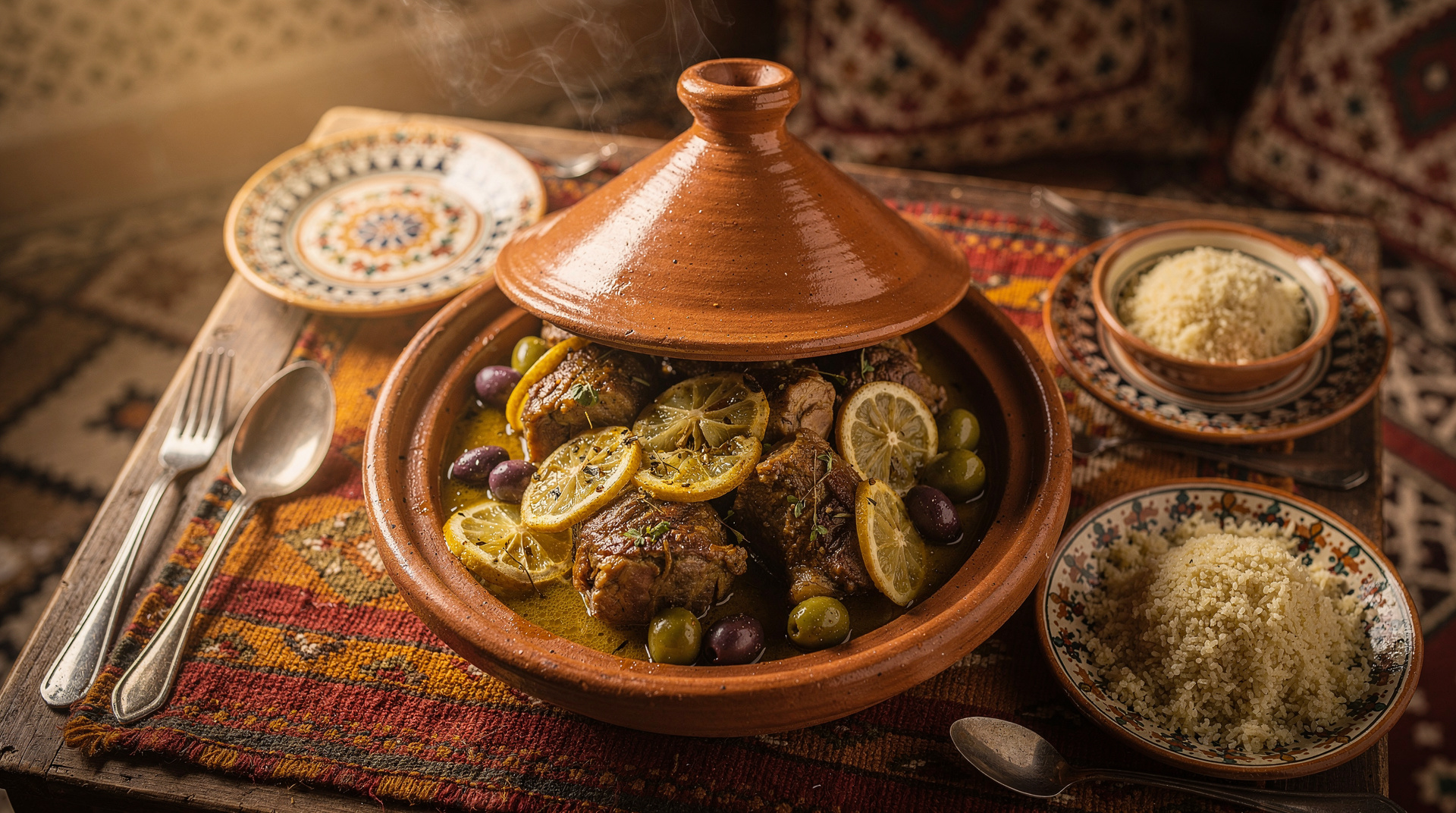
I ate a hasty tagine and got on a camel.
The camel ride: an honest account
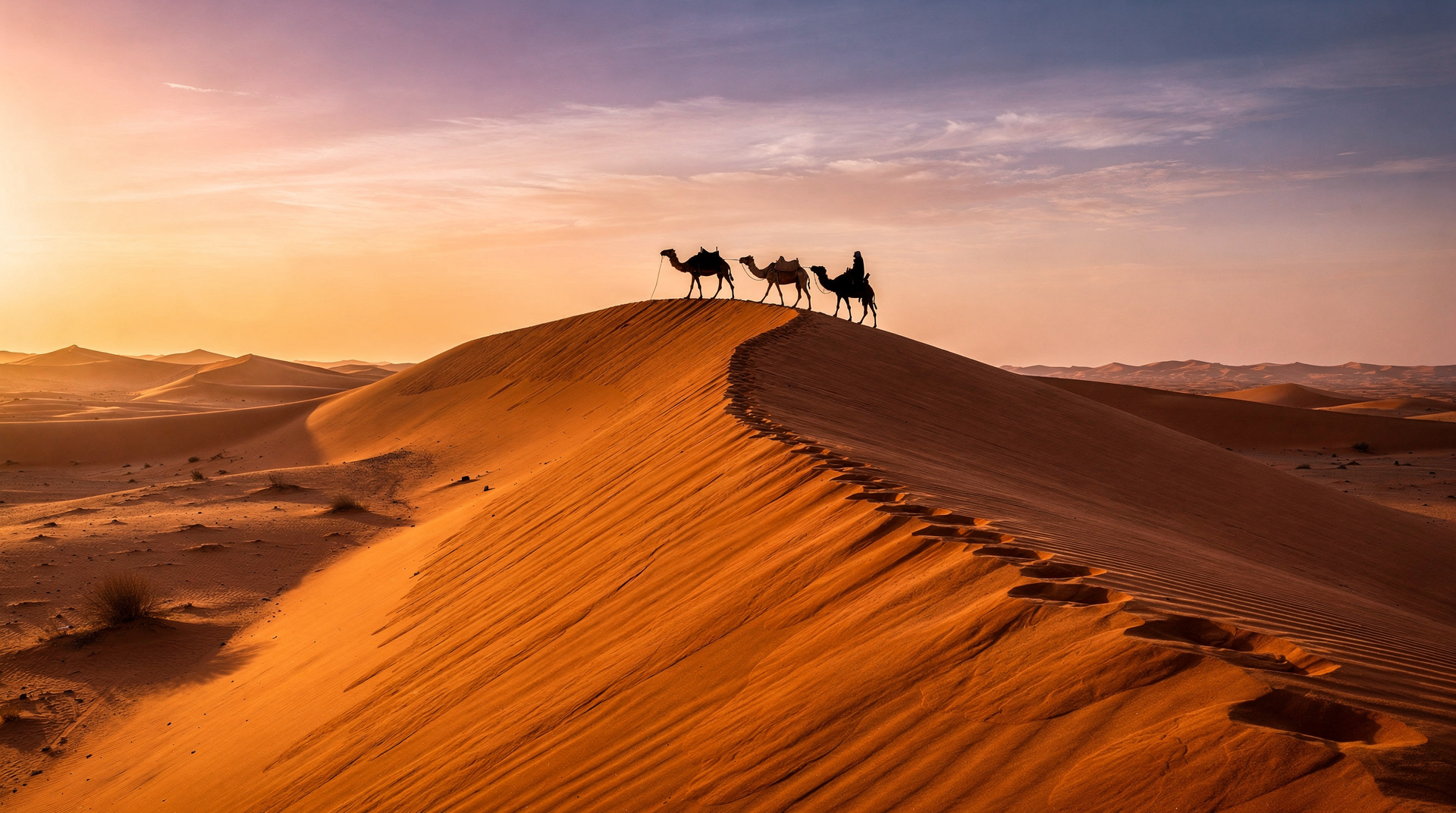
The camel’s name, the handler told me through laughter, was “Mercedes.” This may have been true; it may have been a reliable joke for nervous tourists. Mercedes was large, bad-tempered, and smelled specific. He wore a blanket and a saddle that was comfortable for the first 20 minutes and progressively less comfortable thereafter as we swayed across the flat hammada (stone desert) toward the base of the Erg Chebbi dunes.
There were 12 tourists on the ride. We were strung together in a line — Berber handlers at the front and rear, cameras out, the dunes turning orange ahead of us. The line progressed at the camel’s preferred pace, which is to say slowly and with occasional stops that had no clear motivation.
This is the moment, I think, where the disappointment crystallised. I had a specific image of the Sahara desert built from photographs and literary references and my own imagination over years of wanting to go. That image did not include 11 other tourists on camels, a handler who was checking his phone while his camel walked, or the awareness that 30 metres to my left, invisible but audible, a 4WD was making the same journey to the dune base in seven minutes.
The dunes themselves — and I want to be precise here — were magnificent. Erg Chebbi rises to about 150 metres, the largest sand dune system in Morocco, and in the late afternoon light of November the colour was exactly the red-gold I had been promised. The scale was honest: you could see the curve of dune ridges disappearing into distance, the separation between this sea of sand and the flat stone landscape surrounding it, the particular way the light raked across the surface and made each grain visible as an individual element of something vast. I climbed one dune while the handlers set up the camp for sunset tea.
Standing on the dune ridge, alone for a moment while the other tourists found their angles, I felt something shift. Not magic, not transformation. Something quieter: the recognition that the dunes were indifferent to my disappointment, that they had been there for longer than tourism had existed as a concept, and that the tourist infrastructure surrounding them was a thin membrane on the surface of something genuinely ancient and vast.
I drank tea with sand in it. The sun went down. The dunes went from orange to red to a deep maroon that softened into the same colour as the night sky at the horizon. And then, suddenly, there were more stars than I had seen anywhere outside of a planetarium.
The night sky as argument
I live in a European city. I have seen stars. I have driven into the countryside specifically to see more stars. None of this prepared me for the Merzouga sky at 11 pm in November.
The Sahara has almost no artificial light. The nearest city of any size — Erfoud — is 55 kilometres away. Merzouga village itself is tiny. And the dry desert air has a particular clarity that I have since read about but could not have predicted from the description. The Milky Way was not a faint smudge; it was a structural element, three-dimensional in the way mountains are three-dimensional, with visible depth and density variation. I could see the colour differences between stars — the blue-white of Sirius, the red of Betelgeuse — without binoculars. I could see satellites crossing the sky in steady arcs.
A French couple from the camp and I sat outside our tents until 1 am. We did not talk much. There was not much to say. The sky made conversation feel insufficient.
This is one of those experiences that resists honest description because the honest description is too simple. The stars were extraordinary. That is all. The stars were extraordinary in a way that required physical presence in a desert at night far from artificial light, and there is no substitute for that.
The 4:30 am alarm and the reason I changed my mind
The camp handler had told us the previous evening: wake at 4:30, climb the dune for sunrise at 5:45. I had registered this information with the scepticism I had been applying to most of the Sahara experience — another tourist choreography, another curated moment.
I set the alarm anyway.
The dune at 4:45 in the November dark was cold in a way that caught me off-guard. The Sahara has a temperature range of 30–35°C between day and night in late autumn; I had packed for the daytime and was underprepared for the pre-dawn climb. The sand was different in darkness — each step softened, the surface giving unpredictably, the climb requiring twice the effort of the previous afternoon’s sunny ascent.
I reached the dune ridge alone. The tourists who had come out were scattered across different ridges; nobody had specifically coordinated to the same high point. For perhaps 20 minutes, I sat on the edge of the highest dune ridge I could reach in the available time and watched the sky do the thing that desert skies do at sunrise.
It begins east — a barely-perceptible lightening at the horizon, then a colour shift from black through purple through dark blue through the particular amber of pre-dawn. The dunes do not become visible all at once; they emerge gradually, the nearest ridges first, then the middle distance, then the full extent of the dune sea, each successive wave of dunes becoming legible as the light intensifies.
And then the sun cleared the horizon.
I am going to avoid describing what this looked like because I find that the most affecting moments in travel resist the description that will most accurately communicate them. What I will say is that the Sahara, which had been disappointing me for 18 hours, delivered in the final 15 minutes something that made the entire trip entirely worth it.
Not because the sunrise was more beautiful than any other sunrise I have seen. But because the combination of that specific landscape — enormous, ancient, indifferent — and that specific quality of desert dawn light, and the cold air, and the absence of anyone else in my immediate field of vision, and the small crescent of shadow that my own body made on the sand below me, produced an experience of scale and silence that I have not found anywhere else.
The complex take I have been building toward
The Sahara tourism infrastructure around Merzouga is not good. I say this without hostility toward the Moroccan operators who run it, many of whom are from the area and for whom the camel trek-and-camp circuit is the primary economic activity of their community. The infrastructure is shaped by what European tourists expect to experience — the romantic desert, the Bedouin camp, the camel on the dune ridge — and delivers that expectation efficiently.
What it cannot deliver is solitude. The dunes at Erg Chebbi in peak season (July–August) have hundreds of tourists per evening. Even in November, the camp was full and the camel procession was a procession. If you come to the Sahara expecting to feel small and alone in the desert, the experience is impure — you feel small in the desert while surrounded by other people feeling small in the desert, which is a different thing.
My advice, worked out across this trip and a subsequent one to the Erg Chigaga dunes near M’Hamid (which are considerably more remote and expensive to reach but significantly less crowded): go to the Sahara for the sunrise and the night sky. Accept that the camel infrastructure is a form of tourism logistics rather than a desert experience. Do not go expecting solitude; go expecting scale.
The scale is real. The sunrise is real. The stars are real. These are not tourist constructions — the desert is not performing for your benefit. The tourism is the thin membrane; the desert underneath it is the actual thing.
For practical planning, the 3-day Marrakech to Merzouga desert tour is the standard circuit — it covers Ouarzazate, Aït Benhaddou, and the Dadès Gorge en route, which makes the journey itself worthwhile.
If budget allows, the upgrade to a luxury Merzouga desert camp with camel ride makes a meaningful difference to the camp experience specifically — private tents, actual beds, a decent dinner — without changing what the desert itself delivers.
The Merzouga vs Agafay guide is worth reading if you are on a short trip and wondering whether the 10-hour drive to Erg Chebbi is justified when the Agafay rocky desert is 45 minutes from Marrakech. My honest answer: Agafay is good, Merzouga is different. Agafay is a desert landscape. Merzouga is a dune sea. If you have never stood in an actual dune field at sunrise, the extra distance is worth it.
What I would tell my earlier self
The Sahara will not meet your expectations if your expectations are literary or filmic or Instagram-shaped. It will exceed them if you go knowing what it is: an enormous, old, beautiful, heavily-touristed natural landscape that has a handful of experiences — the pre-dawn dune climb, the night sky, the quality of silence that you can find at the dune edge in the early morning before the camp wakes — that are genuinely difficult to replicate anywhere else.
Be realistic about the camel ride. Pack for the cold. Set the 4:30 alarm.
The desert will do the rest.
When to go, if crowds matter to you
Erg Chebbi is never empty, but the season you pick changes how much company you have on the dune.
| Season | Weather | Crowd level |
|---|---|---|
| Dec-Feb | Cold nights (near freezing), mild days | Moderate — quieter camps, some tours pause around Christmas peak |
| Mar-May | Warm days, comfortable nights | Busy — good weather draws the biggest crowds after summer |
| Jun-Aug | Extreme daytime heat (40°C+), warm nights | Lightest crowds, but the daytime heat is genuinely hard to enjoy |
| Sep-Nov | Warm days, cool nights | Busy, especially October-November — this is when I went |
If solitude matters more to you than convenience, the Erg Chigaga dunes near Zagora are the better call than Merzouga at any time of year — the extra travel time is exactly what keeps the crowds away.
What I would pack differently next time
The gap between daytime and pre-dawn temperatures at Erg Chebbi is the single most underestimated planning detail. A warm layer for the 4:30 am dune climb, a headlamp (the sand is genuinely disorienting in the dark), and something to keep sand out of a camera bag are the three things I wished I had thought about before, not during. The Sahara tour mistake piece covers the operational side of this in more detail — how to pick a tour that does not shortcut the sunrise climb.
For the broader question of how the Sahara fits against the Atlas as a trip priority, the Atlas vs Sahara Morocco guide is a useful comparison if you are short on time and choosing between the two.
Planning around the desert, not just inside it
The night in the dunes works best when it is one chapter of a longer trip rather than the whole point of it. The Merzouga destination page and the wider Sahara Desert overview are the places to start if you want to see how the area fits together before you commit days to the drive.
If you are still choosing between the two big dune areas, the Merzouga vs Zagora comparison lays out the trade-offs honestly. And if you would rather not sort out the logistics yourself, how to book a Sahara tour explains what to look for in an operator, so that the sunrise climb and the night in camp are actually part of the plan.
The night sky is the part of this trip I think about most, so the Sahara stargazing guide is worth a read if that is what draws you. For people who want to turn the journey into a loop, the desert-focused Morocco itinerary shows how the south can be paced so the long drives feel less like a cost.
Frequently asked questions about Sahara tours
Is the Sahara trip from Marrakech worth the long drive? Yes, largely because of the road itself — Aït Benhaddou, the Dades Gorge, and the High Atlas pass are worthwhile stops, not just transit. The drive is part of the experience, not a cost to minimise.
Can you see the Sahara without doing an overnight camp? Technically yes via a day trip to the edge of the dunes, but the two experiences that make the Sahara worth the journey — the night sky and the sunrise climb — both require staying overnight. A day trip alone misses the point.