Ramadan in Fes: the trip I almost cancelled that became the best one
I booked the trip before I checked the dates
This is the part I am mildly embarrassed about. I booked flights to Casablanca and a bus ticket on to Fes in January, found a riad for five nights that had good reviews and a reasonable price, and did not think to check whether any major religious events would be occurring during my visit until a colleague — casually, not even helpfully — mentioned that Ramadan started that year in early March.
I checked the dates. The overlap was complete: my entire Fes stay fell within Ramadan.
My first instinct was to change the trip. I had a vague, uninformed anxiety about travelling in a Muslim-majority country during the holy month — restaurants closed during the day, altered social atmosphere, being an obvious outsider in a context where most of the people around me were fasting. I spent a week reading about it online, getting contradictory advice, and eventually deciding to go anyway partly because the flights were non-refundable and partly because I had run out of reasons that held up under examination.
What I found in Fes during Ramadan bore almost no relation to what I had imagined. And the thing I had imagined as a complication turned out to be the condition that produced the most interesting and unexpectedly intimate travel experiences I have had in five years of Morocco travel.
At a glance
| Where | Fes, 5 nights |
| Cost impact | Broadly similar to normal season; fewer tourists, some restaurants closed daytime |
| Time needed | 4–5 nights is enough to experience both the quiet days and the night medina properly |
| Getting there | Fly to Casablanca, then bus or train on to Fes |
| Best approach | Book a licensed guide for day one, ask your riad about arranging an iftar |
The city in the daytime: a different Fes entirely
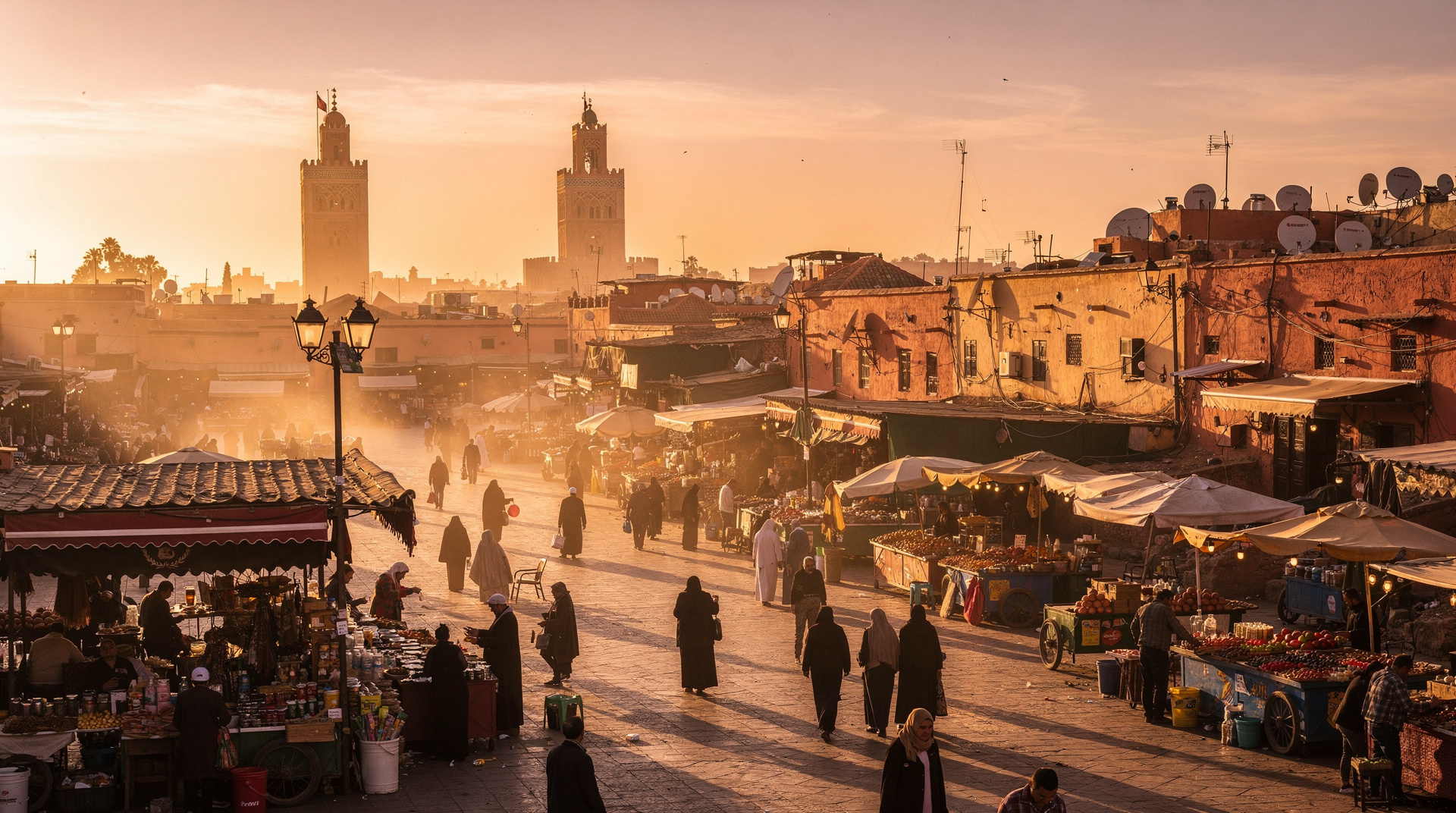
The Fes medina during Ramadan daytime is quieter than usual. This is a fact worth sitting with, because the Fes medina at its most alive is overwhelming — 9,000 alleys, the honking of delivery mules, the calling of vendors, the density of craft workshops and residential traffic. The normal Fes medina is sensory volume at high setting.
The Ramadan Fes medina between, say, 10 am and 4 pm is the same city at medium-low volume. Fewer vendors are calling because fewer tourists are walking and because energy conservation during fasting is a real consideration. Some shops open for reduced hours — fabric traders and tannery viewpoints and most tourist-facing businesses maintained some operations; the neighbourhood food shops and many of the deep-medina craft workshops closed entirely until the evening.
I used this to walk. I walked for four hours on the second day through the medina’s western quarters — the area around Bab Guissa, the neighbourhood north of the Qarawiyyin, the Andalusian bank of the river — that I would not have lingered in at normal tourist volume because the tourist current through the Fes medina tends to sweep you toward the main monuments.
Without that current, I found streets I had no name for, came across a workshop where three men were casting brass into ornamental shapes using methods that seemed unchanged since the medieval period, watched a group of schoolchildren pour out of a doorway and disperse through the alleys in various directions, and discovered a rooftop terrace on a guesthouse that offered a view over the entire Fes el-Bali medina that no guidebook I owned had mentioned.
My guide for the day — I had booked a licensed guide for the first full day, as I recommend to anyone visiting Fes — was a man named Karim who had lived in the medina his whole life. He was fasting, obviously, and I initially felt awkward about eating a breakfast bar from my bag at one point in the morning. He waved this off entirely. “Don’t be strange about it,” he said (in French, which was our common language). “You are my guest in the city. Eat.”
If you would rather not book a private guide directly, a walking tour of the old medina with a local guide is a reasonable way to get the same first-day orientation.
What nobody tells you about the daytime
The honest thing about Ramadan daytime in Morocco is that it is slightly muted, occasionally logistically inconvenient (some hole-in-the-wall lunch spots are closed, café service can be slower than usual), and otherwise fine for tourists. The exaggerated warnings about restaurants being impossible to find and the city being hostile to non-fasting visitors are not accurate.
Every medina in Morocco has tourist restaurants that stay open during Ramadan daytime for exactly the reason that not everyone visiting is Muslim. In Fes, the restaurants around the main tourist zones — the Bou Inania area, the tannery viewpoints, the Rcif — maintained lunch service. The quality at these tourist-facing places during Ramadan is, in my experience, variable, because the staff are fasting and the kitchen is operating at lower energy. Plan for a lighter lunch than usual.
The more interesting option, which I discovered by accident on day two, is the hotels and riads. Most riads in Fes that cater to non-Muslim tourists maintain a kitchen for guest meals throughout Ramadan. My riad — a mid-sized house near the Andalusian mosque — provided breakfast on the rooftop at whatever hour I wanted it and, on request, prepared a simple lunch that I ate in the courtyard. This turned out to be one of the most pleasant eating arrangements of the trip: quiet courtyard, filtered midday light, bread and olive oil and Moroccan salads brought out by a cook who was fasting and seemed genuinely unbothered by preparing food she was not eating.
If you want to see how the food side of the city works, a market visit and hands-on cooking class is an option, though check with the operator how it runs during Ramadan.
Karim explained this to me as a standard element of Moroccan hospitality — the obligation to feed a guest does not have a religious exception. “Hospitality is not optional in Islam,” he said. “Ramadan does not change it. It changes how much effort it costs.”
The Iftar and everything that happens after it
The call to prayer that breaks the fast at sunset — the Maghrib adhan — is one of the most affecting sounds I have heard in Morocco, and I say this as someone who had already heard the call to prayer in Marrakech, Chefchaouen, and Essaouira on previous trips.
In Fes, the Maghrib adhan during Ramadan is different in texture. The city has been very quiet for hours. In the 20 minutes before the call, the streets begin to change — people appearing from doorways and heading somewhere with purpose, the smell of soup becoming audible through open windows, a collective anticipatory tension that is palpable even to an outsider who does not share in the fast. And then the muezzin begins from the Qarawiyyin mosque, and within seconds the other mosques join — the Andalusian mosque across the river, the Bou Inania down the hill — and for a minute the entire city is the call to prayer.
And then: silence, briefly, while everyone eats.
I ate iftar on the third evening with the family of Karim’s brother-in-law — an invitation extended through Karim with a casualness that I spent a full day trying to determine whether it was genuine or politely obligatory. It was genuine.
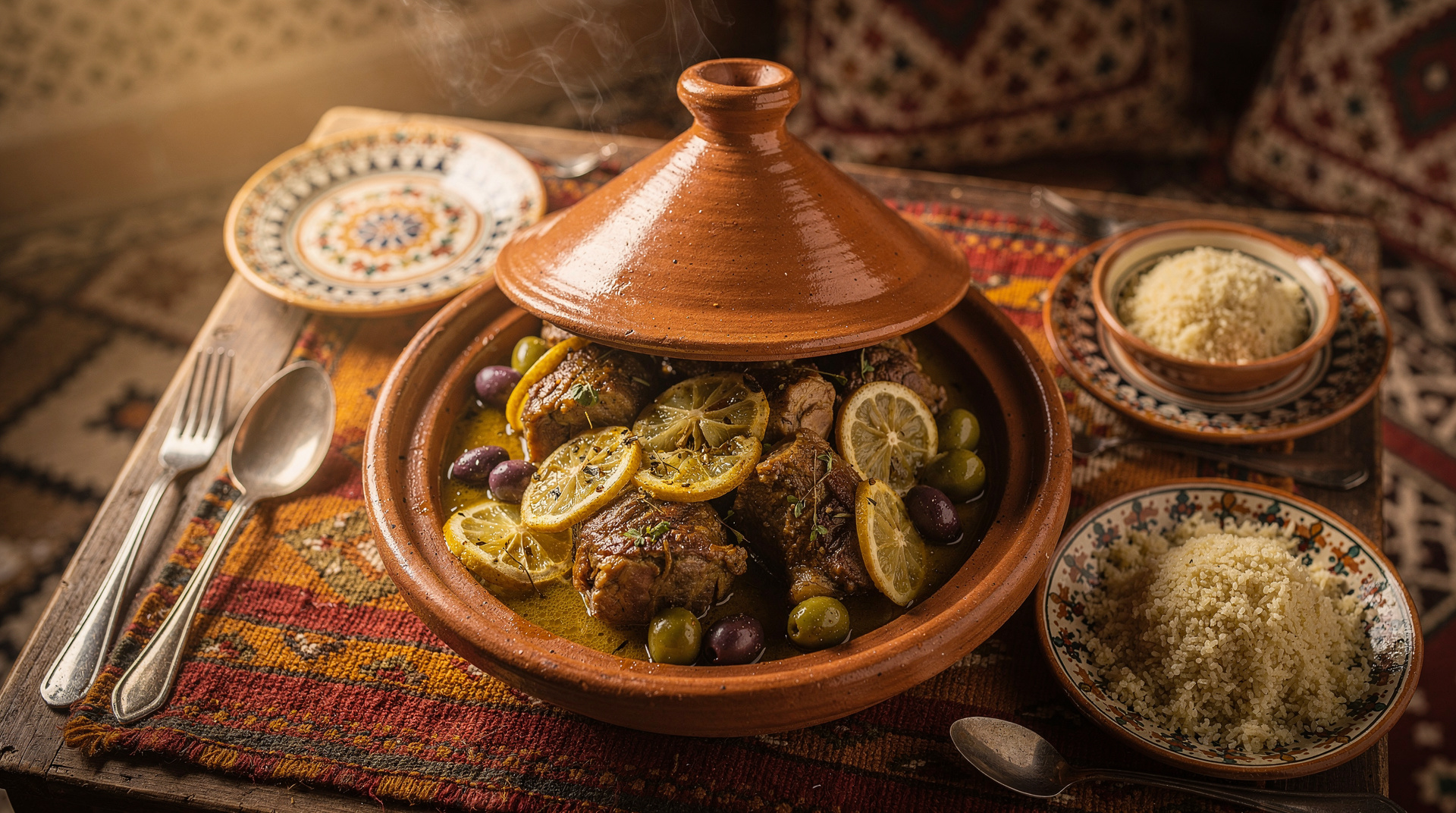
The family — three generations in a house off the Rue Talaa Kebira — set the table at the moment of the adhan with a spread that I had not expected: harira (the essential Ramadan soup — tomato, lentil, chickpea, fresh coriander, a squeeze of lemon, eaten with bread), dates in several varieties, chebakia (sesame and honey pastries, Ramadan-specific, extraordinarily good), hard-boiled eggs, olives, sfenj (Moroccan doughnuts, hot from the oil), msemen flatbread, and an array of small dishes that I could not identify and ate gladly.
The eating was quiet and serious for the first 20 minutes — people who have been fasting since dawn do not chat enthusiastically when the food is in front of them. But after that initial hunger was addressed, the table became social in a way that felt specifically Ramadan-shaped: the particular loquaciousness of people who have been waiting for exactly this moment, the warmth that comes from shared privation ending together.
I spoke to the grandmother of the family — perhaps 75, French from the colonial education era, sharp and direct — who told me she had never seen a non-Muslim eat iftar with the family before. She had expected, she said, that I would be awkward. “But you ate the chebakia,” she said. “So you passed.”
The medina at night during Ramadan
After iftar, the Fes medina during Ramadan becomes the version of itself that I had not anticipated and would happily fly back for on its own terms.
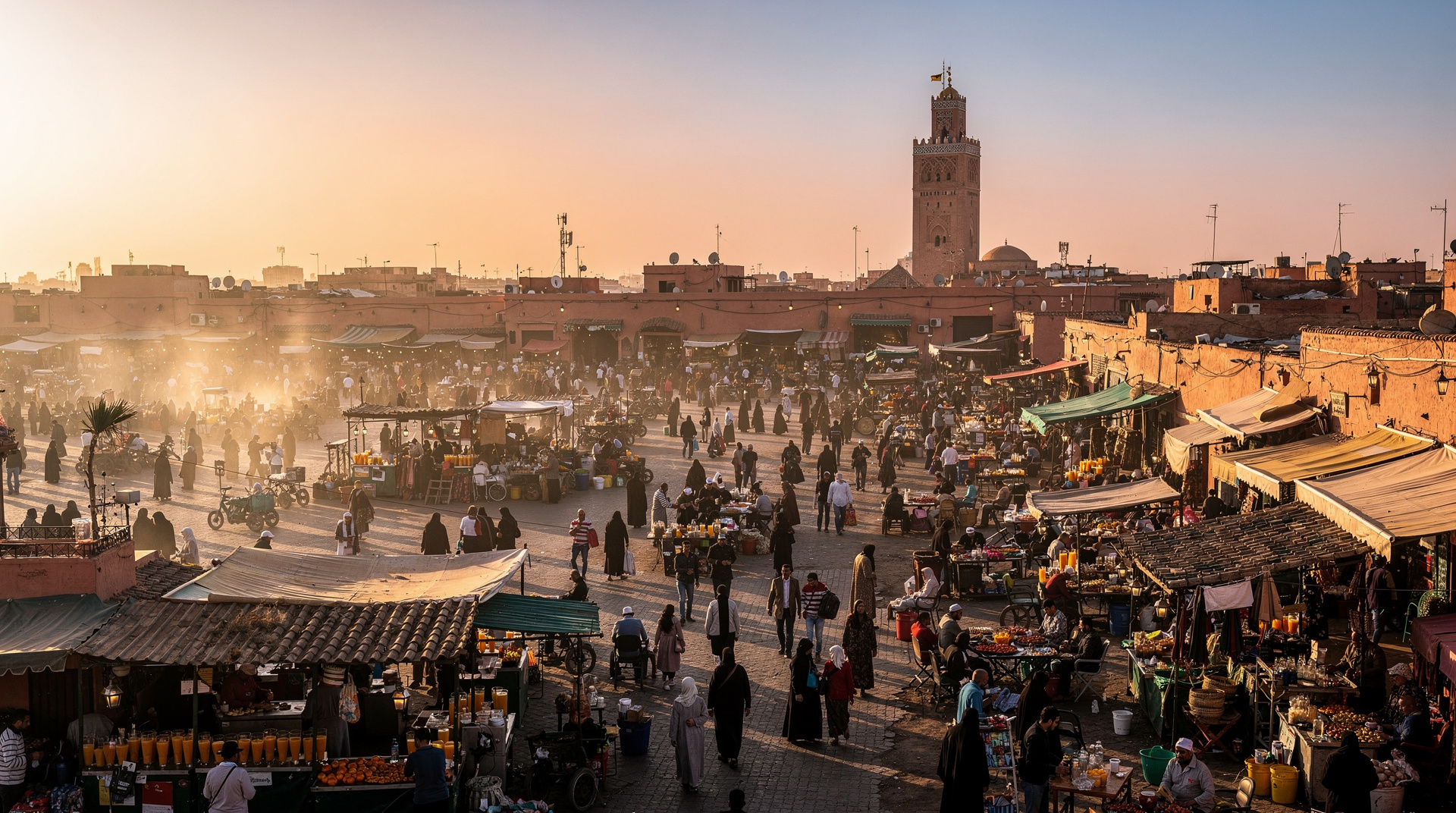
The normal tourist-hours Fes medina empties out after 8 pm — the main monuments close, the tourist restaurants near the tanneries thin out, the medina becomes primarily residential. During Ramadan, the reversal is complete: the medina after 9 pm is more alive than at any point during the day. Shops that were closed or half-staffed during the afternoon are fully open. The lighting in the alleys — streetlamps and the warm yellow of open doorways — creates a quality of atmosphere that is unlike anything I have experienced in Morocco at other times.
The pastry shops were the specific discovery. During Ramadan evenings, Fes’s patisseries operate at full capacity producing chebakia, briouat (almond-filled triangular pastries), qatayef (filled pancakes), and several sweets I could not identify. The smell in the alley near the Attarine souk after 9 pm, with the sugar and sesame of chebakia frying and the almond paste of briouat cooling on racks, was genuinely intoxicating.
The cafés fill from about 10 pm with men drinking café au lait and mint tea and playing cards. The souks run until midnight. The noise level — which in normal Fes is concentrated in the morning and tourist-rush afternoon — is instead sustained and sociable through the night.
I walked until midnight on four of my five nights. I did not feel unsafe; the Ramadan evening atmosphere in Fes is festive rather than edge-laden. I felt, if anything, more like an observer of something real than I typically feel in Moroccan medinas at normal tourist hours.
What I got wrong about Ramadan travel
Almost everything I had worried about.
I worried that restaurants would be closed. Several were, or operated reduced hours. The tourist-facing places stayed open; the riad provided food; I was never hungry.
I worried that the daytime atmosphere would be hostile toward non-fasting tourists. It was not. The most common response I received when I asked about the etiquette (should I not eat in public? should I not drink water on the street?) was a variant of “be discreet but don’t be strange about it.” I ate my breakfast bar in a quiet alley rather than in the main souk thoroughfare and no one cared.
I worried that I would be excluded from the core Ramadan experience — that I would observe it from outside without access to its interior. The iftar with Karim’s family and the Ramadan night medina substantially contradicted this. Moroccan hospitality, particularly during Ramadan when the obligation to share the breaking of the fast is felt strongly, produces more genuine access than the standard tourist-season experience.
I did not worry enough about one thing: the tanneries. The Chouara tannery viewpoint in Fes — one of the most photogenic sites in Morocco, with the dye vats visible from the leather shop terraces above — is an active working facility. During Ramadan, the tannery workers fast alongside everyone else. Some of the most physically demanding tanning operations — the vat workers who stand in chemical baths to treat the leather — operate reduced hours during Ramadan daytime. This meant the best viewing times shifted; Karim advised going in the evening rather than the morning for the best activity and smell (yes, smell — the tanneries have a distinctive and permanent odour).
For a guided tour that covers the tannery and the medina’s other key sites in a single session, a Fes museum, madrasa, tannery, and medina tour sequences the sites efficiently and provides the context for the tannery’s history that makes the viewing meaningful rather than just picturesque.
Ramadan Fes: day versus night
| Daytime (10am–5pm) | Night (after Iftar) | |
|---|---|---|
| Medina energy | Quiet, medium-low volume | Loud, sociable, alive until midnight |
| Restaurants | Reduced hours, tourist spots stay open | Full service, pastry shops at peak output |
| Best for | Unhurried walking, workshops, photography | Food, atmosphere, souk shopping |
| Tannery viewing | Reduced worker activity | Better activity and smell, per local guides |
| Crowds | Thin — fewer tourists overall | Locals out in force, few tourists |
What this means if you are deciding whether to go
If your trip dates overlap with Ramadan and you are tempted to reschedule, weigh the trade-off honestly: you lose some spontaneity around meals and a handful of closed workshops, and you gain a quieter daytime medina and a night medina that non-Ramadan visitors never see. Our Ramadan travel in Morocco guide has the practical checklist — what stays open, how to plan meals, and etiquette around eating in public — that goes beyond this single trip’s account. If you want to plan specifically around the dates, our Ramadan 2027 Morocco dates and travel guide tracks the lunar calendar shift year to year.
For comparison, a non-Ramadan Fes trip has its own rhythms and constraints — our Fes souks guide and day trips from Fes guide are written for the normal-season city and are still useful for the daytime hours of a Ramadan visit.
Planning around the rhythm of the month
If you want to repeat this kind of trip, build the plan around the day’s two halves rather than fighting them. Choose a base where the kitchen keeps working for guests: our best riads in Fes roundup is a good place to start, and it is worth asking about meals before you book. The Ramadan food guide explains what the dishes on an iftar table are, so nothing on the spread feels like a mystery. If you want to understand the evening pastry-shop scene better, the Fes street food guide covers the food side of the medina in more general terms.
The quieter daytime hours suit the city’s architecture well. The Fes medersas guide is useful for slow, unhurried visits, and the Fes souks guide gives context for the craft quarters you will pass on foot. When you are invited into a home, the mint tea ritual guide is worth a read, since tea is almost always part of the welcome. For a wider view of where Fes sits in a longer route, see the imperial cities itinerary.
Revised opinion
I went to Fes during Ramadan by accident and came away believing it is the better time to visit, with some caveats.
The caveats: some logistical flexibility is required, particularly around food. The tannery’s peak activity shifts to evening hours. Some of the artisan workshops in the deep medina close for much of the day.
The reasons it is better: the daytime medina is quieter and more walkable. The Ramadan night medina is a version of Fes that normal tourist-season visitors do not see. The iftar connection — if you can access it through a guide or guesthouse host who can facilitate an introduction — is one of the most unexpectedly moving experiences Morocco offers.
And the month has a quality to it that I found impossible to describe when I got back to people who asked about the trip. A particular weight. A seriousness that sits underneath the evening festivity. A sense that the city is doing something important and you have been allowed to witness it without being required to perform participation.
The Fes destination guide has the practical logistics for any visit. The Ramadan travel blog covers the broader Morocco-during-Ramadan considerations that apply across all cities. If you are planning a Morocco trip and the dates overlap with Ramadan — check the lunar calendar, since Ramadan shifts approximately 10–11 days earlier each year — I would no longer recommend working around it. I would recommend going anyway.
The trip I almost cancelled was the best one.
Frequently asked questions about Ramadan in Fes
Are restaurants open in Fes during Ramadan? Some are. Tourist-facing restaurants near the main sites generally maintain daytime service, though with a lighter menu and slower kitchens since staff are fasting. Neighbourhood food shops and many deep-medina spots close until Iftar. Riads typically keep a kitchen running for guests throughout the day.
Is it disrespectful to visit Morocco during Ramadan as a non-Muslim? No — Moroccan hospitality does not have a religious exception, and the common guidance from locals is to be discreet about eating in public rather than to avoid visiting. Most tourists are welcomed warmly, including at Iftar if the opportunity arises.