Morocco and Canary Islands: 12-day combined itinerary
Two destinations, one Atlantic swing
The Canary Islands are 100 km off the Moroccan coast. Lanzarote’s volcanic landscape was shaped by the same geological forces that pushed up the Atlas Mountains. Gran Canaria’s beaches face Morocco across a narrow strip of Atlantic. The connection between these two destinations is geographical, historical, and — once you plan the trip — logistically elegant.
The Morocco and Canaries combination works for several kinds of traveller. Families who want some medina adventure but also want beach time and reliable sun. Couples who want Morocco’s culture and romance but need a few days of genuine relaxation. Winter-sun seekers who want to extend a Moroccan trip into late autumn or early spring beach weather. The Canaries have year-round summer conditions (20–25°C minimum); Morocco’s Atlantic coast is warm enough for beach use from April to November.
This 12-day itinerary spends 7 days in Morocco (Marrakech, Essaouira, Agadir/Taghazout) and 5 days in the Canaries (Tenerife or Lanzarote), connected by a direct flight from Agadir (AGA) to Las Palmas de Gran Canaria (LPA) or Tenerife South (TFS).
Route at a glance: Marrakech (3 nights) → Essaouira (2 nights) → Agadir/Taghazout (2 nights) → flight to Canaries → Lanzarote or Tenerife (5 nights) → fly home
Total estimated cost (per person, flights excluded): €900–1600
Trip snapshot
| Where | 3 stops in Morocco (Marrakech, Essaouira, Agadir/Taghazout) + Lanzarote or Tenerife |
| Cost (per person, flights excluded) | around €900–1600 |
| Time needed | 12 days minimum; 14 gives the Canaries breathing room |
| Getting there | fly into Marrakech (RAK); internal flight Agadir–Canaries (AGA–LPA/TFS) around day 8 |
| Best time | October–November or March–April for the widest overlap of good weather in both destinations |
| Difficulty | easy — buses and a short flight, no driving required |
At a glance
| Day | Route | Overnight |
|---|---|---|
| 1 | Arrive Marrakech | Marrakech |
| 2 | Marrakech medina + palaces | Marrakech |
| 3 | Marrakech: Majorelle + hammam | Marrakech |
| 4 | CTM bus to Essaouira (2h30) | Essaouira |
| 5 | Essaouira: beach, medina, seafood | Essaouira |
| 6 | Bus to Agadir (3h) → Taghazout | Taghazout / Agadir |
| 7 | Taghazout surf or beach day | Taghazout / Agadir |
| 8 | Fly Agadir → Las Palmas or Tenerife | Canaries |
| 9–12 | Canary Islands: beach, volcano, wineries | Canaries |
Morocco section (Days 1–7)
Day 1: Arrive Marrakech
Marrakech Menara Airport (RAK) has direct connections from most European cities. A petit taxi to your riad costs €4–6 (agree the price first or insist on the meter). The medina’s best area for first-time visitors is within walking distance of Djemaa el-Fna — this keeps transport minimal and you within reach of the city’s heartbeat.
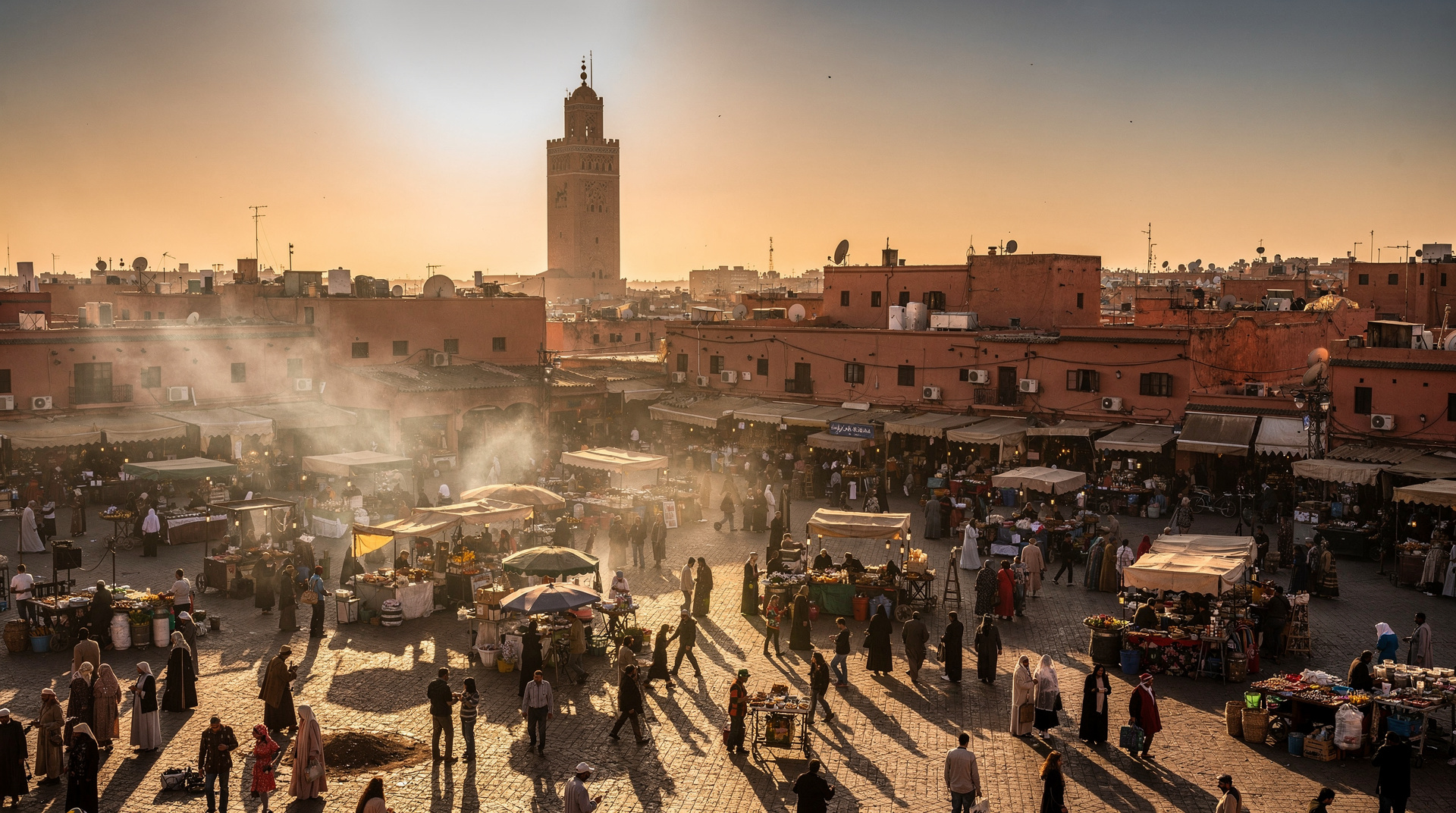
Evening: walk to the square at sunset. The transition from afternoon market to evening grill takes about 30 minutes and is one of the finest free spectacles in travel. Dinner on the square or at a nearby medina restaurant: kefta, harira, bastilla on the more expensive restaurants. Budget €5–15 per person.
Where to stay: Riad Jardin Secret (mid: €80–130); Medina Social (design hotel: €100–160)
Day 2: Marrakech medina
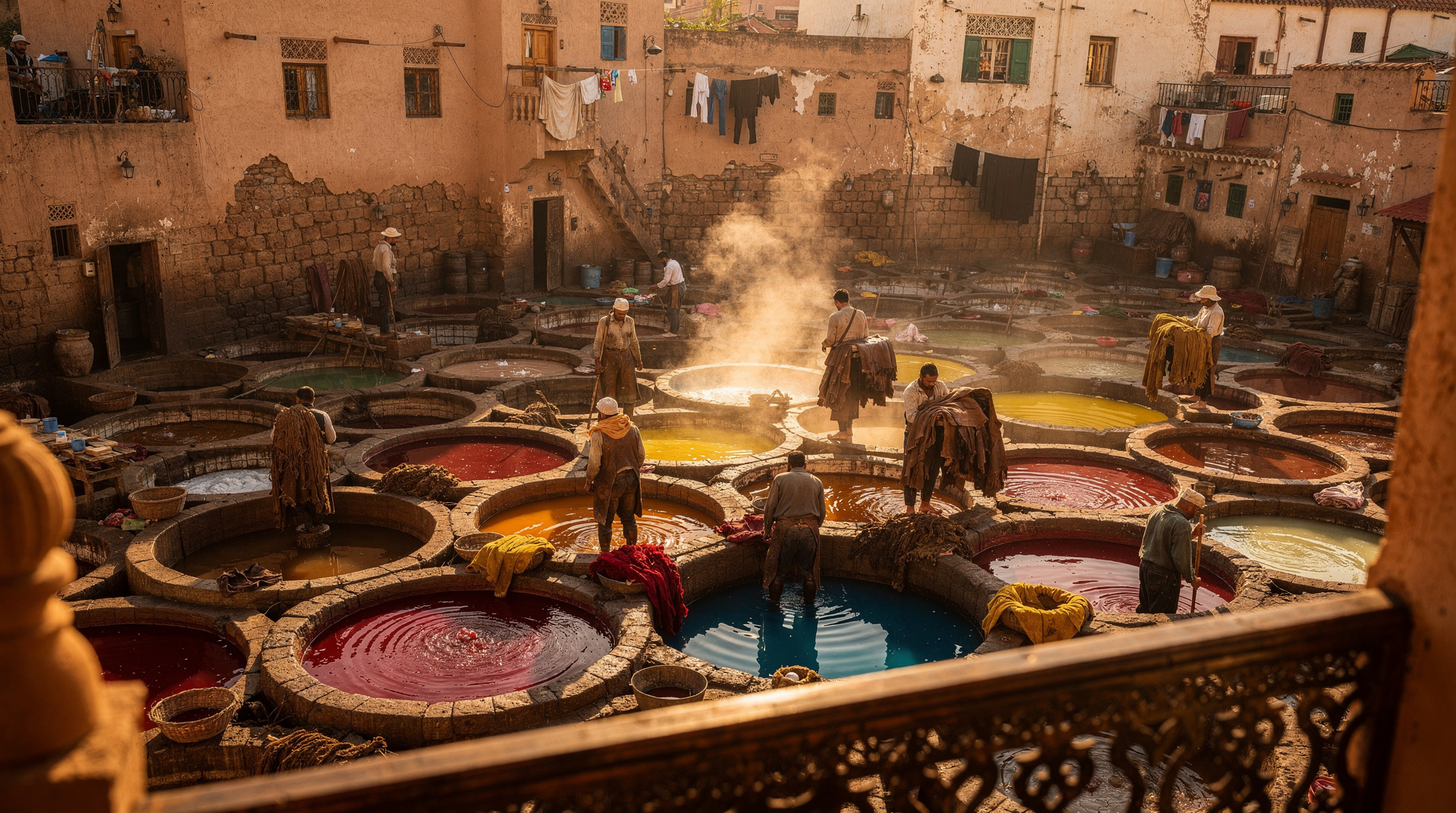
A full day in the medina and palace quarter. Start at Bahia Palace (09:00, €1.80 entry) and the adjacent Saadian Tombs. Walk north through the medina into the souks — the souk Semmarine, the Attarine spice market alleys, the lamp souk — and get appropriately lost in the process.
For a structured introduction, the Marrakech guided medina history and culture tour provides context that transforms the experience from beautiful chaos to readable city.
Afternoon: El Badi Palace ruins (€1.80) or simply time in the souks. The pressure from shop owners is real but negotiable — learn to smile, say “shukran” (thank you), and walk. No one will follow you past the first corner.
Lunch: the mechoui alleys near Rahba Kedima sell whole roasted lamb by the portion at honest prices (€3–5 per serving with bread).
Day 3: Majorelle, hammam, and evening medina
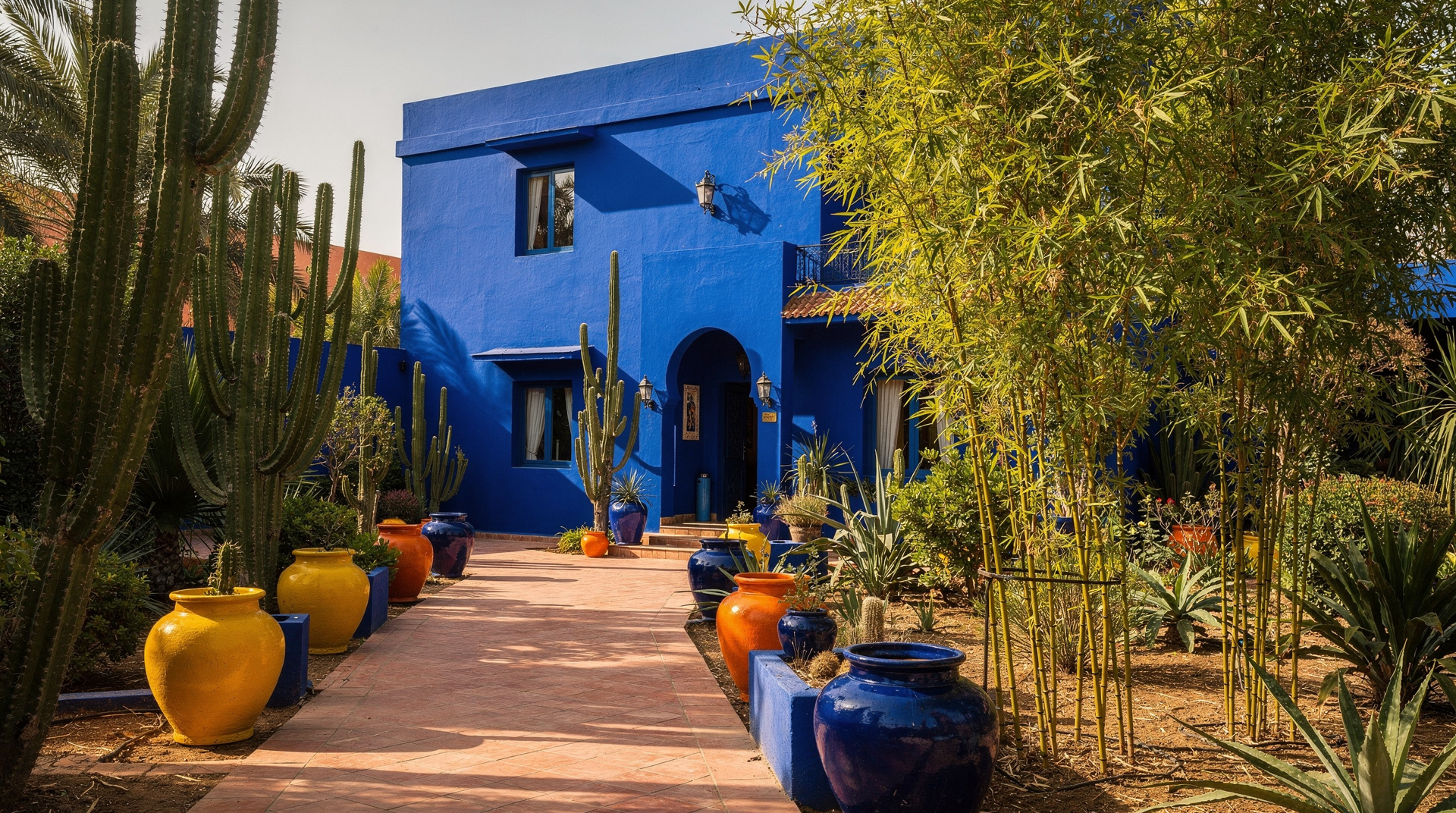
Morning: Majorelle Garden. Book tickets in advance (€8–10) to skip the queue. The cobalt blue buildings, palm groves, and reflecting pools are at their best in the morning light. The adjacent Berber Museum and YSL Museum are worth an extra 90 minutes if design history interests you.
The Majorelle Garden and Berber Museum entry ticket can be booked online — essential on busy days when the walk-in queue can be an hour.
Afternoon: hammam. Les Bains de Marrakech (90 minutes, €45–55) for the spa version, or a neighbourhood hammam for €2–5 for the traditional experience. Either way: the combination of the scrub, steam, and massage resets the body for the travel days ahead.
Evening: the Djemaa el-Fna night food tour is the best value activity in Marrakech — guided or self-guided, it involves wandering between the grill stalls, tasting kefta, sheep’s heads, snail soup (optional), fresh-squeezed orange juice, and Moroccan pastries over 2–3 hours.
If the souks leave you wanting more, the Marrakech souks guide explains how the quarters are laid out, and the Marrakech hammam options are worth a read before you pick between the spa and the neighbourhood version. Anyone staying longer in the city can compare riads in the best riads in Marrakech guide.
Day 4: CTM bus to Essaouira
The CTM bus from Marrakech to Essaouira departs from the CTM station near Bab Doukkala (approximately 07:30 and 15:00 daily). Journey: 2h30–3h, €6–7. Alternatively, a shared grand taxi from Bab Doukkala station: €8 per seat, faster and more frequent.
Arrive Essaouira by midday. Check into your accommodation — Riad Baladin and Dar Adul are excellent mid-range options in the medina (€50–90/night with breakfast). Walk directly to the harbour for lunch: fresh sardines grilled at the harbour stalls, €4–6 per plate.
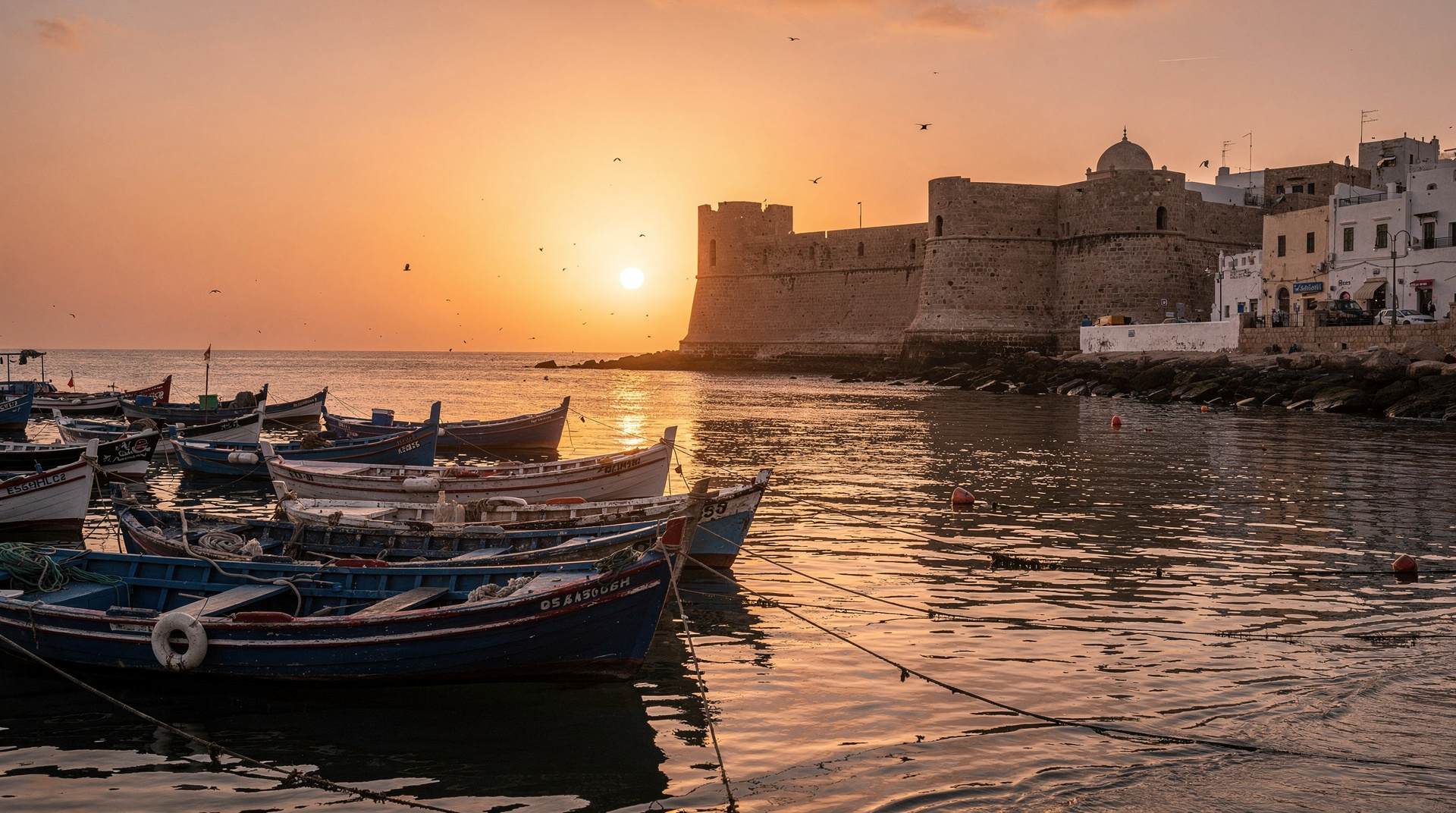
Afternoon: the medina and ramparts. The Skala de la Ville fortification sits above the Atlantic on the medina’s seaward side — the ramparts are open and free, the views of the surf and the old Portuguese cannons are excellent. The medina’s blue-and-white colour scheme, the marquetry workshops selling Thuya wood craft, and the constant Atlantic wind give the city a character completely unlike inland Morocco.
Day 5: Essaouira — beach and afternoon
Essaouira’s beach extends 5 km south from the medina. The morning — before the trade winds fully establish around noon — is the best time to walk it. The afternoon brings the winds that make this one of the world’s top kitesurfing spots.
A surf lesson or kitesurfing introduction is the most memorable activity here. The Essaouira surf lesson for all levels covers beginners with equipment and instructor — the beach break here is reliable and not dangerous for first-timers.
Evening: the best dinner in Essaouira is at Elizir on the Rue d’Agadir — a small, excellent restaurant doing contemporary Moroccan food with wine, seafood, and exceptional presentation. Budget €25–40 per person. Book ahead as it is small and popular.
For more on where to sleep and eat, see the best riads in Essaouira and the food tours in Essaouira. If you are torn about how much time the town deserves, the Taghazout vs Essaouira comparison lays out the trade-offs.
Day 6: Transfer to Agadir
Bus from Essaouira to Agadir: CTM (2h30–3h, €6–8) or shared grand taxis (quicker, same price). Agadir has Essaouira to the north connected by a direct coastal road.
Agadir is a modern beach city — it was largely destroyed in the 1960 earthquake and rebuilt, so the medina (the old Talborjt quarter) is not the draw that other Moroccan cities offer. The draw is the 10 km beach, the marina, and the proximity to Taghazout.
For this itinerary, consider checking into accommodation in Taghazout (20 km north of Agadir) rather than Agadir itself if surf interests you. The village has the better atmosphere and the beach break is directly accessible. Alternatively, base in Agadir (better restaurant selection, airport proximity) and taxi to Taghazout for the day.
Day 7: Agadir/Taghazout final Morocco day
If surfing: Taghazout has the best beginner to intermediate waves on the coast. A final surf session before the Canaries trip.
If not surfing: Paradise Valley is the best excursion from Agadir — a river gorge 30 km inland with palm oases and natural swimming pools. The Paradise Valley day trip from Agadir with lunch is a well-run half-day that handles transport and lunch in the valley.
Agadir’s beach for the afternoon: a long, clean, Atlantic beach with reliable sun. The palm-lined promenade (Corniche) has cafes and restaurants at mid-range prices. The Souk el Had — a large covered market — is worth an hour for fresh produce and local goods, far less tourist-oriented than Marrakech.
Surfers who want to plan this last Moroccan day in more detail can use the Taghazout surfing guide or the Taghazout day trip from Agadir page, and the Paradise Valley day trip guide covers the alternative in depth. The Agadir day trips roundup has further ideas if your flight leaves late.
The Agadir–Canaries flight
Agadir to Las Palmas de Gran Canaria (LPA): Operated by Binter Canarias and occasionally by Ryanair seasonal routes. Flight time approximately 1h30. Fares: €80–150 one-way. Check current schedules as this route changes seasonally.
Agadir to Tenerife South (TFS): Longer routing, usually via Las Palmas or a connection, or available direct on some charter-style carriers. Approximately 2h flight time.
Casablanca to Canaries: If direct Agadir connections don’t work with your dates, Royal Air Maroc and other carriers operate Casablanca (CMN) to Las Palmas and Tenerife year-round. This adds 3–4 hours transfer time from Agadir to Casablanca but provides more schedule options.
Booking advice: Book this flight as early as possible — the Agadir direct routes operate on limited capacity. Check both Binter’s own site (bintercanarias.com) and Skyscanner 3–4 months out for the best fares.
Canary Islands section (Days 8–12)
Lanzarote option (5 nights)
Lanzarote is the most architecturally and geographically distinctive of the Canaries. The 19th-century volcanic eruptions that buried a third of the island left a landscape of black lava fields, volcanic cones, and underground lava tubes — a UNESCO Biosphere Reserve. Artist César Manrique, who grew up on the island, spent his career integrating architecture with the volcanic landscape, creating buildings that feel grown from the rock rather than placed on it.
Timanfaya National Park: 52 km of volcanic landscape, geothermal energy visible as steam from cracks in the rock, and a restaurant where the grills use volcanic heat. Entry included in guided bus tour (€13).
Jameos del Agua: A lava tube filled with sea water and inhabited by a unique blind albino crab species, converted by Manrique into an arts venue. Extraordinary architecture, remarkable biology.
Beaches: Papagayo beaches in the south are the most beautiful in the Canaries — clear turquoise water, low cliffs, white sand. Puerto del Carmen has the widest beach choice and best resort infrastructure.
Where to stay: Playa Blanca for the Papagayo area (mid: €60–120/night); Puerto del Carmen for more options (€50–100/night).
Lanzarote vs Tenerife: which one fits this trip
Both islands work with the Agadir flight connection, but they suit different travellers. Use this to decide before you book the second half of the trip.
| Lanzarote | Tenerife | |
|---|---|---|
| Best for | design/architecture lovers, couples, calmer pace | families, hikers, wider activity range |
| Signature sight | Timanfaya volcanic park + Manrique architecture | Teide National Park + cable car |
| Beaches | Papagayo (best in the Canaries) | Los Cristianos/Las Américas (busier, more resort infrastructure) |
| Getting around | compact — a rental car covers the island in 2–3 days | larger — allow 3–4 days with a car to see both north and south |
| Crowd level | quieter, especially outside Puerto del Carmen | busier, especially the southern resort strip |
| Rough nightly cost | €60–120 | €50–100 |
If this is your first Canaries trip and you want maximum variety in five days, Tenerife’s size works against you — you will spend more time driving. Lanzarote’s compactness suits a five-night add-on trip better; Tenerife rewards a full week or more.
Tenerife option (5 nights)
Tenerife is the largest of the Canaries and offers the most variety. Teide National Park — the volcanic cone at 3718m, the highest point in Spain — is the visual centrepiece of the island. The cable car to 3555m (€30 return) is one of the most dramatic high-altitude experiences in Europe.
Teide National Park: The roñón — the caldera filled with multi-coloured volcanic rock, orange and yellow and white — is extraordinary. Drive the TF-21 road through the park at dawn for an experience that competes with anything in Morocco.
Los Gigantes: The western coast’s 600-metre vertical sea cliffs, visible from boat tours (€20–30 for 2–3 hours). Dolphin and whale watching is reliable in these waters year-round.
South beaches: Playa de las Américas and Los Cristianos are conventional beach resort territory — reliable sun, good water, crowded. Playa de Benijo in the north is less visited and more dramatic.
Where to stay: Los Cristianos for beach resort infrastructure; Puerto de la Cruz in the north for a more atmospheric, less touristy experience (historic town centre, botanical garden).
Budget estimate (12 days)
| Item | Per person |
|---|---|
| Morocco accommodation (7 nights) | €250–450 |
| Morocco transport (buses + taxis) | €50–80 |
| Morocco food and activities | €150–250 |
| Agadir–Canaries flight | €100–180 |
| Canaries accommodation (5 nights) | €300–500 |
| Canaries transport (car hire recommended) | €100–150 |
| Canaries food and activities | €150–250 |
| Total (international flights excluded) | €1100–1860 |
Practical tips for the Morocco–Canaries combination
Currency: Morocco uses the dirham (MAD); the Canaries use the euro. No currency change needed — euros are widely accepted in tourist areas of Morocco and ATMs in both destinations are reliable.
Visas: EU and most Western passport holders need no visa for either Morocco or the Canaries (which are Spanish territory, thus Schengen EU). Check your specific nationality’s requirements.
Health: Morocco’s food and water are safe if standard precautions are observed (bottled water, street food from busy stalls). The Canaries have European health standards.
Luggage: The internal Agadir–Canaries flight has the same baggage rules as any short-haul European flight — typically 10kg cabin allowance on low-cost carriers. Pack light for Morocco (rolling through medinas with large luggage is genuinely difficult) and you will have no problems.
What to pack
- Modest clothing for Moroccan medinas (shoulders and knees covered)
- Swimwear and beach gear for Essaouira and the Canaries
- Light jacket for Essaouira’s Atlantic winds and Canaries evenings
- Good walking sandals for medinas (closed-toe for hiking in Timanfaya)
Best time of year
The Canaries are year-round. Morocco’s Atlantic coast from Essaouira to Agadir is best from April–October. For the overlap between the two:
October–November: The best Morocco conditions (warm, not hot, excellent surf); the Canaries still warm (22–25°C); flights and accommodation at reasonable prices.
March–April: Morocco’s most beautiful months; Canaries reliably warm and less crowded than summer.
July–August: The Canaries are excellent but expensive and crowded; Morocco’s Atlantic coast is warm and windy (good for surfing, not unbearably hot); Marrakech in summer is very hot — minimise inland time.
Common mistakes
Underestimating Agadir-Canaries flight complexity. This is not a mainline route like London–Madrid. It requires careful booking. Have a backup plan: Casablanca (CMN) has year-round Canaries connections and is 4 hours from Agadir by CTM bus.
Visiting Essaouira in a hurry. Two nights minimum. One night means arriving in the afternoon and leaving the next morning — you get the atmosphere but not the best light at either end. Two nights allows a proper beach day and an early morning walk before the wind builds.
Spending all Canaries time on the beach. The geological attractions — Timanfaya, the lava tubes of Lanzarote, Teide — are genuinely world-class and require half-days, not an hour. Rent a car for at least 2–3 days in the Canaries for proper exploration.
For more on the Morocco sections, see our Marrakech guide, Essaouira guide, Agadir and Taghazout guide, the Taghazout destination page for surf-specific detail, our best time to visit Morocco guide, and the Atlantic coast itinerary if you want to extend the Morocco leg northward instead of flying to the Canaries.
Frequently asked questions about Morocco and Canary Islands
Is 12 days enough for both Morocco and the Canaries?
It is workable but tight. Seven days in Morocco covers Marrakech, Essaouira, and Agadir/Taghazout at a reasonable pace without feeling rushed; five days in the Canaries is enough for one island done properly (Lanzarote more comfortably than Tenerife, which is larger). If you can stretch to 14 days, add the extra time to the Canaries side — Morocco’s three-stop route is already efficient.
Do I need a rental car for the Canaries leg?
Not strictly for Lanzarote, where organised bus tours and taxis cover the main sights (Timanfaya, Jameos del Agua) reasonably well. For Tenerife, a rental car is close to essential — Teide National Park and the northern towns are poorly served by public transport, and a car turns a frustrating logistics puzzle into a straightforward few days.