Grand South Morocco road trip
The grand south — Morocco’s greatest road trip
The southern loop from Marrakech is the most rewarding road trip in North Africa. It covers five distinct landscapes — the High Atlas, the pre-Saharan plateau, the Sahara dunes, the Draa Valley palmery, and the Atlantic coast — in 14 days and approximately 2200 km. Every one of these landscapes looks completely different from the others, and the transitions between them are among the best moments of the trip.
This is a driving itinerary. You need a rental car. The roads are paved throughout (a 4x2 is fine on this route), the driving is not technically demanding, and the distances are real — expect some days where you spend 6–8 hours in the car between sights. That is not a problem if you accept it in advance. The southern Morocco landscape is beautiful enough that long drives are part of the experience.
Who this is for: Drivers comfortable with long days on the road. Travellers who want to see the full range of southern Morocco rather than just the Sahara. Landscape and photography enthusiasts. Couples and small groups — grand taxis and buses do not serve this route effectively.
Budget expectation (per person, car excluded): €900–1400 mid-range for 14 days. Car rental adds €30–55/day (split between passengers).
Pace: moderately demanding. You will average 3–4 driving hours per day across the trip, with a few long 8–10 hour days. Build in extra time from your schedule — Google Maps underestimates Moroccan driving times.
At a glance
| Where | Marrakech → Aït Benhaddou → Dades/Todra → Merzouga → Zagora → Taliouine → Agadir → Essaouira → Marrakech |
| Cost (pp, car excluded) | around €900–1,400 mid-range |
| Time needed | 14 days; shortenable to 10 by dropping the Anti-Atlas/coast section |
| Getting there | fly into and out of Marrakech; rental 4x2 for the full loop |
| Best time | October–November or March–April; avoid July–August |
At a glance
| Day | Route | Drive | Highlights | Overnight |
|---|---|---|---|---|
| 1 | Arrive Marrakech | — | Djemaa el-Fna, souks | Marrakech |
| 2 | Marrakech | — | Palaces, Majorelle | Marrakech |
| 3 | Marrakech → Aït Benhaddou | 4h (Tizi n’Tichka) | Atlas pass, ksar | Aït Benhaddou |
| 4 | Aït Benhaddou → Ouarzazate → Skoura | 1.5h | Sunrise ksar, film studios | Skoura |
| 5 | Skoura → Kelaa M’Gouna → Dades Gorge | 2h | Roses Valley, Dades hoodoos | Dades Gorge |
| 6 | Dades → Todra Gorge | 1.5h | Canyon walls | Todra |
| 7 | Todra → Erfoud → Merzouga | 3.5h | Hammada, dune arrival | Merzouga camp |
| 8 | Merzouga | — | Sunrise dunes, Gnawa | Merzouga |
| 9 | Merzouga → Rissani → Zagora | 5h via Tazzarine | Draa Valley, palmery | Zagora |
| 10 | Zagora → Agdz → M’Hamid | 3h | Deep Draa, dunes | Zagora return or M’Hamid |
| 11 | Zagora → Taznakht → Taliouine | 4h | Saffron town, Anti-Atlas | Taliouine |
| 12 | Taliouine → Taroudant → Agadir | 3h | Rose-red Taroudant | Agadir |
| 13 | Agadir → Essaouira | 3h coastal | Atlantic coast, argan | Essaouira |
| 14 | Essaouira → Marrakech | 2.5h | Return | — |
Day-by-day narrative
Day 1: Arrive in Marrakech
Petit taxi from the airport to the medina (€5–8). Collect your rental car on Day 3 morning — driving in Marrakech itself is unnecessary and parking is nightmarish. Use the first two days on foot.
Djemaa el-Fna square after dark: the grills, the smoke, the competing musicians, the orange juice at €0.50 per glass. Eat at the stalls tonight — kefta, merguez, harira — and save the restaurant evenings for the road.
Where to sleep: Riad Jardin Secret or Riad BE Marrakech (mid: €90–140)
Day 2: Marrakech — palaces and final city day
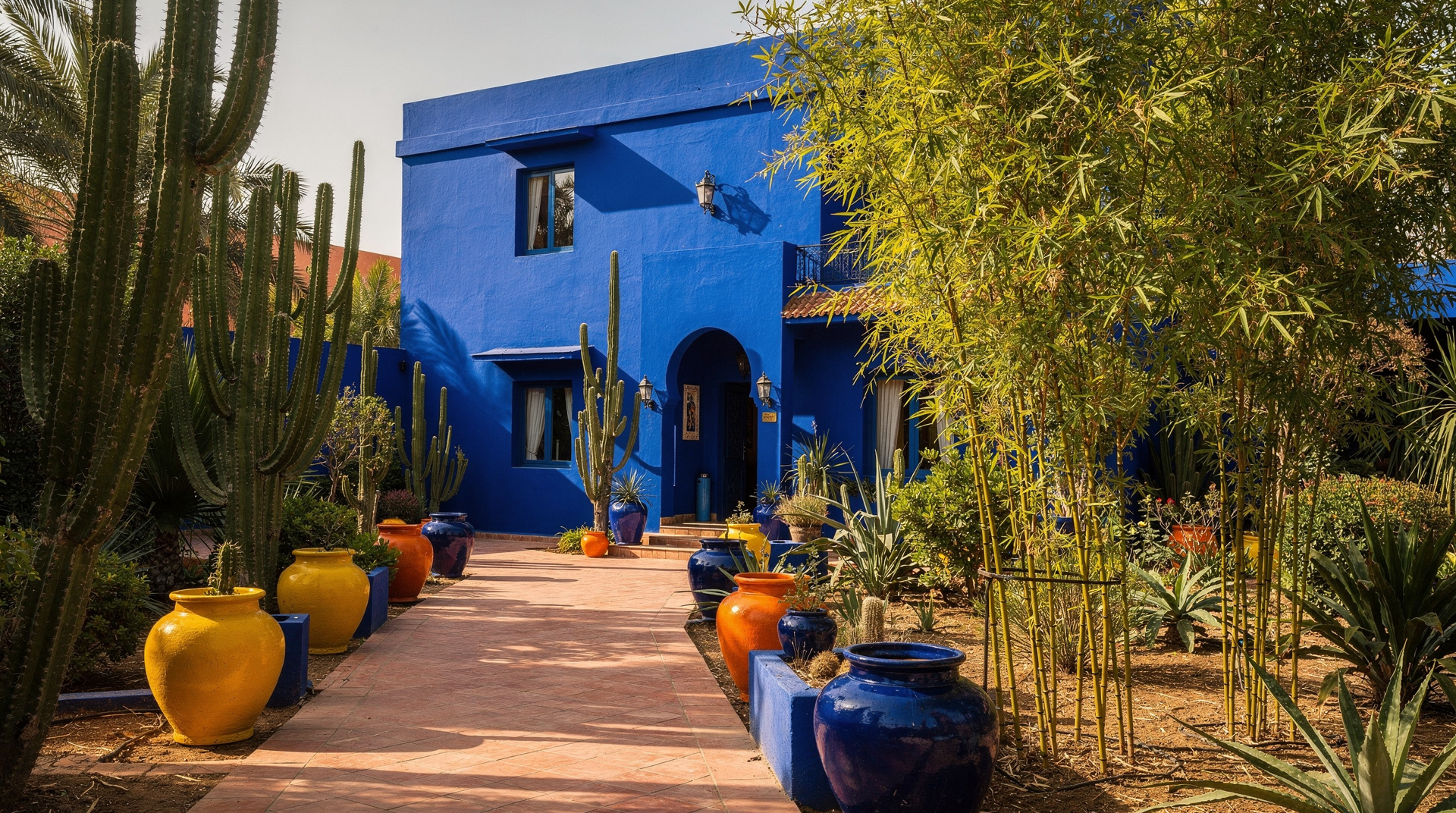
Bahia Palace (09:00, entry €2) and Saadian Tombs (€3) in the morning. Petit taxi to Majorelle Garden in the Ville Nouvelle — book the entry ticket online to avoid the queue. The Berber Museum in the Majorelle complex is the best single context-setter for the Amazigh culture you are about to encounter for the next 12 days in the south.
Afternoon: withdraw dirham cash (ATMs in the deep south can be unreliable or empty). Stock up on road snacks from the Marjane supermarket in Gueliz. Pack the car bag: what you need for 12 nights, leaving any excess at the riad.
Buy the Majorelle Garden and Berber Museum entry ticket in advance to skip the walk-in queue.
Where to sleep: Same riad
Day 3: Tizi n’Tichka — the great Atlas crossing
07:00: collect rental car
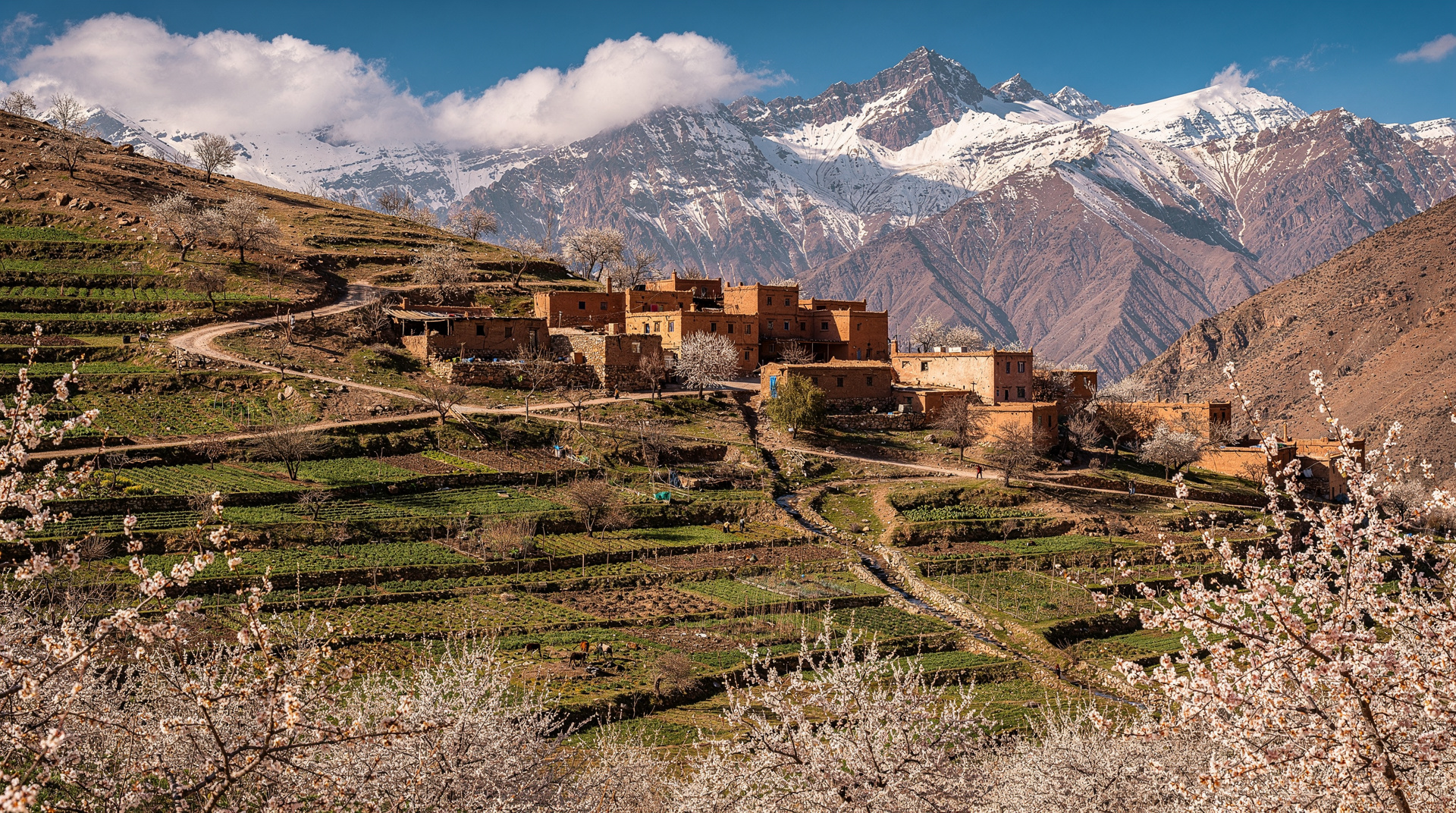
Leave the medina area by 07:00. The N9 south climbs immediately from the Haouz plain into the Atlas foothills. Within an hour the road is winding through hairpin bends with nothing but mountain and sky. The Tizi n’Tichka pass at 2260 metres is the highest paved road pass in North Africa — and on a clear morning, the view from the summit is extraordinary in every direction.
Optional detour: Kasbah Telouet (add 90 minutes)
Just north of the main pass, a signed detour leads to the abandoned Glaoui kasbah of Telouet. The kasbah is partially ruined but still contains extraordinary painted ceilings, carved plaster, and zellige tilework in a state of romantic decay. A local caretaker will show you around for €5. Worth it.
Midday: Aït Benhaddou
The ksar is reached by a paved road off the main highway (signed). Cross the Draa River — by stepping stones in summer, by a small footbridge in flood season — and walk up through the earthen towers. Entry: €3. The view from the summit looks across the river to the new village and the Anti-Atlas beyond. Lunch at a riverside restaurant (tagine, €8–14).
Stay the night in Aït Benhaddou for the sunrise on the ksar. It is copper-coloured at 07:00 in a way that the midday tour-group version is not.
Where to sleep: Dar Mouna (mid: €60–90); Riad Caravane (ksar view: €70–100)
Day 4: Ouarzazate and the Skoura palm groves
Dawn: the ksar at sunrise
Be outside before 07:00. The warm light on the mud-brick towers at dawn is the finest light of the trip for photography. The tour coaches do not arrive until 09:00 — you have 2 hours of relative quiet.
Morning: Ouarzazate
30 km south and east: Ouarzazate. The Atlas Film Studios are the largest in Africa and the biggest in the world outside Los Angeles — the standing sets from Gladiator, Game of Thrones, and Kingdom of Heaven are visible on a guided tour (€8–12, 90 minutes). The Kasbah Taourirt in town is free to enter at the courtyard level and gives a sense of the Glaoui chieftain architecture that dominated the south until 1956.
Afternoon: Skoura oasis
35 km east of Ouarzazate, the Skoura oasis is a 6000-hectare palm grove threaded with ksour (plural of ksar). The Kasbah Amerhidil inside the oasis is among the best-preserved in the region and can be reached on foot through the palm alleys. The Skoura area has excellent guesthouses built into or adjacent to working kasbahs — a more atmospheric overnight than Ouarzazate town.
Where to sleep: Dar Ahlam (luxury: €300+); Kasbah Amerhidil guesthouse (mid: €60–90)
Day 5: Roses Valley and the Dades Gorge
Kelaa M’Gouna and the roses
60 km east of Skoura: Kelaa M’Gouna, centre of Morocco’s rose industry. The Dades Valley between Skoura and the gorge is planted with Rosa Damascena — the same rose grown for attar in Bulgarian and Turkish perfumery, transplanted here centuries ago by Arab traders. The valley blooms in late April and early May (peak timing varies by year and altitude). The cooperatives sell rose water, rose jam, and rose oil at prices far lower than Marrakech tourist shops.
The Dades Gorge
The gorge begins north of Boumalne Dades on a well-paved road that climbs through switchbacks past the famous Doigts de Singe (Monkey’s Fingers) rock formations — orange limestone pillars eroded into improbable shapes above the gorge. The road continues 25 km into the gorge to Msemrir. The higher sections are more dramatic but require confidence on narrow roads above drop-offs.
Stay at a gorge guesthouse for the light show that happens at sunset — the canyon walls turn from orange to deep red to purple in 20 minutes.
Where to sleep: La Kasbah de la Vallee (gorge view: €50–80); Dar Aymane (budget: €25–40)
Day 6: Todra Gorge at dawn
09:00: arrive at the gorge
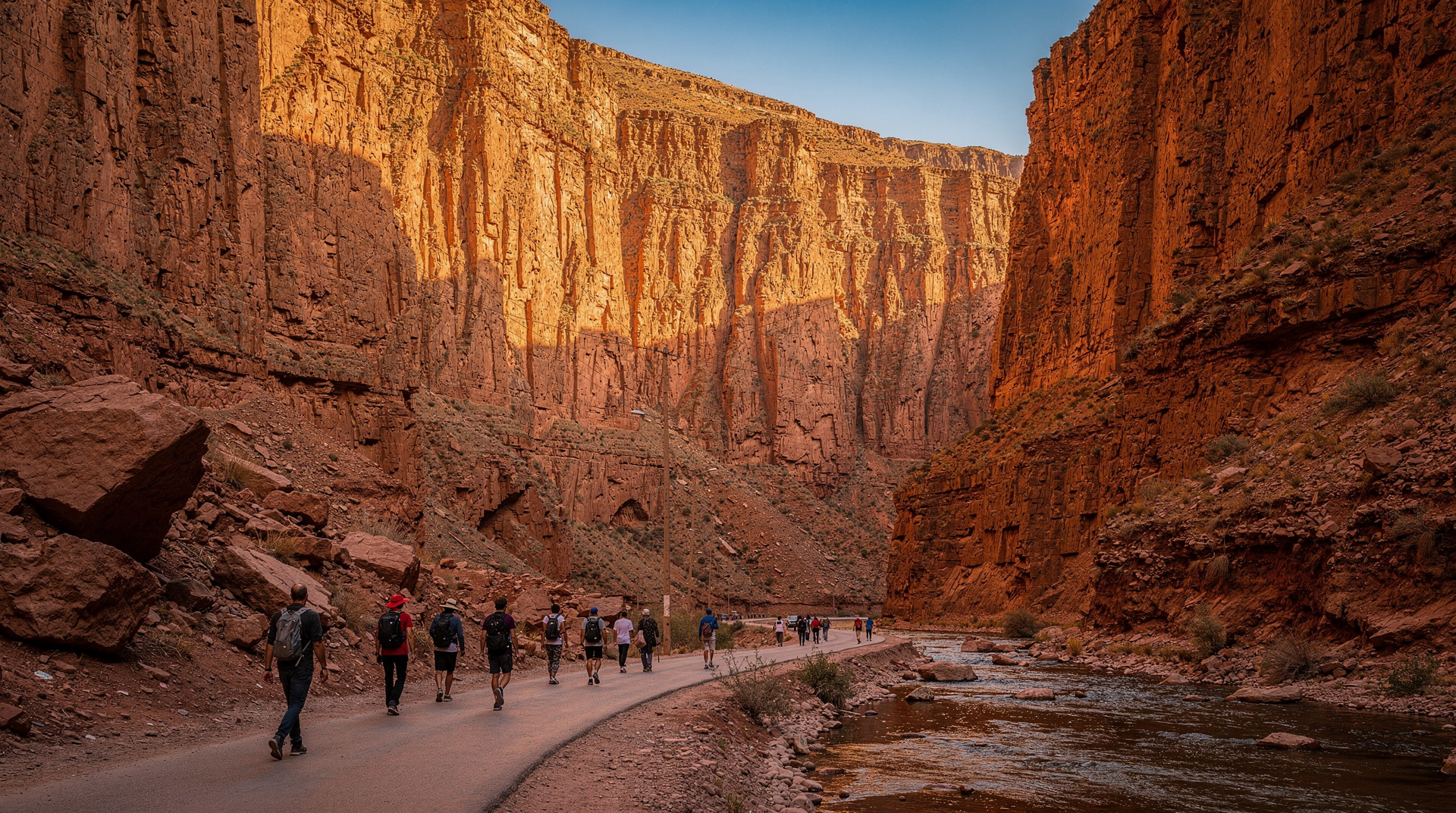
The Todra Gorge is 30 km northeast of Boumalne Dades on a road that crosses the plateau and drops into the Todra River valley. The canyon walls at the dramatic section are 300 metres high with a gap of 10 metres at the narrowest point. A cold river runs through year-round.
Be here before 09:00. The morning light enters the gorge differently in each season — in autumn and spring it floods the lower section; in winter it barely reaches the ground. Walk the 600-metre dramatic section, walk back, have coffee at a riverside cafe with canyon walls on three sides. This is one of the best mornings on the entire trip.
Spend Day 6 in the Todra area: there is a longer walk up the gorge beyond the dramatic section (quieter, wilder, fewer vendors) and the palm groves below the village of Tinghir are pleasant in the afternoon.
Where to sleep: Dar Ayour (gorge location: €40–65); Hotel Yasmina (budget, beside the gorge: €20–35)
Day 7: The hammada to Merzouga
The drive (3.5–4 hours)
East from Tinghir through Erfoud. The landscape changes progressively: first the gorge country, then lower gravel plains, then Erfoud’s fossilised limestone (the hotels here have trilobite fossils embedded in the lobby floor slabs). Rissani beyond Erfoud is the historic capital of the Tafilalt oasis and birthplace of the Alaoui dynasty — Morocco’s ruling family. The souk at Rissani is the largest in the region and worth a walk.
Then south from Rissani toward Merzouga. The landscape becomes flat black gravel (hammada) and the horizon expands in every direction. After 30 km of hammada, the dunes appear without preamble: 150 metres of orange sand, Erg Chebbi, rising from the flat plain like a geological error. The first sighting from the car is one of the trip’s defining moments.
Late afternoon: camel ride and camp
Park at the dune edge (guesthouses along the Merzouga road have secure parking). Camel ride into the dunes begins at 17:00 — 45–60 minutes to the camp inside the dune field. Sunset from the dune summit. Berber dinner in the main tent. Stars.
Book the Merzouga sunset camel trek and overnight camp in advance — the good camps fill weeks ahead in October and November.
Where to sleep: In the dune camp (premium: €80–150 all-inclusive); or Kasbah Mohayut or Auberge Sahara by the dune edge (mid: €40–70)
Day 8: Merzouga — a full day in the desert
05:30: dune sunrise
Climb the main dune before dawn. The walk takes 25–30 minutes of genuine effort through soft sand. At the top: the sun rises over Algeria, the dune shadow sweeps west across the hammada, the temperature shifts from cold to warm in five minutes. This is the moment.
Day at leisure in Merzouga
Use the rest of Day 8 at your own pace: quad biking over the dunes (€30–50 for 90 minutes), sandboarding, visiting the Gnawa musicians of Khamlia village (5 km south — a community descended from sub-Saharan African slaves who preserve a distinct musical tradition), swimming at the Merzouga lake if the flamingos are in residence.
Where to sleep: Return to your previous camp or switch to a hotel guesthouse near the dune for comfort.
Day 9: The Draa Valley road
The route (5 hours, 280 km)
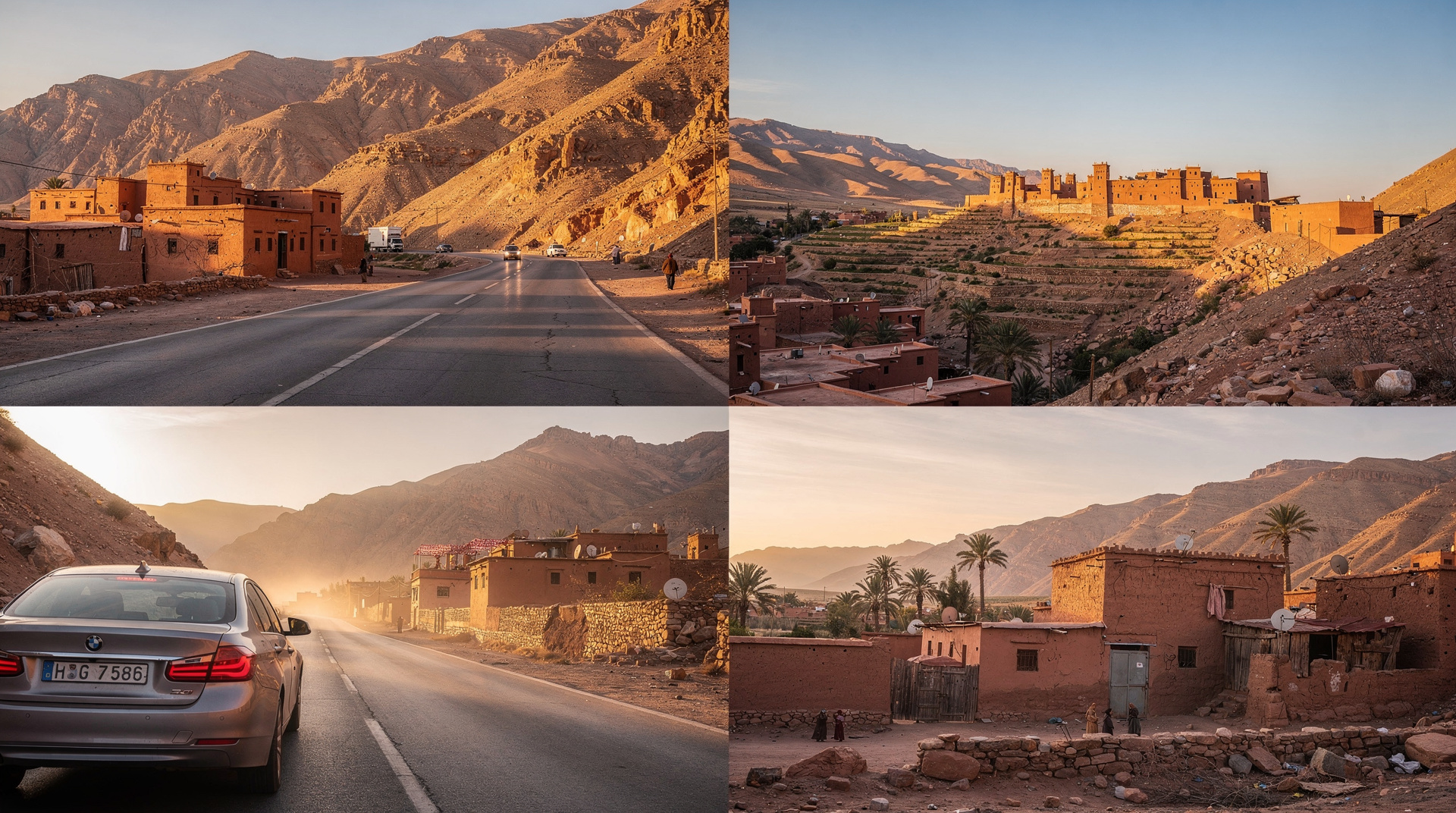
This day requires early departure: Merzouga → Erfoud → Rissani → south via Alnif → Tazzarine → Nkob → Agdz → Zagora. This is the “Draa Valley road” — rarely taken by tourists who go straight north from Merzouga to Fes, but far more beautiful. The route crosses the Anti-Atlas foothills through Nkob (a village of 45 ksour, extraordinary landscape) and descends into the Draa Valley palmery at Agdz.
The Draa Valley from Agdz south to Zagora is 100 km of continuous palm oasis — the longest palmery in Morocco. The road runs through date palms, alongside earthen kasbahs, past rose-red ksour. This is the most sustained beautiful drive of the trip.
Zagora
The sign at Zagora reads “Tombouctou — 52 jours” by camel. The town is the end of the main road south and the gateway to M’Hamid and the open desert. The evening light on the Jebel Zagora mountain above the town is good for photography.
Where to sleep: Riad Dar Sofian (mid: €50–80); Kasbah Sirocco (budget: €30–50)
Day 10: M’Hamid and the deep south (optional)
Drive to M’Hamid (90 km south of Zagora)
M’Hamid el Ghizlane is the end of the road. Beyond is open Sahara, piste tracks, and — eventually — Mauritania and Mali. The dune fields around M’Hamid (Erg Chigaga, 60 km further west, requires a 4x4) are quieter and arguably more beautiful than Erg Chebbi. A short camel walk from M’Hamid into the edge of the dunes takes 2 hours.
Return to Zagora for the night, or camp at M’Hamid if the mood takes you.
Day 11: Anti-Atlas — Taznakht and Taliouine
The drive northwest (4 hours, 240 km)
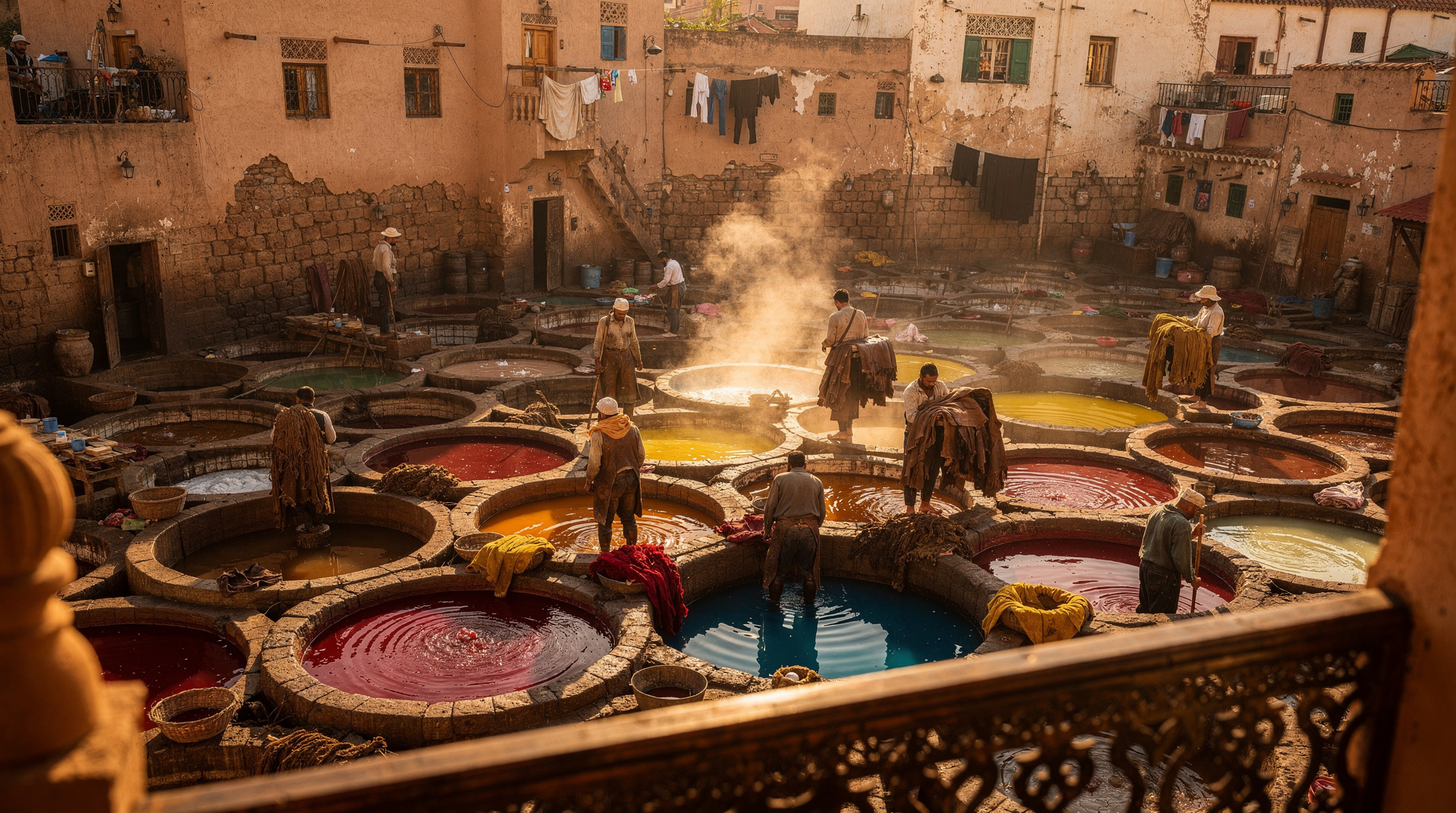
From Zagora back north to Agdz, then west via Foum Zguid and Taznakht. Taznakht is the carpet-weaving centre of the Anti-Atlas — a small town where the distinctive geometric Ouarzazate-style rugs are made in traditional workshops. The colours are extraordinary: saffron, madder red, indigo, natural wool.
Continue west to Taliouine: the saffron capital of Morocco. The Souss-Massa region around Taliouine produces the highest-quality saffron in the world (scientists have verified higher crocin concentration than Kashmiri or Iranian varieties). The saffron cooperative sells certified saffron at €8–12 per gram — significantly cheaper than European retail and guaranteed genuine.
Where to sleep: Auberge Souktana (mountain guesthouse: €35–55); Kasbah Taliouine (mid: €50–80)
Day 12: Taroudant and Agadir
Taroudant
60 km west of Taliouine: Taroudant, the “grandmother of Marrakech” — an ochre-walled medina city that looks like Marrakech 40 years ago before mass tourism. The city walls (12 km of pink earthen ramparts) are among the best-preserved in Morocco. The souks inside are genuine and local: metalwork, leather, pottery, and the Souss-style jewelry different from Marrakech. Give Taroudant 3 hours minimum.
Agadir (90 km west)
The coastal city is primarily a resort, rebuilt after the 1960 earthquake. The beach is excellent — 9 km of Atlantic sand with calmer swimming than Essaouira. The Kasbah hill above the city (destroyed in the earthquake but partially rebuilt) has a sunset view over the bay. The Souk el Had market on Sunday is the largest weekly market in southern Morocco.
Where to sleep: Villa Blanche Agadir (boutique: €100–160); Hotel Petite Suède (budget: €30–50)
Day 13: Coastal road to Essaouira
The drive north (3 hours, 200 km)
From Agadir the N1 runs north along the Atlantic coast through the argan forest. The argan tree is endemic to this coastal strip between Agadir and Essaouira — the UNESCO-protected Arganeraie Biosphere Reserve covers 2.5 million hectares. The cooperative villages along the road offer certified argan oil at the source: both culinary (toasted amber, for cooking) and cosmetic (pale green, for skin and hair). Buy here rather than in Marrakech.
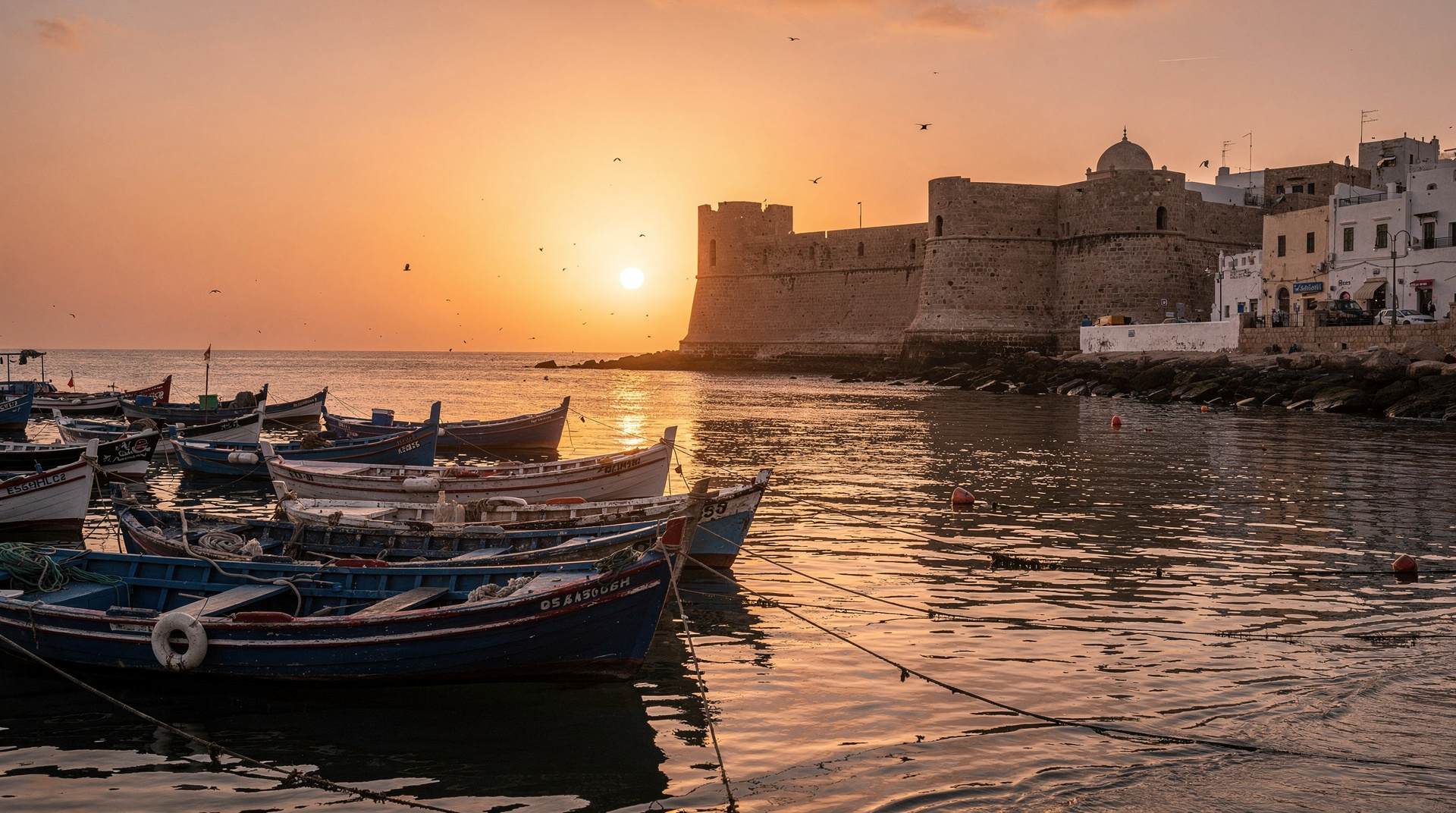
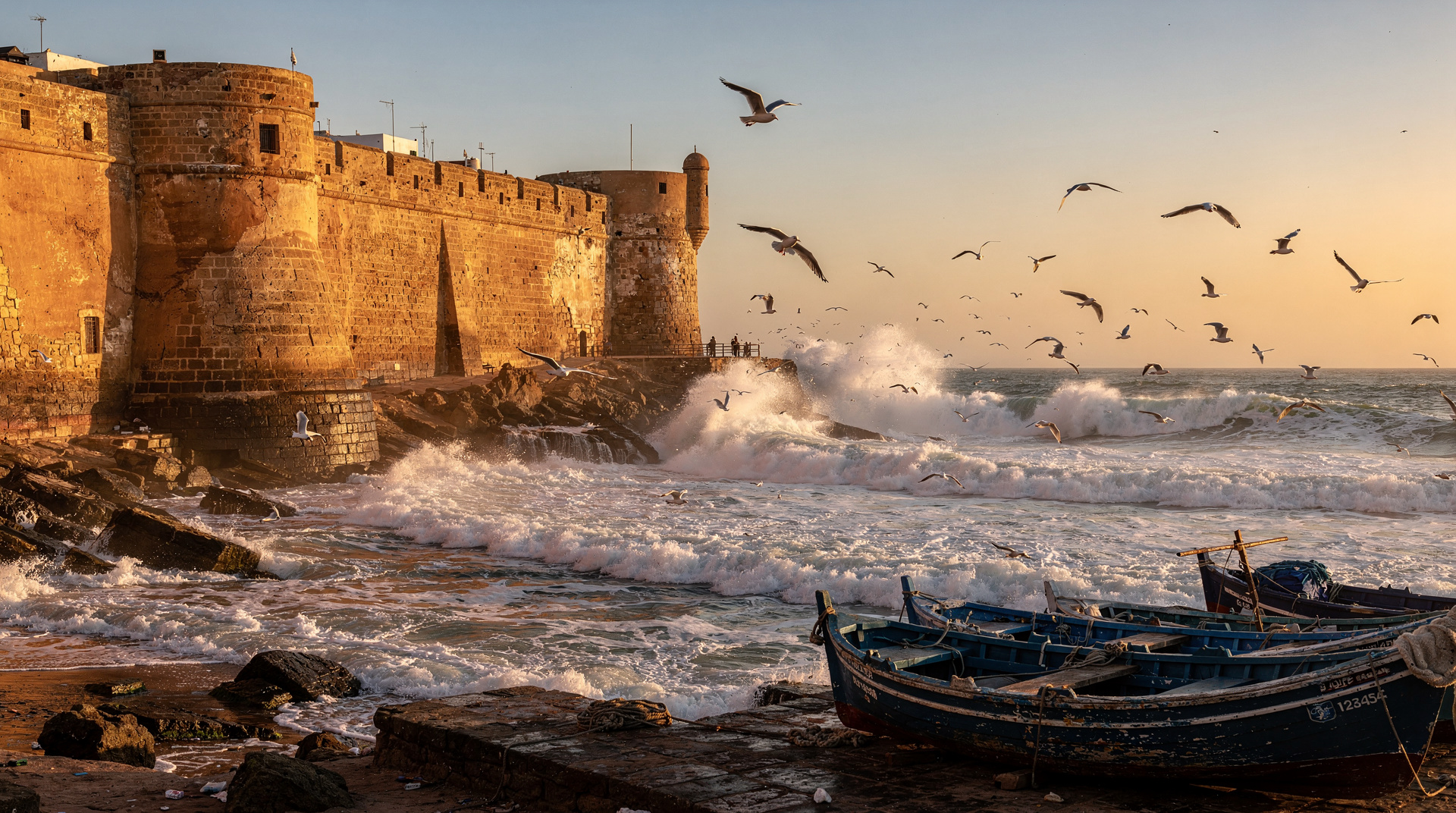
Essaouira appears at the end of a straight road through scrubland: whitewashed ramparts, blue boats in the harbour, Atlantic wind. The contrast with the ochre and dust of the previous 10 days is extreme and welcome.
Afternoon: Essaouira
Walk the Skala de la Ville ramparts immediately on arrival. The Atlantic from the battlements, the fishing fleet below, the medina rooftops behind — this is the best first impression in coastal Morocco. The evening light is exceptional from the rampart walk.
Where to sleep: Heure Bleue Palais (upscale: €150–220); Riad Baladin (mid: €70–110)
Day 14: Essaouira and return to Marrakech
Morning: final Essaouira
Buy argan oil, thuya wood boxes, and Gnawa music CDs in the medina. The spice souk near the port sells certified argan oil in sealed bottles at the best prices in Morocco. The beach in the morning before the wind picks up: walk south toward the ruined Borj El Berod (the castle in the sea, visible at low tide, supposedly the inspiration for “Castles Made of Sand” by Jimi Hendrix who visited in the 1960s).
Midday: return to Marrakech (2h30)
The N1 north through the argan forest and the Haouz plain. Familiar road by now. Return the rental car to the airport or city depot. Allow extra time for car return formalities.
Where to sleep: Airport hotel if early morning flight (Eden Airport Hotel: €60–80), or one final night in a Marrakech medina riad.
Transport logistics
Rental car: A standard 4x2 (Dacia Duster, Renault Duster, or similar) handles all roads on this itinerary. 4x4 is only needed if you want to drive to Erg Chigaga from M’Hamid. Book through a reputable company. Comprehensive insurance is essential — Moroccan roads have variable quality and other drivers.
Key driving times:
- Marrakech → Aït Benhaddou: 4h (180 km via Tizi n’Tichka)
- Aït Benhaddou → Ouarzazate: 30min
- Ouarzazate → Skoura: 40min; Skoura → Dades Gorge: 1.5h
- Dades Gorge → Todra Gorge: 1.5h (via Boumalne)
- Todra → Merzouga: 3.5h (via Erfoud)
- Merzouga → Zagora: 5h (via Tazzarine — the scenic route; 4h via direct Rissani–Ouarzazate–Zagora)
- Zagora → Taliouine: 4h
- Taliouine → Agadir: 2.5h via Taroudant
- Agadir → Essaouira: 3h
- Essaouira → Marrakech: 2.5h
Fuel: Petrol stations are reliable on main routes. Between Merzouga and Tazzarine (about 100 km) there is one station at Alnif — fill up in Merzouga before departing.
A rental for the Marrakech loop
This route starts and ends in Marrakech, so you only need one pick-up point and the same drop-off, with no one-way fee to worry about. What matters is how the car copes with a long circuit through the Atlas, the gorges and the desert edge.
Check that mileage is unlimited, since the loop covers a lot of ground, and ask what the excess is on the insurance before you pay. At the desk, photograph every scratch and tyre, and confirm there is a usable spare. Agree on the fuel policy too: you will be topping up in Merzouga yourself, so a full-to-full arrangement is the simplest. Reservations made ahead also let you settle these terms calmly, and you can look at Marrakech pick-up options on DiscoverCars.
Budget estimate
| Item | Budget (pp) | Mid-range (pp) | Comfort (pp) |
|---|---|---|---|
| Accommodation (14 nights) | €350 | €800 | €1500 |
| Car rental (12 days, 2 people sharing) | €210 | €330 | €480 |
| Fuel (approx 2200 km) | €80 | €80 | €80 |
| Food and drink (14 days) | €210 | €420 | €700 |
| Entry fees, camel ride, activities | €80 | €160 | €300 |
| Local transport | €30 | €50 | €80 |
| Total (flights excluded) | €960 | €1840 | €3160 |
What to pack for the grand south
Car essentials: Physical road map (Morocco 1:800000 Michelin); water (carry 4 litres minimum in the southern section — towns can be 80 km apart); basic toolkit including jump leads; tyre pressure gauge.
Clothing: The temperature range is extreme. Marrakech and the coast: warm. Atlas pass: cold even in summer. Desert nights: 5–10°C in spring and autumn. Essaouira: windy and cool. Pack layers.
Cash: Withdraw enough in Marrakech. ATMs in Zagora and Ouarzazate work; in smaller towns (Skoura, Taznakht, Taliouine) they may be absent or out of cash.
Best time of year
October–November: The sweet spot. The desert is warm (25–30°C days) but not brutal. The Atlas pass is clear. The Dades and Todra gorges are at their most golden.
March–April: Also excellent. Wildflowers in the valleys, green water in the Todra, roses beginning in the Kelaa M’Gouna area (late April).
Avoid July–August: The Sahara exceeds 45°C. Car driving across the black hammada in midsummer is genuinely unpleasant and potentially dangerous.
Common mistakes to avoid
Not stopping in Skoura: Almost everyone drives straight through from Ouarzazate to the Dades Gorge. The Skoura oasis deserves at least 2 hours — ideally an overnight.
Skipping the Tazzarine route: Most guides send you Merzouga → Fes via the direct north road. The Tazzarine–Nkob–Draa Valley alternative is longer but dramatically more beautiful. If you have 14 days, use this route.
Underestimating the Taliouine detour: Taliouine is 4 hours from Zagora but worth every kilometre. The Anti-Atlas landscape and the saffron cooperative are both unique.
Solo, couple, or small group: does this route change?
The grand south works well solo, as a couple, or in a small group of 3-4 sharing a car — the driving is not technically demanding and the accommodation options at every stop range from budget guesthouses to genuine luxury. Solo travellers should factor in that car rental costs don’t shrink per person the way they do when shared; see the solo female travel Morocco guide for route-specific safety notes, and the solo female Morocco itinerary if you’d prefer a route built around solo logistics from the ground up.
Groups of 3-4 get the best value on this route, since the car cost splits further and the deep-south towns (Zagora, Taliouine, Taznakht) have limited but genuine group-friendly guesthouses. For couples wanting a shorter, less driving-intensive version of the same landscapes, the self-drive Morocco itinerary covers similar terrain with fewer overnight changes.
Photography considerations on the grand south route
This route was built with landscape photography in mind even before the extra detours (Telouet, the Draa Valley via Tazzarine) are added, and several stops reward arriving specifically for the light: Aït Benhaddou at dawn (Day 4), the Dades hoodoos in late afternoon (Day 5), Todra Gorge before 09:00 (Day 6), and the Merzouga dune sunrise (Day 8). If photography is the primary goal rather than a byproduct, the dedicated photography Morocco itinerary reorders some of these stops specifically around golden-hour timing and adds a few locations this general-purpose route skips.
How to extend or shorten
To shorten to 10 days: Remove the Tazzarine detour and the Taliouine/Taroudant section. Drive direct Merzouga → Ouarzazate → Marrakech and skip the Agadir/Essaouira section. You lose the coast and the Anti-Atlas.
To extend to 21 days: Add the imperial cities (Fes, Meknes, Chefchaouen) on the northern return and spend more time in Essaouira. See our 21-day Morocco itinerary for the complete loop.
For a photography-focused version of this southern route, see our photography Morocco itinerary. Our Aït Benhaddou, Merzouga, and Essaouira destination guides have full detail on each major stop.
Frequently asked questions about Grand South Morocco road trip
Is a 4x2 rental really enough for the whole grand south route? Yes, for everything except the optional Erg Chigaga detour from M’Hamid, which requires a 4x4 and a local guide. Every other road on this itinerary, including the Tizi n’Tichka pass and the Draa Valley road via Tazzarine, is paved and manageable in a standard rental.
Should I do the M’Hamid detour (Day 10) or skip it? Skip it if you’re already tight on days — it adds a full day for a dune experience similar in kind, though quieter, to what you’ve already had in Merzouga. Include it if the Sahara is the main draw of the trip and you want to compare Erg Chebbi with the more remote Erg Chigaga; the Zagora vs Erg Chigaga guide helps decide.