Adventure Morocco itinerary: 14 days of trekking, dunes, and surf
Morocco for people who don’t sit still
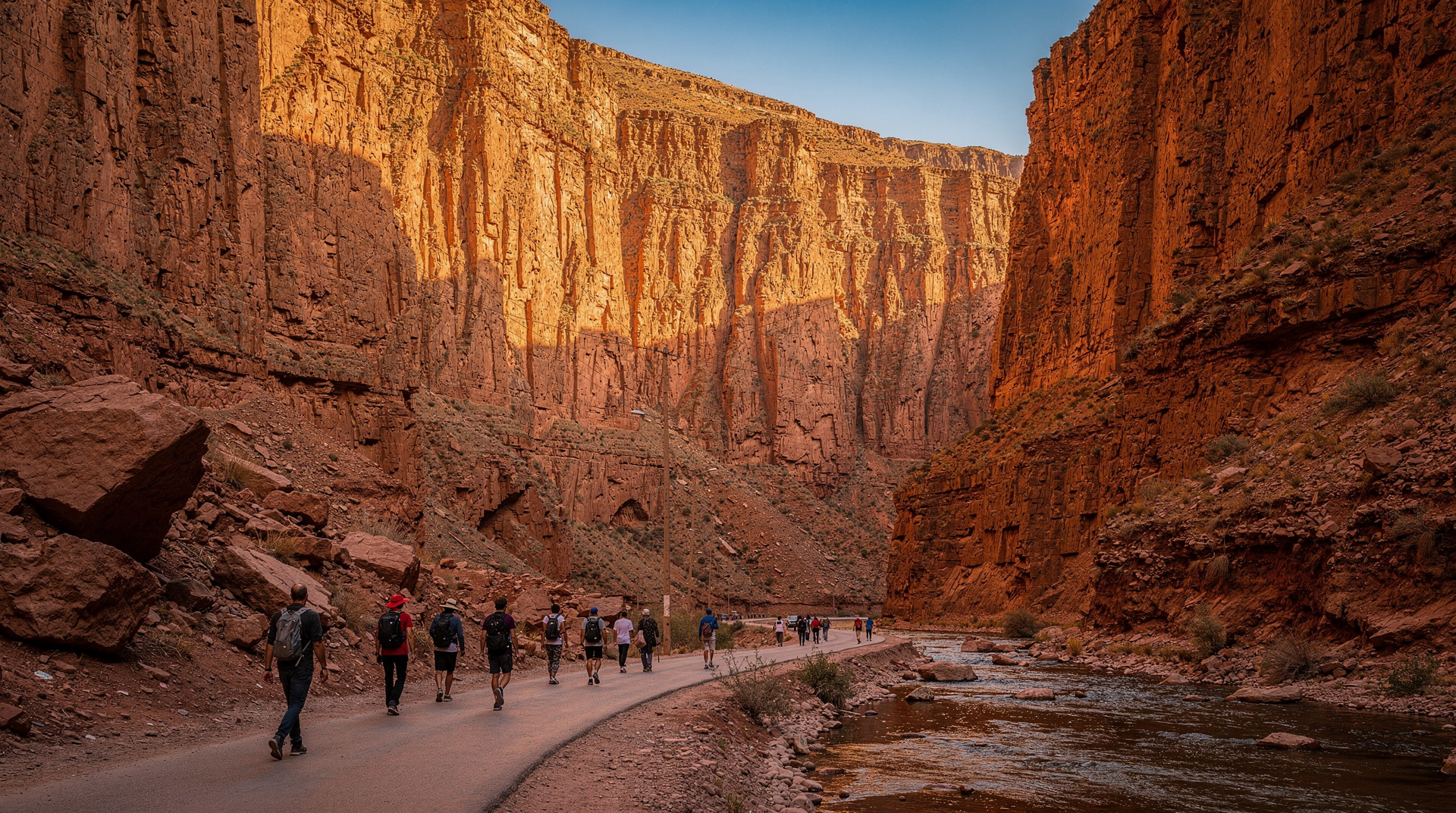
Most Morocco itineraries are built around medinas, riads, and scenic drives. This one is built around moving your body in some of the most spectacular terrain on earth. Morocco’s geographical range is extraordinary: the highest peak in North Africa (Jbel Toubkal, 4167m), the largest hot desert on earth (the Sahara), and one of the best surf coasts in Europe or Africa (the Atlantic coast from Agadir to Essaouira).
This 14-day adventure itinerary connects all three. It is physically demanding — the Toubkal summit day is a 7–8 hour round trip at altitude, the desert section involves camel trekking in heat, and the surf coast requires paddling and stamina. But it is not technical; none of these activities requires specialist experience, and the infrastructure for each is excellent.
Route at a glance: Marrakech (2 nights) → Imlil / Toubkal (3 nights) → Marrakech → Merzouga Sahara (2 nights) → Agadir → Taghazout (3 nights) → Imsouane (1 night) → Essaouira (2 nights)
Total estimated cost (per person, flights excluded): €1100–1800
At a glance
| Day | Route | Overnight |
|---|---|---|
| 1 | Arrive Marrakech | Marrakech |
| 2 | Marrakech acclimatisation + gear check | Marrakech |
| 3 | Transfer to Imlil (1h30), acclimatise, village hike | Imlil |
| 4 | Trek to refuge Toubkal (3207m) | Refuge du Toubkal |
| 5 | Summit Toubkal (4167m) + descend to Imlil | Imlil |
| 6 | Return to Marrakech, overnight bus to Merzouga | Bus |
| 7 | Arrive Merzouga, dunes, sunset camel | Merzouga |
| 8 | Morning dunes, drive Agadir | Agadir |
| 9 | Transfer to Taghazout, surf lesson | Taghazout |
| 10 | Full surf day Taghazout | Taghazout |
| 11 | Taghazout + Imsouane (1h drive) | Imsouane |
| 12 | Imsouane: the longest wave in Morocco | Imsouane |
| 13 | Drive to Essaouira, arrive early afternoon | Essaouira |
| 14 | Essaouira: kitesurfing or windsurf + depart | Essaouira / Marrakech |
Day 1: Arrive Marrakech — the adventure base
Arrive at Marrakech Menara Airport (RAK) and take a petit taxi to your riad (€4–6). The adventure begins tomorrow; today is for recovering from the flight and preparing.
Eat well tonight — a proper Moroccan meal (couscous, tagine, salads) rather than something quick. The body needs carbohydrates and protein before altitude. The market stalls in Djemaa el-Fna offer the best value dinner in the city: €5–8 for a full meal. The orange juice stalls charge 7 MAD per glass and the quality is exceptional.
Check your gear: hiking boots should be worn in, not new. Walking poles are useful on the Toubkal descent. Warm layers for the refuge night (temperatures drop to 0°C or below at 3200m, even in summer). A headlamp for the pre-dawn summit approach.
Where to stay: Riad Jardin Secret (mid: €70–120); Hostel Medina (budget: €12–18)
Day 2: Marrakech preparation + easy Atlas day trip
Do not go straight to altitude. Acclimatisation starts today with a trip to the Ourika Valley — 40 km southeast of Marrakech, 1400m at the road-head, with a 1-hour walk to the Ourika Waterfalls. This is a gentle warm-up for the legs and the lungs.
The Ourika Valley day trip from Marrakech is a well-run half-day that handles transport and guide — use this for a relaxed introduction to the Atlas foothills.
Afternoon: buy any remaining gear in Marrakech’s Souk Berbère or the outdoor shops near the Mellah. Merrell and The North Face items are available at local prices; quality varies, so inspect before buying. Confirm your Toubkal guide arrangement — you need a licensed mountain guide for the summit; the Imlil-based guide associations (Imlil Mountain Guides Association) are the most reliable.
Evening: early dinner and an early sleep. Tomorrow starts at 07:00.
Day 3: Transfer to Imlil — into the High Atlas
A shared grand taxi from Marrakech’s Bab er-Rob taxi stand to Imlil takes 1h30 and costs €5–7 per seat. The road climbs rapidly from the city’s flat suburbs into increasingly dramatic mountain terrain, through Asni (the roadside livestock market is worth a stop if it is Saturday), and up a single-track valley to Imlil at 1740m.
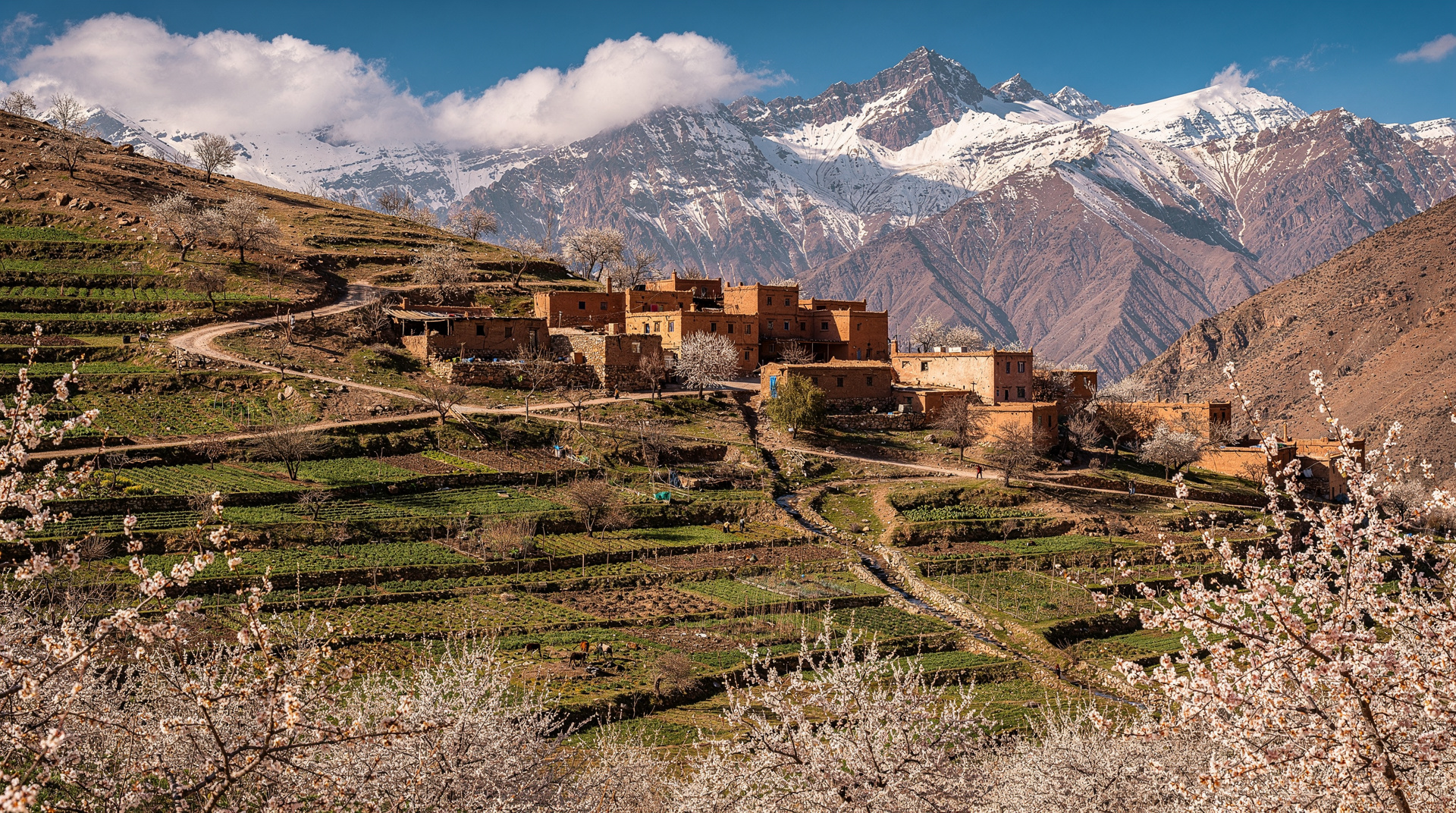
Imlil is a cluster of Berber villages that has evolved into Morocco’s mountain guide capital. Every building has a guesthouse sign or a guide association certificate on the wall. Quality ranges enormously; the Kasbah du Toubkal (a converted kasbah at the village head, now a benchmark mountain lodge: €80–150/night) is the most famous option, but there are good family guesthouses from €20–40 per person including half board.
Afternoon: an acclimatisation walk. The Aroumd valley circuit from Imlil takes 3–4 hours and climbs 300m — enough to feel the altitude without overdoing it. Pass through Berber villages where women weave carpets in doorways, mule trains carry construction materials, and the path is lined with apple and walnut orchards. Return to Imlil for dinner and an early sleep.
Height: 1740m | Where to stay: Kasbah du Toubkal (€80–150) | family guesthouse (€20–40 HB)
Day 4: Trek to Refuge du Toubkal (3207m)
Start by 08:00. The trail from Imlil to the Toubkal Refuge climbs 1467m over approximately 9 km and takes 4–5 hours at a steady pace. It is not technical — the path is clear and well-maintained — but it is sustained, steep, and at altitude.
The first section crosses the Mizane Valley to the hamlet of Sidi Chamharouch, where a white-painted shrine complex occupies a boulder above the river. Many Moroccan pilgrims make this their destination; the site has been a place of healing for centuries. Rest here and drink water.
Above Sidi Chamharouch, the valley narrows and the gradient increases. The vegetation disappears; the terrain becomes rock and scree. The refuge appears at 3207m — a functional mountain hut managed by the Club Alpin Français and several private operators. Dorm beds run €15–20 including dinner and breakfast.
The summit is visible from the refuge: a broad rocky pyramid rising another 960m to the south. Study the route for tomorrow.
What to bring for the refuge: Sleeping bag liner (blankets provided but cold), hiking poles, headlamp (essential for tomorrow’s pre-dawn start), energy snacks, electrolyte tablets.
Day 5: Summit Jbel Toubkal (4167m) — the roof of North Africa
Alarm at 05:00. The standard summit approach starts before dawn to reach the top before afternoon storms develop (uncommon in summer but possible) and before the sun softens the scree, making descent more difficult.
The route from the refuge to the summit takes 2.5–3.5 hours depending on pace and conditions. In summer (June–September), the route is snow-free scree and rock scramble. In other months, an ice axe and crampons may be required — your guide assesses conditions and provides equipment if needed.
The summit at 4167m on a clear day: the Atlas range extends in every direction. To the south, the Sahara is visible on the horizon as a pale ochre haze. To the north, Marrakech is a faint smudge on the plain. The summit cairn has flags and a marker; the view is among the best in Africa.
Descent: 2–3 hours back to the refuge, then another 3 hours back to Imlil. Total summit day: 7–9 hours moving, plus rests. You will be tired and euphoric in approximately equal measure.
Imlil guesthouse dinner: your biggest meal of the trip. Sleep arrives without difficulty.
Your guide: A licensed High Atlas mountain guide is required by regulation for the Toubkal circuit and is essential in practice — route-finding in adverse weather and altitude awareness are genuine skills here. Cost: €80–120/day including guiding and refuge booking.
Day 6: Return Marrakech + overnight bus to Merzouga
Grand taxi back to Marrakech (1h30). You have an afternoon in the city — use it for a hammam (the body genuinely needs it after the trek), a proper meal, and repacking: leave trekking gear at your riad and bring only desert essentials for the Merzouga leg.
The overnight CTM bus to Erfoud/Rissani departs Marrakech at approximately 21:00–23:00. Fare: €12–15. This saves one night’s accommodation cost and positions you in Merzouga for the following morning.
Day 7: Merzouga — the Sahara after the Atlas
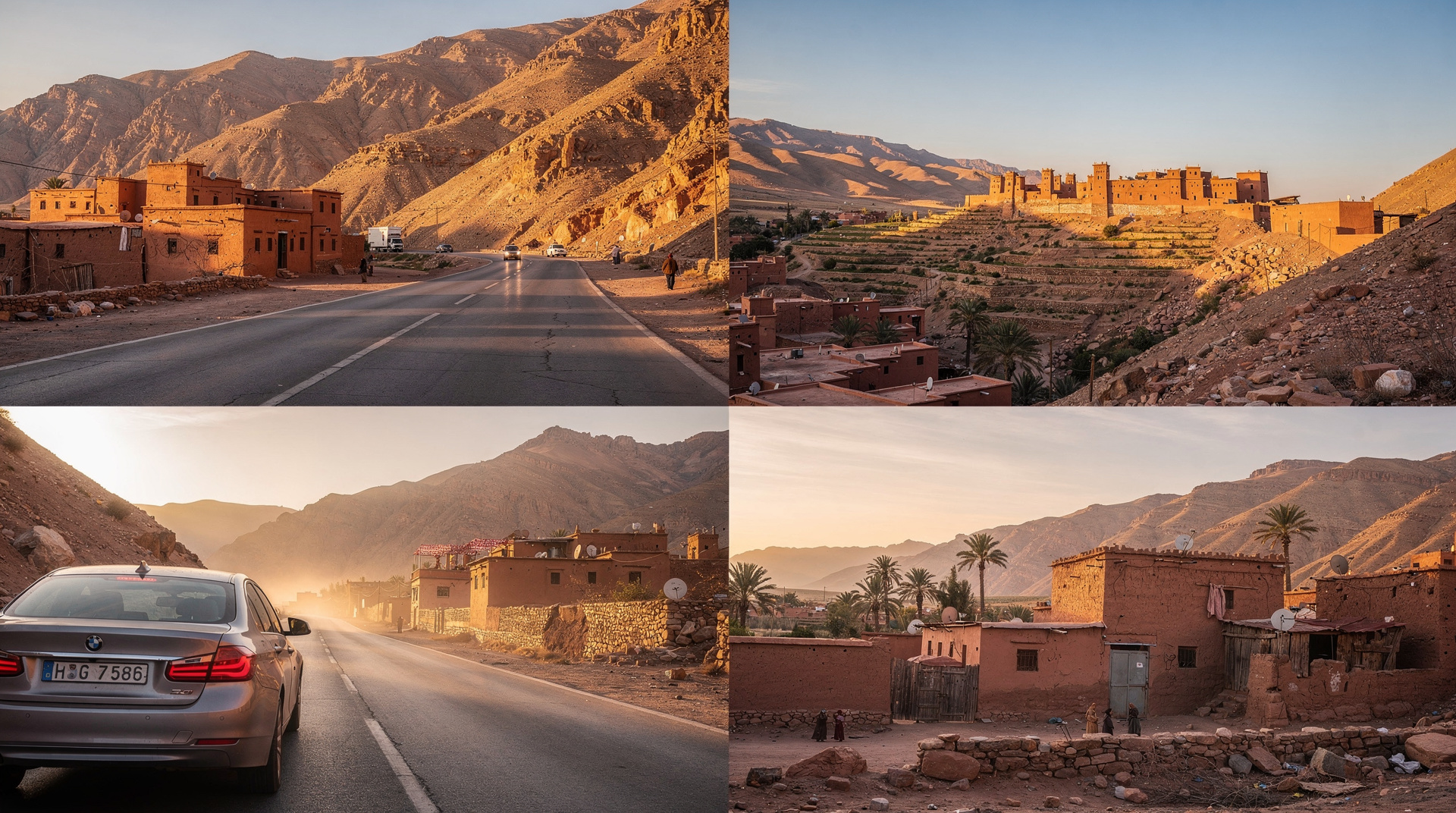
Grand taxi from Rissani to Merzouga: €3–4. Arrive around 07:00–09:00. The contrast with Imlil is absolute: from 4167m of cold rock to flat hammada desert, from mountain silence to wind and heat.
Rest the morning. Check into your guesthouse — Riad Madu, Auberge Kasbah Mohayut, and Maison Merzouga all offer clean doubles at €25–50/night with breakfast, some with small pools.
Afternoon: the dunes. The Erg Chebbi is free to walk into; you simply walk east from the village. Hire a sandboard at the dune base (€5–10) and ride the slopes — it is genuinely fun and requires more skill than it looks. The larger dunes rise 150m above the plain and take 20–30 minutes to climb.
Sunset camel trek: the classic Merzouga experience, and a genuine one even on an adventure-focused trip. A guided sunset camel ride to a basic desert camp costs €25–40 per person including overnight, dinner, and breakfast. The Sahara at night — temperature dropping 15°C from the afternoon high, Milky Way overhead, no light pollution — is one of the defining experiences of any Morocco trip.
Book a Merzouga overnight desert camp with camel ride in advance during peak season (October–April).
Day 8: Sunrise + drive west to Agadir
Dawn from the dune crest: 05:30 alarm, 25-minute climb, 20-minute spectacle. Then breakfast at the camp, camel back to the village, and the long drive begins.
Merzouga to Agadir is approximately 8–9 hours by shared transport or private vehicle. The most convenient option is a private transfer (€150–200 for the vehicle) or a combination of grand taxis to Ouarzazate, then onward via the Tizi n’Test pass or CTM bus connection. Your guesthouse can arrange shared transport.
Agadir is a modern resort city rebuilt after the 1960 earthquake. It is not particularly interesting in itself, but it is the gateway to the surf coast and has the best transport connections. Stay near the beach (Agadir Beach Club area) for one night; basic hotels run €30–60.
Day 9: Taghazout — enter surf territory
Agadir to Taghazout: 20 km north, 30 minutes by shared taxi or petit taxi (€5–8). Taghazout is a small fishing village that has become one of the best surf destinations in Europe and Africa. The waves around the village — Killer Point, Anchor Point, Hash Point, Panoramas — break consistently from October to May, occasionally in summer, and are world-class at Anchor Point when the swell is big.
You do not need to be an experienced surfer to enjoy Taghazout. The beginner breaks at the village beach and at Tamraght (3 km south) are ideal for lessons. The Taghazout beginner surf lesson is a 2-hour session with equipment included — the quickest way to assess whether you are going to stand up or keep falling.
Surf camps and guesthouses in Taghazout offer packages of accommodation plus lessons: €50–80/night all-in for a dorm surf camp (lessons, board, wetsuit, breakfast, shared room), or €80–120 for a private room with lesson package. Morocco Surf Adventures, Atlas Ocean, and Surf Berbère are established operators.
Accommodation in the village itself is tight; book at least 2 weeks ahead in winter (November–March).
Day 10: Full surf day — the Atlantic delivers
A full day of surfing requires no itinerary. Your surf camp instructor assesses your level and sends you to the appropriate break. Total beginners spend the morning on the beach learning the basics, then try the soup at Hash Point. Intermediates paddle out at Panoramas. Advanced surfers walk 45 minutes north to Anchor Point — a right-hand point break that barrels at 4 feet and provides the longest rides on the Moroccan coast.
Between sessions: the village’s surf culture has generated excellent cafes and juice bars. The Amouage Cafe and La Source both do strong coffee and the best avocado toast in North Africa (this is not a joke; the avocados are extraordinary here, grown domestically at very low prices). A full day eating in Taghazout village runs €10–15.
Paradise Valley — a river gorge 30 km inland with natural swimming pools — is a highly recommended non-surf afternoon. Your surf camp typically runs afternoon trips (€15–20 per person). The pools are natural, the palms are dense, and the swimming is excellent.
Day 11: Taghazout + transfer to Imsouane
One more morning surf session at your chosen break, then pack and hire a taxi north to Imsouane (1 hour, €15–20 per vehicle, shareable with 3–4 others from the surf camp).
Imsouane is a small fishing village with a famous bay. The bay wave at Imsouane is reputedly the longest surfable wave in Morocco — it peels for 700 metres on good days. It is a slow, forgiving wave, excellent for intermediate surfers working on their technique. The right-hand point outside the bay is more powerful and better for advanced surfers.
The village is tiny — one main street, a handful of guesthouses, two or three cafes. Guesthouses here cost €15–30 per night; most offer surfboard hire (€10–15/day) and can point you to the best current break. Book ahead because there are very few rooms.
Day 12: Imsouane — a day on the long wave
The bay wave best surfs in the morning when the offshore wind is calm. Get in the water by 08:00. The ride from the take-off point to the end section is 5–7 minutes on a good day. You can catch 30–40 waves in a morning session with zero paddling fatigue because the walk-up the beach only takes 3 minutes.
Afternoon: the bay beach is clean, the village is quiet, and the pace here is completely different from Taghazout. Sit on the terrace, eat fresh fish grilled at the restaurant overlooking the bay (fish + salad + bread + tea: €8–12), and watch the local Moroccan surfers — many of whom are now competing at an international level — rip the point break.
Day 13: Drive to Essaouira — the wind capital
Imsouane to Essaouira: approximately 2 hours by taxi or shared transport. Grand taxis run from Imsouane toward Agadir and from Agadir north to Essaouira; the journey requires one change unless you arrange a private transfer (€40–60).
Essaouira is the windiest spot on the Moroccan coast and consequently one of the premier kitesurfing and windsurfing destinations in the world. The winds — the Alizées trade winds — blow consistently from the north-northeast at 20–35 knots from April to October. The beach extends 5 km south from the medina with a clean sandy bottom and consistent cross-shore wind.
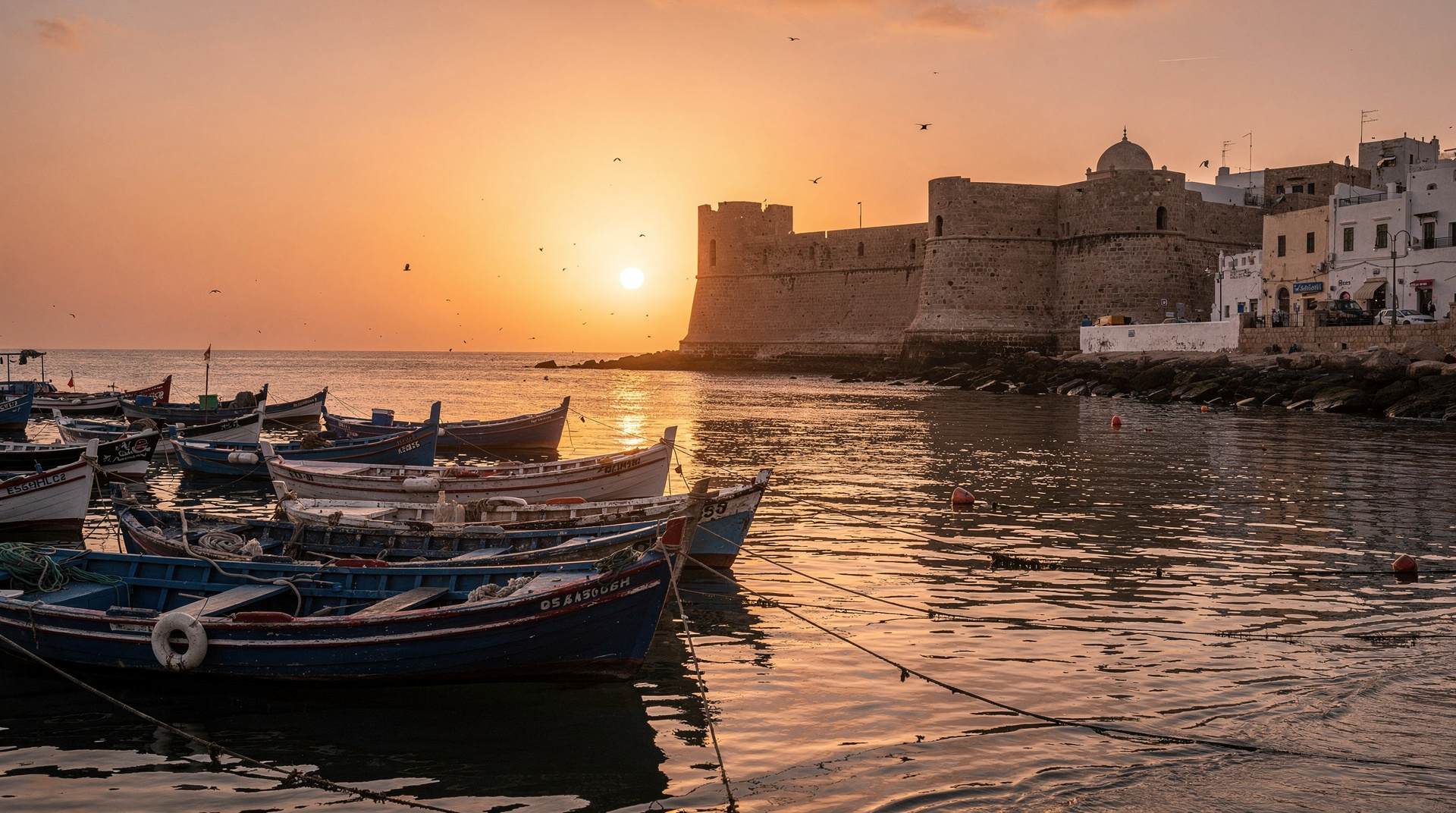
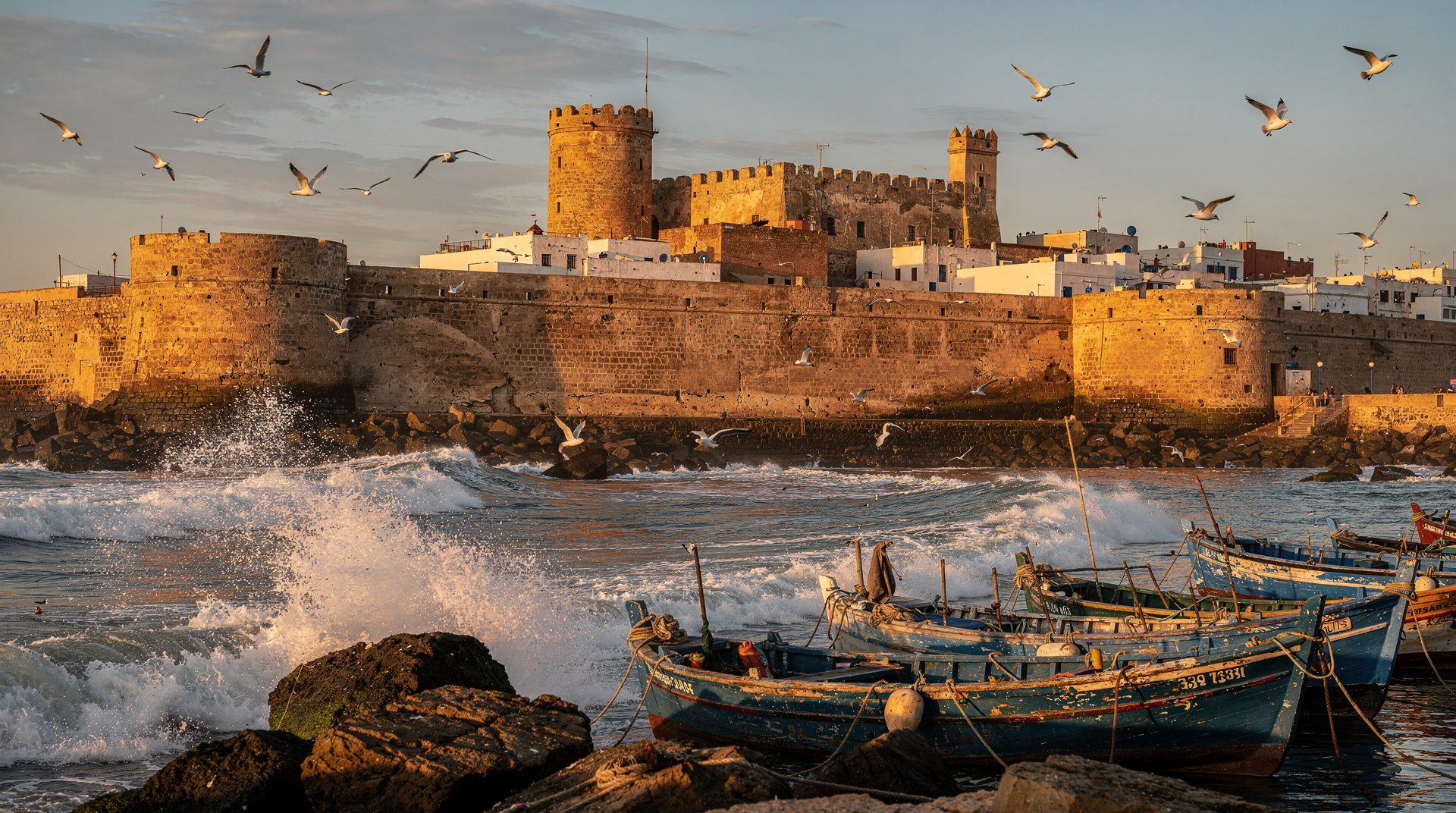
Check into your accommodation (Riad Baladin, Dar Adul, or one of the seafront guest houses run €40–80 for a private room). Walk the medina ramparts at sunset — the light over the Atlantic from the Skala de la Ville fortification is exceptional and costs nothing.
Dinner: the harbour fish stalls. Whatever came in this morning is on the grill. Sardines, sea bass, calamari — €5–8 per plate. This is the best fish dinner in Morocco at the most honest prices.
Day 14: Essaouira — kitesurfing or windsurf + departure
The adventure finale. Book a kitesurfing lesson or windsurfing session through one of the beach operators (Explora Surf, Fun Kite Maroc, or similar). A beginner kitesurfing lesson runs €50–80 for 3 hours including equipment and instructor — enough to get you body-dragging in the water and understand the basics. Windsurfing lessons start at €40 for 2 hours.
Book an Essaouira kitesurfing lesson to confirm availability and equipment in advance.
After the session: return to Marrakech by CTM bus or grand taxi (2h30, €5–8) for the international flight, or continue to Agadir airport (3h from Essaouira) for a direct European flight.
Transport logistics
The multi-modal nature of this adventure itinerary requires some planning. Key connections:
- Marrakech → Imlil: grand taxi from Bab er-Rob, €5–7 per seat, 1h30
- Merzouga → Agadir: most efficient by private vehicle; shared grand taxi connections exist via Ouarzazate but take 10–12 hours
- Taghazout → Imsouane → Essaouira: taxi chain; allow half a day for each leg
- Essaouira → Marrakech: CTM bus or grand taxi, 2h30, €5–8
Budget estimate (14 days)
| Item | Per person |
|---|---|
| Accommodation (14 nights) | €350–550 |
| Mountain guide (2 days) + refuge | €200–280 |
| Desert camp (1 night) | €30–50 |
| Surf lessons (4–5 sessions) | €150–250 |
| Food (14 days, mix of street + cafe) | €150–220 |
| Intercity transport | €100–150 |
| Entry fees and activities | €50–80 |
| Total (flights excluded) | €1030–1580 |
What to pack
- Hiking boots (waterproof, ankle support) — essential for Toubkal
- Lightweight down jacket for the refuge and desert nights
- Surfboard wax and spare leash (most camps provide boards and wetsuits)
- Quick-dry towels, UV-protection rash guard
- Reusable water bottle with filter (mountain streams in the Atlas are generally clean above 2000m)
- Quality sunscreen (mountain UV at 4000m is intense)
Best time of year
October–November: Best overall. Toubkal is snow-free or lightly snowed; swell begins on the surf coast; desert nights are comfortable. Crowds are manageable.
March–April: Also excellent. Swell is still running well; Atlas wildflowers are spectacular; Sahara is at the best temperature.
July–August: Summit Toubkal (snow-free, busy), skip the Sahara (dangerously hot), surf the Atlantic (smaller summer swell but consistent waves at Anchor Point).
December–February: Summit requires crampons and ice axe; swell is largest and most powerful on the surf coast; desert is cold at night but beautiful during the day.
Common mistakes
Not acclimatising before Toubkal. The Ourika day trip on Day 2 is not optional — altitude sickness is a real risk if you go straight from Marrakech (464m) to the Toubkal refuge (3207m) in one day.
Booking the cheapest possible Sahara tour rather than direct transport. For an adventure itinerary, the shared van tours are inefficient — they move on a fixed schedule and spend too much time at tourist shops. Travel independently using grand taxis and CTM.
Underestimating the Atlantic swell. Anchor Point in winter can hold overhead-plus waves that are genuinely dangerous for intermediate surfers. Always check local conditions (Magicseaweed or Surfline Morocco for reports) and stay within your ability level.
For more detail on each leg, explore our Imlil and Toubkal trekking guide, Merzouga desert guide, and Taghazout surf guide.
Fitness level and how to prepare
This itinerary is honestly demanding, and it rewards a few weeks of preparation more than any piece of gear. The Toubkal summit day is the crux: 7–9 hours of moving at altitude, most of it on scree that punishes weak ankles and unconditioned legs. If your longest regular walk is under two hours, start building up 6–8 weeks out — stairs, hills, or a weighted daypack on flat terrain all transfer well. You do not need to be a climber or a surfer already; you need cardiovascular base and a tolerance for consecutive demanding days.
The surf half is more forgiving physically but front-loads a different kind of fatigue — paddling uses muscles most travellers rarely load, and two or three sessions in a row leaves shoulders sore even for fit people. Spacing Day 10 (full surf) against Day 9 (lesson only) is deliberate; do not add extra sessions on Day 11 morning if you are already tired, since Imsouane on Day 12 is worth arriving fresh for.
If you are coming from sea level with limited trekking experience, consider adding a rest day between Day 5 (summit) and Day 6 (bus to Merzouga) — the itinerary as written is tight, and a same-day transfer straight off a 9-hour mountain day onto an overnight bus is the single most commonly regretted compression point travellers report.
Booking sequence — what to lock in before you land
Three elements on this route genuinely need advance booking, in this order of urgency: the Toubkal mountain guide (book 2–4 weeks ahead in peak season — spring and autumn weekends sell out among the Imlil guide associations), the Merzouga desert camp (same window, especially October–April per the note above), and Taghazout surf camp accommodation (2+ weeks ahead November–March).
Everything else — grand taxis, guesthouses in Agadir or Imsouane, the Essaouira riad — can be arranged with a few days’ notice or on arrival outside the busiest weeks. For a broader read on how this route compares to a gentler pace, see our Atlas-focused Morocco itinerary or, for a shorter active taste, the budget Morocco itinerary covers some of the same Atlas ground on a tighter wallet.
FAQ
Do I need previous trekking or surfing experience for this itinerary? No specialist experience is required for either the Toubkal trek or the surf lessons — both are set up for capable beginners with a reasonable fitness base and a licensed guide or instructor. What matters more than prior experience is cardiovascular conditioning going in, since the itinerary stacks demanding days back to back.
Can this itinerary be shortened to 10 days? Yes, most commonly by cutting Imsouane (fold its single long-wave day into an extra Taghazout day) or by taking a direct transfer from Merzouga to Agadir instead of the Ouarzazate routing, saving roughly a day. Dropping the desert leg entirely changes the itinerary’s character too much to recommend; it is one of the three landscapes the trip is built around.