4 Days in Morocco
The case for a four-day Morocco trip
Four days in Morocco is enough to feel the place rather than just glimpse it — but only if you resist the temptation to cram everything in. This itinerary does two things well: Marrakech and the Atlantic coast. It skips the Sahara (that requires at least 3 extra days) and the imperial cities (another 3 days minimum). What it delivers is a genuinely satisfying long-weekend break that leaves you wanting to come back rather than relieved it is over.
Who this is for: couples, solo travellers, and small groups doing a long-weekend or city-break style trip from Europe. Flights from London, Paris, or Amsterdam to Marrakech take 3–4 hours. You can leave on a Thursday evening and be back by Monday night.
Budget expectation (per person, flights excluded): €350–600 mid-range. Budget travellers can do it for €220–300. The main variables are your riad choice and whether you take a private transfer to Essaouira.
Pace: gentle. Two nights in Marrakech, one night in Essaouira (or swap Day 3 for an Agafay desert evening and stay in Marrakech throughout). The itinerary has breathing room built in — deliberately.
At a glance
| Where | Marrakech (2 nights) + Essaouira (1 night) |
| Cost (pp, mid-range, flights excluded) | around €350–600 |
| Time needed | 4 days / 3 nights, extendable to 5 |
| Getting there | fly into Menara Airport (RAK); petit taxi to the medina, around €5–8 |
| Getting to Essaouira | CTM bus ( |
| Best time | October–November or March–April; avoid July–August |
At a glance
| Day | Route | Highlights | Overnight |
|---|---|---|---|
| 1 | Arrive Marrakech | Djemaa el-Fna, evening souks | Marrakech medina riad |
| 2 | Marrakech | Bahia Palace, Majorelle Garden, hammam | Marrakech medina riad |
| 3 | Marrakech → Essaouira | Atlantic coast, medina ramparts, seafood | Essaouira riad |
| 4 | Essaouira → Marrakech | Beach walk, souk, return flight | — |
Variation: replace Day 3 with Agafay desert evening and skip the Essaouira overnight — see Alternative variations below.
Day-by-day narrative
Day 1: Arrive in Marrakech — let the city find you
Morning: arrival
Marrakech Menara Airport (RAK) is small and efficient. The taxi queue outside arrivals is fixed-price to the medina: agree €6–8 before getting in. If you arrive late evening, agree the rate firmly — some drivers attempt to inflate night prices. Your riad will have sent coordinates; the final 200 metres will be on foot through lanes the width of your shoulders. This is not a bug.
Check in, order a mint tea on the rooftop, and give yourself an hour. Marrakech rewards patience on the first afternoon. The medina disorients even experienced travellers in the first two hours. Have lunch at your riad — most serve simple salads and tagines on the roof — and let the sound landscape settle around you.
Afternoon: Djemaa el-Fna and the souks
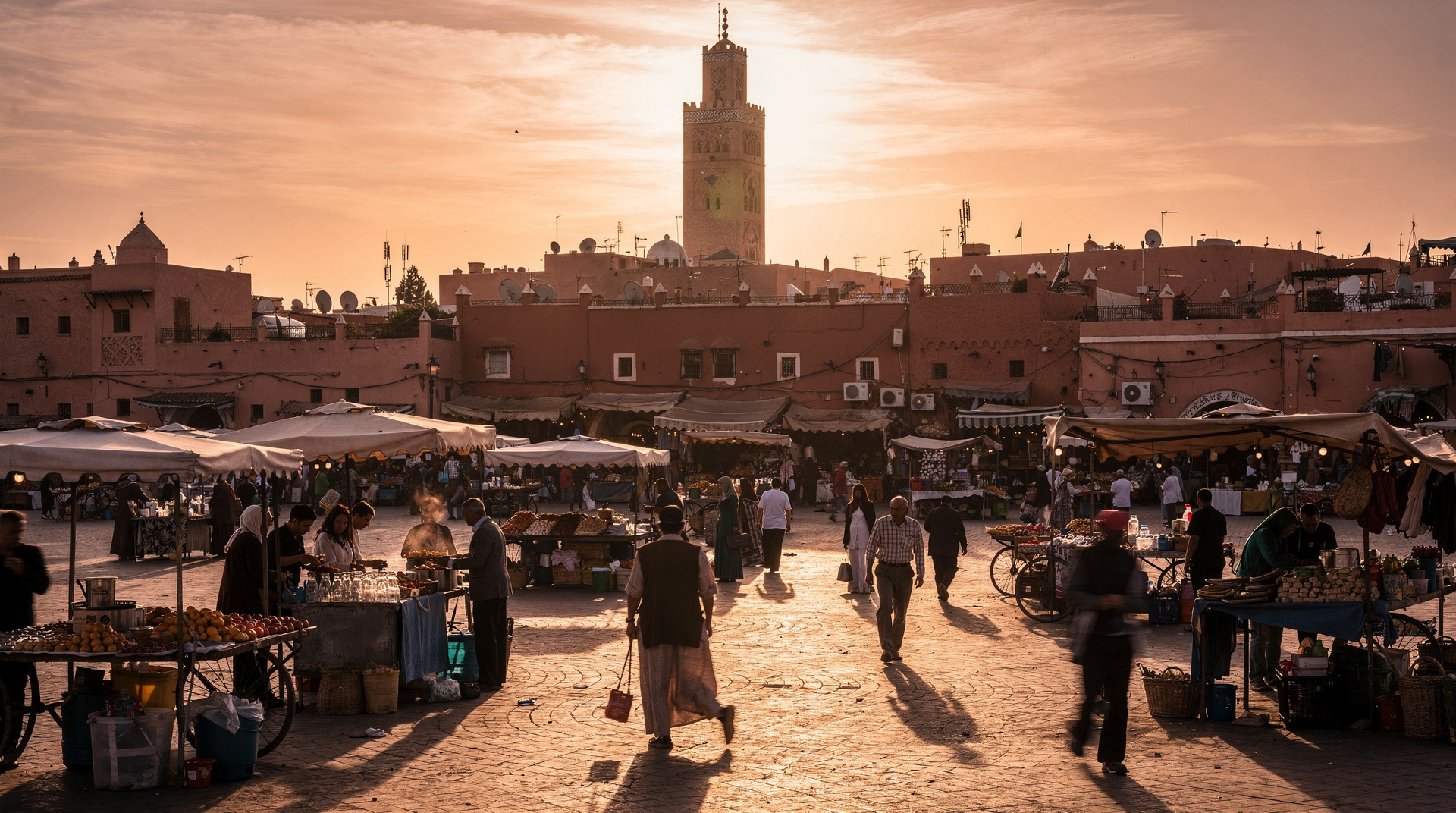
Walk to the Djemaa el-Fna square. In the afternoon it is relatively calm: orange juice vendors (€0.50 per glass, excellent), the odd storyteller, Gnawa musicians whose iron castanets you will hear from two streets away. Walk north from the square into the souks along Souk Semmarine. The main artery branches into specialist lanes within 100 metres — the lamp souk, the slipper souk (babouches in ochre, green, red, powder blue), the copper souk where the hammering is relentless.
Do not try to navigate. Let yourself get semi-lost. The medina is not as large as it feels, and any lane eventually leads somewhere you recognise. If stuck, say “Djemaa el-Fna?” — any local will gesture the direction.
Evening: the square after dark
Return to Djemaa el-Fna at 19:00. The transformation is complete: 50 grill stalls billowing charcoal smoke, acrobats, competing musicians, food hawkers. Eat here tonight — merguez sausage, kefta brochettes, harira soup. Budget €6–10 per person. The chaos is real but the food is genuinely good. Accept the menu, point at what you want, sit where you are put.
Where to sleep: Riad Yasmine (mid: €85–120/night); Riad Jardin Secret (mid: €100–150/night); Villa des Orangers (boutique luxury: €280–400/night)
Budget estimate today: €70–150 including meals, taxi, accommodation
Day 2: Marrakech properly — palaces, gardens, hammam
Morning: Bahia Palace and the Saadian Tombs
Start at 09:00 before the tour groups arrive. Bahia Palace was built in the 1890s by a grand vizier who reportedly had 4 wives and 24 concubines — the spatial logic of the palace makes more sense once you know this. Entry: €2. The decorated ceilings are the finest in Marrakech; the women’s courtyard with its fountain and orange trees is the most peaceful corner of the city.
A 5-minute walk south: the Saadian Tombs, sealed by a jealous sultan in the 1600s and not rediscovered until aerial photography in 1917. The main burial chamber has 60 marble columns and a ceiling of carved muqarnas plasterwork. Entry: €3. Arrive before 10:00 to have it to yourself.
Mid-morning: Majorelle Garden
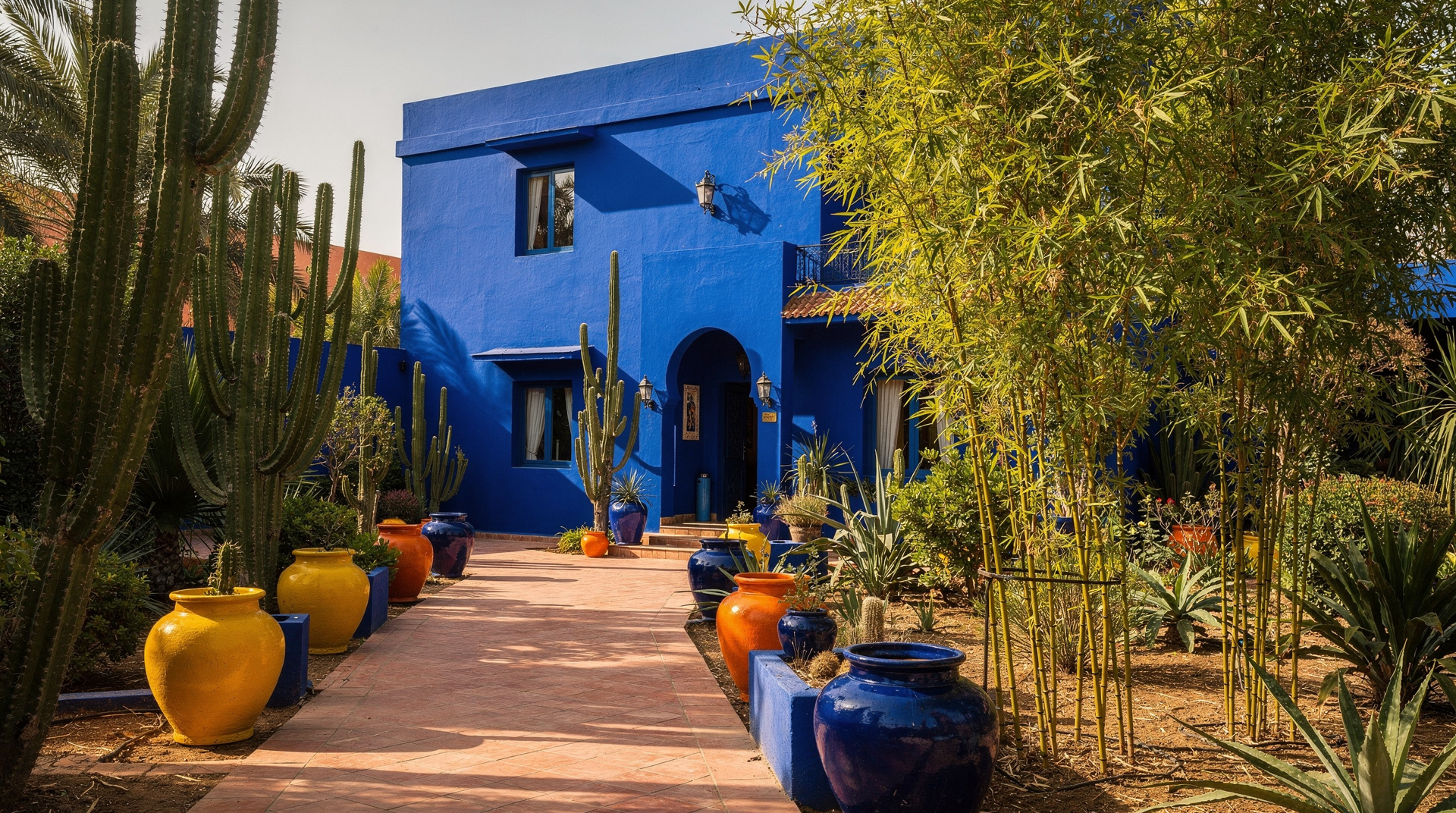
Take a petit taxi (€3) to the Ville Nouvelle for Majorelle Garden. Book your ticket in advance online to skip the walk-in queue. The cobalt blue buildings against the green of the palms and the purple of the bougainvillea are one of the most photographed scenes in Morocco. The adjacent Berber Museum occupies the former studio of the French painter Jacques Majorelle and contains an exceptional collection of Amazigh silver jewelry, textiles, and traditional dress. Allow 90 minutes for both.
For a more structured cultural morning — combining palaces, tombs, and medina history with a licensed guide — the Marrakech Bahia Palace, Madrasa Ben Youssef, and medina tour covers the southern medina highlights in a half day with expert narrative.
Lunch: Gueliz neighbourhood
The Ville Nouvelle (Gueliz) neighbourhood around Avenue Mohammed V has good coffee shops and proper lunch spots at non-tourist prices. Café du Livre or Café 16 are local favourites. Alternatively, head back toward the medina and eat at one of the roof restaurants overlooking the square — the food is unremarkable but the view makes up for it.
Afternoon: souk and hammam
Use the afternoon for unhurried souk browsing. The ceramics souk near Rahba Kedima spice square has genuine Fes blue-and-white pottery alongside the tourist-grade version — a vendor who shows you underneath the piece (to see the stamp) is showing you the real thing. The leather goods (bags, belts, wallets) in the souk around Souk el Kébir are well-made and honestly priced if you negotiate without aggression.
End the day with a hammam. Les Bains de Marrakech does a 90-minute package (scrub, massage, steam) for €45–55 per person and takes walk-ins before 17:00 on most days. A traditional neighbourhood hammam costs €5–8 but requires more comfort with the communal experience.
Evening: a proper dinner
Tonight, spend more than you did last night. Dar Moha on Rue Dar el Bacha serves exceptional modern Moroccan cuisine (€40–55 per person) in a 1930s riad that once belonged to Pierre Bergé. Nomad restaurant, two floors above the spice market, does excellent contemporary Moroccan for €25–35 per person with good views over the square rooftops.
Where to sleep: Same riad
Budget estimate today: €90–180 including meals, entry fees, Majorelle, hammam
Day 3: Transfer to Essaouira — the Atlantic coast
Morning: leave early
The CTM bus from Marrakech to Essaouira leaves from Bab Doukkala station at various times (check current schedule at ctm.ma). Journey: 2h45, cost: €6 per person. Grand taxi from Bab Doukkala is faster (2 hours) and costs €8–10 per seat — you wait until the taxi fills with 5 passengers, which usually takes 20–30 minutes.
If there are two or three of you, a private transfer (€40–55) makes the shared taxi price irrelevant and you leave immediately. Book the night before via your riad or an app like inDriver.
The drive through the Haouz plain and the argan forest is pretty. Argan trees are endemic to this region and are increasingly protected — the cooperatives that line the road offer genuine argan oil products at more honest prices than the Marrakech tourist shops.
Midday: arrive Essaouira
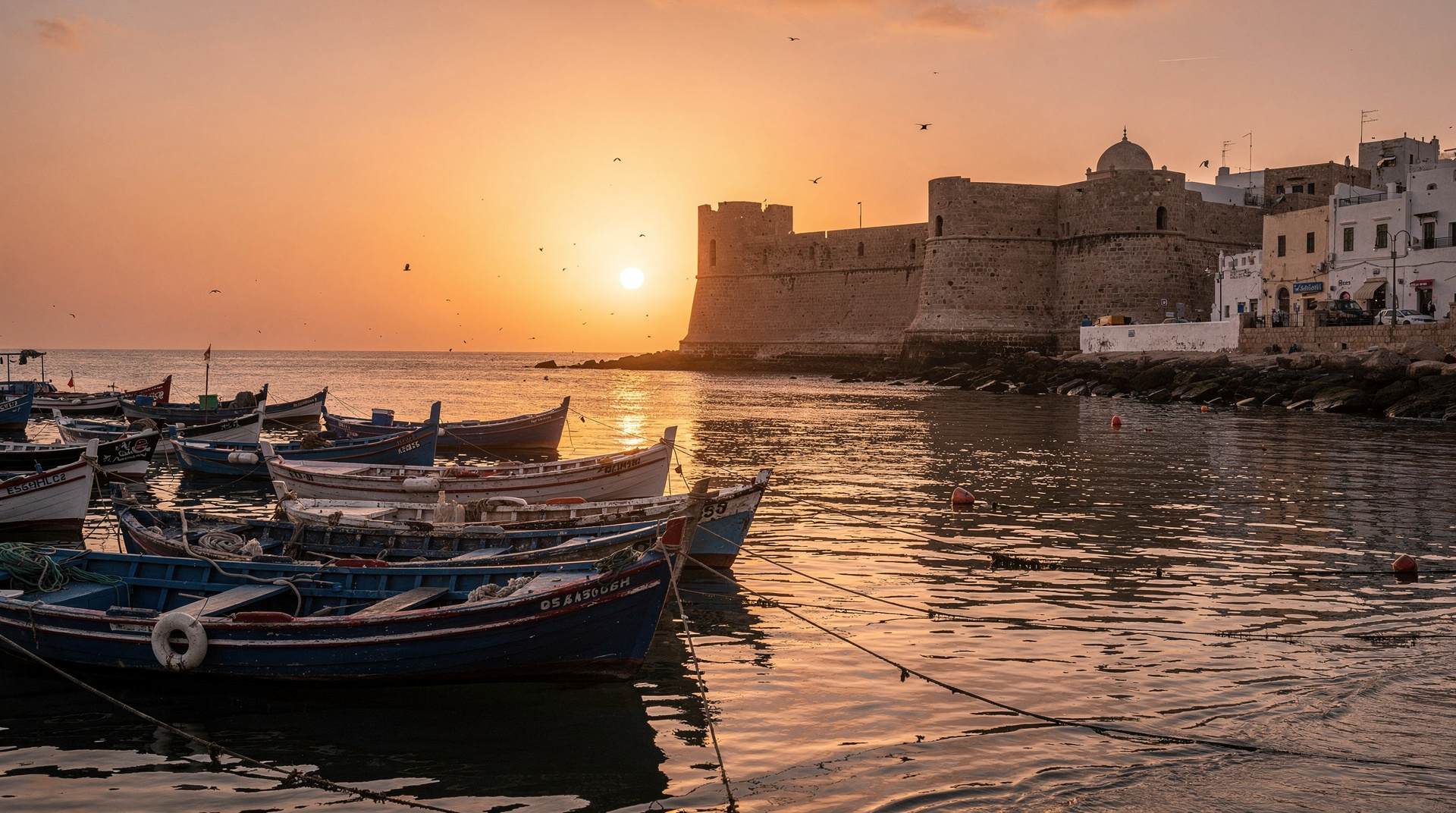
Essaouira operates at a different frequency from Marrakech. The medina is whitewashed instead of ochre, the wind is constant (this is the self-styled “wind city of Africa” and the kite-surfing capital of Morocco), the air smells of salt and grilled sardines, and the pace is roughly half of what you left behind. Check in to your riad — Essaouira has some excellent options — then walk the ramparts immediately.
The Skala de la Ville is the Atlantic-facing fortification with Portuguese cannon still mounted on the battlements. It is free to enter and the views of the ocean and the medina roofline are among the best in Morocco. Walk the full length of the rampart in either direction.
For an introduction to the medina and its history from a local guide, the Essaouira medina half-day guided walking tour covers the key sites and the city’s history as a Portuguese, then Moorish, then French port city in two hours.
Afternoon: the medina alleys
Essaouira’s medina is compact enough to explore thoroughly in an afternoon. The wood marquetry workshops are concentrated near the Skala de la Kasbah — master craftsmen work Thuya wood (which smells faintly of cedar and sandalwood) into decorative boxes, frames, and furniture. A well-made small box runs €20–40; the craftsmanship is genuine and the prices honest by Marrakech standards.
The Mellah (Jewish quarter) has an architectural rhythm distinct from the main medina — wrought-iron balconies and plaster mouldings betraying the Sephardic influence on this trading port city. The Gallery Damgaard near the main square shows the “naif” painting tradition that Essaouira is known for, with works by artists who began painting under the patronage of the Danish collector Frédéric Damgaard.
Evening: seafood on the harbour
The harbour-front fish stalls grill whatever came in that morning. Grilled sardines, sea bass, prawns, calamari — choose your fish, agree the price per 100g, watch it grilled in front of you. Budget €5–8 per plate. For a more comfortable dinner with wine, Restaurant Taros (top floor, sea view, €25–35) and Elizir (intimate, €20–30) are both reliable.
Essaouira is significantly more relaxed about alcohol than inland Morocco. Outdoor seating with a cold Casablanca beer and salt air on your face is available here in a way it is not in Marrakech.
Where to sleep: Riad Baladin (mid: €70–110/night); Heure Bleue Palais (upscale: €150–220/night); Villa Quieta (charming mid-range: €80–120/night)
Budget estimate today: €80–150 including transfer, meals, accommodation
Day 4: Essaouira morning + return to Marrakech
Morning: beach and market
Essaouira’s beach extends 5 km south of the medina. Walk it before the wind picks up (it is usually calmer before 10:00). The kitesurfers are out by mid-morning and the spectacle is worth watching even if you have no intention of joining them. The surf school at the northern end of the beach offers beginner lessons if you have time — Essaouira surf lessons for all levels can usually take same-day bookings in low season.
Back in the medina, the spice market sells argan oil, preserved lemons, and ras el hanout at prices significantly lower than Marrakech. Buy here. The cooperatives near the medina entrance sell certified argan oil in sealed bottles — the certification matters for distinguishing culinary from cosmetic grade.
Midday: return to Marrakech
CTM bus or grand taxi back to Marrakech (2h45 or 2h depending on mode). If your flight is in the evening, you arrive with enough time for a final sweep of the medina and last-minute shopping. Menara airport is 15 minutes by petit taxi from the medina square (€5–6).
If your flight is the following morning, consider staying a third night in Marrakech rather than Essaouira — or book an airport-adjacent hotel (Eden Airport Hotel, €60–80) to remove the early morning rush.
Budget estimate today: €60–100 including transport, meals, final shopping
Transport logistics
Marrakech airport to medina: Petit taxi, agree price before entering: €5–8. The taxi rank is immediately outside arrivals. Journey: 15 minutes in light traffic, 30 minutes at peak times.
Marrakech to Essaouira: Three options — CTM bus (€6, 2h45, departs Bab Doukkala station), grand taxi (€8–10 per seat, 2h, departs same area), private transfer (€40–55, immediate departure). The bus is the most comfortable but least flexible. Grand taxi is the Moroccan way: fast, cheap, shared with locals.
Within Marrakech: Petit taxis for cross-city journeys (€2–5). The medina is too small for taxis — everything is on foot. Agree all fares before departure or insist on the meter.
Within Essaouira: Everything is walkable. The medina is 20 minutes end-to-end.
Budget estimate
| Item | Budget (pp) | Mid-range (pp) | Comfort (pp) |
|---|---|---|---|
| Accommodation (3 nights) | €120 | €280 | €500 |
| Essaouira transfers (x2) | €16 | €50 | €100 |
| Food and drink (4 days) | €80 | €160 | €280 |
| Entry fees, hammam, activities | €25 | €60 | €100 |
| Local transport | €20 | €35 | €50 |
| Total (flights excluded) | €261 | €585 | €1030 |
What to pack for this itinerary
Essentials: Comfortable walking shoes (medina lanes are uneven cobblestone); a light layer for Essaouira’s Atlantic wind even in summer; sun protection for both cities; dirham cash (ATMs in both cities are reliable, but carry enough for taxis and small purchases).
Clothing: Marrakech medinas are conservative — shoulders and knees covered for women, long trousers for men in the old city. Essaouira is more relaxed. Essaouira’s wind means a windproof layer is genuinely useful even in warm months.
Electronics: A universal adaptor (Morocco uses European Type E plugs); a portable battery bank; download offline Google Maps for both cities before you arrive.
Best time of year for this route
October–November: The best months for this itinerary. Marrakech has cooled from summer highs, Essaouira is at its most golden, and the tourist numbers have thinned from the August peak. Expect 22–28°C in Marrakech, 18–22°C on the coast.
March–April: Spring is excellent. Marrakech’s gardens are at their best, Essaouira gets fewer storms than winter. Some rain is possible in March.
December–February: Marrakech winters are mild (15–20°C daytime) but can be cold at night in riads without central heating. Essaouira gets Atlantic storms — the surf is spectacular but the rampart walks are wet and windy.
Avoid: July–August for this specific route. Marrakech in summer regularly exceeds 40°C. Essaouira’s wind makes it bearable but accommodation prices peak in August.
Common mistakes to avoid
Underestimating taxi negotiation: Always agree the price before you get in any petit taxi. The meter exists; most drivers will not use it. A fair Marrakech medina price for most journeys is €2–4. Airport to medina is €5–8.
Packing the schedule: Four days feels short, so the instinct is to add more. Resist this. The Marrakech souks alone can fill an afternoon without buying anything. Add the Sahara, Fes, or Chefchaouen on a separate trip.
Ignoring your riad’s restaurant: Most good riads serve excellent food at honest prices. If your host says the rooftop lunch is worth having, it usually is.
Converting Day 3 to a Marrakech day trip to Essaouira: The trip to Essaouira is 2h45 each way. A day trip is rushed and exhausting. One night in Essaouira transforms the experience entirely.
Missing the Essaouira fish stalls: Easiest and best seafood meal of the trip. Do not go to a restaurant on harbour night one.
How to extend or shorten
If you only have 3 days: Keep Marrakech for 2 nights and skip Essaouira. Do the Agafay desert evening experience on Day 2 instead (45 minutes from Marrakech, includes sunset camel ride and Berber dinner under the stars). Or do a single day trip to Essaouira and return to Marrakech for the third night.
If you have 5 days: Add the Agafay desert evening on Day 2 evening (after the hammam) and extend Essaouira to 2 nights. Or take a detour to the Ouzoud Waterfalls on Day 2 instead of the palace circuit — the waterfalls are a 3-hour drive from Marrakech and genuinely spectacular in spring.
If you have 7 days: See our 7-day Morocco itinerary, which adds the Sahara desert and stays in Essaouira longer.
Alternative variations
Marrakech + Agafay (no Essaouira): Stay 3 nights in Marrakech. On Day 2 evening (after the palace and Majorelle morning), take a sunset transfer to the Agafay desert — 45 minutes from Marrakech into a dramatic rocky desert plateau with Atlas mountain views. The evening includes camel ride, dinner under the stars, and Berber music.
Book the Agafay sunset camel ride and dinner in advance — it is the most popular evening experience from Marrakech and fills quickly on weekends.
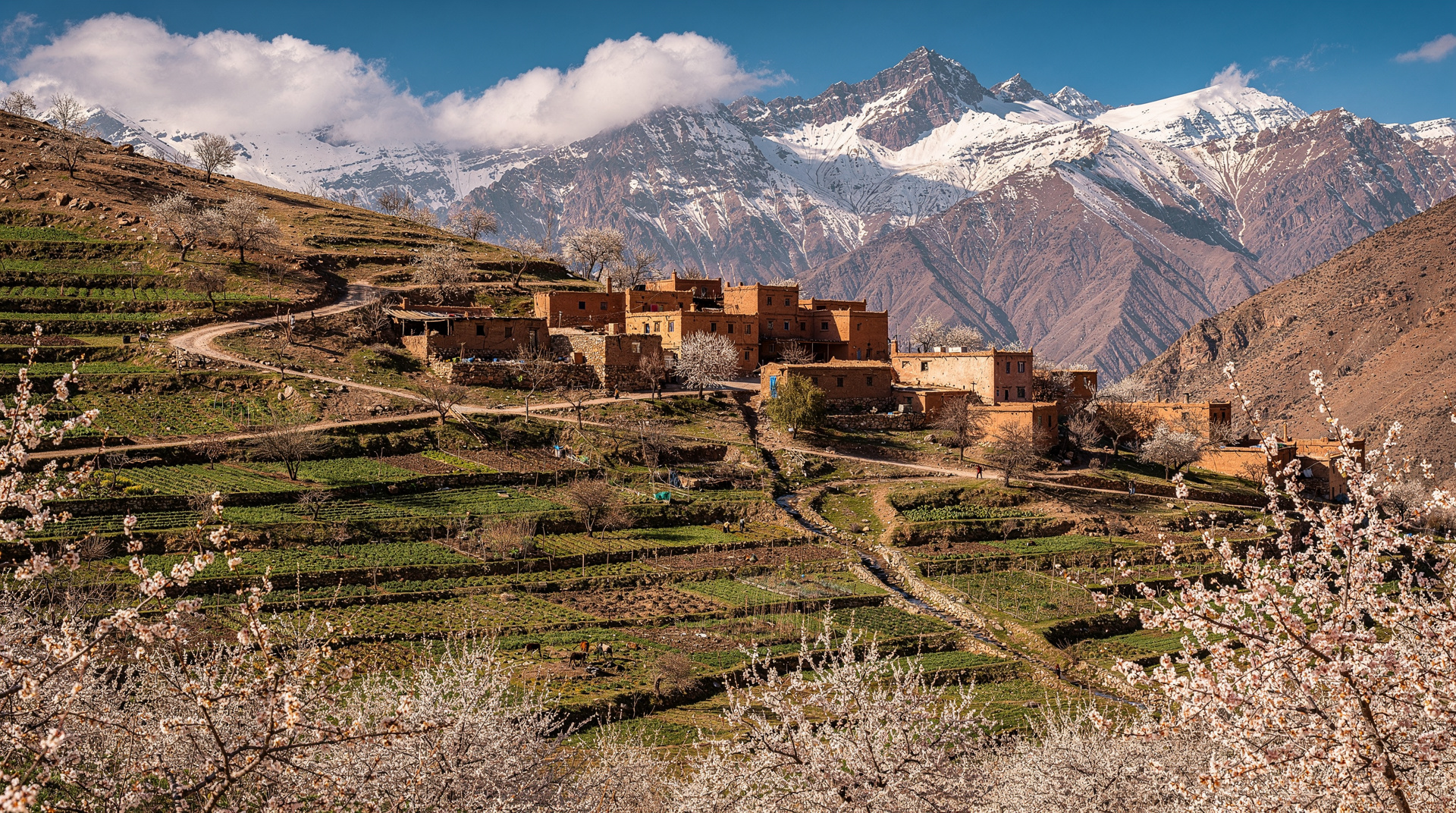
Marrakech + Atlas day trip: Replace Essaouira entirely with a day trip into the High Atlas on Day 3. Drive through Berber villages to Imlil (1740m), walk to a local guesthouse for lunch, return via the Ourika Valley. This is a more active variation for travellers who prefer mountains to coast. See our Atlas Mountains guide for detail.
Marrakech only: If logistics are tight, Marrakech alone fills 4 days without difficulty. Add an Ouzoud Waterfalls day trip on Day 3 (3 hours each way, full day of swimming under the falls) and the Agafay evening on Day 2. This requires zero inter-city travel and gives the most relaxed pace.
For longer Morocco trips built on this foundation, explore our 7-day Morocco itinerary, the 10-day Morocco itinerary, and the family Morocco itinerary if you are travelling with children. Our Marrakech destination guide and Essaouira guide have full detail on each city.
Why Essaouira over Agafay on a 4-day trip
The two most common Day 3 choices — Essaouira or the Agafay desert — solve different problems, and it is worth being deliberate about which one you actually want. Essaouira gives you a genuinely different Morocco: coastal, whitewashed, windy, and slower, with a full change of scenery that a desert evening near Marrakech cannot replicate. Agafay is the lower-effort choice — 45 minutes from the city, no overnight transfer logistics, and it pairs a sunset camel ride with dinner under the stars in one evening. If you have done a Marrakech trip before and want a new city, take Essaouira. If this is a first Morocco trip and you would rather spend the saved travel time back in the medina, take Agafay.
4 days vs. 3 days vs. 7 days: what changes
| Itinerary | What you add over the shorter option | What you still miss |
|---|---|---|
| 3 days | — | Essaouira, Atlas, Sahara |
| 4 days (this one) | Essaouira or Agafay day/night | Sahara, second imperial city |
| 7 days | A genuine Sahara detour via Ouarzazate | Slow pace, extra cities |
Frequently asked questions about 4 Days in Morocco
Is 4 days enough for Marrakech and Essaouira, or should I choose just one? Four days is enough for both if you keep the pace in this itinerary — two nights in Marrakech, one in Essaouira. Splitting time across two cities in less than four days usually means one of them feels rushed; with three days or fewer, the 3-day itinerary which stays in Marrakech (with an optional Agafay night) works better than trying to squeeze in the coast.
Should I do Agafay or Essaouira on a 4-day trip? Essaouira if you want a genuinely different city and don’t mind the 2h45 transfer each way; Agafay if you would rather keep the trip centred on Marrakech and add a lower-effort desert evening (45 minutes away, no overnight logistics beyond the one night in camp). Both are covered as full options above.