What to Wear in Morocco: Dress Code Guide
Is there a strict dress code in Morocco for tourists?
No strict enforcement, but modesty is respected and affects your experience. In medinas: cover shoulders and knees. At the beach and resorts: normal beach attire is fine. At mosques: modest dress, remove shoes. Ramadan calls for more conservative dress during daylight hours. Men need long trousers to enter mosques.
The real dress code in Morocco: what’s expected vs what’s policed
Let’s be direct: nobody will stop you at a medina entrance and turn you back for wearing a tank top. There’s no fashion police in Morocco, and tourists are clearly visible as tourists regardless of what they wear.
What is true: dressing more modestly reduces the frequency and intensity of unwanted attention in urban medinas. It’s also a sign of cultural respect that locals notice and appreciate, particularly outside the tourist core. The relationship between dress and experience is real, even if compliance is not legally required.
This guide explains the expectations clearly so you can make an informed choice rather than packing in anxiety or ignoring local context entirely.
| At a glance | |
|---|---|
| Strictest context | Rural Atlas villages and conservative medina neighbourhoods |
| Most relaxed context | Beach resorts (Agadir, Taghazout) and Essaouira medina |
| Key item to pack | A light scarf (women) — covers shoulders/head in seconds |
| Cost impact | Around 0 MAD — dressing modestly needs no special purchase, just packing choices |
| Ramadan adjustment | More conservative than baseline, especially daytime |
The core modesty framework
Moroccan society is Muslim-majority with significant variation by location. Casablanca and the urban new cities operate on fairly liberal social norms. Traditional medinas and rural areas have more conservative expectations. Beach resorts operate by international tourist norms.
The baseline rule for all medina travel:
- Shoulders covered (short sleeves are fine; sleeveless tops and tank tops are the thing to avoid)
- Knees covered (mid-length or longer trousers, skirts, or dresses — shorts are for beach and new city contexts)
- Chest area not prominently exposed (a scoop neck is fine; a very low neckline in a conservative neighbourhood is not)
This standard is the same for women and men in conservative contexts, though enforcement-wise it falls much more heavily on women in terms of social attention.
What to wear: women
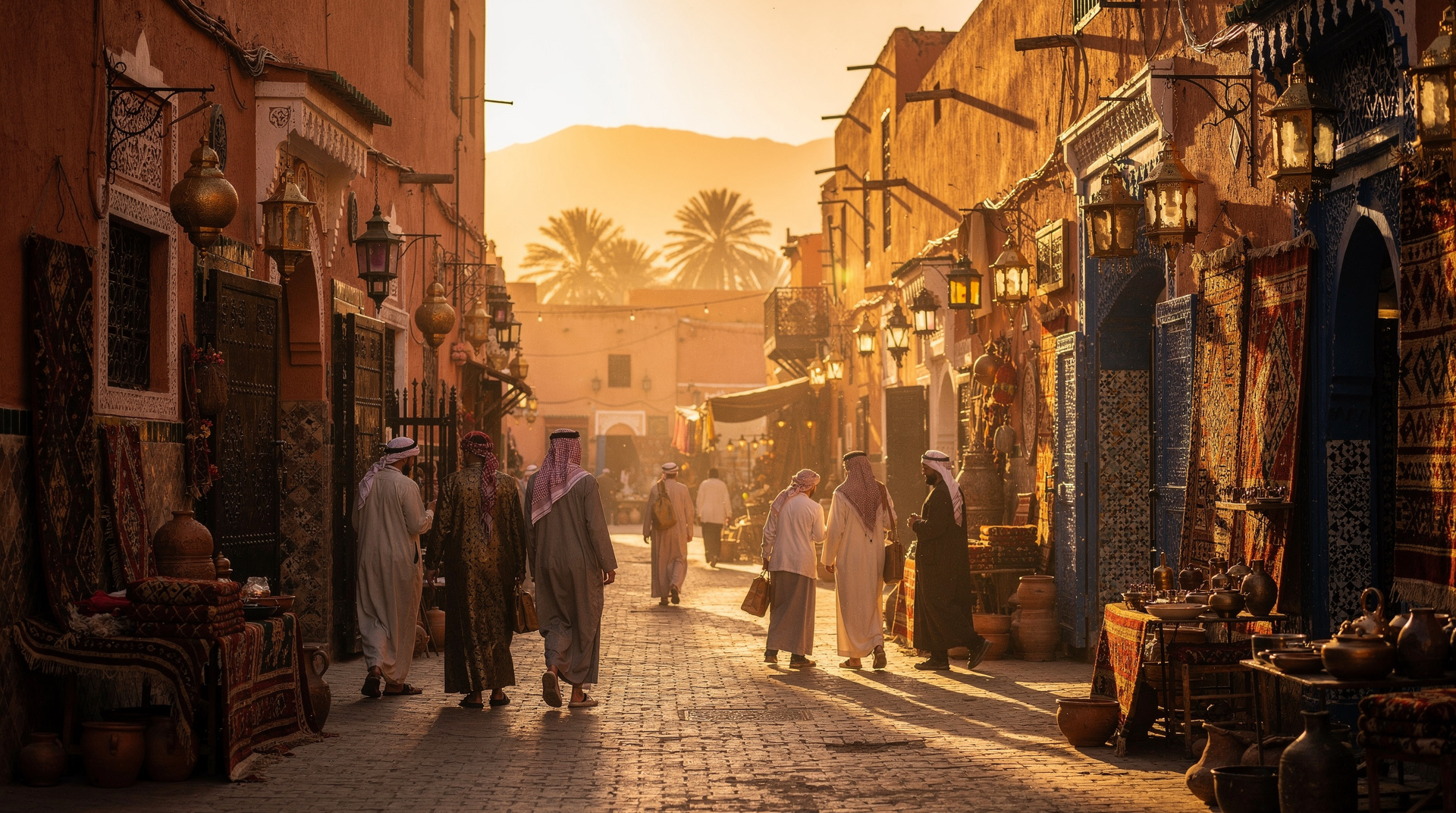
In medinas (Marrakech, Fes, Chefchaouen, Meknes)
The most important context for modest dress. The Marrakech medina and Fes el-Bali are where the gap between respectful and tourist dress matters most.
Works well:
- Lightweight linen or cotton trousers
- Midi-length skirts or maxi skirts
- Short-sleeved or long-sleeved tops (covering shoulders)
- A loose-fit kaftan or tunic over leggings
- A light scarf looped around the neck (can quickly cover shoulders or head if entering a conservative area)
Avoid in medinas:
- Shorts, particularly very short ones
- Sleeveless tops and tank tops
- Strapless or tube tops
- Very tight-fitting or body-con clothing
- Very low-cut necklines
Temperature reality: Morocco’s medinas are hot in summer. The solution is breathable lightweight fabrics in modest cuts, not choosing between comfort and respect. Linen trousers and a loose long-sleeved shirt in a technical travel fabric are cooler than you’d expect and look appropriate in any context.
In beach resorts and Atlantic coast towns
Agadir’s beach, Essaouira’s surf spots, Taghazout, and El Jadida operate on beach resort norms. Swimwear at the beach is entirely appropriate. Cover up when you leave the immediate beach area and enter town or market contexts.
Essaouira note: The Essaouira medina is very relaxed compared to Marrakech. Light summer dresses and shoulder exposure are common among tourists and generate minimal attention. Use your judgement — slightly more conservative than a European beach town, but not significantly.
At religious sites and mosques
Most Moroccan mosques are not accessible to non-Muslims, which makes this a moot point for most visitors. However, some religious sites are open to tourists (some zaouias, certain medersas):
- Shoulders covered
- Knees covered
- Head covering sometimes expected — a scarf is the flexible solution
- Remove shoes at the entrance (often there’s a designated area)
The Kairaouine Mosque in Fes and the Hassan II Mosque in Casablanca are the most-visited. The Hassan II Mosque is accessible to non-Muslims on guided tours, and modest dress (covered shoulders, knees, and sometimes head for women) is required. A guided Hassan II Mosque tour usually includes a briefing on the dress requirements and will advise on arrival.
In the Atlas Mountains and rural areas
Rural village contexts are often more conservative than the tourist medinas, which surprises some travellers. Berber villages have deep modesty norms. Visiting a village homestay or walking through an Atlas community without tourist infrastructure means dressing more conservatively, not less.
- Long trousers or full-length skirts
- Long sleeves, or at minimum short sleeves plus a light top
- No shorts, no sleeveless tops
The hospitality in Atlas villages is genuinely warm. Dressing respectfully is part of the exchange.
In desert camps (Merzouga, Zagora, Erg Chigaga)
Desert camps operate in a tourist context, and the attire is functional rather than formally modest. Loose trousers and long sleeves make practical sense for sun protection and dust anyway. Swimwear or shorts at the camp itself (some have small pools) is fine.
What to wear: men
The basics
The modesty standard for male tourists is genuinely more relaxed than for women. You can wear shorts in most tourist contexts without significant issue. A collared shirt or plain t-shirt is fine almost everywhere.
Where more conservative dress matters for men:
- Inside mosques: Long trousers (not shorts) and a shirt with sleeves. If a mosque allows non-Muslim entry, you’ll be turned away in shorts.
- Upscale restaurants and riads: Smart-casual. Trousers and a collared shirt for dinner at a nice riad — not formal, but presentable.
- Rural and village contexts: As with women, the conservative norms of rural communities deserve respect. Long trousers and a shirt rather than shorts and a vest.
For practical medina travel: Men can wear shorts in tourist medinas without significant social consequence, though light trousers are more comfortable in heat and more versatile across contexts.
Ramadan dress adjustments
During Ramadan (in 2026: February 19 - March 19), Morocco’s public atmosphere changes. Fasting is observed visibly, and cultural sensitivity to the religious context is appreciated.
Dress expectations during Ramadan:
- More conservative dress is appropriate, particularly during daylight hours in public spaces
- Women should err toward more coverage than the baseline above
- Avoid particularly revealing clothing in traditional areas
- The standard medina modest dress (shoulders/knees covered) is the right starting point
Ramadan is also a beautiful time to visit Morocco if you understand the context — read the full Ramadan travel guide for what’s open and closed and how to engage respectfully with the iftar atmosphere.
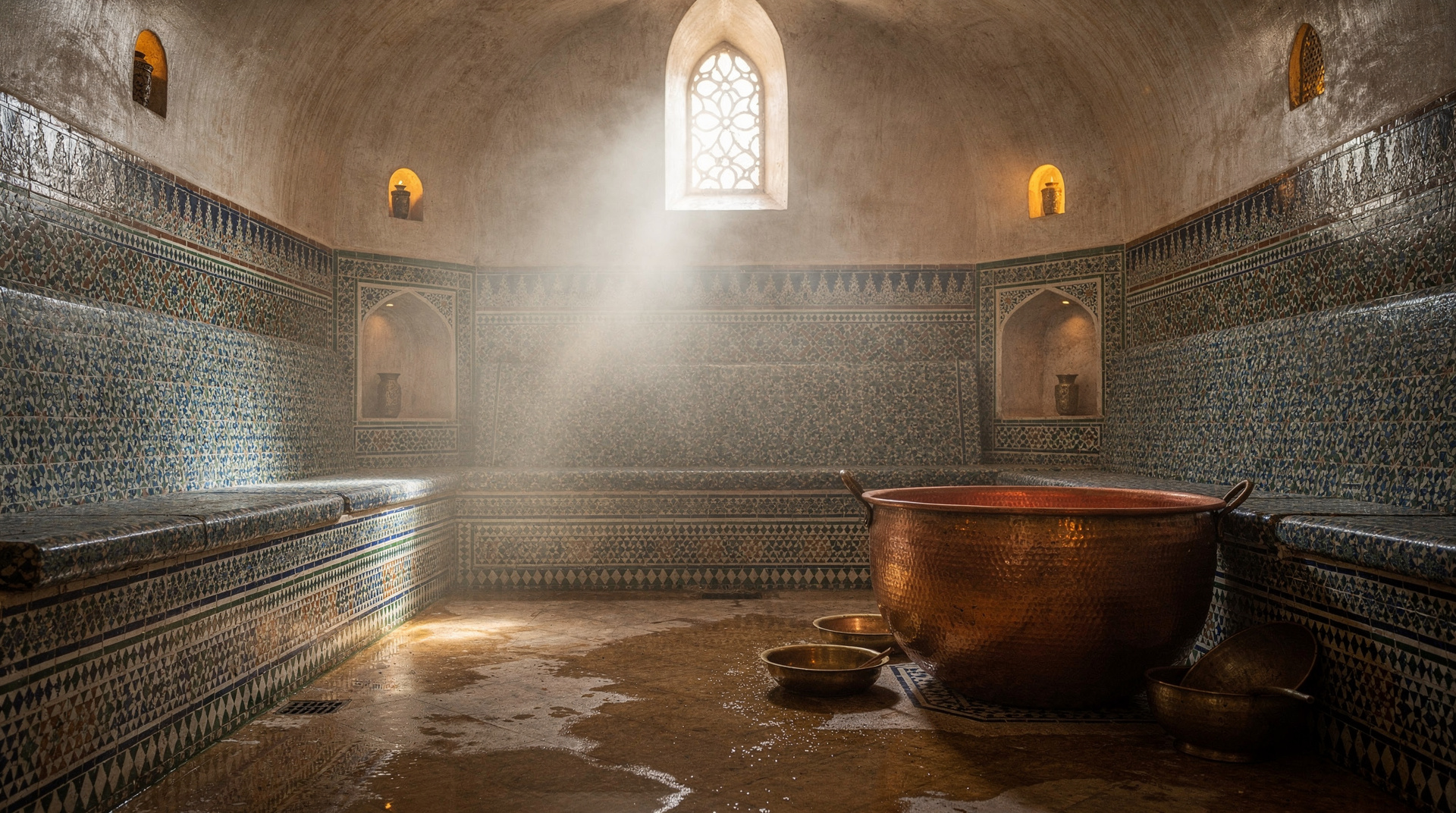
Hammam attire
The hammam (traditional bathhouse) has its own dress context:
At local neighbourhood hammams:
- Women’s sections: strip to underwear or a swimsuit. A kessa (exfoliating glove) scrub will happen. Bring a clean change of clothes.
- Men’s sections: shorts or swimming trunks, or underwear.
At riad spa hammams:
- Swimwear is standard. The experience is more spa-like and the staff provide towels and robes.
For a first hammam experience: A riad spa hammam is less intimidating than a local hammam if you’re uncertain about the process. A traditional hammam experience in Marrakech with a proper booking handles the logistics and removes uncertainty.
How dress affects your experience: the honest assessment
The question isn’t “will I be arrested?” — you won’t. It’s “will my experience be better with modest dress?”
In Marrakech medina: Yes, meaningfully. Tourists dressed modestly are often approached less by touts and treated with more genuine respect by shopkeepers. The reason is partly cultural (modest dress signals awareness and respect) and partly practical (touts profile tourists who look like they don’t know local customs as easier targets).
In Essaouira: The difference is minimal. Essaouira’s relaxed atmosphere means dress variation generates little friction either way.
In rural and Atlas contexts: Significant positive effect. Modest dress in village contexts isn’t just about avoiding harassment — it’s about being received as a respectful guest rather than a culturally oblivious tourist. The interactions are warmer.
In beach resorts: Irrelevant. Agadir operates on beach resort norms and locals understand the tourist beach context.
Fabric and practical clothing choices
For summer (June-September): Lightweight linen and technical travel fabrics are your best friend. Cotton works but doesn’t dry fast if you sweat heavily. Avoid denim and heavy fabrics entirely — they’re miserable in 38°C heat.
For spring and autumn (March-May, September-November): Mix of lighter and slightly warmer layers. A packable jacket for evenings.
For winter (December-February): Marrakech is mild (15-20°C), the Atlas gets cold, the Sahara nights are genuinely cold. Layer system required.
Colour: Light colours reflect heat and show dust more. Dark colours hide dust but absorb heat. Neutrals (beige, sand, khaki, grey) are practical and blend well in Moroccan contexts.
Packing strategy by trip type
For packing specifics, see the full Morocco packing list. A brief summary by trip type:
Cities only (Marrakech, Fes, Casablanca): 2-3 lightweight modest tops, 2 pairs of trousers or a mix of trousers/skirt, light layer for evenings, walking shoes. Women: a versatile scarf is essential.
Cities + beach (add Essaouira or Agadir): Add swimwear, sandals, and one or two more casual items for the beach context.
Cities + Atlas: Add a proper fleece or mid-layer, hiking shoes or trail runners, waterproof outer layer.
Full Morocco circuit (cities + desert): All of the above plus dust buff scarf, warm layer for desert nights, closed shoes for dune walking.
Shopping for clothing in Morocco
If you arrive underprepared, Morocco’s medinas sell exactly the clothing you need. Lightweight djellabas (the traditional long robe) are genuinely practical for medina travel — modest, breathable, and available for 100-300 MAD in the souks. Many tourists wear them with pleasure.
The markets in Marrakech’s medina sell sarongs, lightweight trousers, and scarves in abundance. Don’t overpay — the bargaining guide applies to clothing purchases as much as craft items.
Summary: the practical dress rules
| Context | Women | Men |
|---|---|---|
| Marrakech/Fes medina | Shoulders + knees covered | T-shirt, trousers preferred |
| Mosque visit | Shoulders + knees + possibly head | Long trousers + shirt |
| Beach resort | Normal beach attire | Normal beach attire |
| Atlas village | Long trousers/skirt + covered shoulders | Long trousers + shirt |
| Sahara camp | Loose practical clothing | Loose practical clothing |
| Nice restaurant | Smart-casual | Smart-casual |
| Hammam | Swimsuit or underwear | Shorts or underwear |
| During Ramadan | More conservative than baseline | More conservative than baseline |
Footwear notes
Medina cobblestones and uneven surfaces make sturdy sandals or closed walking shoes far more practical than flip-flops, which slip on smooth marble in riads and hammams. For Atlas day trips or the Toubkal trek, proper trail shoes are non-negotiable — trainers are fine for city and medina walking but not for scrambling terrain. Slip-on shoes are genuinely useful since you’ll remove them frequently: entering mosques, some riads, and carpet shops in the souks.
Shopping list before you fly vs buying in Morocco
Pack the structural pieces you already own (linen trousers, a couple of modest tops, a scarf) rather than assuming you’ll shop first — Marrakech’s souks are better for finishing touches (djellabas, scarves, sandals) than for base layers, and prices reward travellers who already know roughly what a fair price looks like. See the bargaining guide before your first souk purchase.
Frequently asked questions about What to Wear in Morocco
Do I need to cover my hair in Morocco as a tourist?
No, head covering is not required for non-Muslim women in general public spaces. It’s only relevant at some religious sites where a scarf may be requested, and it’s a personal comfort choice in more conservative rural areas.
Can I wear leggings in Morocco?
Leggings alone (without a longer top covering the hips) read as tight-fitting in conservative contexts. Worn under a long tunic or oversized shirt, they’re a practical and comfortable choice for medina walking.