Traditional hammams in Morocco: the honest guide
How much does a hammam cost in Morocco?
A neighbourhood hammam costs 15–30 MAD (1–3 EUR) for entry and basic scrub service. Tourist-oriented hammams in Marrakech's medina charge 200–500 MAD (18–46 EUR). Full luxury spa hammam experiences run 500–1,500 MAD (46–140 EUR) with massage, argan treatments, and private rooms.
The hammam is not a tourist attraction — and that’s exactly why it matters
Morocco’s public hammam is a social institution, not a spa experience. In every neighbourhood of every Moroccan city, there’s a hammam operating daily. Locals use it multiple times a week — for cleanliness, for socialising, for the ritual itself. The neighbourhood hammam costs less than a cup of coffee. The tourist hammam down the road costs forty times more and delivers a carefully packaged version of the same thing.
Both are valid, depending on what you’re looking for. This guide explains the difference honestly, covers what to expect inside a real neighbourhood hammam, and identifies the better tourist and luxury options in Marrakech and Fes.
| At a glance | |
|---|---|
| Where | Neighbourhood hammams in every medina; tourist and luxury versions concentrated in Marrakech and Fes |
| Cost | Neighbourhood around 15-30 MAD; mid-range tourist around 150-400 MAD; luxury spa around 500-1,500 MAD |
| Time needed | Around 60-90 minutes for a proper session |
| Getting there | Ask your riad host for the nearest neighbourhood hammam, or book a medina tourist hammam in advance |
| Best time | Any time of year — indoors, unaffected by season |
How a traditional Moroccan hammam works
The three rooms
A traditional hammam operates on a temperature gradient. There are three main rooms, each progressively hotter:
The cool room (bayt al-barid): The changing area. Leave your clothes and valuables here (use a locker if provided, or bring a trusted companion to watch your things). Most locals leave street clothes in a pile with their shoes on top — theft in traditional hammams is genuinely rare. This room is at ambient temperature.
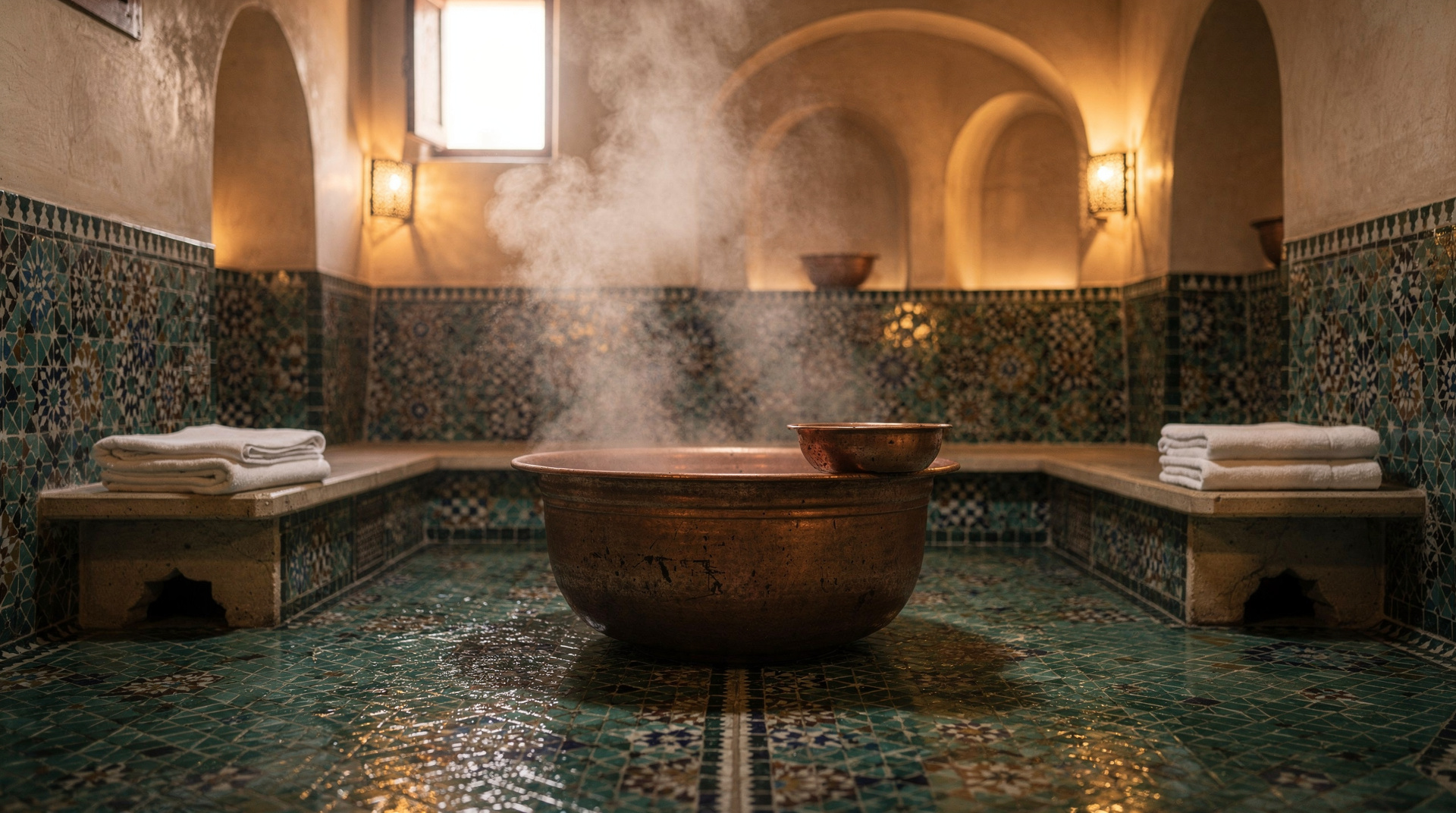
The warm room (bayt al-wastani): The middle room where you acclimatise. Temperature runs around 35-40°C. You spend time here before entering the hot room and return here toward the end of your session for the scrub.
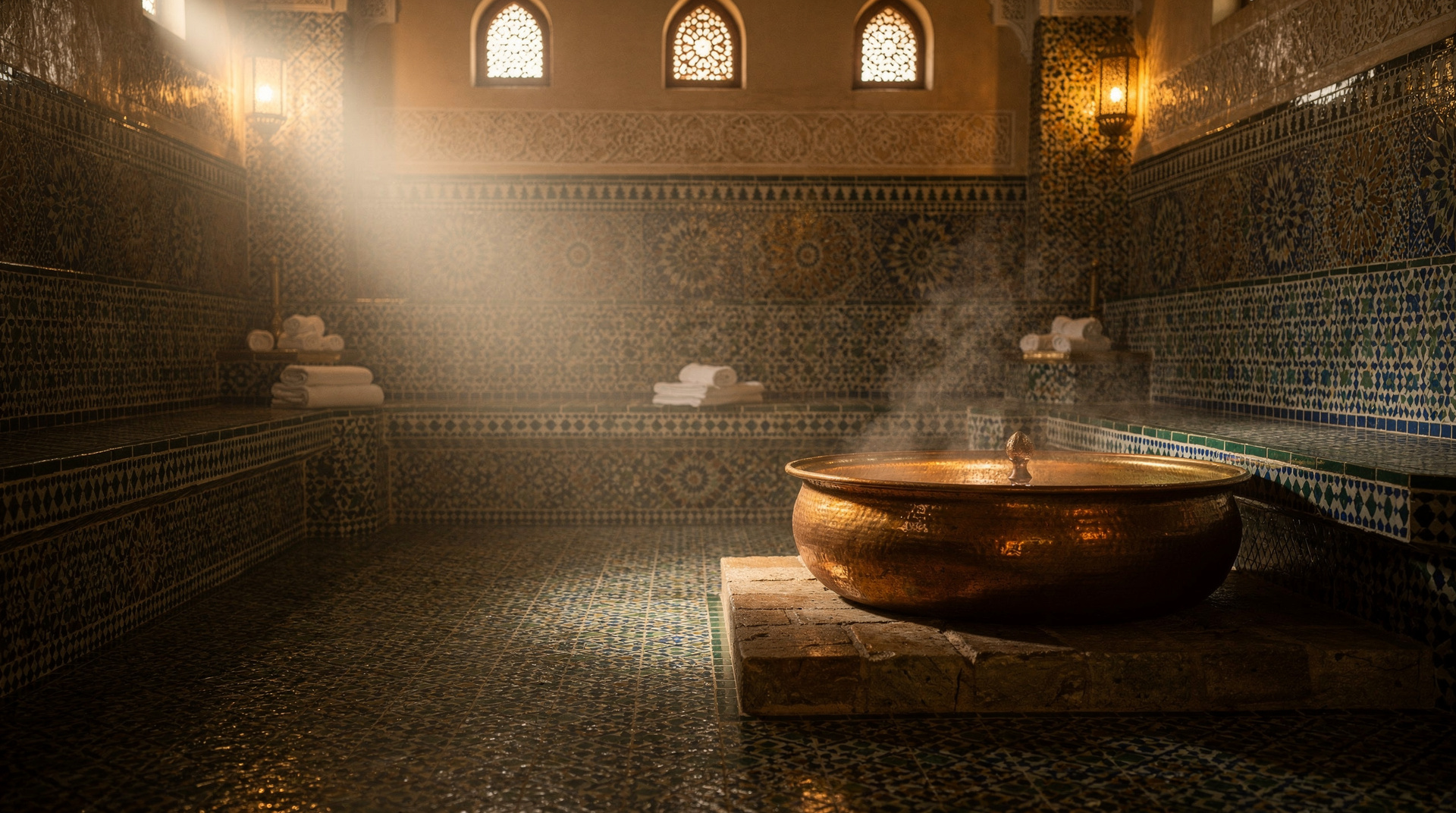
The hot room (bayt as-sajun): The steam room, fed by a central boiler through the floor and walls. Temperature runs 45-55°C with high humidity. This is where you sit and open the pores before exfoliation.
The sequence
The standard hammam sequence:
- Undress in the cool room, wrap in a fouta (sarong-style cloth) or swimwear
- Move to the warm room with your bucket and water supply (plastic bucket and ladle provided)
- Transfer to the hot room for 10-20 minutes to warm through
- Apply black soap (savon beldi) to your body — let it sit
- Move back to the warm room for the kessa (exfoliation mitt) scrub
- Rinse thoroughly
- Apply rhassoul clay if included in the service
- Final rinse and rest in the warm or cool room
The kessa scrub removes layers of dead skin. On your first hammam, the amount of grey matter that rolls off is surprising and slightly alarming — this is normal. Regular hammam users produce less visible scrub matter because they maintain the practice.
The neighbourhood hammam experience
Entry
Neighbourhood hammams have separate entrances for men and women, or separate time slots (women typically morning and early afternoon; men afternoon and evening, though this varies). Ask locally or look for gender signage on the door.
Entry fee: 15-30 MAD (1.4-2.8 EUR). Includes access to all three rooms and a bucket. Not included: black soap (sold for 5-10 MAD), kessa mitt (bring your own or buy for 10-20 MAD), and a keyyasa service (an attendant scrubs you rather than self-applying). The keyyasa service costs an additional 20-30 MAD.
What to bring to a neighbourhood hammam
- Fouta or swimwear — in single-sex hammams, nudity is standard for locals, especially women. As a visitor, swimwear or a wrapped fouta is entirely acceptable.
- Savon beldi (black soap) — you can buy it at the hammam entrance or nearby, or bring your own
- Kessa mitt — a rough exfoliating glove; sold cheaply in any souk (20-30 MAD)
- Flip-flops — floors are wet and shared
- Towel and change of clothes
- Small change — for entry, soap, and tip for the keyyasa
Language in neighbourhood hammams
Staff in neighbourhood hammams often speak limited French and occasionally some English. Basic Darija (Moroccan Arabic) phrases help: “shukran” (thank you), “bezzaf” (too much/enough), “shwiya” (a little). Most attendants understand what you need without language — they’ve seen every confused tourist expression before.
Time needed
Plan on 60-90 minutes for a full neighbourhood hammam session. Rushing defeats the purpose. The typical local spends at least an hour.
Tourist hammams: the medina experience
Several hammams in Marrakech and Fes specifically cater to tourists. These are legitimate hammam experiences — the ritual is the same — but packaged and priced for visitors.
Typical tourist hammam price: 150-400 MAD (14-37 EUR) for entry plus scrub. 300-600 MAD (28-56 EUR) with massage added.
What you get vs neighbourhood hammams:
- Staff who speak English or French
- Private or semi-private areas rather than shared open rooms
- Cleaner changing facilities and lockers
- Quality soaps and rhassoul products included (not extra)
- Cleaner fouta provided
- Predictable experience without the “figure it out as you go” element
What you don’t get:
- The authentic social atmosphere of a neighbourhood hammam
- The price advantage (neighbourhood is 10-20x cheaper)
- Locals around you — tourist hammams are full of tourists
The traditional Moroccan hammam and spa experience in Marrakech represents the packaged tourist hammam at a quality level — it covers the full sequence (steam, black soap, kessa, rhassoul, massage) in a medina hammam setting with English-speaking staff.
The 3-hour traditional hammam with massage and hotel transfer adds hotel pickup and a longer session time for visitors who want the complete experience without logistics.
Hammam etiquette: the complete guide
Behaviour inside
- Keep voices low — the hammam is a place of relaxation, not conversation
- Don’t splash water on other bathers unnecessarily
- If a keyyasa is working, don’t interrupt or rush them
- In women’s hammams particularly, there’s an atmosphere of calm community — match it
Gender and nudity
Moroccan neighbourhood hammams are single-sex. In the women’s hammam, nudity is normal among locals. As a foreign visitor, swimwear is perfectly acceptable and nobody will comment. In men’s hammams, wearing swimming shorts is standard for visitors.
Mixed hammams do not exist in traditional neighbourhood format — that’s only in tourist spas that have adapted the format for couples.
Tipping
In tourist hammams, tipping is expected: 20-30% of the service cost is appropriate for a good keyyasa. In neighbourhood hammams, 5-10 MAD on top of the stated fee is a welcome but not mandatory gesture.
Children
Children are welcome in neighbourhood hammams and many locals bring small children. Toddlers and young children often attend with same-sex parent or older sibling. The hot room temperature may be too intense for very young children — the warm room is sufficient and safe.
Recommended hammams in Marrakech
Neighbourhood hammams (authentic)
Hammam Dar el Bacha (near the tanneries area, Marrakech medina): One of the oldest operational hammams in Marrakech, renovated to allow tourist visits but maintaining its authentic structure. Historical significance and the architecture alone make it worth visiting. Entry is structured for tourists (guided, with explanation) but uses the original rooms. Price: around 100-150 MAD for the tourist-accessible experience.
Neighbourhood hammams near Bab Doukkala and Bab Ghmat: These are genuinely local neighbourhood operations — no tourist infrastructure, all instruction by gesture. Entry: 15-25 MAD. For Marrakech visitors who want the real thing, ask your riad host to direct you to the nearest neighbourhood hammam. Most riad owners will accompany or brief you if you’re nervous.
Mid-range tourist hammams
Several medina hammams operate between the neighbourhood (15 MAD) and luxury spa (1,500+ MAD) extremes. These typically charge 200-400 MAD for entry, scrub, and basic massage. Look for ones within or adjacent to traditional buildings rather than modern renovation — the atmosphere differs considerably.
Important note
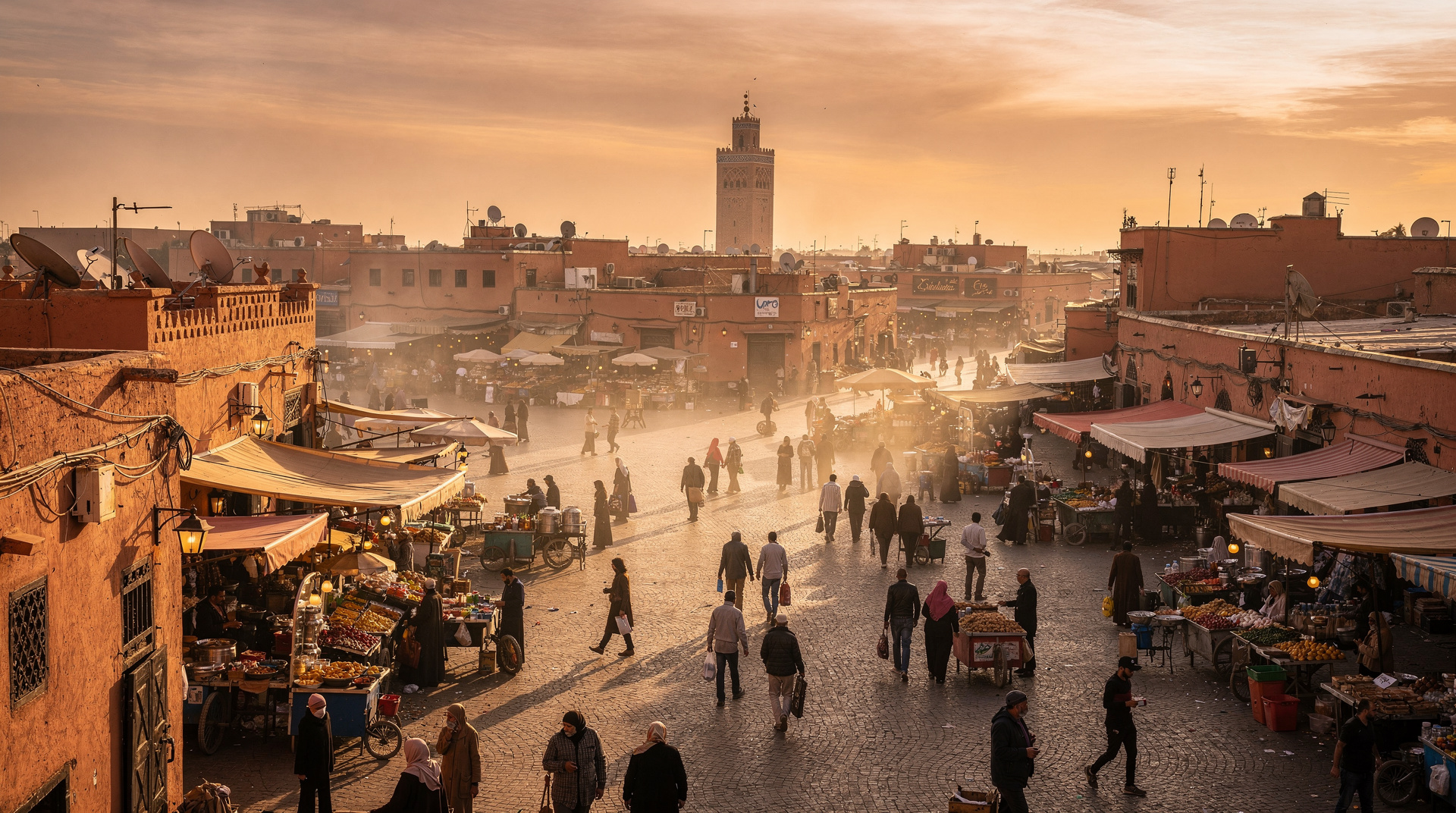
Avoid hammams that employ touts at the door (men offering to “show you the hammam” in the alleyways near Jemaa el-Fna). These almost always lead to overpriced sessions without the quality to justify the premium. Walk in yourself or book through your riad.
Recommended hammams in Fes
Fes has Morocco’s finest hammam architecture — some dating back seven centuries. The Fes el-Bali medina contains numerous neighbourhood hammams alongside a handful of tourist-oriented operations.
Hammam Sidi Azzouz: One of the better-known Fes hammams with some tourist orientation. Located in Fes el-Bali. Multiple sources recommend it for first-time visitors wanting an authentic experience with minimal confusion.
Neighbourhood hammams near the Chouara tannery area: Several neighbourhood hammams are within 5 minutes’ walk of the tanneries — logical to combine a hammam session with tannery viewing. Entry 20-30 MAD. Your riad host in Fes is the best source of current recommendations.
Hammam Beldi near Bab Guissa: Mid-range, positioned for tourists, good products, English-speaking staff available. 200-400 MAD range.
The luxury spa hammam: what’s different
Luxury riads and hotels in Marrakech offer hammam experiences at the higher end: La Mamounia, Royal Mansour, Beldi Country Club. These are covered in the luxury spas Marrakech guide, but the distinction from neighbourhood and mid-range tourist hammams is worth noting here.
Luxury spa hammam characteristics:
- Private room — no shared space with strangers
- Heated marble table (rather than tiled floor bench)
- Curated product line (argania, rose, argan oil treatments)
- Professional therapist (trained to consistent standards)
- Quiet, designed space rather than functional institutional rooms
Price: 500-1,500 MAD (46-140 EUR) for a 60-90 minute hammam treatment.
Worth it? Depends on your baseline. If you’ve never done a hammam before, a luxury spa hammam is an excellent introduction — everything is explained, the setting is beautiful, and the products are high quality. But it’s not a traditional hammam experience in any meaningful cultural sense.
Connecting the hammam to other Morocco wellness experiences
The hammam sits within a broader Moroccan wellness tradition. The rhassoul and argan beauty rituals guide covers the specific treatments used in and after the hammam — understanding what rhassoul clay and argan oil actually are changes how you experience them. The hammam etiquette guide goes deeper into the specific protocol points covered briefly here.
For broader wellness planning, the riad wellness experiences guide covers in-riad hammam and massage options that don’t require venturing out into the medina.
Where the hammam fits in a wider trip
The hammam works best as a pause in the rhythm of a trip, not as a box to tick. In Fes, it pairs well with a slow medina day after the Fes souks guide, and in Marrakech it suits the evening after a busy day of walking. If you are still shaping your route, the first-time visitors guide and the 7-day itinerary show where a rest-day activity like this naturally sits. For the cultural context of why bathing, tea and hospitality go together, the mint tea ritual guide is a good companion read, and the what to wear guide helps you pack sensibly for the medina walk to and from the hammam.
What a first hammam feels like, minute by minute
Nobody tells first-timers what actually happens emotionally. The warm room is where the nerves settle — the heat is gentle, nothing is asked of you yet. The hot room is where most people have a brief moment of “is this too much” around minute five, which passes. The black soap application feels like nothing (it’s just a slippery paste). The kessa scrub is the part people remember most: mildly uncomfortable, oddly satisfying, and genuinely surprising in how much skin comes away. By the final rinse, most first-timers report feeling lighter than expected — not just physically cleaner but calmer. If you’re nervous, book a mid-range tourist hammam for your first visit and a neighbourhood one on a return trip once you know the sequence.
Combining a hammam with the rest of a Marrakech day
A hammam pairs naturally with a slower Marrakech day rather than being squeezed between sightseeing. Many visitors do a hammam late afternoon after the Marrakech souks guide circuit, when feet are tired and the medina traffic has died down slightly. Others treat it as a rest day activity between more demanding excursions like the Atlas Mountains day trip from Marrakech or an Agafay desert day trip.
Frequently asked questions about Moroccan hammams
Do I have to get naked in a Moroccan hammam?
No. In tourist hammams, swimwear is standard. In neighbourhood hammams, swimwear is acceptable and common for foreign visitors. Nobody will pressure you to remove more than you’re comfortable with.
What’s the difference between a hammam and a spa?
A traditional hammam focuses on the hot room, steam, scrub, and rinse sequence — it’s a bathing ritual. A spa adds massage, facial treatments, and additional services in a separate treatment room. Tourist hammams often include elements of both.
How often should I use a hammam?
Moroccans typically visit 1-3 times per week. For tourists, once or twice during a Morocco trip is enough to properly experience it. The kessa scrub requires a few days between sessions to allow new skin to settle.
Is the hammam hygienic?
Traditional neighbourhood hammams maintain cleanliness through constant water flow and regular (twice-daily) cleaning of the rooms. The water is fresh from the central boiler. Concerns about hygiene are generally more applicable to surfaces than to the water itself. Flip-flops eliminate the most common contact risk.
Can men and women go to a hammam together?
In traditional neighbourhood hammams: no — they are single-sex. In tourist and luxury hammams: some offer couples sessions in private rooms. Ask specifically when booking if this matters.