Tagine guide: Morocco's iconic dish explained
What is a tagine and which type should I order in Morocco?
A tagine is a slow-braised stew cooked in a conical clay vessel — the lid recirculates steam to keep meat and vegetables tender. Lamb with prunes and almonds is the richest version; chicken with preserved lemon and olives is the most classic. First-timers should start with the chicken version, which is milder and universally available.
Morocco’s defining dish: understanding the tagine
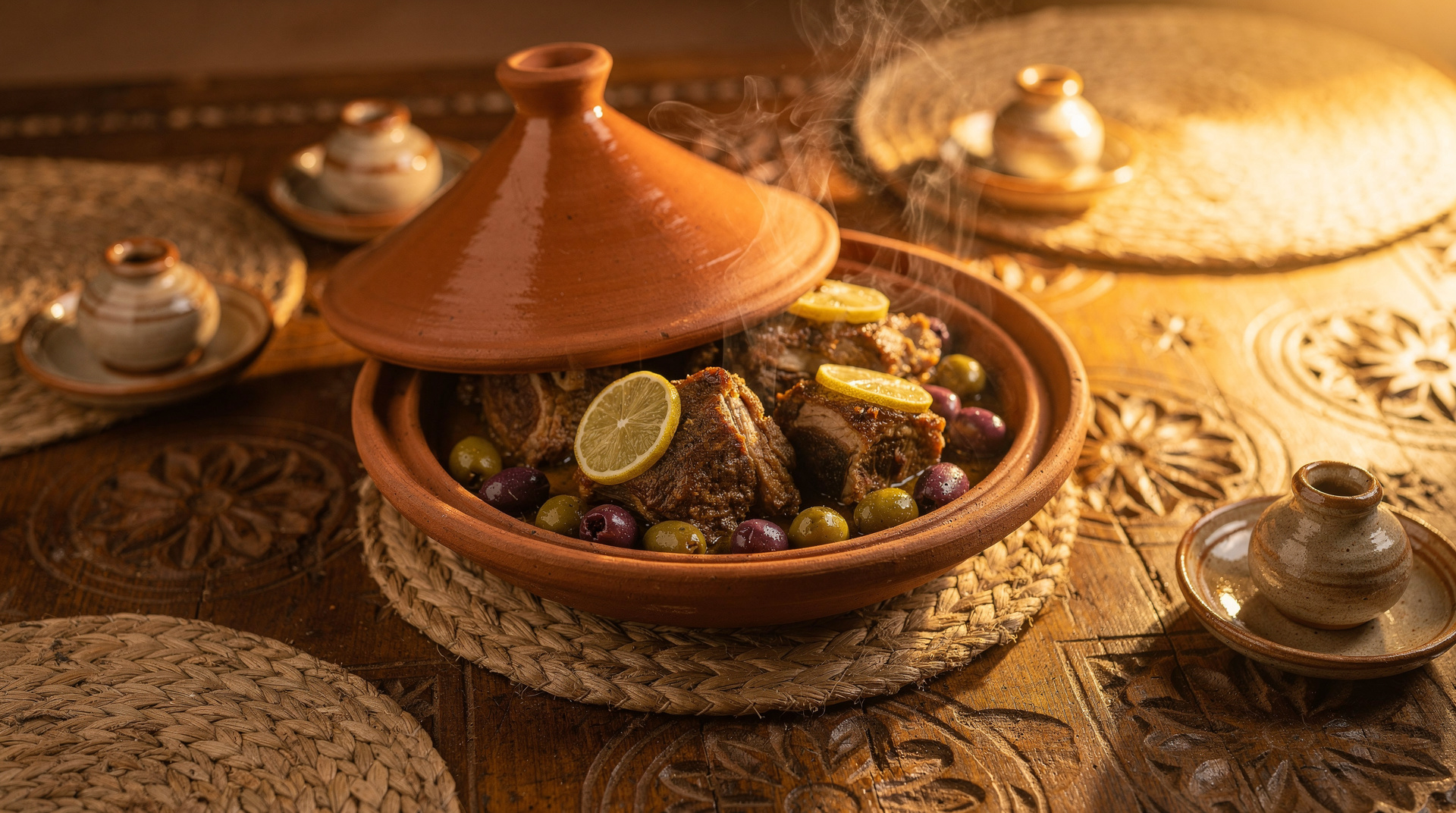
The tagine is the single most requested dish at every restaurant in Morocco, and also the most misunderstood. Tourists order it expecting a bowl of stew. What arrives is a conical clay lid lifted at the table to release fragrant steam, revealing layers of meat falling off the bone, vegetables softened to silkiness, and a broth that has absorbed hours of spice.
The word tagine refers both to the vessel and the dish cooked inside it. The conical lid is engineering as much as tradition — steam rises, condenses on the sloping walls, and drips back into the pot, creating a self-basting environment that needs no constant attention. Moroccan kitchens have been using this principle for centuries, and it remains the most efficient way to cook tough cuts of meat without drying them out.
This guide covers every major tagine type, where to eat them across Morocco, what to pay, and how to avoid the tourist-trap versions that pass for tagine in medina tourist restaurants.
| At a glance | Detail |
|---|---|
| Where to eat | Any Moroccan restaurant, city or village, any day |
| Typical cost | Around 50-500 MAD (5-50 EUR) depending on setting |
| Time needed | 30-60 minutes braise-to-order; longer at fine dining |
| How to order | By meat/filling — chicken, lamb, kefta, seafood, vegetarian |
| Best time | Lunch is the traditional slot, but available any meal |
The classic tagine types
Chicken with preserved lemon and olives
This is Morocco’s most iconic tagine and the right starting point for anyone new to the dish. Bone-in chicken pieces (not breasts — thighs and drumsticks) are braised with onions, saffron, ginger, and a generous quantity of both preserved lemons and cracked green olives.
The preserved lemon is not a garnish. It provides the dish’s characteristic sharp, fermented citrus note that cuts through the richness of the chicken fat. If you eat around it, you miss the point.
What to look for: The chicken should be falling off the bone — if it requires a knife, it’s been undercooked or rushed. The broth should be a golden-yellow from the saffron. Olives should have softened but not disintegrated.
Price range: 80-150 MAD (8-15 EUR) in a medina restaurant; 160-280 MAD (16-28 EUR) at a mid-range riad restaurant.
Lamb with prunes and almonds
The richest and most celebratory of the tagine canon. Lamb shoulder or shank is braised for three to four hours with smen (preserved butter), cinnamon, ginger, and a quantity of dried prunes. The prunes break down into the broth, creating a sweet-savoury sauce. Blanched almonds and sesame seeds are scattered over the top before serving.
This is not an everyday dish in Morocco — it’s served at weddings, family gatherings, and celebrations. At good restaurants, it takes advance ordering because the braising time cannot be shortcut.
What to look for: Meat that shreds without effort. A dark, slightly thick sauce (not watery). The prune sweetness should be present but not cloying — balanced by the salty lamb fat.
Price range: 100-180 MAD (10-18 EUR) in medina restaurants; 200-350 MAD (20-35 EUR) at better establishments.
Kefta with eggs and tomato
A different category from the braised meat tagines — this is the everyday, affordable version. Kefta (spiced minced beef or lamb, mixed with onion, parsley, cumin, paprika, and cinnamon) is rolled into small meatballs, cooked in a fresh tomato sauce, and finished with eggs cracked directly into the pot.
It’s cooked faster than the long-braised versions and is one of the best options at street-level restaurants where you’re eating local rather than tourist. The spice blend in the kefta is what distinguishes a good version from a mediocre one.
What to look for: The eggs should be set but still runny at the yolk. The tomato sauce should taste of fresh tomatoes and herbs, not tinned paste. Kefta balls should be dense and well-spiced, not rubbery.
Price range: 50-90 MAD (5-9 EUR) at a local restaurant; 100-150 MAD (10-15 EUR) in medina tourist areas.
Seafood tagine
Common along Morocco’s Atlantic coast — Essaouira, Agadir, Casablanca — and less so inland. The base is typically a chermoula-marinated mix of white fish, prawns, and sometimes mussels or calamari, cooked with tomatoes, peppers, preserved lemon, and herbs.
Inland cities like Marrakech and Fes serve seafood tagine, but freshness becomes a question. On the coast, the fish arrives daily; inland, you’re trusting the supply chain.
What to look for: Fish that hasn’t disintegrated (a sign of overcooking or thin fish). The chermoula marinade — a paste of coriander, garlic, cumin, and paprika — should be detectable in the broth. Avoid anything that smells less than fresh.
Price range: 80-150 MAD (8-15 EUR) in Essaouira harbour restaurants; higher in Casablanca’s upscale venues.
Vegetarian tagine
Often underrated, partly because it can be excellent or it can be an afterthought. The best vegetarian tagines are built around seasonal produce with proper spicing — chickpeas, preserved lemon, artichokes, fennel, courgette, and tomatoes, braised in olive oil and a carefully calibrated mix of cumin, turmeric, and coriander.
The common tourist-facing “vegetable tagine” is sometimes nothing more than a pile of steamed vegetables in a clay pot. Push back — ask for harissa on the side, inquire what spices are in the broth, look for whether preserved lemon features.
Price range: 50-100 MAD (5-10 EUR) at local restaurants; similar or slightly less than meat versions at mid-range venues.
How to eat tagine correctly
The tagine arrives at the table in its clay vessel, still hot. A few things to know:
The lid comes off at the table. Hold your head back slightly — the steam release is significant and will fog glasses.
You eat communally or individually. In a traditional home setting, the tagine sits in the centre and everyone eats from their section using bread to scoop. In restaurants, you usually get your own individual tagine, but the communal style is also common for large groups.
Bread is the utensil. Moroccan khobz (round flatbread) arrives with the tagine. You tear a piece, fold it slightly, and use it to scoop — pushing the meat and sauce onto the bread and eating the whole mouthful together. Forks are provided at tourist-facing restaurants but aren’t traditional.
Eat slowly. The pot stays hot for 15-20 minutes. There’s no rush. Moroccan meals are not quick service.
The broth at the bottom. Don’t leave it. It’s the most flavourful part of the tagine — use the last of your bread to soak it up.
Where to eat tagine: honest restaurant recommendations
Marrakech
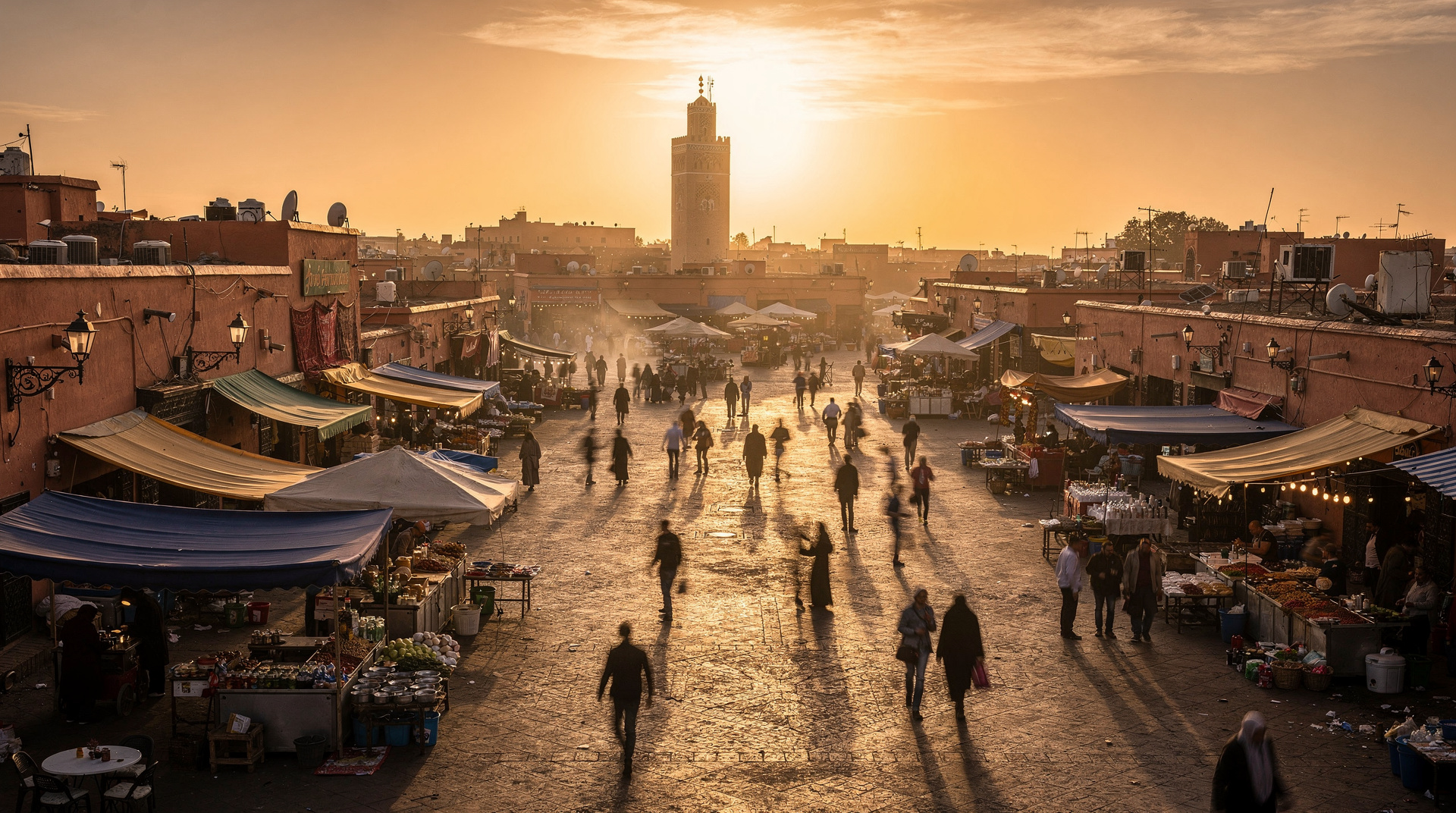
Chez Chegrouni (Jemaa el-Fnaa): Reliable, honest-value Moroccan cooking on the main square. The chicken tagine here is one of the best price-to-quality ratios in the medina — around 80-90 MAD. Ignore the tourist-trap restaurants on the square’s periphery; this is the one frequented by Moroccans.
Al Fassia (Guéliz): Run by women, famous for the most precise Moroccan cooking in the city. The lamb with prunes here is a benchmark version. Expect 200-350 MAD for a main course. Book ahead.
Le Jardin (medina): Beautiful courtyard riad restaurant. Good chicken and vegetable tagines, excellent atmosphere. Mid-range prices, genuinely good quality. Around 140-180 MAD.
Nomad (Derb Djedid, near Bab Doukkala): Modern take on Moroccan classics, rooftop terrace, popular with food-aware travellers. The kefta tagine is notably good. 150-200 MAD.
Dar Moha (medina): The prestige address for Moroccan fine dining in Marrakech. Tagines here are multi-component and elaborately presented. Expect to pay 300-500 MAD and book at least three days ahead.
Fes
The Ruined Garden (Fes el-Bali): Beautiful restaurant in a restored riad garden. Lamb tagine is consistently excellent. Mid-range pricing (150-220 MAD).
Café Clock (Derb el-Magana): Famous for camel burger but also serves excellent traditional tagines. Good vegetarian options. Budget to mid-range (90-160 MAD). Popular with travellers but not a tourist trap.
Restaurant Dar Hatim (medina): Small family-run place serving exceptional local-style tagines at local prices (70-100 MAD). No sign in English — ask your riad for directions.
Tagine at different price points
| Setting | Typical price | Quality indicator |
|---|---|---|
| Street-level local restaurant | 50-80 MAD (5-8 EUR) | Kefta and vegetable tagines; simpler preparation |
| Medina tourist restaurant | 80-130 MAD (8-13 EUR) | Variable; check reviews |
| Mid-range riad restaurant | 140-220 MAD (14-22 EUR) | Generally reliable; better ingredients |
| Upscale restaurant | 250-400 MAD (25-40 EUR) | Refined technique, curated spice blends |
| Fine dining (Al Fassia, Dar Moha) | 300-500 MAD (30-50 EUR) | Benchmark versions |
Cooking your own tagine: classes and what you learn
The best way to understand tagine is to make one. A cooking class in Marrakech or a cooking class in Fes will walk you through the spice assembly, the browning technique, the layering of vegetables, and the long slow braise that creates the finished dish.
Book a traditional Moroccan cooking class with market visit in MarrakechKey things a cooking class teaches that no restaurant meal does:
- The ras el hanout blend varies by cook — there’s no single “correct” version
- The browning of meat and onions before adding liquid is crucial to flavour depth
- Saffron is bloomed in warm water before adding to release colour and aroma
- The clay tagine pot needs soaking before first use and cannot go directly onto a gas flame without a heat diffuser
Tourist trap tagines: what to avoid
The medinas of Marrakech and Fes have hundreds of restaurants serving what they call tagine. Many are serving a dish cooked in a tagine-shaped vessel from a large pot in the back — not a slow-braise made to order. Signs of a tourist-trap tagine:
- It arrives in under 15 minutes (impossible for a real slow-braise)
- The meat is dry or tough
- The sauce is watery with no depth
- No fresh bread arrives with it
- The price is under 50 MAD — quality ingredients at that price level are implausible
The medina streets near Bab Doukkala in Marrakech and the area around Bab Boujloud in Fes have more genuine local restaurants than the main tourist squares. Walking five minutes away from the obvious tourist zone usually doubles the quality.
Regional tagine variations
Morocco’s tagine repertoire varies by region:
Fes: More elaborate spice blends, higher use of preserved lemon, strong Persian influence in the sweet-savoury combinations. Pigeon (hamam) tagine is a Fassi specialty.
Marrakech: Bolder spicing, heavier use of ras el hanout. The lamb with prunes and almonds is more commonly found here than elsewhere.
Coastal cities (Essaouira, Agadir): Seafood tagine dominates. Chermoula marinade is the standard base for fish preparations.
Berber (Atlas Mountains): Simpler, earthier tagines using local produce — turnips, chickpeas, dried figs. Less saffron, more cumin. Often cooked on wood fires, which adds a smoky dimension.
Saharan region: Lamb and camel meat tagines, minimal vegetables. The desert version is functional and filling rather than elaborate.
Tagine versus other Moroccan dishes
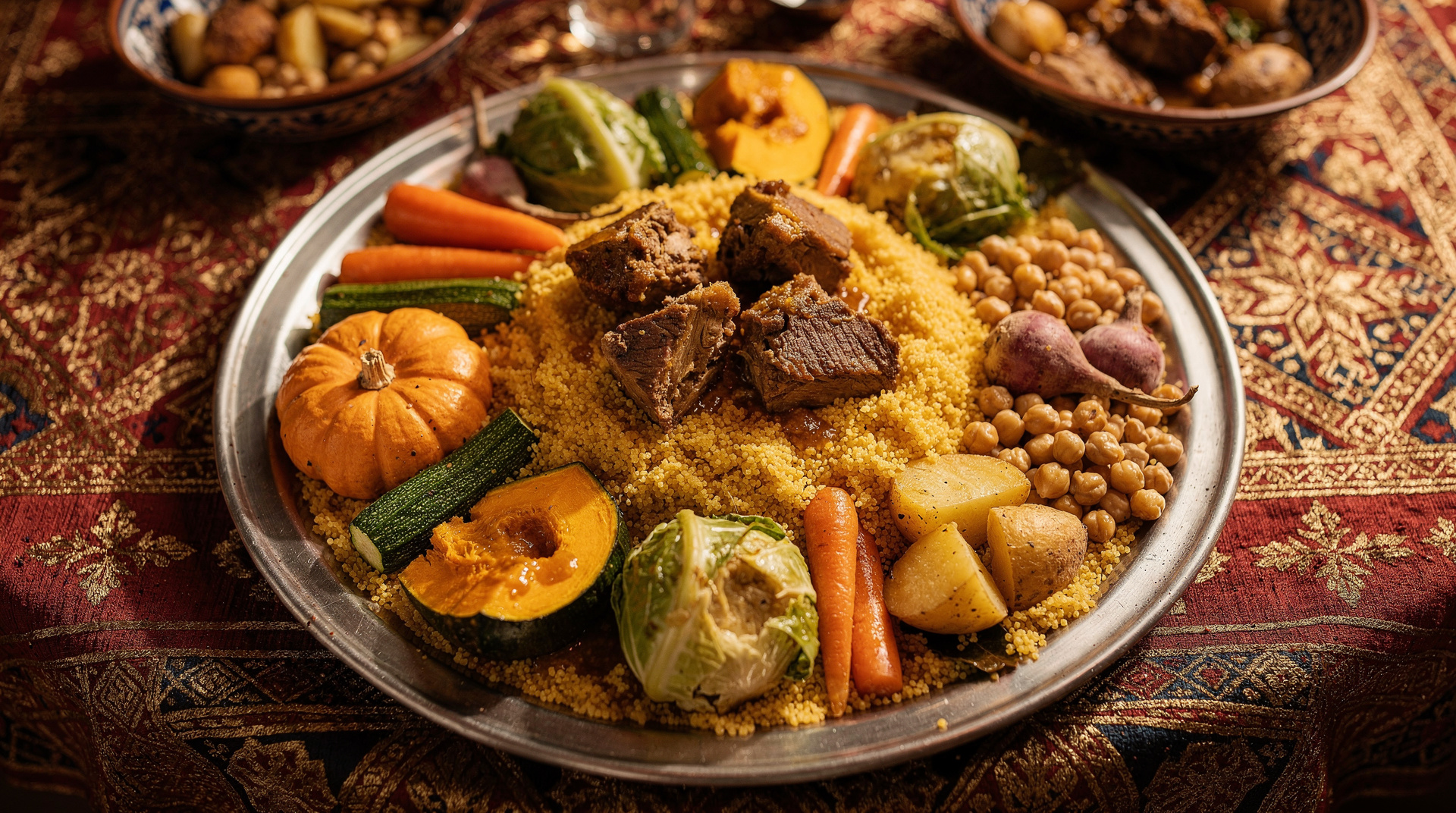
Tagine is the most accessible Moroccan dish for visitors, but it shares a table with couscous (the Friday communal dish), pastilla (the elaborate sweet-savoury pie), and harira (the everyday soup). Understanding how they relate gives you a better menu framework. The tagine vs couscous comparison breaks down when to order each and how they differ in preparation and occasion.
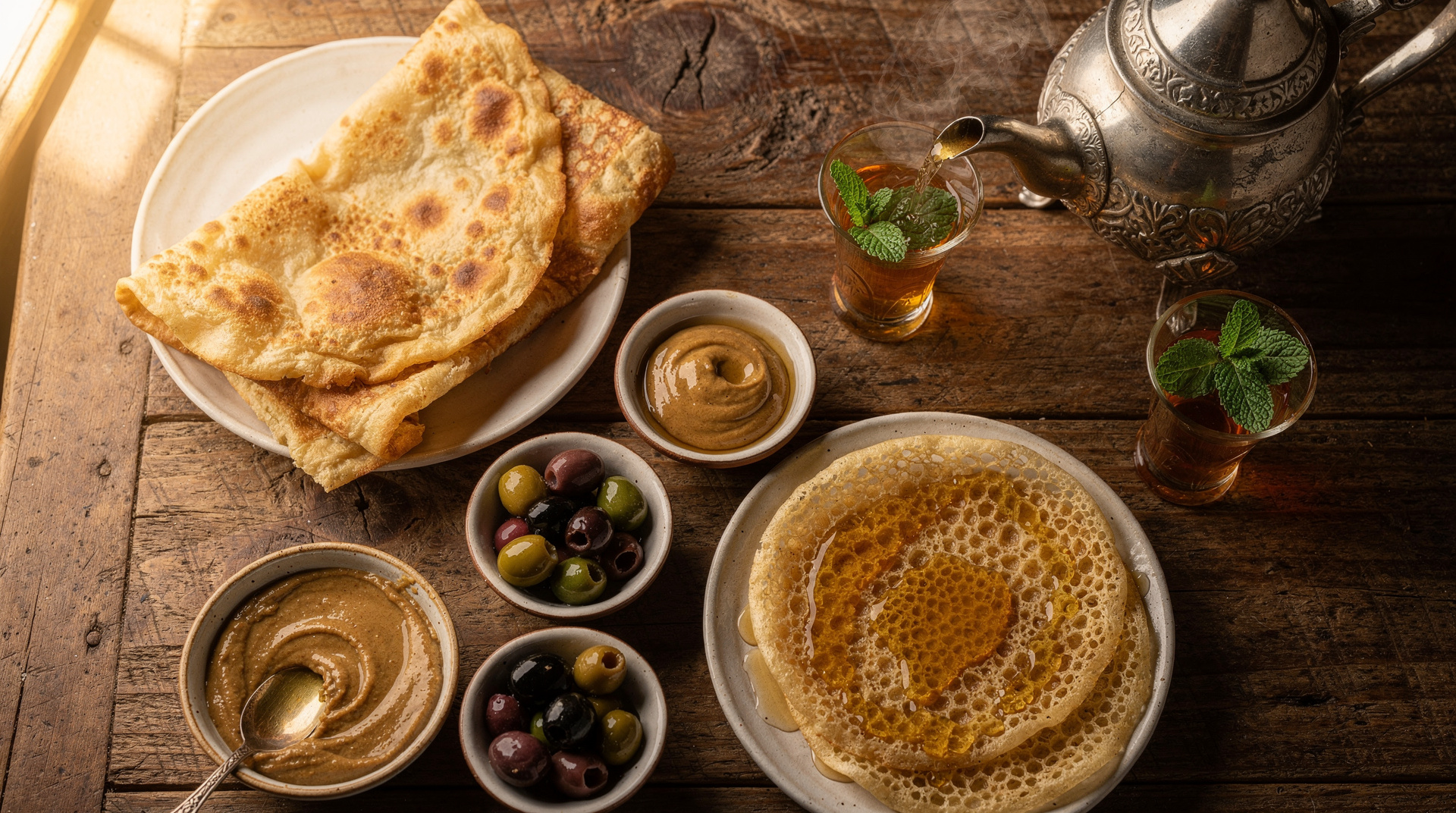
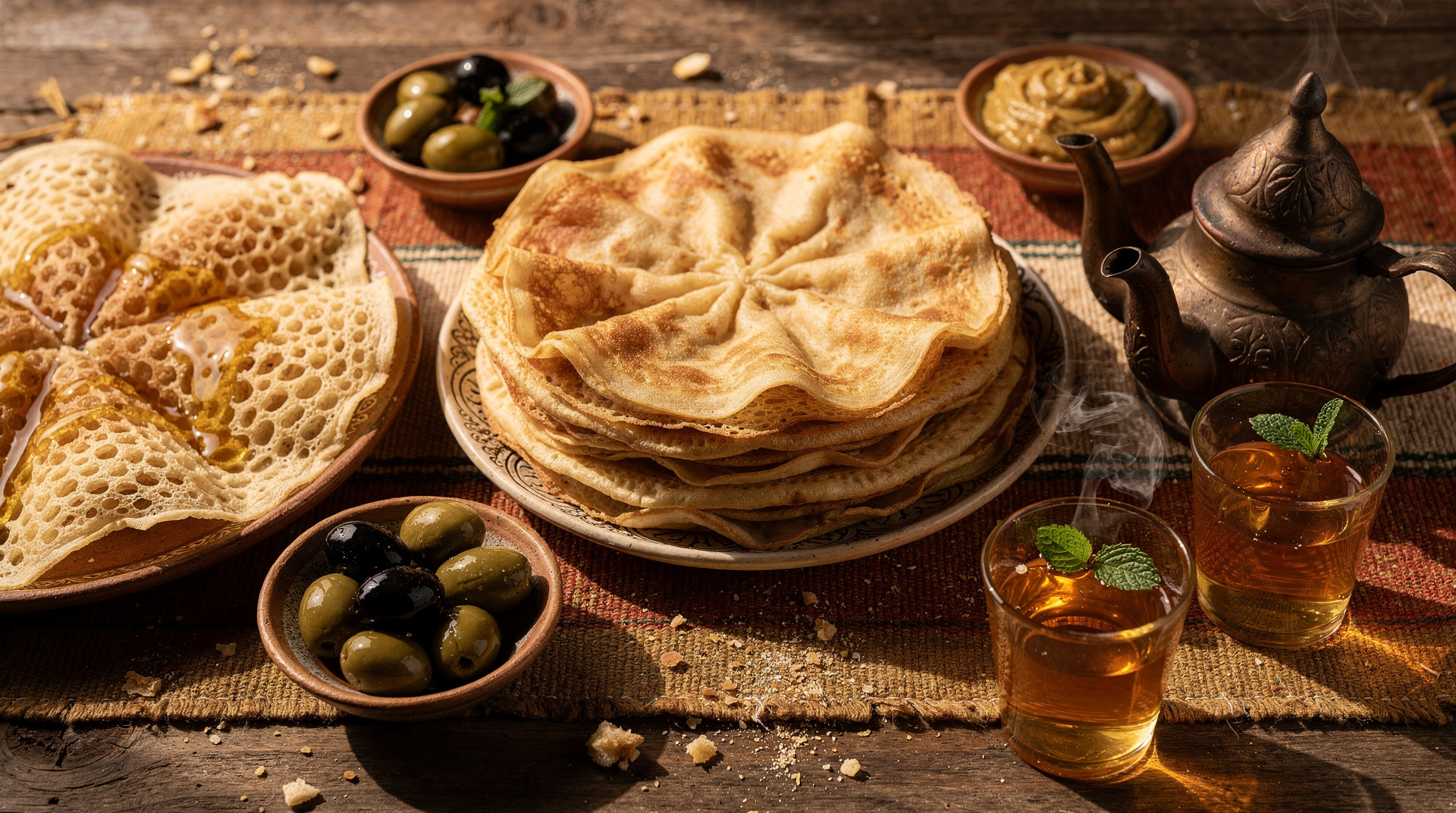
For the broader Moroccan food context — the spice markets, the street food culture, the breakfast traditions — see the Moroccan spices and souks guide and the Moroccan breakfast guide.
Frequently asked questions about Moroccan tagine
Is tagine spicy hot?
No — Moroccan tagines are heavily spiced but not spicy in the chilli sense. The flavour is complex and aromatic from cumin, coriander, ginger, cinnamon, and saffron, but heat is minimal. Harissa (chilli paste) is sometimes served on the side but is not part of the tagine itself.
Can I buy a tagine pot to take home?
Yes, and it’s one of the best Morocco souvenirs. The Marrakech souks guide covers where to buy genuine clay tagine vessels versus the tourist-market versions. Ceramic tagines from the Fes pottery tradition are more decorative; the rough clay versions from market stalls are better for actual cooking.
What’s the difference between a tagine and a Moroccan stew cooked in a regular pot?
The conical lid recirculates steam continuously, which keeps the braise moister and requires less liquid than a conventional pot. You can cook similar dishes in a Dutch oven but you need to add more liquid and results differ in texture and intensity.
How do restaurants serve tagine in tourist areas without the hours-long braise?
Many don’t slow-braise to order. They pre-cook the meat and keep it warm, then plate it in the tagine vessel for service. This is common in busy tourist restaurants and explains why tagines arrive quickly. The results can still be good but are not the same as a properly braise-to-order dish.
Should I order tagine for lunch or dinner?
Both are appropriate. In Morocco, the main meal is traditionally lunch, and tagine is the centrepiece of that meal. Evening versions are equally available at restaurants. If you want the most authentic experience, the lunch tagine in a medina restaurant — eaten slowly with bread and mint tea — is the closer approximation of the actual Moroccan mealtime tradition.
Is lamb or chicken tagine better for a first experience?
The chicken with preserved lemon and olives version is universally considered the best introduction — it’s the most balanced between all the flavour elements (citrus sharpness from the preserved lemon, brine from the olives, warmth from the spices), and it’s slightly lighter than the lamb versions. Move to lamb with prunes and almonds on your second or third tagine.
What wine or drink pairs with tagine?
Mint tea is the traditional accompaniment and the most appropriate pairing — the sweetness and freshness cut the richness. If you want alcohol, Moroccan rosé wine works well with the chicken version. For the lamb with prunes, a fuller Moroccan red (look for Celliers de Meknes labels) handles the sweetness well. Beer is available in tourist restaurants but doesn’t pair as well.
The tagine pot itself: buying one to take home
The clay tagine vessel is one of Morocco’s most iconic souvenirs and a genuinely useful kitchen item. A few things to know before buying:
Types of tagine pot:
- Unglazed clay (chtara): The traditional version — rough earthenware, porous, absorbs flavour over time. Better for actual cooking. Cheaper (80-200 MAD at a souk). Needs seasoning before first use (soak in water for 24 hours, rub the inside with olive oil and garlic, heat slowly before first cook).
- Glazed decorative tagines: Brightly coloured, often with hand-painted geometric patterns. Beautiful but sometimes not safe for cooking — some glazes contain lead. Use these for serving only, not cooking.
- Ceramic tagines from Fes (blue pottery): The famous blue-and-white Fes pottery tradition produces tagines intended as decorative pieces and serving vessels rather than cooking vessels. Excellent for presentation; use for serving only.
Where to buy the right version: The best functional tagines are not in tourist souvenir shops. They’re at the household goods section of the main medina souk — the area where Moroccan households shop, not where tourists shop. In Marrakech, the area near the Mouassine neighbourhood has kitchen goods shops alongside spice vendors. In Fes, the streets around Seffarine Square (the coppersmiths) have practical household goods shops.
Airline considerations: A tagine pot is heavy and fragile. Wrap the base and lid separately in clothing, place in the centre of checked luggage, and accept that you’re sacrificing 1-2kg of baggage allowance.
Tagine and the broader Moroccan meal
Understanding where tagine fits in the structure of a full Moroccan meal helps with restaurant ordering.
At a formal Moroccan table (restaurant or home):
- Salads (first course): Three to six small plates of cold and warm vegetable preparations — zaalouk (smoky aubergine), taktouka (roasted peppers and tomatoes), carrot with cumin, beet with orange. Eaten with bread.
- Tagine (main course): The centrepiece. Arrives in its clay vessel, still sealed, for opening at the table.
- Fruit and pastries: Fresh fruit (seasonal), honey-soaked pastries, mint tea. Not always a formal dessert.
The salads are not optional starters — they are structural elements of the meal that provide acidity and freshness to contrast the rich tagine. Eating through all of them before the tagine arrives is part of the experience, not a signal that the main course is delayed.
At a local restaurant: The format is usually simpler — tagine arrives quickly (if it’s pre-made) with bread and a small salad plate. The elaborate multi-salad progression is more common at riad restaurants and formal settings.
Tagine etiquette: the details that matter
A few etiquette details that make the difference between eating tagine as a tourist and eating it as a guest:
Don’t lift the lid yourself. At a Moroccan table, the host or the server lifts the tagine lid — it’s a hospitality gesture. Wait for it to be uncovered.
Eat from your section. At a communal tagine (one vessel for multiple people), each person eats from the section of the pot nearest to them. You don’t cross the centre to take meat from someone else’s side.
The bone goes back in the pot. In traditional eating, when you’ve finished with a piece of bone, you return it to the tagine vessel rather than leaving it on your plate. This keeps the table cleaner and is the expected behaviour.
Pace yourself. Moroccan meals are not rushed. The tagine stays hot in its clay vessel for 20-30 minutes. Eating slowly, using the bread methodically, and following the conversation — this is the meal as designed.
Compliment the cook. “Bnin bzzaf” (very delicious in Moroccan Arabic) will earn genuine appreciation at any table. Even if your Moroccan Arabic stops there, using it shows engagement with the culture.
Pairing tagine with the rest of a Morocco trip
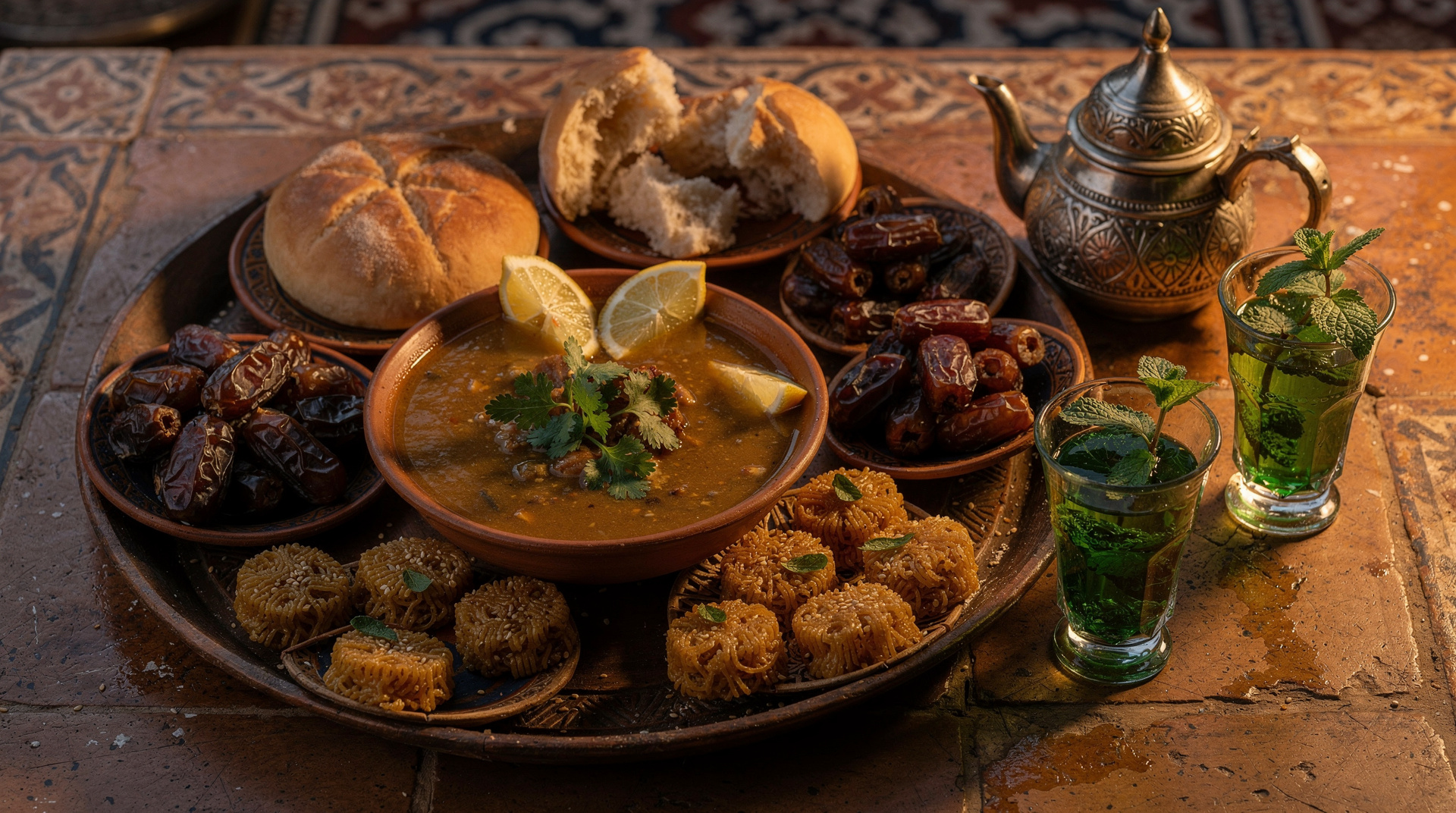
If you’re eating your way through the country, tagine tastes different depending on where you have it. A street food tour in Marrakech or street food in Fes gives you the informal side of Moroccan cooking before you sit down for a proper braised tagine, and understanding the Moroccan spices and souks that go into the spice blend adds real context to what’s in the pot. If your trip includes Ramadan dates, the Ramadan food guide explains how tagine timing and portions shift around the fast.
FAQ: quick answers
Do I need to tip for a tagine meal? A 5-10% tip is standard and appreciated at sit-down restaurants; it’s not expected at very informal street-level places, though rounding up is welcome.
Can I get tagine to go / as takeaway? Yes, especially in cities — many medina restaurants will pack a tagine in foil or a takeaway container, though you lose the clay-vessel presentation and it cools faster.
Is it rude to ask what’s in the tagine before ordering?
No — asking about ingredients or spice level is completely normal and expected, especially for travellers with allergies or dietary restrictions. Staff at most restaurants, including local ones, are used to the question.
What’s the best tagine for someone who doesn’t eat meat or fish?
The vegetarian tagine with chickpeas, preserved lemon, and seasonal vegetables — ask specifically whether the broth is vegetable-based, since some kitchens default to chicken stock even in the “vegetarian” version. See the section above on vegetarian tagine for what a good one looks like.