Street food in Fes: the honest guide to eating in the medina
Where is the best street food in Fes?
Bab Boujloud and its surrounding streets have the densest concentration of street food in Fes, from harira stalls at dawn to lamb sandwich vendors at midday. Café Clock in Derb el-Magana is the best sit-down street food experience. For local eating without tourist pricing, head into the residential sections of Fes el-Bali away from the main tourist circuit.
The real food of Fes is on the street
Fes is Morocco’s culinary capital — not in the sense of fine dining (that’s Marrakech), but in the sense of depth. The medina of Fes el-Bali is the largest living medieval city in the world, and its food reflects a thousand years of accumulated tradition: recipes from Andalusian refugees who arrived in the 9th century, spice trade influences from sub-Saharan Africa, Berber mountain cooking embedded in the lowland city.
Most of this food is not in restaurants. It’s at stalls, in neighbourhood souks, at the harira lady who sets up her terracotta pot on the same corner every morning, at the bread-seller whose msemen is made on a griddle outside the farran. To eat properly in Fes is to eat on the street.
This guide identifies the best stalls, areas, and dishes, with prices and specific addresses where possible.
| At a glance | |
|---|---|
| Where | Bab Boujloud and Talaa Kebira/Sghira, the Andalusian quarter, the R’cif/mechoui market area |
| Cost | Around 3-25 MAD per item; a full morning of tasting typically runs 40-80 MAD per person |
| Time needed | A morning session (8am-1pm) covers most stalls; add an afternoon for Café Clock |
| Getting there | All areas are within Fes el-Bali, reachable on foot from Bab Boujloud |
| Best time | Early morning for harira and msemen; most cooked-food stalls wind down by 1pm |
The geography of Fes street food
Bab Boujloud and the main medina streets
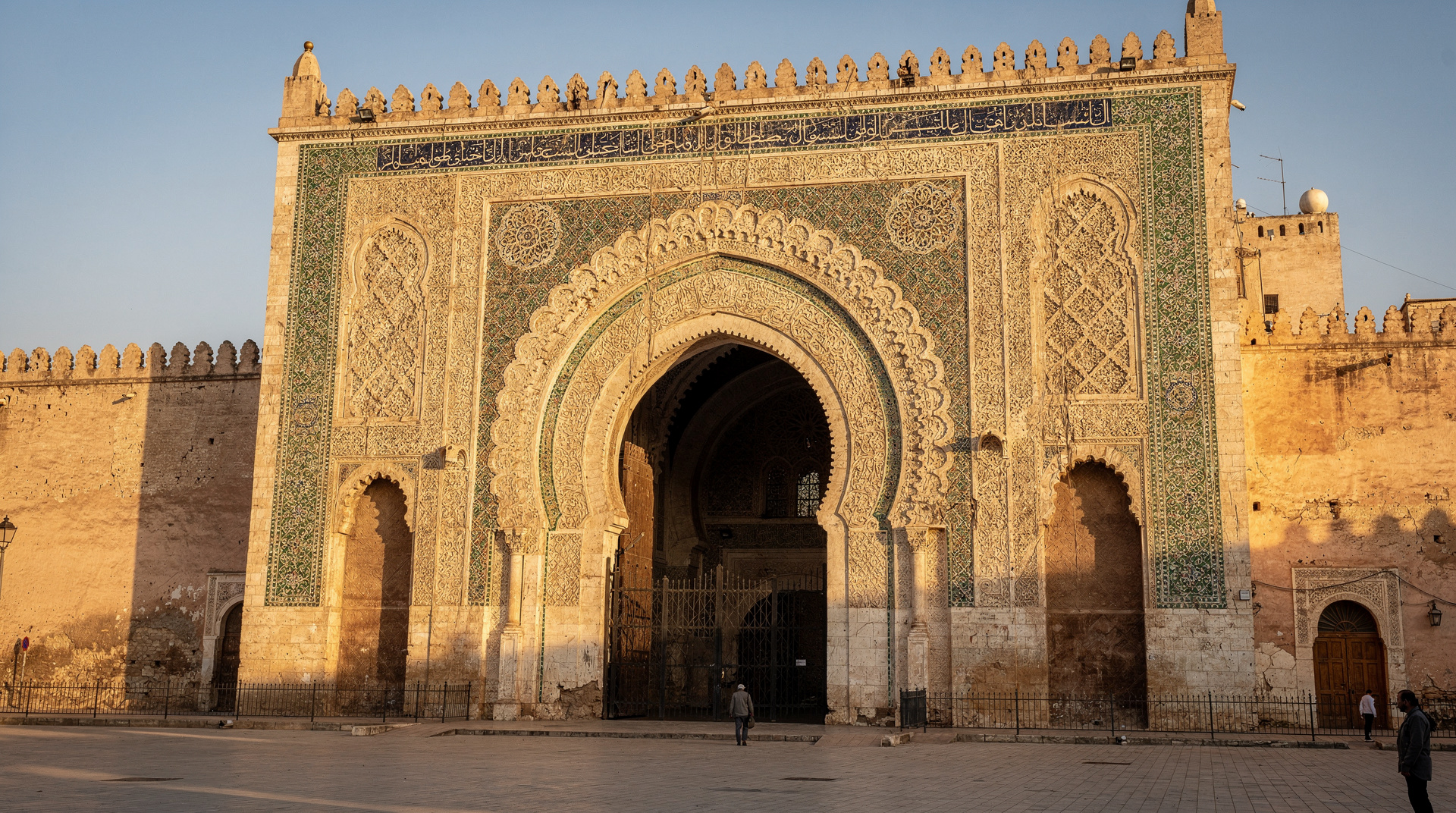
The blue-tiled Bab Boujloud gate is the western entry point into Fes el-Bali. The streets immediately inside — Talaa Kebira and Talaa Sghira, the two main arteries descending into the medina — have the highest concentration of visible street food.
The obvious tourist-facing stalls (with picture menus in multiple languages) are on the main drag. The better value and quality are in the side streets and residential areas visible from the tourist circuit but one alley removed.
What to expect near Bab Boujloud: Msemen vendors griddling bread to order, harira stalls in the morning, grilled sheep brain sandwiches (a Fes specialty), merguez sausage rolls, fresh juice, and plenty of mint tea.
The Andalusian quarter (Adouat al-Andalus)
Across the Oued Fes river from the main medina, the Andalusian quarter is less toured and has a more genuinely local street food scene. The market area near the Andalusian mosque (Mosque al-Andalus) has produce vendors, bread stalls, and prepared food sellers catering to the resident population rather than visitors.
Getting here requires crossing the old bridge — 15 minutes from Bab Boujloud. Worth the walk for the different atmosphere and lower prices.
The mechoui market near the main souk
A section of the medina near the Kairaouine Mosque area has vendors selling roasted mechoui (whole slow-roasted lamb) that falls off the bone. They carve portions to order, weigh them, and serve with bread and cumin-salt. This is one of the most satisfying cheap meals in Fes.
The dishes: what to eat and where
Harira
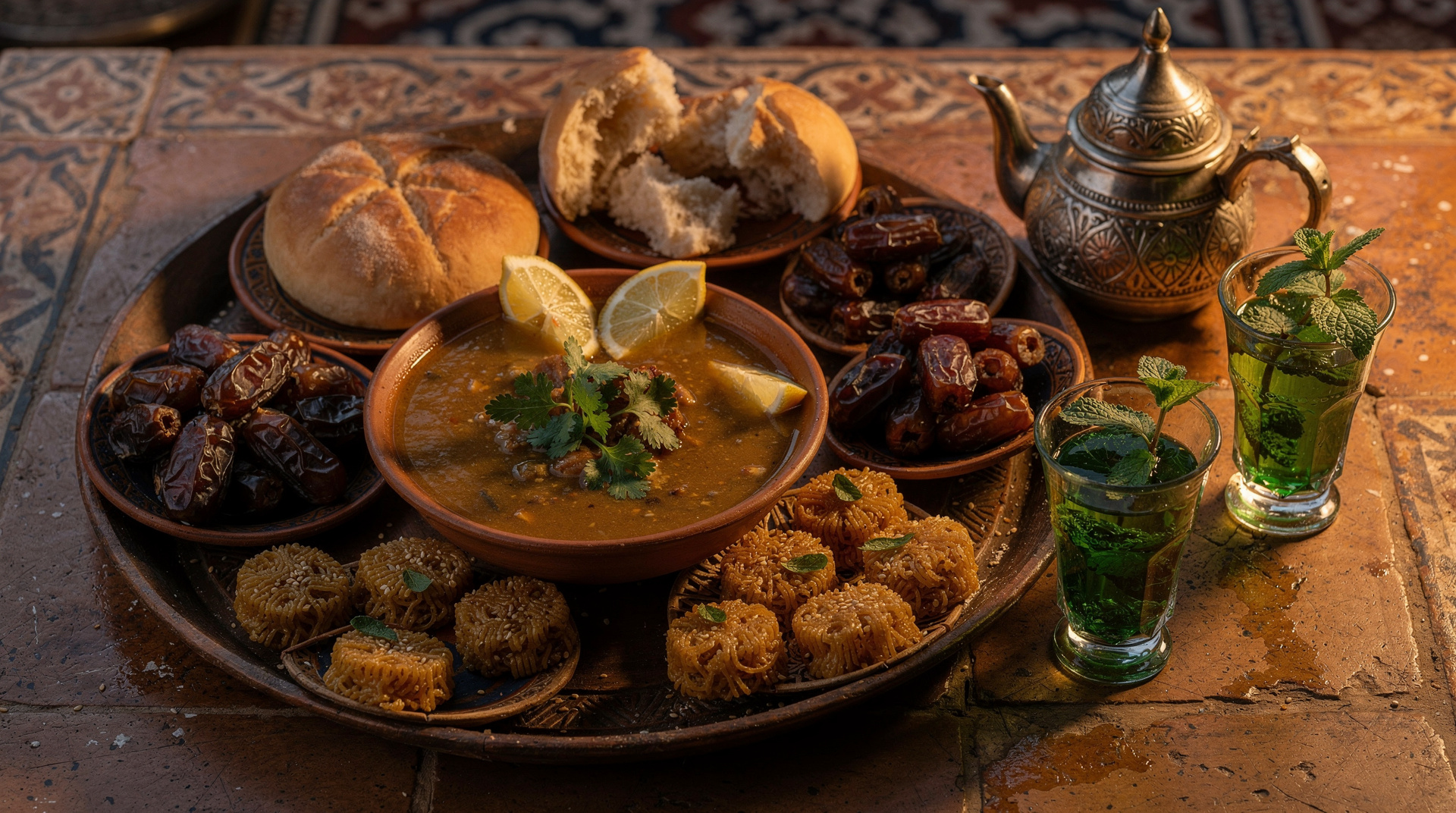
Harira is Morocco’s daily soup — a tomato, lentil, chickpea, and herb broth thickened with flour, seasoned with ginger, turmeric, coriander, and a squeeze of lemon. It’s the soup that breaks the Ramadan fast at sunset and the breakfast of every working person in the medina.
At street level: A terracotta bowl costs 8-15 MAD. It’s served with a twist of dried lemon (added to the bowl at the table), a handful of dates or figs sometimes, and always bread. The consistency varies — some vendors keep it thick and hearty; others serve a thinner version. Thick is better.
Best harira in Fes: Near the entrance to the Attarine Medersa, there are two or three established harira vendors who have occupied the same spots for years. The one on the left as you face the medersa entrance (morning hours only) is the most consistent.
Timing: The best harira is in the early morning and at sunset. The pots are fresher; the soup hasn’t been sitting since 6am.
Msemen and meloui
The griddle breads are made at stalls throughout the medina from early morning until around 11am. After that, quality drops — the dough has been sitting, the batches were made hours ago.
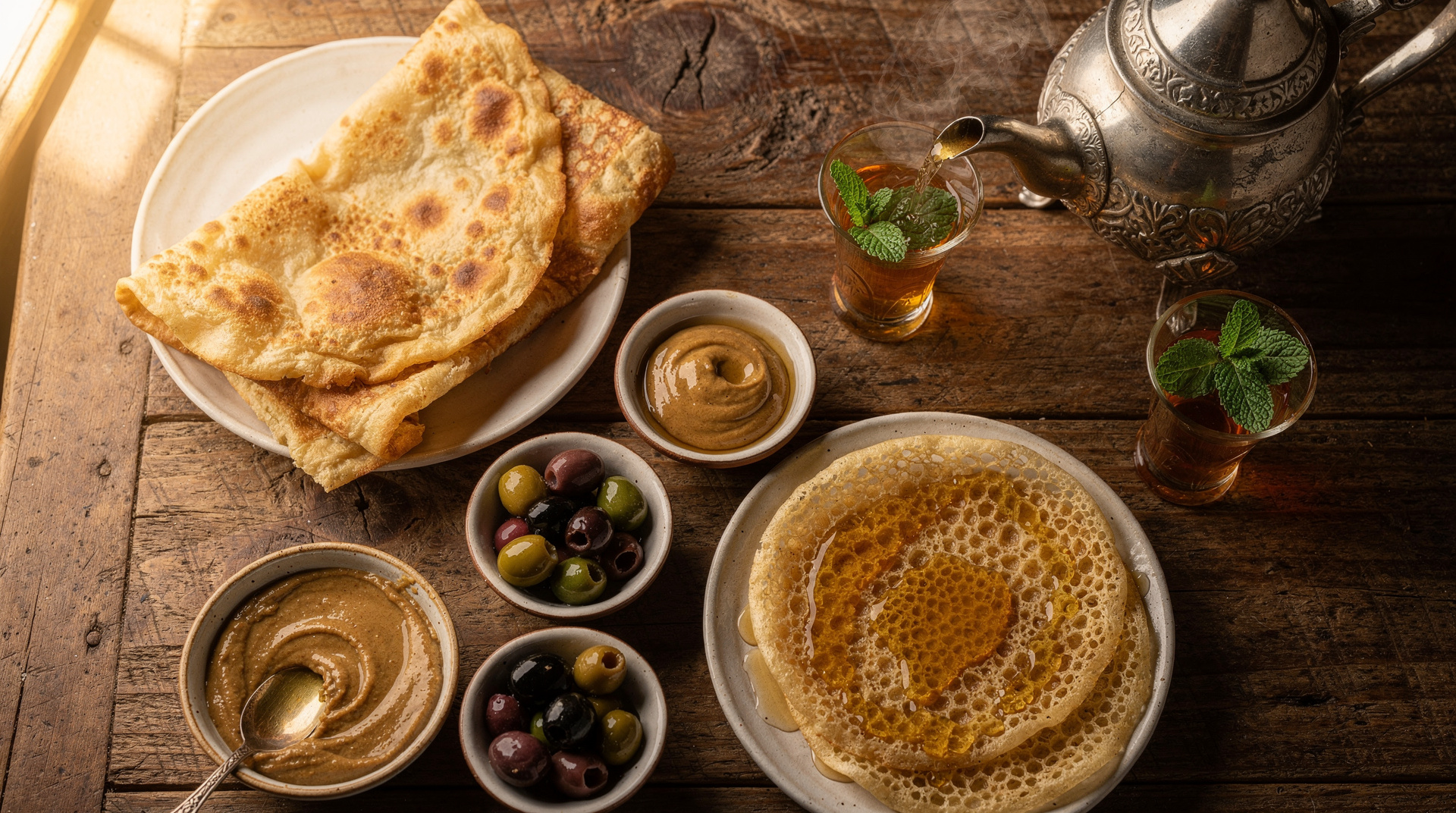
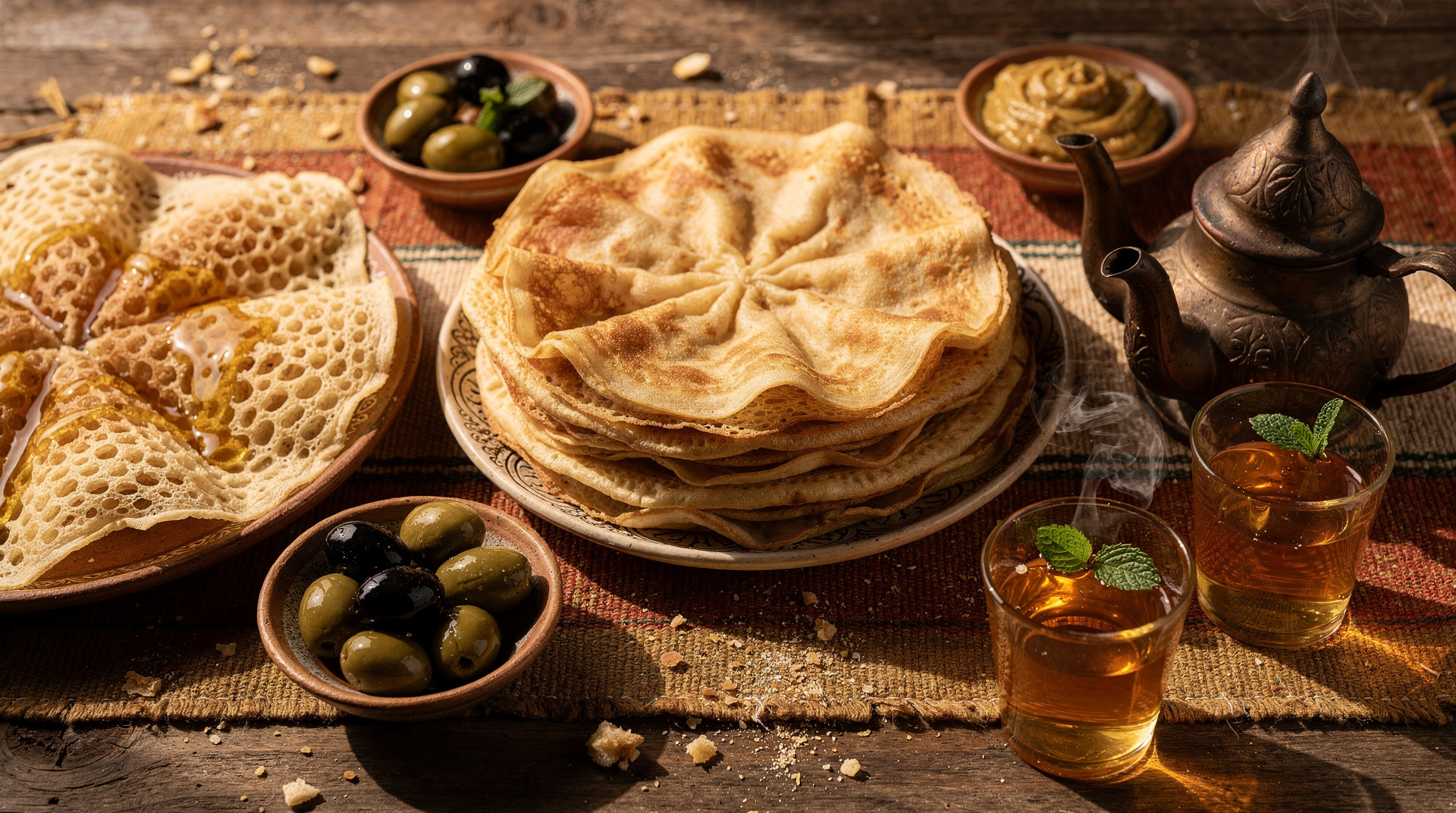
Where to find the best: Side streets off Talaa Kebira have multiple griddle-bread operations. Look for a woman with a large flat griddle, a bowl of dough, and a small table with butter, honey, and amlou. The signs (if there are any) will be in Arabic. The best msemen costs 3-5 MAD per piece and is made in front of you.
Meloui: The spiral-rolled variant of msemen. Less common than msemen but better textured — more layers, more chew. Not every stall makes it, but worth asking for.
Lamb sandwiches and kefta rolls
The medina sandwich vendor is one of the most practical street food options in Fes. A spiced kefta (minced lamb or beef) sandwich — kefta formed around a skewer, grilled on charcoal, pulled into a khobz roll with harissa, olives, and fresh herbs — costs 15-25 MAD.
Best areas: The area between Bab Rcif and the main souk has several reliable kefta sandwich vendors who operate through the afternoon. Near the R’cif bridge there are also grilled offal vendors (liver, lung) for those willing to go further.
Grilled sheep brains: A Fes speciality that visitors either find fascinating or repellent. Cleaned sheep brains are grilled on charcoal, placed in a bread roll with cumin, harissa, and fresh tomato. Tastes mild and slightly creamy — less confronting than the description suggests. 10-20 MAD at specialist offal vendors near the main butcher’s souk.
Harsha and fried breads
Harsha (the semolina rounds covered in the Moroccan bread guide) is sold from stalls and carts in the early morning. In Fes, the version is slightly thicker and sometimes coated in sesame seeds. Eaten split with fresh jben (soft white cheese) and honey — one of the best cheap breakfasts in the medina at 5-8 MAD.
Sfenj (Moroccan doughnuts) appear in some medina locations — ring-shaped, fried to order, dusted with sugar. Lighter than a European doughnut, slightly chewy, and eaten hot. 3-5 MAD each.
Tangia Fassi
Tangia is a Fes specialty that requires advance planning — or going directly to a restaurant that prepares it. The dish involves marinated lamb or beef sealed in an amphora-shaped clay pot (the tangia itself, which gives the dish its name) with preserved lemon, smen (preserved butter), saffron, garlic, and cumin. The pot is sealed and taken to the farran to cook in the residual heat overnight.
The result, after six to eight hours of slow indirect heat, is meat that has reached complete collapse — falling off the bone, intensely flavoured, absorbed with all the preserved lemon and smen. It’s served with the pot cracked open at the table and bread for dipping.
Where to find it: Tangia Fassi requires ordering in advance or finding a restaurant that makes it regularly. Café Clock in Derb el-Magana makes a version — call ahead. Some medina restaurants near the university quarter list it on Friday menus.
Grilled sardines and fish (near the medina periphery)
Near Bab Ftouh, on the edge of the medina, there are a few fish vendors who grill fresh sardines to order. Smaller than what you’d find in Essaouira (a coastal city) but prepared well — gutted, marinated in chermoula, grilled on charcoal. 20-40 MAD for a plate. Less common in Fes than in coastal cities, but worth knowing exists.
Café Clock Fes: the bridge between tradition and innovation
Café Clock in Derb el-Magana (a side street in the medina) is the most food-important venue in Fes for visitors. It is not a tourist trap — the camel burger that made its name is a genuine product, the kitchen works with local ingredients and traditional techniques, and the staff are knowledgeable about Moroccan food culture.
What to order:
- Camel burger: The house signature. Ground camel meat in a khobz roll with chermoula sauce, pickled vegetables, and harissa. Tastes similar to beef but slightly gamier. 60-80 MAD.
- B’stilla: The traditional pigeon (or chicken) pastilla with almonds, saffron-spiced eggs, and powdered sugar — Café Clock’s version is one of the best accessible preparations in the city. 70-100 MAD.
- Harira: The house version is good — thick, properly spiced, served with dates and lemon. 25-35 MAD.
- Kefta tagine: Reliable, honest preparation. 70-90 MAD.
Context: Café Clock runs cultural events, storytelling evenings, and music performances. It’s the kind of place that bridges the gap between tourist curiosity and genuine local culture. Not cheap by Fes street standards but fully justified for what you get.
Book an authentic Fes cooking class with medina visitThe food tour option
For visitors who want guidance through the medina’s street food scene without getting lost, a guided food tour provides both navigation and context.
Book the Flavors of Fez market visit and cooking classA Fes medina food tour typically covers: a morning market visit (spices, produce, bread), several street food stops (harira, msemen, mechoui), a cooking demonstration, and lunch. Duration is usually 4-6 hours. The value is as much in navigating the medina (which is genuinely confusing) as in the food itself.
Prices: what to pay and where you’re being overcharged
The Fes medina has a two-tier price system: local prices and tourist prices. The gap is significant. Here are honest benchmarks:
| Item | Local price | Tourist area price |
|---|---|---|
| Harira (bowl) | 8-12 MAD | 20-35 MAD |
| Msemen (piece) | 3-5 MAD | 8-15 MAD |
| Kefta sandwich | 15-20 MAD | 30-50 MAD |
| Mint tea (small pot) | 10-15 MAD | 25-40 MAD |
| Mechoui (100g) | 15-25 MAD | 40-70 MAD |
| Freshly squeezed orange juice | 8-12 MAD | 20-30 MAD |
Getting local prices requires being in local areas and being willing to not understand the menu. The tourist-facing stalls near Bab Boujloud are not dishonest — they’re running a business that serves visitors — but you pay a significant premium for the English menus and familiar surroundings.
Practical tips for street eating in Fes
Go in the morning: The best street food in Fes is a morning phenomenon. Most prepared food vendors wrap up by 1pm. The afternoon is for fruit, juice, and nuts rather than cooked food.
Follow the locals: If there’s a queue at a harira stall and it’s local people in the queue, the food is good. If the only people there are tourists with cameras, recalibrate.
Water is essential: The medina of Fes is one of the most labyrinthine spaces in the world and noticeably warmer inside the walls than outside. Drink water constantly; carry your own.
The Boujloud syndrome: The streets immediately inside Bab Boujloud are the tourist mainline. They are fine, accessible, and moderately priced. But the authentic Fes is 10 minutes deeper into the medina. The Fes medina tour options include guides who go beyond the surface circuit.
Eat where you see smoke: Charcoal grilling is visible — follow the smoke to find the meat vendors. They’re not always on the main streets.
Day-trip food context: Fes from Marrakech or Chefchaouen
If you’re visiting Fes on a day trip from Marrakech or from Chefchaouen, plan your eating around the medina’s food schedule: arrive early, eat harira and msemen at breakfast, mechoui or kefta sandwiches at lunch, and finish with Café Clock in the mid-afternoon before heading out. The evening food scene is good but requires being based in the city.
The Fes destination guide has the full logistics of getting around the medina and what to combine with a food-focused visit. For the cooking school context — learning to make what you’re eating on the street — the Fes cooking classes guide covers the best options.
What connects Fes street food to the broader Moroccan tradition
The street food of Fes is not separate from the restaurant and home cooking tradition — it’s a continuation of it at different price points and with less formality. The harira at the stall is the same harira at the riad dinner. The msemen from the griddle is the same msemen at the riad breakfast. Understanding the Moroccan breakfast tradition, the tagine culture, and the spice souk context transforms a street food tour from a snacking exercise into something more interesting.
Fes is also where Morocco’s most serious cooking traditions are codified — the cooking classes in Fes teach the same techniques that have produced the city’s food culture for a thousand years. Eating on the street and then learning to cook at a riad kitchen gives you the full picture.
The Fes spice connection: from souk to street food
The flavours you encounter in Fes street food trace directly to the Attarine spice souk — the ancient market near the Kairaouine Mosque where the same spice blends have been sold for centuries. The harira on the street gets its character from the specific Fes blend of ginger, turmeric, and white pepper. The kefta sandwich’s spice mix reflects the ras el hanout specific to the Fes merchants.
Understanding the Moroccan spices souks guide adds a layer to any Fes street food experience — you can trace the flavour of what you’re eating to the merchant who supplied the kitchen.
Book a comprehensive Fes medina tour covering the souks, tanneries and food areasSeasonal street food in Fes
The street food calendar in Fes shifts with the seasons in ways that visitors on fixed itineraries miss:
Spring (March-May): Broad bean season. Vendors near the medina markets sell fresh broad beans (bessara style — pureed with cumin and olive oil) as a warm dip with bread. Also fresh pea fritters (small deep-fried fritters from a batter of ground peas and herbs) at street stalls.
Summer (June-September): Watermelon and melon vendors set up carts throughout the medina. Fresh almond vendors (green almonds dipped in salt) appear in late spring through summer — a tart, crunchy snack specific to this season.
Autumn (October-November): Roasted chestnut vendors appear near Bab Boujloud and the Andalusian quarter. Fig-and-honey sellers at the morning market. The olive harvest brings fresh unprocessed olives to the market — bought to be cured at home.
Ramadan: The entire street food dynamic shifts — daytime vendors disappear, but the post-iftar (sunset) street food scene becomes the most intense of the year. Chebakia (sesame honey pastries), harira stalls operating at full capacity, sfenj doughnut vendors. The Ramadan food guide covers this in detail.
Getting to the best areas: navigation notes for Fes
Fes el-Bali is genuinely one of the most confusing urban environments in the world — 9,000 streets (many are dead ends), no grid, no reliable map that matches the reality on the ground. A few navigation anchors for food:
Start at Bab Boujloud: The most accessible entry point. From here, Talaa Kebira descends to the left (east) — this is the main tourist street. Talaa Sghira runs parallel. Street food is more concentrated along Talaa Kebira in the first 400 metres.
The R’cif area: Accessible by continuing through the medina toward the Kairaouine Mosque area. More local food, less tourist pricing. Worth reaching if you’re spending more than half a day in the medina.
The Andalusian quarter: Cross the river at any of the old bridges. The neighbourhood immediately around the Andalusian mosque has local morning markets with fresh produce, bread, and small cafés that rarely see tourists.
Getting unlost: Accept that you will get lost. Carry a phone with offline maps (Maps.me covers Fes el-Bali reasonably well) and know the Arabic name of your riad. Any resident can redirect you from a landmark. Getting lost in Fes is not dangerous — the medina is inhabited and populated at all hours.
For a guided approach, the Fes souks guide covers the medina’s structure and the best-guided tours for navigating without the stress of independent navigation.
Comparing Fes street food to Marrakech
Visitors who do both cities often note that Fes feels more genuinely connected to its food culture than Marrakech — partly because Fes has less tourist development, partly because the Fes medina is larger and has more residential depth.
Marrakech street food is centred on Jemaa el-Fnaa (spectacular, tourist-facing) and the surrounding streets (variable quality, high prices in visible areas). The best Marrakech street food requires the same discipline as in Fes — moving away from the main tourist circuit. See the Marrakech street food guide for the Marrakech-specific scene.
The key difference: In Fes, the tourist food areas are smaller relative to the total medina. It’s easier to stumble into genuinely local eating territory in Fes simply by walking for ten minutes without following the tourist circuit. In Marrakech, the tourist food zone is more pervasive — local eating requires more deliberate navigation.
Frequently asked questions about Street food in Fes
Is Fes street food safe to eat?
Generally yes, using the same common-sense rules as anywhere in Morocco: choose stalls with visible turnover and food cooked to order, avoid anything pre-plated and sitting in the sun, and give your system a couple of days to adjust to the change in water and spice levels.
Do I need cash for street food in Fes?
Yes — street vendors in the medina operate cash-only in Moroccan dirhams. Carry small notes and coins, since stalls rarely have change for larger bills.