Stargazing in the Sahara: Morocco's best dark sky spots
Where is the best place to stargaze in Morocco?
Erg Chebbi near Merzouga and Erg Chigaga near M'Hamid offer Morocco's darkest skies. Erg Chigaga is marginally darker due to complete isolation. Agafay is a reasonable compromise if you don't want to drive 10 hours from Marrakech.
The Sahara’s night sky is not a metaphor
Travel writing about Morocco’s desert frequently uses phrases like “a carpet of stars” or “the sky came alive.” These are not exaggerations. The Saharan night sky, seen from a camp deep in Erg Chebbi on a new-moon night, is among the most visually overwhelming experiences available in Morocco — and one that requires almost no planning beyond choosing the right nights and the right location.
This guide covers the specific logistics: which spots have the darkest skies, which months work best, how moon phase affects the experience, what camps offer telescope access, and the practical photography information if you want to come back with images that justify the trip.
| At a glance | |
|---|---|
| Where | Erg Chebbi (Merzouga), Erg Chigaga (M’Hamid), Agafay Desert |
| Cost | Usually included in an overnight camp stay; no separate stargazing fee at most camps |
| Time needed | One overnight stay is enough; two nights hedges against a cloudy or hazy first night |
| Getting there | Around 8-10 hours by road from Marrakech to Merzouga; 45 minutes to Agafay |
| Best time | New-moon nights, March-May or September-November for comfortable temperatures and a well-placed Milky Way core |
Why the Sahara has such dark skies
Light pollution is the enemy of stargazing. The southern Moroccan desert is dark for several reasons that compound each other:
Distance from cities: Merzouga sits approximately 560km from Marrakech and 290km from the nearest large city (Errachidia, population around 70,000). The nearest major light pollution source is hundreds of kilometres away.
Zero agricultural lighting: Unlike European or North American farmland, the Moroccan desert has no widespread artificial lighting across the landscape. Between Merzouga and the Algerian border is essentially nothing.
Clear air: The Sahara’s dry air has minimal water vapour and pollution. This makes the atmosphere extraordinarily transparent — stars that atmospheric moisture and particulates would obscure elsewhere are clearly visible.
Low humidity: Moisture in the air causes atmospheric distortion that blurs stars and reduces visibility. Desert air is consistently low-humidity, which benefits both visual observation and astrophotography.
The result is that from Erg Chebbi on a good night, the naked eye can see the Milky Way as a distinct band with visible internal structure — not a faint smear but a clearly differentiated cloud of stars with darker rifts and brighter regions visually apparent.
The three main stargazing destinations
Erg Chebbi (Merzouga): the main event
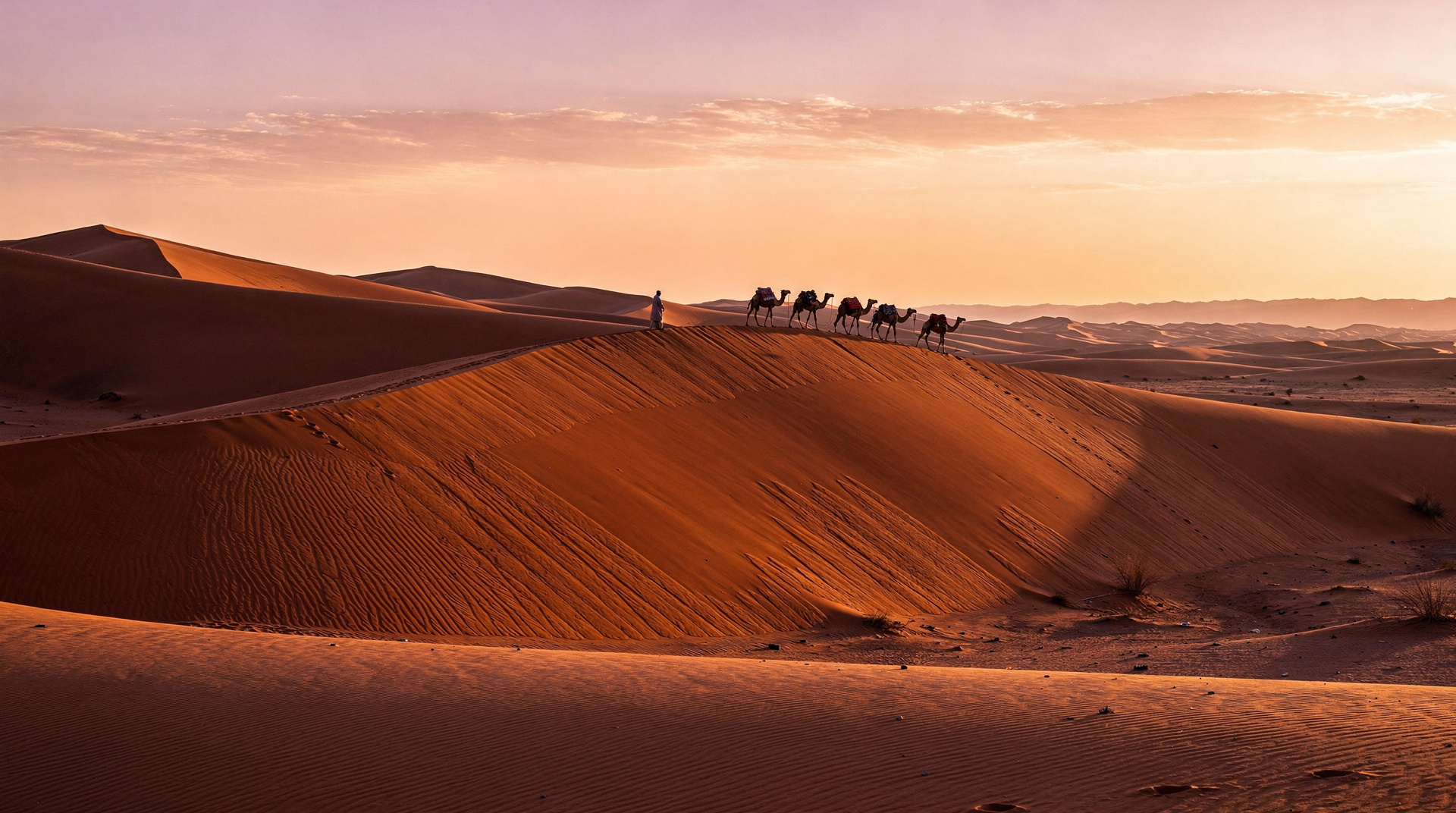
Erg Chebbi is the most visited and, arguably, the best-equipped for stargazing tourism. The dune landscape provides foreground interest for astrophotography, and a growing number of camps specifically cater to astronomy-interested guests with telescopes, guided sessions, and photography setups.
The Bortle scale rating for Erg Chebbi is approximately 2-3 (on a scale where 1 is perfectly dark and 9 is inner city). This puts it in the same league as established international dark sky reserves. The limiting visual magnitude (faintest star visible to the naked eye) is around 7.0-7.5 on good nights, compared to 5.5-6.0 in a typical rural European location.
The Merzouga luxury desert camp with camel ride and dinner provides the classic overnight format with camp positioning inside the erg — important for minimising the ambient light from Merzouga village at the dune edge.
The standard overnight camp experience at Merzouga overnight desert camp with camel ride also delivers the full dark sky experience, even at the mid-range camp tier — the sky is the same regardless of camp price.
Erg Chigaga (near M’Hamid): darker and more remote
Erg Chigaga sits 60km from M’Hamid across unpaved piste. There is no settlement at the dune edge, no road lighting, and no village ambient glow. This gives Erg Chigaga a marginal edge in sky darkness over Erg Chebbi — Bortle 1-2 on the best nights.
The practical trade-off is significant access difficulty: 7 hours from Marrakech to M’Hamid, then 2-3 hours by 4WD to reach the camp. Total journey time of 9-10 hours without the 10-hour Marrakech-Merzouga drive’s notable landscape payoffs (Aït Benhaddou, Dadès Valley). Most travellers who prioritise the sky over the total experience choose Erg Chebbi for convenience; hardcore astronomers choose Chigaga for marginal darkness improvement.
Agafay Desert: dark sky within reach of Marrakech
Agafay is not the Sahara — no dunes, no genuine darkness on Bortle scale terms. Its Bortle rating is approximately 4-5, meaningfully affected by Marrakech’s glow on the western horizon. But it’s 45 minutes from Marrakech, which makes it accessible for travellers who can’t build 2 desert days into their itinerary.
On new-moon nights, the Milky Way is visible from Agafay. The Atlas mountain silhouette provides foreground interest. For casual stargazing — sharing a blanket, pointing out constellations over dinner — Agafay works well. For serious photography or immersive astronomy, Merzouga is incomparably better.
Best months for Sahara stargazing
Prime season: March-May and September-November
These months combine comfortable temperatures (15-30°C during the day, 5-15°C at night) with the Milky Way core’s availability above the horizon during evening hours. The Galactic Centre rises in the southeast and is well-positioned for viewing from 9pm onwards during these periods.
March-April: The Milky Way core rises earlier each night. By late April, the core is above the horizon from around 11pm. Clear nights are dominant in spring, with occasional dust-haze events (Sirocco winds) that reduce transparency. These are short-duration and improve rapidly.
September-October: Temperatures drop back to comfortable levels after summer. The Milky Way core is still well-positioned in the first half of September, lower by October. This is the most popular period for desert tourism generally, so camp availability at quality operations requires advance booking.
Acceptable but not optimal: November-February
Temperature drops significantly — desert nights can reach 0°C or below in December and January. The Milky Way core is either low on the horizon or absent from evening sky. The visible night sky is still extraordinary (stars, nebulae, open clusters are excellent regardless of season), but photographers specifically targeting the Galactic Centre won’t find it in these months. Orion and Andromeda are the winter highlights instead.
Avoid for stargazing: June-August
Summer temperatures are prohibitive (40-45°C daytime, 25-30°C overnight). The Milky Way core is excellently positioned — directly overhead at midnight — but the practical discomfort of being outside on sand that radiates stored heat until 2-3am limits the experience. Serious astronomers sometimes accept this trade-off; most casual visitors don’t.
Moon phase is the critical variable
The moon is the primary enemy of dark-sky observation. A full moon provides enough ambient light to eliminate most faint objects from view and washes out the Milky Way entirely. The calculation is straightforward:
- New moon (0%): Maximum darkness. Prime stargazing. Plan around this if you can.
- Crescent (1-25%): Moon sets early in the evening. After moonset, conditions approach new-moon quality.
- Quarter (25-50%): Moderate impact. The Milky Way is visible but dimmed. Brighter stars and planets unaffected.
- Gibbous (50-90%): Significant light pollution from the moon. Milky Way difficult. Not ideal.
- Full moon (100%): Beautiful in its own right — the dunes lit silver at midnight is visually striking — but not stargazing conditions.
The practical advice: check the lunar calendar for your travel dates before booking. New moon dates repeat on roughly 29.5-day cycles. If your trip dates fall within 5 days of new moon, you have excellent conditions. If they fall within 5 days of full moon, adjust expectations accordingly.
Camps with telescope access
A small number of camps at Erg Chebbi have invested in telescope setups for guests. The quality ranges from a department-store refractor to genuine 8-12 inch Dobsonian reflectors capable of showing Saturn’s rings, the Orion Nebula’s gas structure, and globular clusters.
When enquiring with a camp about telescope access, ask specifically:
- What aperture is the telescope? (Larger aperture = more light = more detail. Anything under 100mm is a toy for desert use.)
- Is there a guide or astronomer who can point out objects? (An operator saying “yes” to this is worth more than the telescope itself.)
- Is the telescope positioned away from the camp’s lighting? (Generator light and fire light ruin dark adaptation.)
Some luxury camps are beginning to hire part-time astro-guides during peak season. This is a genuine value-add for serious astronomy visitors. The luxury desert camps guide covers specific camp facilities in more detail.
Photography guide for Sahara night shooting
Sahara astrophotography doesn’t require specialist equipment. A DSLR or mirrorless camera with a wide-angle lens (14-35mm), a tripod, and a basic understanding of manual settings is sufficient.
Recommended settings
Exposure length: 15-25 seconds maximum before stars begin to trail (due to Earth’s rotation). At 14mm, 25 seconds works. At 24mm, 20 seconds. At 35mm, 15 seconds. These are the 500 Rule approximations for crop sensor cameras; multiply by 1.5 for full-frame equivalents.
Aperture: As wide as your lens allows. f/1.8 and f/2.8 are excellent. f/4 is workable. f/5.6 and above requires significantly higher ISO to compensate.
ISO: Start at ISO 3200. Review the image and historgram. If the sky looks dark and stars are barely visible, push to ISO 6400. If the image looks milky and overexposed, pull back to ISO 1600. Modern full-frame cameras handle ISO 6400 well; APS-C cameras show more noise.
Focus: Autofocus doesn’t work on stars in the dark. Use Live View magnification at 10x, point at the brightest star, and manually focus until the star point is at its smallest. Lock focus and don’t touch the ring again.
Using the dunes as foreground
Position your camera at a dune base or on a dune slope. The curved horizon of a dune crest provides a natural frame for the sky. Sand ripple texture lit by starlight or ambient camp firelight provides foreground interest. Experiment with brief (5-10 second) flashlight illumination of nearby sand for foreground detail in the exposure.
Milky Way orientation
The Galactic Centre rises in the southeast and arcs overhead. In March-April from Morocco (latitude ~31°N), the core is above the horizon from roughly 11pm. By 1-2am it is well-positioned for photography with dunes in the foreground. Plan to be at your location by 10:30-11pm and allow your eyes 20-30 minutes to dark-adapt fully before shooting.
Practical preparation for a stargazing night
Clothing: Desert nights are cold. Even in September-October, temperatures at 1-2am can be 8-12°C. In December-February, expect 2-5°C or below. Bring a down jacket, hat, and gloves even if the daytime temperature seems to preclude them.
Red torch: White light destroys night vision adaptation (which takes 20-30 minutes to develop and is eliminated in 30 seconds of white light exposure). A red-light headtorch preserves dark adaptation. If you don’t have one, cover a normal torch face with red cellophane or tape.
Dew: Desert dew can form on camera lenses after midnight as temperatures drop. A lens heater (USB-powered strip) is useful for photography sessions. Otherwise, keep a dry cloth and check the front element periodically.
Power bank: Camera batteries drain faster in cold conditions. Bring a spare and a power bank.
Connecting stargazing to the broader desert trip
Stargazing works best as part of the overnight desert experience, not as a standalone activity. The 3-day Sahara tour from Marrakech naturally includes the desert overnight where the stars are accessible. Combining the night sky with a sunrise camel trek the following morning is the standard format — and one of the best sequences of experiences Morocco offers.
If the camel ride is part of your plan, the camel trekking guide explains what to expect from the saddle, and Merzouga and Erg Chigaga each have their own destination pages with the practical context for getting there. Choosing between the two dune systems is covered in the Zagora vs Erg Chigaga comparison, which is worth reading before you commit to the longer, more remote journey.
Travellers still deciding between desert and mountain nights can read Atlas vs Sahara for how the two compare. Booking mechanics, including what to ask a camp before you pay, are laid out in how to book a Sahara tour. If you would rather build the desert into a full route, the desert-focused Morocco itinerary shows how the overnight fits alongside the rest of the trip, and my worst Sahara tour mistake is a candid account of what can go wrong when the booking is rushed.
If you’re comparing desert locations specifically for night sky quality, the Merzouga vs Agafay comparison and the Sahara desert destination guide provide the full location context. For planning your Morocco trip timing around moon phases and season, the best time to visit Morocco guide has the month-by-month breakdown.
Frequently asked questions about Stargazing in the Sahara
Do I need any special equipment for casual stargazing?
No. Your eyes are sufficient. The dark sky is so dramatic at Erg Chebbi that naked-eye observation alone — lying on a dune with no equipment — is genuinely exceptional. Binoculars add detail on nebulae and star clusters. A telescope adds more. But equipment is optional.
Can I see the Milky Way from Morocco year-round?
The Milky Way exists year-round, but the Galactic Centre (the bright, dense core region that makes the Milky Way visually spectacular) is above the horizon only from roughly February/March to October/November as seen from Morocco. In winter months, the Galactic plane is still visible but the core is below the horizon.
Is light pollution from Merzouga village a problem?
Some ambient glow from Merzouga village is visible from the dune edge, particularly to the west. Camps positioned further inside the erg — 3-5km from the village — are meaningfully darker. This is one practical reason why camps deeper in the erg command a price premium. Ask any camp you’re considering how far from the village lights they’re positioned.
Is Agafay worth visiting just for stargazing?
Only if you’re in Marrakech with one free night and can’t get to Merzouga. Agafay’s skies are decent but not extraordinary. The Milky Way is visible on new-moon nights, but the experience is a fraction of what Erg Chebbi offers. If you have any flexibility to include a Merzouga overnight in your itinerary, it’s worth the drive.
Do I need to book a stargazing-specific tour, or does any desert camp work?
Any overnight desert camp gives you access to the same sky — stargazing isn’t a separate paid activity at most operators. What matters more is camp position (deeper in the erg is darker) and, if you want guided viewing, whether the camp has a telescope and someone who can point out objects. Confirm both before booking rather than assuming.