Sandboarding in Merzouga: what to know before you slide down Erg Chebbi
Can you go sandboarding at Merzouga's Erg Chebbi?
Yes. Sandboarding is available at Erg Chebbi with boards rented from Merzouga village operators or included in activity packages. The main dune faces offer slopes up to 80-100m. No prior experience is needed.
Sliding down 150-metre dunes: the basics
Sandboarding at Erg Chebbi is one of those activities that sounds more extreme than it is. The concept is simple: you strap a board to your feet (or sit on it), find a suitable dune slope, and go down. No lifts, no infrastructure, no crowds (relative to ski resorts). The climb back up is the hard part.
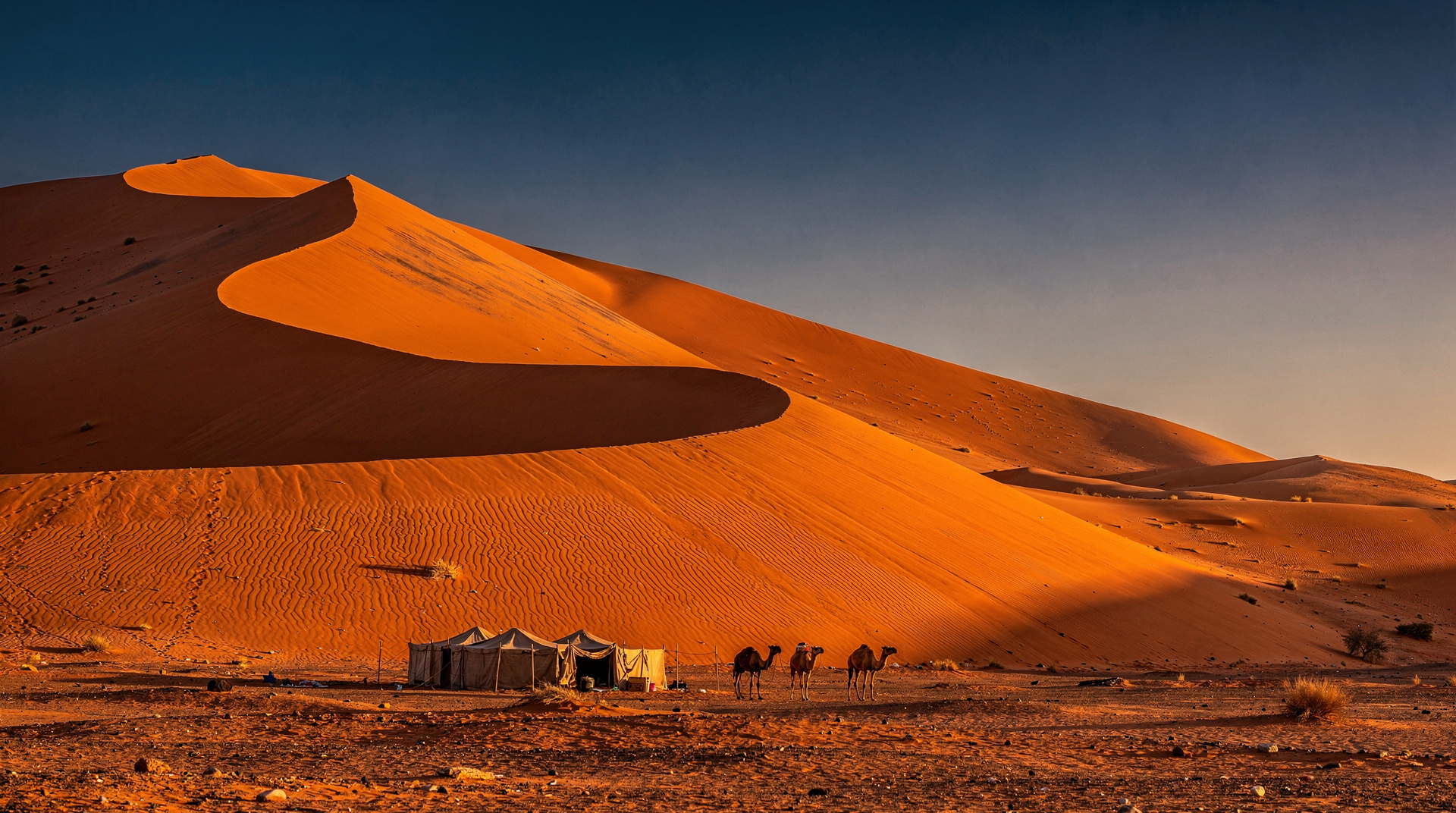
Morocco’s Erg Chebbi near Merzouga is the main sandboarding location in the country, and for good reason: the dunes here reach up to 150m, the orange sand has the right texture for sliding, and the desert infrastructure is well-developed enough to rent boards and find guides without difficulty.
This guide covers the practical details: where to get boards, which dunes to use, how it compares to snowboarding, what to pack, and how to combine sandboarding with quad biking for a full activity day.
At a glance
| Where | Erg Chebbi dunes, 2-3km from Merzouga village |
| Cost | Around 100-200 MAD for board rental (half-day); 600-900 MAD for a quad + sandboard combo |
| Time needed | 1-2 hours for a focused session, half-day if combined with quad biking |
| Getting there | Base yourself in Merzouga village or a nearby desert camp; most operators collect guests on-site |
| Best time | Early morning (7-10am) or sunset (4-6pm); March-May and September-November for comfortable temperatures |
What sandboarding actually involves
The board
Desert sandboards look like snowboards but are typically shorter, wider, and made from different materials. The base needs to be smooth and slick to reduce friction against the sand — the same physics as snowboarding, but sand grains have much higher friction than snow crystals. Most rental boards are either:
- Standing boards: Similar to a snowboard, with foot straps. Used for standing/surfing-style descent. Requires balance but offers more control.
- Sitting/toboggan boards: A flat board you sit on, hands braced behind you. Faster on steep slopes, zero technique required, and much more forgiving.
Most beginners spend time on sitting boards before attempting standing. The transition to standing sandboarding is similar to the difference between tubing and actually snowboarding — enjoyable regardless.
The wax issue
Snowboards are smooth and fast on snow. Sand is more abrasive and creates significantly more friction. Sandboards need regular waxing with a hard paraffin wax to maintain speed. Rental boards at Merzouga are (should be) pre-waxed. If you’re using a board for a full day, reapplication may be needed by mid-afternoon. Ask the rental operator — most include wax or will apply it between runs.
Where to rent boards in Merzouga
Most desert camps and activity operators in Merzouga village offer sandboard rental. There is no centralised rental hub — you’ll find boards at:
- Your desert camp: Most mid-range and luxury camps at Erg Chebbi have boards available for guests, either included in the package or at 50-100 MAD per half-day.
- Merzouga village operators: Several small operators on the main road through Merzouga rent boards alongside quad bikes and offer guided dune sessions. Prices run 100-200 MAD per half-day (10-20 EUR).
- Activity packages: The best value for sandboarding is a combined activity package that includes board rental, quad biking, and a guide.
The dedicated Merzouga sandboarding at Erg Chebbi dunes package handles board rental and guides you to the appropriate slopes.
The best dunes for sandboarding
Not every dune at Erg Chebbi is suitable for sandboarding. The ideal slope has:
- Consistent angle: 25-35 degrees is optimal. Shallow slopes don’t generate enough speed. Extremely steep slopes (40+ degrees) require confident technique to avoid tumbling.
- Clean face: No camel or quad tracks across the slope that create ruts. Fresh, undisturbed sand is faster and smoother.
- Clear runout: Adequate flat space at the base to slow down before any obstruction.
- East-facing slopes in the morning: East-facing dune faces receive morning sun, which warms and loosens the top layer of sand slightly — better for speed. By afternoon, west-facing slopes are optimal.
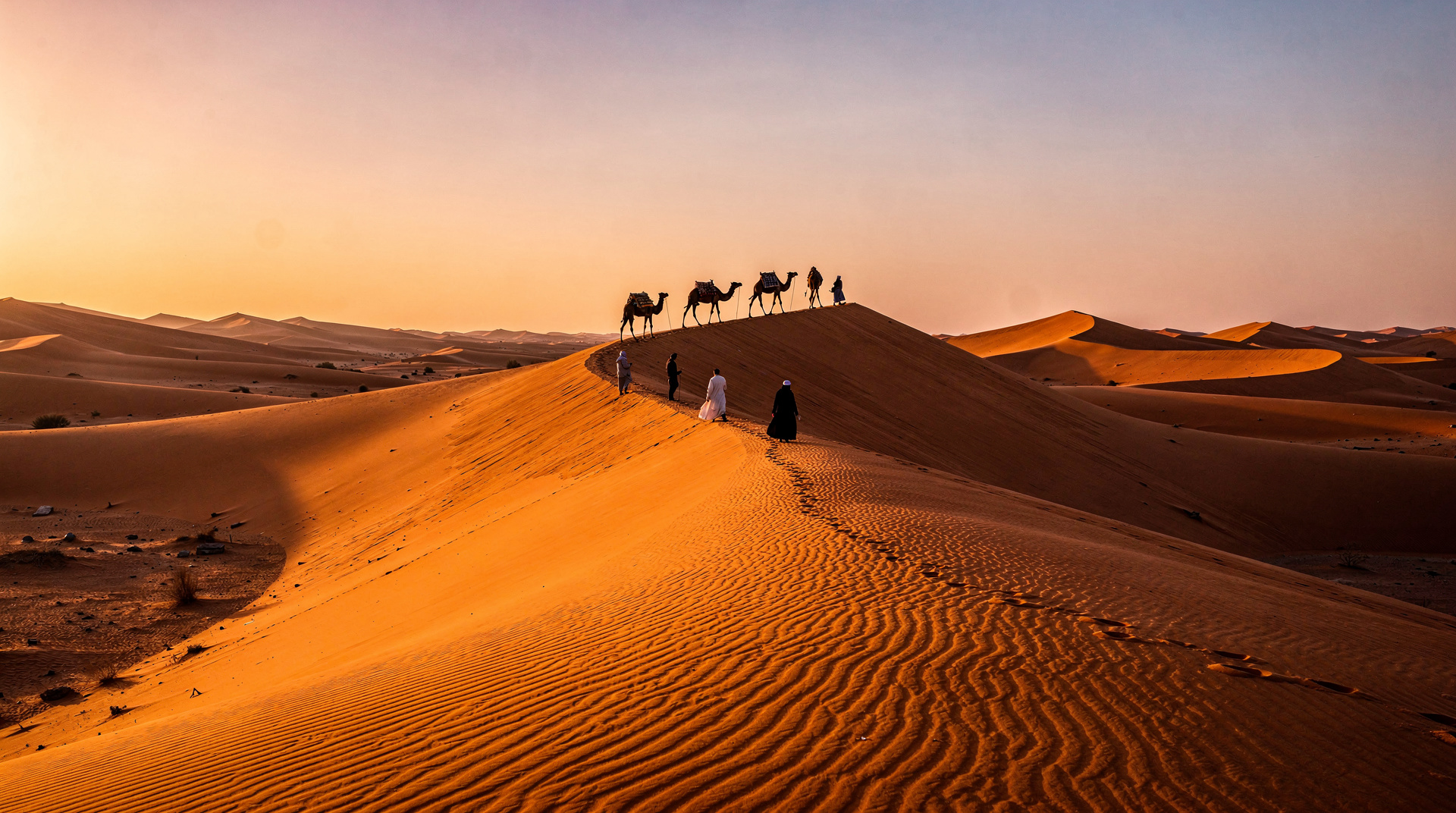
The main usable sandboarding areas are on the northwestern face of Erg Chebbi, approximately 2-3km from Merzouga village. Your guide will know the current best slopes — dune geography shifts continuously with wind, so the best faces change seasonally.
The big dunes
The highest dunes at Erg Chebbi reach 150m. These are exhilarating for experienced sandboarders but involve a significant climb (30-45 minutes on foot to reach the usable ridgelines) and require reasonable fitness. Most beginners start on 20-40m slopes and progress from there.
How sandboarding compares to snowboarding
The mechanics are similar but the feel is notably different:
Speed: Sandboarding is generally slower than snowboarding on comparable gradients. Sand friction is much higher than snow friction. A 30-degree sand slope feels slower than a 30-degree groomed snow slope. However, on steep sand faces the speed builds quickly and can feel surprisingly fast.
Board control: Carving on sand is harder than on snow. The board sinks slightly into the sand on turns, which slows you and resists direction changes. Beginners often find that straight-line descents work better than attempting turns. Experienced snowboarders adapt their technique within a few runs.
Physical demands: The climb is more demanding than snow. Sand is unstable underfoot on a steep face — you sink slightly with each step. A 40-metre climb takes significant effort in loose sand, especially at Saharan temperatures. Budget more energy for the climb than you expect.
Equipment fit: Rental boards use adjustable bindings that fit most foot sizes. Unlike ski boots, there is no performance footwear — you ride in your regular footwear (trainers recommended, not sandals). The binding setup takes 5 minutes.
Learning curve: Sitting board sandboarding has almost no learning curve — sit, hold on, go. Standing sandboarding on moderate slopes takes 3-5 runs to find your balance. It’s more accessible than snowboarding because sand is more forgiving — falling on sand doesn’t hurt (at reasonable speeds).
Combining sandboarding with quad biking
The most popular format at Erg Chebbi combines sandboarding and quad biking into a single half-day or full-day activity session. This makes logistical sense: quads get you to the good dunes quickly (a 3km ride rather than a 30-minute walk), you sandboard down the faces, and the quad retrieves you from the base.
The Merzouga quad biking in Erg Chebbi dunes is the standalone quad option; most operators also combine this with sandboard access.
Quad biking basics at Erg Chebbi
Erg Chebbi quad bikes are typically 250-400cc ATVs (All Terrain Vehicles), automatic or semi-automatic, operated by operators who provide brief training before departure. No prior quad experience is required.
The quad routes cover both the flat hammada terrain around the erg’s base (fast, easy) and the dune flanks themselves (challenging, exhilarating). Guides lead in convoy — you follow the guide’s lines through the terrain.
Duration options:
- 1-hour session: Covers the main accessible dune areas, suitable for beginners wanting a taste
- 2-hour session: More terrain, includes the larger dune faces
- Half-day: Full exploration with sandboarding combination
Prices:
- 1 hour quad: 200-350 MAD per person (20-35 EUR)
- 2 hours quad: 350-500 MAD per person (35-50 EUR)
- Half-day quad + sandboarding combo: 600-900 MAD per person (60-90 EUR)
Timing and conditions
Best time of day
Early morning (7-10am) is the optimal sandboarding window for two reasons:
-
Temperature: Sand surface temperature at midday (especially in spring and autumn) can exceed 50°C on sun-exposed slopes. Exposed sand is unpleasantly hot on hands and legs during falls. Morning sand is cooler and more comfortable.
-
Sand consistency: Early morning sand retains slight overnight moisture from temperature differential, which marginally improves friction for boarding speed.
Sunset sessions (4-6pm) are the second-best option — cooler temperature, beautiful light, and the camp dinners typically start after 7pm so you’re back in time.
Best months
March-May and September-November. Same reasoning as all Sahara activities: comfortable temperatures, no summer heat extremes, good light conditions.
Summer (June-August) sandboarding exists but is genuinely unpleasant in midday heat. Operators still run sessions at dawn and dusk. Winter (December-February) is fine for sandboarding but morning sessions require proper warm clothing.
Costs summary (2026 reference)
| Activity | Duration | Price per person |
|---|---|---|
| Board rental (self-guided) | Half-day | 100-200 MAD (10-20 EUR) |
| Guided sandboarding session | 2 hours | 200-350 MAD (20-35 EUR) |
| Sandboarding + quad combo | Half-day | 600-900 MAD (60-90 EUR) |
| Sandboarding package (GYG) | Varies | 25-60 EUR |
| Included in desert camp package | Half-day | Often included |
What to wear and bring
Footwear: Closed trainers or light hiking shoes. Not sandals (sand gets in) and not heavy boots (unnecessary).
Clothing: Lightweight, long-sleeved layer for sun protection on arms. The sand reflects UV. Short sleeves feel appropriate but lead to significant sunburn on extended sessions.
Eye protection: Goggles or sunglasses. Fine sand gets airborne when descending and direct hit to the eyes is uncomfortable.
Sunscreen: Apply before going out and reapply. The combination of direct sun and sand reflection is intense.
Water: 1.5-2L per person minimum. Sandboarding plus quad biking in desert heat is more physically demanding than it appears. Dehydration creeps up quickly.
Avoid: White or light-coloured clothing (sand stains permanently), cameras without protective cases (fine dust penetrates lens mechanisms).
Who should skip it (and who it’s perfect for)
Sandboarding is genuinely one of the more accessible Sahara activities, but it’s not for everyone. Older travellers or anyone with knee or back issues should think twice about the climb — it’s the most physically demanding part, not the descent. Reasonable fitness makes the difference between an enjoyable hour and a draining one.
Families do well with it. Sitting-board sandboarding is manageable for children from around age 7, and it pairs naturally with the gentler pace of a camel ride earlier in the day — the two activities complement each other rather than compete for energy. For a broader look at what works with children in the Sahara, the Morocco with kids guide has the full picture, and the family travel Morocco guide covers logistics beyond the desert leg.
Anyone travelling with limited time is better served by the combined quad-and-sandboard package than trying to arrange board rental and dune access separately — it removes the guesswork about which slopes are usable that day.
Sandboarding as part of the desert itinerary
Sandboarding works best as a morning activity on the second day of a 3-day Sahara tour from Marrakech — after the first night at camp and the sunrise viewing, before the drive back begins. This is the most natural placement and most tour operators build the option into Day 2.
For camel trekking in the same area, the camel trekking Morocco guide covers the erg experience from the slower, more meditative perspective. For planning the full Merzouga trip, the Merzouga destination guide covers transport, camp booking, and what to do beyond the dunes.
If you’re deciding between Merzouga and other desert options, the Merzouga vs Agafay comparison covers the full activity landscape of each location.
Frequently asked questions about Sandboarding in Merzouga
Do I need sandboarding experience?
No. The sitting board format requires no technique. Standing sandboarding on moderate slopes is learnable in 3-5 runs. Prior snowboarding experience helps but isn’t required.
Is there an age limit?
Operators generally accept ages 7+ for sitting-board sandboarding and 12+ for standing boards. There’s no official upper age limit. Anyone with reasonable mobility and no significant joint issues can participate. Quad biking typically requires age 16+ per operator policy.
What happens if I fall?
Falling on sand at reasonable speeds is generally painless — sand is soft. The main risks are inhaling sand on a face-first fall (wear sunglasses) and rolling on a steep slope (keep knees bent and try to arrest the slide). Serious injury is rare at the speeds achieved on rental equipment.
Can I bring my own snowboard?
You can, but it won’t perform well without specific sandboard wax applied to the base. Standard snowboard wax is too soft and burns off quickly on hot sand. If you’re serious about it, buy dedicated sandboard wax (similar to candle wax consistency) and apply it before each session.
Do I need to book in advance?
For a self-guided rental at your camp, no — boards are usually available on request. For a combined quad-and-sandboard package during peak season (October-November, March-May), booking the Merzouga quad biking in Erg Chebbi dunes experience a day or two ahead avoids disappointment, since operators can fill up on the best morning slots.
Is sandboarding included in a standard Sahara tour, or is it extra?
It depends on the package. Some 3-day Sahara tours from Marrakech bundle a sandboarding session into the Day 2 activities; others treat it as a paid add-on arranged with the camp on arrival. Confirm this when booking rather than assuming it’s included.