Rabat day trip from Casablanca: Kasbah, Hassan Tower and Chellah
How do you do a day trip from Casablanca to Rabat?
The ONCF train from Casablanca-Voyageurs to Rabat-Ville takes 1h15 and costs 55–90 MAD. Trains run every 30–60 minutes from 6am. Rabat's main sights — Hassan Tower, Kasbah Oudaya, Chellah — are all walkable from the train station or accessible by a short petit taxi ride. A full day is enough to see everything.
Morocco’s capital city and Casablanca’s best day trip
At a glance
| Where | Rabat, around 87km up the coast from Casablanca |
| Cost | Train around 55-90 MAD each way; entry fees around 90 MAD total for paid sites |
| Time needed | A full day (around 9am-5:30pm) for all main sites; half a day covers the highlights |
| Getting there | ONCF train from Casablanca-Voyageurs, around 1h15, every 30-60 minutes |
| Best time | Morning departure for the fullest day; avoid weekday rush hours if driving |
Casablanca gets the airport and the commercial reputation. Rabat gets the government buildings and the medinas that actually function. Most visitors to Morocco’s economic capital find themselves with a free day and a desire to see something more historically substantial than Casa’s urban boulevards. Rabat, 87 kilometres up the Atlantic coast, is the obvious answer.
Morocco’s political capital since 1912, Rabat is a city of surprising coherence — a royal capital with a functioning medieval medina, a UNESCO-listed historic centre, two of the country’s finest archaeological sites, and an Atlantic ocean setting of genuine beauty. It receives fewer tourists than Fes or Marrakech, which means you can visit the Kasbah Oudaya on a Tuesday morning in October and have the blue-and-white alleys essentially to yourself.
The ONCF train between Casablanca and Rabat is one of the best-functioning short rail routes in Africa. The journey is reliable, fast, air-conditioned, and cheap. There is no reason to drive.
Why Rabat is the best day trip from Casablanca
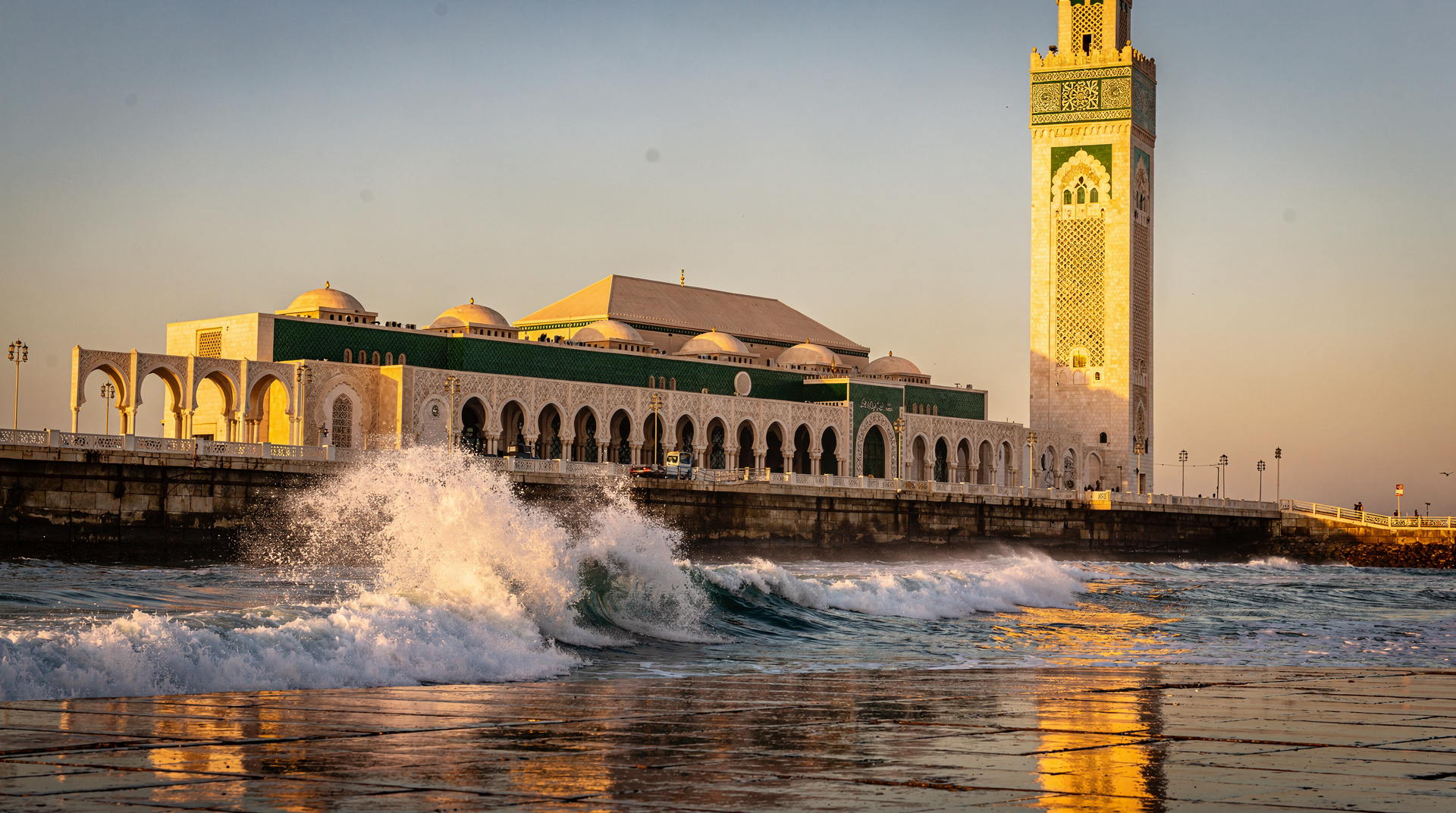
Casablanca’s own historical attractions are limited — the Hassan II Mosque is extraordinary (the world’s third-largest, and the only mosque in Morocco fully open to non-Muslim visitors), the Old Medina is compact and manageable, and the Habous quarter is an elegant exercise in 1930s French colonial architecture. But none of these produce the layered historical depth that characterises Morocco’s great medina cities.
Rabat does. And unlike Fes or Marrakech, Rabat is:
- 90 minutes from Casablanca, not 3–4 hours
- Compact enough to see the main sites in a single full day
- Well-served by taxis and a clear street layout (the 20th-century Ville Nouvelle is navigable)
- Uncrowded by Moroccan tourist standards — the people here are predominantly government workers and university students, not other tourists
If you have already done the Hassan II Mosque in Casablanca and want a full day of genuine historical Morocco, Rabat is the correct destination.
How to get there from Casablanca
By train (recommended): ONCF runs trains between Casablanca-Voyageurs station and Rabat-Ville station approximately every 30–60 minutes from early morning. Journey time: 1h15 in second class. Cost: approximately 55 MAD (second class) to 90 MAD (first class). Trains are comfortable, air-conditioned, and reliable. This is the correct way to do this trip.
Note: If you are staying near Mohammed V International Airport or near Casa-Port (the harbour station), check which Casablanca station is most convenient for you — both Casablanca-Voyageurs and Casa-Port serve Rabat routes.
By car: The A3 motorway runs directly from Casablanca to Rabat — 87km, approximately 1h15 without traffic. Traffic on the Casa–Rabat corridor is heavy in morning rush hours (7–9am) and evening (5–7pm) on weekdays. Parking in Rabat near the medina area is available in the Ville Nouvelle but limited close to the Kasbah Oudaya.
By organised tour: The Casablanca to Rabat day trip covers transport and a guided visit to the main Rabat sites. Useful if you want historical context for the monuments but the train-and-taxi option is considerably cheaper for those comfortable exploring independently.
Getting around Rabat
Rabat’s main sites are spread over a manageable area. From the train station:
- Rabat-Ville station to the Hassan Tower: 1.5km, 20 minutes on foot or 5 minutes by petit taxi (10–15 MAD)
- Hassan Tower to the Kasbah Oudaya: 1km walk along the Andalusian garden path
- Kasbah Oudaya to the Medina: 10 minutes on foot
- Medina to Chellah: 2km by petit taxi (15–20 MAD) — too far to walk comfortably with limited time
Petit taxis in Rabat are metered, abundant, and relatively honest — a feature of a city with a large civil servant population and functioning urban institutions. The meter fare for most intra-city journeys is 10–25 MAD.
If you would rather have someone explain what you are looking at, a private historic highlights walk through Rabat is an option once you arrive by train, though the sites are easy enough to do on your own.
Rabat also has a tram system (the Tramway de Rabat) running from the train station area past the Ville Nouvelle and toward the university. Useful but not essential for the main tourist sites.
Suggested day itinerary
9:00am — Arrive at Rabat-Ville station A 7:30am train from Casablanca-Voyageurs arrives in Rabat around 8:45am. Start the day with a coffee at one of the cafés near the station (Avenue Mohammed V has several) or head directly to the first site.
9:00–10:30am — Hassan Tower and Mohammed V Mausoleum The Hassan Tower (Tour Hassan) is Rabat’s most recognisable landmark — the unfinished minaret of a 12th-century mosque commissioned by Almohad Sultan Yacoub el-Mansour. The tower was intended to be the world’s largest minaret; the Sultan’s death in 1199 stopped construction at 44 metres (it was planned to reach 60 metres). The surrounding plaza of 200 columns — the remains of the mosque’s prayer hall — is one of the most evocative archaeological sites in Morocco.
Adjacent to the Hassan Tower, the Mausoleum of Mohammed V is the resting place of the modern Moroccan state’s founder (the king who negotiated independence from France in 1956) and his successor Hassan II. The building is a masterwork of contemporary Moroccan craftsmanship — the marble work, carved plaster, carved cedar, and zellige tilework are among the finest produced in 20th-century Morocco. Non-Muslim visitors are welcome, free of charge.
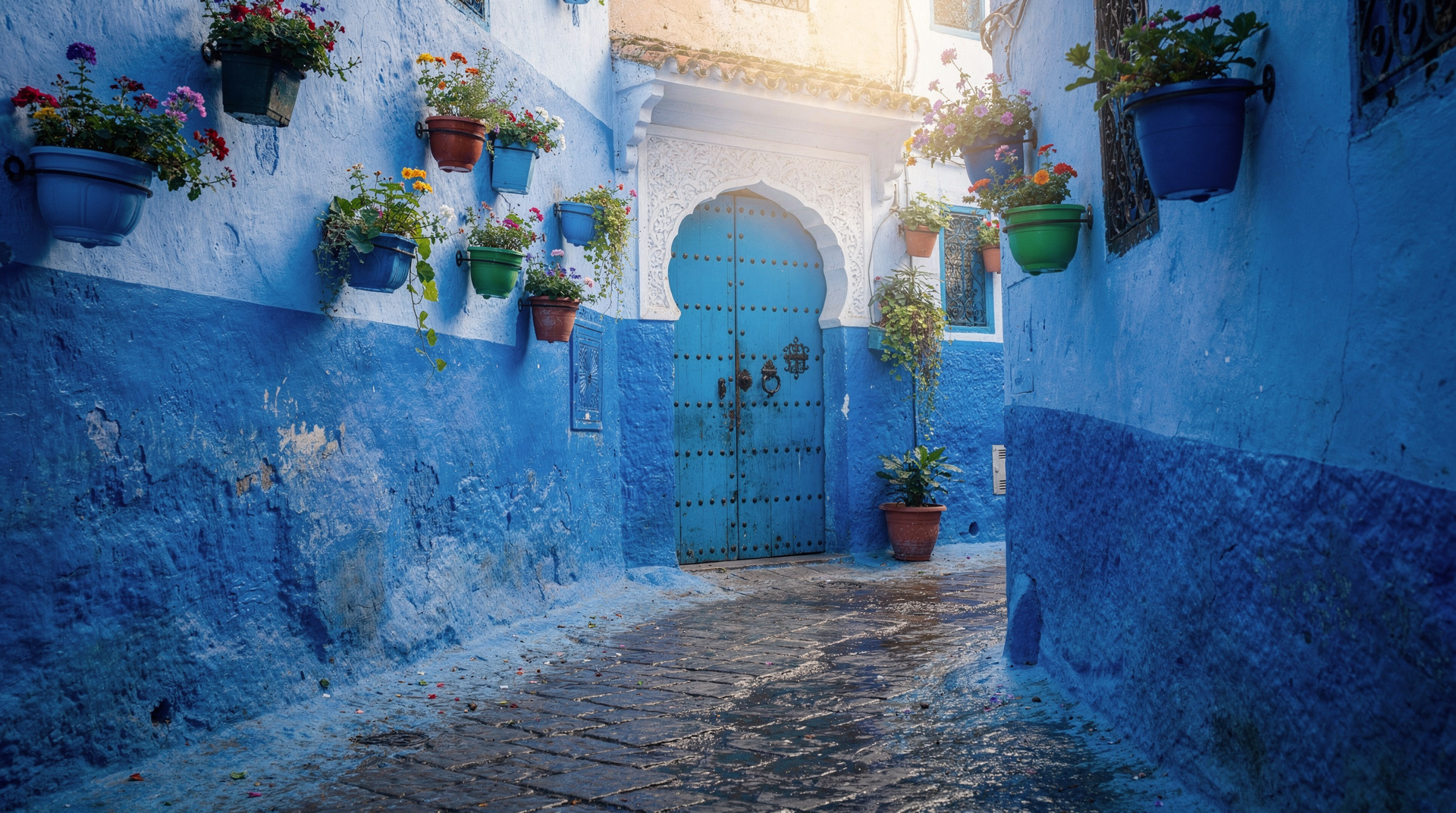
10:30am–12:30pm — Kasbah Oudaya Walk or take a petit taxi to the Kasbah Oudaya, the 12th-century Almohad fortress at the mouth of the Bou Regreg river. The kasbah is one of Morocco’s architectural gems: a blue-and-white Andalusian quarter perched on a cliff above the Atlantic, with a riverside promenade, a Moorish café and garden, and a residential quarter of whitewashed houses and painted blue doorways. The views from the clifftop over the Bou Regreg river and the city of Salé across the water are exceptional.
The Museum of Moroccan Art inside the kasbah is small but well-curated — jewellery, ceramics, textiles, and musical instruments from the main Moroccan craft traditions. Entry: 20 MAD.
The Andalusian Garden within the kasbah walls — one of the finest Islamic gardens in Morocco, with fragrant orange trees, rose bushes, and a pavilion — is excellent for a morning rest.
12:30–2:00pm — Lunch in the Ville Nouvelle or Medina The Ville Nouvelle (around Avenue Mohammed V) has the best range of mid-range restaurants. See the eating section below.
2:00–3:30pm — Rabat Medina Rabat’s medina is smaller and less intense than Fes or Marrakech — a relief after the sensory assault of larger medina cities. If you want a guide for this part of the day, a guided half-day walking tour of Rabat covers the medina and the main sights. The central souk area (around Rue Souika and the Kissaria) is active and interesting without the aggressive commercial atmosphere of bigger tourist medinas. The mellah (historically Jewish quarter) in the southeast of the medina has some fine old architecture and is worth exploring.
The Great Mosque (Grande Mosquée) and the nearby Bab el-Had gate are the medina’s main architectural landmarks — visible from outside and worth the detour.
3:30–5:00pm — Chellah If energy allows, Chellah is the day’s final and perhaps most evocative site — a walled Merinid necropolis built over Roman-era Sala Colonia, about 2km southeast of the medina by petit taxi. The ruins are extensive: Roman columns, a Merinid mosque and mausoleum, an overgrown garden of fig trees and storks. The site is atmospheric in a way that Rabat’s more maintained monuments are not — genuinely ruinous, inhabited by nesting storks and feral cats, and beautiful in the late afternoon light. Entry: 70 MAD.
5:30–6:00pm — Train back to Casablanca Trains from Rabat-Ville to Casablanca run throughout the evening. A 5:30–6:30pm departure gets you back in Casablanca by 7:00–8:00pm — time for dinner in Casa if you want it.
Top highlights
Hassan Tower
The tower itself — a square minaret of carved stonework rising from a field of Roman columns — is one of the genuinely iconic Moroccan images. The scale of what was intended (the mosque’s prayer hall would have been the largest in the Muslim world) makes the ruins more poignant than most finished monuments.
Mausoleum of Mohammed V
Free to enter and one of the finest examples of traditional Moroccan decorative arts in the country. The Royal Guard maintains a formal presence here — the changing of the guard is worth timing your visit around if you arrive at the right moment.
Kasbah Oudaya
The most photogenic site in Rabat. The blue-and-white residential streets inside the kasbah walls, the clifftop views over the Atlantic, and the Andalusian Garden make this the easiest hour and a half to spend in Morocco’s capital.
Chellah
The ruins of the Merinid necropolis over Roman Sala — overgrown, stork-inhabited, and atmospheric in a way that Morocco’s more curated attractions are not. The 14th-century Merinid Sultan Abu el-Hassan commissioned the most important tombs and mosque here; his wife’s tomb is particularly fine. The storks nesting on the minaret are a Rabat signature.
The Bou Regreg riverfront
The promenade along the Bou Regreg separating Rabat from Salé has been substantially redeveloped and is one of the more pleasant urban waterfront walks in Morocco. The view from the Oudaya bridge looking toward the kasbah with the Atlantic beyond is excellent.
Where to eat
Dar Zitoun (Rue Sidi Fateh, Ville Nouvelle): A reliable mid-range Moroccan restaurant popular with government workers and visiting professionals. Good pastilla (the chicken-and-almond pie variant is excellent here), harira, and tagines in a riad courtyard setting. Lunch for two: 250–400 MAD.
Restaurant El Bahia (Rue El Mansour Eddahbi, Ville Nouvelle): More casual — a lunchtime spot with a Moroccan menu at honest prices. Good couscous on Fridays. Main courses: 80–130 MAD.
Café Maure (inside Kasbah Oudaya, Andalusian Garden): The historic café inside the kasbah gardens is a Rabat institution — mint tea, Moroccan pastries, and a terrace overlooking the river. Not a full lunch, but an excellent mid-morning or mid-afternoon stop. Tea and cakes: 40–70 MAD.
Street food on Avenue Mohammed V: Sfenj, msemen, and fresh-pressed orange juice from the morning stalls are available near the train station. Good for a quick breakfast before visiting the Hassan Tower.
What to skip
The Chellah audioguide tapes: Some guided day trips include an outdated audioguide for Chellah that covers only the most superficial historical overview. A decent printed guide (available at the site entrance) or a background read before visiting gives better context.
The Rabat medina carpet shops: Like all Moroccan medinas, Rabat has its commission-hungry carpet dealers. These are less aggressive than in Fes or Marrakech, but the same advice applies — if you want rugs, buy them at a known price point from an established shop rather than following a new “friend” to his cousin’s warehouse.
Lunch inside the kasbah: The restaurants immediately inside the Oudaya kasbah gate charge tourist prices for below-average food. The Café Maure for tea and pastries is the exception. Go to the Ville Nouvelle for a proper meal.
Is it worth overnighting instead?
Rabat as an overnight destination is an underexplored choice among Morocco travellers. The hotels in the Ville Nouvelle are good value (frequently better than equivalent Casablanca hotels), and the city is quiet in the evenings in a way that Fes or Marrakech are not.
Spending a night in Rabat allows you to:
- See the Kasbah Oudaya at dawn (spectacular, completely empty)
- Take a morning walk on the beach at Rabat-Plage (the Atlantic beach north of the city)
- Make a day trip to Meknès or the Roman ruins at Volubilis the following day
If you have two or three nights to allocate between Casablanca and Fes, Rabat as a one-night stop between them is significantly better than spending all nights in one city.
Combined trips
Rabat + Casablanca medina (two days): Spend the morning in Casa’s Old Medina and Habous quarter, then take the afternoon train to Rabat. Overnight in Rabat, full day of Rabat sights, return to Casablanca in the evening.
Rabat + Meknès and Volubilis: From Rabat, the train to Meknès (2 hours) connects to the imperial city and the Roman ruins of Volubilis. This is a full extra day from Rabat, so requires an overnight in Rabat.
Rabat as part of an imperial cities circuit: Casablanca to Rabat to Meknès to Fes is the classic imperial cities circuit. Each leg is a natural day’s travel. See the Morocco imperial cities itinerary for the full sequence, or the Meknès day trip guide and Volubilis Roman ruins guide for the next legs. For other Casablanca day trip options, see the day trips from Casablanca guide.
Where Rabat fits in a wider trip
If Rabat is one stop among several, the 3-day Morocco itinerary and the Morocco by train itinerary both show how a capital stop slots in around the bigger cities. Travellers who like the idea of an easy coastal pace afterwards can read the El Jadida day trip from Casablanca for a quieter, seaside contrast. If you are still working out the basics, the first-time visitors guide and the getting around Morocco guide cover the practical groundwork. Anyone curious about the next city on the imperial route can also look at the Meknès destination page.
Rabat vs other Casablanca day trip options
Rabat isn’t the only day trip from Casablanca, but it’s the strongest for most visitors. El Jadida (a Portuguese-fortified coastal town) is closer and beach-focused rather than historical. Marrakech, at 2.5-3 hours each way, is really an overnight destination rather than a day trip. For travellers who specifically want a Morocco capital city experience with royal monuments and a proper medina in a single manageable day, Rabat has no real competitor from Casablanca. See the Marrakech vs Casablanca guide for how the bigger cities compare if you’re deciding where to base yourself.
Practical information
Train booking: Buy tickets at the Casablanca station on the day or book online at oncf.ma. Second class is perfectly comfortable for a 1h15 journey. The train is reliable and rarely delayed.
Time needed: A full day (9:00am–5:30pm) covers all four main sites at a relaxed pace. Half a day (9:00am–1:00pm) covers the Hassan Tower and Kasbah Oudaya without Chellah or the medina.
Entry fees: Hassan Tower and Mausoleum — free. Kasbah Oudaya Museum — 20 MAD. Chellah — 70 MAD. Rabat Medina — free.
Language: French is the primary tourist-facing language in Rabat. English is increasingly understood in museums and larger establishments.
Frequently asked questions about Rabat day trip from Casablanca
How long is the train from Casablanca to Rabat?
1 hour 15 minutes by the direct ONCF service. Trains run every 30–60 minutes from early morning to late evening.
What are the opening hours for the Hassan Tower?
The Hassan Tower and Mausoleum plaza are open daily from 9:00am to 5:30pm (hours may vary on national holidays). Entry is free.
What is the entry fee for Chellah?
70 MAD (approximately 6–7 EUR). The site is open daily from 9:00am to 5:30pm.
Can I visit Rabat and Fes in the same day trip from Casablanca?
No — Fes is 3 hours from Casablanca and requires a full day on its own. Fes is best approached as an overnight destination, not a day trip from Casa.
Is Rabat safe for solo female travellers?
Rabat is widely considered one of Morocco’s safest and most comfortable cities for solo female travellers. As a civil servant and university city with strong French institutional influence, the street harassment that characterises some Moroccan cities is significantly reduced. The Kasbah and medina are navigable without particular concern.
How does Rabat compare to Fes as a day trip from Casablanca?
Fes is approximately 3 hours from Casablanca, making it a very long and rushed day trip — not recommended. Rabat at 1h15 is the correct day-trip scale. If you want to experience Fes properly, add it as an overnight stop between Casablanca and Marrakech or Chefchaouen.
Do I need to book train tickets in advance for the Rabat day trip?
No — the Casablanca-Rabat route runs frequently enough (every 30-60 minutes) that same-day tickets purchased at the station are almost always available, even at peak times. Advance booking online at oncf.ma is possible but not necessary for this specific route, unlike longer routes to Marrakech or Fes in high season.