Morocco vs Tunisia: Which North Africa Trip?
Should I visit Morocco or Tunisia?
Morocco is larger, more varied, and generally better for first-time North Africa visitors — the medinas, Sahara access, and Atlantic coast give it more content per trip. Tunisia is smaller (a week is enough to see the highlights), has better Mediterranean beaches and the extraordinary Carthage and Djerba, and is cheaper. If you can only do one: Morocco. If you've done Morocco: Tunisia.
Two Berber-heritage North African neighbours
Morocco and Tunisia share cultural roots — both have Amazigh (Berber) indigenous populations, both were shaped by the Carthaginian, Roman, and Islamic empires, and both produce excellent cuisine built on olive oil, harissa, and slow-cooked spiced meat. But they’re very different travel destinations.
Morocco is large, physically dramatic, and offers variety that requires at least two weeks to fully explore. Tunisia is compact — you can cover its main highlights in 7-8 days — with outstanding ancient Carthaginian and Roman ruins, some of North Africa’s best Mediterranean beaches, and a price point that undercuts Morocco at nearly every category.
At a glance
| Morocco | Tunisia | |
|---|---|---|
| Typical trip length | 10-14 days | 7-8 days |
| Getting there | ~3h30 from Paris/London | ~2h30-3h from Paris |
| Best time to go | March-May, September-November | April-June, September-October |
| Rough daily budget (mid-range) | 100-150 EUR | 20-30% cheaper than Morocco |
| Visa for EU/UK | Not required | Not required (short stays) |
The quick comparison table
| Factor | Morocco | Tunisia |
|---|---|---|
| Country size | 710,000 km² | 163,000 km² |
| Population | 37 million | 12 million |
| Days needed for highlights | 10-14 minimum | 7-8 adequate |
| UNESCO sites | 9 | 8 |
| Sahara desert access | Excellent (Erg Chebbi, Zagora) | Yes — Douz, Nefta (smaller ergs) |
| Mediterranean coast | Yes (north) | Extensive — most of the country |
| Atlantic coast | Yes (full western edge) | No |
| Roman ruins | Volubilis (good) | Dougga, Sbeitla, El Jem (outstanding) |
| Carthaginian ruins | Sala Colonia (Rabat) | Carthage itself — near Tunis |
| Ancient medinas | Fes, Marrakech, Meknes (world-class) | Tunis, Kairouan, Sousse (good-excellent) |
| Medina UNESCO listing | Marrakech, Fes, Meknes, Tetouan | Tunis, Kairouan, Sousse, Sfax, Monastir |
| Beach quality | Atlantic (cold), Med (north) | Mediterranean — excellent and warm |
| Star Wars filming locations | No | Yes — Tatooine sets still exist |
| Cuisine | Complex — tagine, couscous, pastilla | Excellent — harissa-heavy, brik, lablabi |
| Average cost comparison | Moderate | 20-30% cheaper |
| Flight connections | Excellent from Europe | Good from Europe |
| Alcohol availability | Available in cities | Available — wine country |
| Safety 2026 | Generally safe | Generally safe; improved since 2015 |
The case for Morocco
Morocco offers a scale and variety that Tunisia can’t match. At 710,000 km², it’s a genuinely large country with dramatically different landscapes packed within its borders. A single Morocco circuit can deliver the High Atlas mountains, Sahara dunes, Atlantic coast, Mediterranean beaches, and three imperial cities — all on one connected itinerary.
Why Morocco wins:
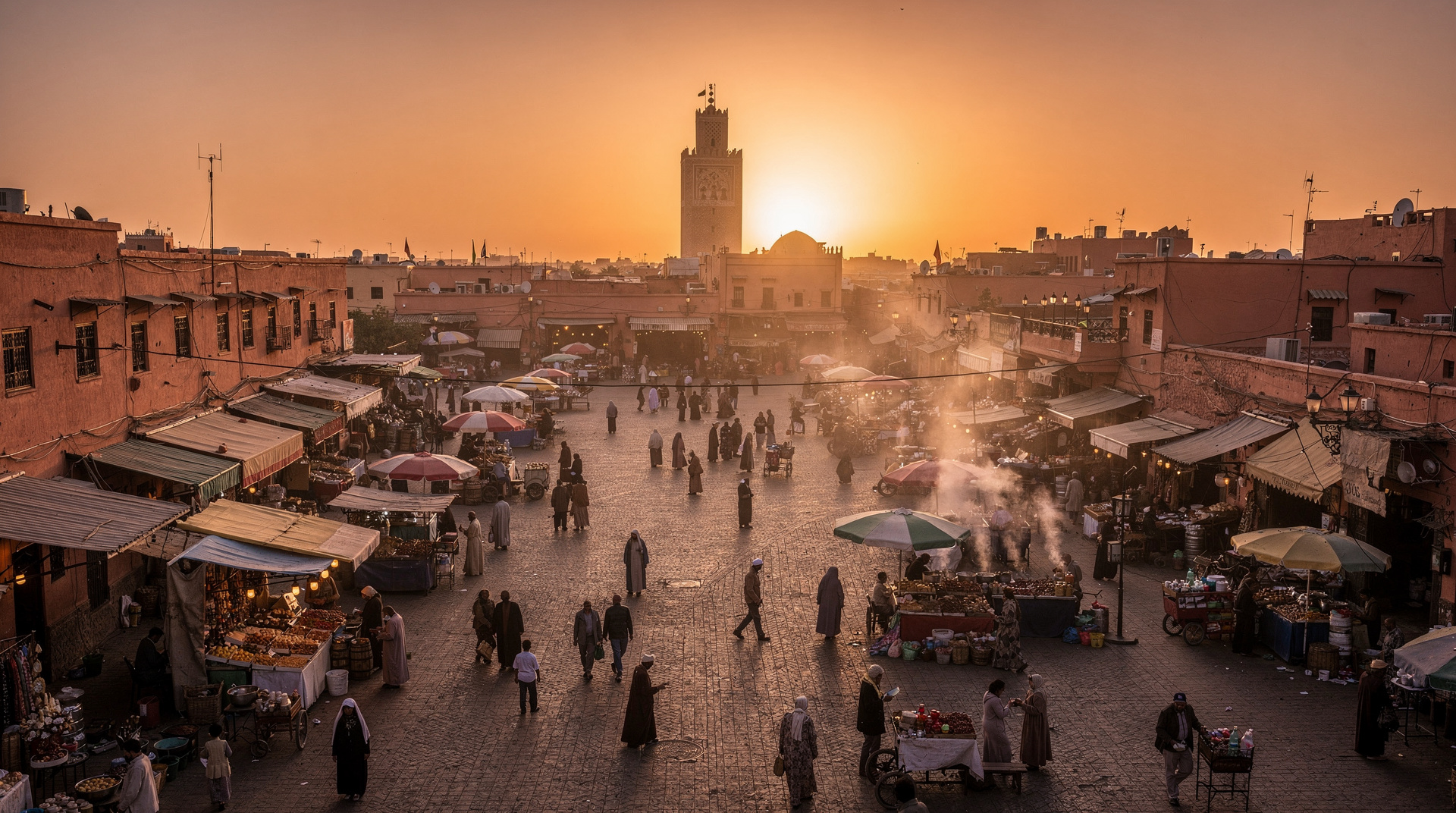
- The medinas of Fes and Marrakech are among the world’s greatest surviving medieval Islamic cities — Tunis’ medina, while excellent, is smaller and less overwhelming
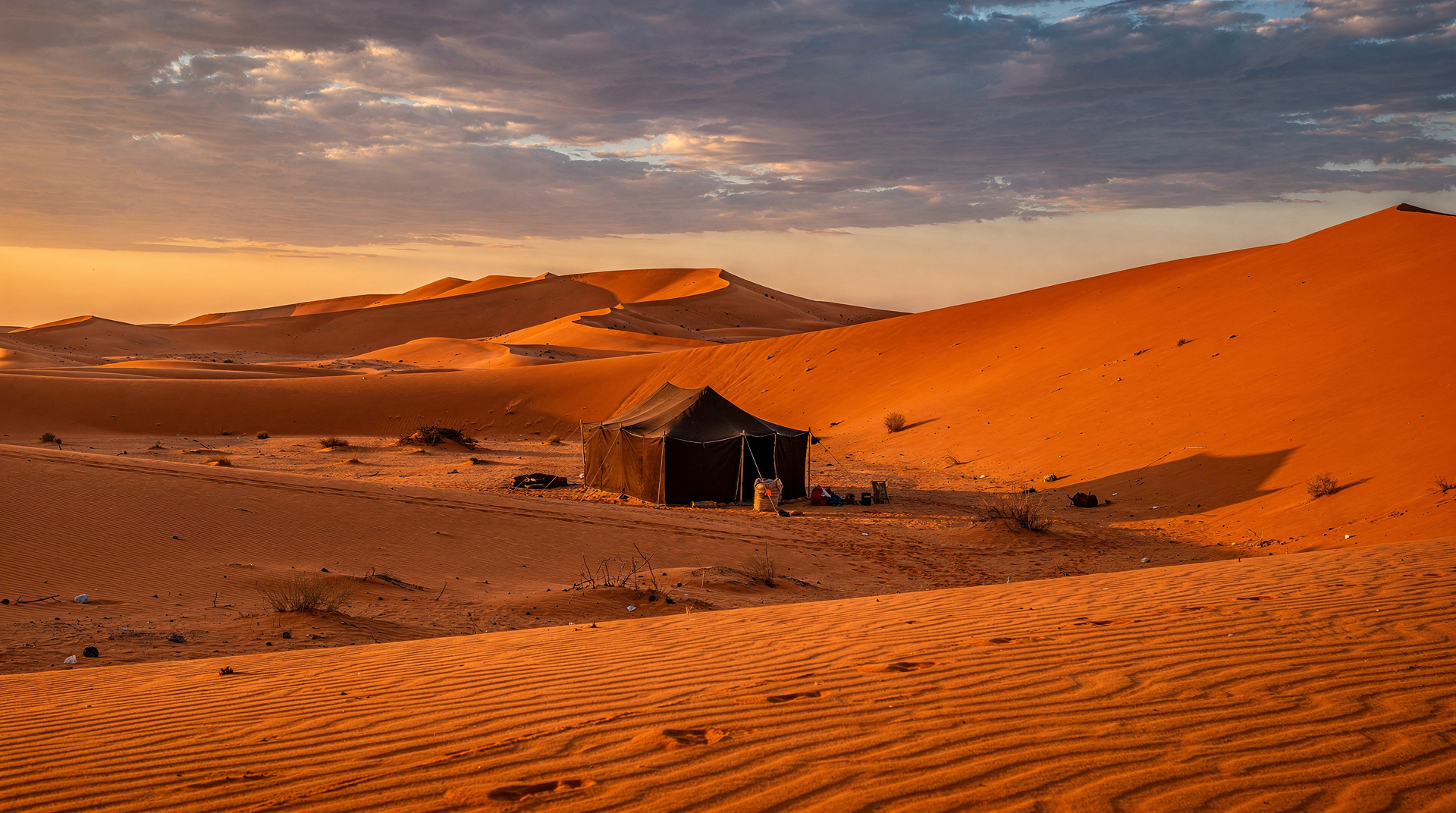
- The Sahara desert access is exceptional — Erg Chebbi (Merzouga) produces one of the world’s great dune landscapes, with a matured camp infrastructure from budget to luxury
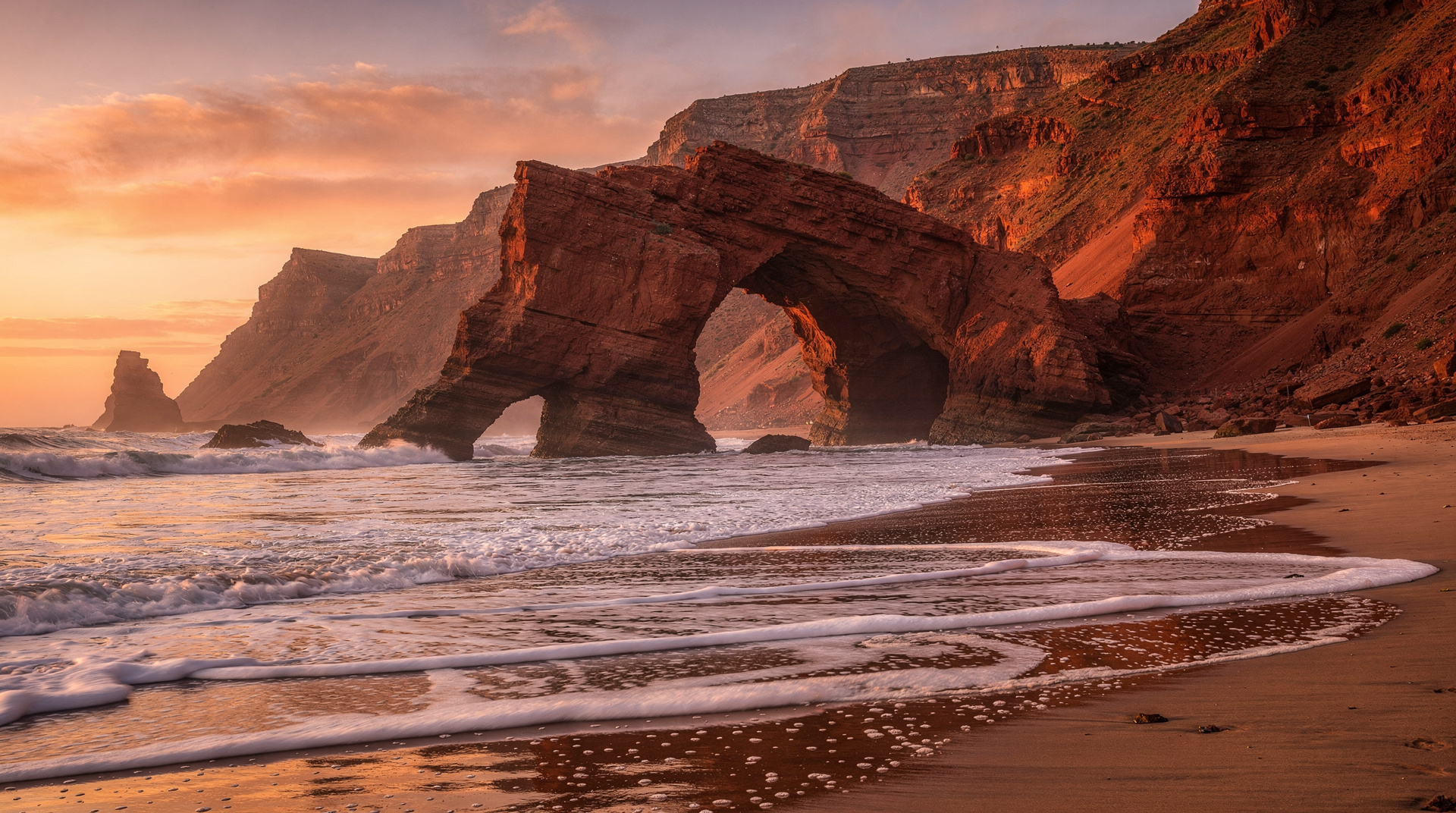
- The physical landscape variety is extraordinary — Atlas mountains above 4,000m, Atlantic coast, Sahara, Draa Valley palmeraies, cedar forests
- Morocco’s imperial cities (Marrakech, Fes, Meknes, Rabat) form a circuit that allows several days of medina exploration without repetition
- Infrastructure for tourism is well-developed — comfortable transport options, wide range of accommodation, many English-speaking service workers in tourist areas
- The riad accommodation model creates genuinely distinctive places to stay
What Morocco can’t match Tunisia on:
- Ancient ruins at the quality of Dougga, El Jem, and Carthage. Volubilis (near Meknes) is Morocco’s best Roman site and is genuinely impressive, but Tunisia has multiple Roman sites of equal or greater scale
- Mediterranean beach quality. Tunisia’s eastern coastline produces warm, calm Mediterranean water suitable for comfortable swimming — Morocco’s Atlantic is cold and wavy
- Price. Tunisia is consistently cheaper for accommodation, food, and transport
The case for Tunisia
Tunisia is underrated. The Bardo Museum in Tunis holds the world’s largest collection of Roman mosaics. The amphitheatre at El Jem is the fourth largest Roman amphitheatre ever built and is in extraordinary condition. The ruins of Carthage — the city-state that fought Rome for Mediterranean supremacy for three centuries — sit within the suburbs of modern Tunis. Dougga is arguably North Africa’s most complete Roman town site.
Why Tunisia works:
- The Roman heritage is exceptional and uncrowded — El Jem amphitheatre on a quiet weekday has no lines, no chaos, just an extraordinary ancient structure
- Tunisia is a wine-producing country — Muscat de Kelibia and other local wines are widely available and the café culture is notably more relaxed than Morocco’s
- The island of Djerba — famous for its Jewish community, whitewashed architecture, and good beaches — is unique in the region
- Star Wars locations: the original Tatooine sets were filmed in the Tunisian south (Matmata cave hotels, Mos Espa set near Tozeur) and many are still accessible
- Compact size means a 7-day trip covers Tunis, Carthage, the medina cities (Kairouan — the holiest city in North Africa; Sousse), the Sahara approaches at Douz and Nefta, and the coast
- Consistently cheaper than Morocco — expect accommodation to cost 20-30% less for comparable quality
The honest limitations:
- Tunisia’s Sahara is less dramatic than Morocco’s. The dune ergs near Douz are real but smaller than Erg Chebbi
- The medina experience in Tunis and Sousse, while good, is smaller scale than Morocco’s imperial cities
- Political stability has been uncertain following the 2011 revolution and subsequent shifts — check current foreign office advisories
By traveller type
Ancient history enthusiasts: Tunisia, by a clear margin. The Roman and Carthaginian sites — El Jem, Dougga, Bardo Museum, Carthage itself — are extraordinary and less visited than Morocco’s equivalent sites.
Beach seekers: Tunisia’s Mediterranean coast is warmer and calmer than Morocco’s Atlantic. For a combined culture-and-beach trip, Tunisia works better.
Medina explorers: Morocco wins — Fes and Marrakech offer medina experiences at a scale and intensity that Tunisia’s cities can’t match. A full-day cultural tour of Fes medina is the benchmark experience.
Desert lovers: Morocco for the full Sahara experience — the 3-day Merzouga desert tour from Marrakech with camel ride and camp is the definitive route. Tunisia for a shorter, cheaper taste of the northern Sahara approaches.
First-time North Africa visitors: Morocco — the variety, infrastructure, and well-established tourist circuit make it the more reliable introduction.
Budget travellers: Tunisia is cheaper across the board.
Wine lovers: Tunisia — as a wine-producing country, it’s significantly more relaxed about alcohol and local wine is excellent.
Verdict by scenario
First North Africa trip: Morocco. More variety, better medinas, the Sahara circuit. A good starting point is a 3-day imperial cities and Atlas Mountains tour from Marrakech that captures Morocco’s breadth.
Already done Morocco: Tunisia for a completely different perspective on North Africa — ancient ruins, Roman heritage, wine, and different cuisine.
7 days available: Tunisia covers its highlights in a week. Morocco requires at least 10 days to do it justice.
Focused on beaches: Tunisia’s Mediterranean coast.
Focused on desert: Morocco for scale and infrastructure. Tunisia for a cheaper, lower-commitment taste.
Can you combine both?
Not efficiently in a single trip — they’re connected by flight (direct routes between Casablanca/Marrakech and Tunis) but the geography doesn’t create a logical overland circuit. Some independent travellers cross from Tunis to Algiers to Morocco overland, but Algeria’s visa requirements make this complex.
Better approach: two separate trips. Morocco first (10-14 days), then Tunisia (7-8 days) on a subsequent visit. The cultural overlap — shared Amazigh heritage, Islamic architectural tradition, shared cooking elements — makes Tunisia feel coherent as a “North Africa deep-dive” follow-up to Morocco.
Planning the Morocco side of the decision
If Morocco is the choice, the length and season questions matter more than for Tunisia’s tighter, more forgiving itinerary. The Morocco 10 vs 14 days guide is the right starting point for a Morocco-only trip; the best time to visit Morocco guide covers the month-by-month picture across the mountains, desert, and coast.
Morocco’s medina cities deserve dedicated planning rather than a single rushed day each — see the Marrakech souks guide and the Fes souks guide for how to actually navigate them well. For the Sahara leg that Tunisia can’t fully match, the how to book a Sahara tour guide walks through choosing between the Zagora and Merzouga routes, and the Volubilis Roman ruins guide is Morocco’s best answer to Tunisia’s Dougga and El Jem, even if it doesn’t fully match their scale.
Frequently asked questions about Morocco vs Tunisia
Which North African country should I visit first?
Morocco for most travellers. The infrastructure is better developed for tourism, the highlights (Sahara, medinas, Atlas) are more concentrated and accessible, and it’s a more complete experience for a first-time North Africa visitor. Tunisia then works well as a follow-up focused on ancient history.
Is Tunisia safe in 2026?
Tunisia’s security situation has improved since the terror attacks of 2015. The main tourist areas — Tunis, Sousse, Djerba, Sfax, the Roman sites — are generally safe. Check your government’s current travel advisory; some governments maintain elevated caution advisories for certain regions. The situation is meaningfully better than five years ago.
Does Tunisia have good food?
Yes. Tunisian cuisine has a distinct identity from Moroccan cooking — heavier use of harissa (chilli paste), olive oil rather than argan oil, brik (fried pastry with egg), and fresh fish from both the Mediterranean and the Saharan south. The cuisine is excellent and generally cheaper than Moroccan restaurants.
Is Berber/Amazigh culture visible in Tunisia?
Yes, particularly in the south — the cave-dwelling Berber communities of Matmata (famously the filming location for Star Wars’ Tatooine) maintain traditional architecture. The Amazigh cultural presence in Tunisia is more rural and less visible than in Morocco, where it’s central to the national identity.
What languages do I need in Tunisia?
Tunisian Arabic (Darija — different from Moroccan Darija but related) and French. French is widely spoken in business and tourism. English is becoming more common in tourist areas. In some ways, French speakers find Tunisia slightly easier to navigate than Morocco — the French colonial overlay is deeply embedded.
Is Morocco or Tunisia better for a short 5-day trip?
Tunisia handles a short trip better — its highlights are geographically closer together, so 5 days can realistically cover Tunis, Carthage, and one coastal or desert extension without feeling rushed. Morocco in 5 days works best as a single-region trip (Marrakech and the Atlas, for example) rather than trying to cover the whole country; see the 5-day Morocco itinerary for a realistic version.