Morocco Spring vs Autumn: April/May or October/November?
Is spring or autumn better for Morocco?
Both are excellent — these are Morocco's two peak seasons for good reason. Spring (April-May) brings rose blooms in the Dadès Valley, wildflowers in the Atlas, and longer days. Autumn (October-November) has slightly lower temperatures at the Sahara, excellent light, and coincides with date harvest in the south. For the desert, autumn edges spring; for the mountains and Atlantic coast, spring edges autumn.
Why spring and autumn both claim to be Morocco’s best season
Morocco has two genuine shoulder-season sweet spots that travel professionals consistently recommend: April-May and October-November. Both avoid the extreme summer heat that makes the Sahara dangerous and the southern cities uncomfortable. Both offer good desert conditions, manageable Atlas temperatures, and pleasant medina days. The question is which specific window fits your trip better.
At a glance
| Spring window | April to mid-May, with the Dadès rose valley harvest late April to mid-May |
| Autumn window | October to mid-November, with date harvest around Zagora and Tafilalet |
| Desert edge | Autumn — cooler nights, better light, no rose-valley competition for time |
| Mountains and coast edge | Spring — wildflowers, running water, longer daylight |
| Pricing | Both are near-peak; book desert camps and popular riads 6-8 weeks ahead for either season |
| Getting there | Same as year-round — direct flights into Marrakech, Fes, Agadir or Casablanca |
The quick comparison table
| Factor | Spring (April-May) | Autumn (Oct-November) |
|---|---|---|
| Average temperature in Marrakech | 22-28°C | 20-26°C |
| Desert (Merzouga) temperature | 28-35°C daytime, 10-15°C nights | 25-32°C daytime, 8-14°C nights |
| Atlas Mountains | Snow mostly gone above 2,000m by May | Snow can begin October at altitude |
| Rain probability | Low-moderate (April wetter than May) | Low (driest in October) |
| Daylight hours | 12-14h | 10-12h |
| Crowd levels | High (Easter particularly) | High (autumn half-terms) |
| Rose Valley / Dadès | Rose bloom late April to mid-May | Post-harvest, not as scenic |
| Date harvest | Not applicable | October-November — Draa Valley dates |
| Atlas wildflowers | Exceptional April-May | Absent |
| Desert light quality | Good | Slightly better (lower sun angle) |
| Green Atlas | Yes — post-winter vegetation | Less — end of summer dryness |
| Hotel prices | Higher (Easter peak) | Moderate-higher |
| Ramadan impact (2026) | Not applicable (Ramadan ends mid-March 2026) | Not applicable in 2026 |
Spring in Morocco: April and May
Spring is Morocco’s most visually spectacular season. The High Atlas emerges from winter with wildflowers on the lower slopes, the rivers run fast with snowmelt, and the valleys between Marrakech and the Sahara are at their greenest. The rose harvest in the Dadès Valley (Kalaat M’Gouna area) runs from approximately late April to mid-May, producing one of Morocco’s most distinctive seasonal landscapes — the Damask rose fields filling the valley with pink blooms and fragrance.
Why spring works:
- The Dadès rose harvest is one of Morocco’s most distinctive events. Local cooperatives process the blooms into rosewater and rose oil; you can visit working distilleries and buy directly. The annual Rose Festival in Kalaat M’Gouna (usually first two weeks of May) draws significant local participation
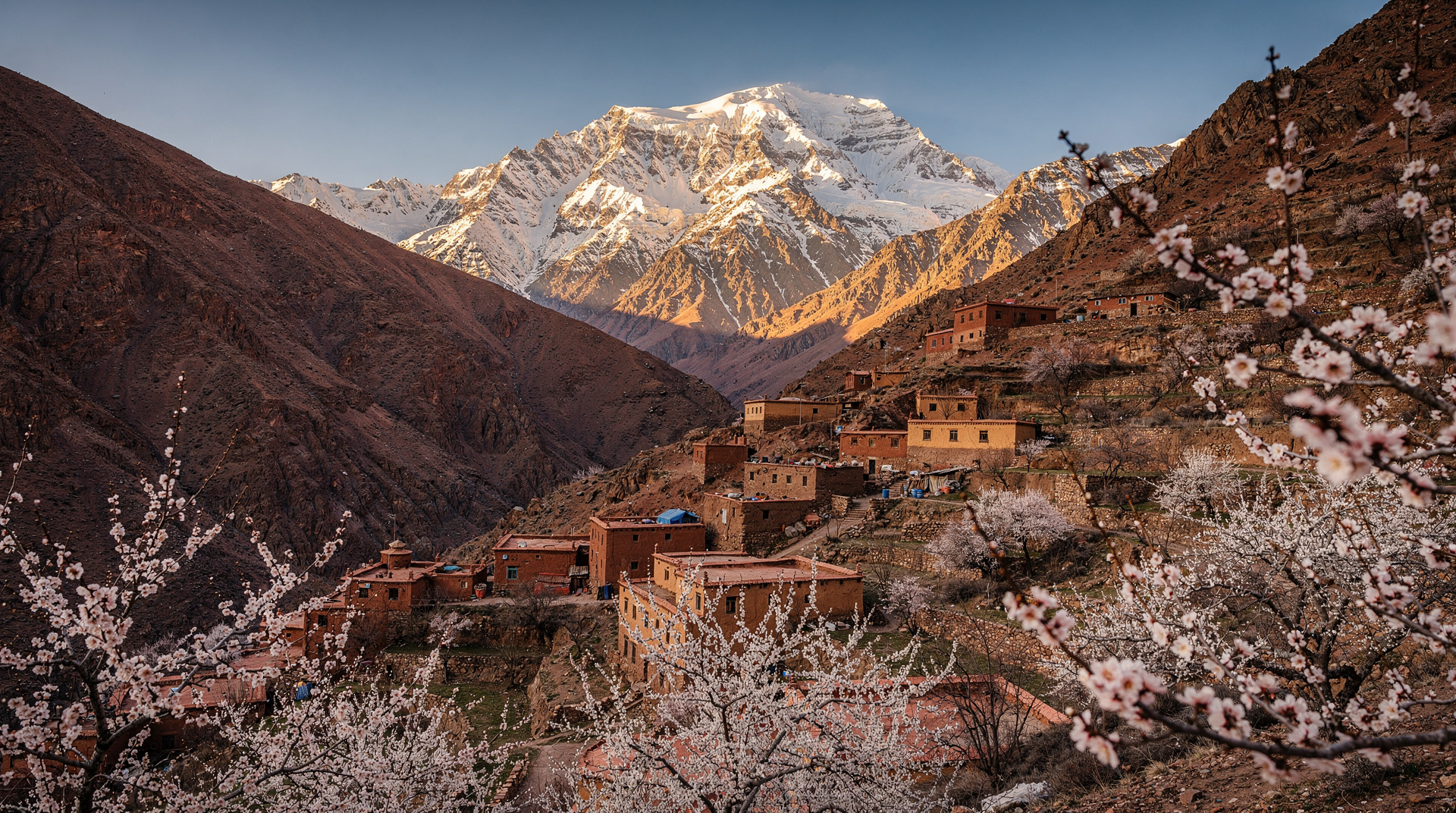
- Atlas landscapes are at their best — green valleys, running water, wildflowers up to 2,500m, with snow still visible on Toubkal and the highest peaks above
- Days are long — 13-14 hours of daylight means more time for photography, driving, and exploration without the aggressive midday heat
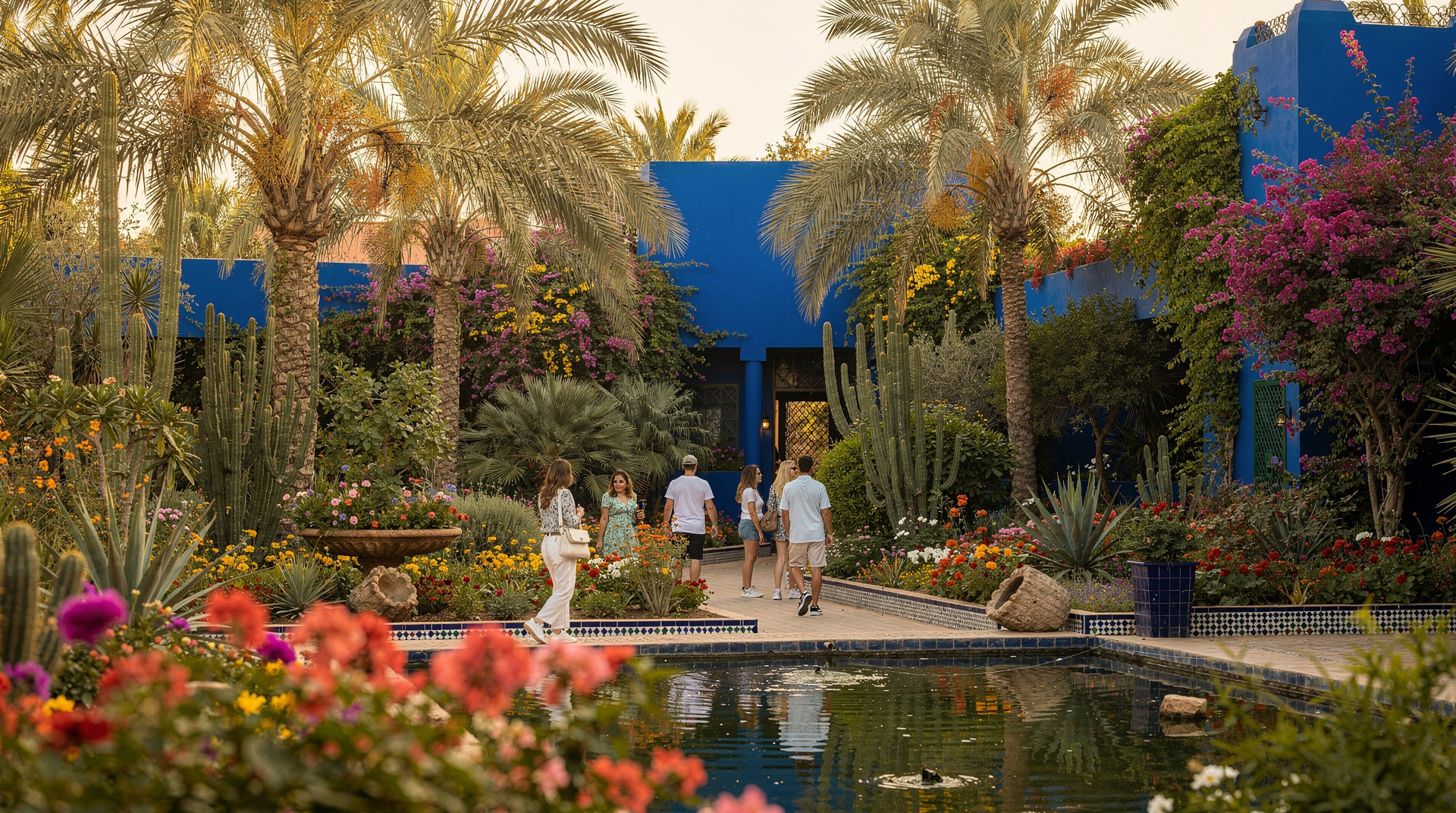
- The Marrakech gardens (Majorelle, Menara) and riad courtyards look best in spring light
- Essaouira and the Atlantic coast are pleasant — the Alizé trade winds pick up from April, making it excellent for kitesurfing
The honest friction points:
- April can bring brief rain, particularly in the north and the Atlas. Not constant, but worth bringing layers and a light rain layer
- Easter holiday period (variable, typically late March to mid-April) brings significant crowd increases, particularly from European families. Popular riads and desert camps book out months ahead
- The desert in May is already getting warm — daytime temperatures at Merzouga can hit 38-40°C in late May, which is the upper comfortable limit
Autumn in Morocco: October and November
Autumn is Morocco’s best season for the desert specifically. The summer heat breaks decisively in late September, and by October the Sahara is comfortable both day and night without the spring’s competing attraction of the rose valley. October also coincides with date harvest season in the Draa and Tafilalet valleys — bunches of Medjool dates being cut from the palm trees are a very specific autumn visual.
Why autumn works:
- Desert conditions are close to ideal in October — comfortable temperatures (25-32°C daytime), cool nights (8-14°C), clear skies, and the low sun angle produces slightly better light quality for photography than spring
- Date harvest in the Draa Valley (Zagora area) and Tafilalet (near Merzouga) runs October-November. The palmeraies are active with harvest work, dates available fresh at roadsides, and the atmosphere is very different from the spring tourist season
- Crowds are slightly lower than spring Easter period, though European autumn school holidays (late October) bring spikes
- Migratory birds pass through Morocco in October-November — birdwatchers will find the Souss-Massa estuary (near Agadir) and the Middle Atlas forests excellent
- Olive harvest begins in the north (Meknes, Fes region) and almond orchards have finished yielding — the agricultural cycle is visible in the medina food markets
The honest friction points:
- Daylight hours are shorter — by mid-November you have only 10-11 hours. Long desert drives require earlier starts to maximise daylight
- The Atlas above 3,000m can receive first snow from October — Toubkal summit trekking requires winter equipment by November. October is the final window for straightforward summer conditions on the high routes
- The rose valley (Dadès) and wildflowers are absent — if spring’s visual bounty was part of your motivation, autumn won’t deliver it
- Some Atlantic beach destinations see more cloud cover in November, reducing the beach holiday appeal
By traveller type
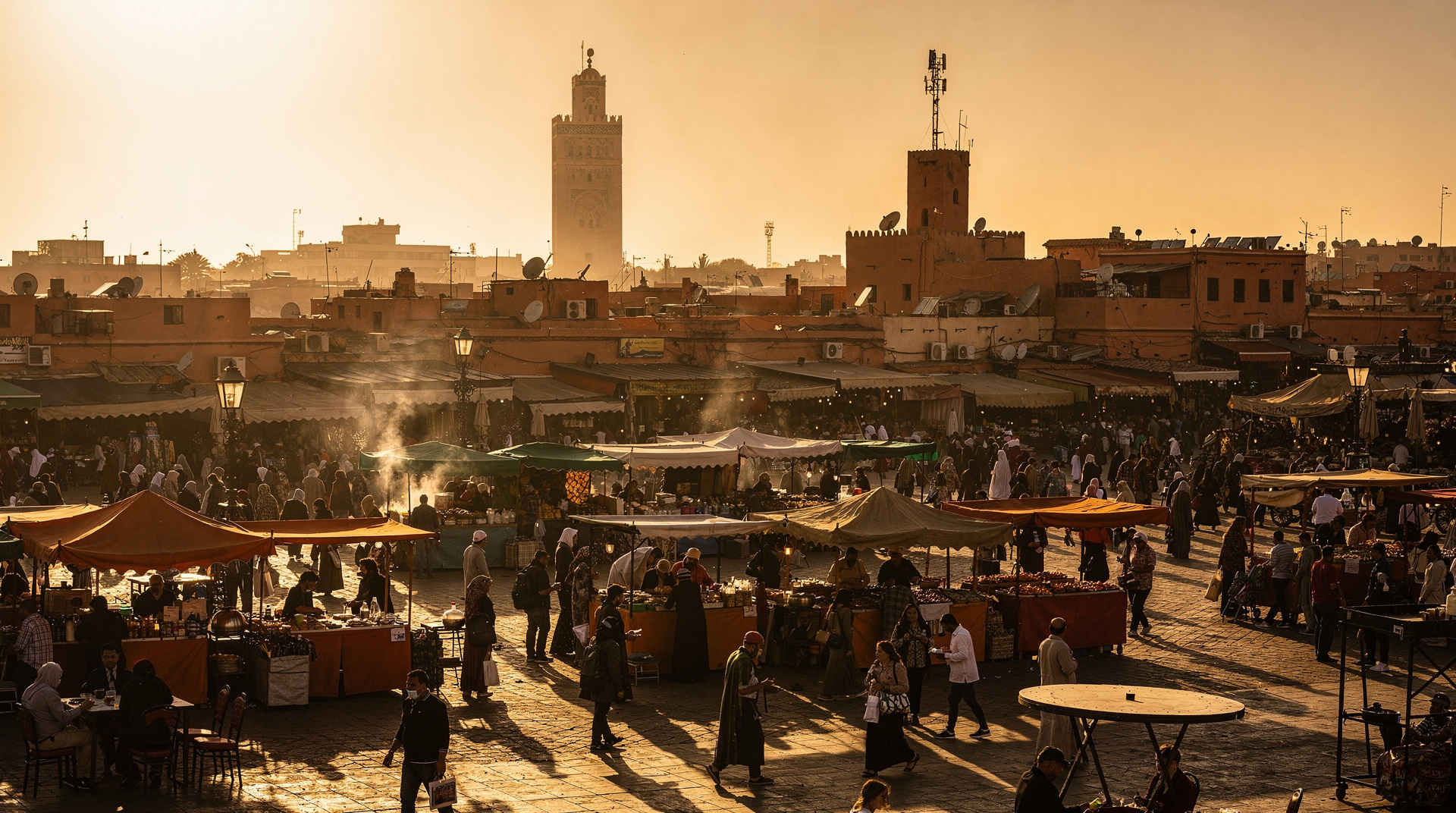
Desert-focused trips: October is slightly better — cooler at night, excellent photography light, date harvest adds interest. The 3-day desert tour from Marrakech to Merzouga is the standard format for either season — but the October slot should be booked 6-8 weeks ahead as desert camps reach capacity during autumn school holidays.
Mountain trekkers (Toubkal): Late April to early June is the sweet spot — snow gone from main routes, excellent visibility, not yet summer-hot. October is the final autumn window before winter conditions. The Atlas Mountains and Berber villages day trip from Marrakech is a good way to assess Atlas conditions before committing to a multi-day summit push in either season.
Rose Valley / Dadès specialists: Late April to mid-May, specifically around the rose festival.
Atlantic coast / surfing: Autumn slightly better for surf (October-November swells are strong) while spring can mean more wind. Both work for kitesurfing.
Families with school-age children: Easter (spring) or October half-term (autumn) are the natural windows — but both coincide with peak tourist periods. Consider travelling the week before or after the main holiday weeks.
Budget travellers: November and late October outside school holidays offer the best combination of good weather and lower prices.
What about March and June?
March is excellent: pre-spring, the desert is comfortable, Atlas is still snow-capped (beautiful backdrop), and crowds are lower than Easter. In 2026, Ramadan runs approximately February 19 to March 19 — the final week of Ramadan and Eid al-Fitr around March 20 affects services and camp availability.
June starts Morocco’s difficult season. Marrakech hits 38-42°C regularly by mid-June. The desert is approaching dangerous levels. The north (Chefchaouen, Fes) remains pleasant and summer-comfortable. The coast (Essaouira, Agadir) works well in June.
Verdict by scenario
First Morocco trip, want to do everything (desert + Atlas + coast + cities): October — the desert is at its best, the Atlas is still accessible, and you have ideal pacing across the whole circuit.
Specifically want the rose valley experience: Late April to May 10. The rose blooms are the defining seasonal event for the Dadès Valley.
School holidays constraint: The week after Easter (spring) or first two weeks of November (post-autumn half-term) give good weather with reduced peak crowds.
Photography focus: October for the desert; May for the Atlas wildflowers and spring green.
Combining both seasons in one trip
Not typical, but possible for longer Morocco stays (14+ days) that bridge September-October or April-May where one season ends and another begins. The May-June transition gives late spring desert conditions plus warming coast weather for the second half of a two-week trip.
How this compares to September
If neither shoulder-season window fits your dates, September is worth a look — it sits just before the autumn window opens and offers a similar trade-off of thinning crowds against still-warm conditions, particularly on the Atlantic coast where September edges out even October for warmth. It’s a reasonable fallback if your travel dates are fixed and fall just outside the classic spring/autumn windows.
For city-specific planning within either season, the Marrakech and Fes destination guides cover how each city’s medina and surrounding sights handle spring versus autumn conditions in more detail than a national overview can.
Frequently asked questions about Morocco Spring vs Autumn
Is Morocco too hot in summer?
The Sahara and Marrakech are genuinely uncomfortable June-August, with temperatures regularly hitting 42-48°C. The north (Chefchaouen, Fes, Tangier) and the Atlantic coast (Essaouira, Agadir) are significantly cooler and can work for summer visits. For a full Morocco circuit including the desert, summer is strongly inadvisable.
What’s winter like in Morocco?
December-February is Morocco’s cold season. The Sahara has comfortable daytime temperatures (18-25°C) but cold nights (near 0°C). Marrakech averages 18-20°C days in January with cold evenings. The Atlas can be deeply snowed in — Tizi n’Tichka pass sometimes closes. The coast is cool and occasionally wet. Winter is Morocco’s quiet season with lower prices and smaller crowds at major sites — worthwhile for budget travellers who don’t mind the cold.
Does Morocco have a rainy season?
Morocco has two brief wetter periods — October-November in the north, and February-March before spring. Neither constitutes a “monsoon” — Morocco is semi-arid to arid. Rainfall is typically brief and scattered rather than sustained. The south (Marrakech and below) is very dry year-round.
When are the best deals on Morocco riads and desert camps?
December-January (excluding Christmas-New Year) offers the best prices. February (outside school holidays) is also good. The weeks between the Easter peak and Ramadan (typically March-April depending on year) can offer spring weather with lower prices if the dates align.
How does Ramadan affect Morocco trips?
In 2026, Ramadan runs approximately February 19 to March 19. During Ramadan, some restaurants close until sunset, camp catering may be reduced, and the pace of life changes. Some travellers find Ramadan Morocco more atmospheric and authentic; others find the disruption to services frustrating. The Eid al-Fitr celebration at the end of Ramadan (around March 20 in 2026) affects transport and accommodation availability significantly. See the Morocco trip planning guide for Ramadan logistics in detail.
Is September a good alternative to spring or autumn?
Yes, particularly for the coast and desert. September sits just before the classic autumn window, with warmer Atlantic coast conditions than October and a similar crowd-thinning effect once European school terms restart. It’s a good option if your fixed travel dates don’t align with April-May or October-November.
What should I pack differently for spring vs autumn?
Spring needs a light rain layer for occasional April showers and a warmer evening layer for cooler Atlas nights; autumn is generally drier but daylight hours shrink faster, so plan desert drives earlier in the day. The Morocco packing list: winter vs summer guide covers the shoulder-season hybrid approach in more detail.