Moroccan wedding customs: the 3-day ceremony explained
How long does a traditional Moroccan wedding last?
A traditional Moroccan wedding spans three days: a henna ceremony on the first evening, the main wedding night (laylat al-eid) with music and the bride's multiple costume changes, and a post-wedding family gathering. The most elaborate element is the bride's amaria procession — carried on a palanquin through the celebration hall while wearing her finest kaftan.
A Moroccan wedding: ceremony as community
In Morocco, a wedding is not just a union between two people — it is a three-day event involving extended families, neighbours, professional musicians, and hundreds of guests. A large traditional wedding in Marrakech or Fes can have 500-1000 guests over its full duration; even modest urban weddings run for two full days and nights.
The scale and structure of a Moroccan wedding reflect the country’s social architecture. A wedding is one of the few moments when the full extended family — cousins across multiple generations, family friends from different cities, business associates of the father — assembles in the same place. The food served, the music played, and the clothes worn all carry precise cultural meaning that guests decode in real time.
Understanding what happens at a Moroccan wedding — and when — transforms the experience from spectacular spectacle to something you can actually follow.
At a glance
| Duration | Around 3 days for a traditional urban wedding; rural/Amazigh weddings can run 3-7 days |
| Guest dress | Caftan or takchita for women, djellaba/jabador or dark suit for men |
| Typical gift | Cash in an envelope — around 200-400 MAD is respectful for a distant guest |
| Best season to expect an invitation | Spring and autumn, mostly Friday-Saturday nights |
| Start time reality | Stated time +1-2 hours; the celebration itself runs to around 4-5am |
Day one: the hammam and the henna ceremony
The hammam visit
The wedding festivities traditionally begin with the hammam — the ritual bath that purifies the bride before her ceremony. This is not the tourist hammam experience; it is a women-only procession in which the bride’s female family members and close friends accompany her to the neighbourhood hammam. The wedding party carries trays of henna paste, ghassoul (clay), kessa (exfoliating glove), and sweets.
The hammam visit is private and not something visitors observe. But understanding it contextualises the henna ceremony that follows.
The henna night (laylat al-henna)
The henna ceremony is the most visually striking element of the pre-wedding celebrations. On the evening before the main wedding, the bride’s female family and friends gather for an intimate celebration during which a professional henna artist (negaffa or hennaya) applies intricate patterns to the bride’s hands, feet, and sometimes forearms and calves.
The henna application: The patterns are not random — Moroccan wedding henna follows recognisable regional styles. Marrakech henna tends to larger floral motifs; Fes henna is finer and more geometric; Amazigh henna from the Berber tradition uses more linear, symbolic patterns. The application takes two to four hours for a full hand and foot treatment.
The paste: Real Moroccan henna paste (made from dried henna powder, water, lemon juice, and sometimes sugar) stains dark orange then deepens to deep burgundy-brown over 24-48 hours. The darker the final colour, the better the quality of the paste and the longer it was left on.
Guest henna: Female wedding guests also receive smaller henna applications — typically just the palms or a finger motif — as part of the celebration. It’s an inclusive tradition: henna unites the women at the gathering.
Food at the henna night: The henna ceremony involves its own food service — sweets, pastries (chebakia, ka’ab el-ghazal, briouate), mint tea, and juices. It’s a long evening of tea, conversation, music (often a small Gnawa or traditional women’s music ensemble), and the smell of henna paste and argan oil.
Day two: the main wedding night (laylat al-eid)
The wedding hall (qaa’a)
The main wedding celebration takes place in a specialised wedding hall — a large event space rented for the night and decorated in the style the family has chosen. Traditional weddings use specific colour schemes, elaborate floral arrangements, and large canopy structures. The centrepiece is the atay corner — a decorated area with cushioned benches where the bride and groom receive guests.
The bride’s seven dresses (or kaftans)
The bride of a traditional Moroccan wedding does not wear one dress — she changes costume multiple times throughout the night. The traditional number is seven, though modern weddings range from three to ten changes depending on the family’s means and preferences.
Each change represents a different moment in the celebration:
The opening kaftan: Usually in white (reflecting modern Western influence) or a pale colour for the early evening reception. The bride enters in this kaftan to greet guests.
The regional kaftans: Subsequent changes involve traditional kaftans from different Moroccan regions or historical periods — a Fassi-style kaftan in deep jewel tones (burgundy, navy, emerald), a Marrakchi kaftan with elaborate passementerie (metallic braid), an Amazigh-influenced costume with heavier embroidery and silver jewelry.
The takchita: A two-piece kaftan consisting of an under-dress and a second layer of lighter fabric, often in contrasting colours. The takchita is considered more festive and celebratory than the standard kaftan.
The final white kaftan: The ceremony often ends with a return to white or ivory — the bride’s final appearance in the most elaborate gown of the evening.
Each costume change is accompanied by an announcement, a procession, and live music. The room applauds and photographs each entrance.
The berboucha (berboucha procession)
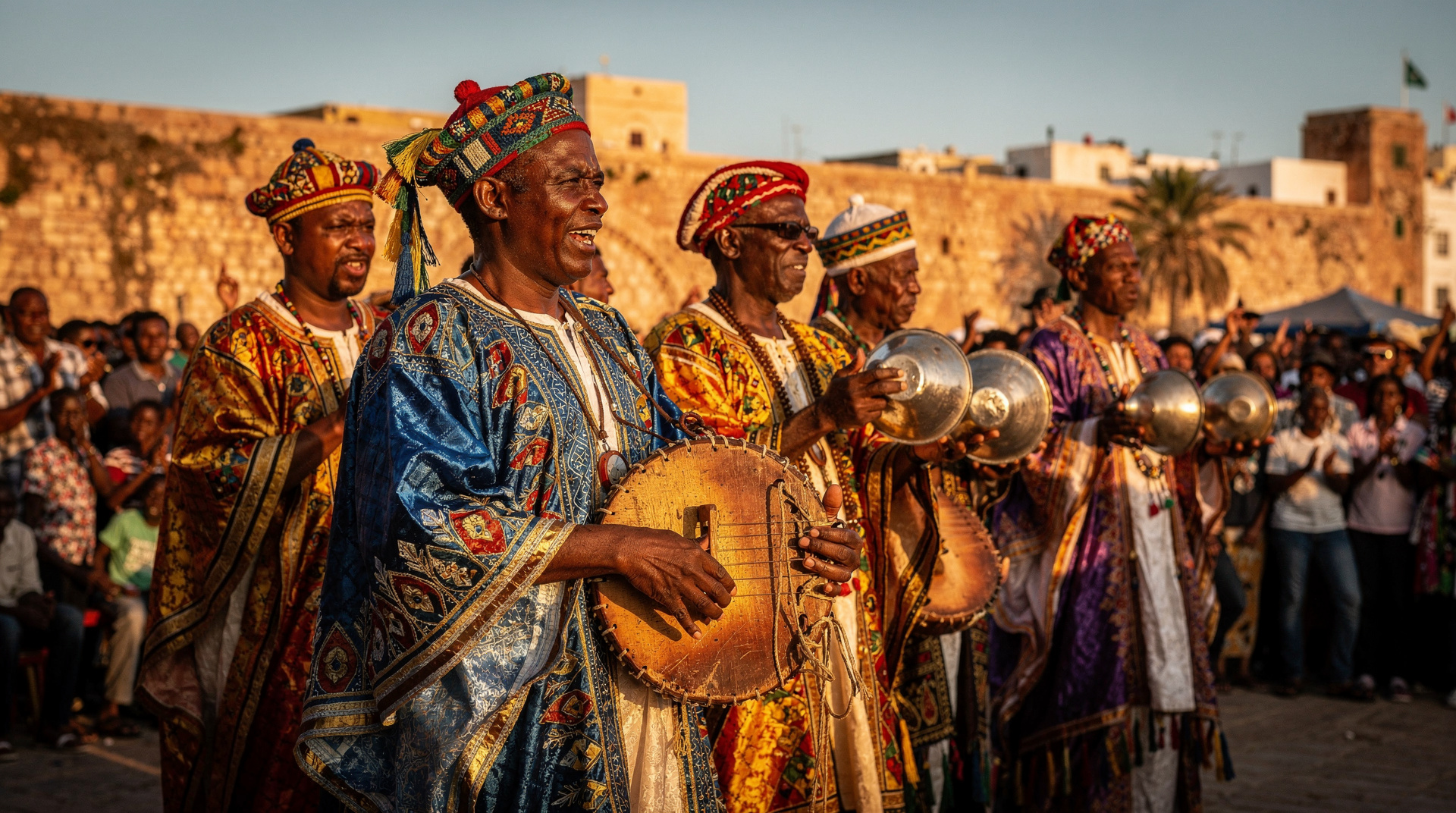
Between costume changes, entertainers (berboucha) perform — professional women who sing, dance, and play traditional instruments (darbuka drum, guembri bass lute, krakeb metal castanets). They maintain the energy of the crowd between the formal moments. The berboucha tradition has Gnawa and sub-Saharan African roots and is specific to Moroccan wedding culture — these are professional wedding entertainers, not general performers.
The amaria procession
The amaria is the centrepiece of the Moroccan wedding ceremony — the bride’s (and sometimes groom’s) procession through the hall while carried on a raised palanquin. The amaria itself is a decorated litter, often gilded or silver, carried on the shoulders of four to six men. The bride sits inside in full costume and jewelry while being paraded through the hall to the music of the chaabi or Andalusian orchestra.
The amaria procession happens multiple times during the night — once for each significant costume change at some weddings. Each procession circuit of the hall takes 10-20 minutes. Guests throw flowers and petals from their seats.
This is the visual moment that defines Moroccan wedding photographs — the bride elevated on the amaria, jewels catching the light, musicians surrounding the procession.
The food: wedding cuisine
Moroccan wedding food follows a specific progression that marks different moments in the celebration.
The opening sweets: Guests are received with dates, pastries (ka’ab el-ghazal — crescent-shaped almond pastries, chebakia — sesame honey fried pastries), and mint tea. This reception food is continuous and abundant.
The main wedding meal: Served at the peak of the evening — typically between midnight and 2am. The sequence at a formal wedding:
- Cold Moroccan salads (zaalouk, taktouka, carrot with cumin, beet with orange)
- B’stilla (the elaborate pastilla pie — pigeon or chicken with almonds and spiced egg, dusted with powdered sugar)
- Several tagines served simultaneously — chicken with preserved lemon, lamb with prunes, kefta
- Couscous (the seven-vegetable version, the traditional communal dish)
- Fresh fruit, pastries, and mint tea
The meal is served at tables of 8-10 guests, with communal dishes. At some weddings, dishes are still served in the traditional style with a central platter and guests eating from their section.
Wedding couscous: The couscous served at a wedding is considered the most important version — made with the best ingredients, by professional wedding caterers (and often the family’s own women), and meant to be the best couscous guests eat all year. The sweet couscous with tfaya (caramelised onions and raisins) sometimes appears as a separate sweet course.
Day three: the post-wedding gathering
The third day is usually a smaller family lunch — the immediate families of both the bride and groom, close relatives. Food is simpler: a large shared tagine or mechoui (whole roasted lamb), bread, salads, and mint tea. The formality of the wedding night dissolves into relaxed conversation.
For close family, this day involves the formal gifts and the settling of wedding-related finances. For guests, it’s optional attendance but shows respect for the hosting family.
Guest dress code: what to wear
For women
Caftan or takchita: The most appropriate and always appreciated. A mid-range caftan from Marrakech or Fes souks costs 300-800 MAD; premium versions from established caftan designers run 2000-6000 MAD. Evening color: rich jewel tones, embroidered fabrics, metallic threads. Pastels for daytime events.
Head covering: Not required for non-Muslim guests, but many foreign women wear one out of respect. A simple scarf in a complementary colour is appropriate.
Jeans, short skirts, or revealing clothing: Not appropriate for a traditional wedding. This is the most formal social event in Moroccan culture; dress accordingly.
Shoes: Belgha (traditional leather slippers) are worn by Moroccan women inside wedding halls. Foreign guests typically wear heels or formal flats.
For men
Djellaba or jabador: Traditional formal wear for Moroccan men — a full-length robe (djellaba) in a neutral colour (cream, grey, brown) with embroidery detail, or a jabador (matching trousers and tunic). Not required for foreign male guests but wearing one shows genuine respect.
Western formal: Dark suit, dress shirt, tie — entirely appropriate and common for non-Moroccan guests or for urban, modern weddings. No shorts.
Colors: Conservative and solid. Bright patterns are for women’s wear; men dress in muted tones at formal Moroccan events.
If you’re invited: practical advice for foreign guests
Accept the invitation: Being invited to a Moroccan wedding as a foreigner is a genuine honour. The host family has deliberately included you. Accept with sincere thanks.
Bring a gift: Cash is the most practical (and expected) wedding gift in Morocco — placed in an envelope with a card. The amount varies by your relationship to the family, but a minimum of 200-400 MAD is respectful. Alternatively, a high-quality household item (quality ceramic, quality argan oil product, quality textile).
Expect the timeline to be flexible: Moroccan weddings start 1-2 hours after the stated time. If the invitation says 8pm, arriving at 9:30pm is considered on time. The ceremony itself runs until 4-5am at traditional weddings.
Eat enthusiastically: Refusing food is considered impolite. If you have dietary restrictions, explain quietly to the host before the meal.
Don’t photograph without permission: Ask before photographing the bride, especially during the amaria procession. Some families are comfortable with guest photography; others prefer it stays within the family.
Moroccan wedding and the broader culture
The wedding customs connect deeply to Moroccan cultural identity — the henna tradition, the kaftan design tradition, and the Andalusian music tradition all manifest most visibly at weddings. For the broader context of Moroccan cultural traditions, the Berber culture guide covers the Amazigh influence on wedding ceremonies in Atlas mountain regions, where the traditions differ significantly from urban Moroccan weddings.
The hammam culture that begins the wedding preparation is covered in the traditional hammams guide — and the traditional Moroccan hammam and spa experience in Marrakech gives visitors a direct sense of the ritual that opens every wedding. The mint tea ritual that runs through every stage of the wedding — reception, meal, late-night socialising — has its own guide.
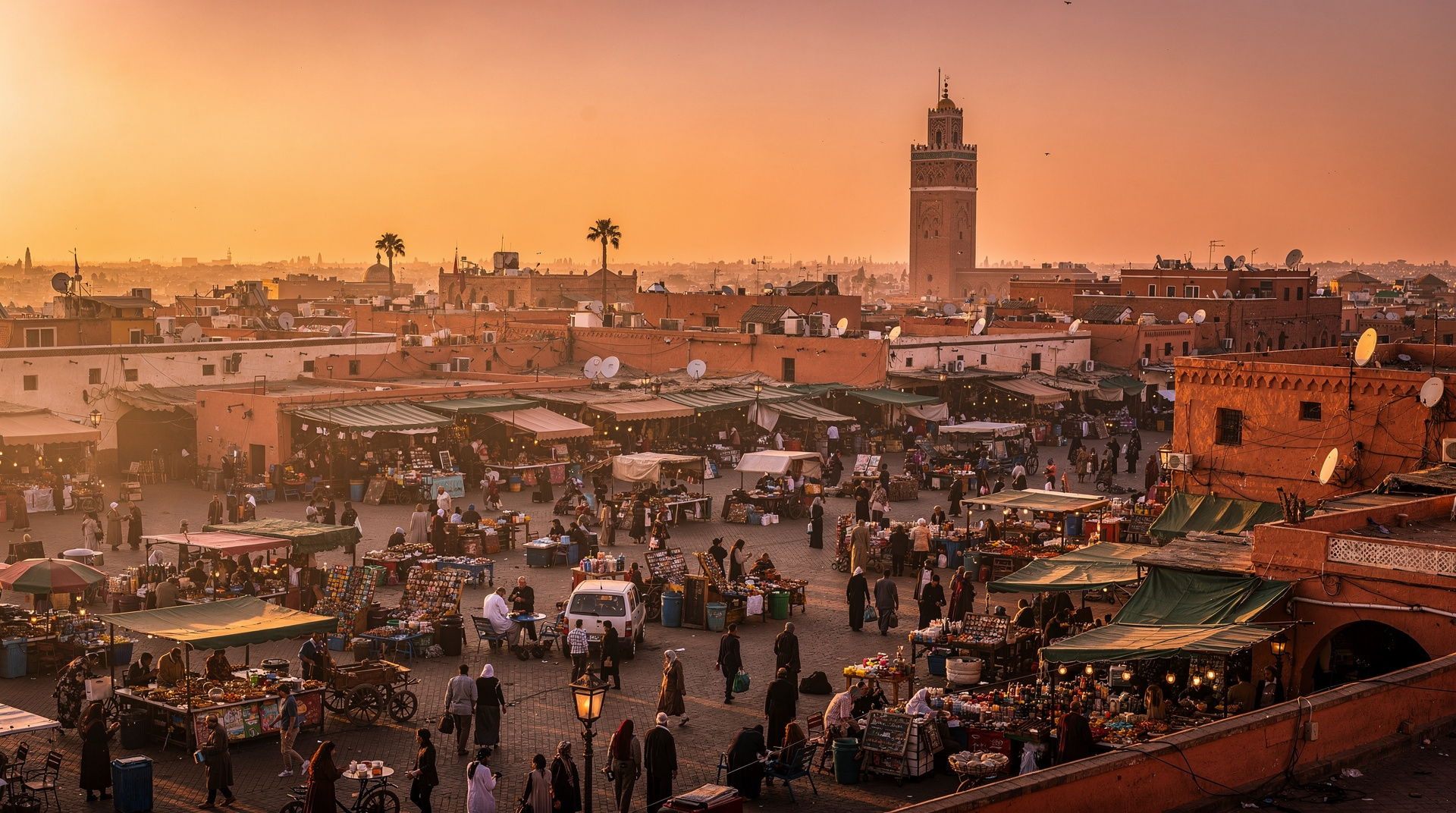
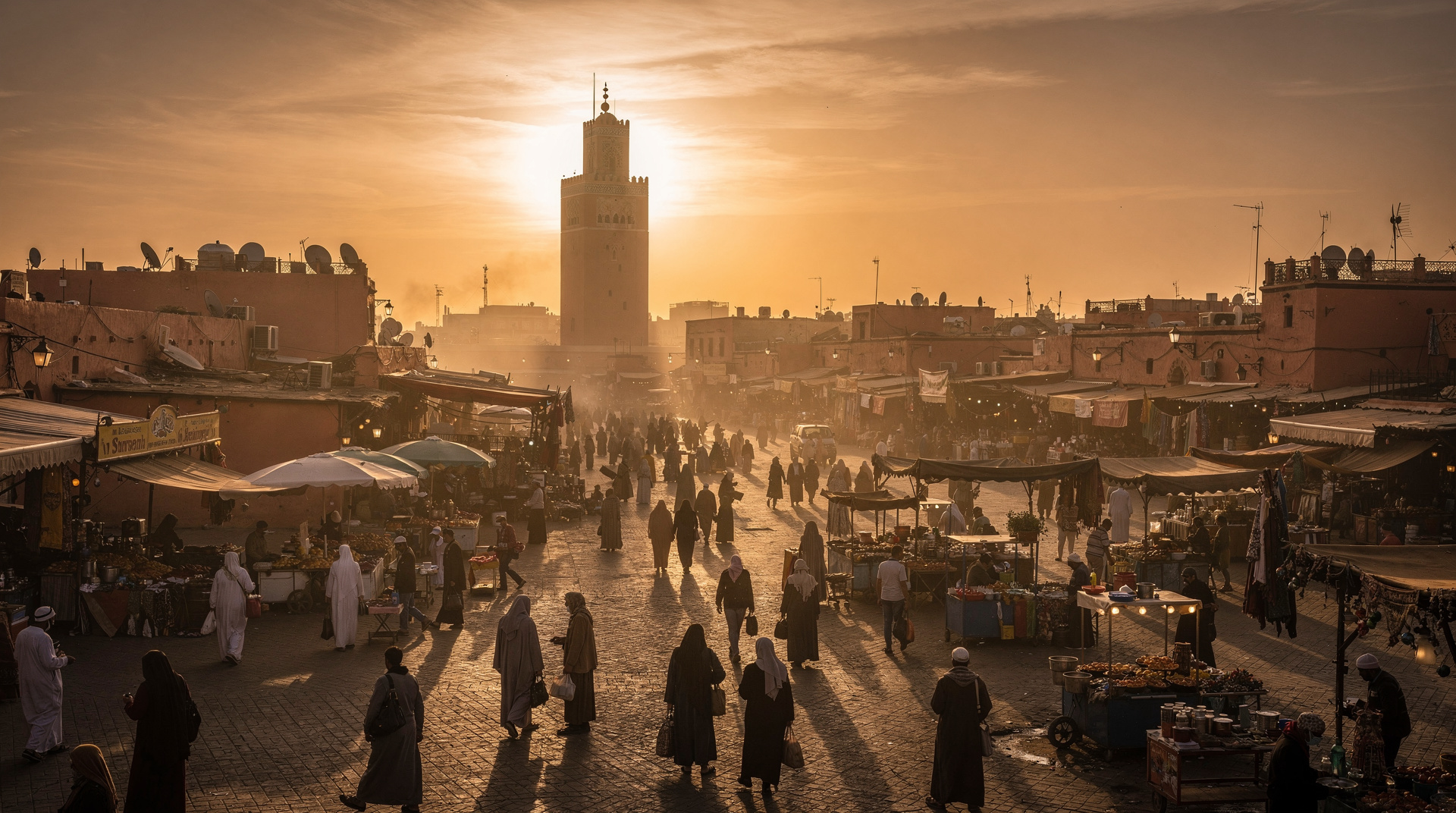
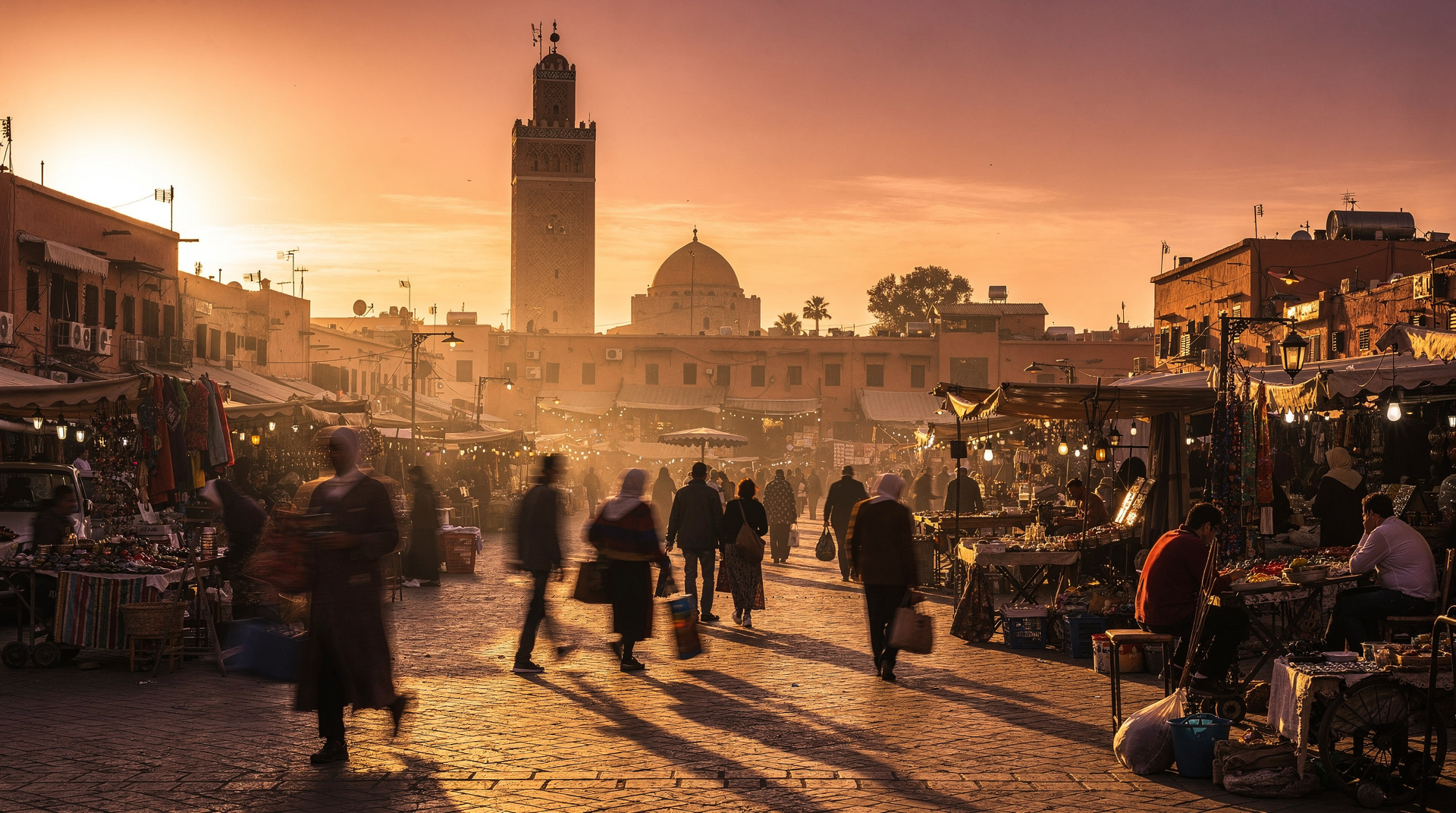
Visiting Marrakech or Fes around a wedding season (weddings are concentrated in spring and autumn, and particularly on Fridays and Saturdays) sometimes means encountering wedding processions in the medina streets. These are public celebrations — music, crowds, the amaria being carried — and can be watched from a respectful distance.
For an official evening show that incorporates fantasia horsemanship, folk dance, and a Moroccan feast, the Chez Ali Fantasia folklore show and Moroccan dinner draws on the same Andalusian music and collective celebration traditions that form the spine of a traditional Moroccan wedding night.
Regional wedding variations
Moroccan weddings differ significantly by region. The urban weddings of Marrakech and Fes are the most elaborate; rural and mountain traditions are distinct.
Amazigh (Berber) mountain weddings
In High Atlas and Rif villages, wedding celebrations follow different traditions from urban Morocco. The Amazigh wedding is more community-centred — rather than a wedding hall, the celebration takes place in the village, with neighbours involved in both preparation and participation.
Distinctive elements:
- The ahwash collective dance replaces the Andalusian orchestra (see the Berber culture guide for the ahwash tradition)
- The bride may wear traditional Amazigh dress — layered coloured textiles with heavy silver jewellery rather than the kaftan
- Henna is applied in different patterns reflecting Amazigh geometric traditions rather than Andalusian floral motifs
- Food is cooked communally — neighbours bring ingredients and cook together for the celebration
The Imilchil Marriage Festival in the High Atlas (September) is the largest public expression of Amazigh wedding culture and is accessible to visitors as a cultural event.
Urban versus rural weddings
| Factor | Urban (Marrakech, Fes, Casablanca) | Rural/Amazigh |
|---|---|---|
| Venue | Rented wedding hall (qaa’a) | Village public space or household courtyard |
| Duration | 2-3 days | 3-7 days |
| Music | Andalusian orchestra, chaabi, Gnawa | Ahwash, ahidous (Amazigh collective music) |
| Bride’s dress | Multiple kaftan changes | Traditional Amazigh dress, less change of costume |
| Food | Catered by professional wedding cooks | Community-cooked by neighbours and family |
| Amaria | Standard element | Less common; regional equivalents exist |
| Guest count | 200-1000+ | Community-wide (village population) |
Wedding costs: the economic reality
Moroccan weddings are one of the most significant financial events in a family’s life. Understanding the economics gives context to the celebrations:
A mid-range urban wedding in Marrakech or Fes:
- Wedding hall rental: 15,000-40,000 MAD
- Catering (per person): 300-600 MAD for a full dinner with meat courses
- Music (Andalusian orchestra for one night): 10,000-25,000 MAD
- Negaffa (wedding mistress of ceremonies and styling): 5,000-15,000 MAD
- Bride’s kaftans (7 changes from a good designer): 15,000-60,000 MAD
- Henna night: 3,000-10,000 MAD
- Amaria procession hire: 2,000-5,000 MAD
- Photography and videography: 5,000-15,000 MAD
A full traditional wedding in a major city can cost 100,000-300,000 MAD (10,000-30,000 EUR) — a sum that requires family savings, contributions from extended family, and sometimes significant debt. Families save for years specifically for this event.
The gifting economy: The cash gifts from guests at the wedding are meant to offset these costs. A wedding that draws 400 guests contributing an average of 500 MAD each generates 200,000 MAD — enough to cover a significant portion of the costs. The social reciprocity of this system (you contribute to others’ weddings and they contribute to yours) is the economic logic.
Andalusian music at Moroccan weddings
The musical tradition of the formal Moroccan urban wedding is the Moroccan Andalusian classical tradition — one of the world’s most ancient preserved musical traditions, brought to Morocco by Muslim refugees from the fall of al-Andalus (medieval Islamic Spain) in the 15th century.
The full Andalusian orchestra (at weddings, typically a smaller ensemble of 6-12 musicians rather than the full philharmonic-scale orchestras at public performances) plays the nuba — a suite of compositions in a specific mode, progressing from slow and meditative to fast and rhythmic. The vocal tradition (malhun poetry set to Andalusian musical modes) is the centrepiece.
What visitors hear at a wedding is not folk music — it’s a sophisticated classical tradition that takes years of training. The Moroccan conservatories of Fes, Rabat, and Tetuan produce the musicians who play at these events.
Photography at Moroccan weddings
Photography at Moroccan weddings is a nuanced subject. A few principles:
Professional photography is elaborate: Moroccan wedding photography has developed its own visual language — dramatic lighting, posed amaria procession shots, elaborate bride portraits in each kaftan. Professional Moroccan wedding photographers are in high demand and their rates reflect this.
Guest photography varies by family: Some families welcome guest photography, especially of the public moments (the music, the general celebration). Others prefer photography to stay within the family, particularly for the bride. When in doubt, ask.
Never photograph the henna night without explicit permission: The henna ceremony is a women-only event at many traditional weddings. If you’re allowed to attend as a woman, follow the host’s lead on photography. Default to not photographing unless told it’s welcome.
Video of the amaria: The amaria procession is the most photographed moment of any Moroccan wedding. It is generally expected to be photographed — but pointing a camera at the bride’s face from close range without invitation is still intrusive. Photograph the scene, not the individual.
Shopping for a wedding outfit or gift
If you’re invited with only a few days’ notice, both Marrakech and Fes have souks that can turn around a caftan quickly — tailors in the medina routinely alter ready-made pieces same-day for an event that evening. The Fes souks guide and Marrakech souks guide both cover where to find textile sellers versus tailors. Expect to negotiate — the bargaining in Morocco guide explains the etiquette, though most caftan sellers who deal with wedding guests set fairer starting prices than souvenir stalls.
For the gift itself, quality argan oil, ceramics, or textiles from an artisan cooperative are a genuine alternative to cash if you’d rather bring something tangible. General guidance on what’s appropriate to wear day to day (distinct from formal wedding dress) is in the what to wear in Morocco guide, and cash-handling etiquette for gifts and tips more broadly is covered in the tipping in Morocco guide.
When you’re likely to encounter a wedding
Wedding season concentrates in spring and autumn — broadly the same shoulder-season months covered in the best time to visit Morocco guide — because summer heat makes an all-night celebration in a packed hall genuinely gruelling, and winter is considered less auspicious by many families. If your own trip lands on a Friday or Saturday evening in April, May, September, or October, don’t be surprised to hear drums and see a procession crossing a medina street; it’s worth pausing respectfully rather than pushing through.
Frequently asked questions about Moroccan wedding customs
Can tourists attend a Moroccan wedding without knowing the family?
Not appropriately, no. Moroccan weddings are private family events held in rented halls or homes; there’s no public or ticketed way to attend one as a stranger. If you’re staying at a riad or working with a guide who has a personal connection, an invitation sometimes happens organically, but it should never be sought out or paid for.
How much should I really give as a wedding gift if I barely know the couple?
For a distant acquaintance or a guest invited through a host family (for example, your riad owner’s relative), 200-300 MAD is a respectful minimum. Close friends or family typically give considerably more, often 500-1500 MAD or more depending on means and closeness — there’s no fixed rule, and it scales with the relationship.