Moroccan breakfast guide: msemen, baghrir, amlou and beyond
What is a traditional Moroccan breakfast?
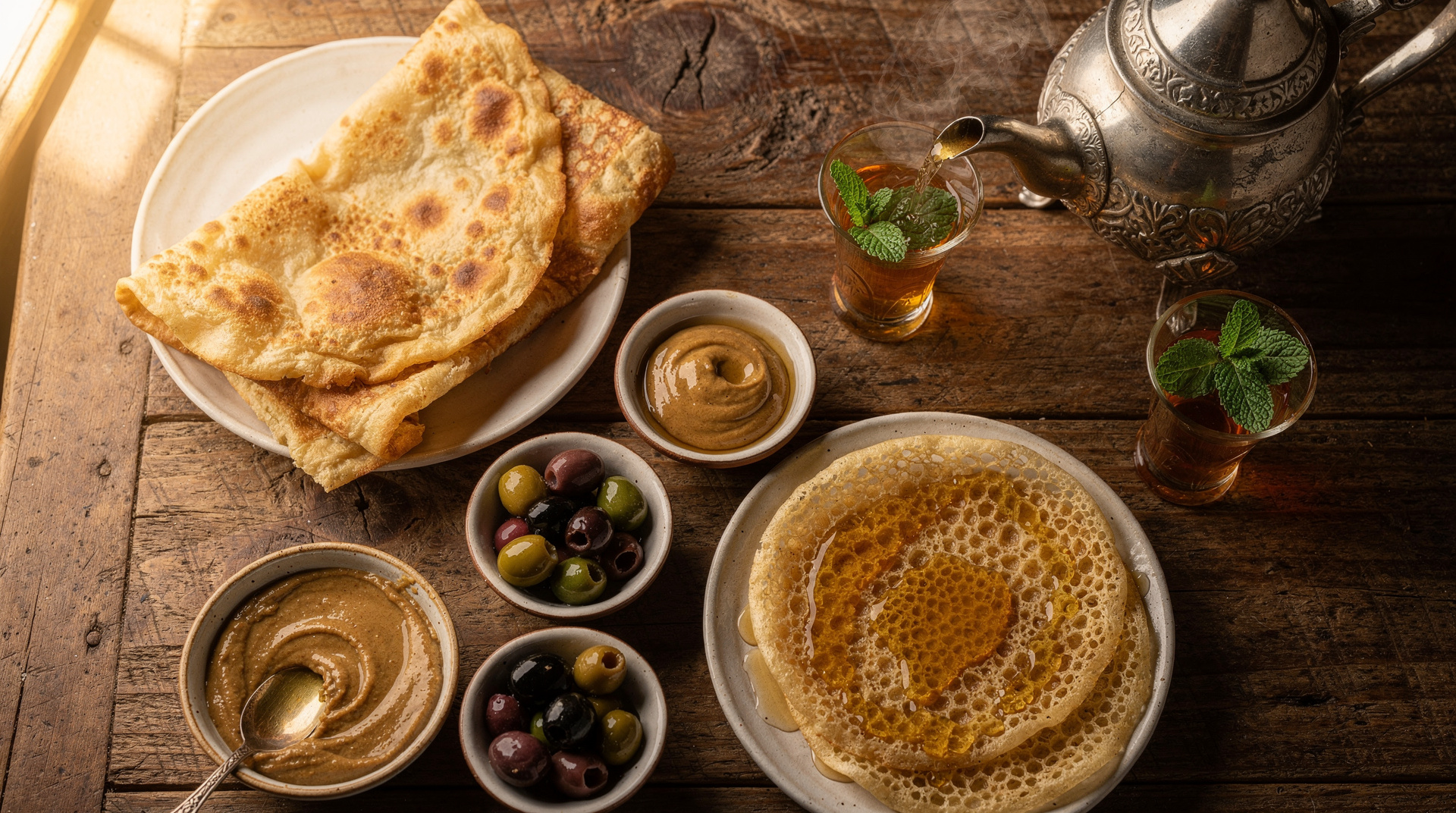
A traditional Moroccan breakfast centres on bread and bread products — msemen (layered flatbread), baghrir (honeycomb pancakes), harcha (semolina rounds) — served with argan oil, amlou (almond-argan paste), honey, olive oil, and cheese. Sweet mint tea is the universal drink; café au lait is also common in cities.
Waking up in Morocco: what breakfast really looks like
The Moroccan breakfast table is a study in contrasts — ancient bread-making traditions from the Berber kitchen alongside French café au lait, argan oil from a five-hundred-year-old tradition next to processed cheese triangles, honeycomb pancakes eaten with butter and honey while mint tea is poured from height into small glasses.
This is not a country that eats a quick breakfast standing up. Moroccans take the first meal seriously — it’s slow, communal, and accompanied by conversation. Riad owners in Marrakech and Fes often tell visitors that the breakfast they serve is what their families have been eating for generations, and it’s broadly true.
Understanding what’s on the breakfast table — what each item is, how it’s made, and how it fits into the broader food culture — transforms a pleasant meal into something you can actually engage with.
Breakfast is also only the first chapter of Moroccan eating. Once you know the morning table, the tagine guide and the couscous guide make natural next reads, and the street food guide for Marrakech picks up where the café counter leaves off.
| At a glance | |
|---|---|
| Where to have it | Riad breakfast table, medina café-restaurant, street stall |
| Typical cost | Around 15-30 MAD (street) to 80-150 MAD (riad, if not included) |
| Time needed | 30-60 minutes for a proper sitting |
| Getting there | Riads serve it on-site; medina cafés are usually a short walk from most accommodation |
| Best time | Morning until around 10-11am; street stalls sell out earlier |
The bread and bread products
Msemen
Msemen (also spelled m’semen or msimmen) is Morocco’s most beloved breakfast bread and one of the most labour-intensive. The dough — wheat flour, water, salt, semolina — is made, divided into balls, coated in olive oil, rolled thin, folded multiple times to create layers, then cooked on a dry griddle.
The layered structure is the point: when hot, the layers create a slightly chewy, slightly crisp bread that tears in strips. When eaten with butter and honey, the layers absorb without becoming soggy. When eaten with amlou, the texture provides the right resistance against the paste.
Msemen is made fresh in the morning — it does not improve with age. Any riad breakfast worth the name has it made that day. At medina bakeries and stalls, msemen is cooked to order, one at a time, and eaten hot. It costs 3-5 MAD per piece at street level.
How to eat it: Tear a strip, dip into argan oil or amlou, follow with a sip of mint tea. Do not use a fork.
Baghrir (beghrir)
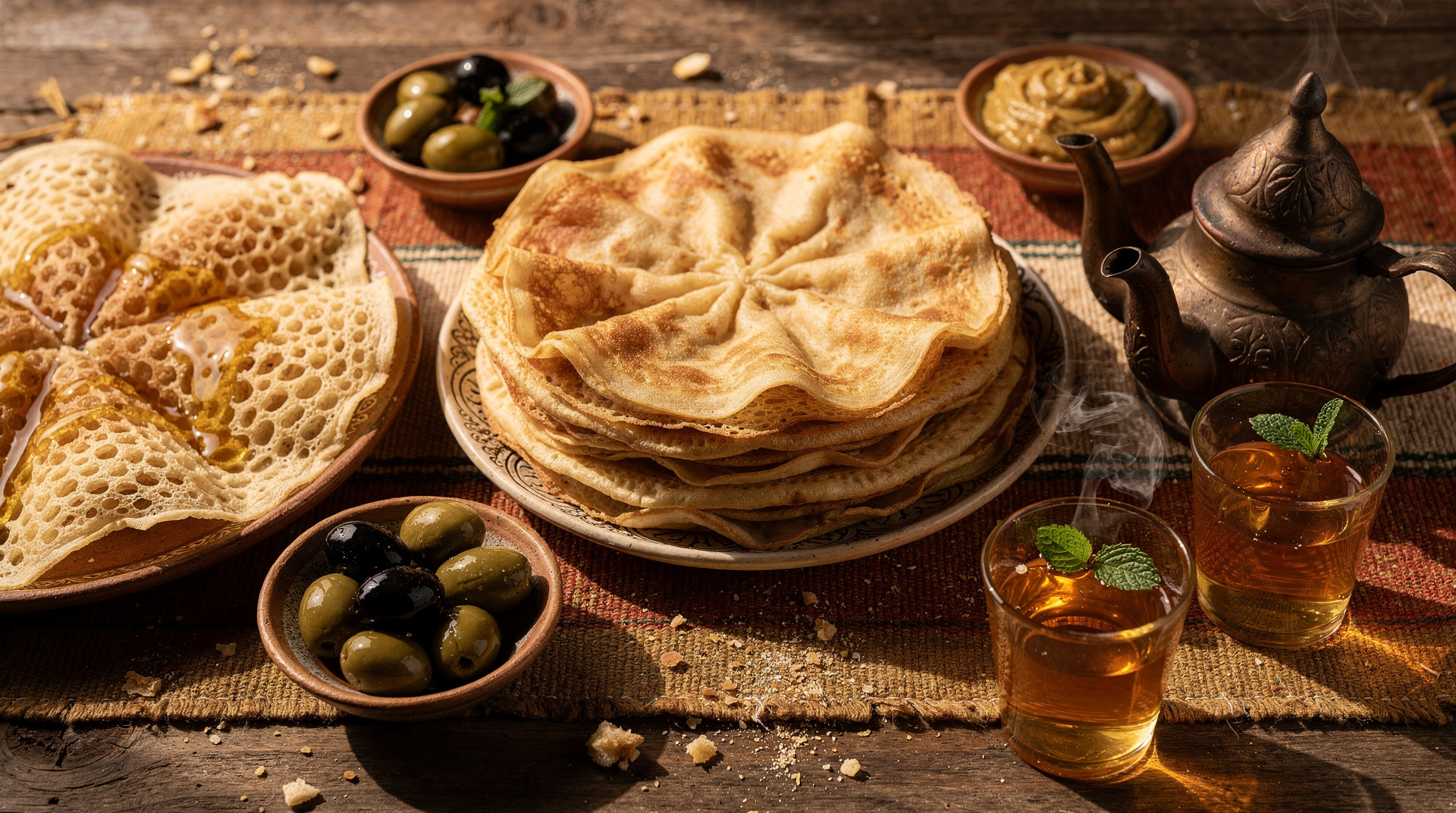
Baghrir is the “thousand holes” pancake — a unique preparation that develops its texture from the fermentation of the semolina batter. The batter (fine semolina, yeast, water, a little flour) ferments for 30-60 minutes, then is ladled onto a griddle and cooked on one side only. The top surface develops dozens of tiny holes as bubbles rise and burst — these holes are what makes baghrir special.
The one-sided cooking means the base is set and slightly golden while the top is a sponge. You eat it dipped into melted butter and honey poured directly over the top, letting the liquid run into the holes. It’s the most dessert-like of the Moroccan breakfast items and the one visitors most consistently love.
Regional names: Baghrir is the standard Moroccan Arabic name; beghrir is a variation. In some Berber regions they’re called “crepes de mille trous” in the French-influenced vocabulary.
Where to find the best: Home kitchens produce the best baghrir — the fermentation is calibrated by feel. Good riad breakfasts should have them. At street level, they’re available at Moroccan café-restaurants in the morning, usually 5-8 MAD each.
Harcha
Harcha is the simplest of the breakfast breads — a thick round made from coarse semolina, butter or olive oil, milk, and salt, cooked on a griddle until golden on both sides. The texture is crumbly and slightly grainy from the semolina, denser than msemen. It doesn’t have the layers or holes of the other breads; it’s more like a thick cornbread cousin.
Harcha is often split and filled — with fresh goat cheese (jben), honey, or Laughing Cow triangles (the French processed cheese is an unexpected but ubiquitous element of the Moroccan breakfast table). It travels well, which makes it a popular market item.
Price: 3-6 MAD at street stalls and bakeries.
Khobz (the everyday loaf)
The round Moroccan flatbread appears at every meal, but breakfast is when it’s most important — fresh from the communal oven (farran), still warm, with a crust that cracks when pulled. Khobz at breakfast is eaten with olive oil, honey, or spread with amlou. See the Moroccan bread guide for the full bread culture context.
The spreads and dips
Amlou
Amlou is one of Morocco’s most distinctive products and one of the least known outside the country. It’s made by grinding toasted almonds, mixing with argan oil and honey, and adjusting the consistency — the result is a thick, nutty paste somewhere between peanut butter and tahini, with a complex flavour from the toasted almonds and the distinctive nuttiness of argan oil.
Produced mainly in the Souss region (around Agadir and Taroudant) where both almonds and argan trees grow together, amlou is specific to the southwest of Morocco. In Marrakech and further north, you find it, but it’s less central to the breakfast table.
How it tastes: Deeper and more complex than peanut butter. The argan oil adds a slight bitterness that the honey counterbalances. The almond texture remains grainy — amlou is never completely smooth. Served in a small bowl or pot alongside the bread.
Buying amlou: At cooperative shops and argan oil cooperatives, amlou costs 40-80 MAD per 250g. At tourist shops in the souks it can reach 120-200 MAD for the same quantity — always compare prices. The argan oil experience guide has the full buying guide.
Argan oil
Pure argan oil on bread (with honey) is the other breakfast spread specific to Morocco and irreplaceable from the tradition. The culinary argan oil — lighter pressing, slightly toasted seeds — is what appears at breakfast, distinct from the cosmetic oil used in beauty products.
Drizzle over msemen or harcha, follow with honey, eat immediately. The oil doesn’t keep well on bread — eat before the bread softens.
Quality indicator: Good culinary argan oil is amber-coloured with a pronounced toasted nut aroma. Pale or odourless “argan oil” sold cheaply in tourist shops is usually adulterated. See the argan oil guide for how to evaluate quality.
Honey
Moroccan honey varies dramatically by region. The thyme honey from the High Atlas (miel de thym) is the most prized — intensely aromatic, slightly herbal. Orange blossom honey from the plains around Meknes is lighter and floral. Euphorbium honey from the south has a stronger, almost resinous character.
At riad breakfasts, you’ll typically receive one variety in a small pot. At the spice souks, multiple varieties can be sampled and purchased. See the Moroccan spices souks guide for what to look for when buying.
Cheese: jben and la vache qui rit
Fresh white cheese (jben) is produced daily in Moroccan households and farms — unsalted, soft, eaten fresh with honey or olive oil. Finding genuine jben requires either a Moroccan family table or specific markets. What most visitor breakfasts include instead is Laughing Cow (La Vache Qui Rit) processed cheese triangles — a French import so thoroughly embedded in Moroccan breakfast culture that it no longer feels foreign.
The combination of French processed cheese triangles and traditional Moroccan bread is one of Morocco’s small culinary paradoxes and worth accepting on its own terms.
Moroccan omelette
The Moroccan omelette (kefta omelette or egg with herbs) at breakfast is distinct from the French version — it’s cooked in a tagine pot, flat and open-faced, with fresh tomatoes, onion, cumin, and sometimes kefta (spiced minced meat), herbs, and fresh peppers. It’s set rather than folded, eaten from the pot with bread.
At street café-restaurants in the morning, a Moroccan omelette costs 20-40 MAD. At riad breakfasts, it’s often served as part of a larger spread. It’s more filling than the European version and works as the protein anchor of the meal.
Tea culture versus coffee culture
Moroccan mint tea
The dominant breakfast drink across Morocco. Three glasses are traditional — the first “strong as death, sweet as love, gentle as life” in the folk saying. In practice, the tea is Gunpowder green tea (the Chinese variety that Morocco imports in enormous quantities) brewed with fresh spearmint and sugar. Pouring from height aerates and slightly cools the tea; refilling the same glass three times is the ceremony.
See the mint tea ritual guide for the full cultural context and preparation method.
At breakfast, tea is poured by the host (traditionally the head of household or the riad staff) — not self-served. Refusing the third glass is acceptable with a hand gesture; refusing the first is considered impolite.
Coffee at breakfast
Cities — Marrakech’s Guéliz, Casablanca, Rabat — have developed a café au lait culture running parallel to the tea tradition. A noss-noss (half-half, the Moroccan café au lait) is espresso topped with hot milk, served in a glass, and accompanied by sugar. Cafés Hafa in Tangier and the countless Guéliz café-terraces are built around coffee in the morning, not tea.
In the medina and in smaller towns, tea remains dominant for breakfast. Coffee is more an urban, modern-district phenomenon.
The visitor experience: Most riad breakfasts offer both. Don’t feel pressured to drink tea if you want coffee — ask and it will appear. The choice is yours; the ceremony is the host’s.
Where to have a proper Moroccan breakfast
At your riad
The best Moroccan breakfast is at a well-run riad — the bread is made that morning, the amlou is homemade, the tea is properly prepared, and you’re in a setting that makes the meal feel like what it is. Budget 80-150 MAD per person for a full riad breakfast if it’s not included in your room rate. If you want to learn what goes into it, the Marrakech cooking class in a traditional home covers breakfast breads alongside the main tagine and couscous session.
Medina café-restaurants
Street-level cafés in the medinas of Marrakech, Fes, and Chefchaouen serve local breakfasts for 20-50 MAD: a pot of tea or coffee, msemen or baghrir, butter and honey, sometimes a soft-boiled egg. This is how most Moroccans eat breakfast outside the home — quickly, cheaply, at a small table or standing at the counter.
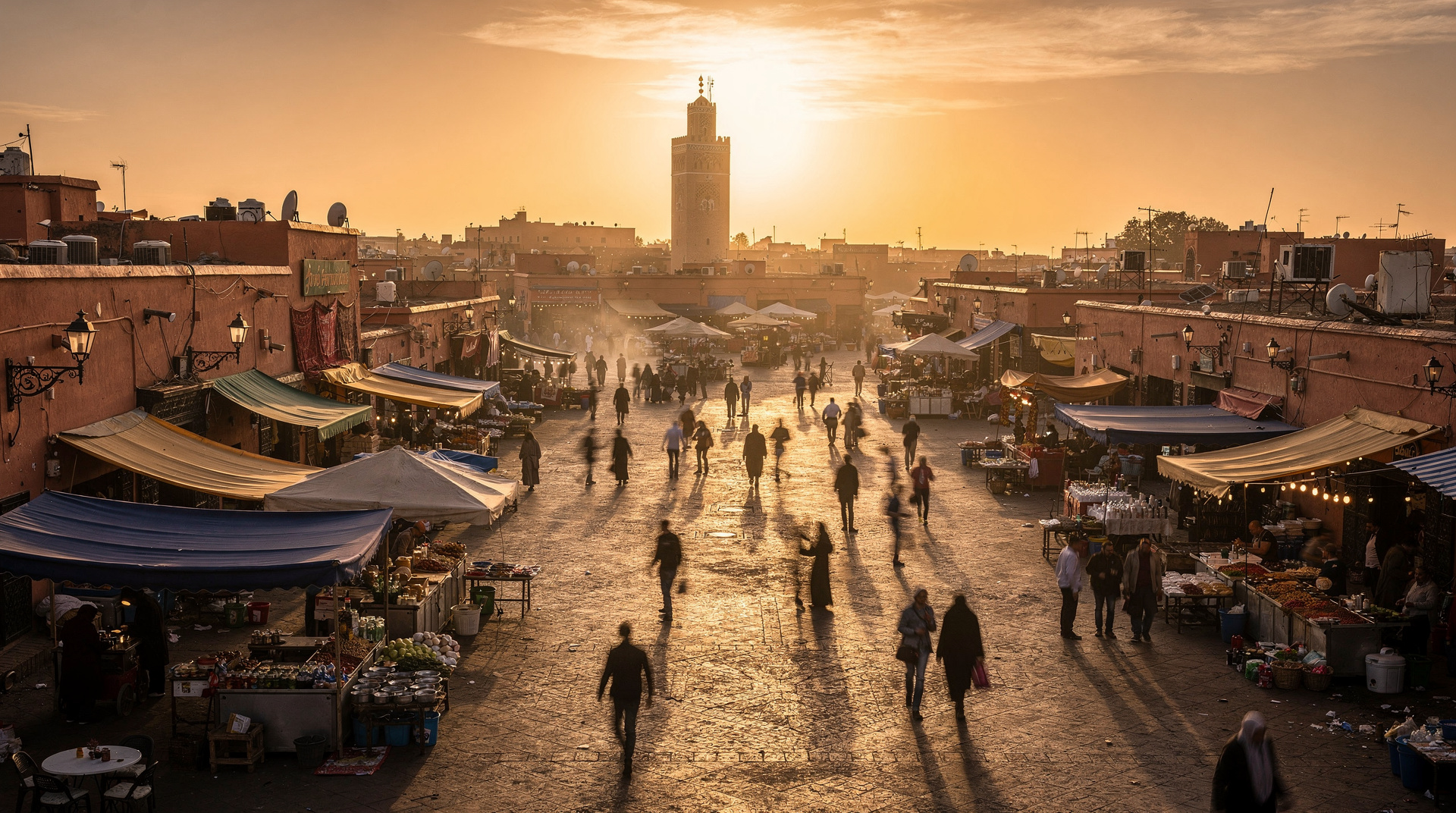
In Marrakech: The area around the Mellah and near Bab Doukkala has the best local café-breakfast scene. Avoid the Jemaa el-Fnaa tourist cafés for breakfast — quality drops and prices rise. For a structured introduction to the local food culture, the Marrakech Jemaa el-Fnaa night food tour shows you the stalls to trust and the snacks worth eating across the square.
If you are still choosing where to stay, the best riads in Marrakech and the best riads in Fes are worth comparing with the breakfast in mind, since a kitchen that cares about the morning table usually cares about the rest of the stay too.
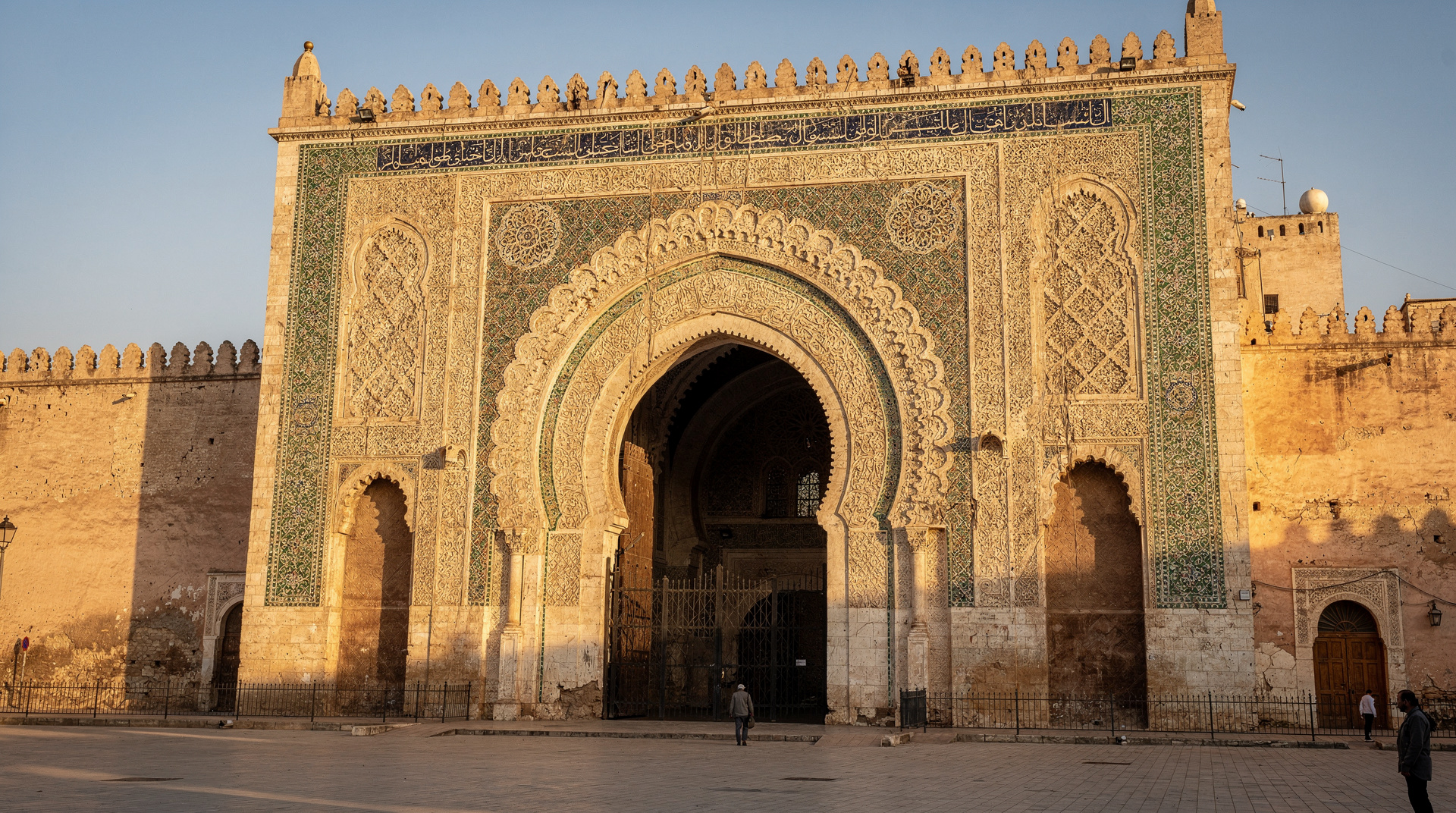
In Fes: The streets leading from Bab Boujloud toward the tanneries have several local cafés serving good morning spreads. The area around Ain Azliten has family-run breakfast spots with homemade msemen.
In Chefchaouen: The small cafés around the central fountain serve excellent baghrir with honey and argan oil for 15-25 MAD — one of the best budget breakfast options in the country.
For a wider look at eating in the two big medinas, the Fes street food guide covers the stalls and snacks that sit alongside the morning café scene, and the tipping guide explains what is customary when a riad host serves you breakfast every day.
Breakfast during Ramadan
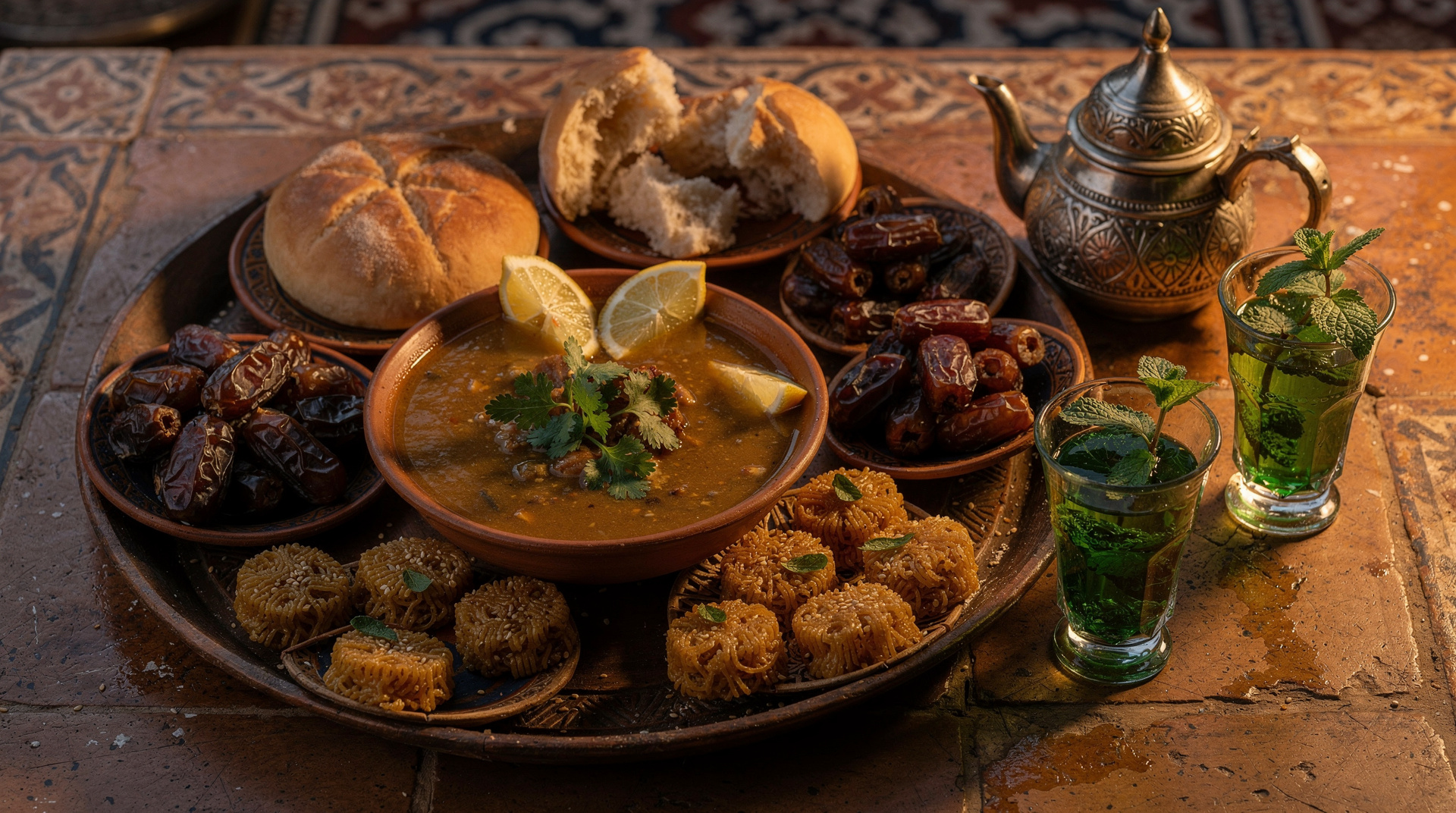
The suhoor meal (the pre-dawn meal before the fast begins) takes the place of breakfast during Ramadan and is a substantial affair — harira, dates, beghrir, msemen, hard-boiled eggs, and plenty of tea. For visitors travelling during Ramadan, the Ramadan food guide covers how to navigate eating timing and what to expect at hotels and restaurants during the fasting month.
Bringing breakfast home
The best Morocco breakfast items to take home:
- Argan oil (culinary): 100ml bottles are airline-approved. Buy from cooperatives, not tourist shops.
- Amlou: Buy fresh from cooperatives. Will keep 2-3 weeks unrefrigerated.
- Ras el hanout for the omelette spicing: available at any spice souk.
- Moroccan mint tea (gunpowder green tea plus dried spearmint): buy separately and combine at home.
The Moroccan spices souks guide covers where to buy and what quality to look for.
The full breakfast spread at a glance
| Item | What it is | How to eat it | Price (street level) |
|---|---|---|---|
| Msemen | Layered griddle flatbread | Torn strips with oil/amlou/honey | 3-5 MAD |
| Baghrir | One-side-cooked sponge pancake | Dunked in butter and honey | 5-8 MAD |
| Harcha | Semolina round | Split and filled with cheese/honey | 3-6 MAD |
| Amlou | Almond-argan paste | Spread on msemen | Included at riad |
| Argan oil | Culinary pressed argan | Drizzle on bread with honey | Included at riad |
| Jben | Fresh white cheese | With bread and honey | Market only |
| Moroccan omelette | Open-face egg in tagine pot | With bread | 20-40 MAD |
| Mint tea | Gunpowder green + spearmint | Three glasses, hot | 10-15 MAD |
| Noss-noss | Half espresso, half hot milk | In a glass | 12-20 MAD |
Breakfast in a medina riad: what a proper version looks like
The gold standard for a Moroccan breakfast experience is a well-run riad in the medinas of Marrakech, Fes, or Chefchaouen. What separates a proper riad breakfast from a generic hotel buffet:
Made that morning: Msemen kneaded and griddled in the kitchen before you come downstairs. Baghrir batter fermented overnight, cooked to order. Amlou ground fresh. Honey in an unlabelled jar from a local beekeeper, not a branded packet.
The table setup: A basket of warm breads (msemen, harcha, sometimes beghrir), small pots of butter, amlou, honey, and olive oil. A plate of fresh fruit. A pot of mint tea. Sometimes a small Moroccan omelette or a soft-boiled egg. The whole spread costs 80-120 MAD at a good riad if not included in the room rate.
What to ask for: If your riad doesn’t automatically offer amlou, ask for it — most riads in the Marrakech and Fes medinas have it in the kitchen. The same goes for fresh jben if they have a relationship with a local cheese producer.
What visitors most often get wrong about Moroccan breakfast
Eating it alone: The Moroccan breakfast is designed to be a slow, shared meal. If you’re in a riad with other guests, the communal breakfast table is the right context — conversation over msemen and tea is part of the experience.
Rushing through it: The fastest acceptable pace for a Moroccan breakfast is 30 minutes. An hour is normal at a family table. Eat slowly, refill the tea, tear the bread, and engage with what’s in front of you.
Ignoring the olive oil: A small bowl of good olive oil at breakfast is not decoration — it’s one of the primary spreads for khobz. Drizzle it over bread and follow with a small amount of honey. The combination is more interesting than butter alone.
Skipping the amlou because it looks unfamiliar: This is one of the flavours that makes Moroccan breakfast distinctive. If you don’t try amlou, you’re skipping the most specific and unreplicable element of the meal.
The economics of Moroccan breakfast
Understanding the price structure helps navigate what to expect where:
| Setting | Price range | What you get |
|---|---|---|
| Street café (standing) | 15-30 MAD | Tea/coffee + 1-2 bread items |
| Neighbourhood café (seated) | 30-60 MAD | Tea + msemen/baghrir + eggs |
| Tourist café (medina) | 60-120 MAD | ”Moroccan breakfast” platter |
| Good riad (included in room) | Included | Full spread, made fresh |
| Good riad (charged separately) | 80-150 MAD | Same full spread |
The tourist café “Moroccan breakfast” platter at tourist-facing cafés near Jemaa el-Fnaa in Marrakech or Bab Boujloud in Fes is not a bad option, but it’s made ahead and the bread products are not always fresh. Pay similar prices at a good riad and the quality difference is significant.
Seasonal breakfast variations
Moroccan breakfast adapts slightly by season:
Winter (December-February): Heartier preparations — thicker harcha, richer amlou, more butter in the msemen. The hot mint tea is even more central in the cold medina mornings. Some riads add a small harira soup to the winter breakfast spread.
Spring (March-May): Fresh strawberries from the Gharb plain, first honey from the thyme harvest in the Atlas. Spring is considered the best season for Moroccan honey purchases.
Summer (June-September): Lighter preparations, more fresh fruit (peaches, apricots, figs), occasionally fresh orange juice from the previous season’s pressed stock. Mint tea consumed in higher quantities to compensate for heat.
Autumn (October-November): Quince season — quince jam with msemen is a September-October specialty. Fig season means fresh figs with honey at the breakfast table. Olive harvest begins and new olive oil appears in cooperative shops.
Frequently asked questions about Moroccan breakfast guide
Is breakfast usually included at Moroccan riads?
Often, but not always — check the booking terms carefully. Mid-range and upscale riads frequently include breakfast in the room rate; budget guesthouses sometimes charge separately (80-150 MAD per person). If it’s not included, ask the riad staff the night before so the kitchen can prepare fresh msemen and baghrir rather than serving pre-made items.
What should vegetarians and vegans expect at a Moroccan breakfast?
Vegetarians are well served — bread, honey, argan oil, amlou, olive oil, and fresh fruit are all naturally vegetarian, and the Moroccan omelette is the only common animal-protein item. Vegans should ask about butter in the msemen and clarify that honey is used generously; amlou and argan oil on bread without butter or honey is a solid vegan option, and cafés will usually accommodate a request to skip dairy.