Buying Berber rugs in Morocco: the complete honest guide
How do you tell if a Berber rug in Morocco is genuine handwoven wool?
Pull apart a small section of fringe: genuine wool fibres are crimped and slightly rough. Synthetic yarn is straight and smooth. Flip the rug over — hand-knotted pieces show individual knots on the back; machine-made pieces have a uniform latex or fabric backing. Genuine Beni Ourain wool has a subtle lanolin smell when slightly damp.
The most expensive souvenir that’s also the most likely to be fake
Moroccan rugs are among the most coveted souvenirs in the country — and among the most frequently misrepresented. The “handmade Berber rug” category encompasses everything from genuine century-old tribal weavings passed down through generations to acrylic-pile carpets machine-made in Chinese factories, relabelled in a Marrakech warehouse, and sold with a convincing tribal origin story.
This guide cuts through the classification confusion and sales theatre that surrounds rug buying in Morocco, covering the four main rug types, how each is made, what distinguishes quality from junk, where to buy with the best chance of getting the real thing, and what fair prices actually look like.
| At a glance | |
|---|---|
| Where to buy | Marrakech Souk des Tapis, Atlas cooperatives, Ensemble Artisanal (fixed-price) |
| Typical cost | Around 400 MAD (small kilim) to 15,000+ MAD (large genuine Beni Ourain) |
| Time needed | Allow at least 2 visits — one to scout, one to buy |
| Getting there | Souk des Tapis is walkable from Jemaa el-Fnaa; cooperatives usually need a day trip or driver |
| Best time | Any season; cooperatives are quieter (and staff more available) outside July–August peak |
The four main Berber rug types
Beni Ourain
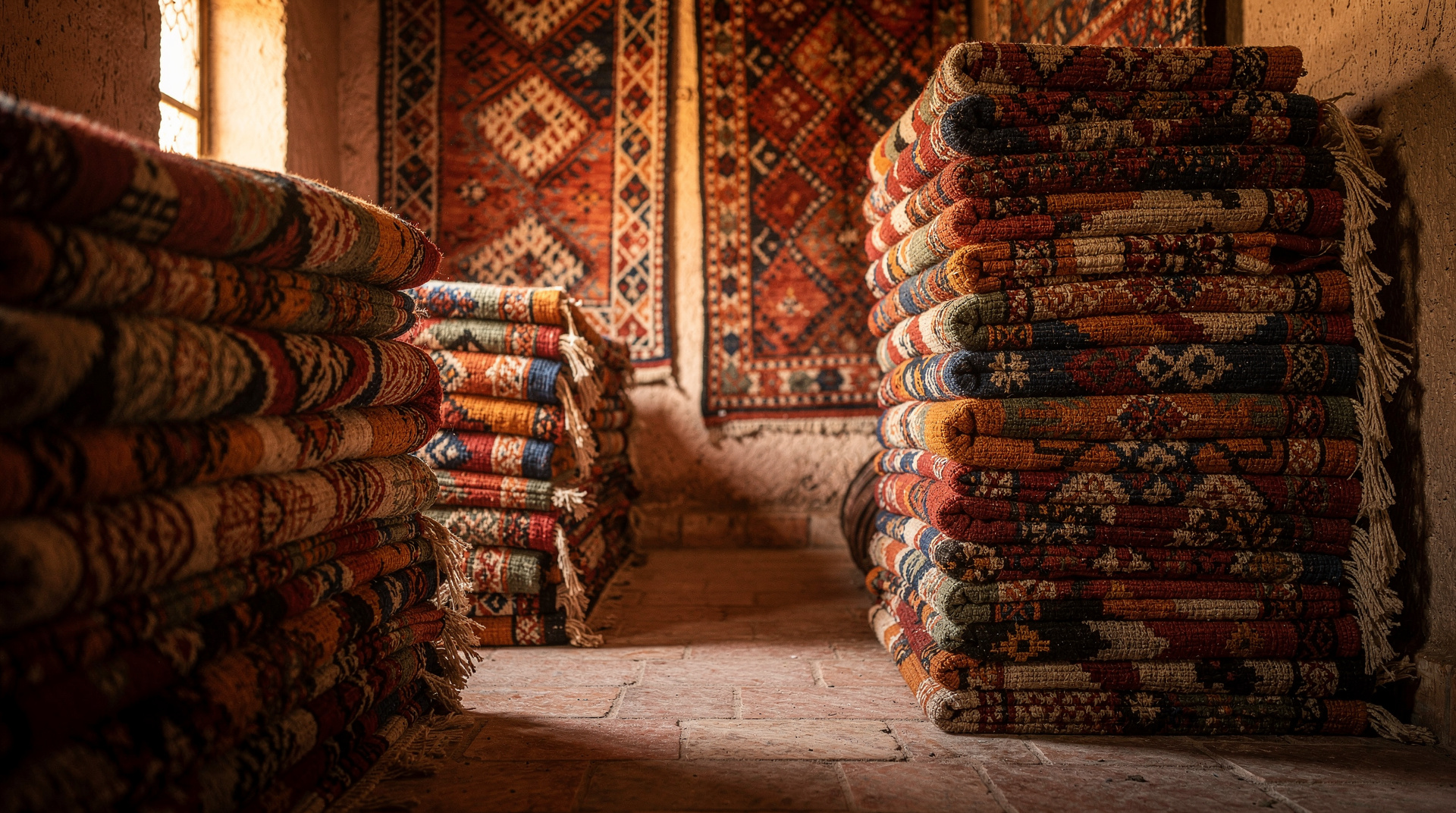
The most internationally famous Moroccan rug type, named for the Beni Ourain confederation of Berber tribes in the Middle Atlas mountains between Fes and Midelt. Genuine Beni Ourain rugs are made from undyed, natural-coloured wool in cream and ivory tones, often with a sparse geometric pattern in dark brown or black natural wool. The pile is thick and shaggy — typically 2–4cm — producing a luxurious feel that has made these rugs extremely popular in contemporary interior design.
Origin: The Beni Ourain region of the Middle Atlas, roughly between Guercif and Midelt. Genuine pieces come from Berber tribal families who have woven these patterns for centuries, though modern production has expanded to urban workshops copying the style.
How to identify genuine Beni Ourain:
- Natural wool smell, particularly when slightly dampened (lanolin has a distinctive earthy note)
- Back of the rug shows individual hand-tied knots (not uniform machine backing)
- Fringe is the extension of the warp threads, not sewn on separately
- Slight irregularity in the pattern — hand-weaving produces natural variation
- The wool pile feels substantially different from synthetic: heavier, slightly rough, not uniformly soft
Sizes and prices (genuine, high-quality):
- Small (100 x 150cm): 1,500–3,000 MAD
- Medium (150 x 200cm): 3,000–6,000 MAD
- Large (200 x 300cm): 6,000–15,000 MAD and above for exceptional pieces
These prices are for genuine old or quality new pieces from legitimate sources. Prices in Marrakech tourist souk stalls will often be presented as much higher and negotiated down theatrically — the starting figure is irrelevant.
Azilal
Azilal rugs come from the Azilal province in the High Atlas mountains south of Beni Mellal. They are more colourful than Beni Ourain — featuring abstract geometric patterns, symbolic motifs, and a wide palette of natural and sometimes synthetic dyes in pink, yellow, orange, and blue on a cream or ivory ground. The pile is medium-length, and the patterns are expressive and individual — each rug reflects the specific weaver and her cultural context.
Origin: The Azilal and Aït Benhaddou areas of the High Atlas, woven predominantly by women as part of the Berber tradition of textiles as a form of personal and communal expression. Motifs may include diamond shapes (symbol of the eye, for protection), chevrons (representing mountains), and stylised human or animal figures.
Identifying genuine Azilal:
- More colourful than Beni Ourain but still using wool or a wool-cotton blend
- The pattern is asymmetric — each genuine tribal piece is unique; a perfectly repeated pattern suggests machine or workshop production
- The back shows knotting
- Fringe is original (part of the warp), not attached
Prices:
- Small (80 x 150cm): 1,200–2,500 MAD
- Medium (150 x 200cm): 2,500–5,000 MAD
- The expressiveness and rarity of individual pieces can push prices significantly higher for exceptional examples
Boucherouite
The name comes from the Moroccan Arabic expression “bou sh’rette” — roughly “torn piece of clothing.” Boucherouite rugs are made from recycled materials: strips of cotton fabric, nylon clothing, plastic bags, and other textile scraps woven together on a cotton or jute warp. They are typically bold, colourful, and wildly varied — the antithesis of the carefully controlled Beni Ourain palette.
Originally produced from genuine necessity (using what was available rather than expensive wool), boucherouite has become valued as an art form in its own right. Major design museums and collectors prize exceptional pieces.
What to look for: The composition of recycled materials is clearly visible on close inspection. Quality boucherouite has dense, tightly packed strips; poor quality shows the backing through the pile. No two pieces are remotely alike — if they are, something is wrong.
Prices: More variable than wool rugs — a small exceptional piece can sell for the same as a large wool rug, while functional boucherouite runners are relatively inexpensive (800–2,000 MAD for medium sizes).
Kilim (Hanbel)
Kilims are flat-weave rugs with no pile — the pattern is created by the interlocking of warp and weft threads in different colours. Moroccan kilims (sometimes called hanbel) are typically geometric with bold colours and are made throughout the country by both Berber and Arab weaving communities.
Kilims are lighter and easier to transport than pile rugs, which makes them popular purchases. They are also somewhat easier to assess — the weave quality is visible from the front, and any machine weave shows immediately in the uniformity of the pattern.
Prices:
- Small kilim (60 x 120cm): 400–900 MAD
- Medium kilim (120 x 200cm): 900–2,000 MAD
- Large kilim: 2,000–5,000 MAD
Spotting synthetic and fake rugs
The rug selling circuit in Morocco’s tourist souks is full of acrylic, synthetic, or machine-made pieces sold as genuine tribal wool rugs. Here are the tests that work:
The burn test: Pull one thread from the fringe and burn it. Genuine wool: chars, smells of burning hair, produces dark ash that crumbles. Synthetic fibre (acrylic, nylon): melts rather than burns, smells of burning plastic, produces a hard bead of melted material. You can ask a seller to do this in front of you — a reputable merchant will agree immediately.
The feel test: Genuine wool has a slightly rough texture and some natural elasticity. Synthetic pile feels uniformly soft (almost silky) and lacks the slight friction of natural fibres.
The back test: Turn the rug over. Hand-knotted rugs show individual knot clusters on the backing. Machine-made rugs have a uniform fabric, canvas, or latex backing with no visible knotting. This is the most reliable test for pile rugs.
The price test: A genuine Beni Ourain rug of 150 x 200cm made from quality wool cannot be sold at 1,000 MAD and generate a profit for anyone in the supply chain. If the price is dramatically lower than benchmarks above, the material is almost certainly synthetic or the piece is machine-made.
The fringe test: On a genuine woven rug, the fringe is an extension of the warp threads — integral to the structure. On a fake, the fringe is sewn on separately. Check where the fringe meets the rug body; if there is a seam, the fringe is added.
Where to buy genuine rugs
Marrakech souk (Souk des Tapis)
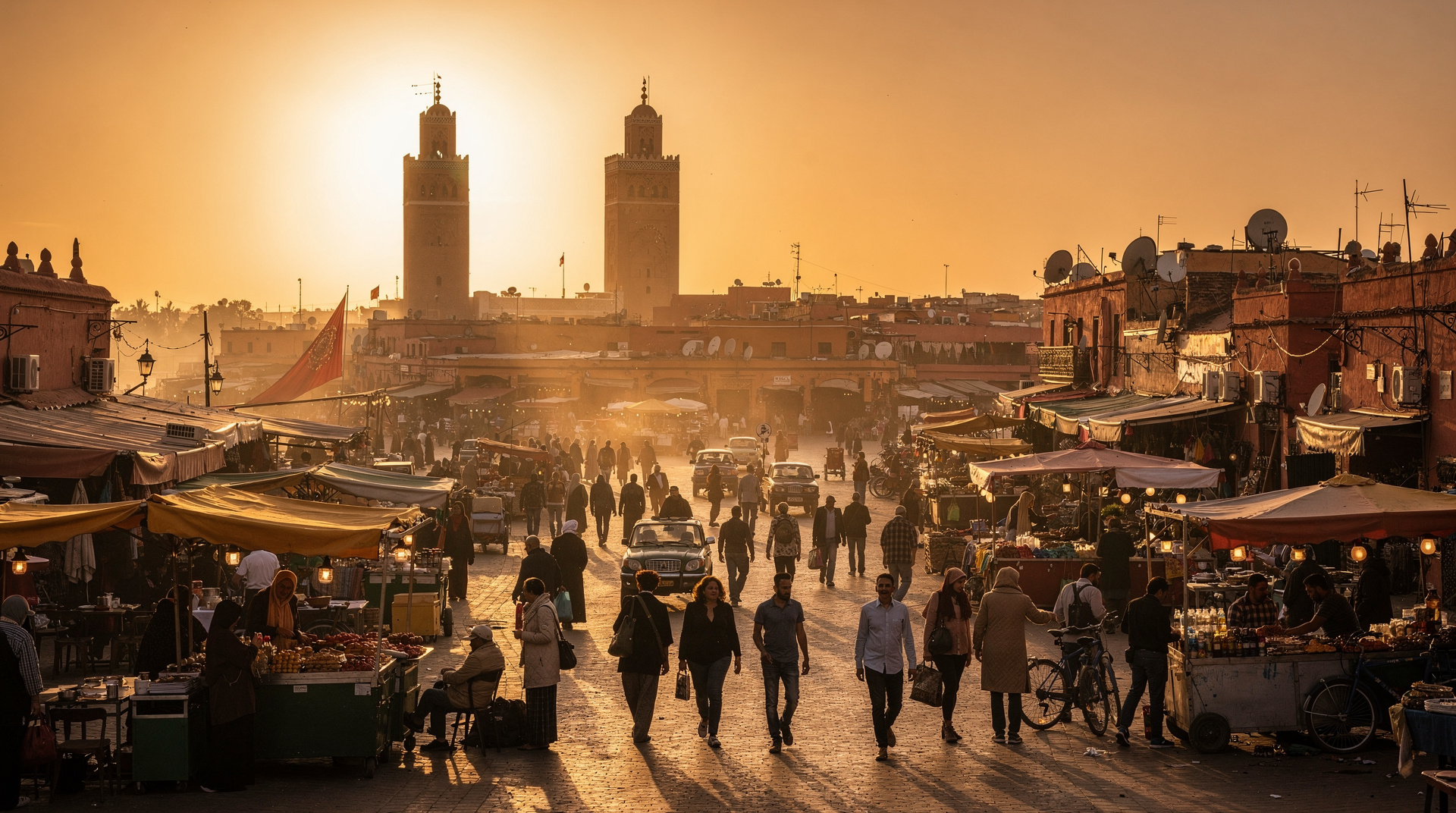
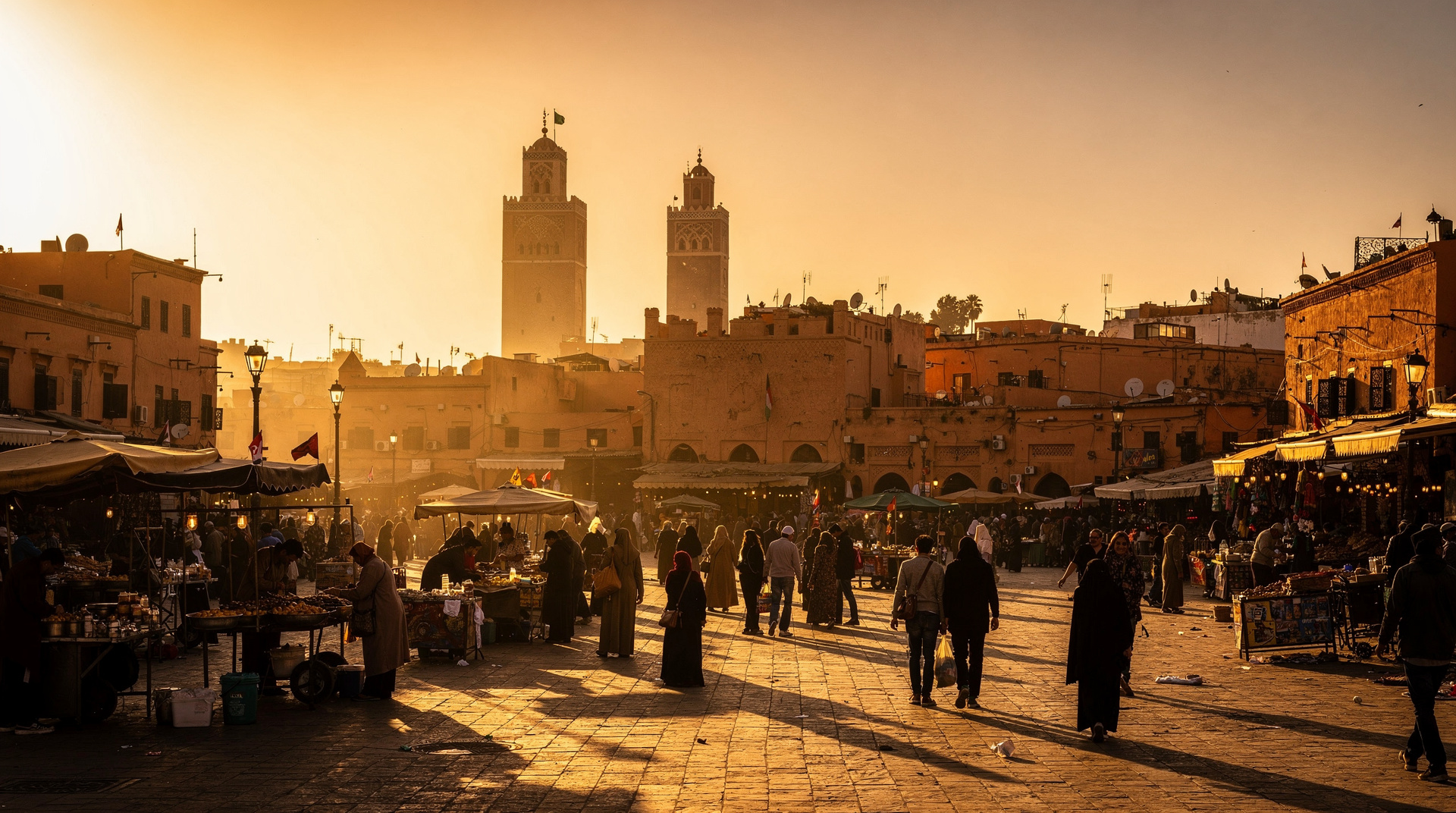
The dedicated carpet souk in Marrakech is located off the main souk route, roughly in the area of Rahba Kedima. This is where most visitors end up purchasing rugs. Quality here varies enormously — genuine tribal pieces coexist with mass-produced fakes, and the theatrical sales environment (mint tea, elaborate origin stories, aggressive price negotiation with a “final special price”) clouds judgement.
How to use the Marrakech carpet souk effectively:
- Go once early in the trip without intending to buy, just to understand the product range and pricing — joining a guided souk and medina tour on your first day helps orient you to the craft quarters before you shop independently
- Return with the specific type of rug you want in mind
- Apply the tests above before engaging in any negotiation
- Remember that the elaborate storytelling about a rug’s tribal origins may or may not be true — the physical properties of the rug are the only reliable guide to authenticity
Atlas Mountain cooperatives
The most reliable source of genuine Berber rugs is closer to the producing communities. Cooperatives in the Atlas Mountains sell directly to visitors at prices that reflect actual production costs without the Marrakech markup.
Cooperative d’Aït Benhaddou: Near the UNESCO kasbah, this cooperative sells genuine High Atlas weavings directly. Prices are fixed and fair.
Imilchil and Middle Atlas cooperatives: The Imilchil area is genuine Beni Ourain territory. Visiting this region during the annual marriage festival in September brings you into direct contact with the weaving community.
Fixed-price government cooperatives (Ensemble Artisanal): These exist in Marrakech (near Bab Nkob), Fes, and other cities. Prices are set and verified, quality standards are enforced, and the goods are genuinely Moroccan. The prices are not the lowest you can find but they are honest.
Chefchaouen and Fes medinas
Both cities’ medinas include fixed-price and cooperative shops where weavings are sold with cleaner provenance. The weavings in Chefchaouen are typically Rif-style rather than Atlas-style — see the Chefchaouen shopping guide for specifics.
For a broader guide to Morocco’s artisan cooperatives, the artisan cooperatives guide lists the most significant organisations and explains how to find them. The Atlas Mountains and Berber villages day trip visits active weaving communities outside Marrakech where you can see rugs made in their original context rather than in a tourist souk setting.
The carpet buying experience: what actually happens
Walk into a carpet shop in Marrakech’s tourist souk and the experience follows a fairly consistent script: tea is served; the merchant’s assistant begins pulling rugs from the shelves and spreading them across the floor; a story is told about each rug’s tribal origin; prices are quoted and immediately “discounted”; the atmosphere becomes increasingly intimate and time-pressured.
This script exists because it works. The social debt created by tea and hospitality, the overwhelm of choices, and the artificial urgency of “special price today only” all work together to produce purchases that visitors later question.
Useful counters:
- Accept the tea — it is genuinely offered in good faith and rejecting it is rude
- Tell the merchant explicitly what type, size, and price range you are looking for before any rugs are unrolled
- Leave and return the next day if you are interested — this breaks the urgency and also tests whether the “special price” is real
- Compare prices at the Ensemble Artisanal first so you know what genuine fixed prices look like
Shipping rugs home
Rugs purchased in Morocco can be shipped home through:
Your own luggage: A kilim or small Azilal can be rolled tightly and carried as checked luggage. Most airlines allow oversized items with the relevant fee.
Professional shipping: Major carpet shops in Marrakech and Fes offer international shipping through DHL or Aramex. Get a written receipt with the rug’s dimensions, material, and agreed price before allowing it to leave your sight.
Customs considerations: Import duties vary by country. EU residents can import goods worth up to €430 per person without duty. US residents: standard customs rules apply for personal use purchases. Large rugs (over $800 USD estimated retail value) may attract duty — consult your country’s customs authority.
How rugs fit into a broader Morocco shopping trip
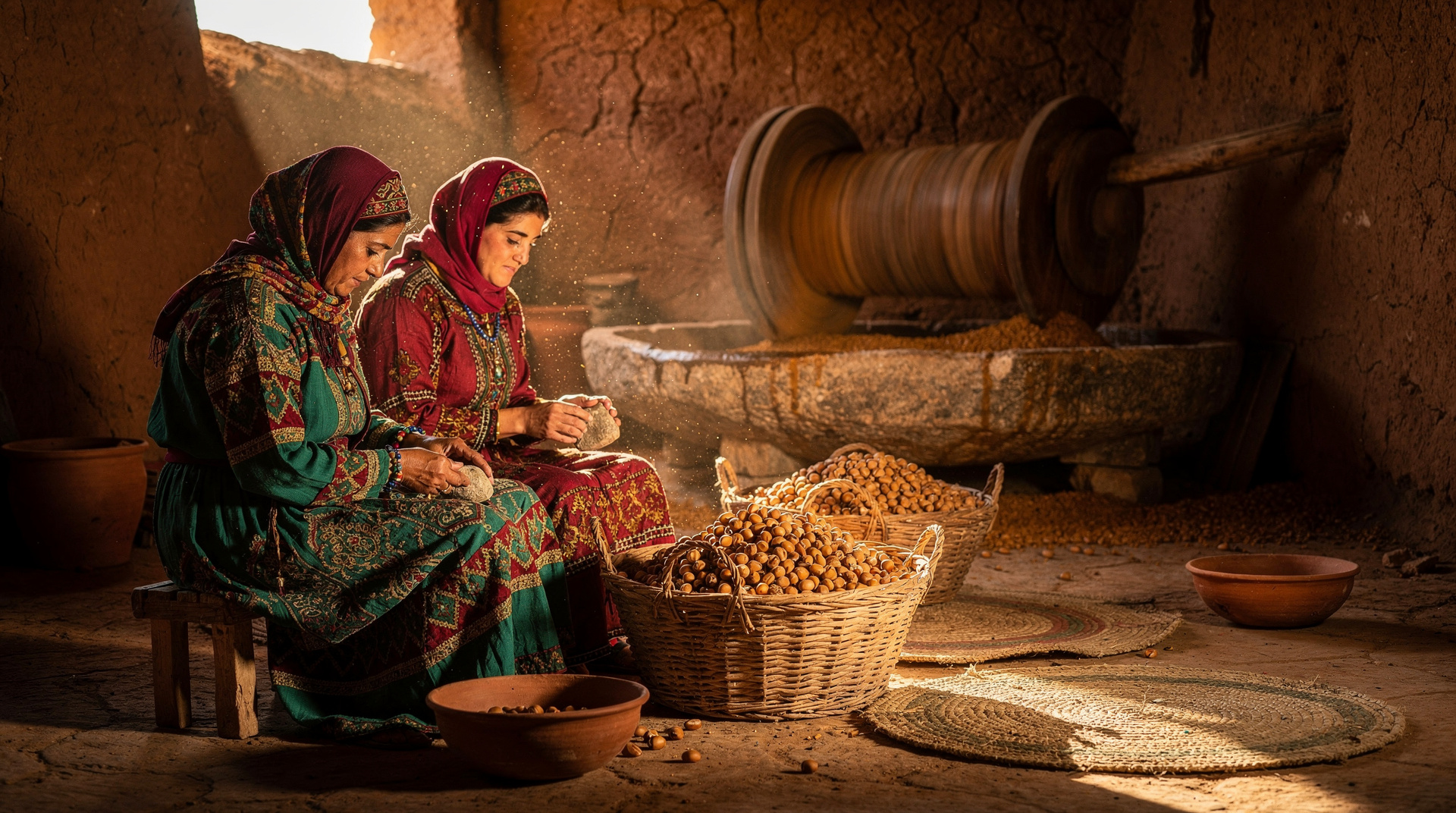
The rug-buying experience in Morocco is one of the most culturally distinctive shopping encounters you will have anywhere in the world. Even if you decide not to buy, visiting a genuine tribal rug cooperative and understanding the production process — women hand-knotting Beni Ourain pile for several months to produce a single medium rug — provides context that makes the rest of Moroccan craft culture more legible.
For the rest of Marrakech’s souk shopping, see the Marrakech souks guide. For leather specifically, the Fes leather goods guide gives the same level of detail on quality assessment and price benchmarks. The Marrakech destination guide covers logistics for being in the city.
Frequently asked questions about Buying Berber rugs in Morocco
What is the difference between Beni Ourain and Azilal rugs?
Beni Ourain rugs are cream-coloured with minimal black or brown geometric pattern and long shaggy pile — classic, neutral, widely used in contemporary interiors. Azilal rugs are more colourful, with expressive abstract patterns on a cream base, medium pile, and individual character. Both are genuine Atlas Mountain tribal weavings.
How do you negotiate a rug price in Morocco?
Start at 30–40% of the opening price, be prepared to walk away, and do not let the tea or the storytelling cloud your judgment about whether you actually want the item at the price being offered. The final fair price for a genuine rug is what the benchmark tables above suggest — not what the opening theatrical offer implies.
Can I trust rug certificates of authenticity in Moroccan shops?
Not reliably. Certificates are easy to produce and are not verified by any independent body. The physical tests described in this guide — burn test, back inspection, feel test — are more reliable than any document.
Is it better to buy rugs in Marrakech or directly from cooperatives?
Directly from Atlas Mountain cooperatives if you can arrange it — the prices are fairer, the provenance is clearer, and the money reaches the producing community more directly. Marrakech is more convenient but involves a larger intermediary markup and a higher proportion of misrepresented goods.
Do rug prices vary by season in Morocco?
Not dramatically — rug prices are driven more by tourist footfall and negotiating skill than by season. That said, cooperatives outside the July–August peak tend to have more time to talk through pieces properly, which indirectly helps you land a fairer price. See the best time to visit guide for the broader seasonal picture.
Can a rug be shipped directly from an Atlas cooperative?
Yes — most established cooperatives, including those near Aït Benhaddou, can arrange DHL or a local courier to a Marrakech shipping agent. Confirm the total cost (rug plus shipping) before committing, since remote shipping quotes can be vague until the package is actually weighed.