Kitesurfing in Morocco: Essaouira vs Dakhla compared
Is Essaouira or Dakhla better for kitesurfing?
Dakhla is better for freestyle and flat-water riding — its lagoon is world-class. Essaouira is better for those combining kitesurfing with a broader Morocco trip. Both have consistent wind, but Dakhla's conditions are more reliable and suited to a wider range of levels.
Two kitesurfing destinations that couldn’t be more different
Morocco’s Atlantic coast is one of the windiest coastlines in the world. The same trade winds that made Essaouira a medieval trading port make it a kitesurfing destination. And 1,200km further south, the Dakhla peninsula — a narrow spit of land extending into the Atlantic — has a flat-water lagoon that regularly features on lists of the world’s top kite spots.
Both deserve their reputations. But they serve very different kitesurfers and travel styles.
At a glance
| Where | Essaouira/Sidi Kaouki (Atlantic coast) or Dakhla peninsula (Western Sahara) |
| Cost | Essaouira lessons around 55-75 EUR/session; Dakhla weekly packages around 600-1,200 EUR all-inclusive |
| Time needed | Minimum 4-6 days to reach first independent water starts |
| Getting there | Essaouira: 2.5h drive from Marrakech; Dakhla: 2.5h flight from Casablanca |
| Best time | April-September for Essaouira; April-October for Dakhla |
Essaouira: the windy city of Africa
Why Essaouira has wind
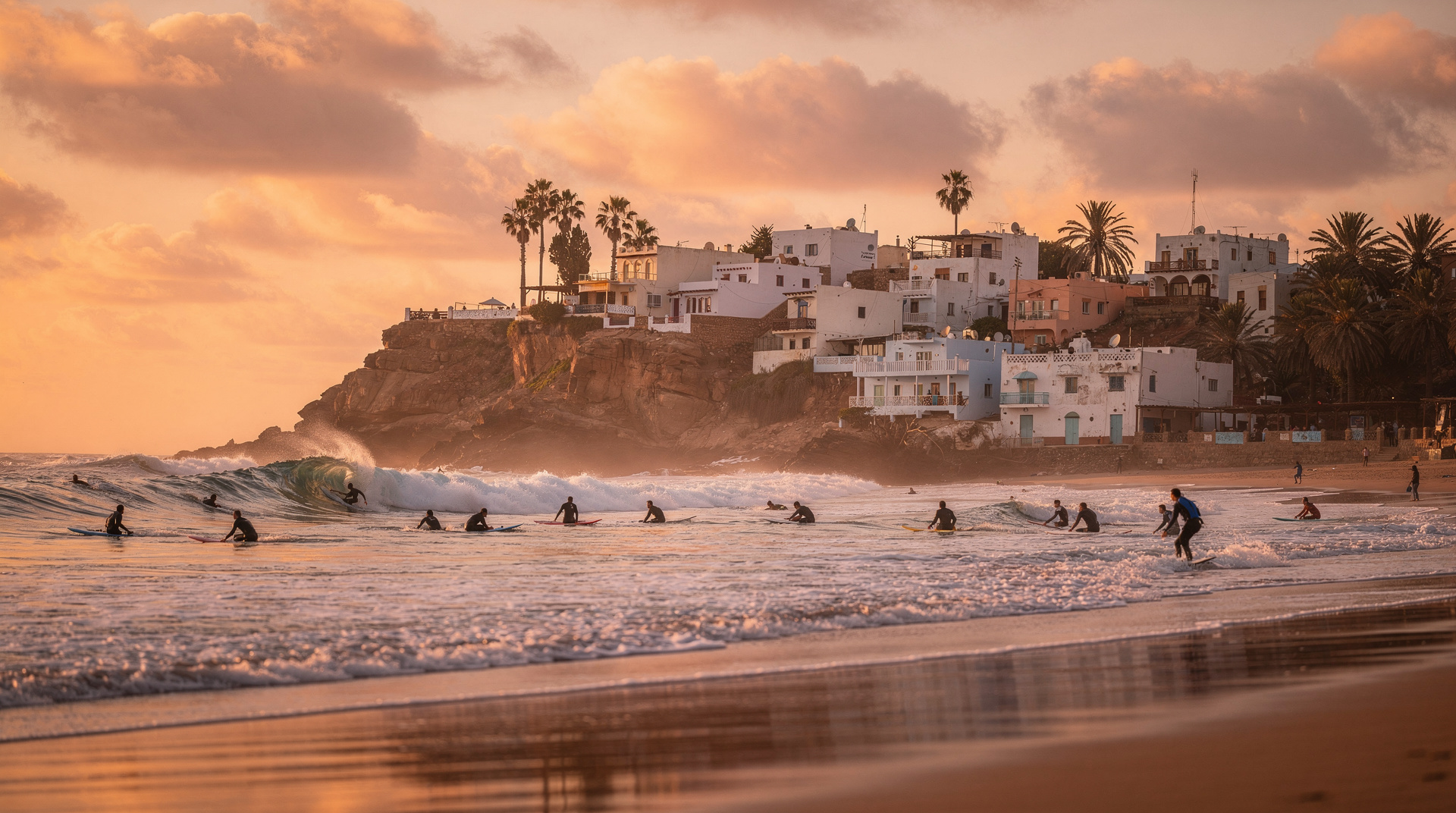
Essaouira sits on a natural headland that funnels Atlantic trade winds. The alizé wind blows consistently from the north-northeast, typically beginning in the late morning and building through the afternoon. Average wind speeds during peak season (April–September) run 20-30 knots. The consistency rather than the strength is what makes Essaouira: you can almost set your watch to the wind arriving by 11am.
The kitesurfing conditions at Essaouira
Essaouira’s kite beach is Sidi Kaouki, about 25km south of the medina, accessible by taxi or rented car. This is where the kite schools concentrate. The beach is wide, the launch and landing zones are well-defined, and the bottom is sandy.
The wave profile is important to understand: Essaouira is not flat water. The Atlantic swell combines with the wind chop to produce a choppy, wave-influenced surface that suits wave riders and intermediate-to-advanced kiters. Beginners can learn here, but it takes longer and requires more skill than learning in flat water.
Wind direction at Essaouira is predominantly cross-onshore — fine for kiting, but requiring attention during lessons. There’s no lagoon or protected water: if you drop your kite offshore, you’re swimming.
Seasons at Essaouira
April–September: Peak wind season. Most reliable conditions. Water temperature 18-20°C. This is when the schools run full operations. June and July see the most consistent 25+ knot days. The Gnaoua World Music Festival in June brings large crowds to the medina.
October–March: Wind still present but less consistent, dropping to 15-20 knot averages. Can go light for several days in a row. Fewer kite schools operating. Swell increases, making conditions more wave-oriented.
Year-round note: The afternoon wind is the working assumption. Mornings are often calm and flat — a significant difference from Dakhla where wind arrives earlier.
Kitesurfing lessons and gear at Essaouira
The Essaouira kitesurfing lesson is the standard entry point for first-timers. A proper IKO-certified beginner course runs 3–4 days minimum: day one in the water with the trainer kite, days two and three body dragging and board work, day four first water starts if conditions are right.
Prices: group lessons run 600–800 MAD (55–75 EUR) per 3-hour session. Full beginner courses: 3,500–5,000 MAD (320–460 EUR) for 4 days including gear rental. Private instruction: 900–1,200 MAD (82–110 EUR) per session. Equipment rental (kite, board, harness, wetsuit) for certified kiters: 400–600 MAD/day.
If you would rather stay on the board without the kite for a day, a surf lesson in Essaouira is a lower-commitment way to get used to the Atlantic swell, and it works well on mornings when the wind has not yet arrived.
Dakhla: the flat-water paradise
What makes Dakhla exceptional
Dakhla sits in Western Sahara, administered by Morocco. The town occupies a peninsula pointing into a vast lagoon — 50km long, protected from the ocean swell by a natural sandbar. The result is flat, shallow water with consistent wind and zero wave chop in the inner lagoon sections.
This is why Dakhla has become a serious freestyle and speed kite destination. No chop means you can jump, land, and ride in either direction without fighting the water surface. The lagoon’s shallow sections allow standing at 60-80cm depth — a critical safety factor for beginners and a useful playground for advanced riders working on tricks.
The wind at Dakhla
Dakhla’s wind is driven by the same Atlantic trade winds as Essaouira, but the lagoon creates more consistent conditions. Wind typically arrives earlier in the day (10-11am), blows more steadily through the afternoon, and calms later in the evening. Average speeds run 18-28 knots during peak season.
The statistics that serious kiters care about: Dakhla averages 300+ windy days per year. Essaouira averages 280-300, but with less reliable morning wind.
Dakhla’s spots
The lagoon (inner sections): Flat water, perfect for freestyle, beginners, and anyone who wants to focus on technique without fighting waves. Shallow enough to stand in large areas. The kite camps are positioned along the lagoon shore.
The lagoon (outer sections and ocean-facing spots): Wave kiting, with decent Atlantic swell reaching around the sandbar. More challenging, appropriate for experienced wave kiters.
Speed strip: A famous flat stretch where speed records have been attempted. The corridor is used for downwind runs with consistent side-offshore wind.
Seasons at Dakhla
April–October: The primary season. Most wind, warmest water (22-25°C). European kite tourists fill the camps June through September. October is excellent — wind still reliable, water warm, fewer crowds than July–August.
November–March: The shoulder and off-season. Wind less consistent. Cooler water (18-20°C). Some camps close December–January. However, good wind days in winter can produce excellent empty-lagoon sessions for experienced kiters.
Dakhla’s kite infrastructure
The industry around Dakhla’s lagoon is well-developed. Dedicated kite camps line the lagoon shore — most are package operations offering accommodation, full equipment, instruction, and transfers from Dakhla town. Packages run 600–1,200 EUR per week all-inclusive depending on camp quality and season.
Reaching Dakhla from the rest of Morocco: fly from Casablanca (Royal Air Maroc runs regular services, 2.5h), or drive the long road south — about 20h from Agadir through the Sahara coastal highway. Most kite tourists fly directly.
Side-by-side comparison: Essaouira vs Dakhla
| Factor | Essaouira | Dakhla |
|---|---|---|
| Water type | Ocean, choppy | Lagoon, flat |
| Wind consistency | Good (280+ days) | Excellent (300+ days) |
| Wind arrives | Late morning (11am+) | Mid-morning (10am+) |
| Best for | Beginner lessons, wave kiting | Freestyle, beginner progression, flat water |
| Season (peak) | April–September | April–October |
| Distance from Marrakech | 2.5h drive | 1,200km south (fly) |
| Combined with Morocco trip | Easy | Dedicated trip only |
| Camp infrastructure | Adequate | Highly developed |
| Price (weekly kite package) | 2,500–4,500 MAD | 600–1,200 EUR |
| Non-kite activities nearby | Medina, markets, culture | Limited — pure kite destination |
Who should choose Essaouira
Essaouira makes sense if:
- You’re combining kitesurfing with a broader Morocco trip (it’s 2.5h from Marrakech)
- You want to mix kite sessions with medina exploration, music festivals, and Moroccan culture
- You’re a wave kiter who wants ocean conditions
- You’re a beginner willing to work harder in choppier water (the medina and atmosphere compensate)
- You don’t want to take an additional domestic flight
The Essaouira destination guide covers the full city alongside the surf scene. For a day trip from Marrakech combining the medina with a kite session, the Essaouira day trip guide is worth reading before booking.
If you are still deciding where to stay on the coast, the best riads in Essaouira make a quiet base after a windy afternoon, and the Essaouira vs Agadir comparison helps if you are weighing the two coastal hubs. Travellers who also want to try waves rather than wind can look at Taghazout vs Essaouira before committing to one base.
Who should choose Dakhla
Dakhla makes sense if:
- Kitesurfing is the primary purpose of your Morocco trip
- You want flat water for freestyle progression or record attempts
- You’re a complete beginner who wants to learn in the most forgiving conditions
- You have a week or more specifically for kitesurfing
- You’re willing to fly separately from the main Morocco circuit
Dakhla sits well outside the usual first-timer route, so it works best as its own trip or as a final leg after a shorter loop. Our Dakhla destination guide covers the town itself, and the Morocco 10 vs 14 days guide shows how much time a dedicated kite week takes out of a longer itinerary.
Getting kite-certified: what the qualification process looks like
Neither Essaouira nor Dakhla requires you to be certified to kite, but IKO (International Kiteboarding Organization) certification is the standard and most reputable schools run IKO courses.
IKO Level 1 (beginner): covers kite theory, safety systems, body dragging, and first board starts. Takes 9-12 hours of instruction. At Dakhla’s lagoon in flat water, students often achieve their first water starts by day three.
IKO Level 2: independent upwind riding. Additional 6-9 hours.
Cost for full IKO Level 1+2 certification: 5,000–8,000 MAD (460–740 EUR) including equipment. Dakhla camps typically include this in weekly packages.
Gear considerations: what to bring
If you own your gear, bring it — rental fleets at both destinations are adequate but not exceptional for experienced kiters used to specific equipment.
Wetsuits: 3/2mm for Essaouira October–April; boardshorts possible June–August. Dakhla is warmer in summer — 2/2mm or even rashguards in peak season.
Kite size: Essaouira conditions typically suit 9-12m kites during peak season. Dakhla’s lagoon with steadier wind often allows a smaller kite — 8-10m is common.
Pack for the rest of the trip too: sun protection matters on open beaches, and the Morocco packing list covers what to bring for the days off the water. If your plans include the Atlantic coast beyond kiting, the surf Morocco itinerary shows how a coastal route can fit together.
Practical logistics for Essaouira kitesurfing
Getting there: Marrakech Menara to Essaouira — CTM bus (70 MAD, 2.5h) or grand taxi (around 80-100 MAD/person). From Agadir: 2.5h north on the coastal road.
Sidi Kaouki from Essaouira: 25km south. Petit taxi or rental car (60-80 MAD one way). Some kite schools run shuttles from the medina.
Accommodation at Sidi Kaouki: Several surf and kite camps offer on-site accommodation. Essaouira medina accommodation is more characterful but adds daily commute.
The Atlantic coast destination guide has full logistics for moving between Essaouira, Agadir, and Taghazout. For surfing rather than kitesurfing, the Taghazout surf guide covers the point breaks to the south. If you’re planning the full surf and coast itinerary, the best time to visit Morocco guide explains the seasonal wind patterns in context.
For moving around once you land, the getting around Morocco guide lays out buses, taxis and rental cars, and the Essaouira day trip from Marrakech shows the road in detail. Rest days between sessions are well spent in the medina, and the food tours in Essaouira are an easy way to fill an evening when the wind drops.
Frequently asked questions about kitesurfing in Morocco
Is Morocco good for learning to kitesurf from scratch?
Yes — both destinations have professional IKO schools. Dakhla’s flat water is more beginner-friendly for faster progression. Essaouira works but choppy water makes early board starts harder.
Do I need any experience before a kite lesson?
No prior experience required. You’ll spend the first session with a trainer kite (small kite you control on land) before progressing to the full setup.
How many days does it take to learn kitesurfing?
First independent water starts: typically 4-6 days for most students. Upwind riding that gives you real independence: 8-12 days. Intensive weeks at Dakhla accelerate this because flat water means more time on the board and less time swimming.
Is kitesurfing in Morocco safe?
The main hazards are the same as anywhere: kite crash on land, being downwind of an obstacle, and offshore wind. All reputable schools use safety systems (quick release), teach self-rescue, and conduct lessons in appropriate wind windows. Essaouira’s cross-onshore wind is safer than pure offshore would be.
What else is there to do in Dakhla besides kitesurfing?
Windsurfing, stand-up paddleboarding on the lagoon, fishing, and exploring the town are the main alternatives. Dakhla is a kite-focused destination — if you want cultural Morocco, the town has limited interest compared to the imperial cities or Essaouira.
Can beginners choose either destination, or does the choice matter more for experienced kiters?
Beginners benefit most from choosing carefully — Dakhla’s flat lagoon shortens the learning curve noticeably, while Essaouira’s chop adds friction to early board starts. Experienced kiters can enjoy either: Essaouira for wave riding and a broader Morocco trip, Dakhla for freestyle and speed. If you’re only doing one Morocco kite trip and want the fastest progression, Dakhla is the more efficient choice.