Fes souks guide: the medina's ancient markets explained
What are the best souks to visit in Fes and what should you buy there?
The Attarine spice souk, Nejjarine carpenter quarter, Henna Souk, and the area around Chouara tannery are the essential stops. Buy leather goods, quality spices, hand-painted ceramics, and carved cedarwood. Avoid 'antiques' without documentation and any rug sold under heavy pressure.
The medina that has barely changed in a thousand years
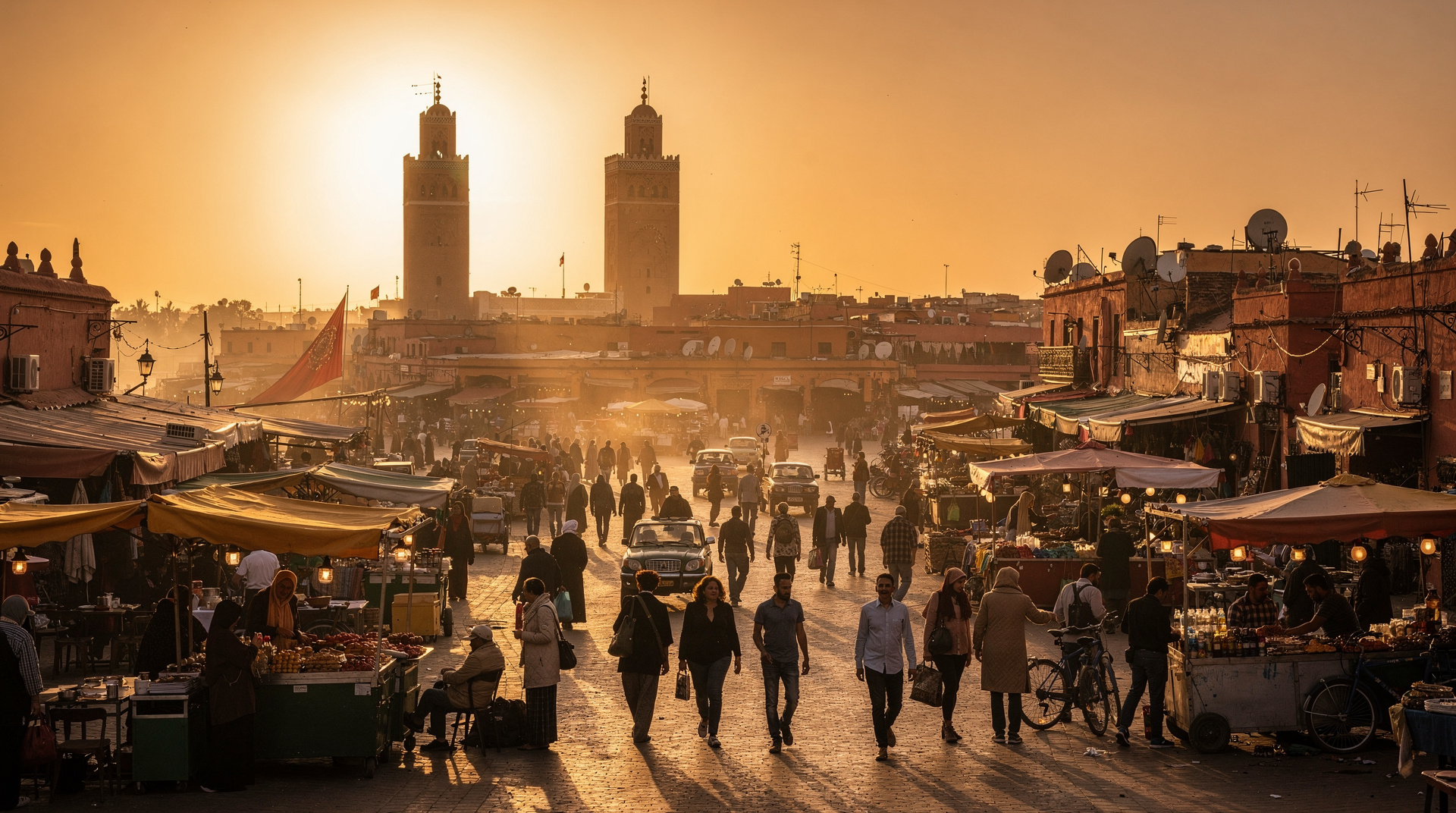
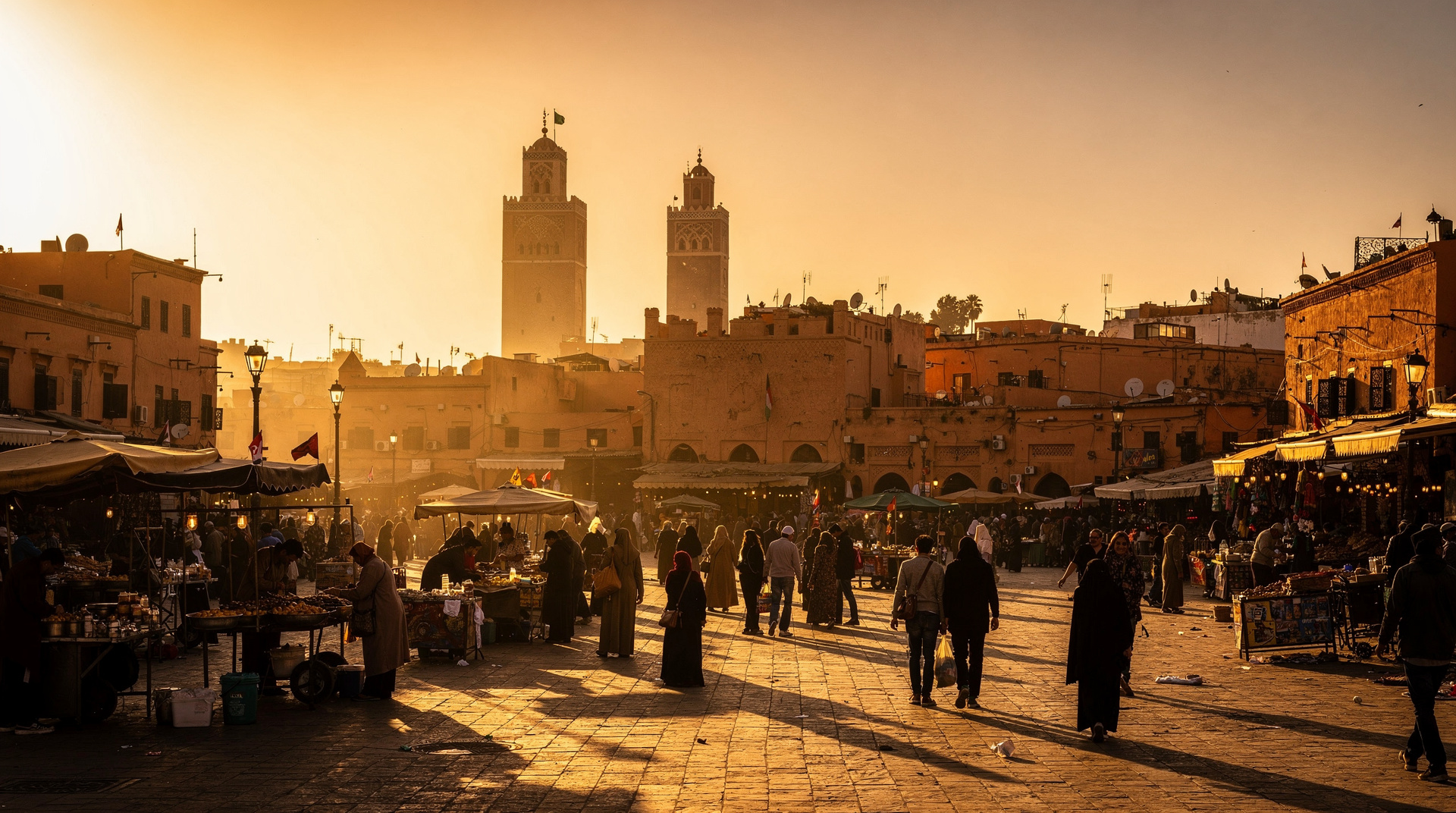
Fes el-Bali — the old medina of Fes — is a UNESCO World Heritage Site and the largest car-free urban area in the world. Its 9,000 alleyways are narrower than Marrakech’s, its walls older, and its souk culture deeper and less interrupted by tourist overlay. Where Marrakech’s souks have gradually turned toward visitors, Fes medina is still substantially a working city that happens to have tourists in it rather than a tourist destination that happens to have locals.
This distinction matters practically. The Fes souks are harder to navigate (no logical grid, alleys that shrink to 80cm, no signage in Roman script), less pressured for casual shopping, and more likely to contain genuine craftspeople doing their actual work. A copper engraver in the Haddadine quarter of Fes is not performing for cameras — he is filling orders for local customers. The tannery workers at Chouara have been dyeing leather the same way for 800 years not because it photographs well but because the process produces leather that lasts.
This guide covers the key souk districts, what they sell, price benchmarks, and the practical questions around the tanneries that confuse most visitors.
At a glance
| Where | Fes el-Bali medina, entered from Bab Bou Jeloud |
| Cost | Free to browse; tannery terrace access typically free, leather bags around 600-800 MAD |
| Time needed | Half a day minimum, a full day for a thorough visit |
| Getting there | Petit taxi (around 25-35 MAD) or riad pickup from the train/bus station |
| Best time | Morning for the tannery; avoid Friday afternoon (partial closures) |
The main souk districts of Fes medina
Attarine souk (spice and perfume market)
Located directly adjacent to the Al-Attarine Madrasa, Souk Attarine is the aromatic heart of Fes medina. Vendors sell Ras el Hanout, saffron, dried rosewater, kohl, argan oil, orange blossom water, and an extensive range of medicinal herbs used in Moroccan folk medicine. The concentration of small family stalls here is more genuine than the tourist-facing spice shops near the major landmarks.
What to buy: Ras el Hanout (40–70 MAD per 100g for genuine blends), saffron from the Taliouine region (genuine saffron is expensive — expect 15–25 MAD per gram), and locally produced argan oil. Ask vendors to open the container so you can smell. Genuine Ras el Hanout has 15–20 distinct aromatic notes; a poor blend smells predominantly of one spice.
Price check: Saffron sold at dramatically low prices is padded with safflower (same colour, no flavour). Genuine saffron in Morocco costs 1,500–2,500 MAD per 100g (15–25 MAD/gram) and should be sold by the gram.
Nejjarine (carpenters’ quarter)
The sounds of the Nejjarine quarter — adzes and saws on cedarwood — carry down the alley before you see it. This is where the carved cedarwood ceilings, decorative screens (moucharabieh), and furniture that fills Moroccan riads are produced. The Nejjarine Fountain (an 18th-century public drinking fountain in carved cedar, tile, and wrought iron) anchors the square; the Nejjarine Museum of Wooden Arts and Crafts occupies the adjacent funduq (caravanserai).
What to buy: Small carved cedar boxes (50–150 MAD), thuya wood bowls (a different wood with distinctive grain patterns, often made in Essaouira but sold here), and decorative screens if you can solve the shipping problem. The cedar scent in these products lasts for years.
Henna Souk (Souk al-Henna)
Despite its name, Henna Souk now sells a broader range of traditional goods than henna alone — ceramics, herbal cosmetics, baskets, and woven goods alongside the actual henna paste and powders. It occupies a shaded square with a large old tree, which gives it a more relaxed atmosphere than the main souk arteries. The ceramics sold here include genuine hand-painted Fes blue-and-white ware at somewhat lower prices than the main tourist shops.
What to buy: Henna powder (30–60 MAD for a good-quality packet), blue-and-white ceramic plates and bowls, woven baskets. The henna artists in the square will paint your hand — agree the price before sitting down (50–100 MAD for a simple design is fair).
Chouara tannery quarter
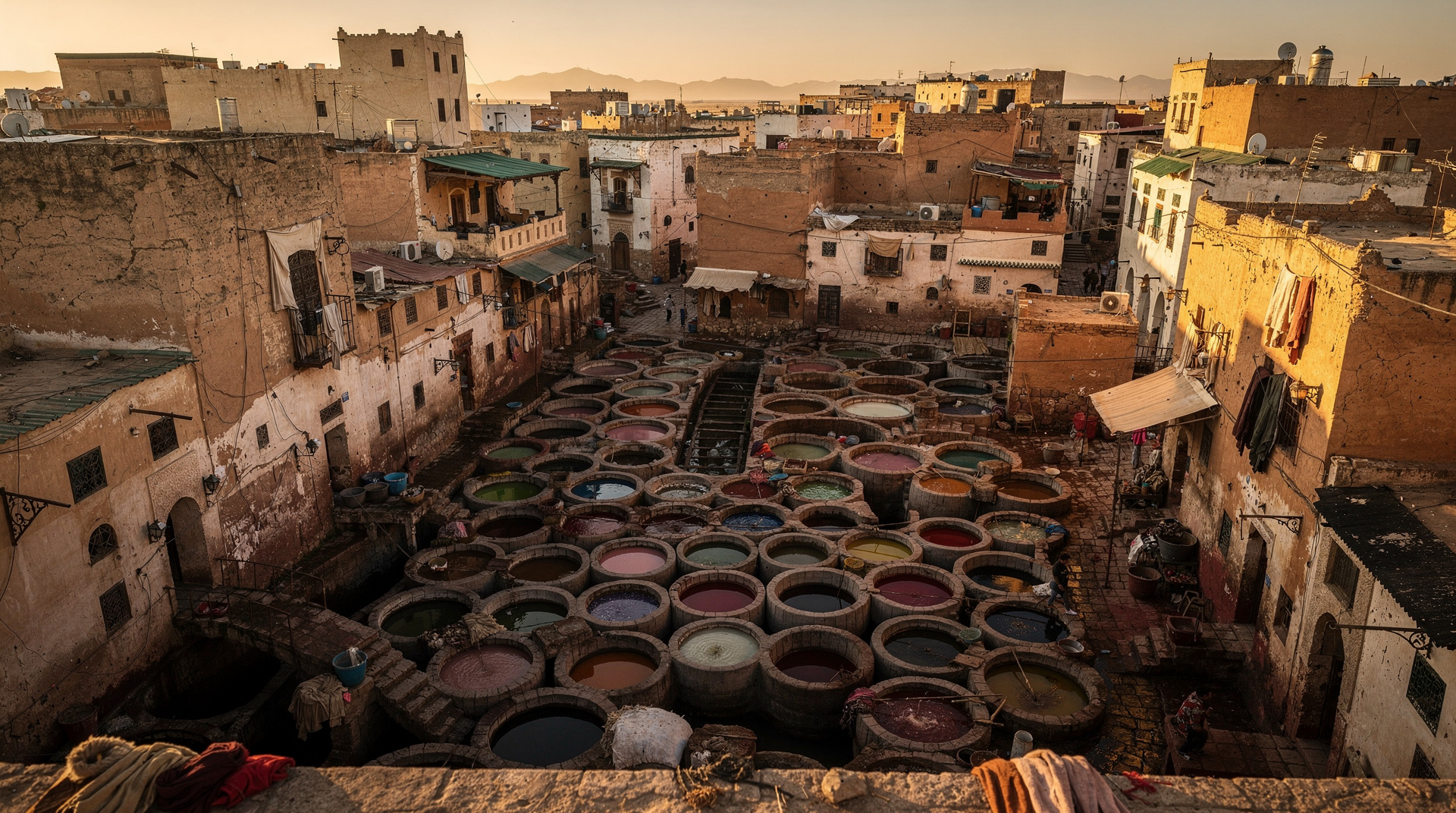
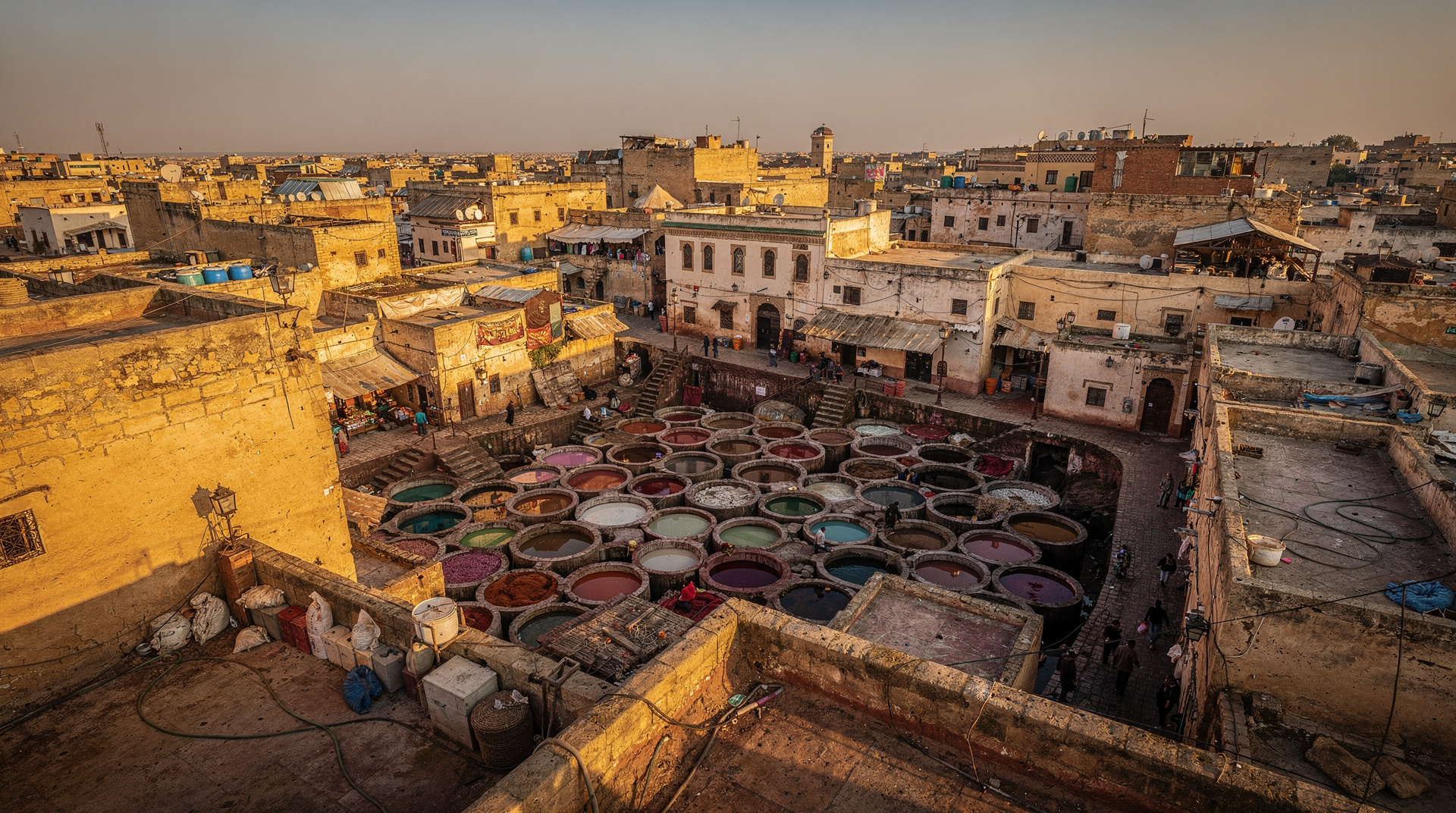
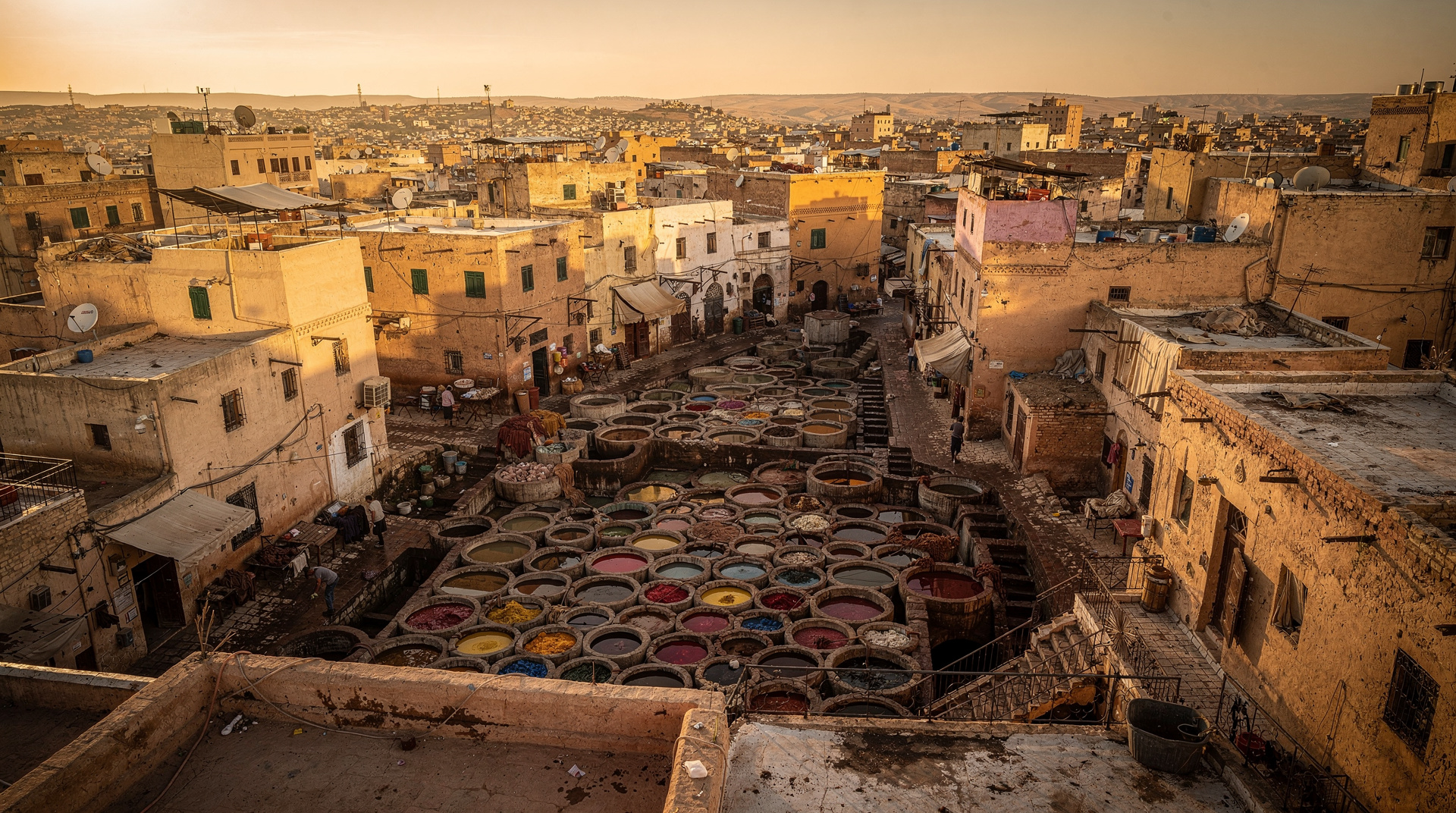
The Chouara tannery is simultaneously Fes’s most visited sight and its most misunderstood. What visitors see from the surrounding terraces is a working dye facility that has operated continuously for approximately 800 years. The circular stone vats — filled with pigeon dung (ammonia for softening), quicklime, saffron, poppy, indigo, and henna — produce the distinctive Moroccan leather colours that define the country’s leather goods industry.
The overlook terraces belong to surrounding leather merchants, who offer free access to visitors in exchange for the opportunity to show their goods. This is not a scam — it is an honest commercial arrangement, and you are under no obligation to buy anything. The smell at the tannery is powerful (ammonia and decomposing organic matter); you will be offered a sprig of mint to hold under your nose. Accept it.
Book tannery entry access in FesThe leather goods sold in the tannery quarter shops are among the best in Fes — this is where the product is made, not merely sold. For a detailed breakdown of what to buy and how to assess quality, see the Fes leather goods guide.
Ras el Chebs (copper and metalwork)
Less visited than Marrakech’s equivalent, the metalwork quarter of Fes produces copper trays, lanterns, serving vessels, and decorative platters using hand-hammering techniques you can watch through open workshop doors. Prices are lower here than in Marrakech for comparable quality.
What to buy: Copper or brass tea trays (150–400 MAD depending on size and engraving complexity), lanterns, small incense burners.
The tannery visit: what no one explains clearly
The standard tannery experience generates more confused reviews than almost any other Moroccan attraction, largely because the physical setup is confusing. Here is exactly how it works:
Access: The Chouara tannery itself is private — a working facility, not a public space. The view is obtained from the terraces of the shops surrounding it. Multiple shops on Derb Chouara and Rue Chouara offer free access to their terrace overlooks.
What you see: Up to several dozen workers in knee-deep vats, moving hides between colour and treatment stages. The process is: fresh hides arrive, are soaked in salt water, then lime pits (to remove hair), then pigeon dung vats (to soften), then colour vats (saffron yellow, indigo blue, poppy red, henna orange, mint green), then drying racks on the slopes below.
Best time to visit: Morning, when the workers are most active and the light is better for photography. The tannery is more or less quiet on Fridays.
The sales pitch: After your terrace visit, you will be invited through to the shop. The bags, jackets, and poufs are genuinely produced with Chouara leather. Prices are negotiable but start high — a mid-quality leather bag might open at 1,200 MAD; 600–800 MAD is a fair price for genuine quality. See the leather goods guide for detailed benchmarks.
Guided tours vs solo exploration in Fes
Fes medina is more genuinely disorienting than Marrakech’s, and the case for a guide is stronger here. GPS works poorly in the deep alleys because satellite signal bounces off the walls. The medina’s layout is not based on a grid of any kind — it was built organically over centuries, layer by layer, and its logic is largely tribal (different neighbourhoods built by different communities at different times).
What a guide adds in Fes that it doesn’t in Marrakech: Context. The history of Fes medina is dense and layered — the University of Al-Qarawiyyin (founded 859 AD, the world’s oldest continuously operating university), the competing influences of Andalusian refugees, Berber tribal communities, and successive dynasties, and the specific craftspeople who supply specific royal palaces. A good guide turns what would otherwise be an aesthetic experience (old buildings, colourful vats) into something intellectually engaging.
Book a guided Fes medina tourHalf-day option: If a full day feels like too much, a focused half-day sightseeing tour covers the tannery, one or two madrasas, and key souk quarters with enough structure to make sense of the layout.
Book a Fes half-day sightseeing tourSolo navigation: If you are determined to explore independently, download Maps.me with the Fes offline map, start from Bab Bou Jeloud (the main blue gate entrance), and keep the gate as a reference point. The main souk artery (Talaa Kebira) runs more or less straight from the gate to the Attarine area and is findable even when you’re temporarily lost.
What to buy in Fes — and what to leave behind
Buy
Leather goods: The quality of leather produced at Chouara is genuine. Well-made bags, poufs, wallets, and babouches from the tannery district are among Morocco’s best purchases. Take time to inspect stitching and material feel. See the leather goods guide for specifics.
Blue and white ceramics: Fes is the home of Moroccan blue-and-white pottery, produced primarily in the Aïn Nokbi potters’ village on the medina’s edge. Authentic hand-painted pieces have slight imperfections in the line work (painted by hand, not machine). For a full explanation, see the Fes blue pottery guide.
Spices: The Attarine souk’s family stalls are a reliable source of quality saffron, Ras el Hanout, and preserved lemons. Buy from vendors who let you smell before purchasing.
Carved cedarwood: Boxes, frames, and decorative items from the Nejjarine quarter last decades. The scent gradually fades but remains faintly detectable for years.
Leave behind
“Antique” coins, weapons, and artefacts: Fes has an active trade in items presented as medieval Moroccan antiques. Genuine items exist but require export documentation; fakes are abundant. Don’t buy without verifiable provenance.
Rugs on the tourist route: Carpet sellers near Bab Bou Jeloud target new arrivals with high-pressure sales pitches. The Berber rugs guide explains how to distinguish genuine handwoven pieces from machine production.
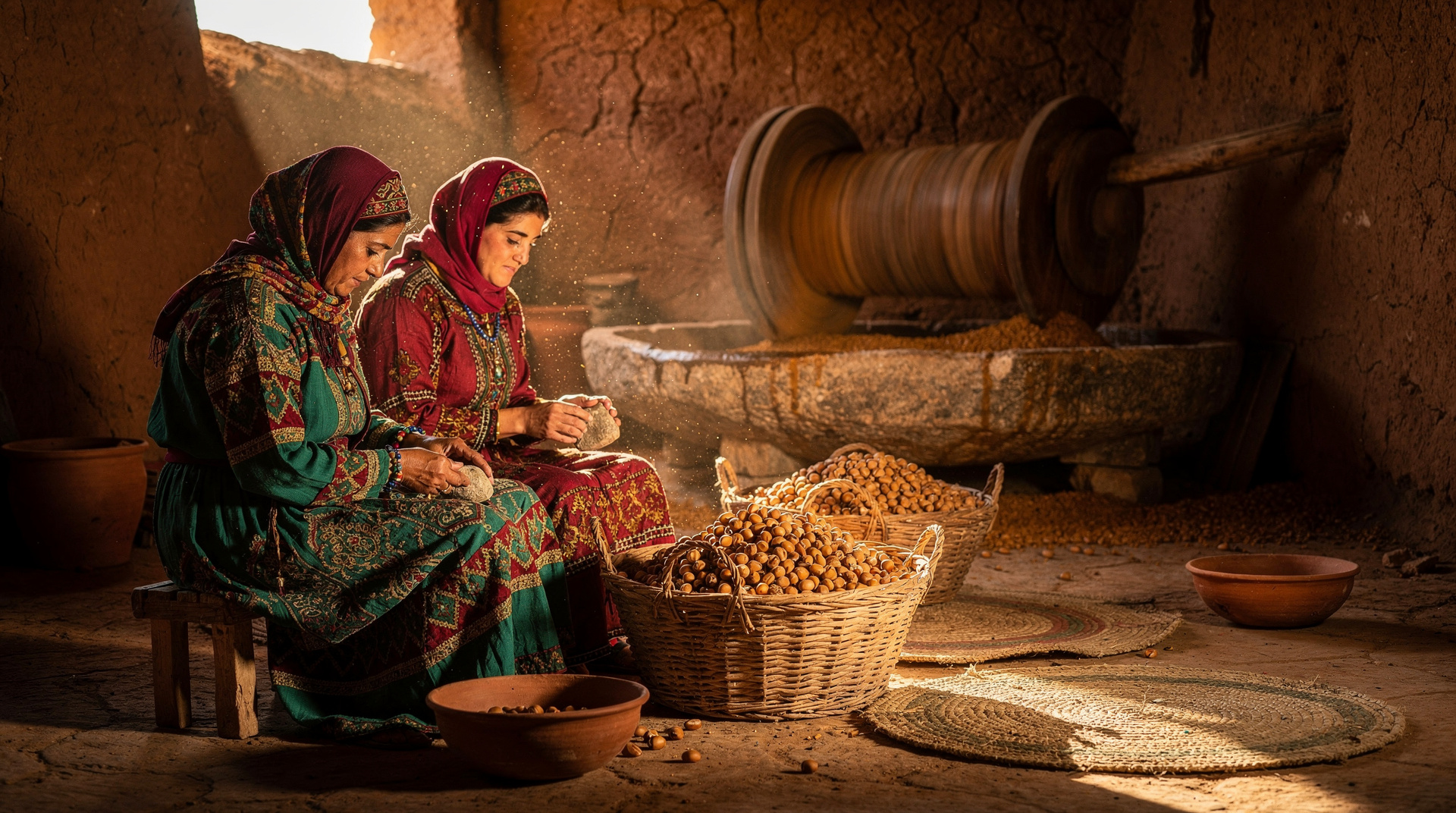
Packaged “argan oil” without origin labelling: Genuine Moroccan argan oil comes from cooperatives in the Souss-Massa region. Generic bottles without cooperative certification may be diluted or mislabelled.
Fes vs Marrakech souks: key differences
| Factor | Fes | Marrakech |
|---|---|---|
| Tourist orientation | Lower | Higher |
| Navigation difficulty | Higher | Moderate |
| Pressure to buy | Lower | Higher |
| Leather quality | Excellent (made here) | Good |
| Ceramics | Fes blue pottery | Varied |
| Atmosphere | More authentic, quieter | Louder, more theatrical |
| Guide value | Essential for first visit | Recommended |
The two souk experiences complement rather than duplicate each other. If you are visiting both cities, dedicate your major shopping session to Fes for leather and ceramics, and use the Marrakech souks more for atmosphere and smaller craft items.
Practical details
Getting to the medina: The train and bus stations are in Fes el-Jedid (the newer city), about 3 km from Bab Bou Jeloud. Take a petit taxi (25–35 MAD, insist on the meter) or arrange pickup with your riad. Many riads are within the medina walls — no cars can follow you inside.
Opening hours: Souks are generally open 9am–7pm, six days a week. Friday afternoon sees partial closures for prayers; fully closed on major Islamic holidays.
Cash: Bring MAD — many souk stalls are cash-only. The nearest ATMs to Bab Bou Jeloud are outside the gate in Fes el-Jedid.
Visiting Meknes and Volubilis: Fes makes an excellent base for a day trip to Meknes (45 min by train) and the Roman ruins of Volubilis — see the Fes destination guide for logistics and what to expect from each stop.
For broader Fes planning, the Fes travel guide covers hotels, where to eat, and how many days to allocate. If you’re weighing Fes against Chefchaouen for a shorter itinerary, the Chefchaouen vs Fes guide helps decide, and the day trips from Fes guide covers Meknes, Volubilis, and other options beyond the souks themselves.
Bargaining in the Fes souks
Bargaining is expected throughout the souks, though the pressure is generally lower than in Marrakech. A reasonable approach: ask the price, offer around 40-50% of the opening figure, and settle somewhere in the middle with good humour rather than confrontation. The bargaining in Morocco guide covers technique and etiquette in more depth — it applies directly to leather, ceramics, and spice purchases in Fes.
Frequently asked questions about Fes souks guide
Is the Chouara tannery worth visiting?
Yes, but go in the morning when it’s active and set your expectations correctly — you’re looking down from a terrace into a working industrial facility, not walking through a museum. The smell is intense. The history and visual impact are genuinely impressive.
Do I need a guide for the Fes souks?
For a first visit, a guide significantly improves the experience. The medina is genuinely labyrinthine and the cultural context of what you’re seeing is non-obvious. For a second or third visit, solo exploration is more rewarding.
What is the difference between Fes el-Bali and Fes el-Jedid?
Fes el-Bali is the old medina — the 9th-century city with the souks, madrasas, and tanneries. Fes el-Jedid is the 13th-century royal city adjacent to it, containing the royal palace, the Mellah (Jewish quarter), and the main connecting street to the modern city. Most visitor time is spent in Fes el-Bali.
How long should I spend in the Fes souks?
A minimum of half a day for the main highlights (tannery view, Attarine, Nejjarine, Henna Souk, Al-Qarawiyyin exterior). A full day allows for the medina madrasas, a longer souk wander, and time to sit and watch at the Nejjarine fountain. Two days covers almost everything.
Is it safe to shop in the Fes souks alone?
Yes, the Fes souks are generally safe for solo shopping — the main risks are getting lost (a navigation inconvenience, not a safety issue) and overpaying rather than any personal safety concern. Normal city precautions apply. The is Morocco safe guide covers broader safety context if useful.