Family Travel Morocco: Practical Guide for Parents
Is Morocco good for family travel with children?
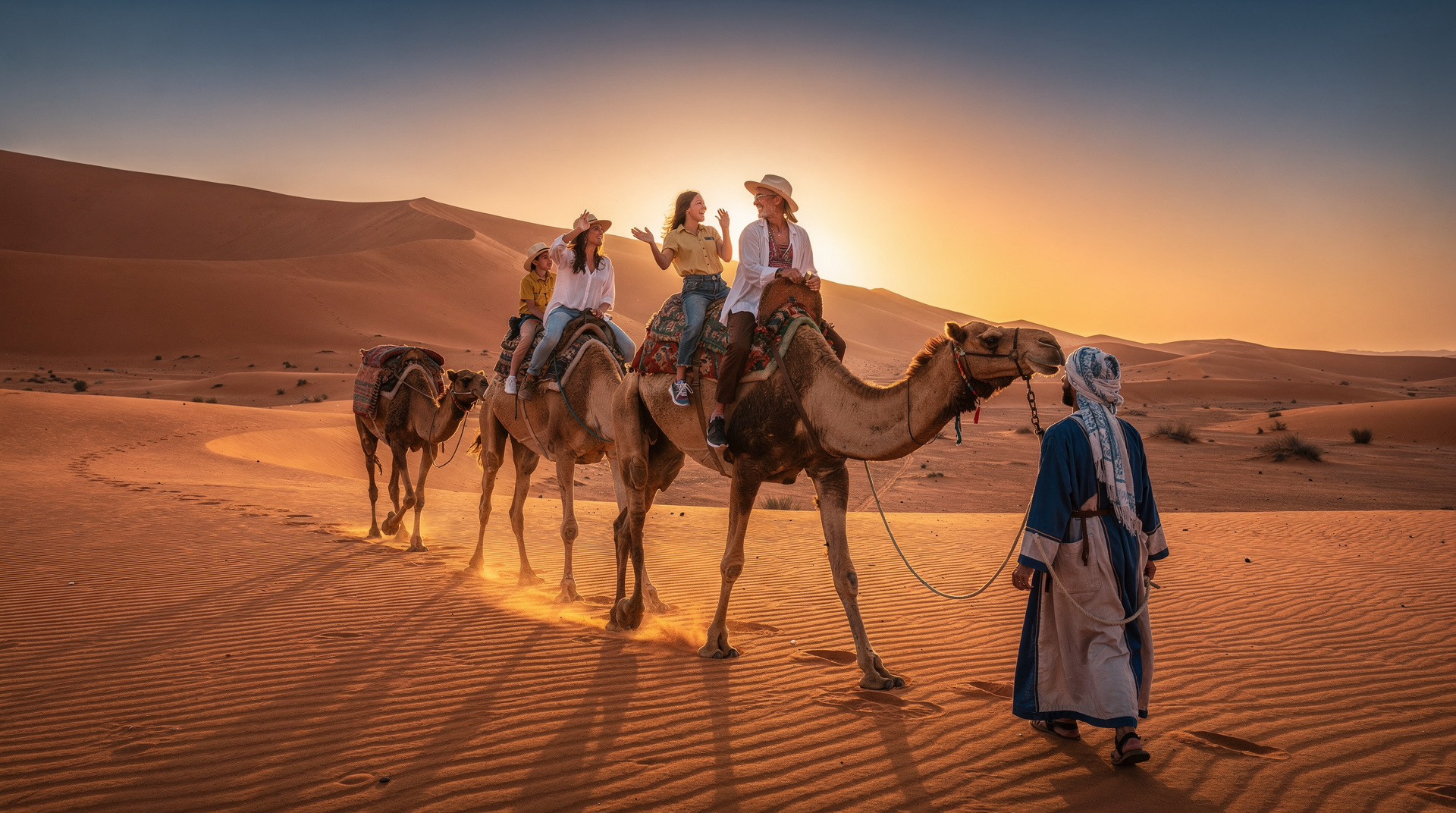
Morocco is a rewarding family destination with the right approach. Kids are welcomed warmly everywhere. The main challenges: heat management, car seats must be brought from home, food unpredictability for fussy eaters, and medina logistics with strollers. Age 5+ is generally easier than younger. Desert tours and Atlas day trips are family highlights.
Morocco with kids: genuinely rewarding, logistically specific
Morocco is an extraordinary family destination — colourful, varied, and welcoming in ways that give children a genuinely different experience from European holidays. Moroccan culture treats children as a social asset; families with children are smiled at, welcomed into restaurants, and treated with extra warmth throughout the country.
The logistical challenges are real and worth planning around, but none of them are insurmountable. This guide gives you the honest picture on what works, what doesn’t, and how to structure a family Morocco trip that everyone enjoys.
Passport and entry requirements for children
Standard entry rules apply to children of all nationalities. Children require their own valid passport — they cannot travel on a parent’s passport under any circumstances for international travel in 2026.
Passport validity: As with adults, children’s passports should be valid for at least 6 months beyond your travel dates.
Unaccompanied minors or children with one parent: If a child is travelling with only one parent (or with neither biological parent), Moroccan customs may request documentation that the absent parent(s) have given consent. A signed and notarised letter from the absent parent stating permission to travel is strongly recommended for single-parent family travel.
Visas: Children from EU, UK, US, Canadian, and Australian families have the same visa-free status as adults — no visa required for 90-day stays.
Car seats: the critical logistical gap
Car seats are not reliably available to rent or borrow in Morocco. This is the single most important logistical reality for families travelling with young children.
Morocco’s car seat culture is significantly behind Western European standards. Rental car companies in Morocco do technically offer child seats as an add-on, but:
- Availability is inconsistent and cannot be guaranteed
- Quality and safety standards vary significantly from Western European norms
- The seats that are available are often older models without ISOFIX and without recent safety certification
Recommendation: Bring your car seat from home if you plan to drive with young children. Check airline policies — most allow car seats as additional baggage at no charge or low charge. A travel car seat (lighter, designed for international travel) is worth the investment if you travel with young children frequently.
For families not renting a car: Taxis and private transfers don’t legally require child seats in Morocco, though this varies. For infant and toddler travel specifically, a car seat is still the safest option even in private transfers. Discuss with your transfer provider in advance.
What children eat in Morocco
Moroccan food, with some navigation, is family-friendly. The challenge is fussy eaters in a cuisine where the flavour base (cumin, preserved lemon, saffron, ras el hanout) is unfamiliar.
Kid-friendly Moroccan foods:
- Chicken tagine (often not very spicy, mild enough for most children): widely available
- Kefta (minced meat meatballs): familiar meatball format, loved by most children
- Briouats (fried pastry parcels, often filled with meat or cheese): finger-food format
- Msemen (Moroccan flatbread, like a savoury pancake): children eat it enthusiastically
- Couscous with vegetables: familiar grain format, adaptable
- Fresh-squeezed orange juice: a universal child hit
What to watch for:
- Spice levels vary. Ask for “sans piment” (without spicy peppers) when ordering for children. Most restaurants will accommodate this.
- Fried food options — chips/frites are universally available and serve as the familiar fallback for fussy eaters
- Salads at Moroccan restaurants often have fresh tomato, cucumber, and olive — straightforward and familiar
Supermarkets (Carrefour, Marjane, Label’Vie) stock familiar international brands — yoghurt, breakfast cereal, pasta, rice. Having a riad with a fridge or a self-catering option gives more flexibility for younger children with specific food needs.
Baby food: International brands (Blédina, Nestlé) are available at Carrefour and Marjane in major cities. Bring adequate supplies from home for remote areas or destinations outside major cities.
Water: Only give children bottled water. Don’t use tap water for brushing teeth or reconstituting baby formula.
Heat management with children
Summer (June-September) in southern Morocco is genuinely very hot. Marrakech regularly exceeds 38°C in July and August. The Sahara approaches 45°C at peak hours.
For families with young children:
- Schedule outdoor activities for early morning (7-10am) and late afternoon (4-6pm)
- Midday rest in the riad or hotel is not defeated tourism — it’s sensible temperature management
- Children dehydrate faster than adults. Push water intake actively.
- Hat and high-SPF sunscreen are non-negotiable in Morocco’s sun
- Air-conditioned spaces: Modern hotels and some riads have air conditioning. Verify before booking if this matters to your family.
- Avoid the desert in July and August with young children — the heat is seriously challenging for small children and doesn’t enhance the experience
Spring (March-May) and autumn (September-November) are dramatically better for families with young children. The Atlas and coastal destinations are comfortable year-round outside of peak summer.
Medical care: hospitals and pharmacies
Pharmacies are well-distributed throughout Morocco’s cities and many towns. They’re often green-cross marked and staffed by trained pharmacists who speak French and sometimes English. Moroccan pharmacies are quite good at providing appropriate medications for common travel ailments (traveller’s diarrhoea, infections, minor injuries) without requiring a prescription.
In major cities, for non-emergency medical care: Private clinics (cliniques) are faster, cleaner, and more foreigner-friendly than public hospitals. In Marrakech, the Clinique du Sud in Hivernage is referenced by expats and tour operators. In Casablanca, the Clinique Casablanca and Clinique Al Amine have English-French-speaking staff.
For serious emergencies: The SAMU emergency number is 15, or 19 for general emergency. Tourist police (Brigade Touristique) in major cities can assist with medical emergency logistics.
Travel insurance with medical coverage is strongly recommended for family travel. Choose a policy that covers medical evacuation specifically — some Moroccan private clinic situations may require transfer to a European hospital, and the cost without insurance is significant.
Child-specific medical kit to pack:
- Children’s paracetamol and ibuprofen (bring from home — familiar brands and dosing)
- Children’s oral rehydration sachets (Dioralyte or equivalent)
- Antihistamine suitable for your child’s age
- High-SPF children’s sunscreen
- Insect repellent (DEET or Picaridin, child-appropriate concentration)
- Your child’s regular prescription medication in adequate quantity
Strollers and medina logistics
Moroccan medinas are not stroller-friendly. This is a genuine logistical reality: cobblestones, steep narrow lanes, steps up and down without warning, surfaces that are smooth then suddenly rough. A stroller in the Marrakech or Fes medina is a constant challenge.
Alternatives:
- Baby carrier/sling: Far more practical for medina navigation. A structured carrier (Ergobaby, BabyBjorn) handles cobblestones and allows hands-free movement.
- Lightweight umbrella stroller: If you do bring a stroller, a lightweight single-wheel umbrella stroller is more manageable than a full pram. Accept that you’ll be lifting it over steps frequently.
- For children over 3 who can walk independently: medina walks are entirely manageable if the pace is adjusted and the distances are realistic.
Riad choice for families: Select a riad with a ground-floor accessible space. Some traditional riads have beautiful rooms up steep, narrow stairs that are essentially inaccessible with young children and luggage. Read reviews specifically for family-friendliness and ground-floor room availability.
Best destinations for family travel
Marrakech
The most family-viable of Morocco’s major cities for first-time visitors. The Gueliz new city has wide streets and easy logistics. The medina is accessible with older children. The Jardin Majorelle and Menara Gardens give children outdoor space.
The Agafay Desert near Marrakech — 30 minutes’ drive — is a very good family day trip option. The rocky desert landscape, with camel rides and quad bikes scaled to family pace, works well for children 5 and up. The Agafay desert quad bike and camel ride experience is popular with families.
Essaouira
Excellent for families. The medina is smaller and less overwhelming than Marrakech, the beachfront is long and safe for children, and the wind keeps temperatures manageable in summer. The horse riding on the beach and the relatively calm ocean (good for children who want to play in the surf without serious wave danger) make it a strong family choice.
Agadir
The easiest Morocco city for families with young children. The beach is safe and wide, the resort hotel infrastructure is international standard, car seats are more available (though still not guaranteed), and the family-oriented resort environment requires less cultural adjustment.
Aït Benhaddou and the Kasbah circuit
Children find the ancient ksar of Aït Benhaddou genuinely exciting — scrambling on a UNESCO-listed movie set (Game of Thrones, Gladiator, Lawrence of Arabia were filmed here) appeals to most ages from about 6 upward. The scale is manageable and the approach is straightforward.
The Sahara
For children 6 and up: The Sahara experience is memorable and appropriate. The camel ride, the desert camp, the sunrise on the dunes — children who are old enough to appreciate the scale love it.
For children under 5: The 10-hour drive from Marrakech to Merzouga is too long and the heat in peak summer too intense. If you’re set on the Sahara with young children, the Zagora desert (6-7 hours from Marrakech) is a more manageable option with a real desert atmosphere.
For children under 3: Consider the Agafay Desert (30 minutes from Marrakech) instead — genuine desert landscape, camel interaction, much more accessible.
Age recommendations by activity
| Activity | Minimum comfortable age | Notes |
|---|---|---|
| Marrakech medina half-day | 4+ | With carrier for younger |
| Djemaa el-Fna evening | 5+ | Loud, crowded, exciting |
| Camel ride (short) | 3+ | Always with adult |
| Agafay desert day | 4+ | Not peak-summer |
| Sahara (Merzouga) | 6+ | Avoid July-August |
| Atlas Mountains day hike | 5+ | Short, easy routes only |
| Hammam | 6+ | Some children love it |
| Hot air balloon | 5+ | Check operator minimum age |
| Guided medina tour | 8+ | Shorter format is better |
Practical logistics for families
Riad choice: Smaller riads may not have the space for family groups. Search for riads with family rooms, interconnecting rooms, or ground-floor options. Many riads have rooftop pools that are wonderful for cooling off — check depth and supervision.
Accommodation with pools: In Marrakech, a hotel or riad with a pool adds significant family-quality-of-life during the heat of the day. Agafay desert camps and some Sahara luxury camps also have pools.
Food timing: Moroccan restaurant service is slow by Northern European standards. Bring something for children to do while waiting. Local markets and hanout corner shops have snacks for the impatient moments.
Pacing: Morocco rewards slow travel more than fast city-hopping. For families, the temptation to cover too many cities in 10 days is worth resisting. Two or three destinations well-experienced beats five destinations seen from a moving vehicle.
For transport logistics, the getting around Morocco guide covers all options including family considerations. For packing: the Morocco packing list covers seasonal and context-specific items.